
What if the most critical component of your home's health is the one you cannot see? For many Alberta homeowners, the water storage system is often overlooked until a problem arises, yet your family's safety depends entirely on its integrity. You likely understand the stress that comes with worrying about E. coli contamination or sediment buildup that might lead to an expensive pump replacement. Consistent cistern maintenance is not just a household chore; it's a proactive investment that ensures your potable water remains sanitary and your infrastructure lasts for decades.
We agree that managing rural water systems can feel complicated, especially with the January 20, 2026, updates to the Water Act emphasizing the need for reliable storage. This article provides a professional framework to help you navigate these requirements with total peace of mind. You'll learn the exact schedule for inspections and how to meet the safety standards defined by the CSA B126 Series-13. We will preview the essential steps for your seasonal checklist, including how to utilize free Alberta Health Services testing twice a year to keep your water pristine.
Key Takeaways
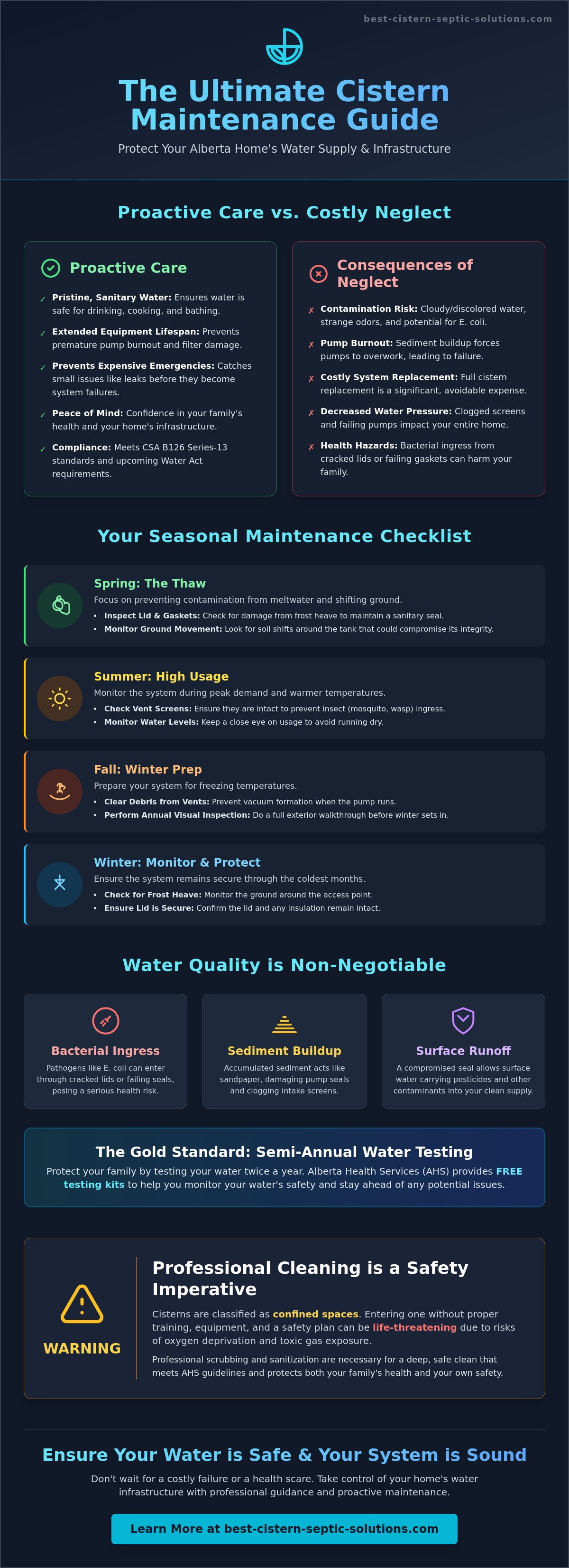
- Learn how to safeguard your water supply during critical seasonal shifts by inspecting lid seals and monitoring for ground movement after the spring thaw.
- Identify the "Big Three" contaminants to watch for and discover why semi-annual water testing is the gold standard for protecting your family’s health.
- Implement a proactive cistern maintenance schedule that includes monitoring pump cycle times to detect hidden leaks or pressure tank issues before they lead to failure.
- Understand the life-threatening risks of confined space entry and why professional scrubbing and sanitization are necessary for a deep, safe clean.
- Gain the confidence to manage your home’s infrastructure by testing critical safety components like low-water alarms to prevent the stress of running dry.
What is Cistern Maintenance and Why Does It Matter?
Cistern maintenance is a systematic, professional framework for inspecting, cleaning, and testing your potable water storage system. It ensures that every drop of water your family consumes remains sanitary and free from harmful contaminants. While homeowners often research what is a cistern to understand their rural utility, the real value lies in the ongoing care of that infrastructure. In Alberta, environmental factors like heavy sediment in hauled water and significant soil shifting during the freeze-thaw cycle can compromise a tank's structural integrity. Proactive care identifies these issues before they escalate into health risks or mechanical failures.
Effective cistern maintenance involves more than just a quick glance into the tank. It requires a methodical review of the lid seals, the vent screens, and the interior surfaces of the storage unit. Because the system is the primary source of your home's water, any breach in its integrity can allow surface runoff or insects to enter the supply. By following a professional maintenance routine, you ensure that your system meets the CSA B126 Series-13 standards reaffirmed in 2023. This diligence protects your family from bacterial ingress and ensures that your water storage remains a reliable asset for decades.
The Cost of Neglect vs. Proactive Care
Ignoring your water system can lead to sudden, expensive emergencies. Homeowners should watch for early warning signs that indicate the system needs attention:
- Cloudy or discoloured water coming from the taps.
- Unusual or earthy odors in the kitchen or bathroom.
- A cistern pump that cycles more frequently than usual.
- A noticeable decrease in water pressure throughout the home.
When sediment accumulates at the bottom of your tank, it creates a grinding abrasive that damages internal seals and clogs intake screens. This buildup forces your pump to work significantly harder, which leads to premature burnout. Reviewing the cistern cost in Alberta for a full system replacement highlights why prevention is such a vital investment. By managing sediment levels and inspecting mechanical parts, you protect your components and extend the lifespan of your filtration system.
Pristine Water: The Ultimate Goal
Potable water standards in rural Alberta residences require that stored water remains free from harmful pathogens. Because these systems are buried underground, it is easy to adopt an "out of sight, out of mind" philosophy. However, neglecting your storage system can lead to bacterial ingress through cracked lids or failing gaskets. Your cistern is the heart of your home's water supply. Maintaining it ensures that the water remains pristine and sanitary for drinking, cooking, and bathing. A well-maintained tank isn't just a container; it's a dedicated safeguard for your family’s property and health. We provide the professional solutions you need to keep your water safe and your system running smoothly.
Your Seasonal Cistern Maintenance Checklist
Alberta's climate dictates the rhythm of your home’s infrastructure. A reliable approach to cistern maintenance follows the changing seasons to address the specific environmental stresses our province faces. In the spring, the primary concern is the thaw. As the ground releases frost, the shifting soil can exert significant pressure on your tank’s lid and gaskets. This movement potentially breaks the sanitary seal, allowing surface meltwater to seep into your potable supply. Inspecting these seals early in the season prevents contamination before it starts.
During the summer peak, high water usage and warmer temperatures require a different focus. You should monitor water levels closely and check for any signs of algae growth or insect ingress. Mosquitoes and wasps often seek out small gaps in vent screens. By the time fall arrives, your priority shifts to ensuring the system is ready for freezing temperatures. Clear any debris from the vents to prevent a vacuum from forming when the pump runs. In the winter, continue to monitor for frost heave around the tank access point to ensure the lid remains secure and the insulation stays intact.
The Annual Visual Inspection
Once a year, perform a detailed walkthrough of your system’s exterior. When following the Alberta Health Services cistern cleaning guidelines, the process begins with a thorough visual check of the structural components. Follow these three steps to ensure integrity:
- Step 1: Examine the cistern lid for cracks, gaps, or a failing gasket. A tight seal is your first line of defense against bacteria.
- Step 2: Inspect the vent screen. Ensure the mesh is intact so that rodents or insects cannot enter the storage area.
- Step 3: Look for signs of surface water runoff. If you see water pooling near the access point, you may need to adjust the grading to protect the tank.
Maintenance Tasks for Every Delivery
Every time you receive a water delivery is an opportunity for a quick system health check. Don't wait for an annual cleaning to spot potential issues. Visually inspect the water for any changes in clarity, colour, or odour as it enters the tank. Ensure the fill pipe area is clean and free of animal waste or debris that could be pushed into the system. Finally, listen to the pump's operation. If you notice unusual noises or rapid cycling patterns, it may indicate a leak or a pressure tank issue. If you notice any structural concerns during your inspection, a professional cistern system assessment can provide the clarity you need to keep your water safe.
Water Quality Testing and Safety Protocols
Testing your water is the only way to confirm that your cistern maintenance efforts are truly effective. While a visual inspection covers structural integrity, it cannot detect the microscopic pathogens that compromise your family's health. Alberta Health Services provides free bacteriological water testing for private systems, and they recommend submitting samples at least twice per year. For a more detailed analysis, commercial labs offer a basic suite of tests for approximately $60, while a comprehensive diagnostic suite costs around $300 as of May 2026. These investments provide the data needed to ensure your water remains pristine.
When reviewing your lab reports, focus on the "Big Three" contaminants. Total Coliforms are a broad group of bacteria that indicate your system may be vulnerable to environmental ingress. E. Coli is a more serious finding, as it signals direct fecal contamination. Finally, Nitrates are a common concern in agricultural areas; high levels can be dangerous, particularly for infants. If your results come back marked as "unsatisfactory," don't panic. This result is a clear signal that your system needs a professional inspection to identify where the sanitary barrier has failed. Until the issue is resolved, follow a boil water advisory for all drinking and cooking needs.
Collecting a clean sample is vital to avoid a false positive. Use the sterile vial provided by the lab and do not touch the inside of the cap or the rim of the bottle. Run your cold water tap for two to three minutes to clear the lines before filling the container. Submit the sample to the lab within 24 hours to ensure the data is accurate. This methodical approach to testing is a cornerstone of responsible home ownership.
When to Test Immediately
Routine semi-annual testing is the baseline, but certain events require an immediate response. You should test your water after any professional repairs or cleaning services to confirm the system is disinfected. If your property experiences heavy surface runoff or localized flooding, the risk of bacterial ingress increases significantly. Finally, submit a sample if you notice any change in the water’s taste, smell, or appearance. These sensory cues often precede a failed lab test.
Safe Water Practices for the Household
A clean tank is the first line of defense for your entire water system. When the storage unit is free of sediment and bacteria, your secondary treatment components—such as UV lights or charcoal filters—can operate at peak efficiency. For more information on how these components integrate into your property, see the 2026 Homeowner’s Guide to Cisterns. Maintaining mechanical integrity ensures that these safety protocols provide the protection your family deserves.
Mechanical Integrity: Pumps, Alarms, and Vents
While water quality is the primary health concern, the mechanical components of your system represent the "muscles" that keep your household running. A robust approach to cistern maintenance must include a thorough check of the delivery hardware. One of the most effective ways to gauge system health is to monitor your pump’s cycle times. If you notice the pump turning on and off rapidly every time a tap is opened, your pressure tank likely has a compromised air charge. This condition, known as short-cycling, places immense stress on the motor and is a leading cause of premature equipment failure.
Your safety net against a dry run is the low-water alarm. You should test this component annually to ensure the sensor triggers a notification before the water level drops below the pump intake. Running a pump without water causes immediate friction and overheating, which can destroy internal seals in minutes. Additionally, ensure your vent screens remain clear of dust and frost. A blocked vent can create a vacuum within the tank, making it difficult for the pump to draw water and potentially causing structural stress to the tank walls. Checking these mechanical details ensures your system remains reliable and efficient.
The Cistern Pump: Your System's Engine
Identifying early signs of a struggling pump can save you from a total loss of water service. Listen for unusual clicking, humming, or a noticeable drop in household water pressure. In many rural Alberta systems, sediment accumulation at the bottom of the tank is the primary cause of pump failure. When the pump draws in abrasive grit, it grinds down the impellers and clogs the intake screen. If you suspect your current unit is underperforming, our guide on choosing the best cistern pump provides technical insights into selecting a replacement that can handle the specific demands of your property.
Filtration and Pre-Treatment Care
Your filtration system depends entirely on the cleanliness of the water coming from the tank. Clogged sediment filters can often mimic the symptoms of a failing pump by causing low pressure at the tap. Check your UV lamp replacement dates; most bulbs require annual service to maintain their ability to neutralize pathogens. Finally, verify that your pump's intake float is positioned correctly. It should draw water from the middle of the water column, away from the bottom sediment layer where contaminants settle. If you are concerned about the mechanical health of your system, a professional cistern pump inspection can identify hidden issues before they become emergencies.
Professional Cistern Cleaning: When to Call the Experts
While seasonal visual checks are within a homeowner's reach, a deep sanitization of your water system requires specialized expertise. Professional cistern maintenance involves more than just a garden hose and a scrub brush. It is a technical process designed to remove stubborn biofilm and accumulated sediment that annual flushing cannot reach. In Parkland County, we typically recommend a professional deep cleaning every 3 to 5 years. This frequency ensures your system remains in peak condition while complementing the annual water testing recommended by health authorities.
Investing in a professional cleaning schedule protects your property value and the longevity of your infrastructure. Over time, even the most pristine water leaves behind a layer of fine silt. This material can harbour bacteria and eventually clog the intake of your pump. By hiring a specialist, you ensure that the interior surfaces are scrubbed and disinfected without damaging the tank's structural integrity. It is a proactive step that transforms your water storage from a simple utility into a high-performing, sanitary asset for your household.
The Dangers of DIY Tank Entry
The most important reason to hire a professional is safety. Cisterns are designated as confined spaces under Part 5 of the Province of Alberta Occupational Health and Safety Code. These environments are life-threatening due to the risk of oxygen deficiency or the silent buildup of toxic gases like hydrogen sulfide. Entering an underground tank without the proper training is never worth the risk. Our team treats every entry as a high-stakes technical operation.
Professional gear is non-negotiable for these tasks. We use calibrated air monitors to test the atmosphere before and during the cleaning process. Specialists also utilize safety harnesses and tripods to ensure a safe exit is always available. We follow a "Trusted Specialist" approach, meaning we perform a thorough cleaning while meticulously protecting the gaskets and seals that keep your system watertight. You get a pristine tank without the physical risks associated with DIY entry.
Booking Your Professional Service
When you book a professional maintenance visit, you can expect a comprehensive end-to-end service. The process begins with draining the remaining water and performing a detailed interior inspection. We then scrub the walls and floor to remove any organic buildup before sanitizing the entire system with a food-grade chlorine solution. This methodical approach ensures your water remains safe for drinking and cooking. If you are still learning about how your system was originally set up, our cistern installation guide provides a clear overview of the components we service. Taking these steps provides the final peace of mind that your family's most vital resource is safeguarded for years to come.
Protecting Your Home's Most Vital Asset
A reliable water supply is the foundation of a healthy rural home. By following the seasonal inspection steps and committing to semi-annual water testing through Alberta Health Services, you take control of your system's safety. Remember that while visual checks are important, professional deep cleaning every 3 to 5 years is necessary to remove biofilm and sediment that impact your pump's longevity. Consistent cistern maintenance transforms a hidden utility into a high-performing, sanitary resource that serves your property for decades.
Best Cistern & Septic Solutions provides the expert mechanical and hygiene maintenance you need to keep your water pristine. We are specialists in rural potable water systems, serving homeowners across Parkland, Leduc, and Sturgeon Counties with diligence and care. Our team ensures that your tank entry is handled safely and your system integrity remains uncompromised. Secure your water supply with a professional cistern inspection today. You deserve the peace of mind that comes with a clean, reliable, and expertly managed water storage system.
Frequently Asked Questions
How often should I clean my cistern in Alberta?
Health Canada and Alberta Health Services recommend that you clean your cistern at least once per year. For a more intensive deep-clean that removes stubborn biofilm and accumulated silt, professional cistern maintenance is typically scheduled every 3 to 5 years. This regular schedule prevents heavy sediment from damaging your pump and ensures your potable water remains sanitary for daily household use.
Can I use bleach to sanitize my cistern water myself?
You can use unscented household bleach for shock chlorination, provided you follow the precise dosage and contact time guidelines from Alberta Health Services. It's vital to calculate the exact volume of water in your tank to ensure the chlorine concentration is effective without becoming a safety hazard. While this handles surface bacteria, it doesn't replace the need for physical scrubbing to remove the sediment where pathogens often hide.
What are the signs that my cistern pump is failing?
Common warning signs include a noticeable drop in household water pressure or a pump that cycles on and off rapidly when a tap is opened. You might also hear unusual humming or clicking noises coming from the pressure tank or the pump itself. If your pump runs constantly without reaching the shut-off pressure, it often indicates a leak in the delivery line or a significant mechanical failure within the unit.
Why does my cistern water smell like rotten eggs?
This odour is usually caused by hydrogen sulfide gas produced by bacteria living in the sediment at the bottom of your tank. If the smell only occurs when using hot water, the issue might be the anode rod in your water heater. However, a persistent smell in both hot and cold water is a clear signal that your cistern requires a professional cleaning and disinfection to restore water quality.
Is it safe to enter my cistern to inspect it?
Entering a cistern is never safe for an untrained individual. These are classified as confined spaces under Part 5 of the Alberta Occupational Health and Safety Code due to risks of oxygen deficiency and toxic gas buildup. Professionals use specialized air monitors and safety harnesses to manage these life-threatening hazards. You should perform all visual inspections from the surface using a high-powered flashlight to maintain your safety.
How much does professional cistern maintenance cost in Parkland County?
Professional cleaning costs in Alberta are not standardized and are typically provided as a custom quote after a visual inspection. Factors like the size of your tank and the level of sediment buildup influence the final price. While some providers in other provinces use flat fees or volume-based disinfection charges, we recommend contacting a local specialist for a transparent estimate tailored to the specific needs of your water storage system.
What should I do if my low-water alarm goes off?
You should immediately stop all high-volume water usage, such as laundry or showers, and check your tank's water level. If the level is low, schedule a water delivery right away to prevent the pump from running dry and overheating. If the tank is full and the alarm persists, the float switch or the alarm unit itself likely requires a professional repair to restore your system's monitoring capabilities.
How do I prevent my cistern lid from freezing shut in the winter?
You can prevent freezing by ensuring your cistern lid is properly insulated with a moisture-resistant foam board. It's also helpful to apply a thin layer of silicone-based lubricant to the lid’s gasket before the first frost. This creates a barrier that prevents meltwater from seeping into the seal and bonding the lid to the frame during the extreme cold of an Alberta winter.


