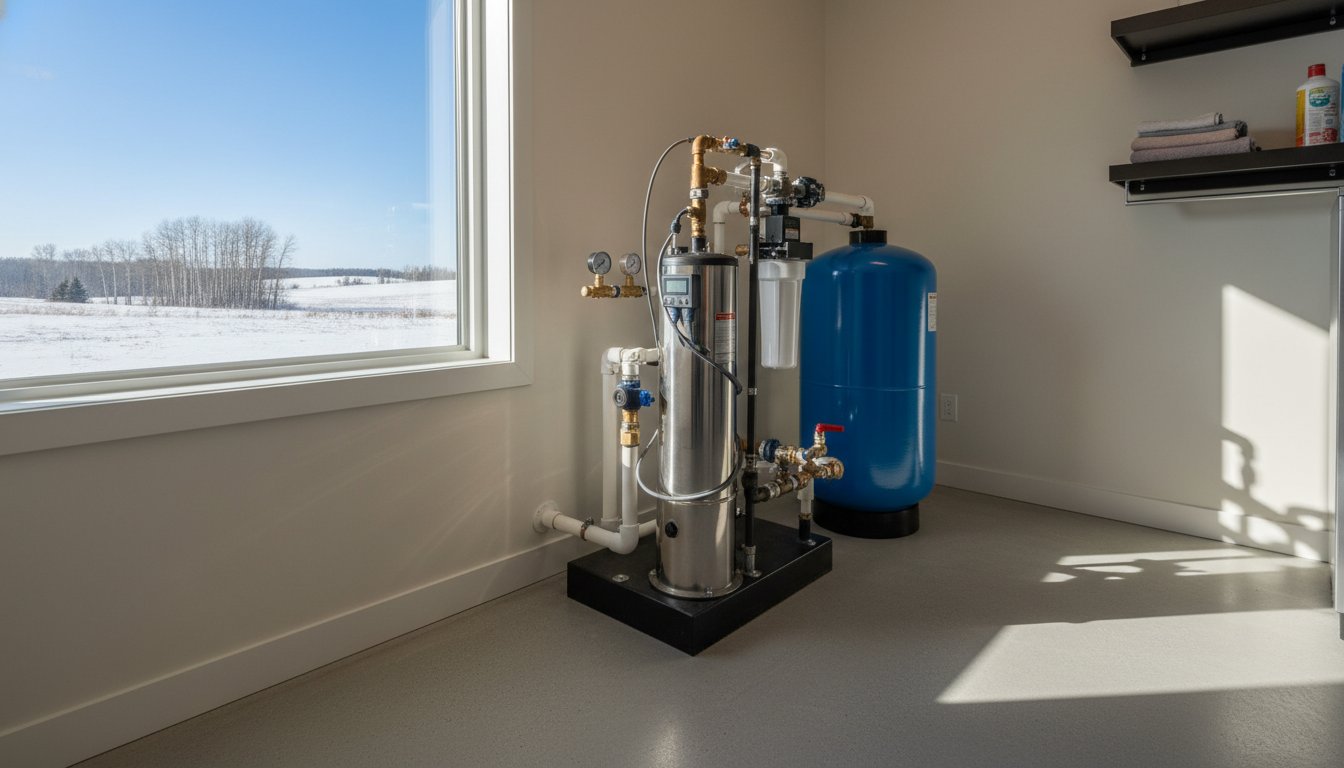
On a -35°C morning in January 2024, many Parkland County homeowners faced the stressful reality of a frozen or failed water system. You rely on your home’s infrastructure to remain invisible and effective, providing the peace of mind that comes with a warm shower and safe drinking water. We agree that you shouldn't have to worry about technical failures or choosing the wrong cistern pump when you're managing a rural property.
This 2026 guide helps you select and size the ideal equipment to ensure your Alberta home enjoys high-pressure potable water throughout the harshest seasons. You'll discover how to maintain your system's integrity to achieve a "set and forget" setup that protects your family's health and investment. We will compare submersible and jet pump technologies while providing a clear maintenance schedule to maximize your system's longevity and performance.
Key Takeaways
- Compare the performance and noise levels of submersible versus jet pump technologies to determine the most efficient fit for your home’s layout.
- Learn how to calculate your household’s peak demand in GPM to select a cistern pump that provides consistent pressure without the risks of oversizing.
- Understand the essential installation and winterization steps required to meet Alberta building codes and safeguard your system against extreme cold.
- Discover how proactive maintenance and annual cleaning protect your mechanical investment from sediment damage while ensuring the safety of your potable water.
- Identify the long-term benefits of professional oversight to prevent premature system failure and maintain the structural integrity of your rural water infrastructure.
What is a Cistern Pump and Why is it Critical for Your Rural Alberta Home?
For homeowners in Parkland County and Strathcona County, a reliable water supply isn't a luxury; it's a daily necessity. Since municipal water lines don't reach many of these rural properties, residents rely on stored water. The cistern pump acts as the mechanical heart of this system. It's responsible for drawing potable water from your storage tank and delivering it to your faucets, showers, and appliances at a steady, comfortable pressure. Understanding What is a Cistern helps clarify that these tanks are the primary reservoir for your household's daily needs, making the pump the most vital component for functional living.
There's a distinct difference between well pumps and cistern pumps that local property owners should recognize. While well pumps are designed to pull water from deep underground aquifers, a cistern pump is optimized to move water from a localized storage tank. This requires different pressure thresholds and motor configurations to ensure the system doesn't overwork itself. In North Central Alberta, where water hauling is a standard practice for many, the efficiency of this pump determines how effectively you utilize every liter of your delivered water.
The Importance of a Reliable Potable Water System
A high-quality pump prevents system cavitation, which occurs when air bubbles form and collapse within the pump, leading to internal damage and loud, vibrating pipes. Maintaining a steady flow also protects the long-term health of your septic field installation. If a pump fails or creates irregular pressure spikes, it can lead to uneven water distribution that stresses your entire wastewater system. Choosing a "Trusted Specialist" for your installation ensures the pump is sized correctly for your home's specific peak-demand periods, providing lasting peace of mind.
Common Signs Your Current Pump is Failing
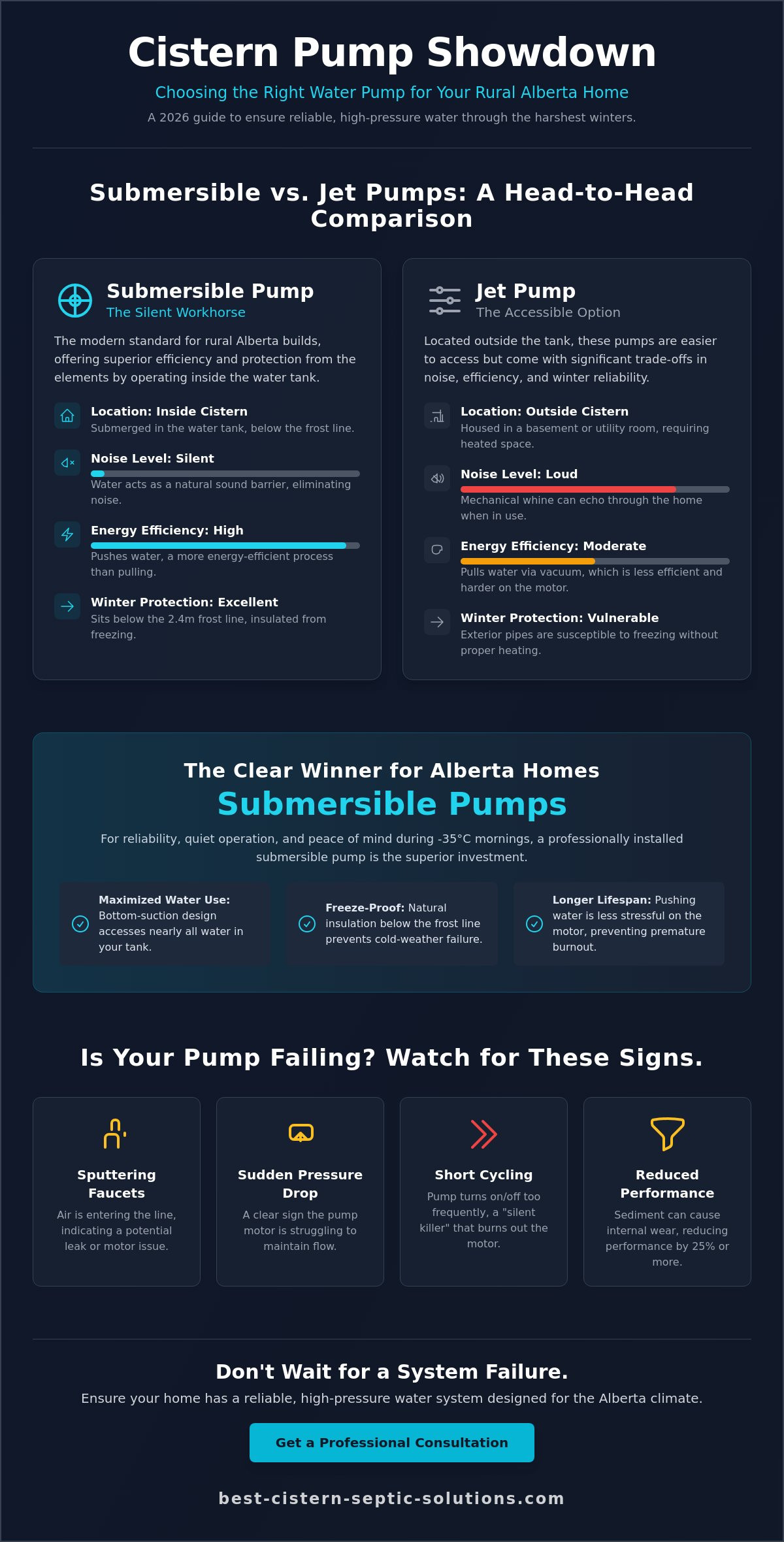
Identifying trouble early can save you from a total loss of water service. You might notice sputtering faucets or a sudden drop in water pressure during a shower. These are often signs that air is entering the line or the motor is struggling. Short cycling is another major red flag. This happens when the cistern pump turns on and off too frequently, often due to a failing pressure tank or a leak. Short cycling is a silent killer for pump longevity, as the heat generated by constant starts can burn out the motor years ahead of its expected lifespan. In our region, sediment buildup is a common culprit. Fine particulates can settle in the tank and enter the pump intake, causing internal wear that reduces performance by 25% or more before the unit finally fails.
Submersible vs. Jet Pumps: Comparing Your Options
Parkland County homeowners generally choose between two distinct technologies when installing or replacing a cistern pump. While both systems serve the same purpose of delivering potable water to your fixtures, their performance in Alberta’s climate varies significantly. The choice you make impacts your home's noise levels, energy bills, and the long-term reliability of your water supply.
Submersible Cistern Pumps: The Silent Workhorse
Submersible pumps are now the standard for modern rural builds in Alberta. Because the motor stays submerged inside the tank, the surrounding water acts as a natural sound barrier. This eliminates the loud mechanical whine that often echoes through a basement when a tap is turned on. Beyond acoustics, these units offer superior protection against the elements. Since they sit below the 2.4-meter frost line, they remain insulated from the freezing temperatures that can crack exterior pipes.
Efficiency is another major advantage. Submersibles use a "bottom suction" design, which allows them to draw water from the lowest point of the tank. This feature maximizes your usable volume, ensuring you don't lose access to the last 200 liters of storage during a delivery delay. We frequently recommend the Franklin C1 series for local properties. It's a benchmark for reliability because it's specifically engineered for quiet operation and can handle the occasional sediment without failing. These units push water toward the house rather than pulling it, which is a much more energy-efficient process.
Shallow Well Jet Pumps: Accessibility and Use Cases
Jet pumps are located outside the cistern, typically in a basement, crawlspace, or heated utility room. They work by creating a vacuum to pull water from the tank. While these systems are easier to access for a quick visual inspection, they come with several trade-offs. The most frequent complaint we hear from residents in Parkland County involves "prime loss." If a tiny amount of air enters the suction line or a foot valve fails, the pump loses its ability to move water. This often results in a total loss of water pressure until a technician or homeowner manually re-primes the system.
Jet pumps might remain a viable choice for older homes where the existing plumbing footprint is difficult to modify. However, they require more frequent maintenance to ensure seals stay tight and the motor doesn't overheat. If your current system is causing frequent headaches, a professional cistern inspection can help determine if a conversion to a submersible model is the right investment for your property’s longevity.
- Noise: Submersibles are nearly silent; jet pumps are loud and prone to vibration.
- Efficiency: Submersibles use less electricity by pushing water with gravity's help.
- Maintenance: Jet pumps require manual priming; submersibles are largely "set it and forget it" for 10 to 15 years.
Choosing the right technology ensures your family has a consistent, pressurized water supply without the stress of mechanical failure. While jet pumps served rural Alberta well for decades, the move toward submersible technology represents a significant improvement in home comfort and system integrity.
Sizing Your Cistern Pump: Flow Rate and Pressure Requirements
Selecting the right hardware for your water system is a balance of precision and practicality. Many homeowners assume that a higher horsepower motor translates to better performance, but a cistern pump that's too powerful often leads to short-cycling. This rapid starting and stopping puts unnecessary strain on the motor and reduces the lifespan of your equipment. We focus on finding the specific capacity that matches your home’s actual usage patterns to ensure long-term reliability and system integrity.
Calculating Your Gallons Per Minute (GPM)
A reliable way to determine your needs is to count the number of water fixtures in your home, including sinks, toilets, showers, and outdoor taps. While a large home might have 15 fixtures, you won't use them all at once. For most Alberta families, a cistern pump with a 10 GPM delivery rate provides the perfect balance of pressure and efficiency. You can estimate your requirement by allowing 1 GPM for every fixture that might run simultaneously during a busy morning. Peak Demand is the maximum water used when multiple appliances run at once.
Your pump works in a vital partnership with the pressure tank. The pump's job is to move water into the tank, which then uses compressed air to push that water through your pipes. This setup prevents the motor from turning on every time you wash your hands. In larger properties across Leduc County or Sturgeon County, where you might also support a small garden or livestock, we often recommend a larger pressure tank rather than a bigger pump. This approach maintains a steady flow without overworking the mechanical components, protecting your home's health.
Understanding Total Dynamic Head (TDH)
The term "head" refers to the total resistance the pump must overcome to get water from the cistern to your highest faucet. This includes the vertical lift and the friction created as water moves through the pipes. Because Alberta winters require cisterns to be buried at least 2.5 to 3 meters deep to stay below the frost line, your cistern pump needs sufficient lift capability to move water upward against gravity.
- Measure the vertical distance from the bottom of the cistern to the highest showerhead in the house.
- Account for the horizontal distance of the pipe run to the house.
- Check the pump manufacturer’s curve to ensure it delivers the desired GPM at your specific TDH.
Before you purchase a pump, always measure your cistern depth and the elevation of your home. This calculation ensures the unit you install has the mechanical strength to deliver water at the correct pressure. Taking the time to size your system correctly is a smart investment that prevents future plumbing stress and ensures your family has a consistent, sanitary water supply for years to come.
Professional Installation and Winterization in the Edmonton Capital Region
Installing a new cistern pump requires more than just mechanical aptitude; it demands strict adherence to Alberta building codes to ensure household safety. Many homeowners attempt a DIY replacement to save on initial costs, but this often results in premature equipment failure within the first 12 to 18 months. Professional installation provides the technical precision needed to handle the specific environmental pressures of Central Alberta.
The Professional Installation Workflow
A methodical approach ensures your water system remains reliable and sanitary. Our technicians follow a rigorous three-step process for every installation:
- Step 1: Sanitize the System: We treat the new pump and all connecting lines with a food-grade chlorine solution. This eliminates bacteria introduced during the handling process, maintaining the integrity of your potable water supply.
- Step 2: Calibrate the Pressure Switch: We adjust the switch to align with your home’s specific plumbing capacity. Incorrect settings cause the pump to cycle too frequently, which is the leading cause of motor burnout.
- Step 3: Waterproof Electrical Connections: Every wire is secured with adhesive-lined, waterproof heat-shrink seals. Standard electrical tape eventually fails in the humid environment of a cistern, leading to short circuits.
Winter-Proofing Your Water Supply
In Parkland and Sturgeon County, winter temperatures frequently drop to -40°C. These extreme conditions test every component of your infrastructure. The frost line in our region typically reaches depths of 7 to 8 feet. If your lines are shallower, we integrate self-regulating heat tape and insulated pitless adapters to prevent catastrophic freezing. These components act as a final line of defense when the ground begins to heave.
Environmental shifts can also impact your water lines in ways that aren't immediately visible. For instance, a professional septic system repair or a comprehensive site inspection often reveals ground settling that puts stress on your water intake pipes. Monitoring your utility room is equally vital. Ensure the temperature remains above 10°C during cold snaps to protect the pressure tank and sensitive gauges from cracking. Small adjustments to your heating vents can prevent a total system shutdown during a blizzard.
Investing in a professional setup for your cistern pump means you don't have to worry about losing water in the middle of a January night. It’s about protecting your family’s comfort through proactive maintenance and expert execution. Our team focuses on the technical details so you can enjoy a consistent, reliable water supply regardless of the weather outside.
Maximizing Longevity: Maintenance and the Local Expert Advantage
Your cistern pump acts as the heart of your rural home’s infrastructure. It’s a long-term investment in your family’s daily comfort and the overall health of your property. We don’t just install equipment; we partner with you to ensure that water flows reliably for a decade or more. This commitment to longevity starts with understanding the hidden threats to your system and addressing them before they become costly emergencies.
The Role of Regular Cistern Maintenance
Sediment and bio-film are the primary enemies of any submersible system. Over several seasons, fine particulates settle at the bottom of your tank, creating a layer of sludge. These materials can clog the intake of your cistern pump, forcing the motor to work harder and eventually causing it to overheat or burn out. We suggest a professional inspection every 2 to 3 years to clear these hazards. Our technicians use a thorough cleaning process that safeguards your property while restoring your water storage to a sanitary, pristine condition. By removing these abrasives, we extend the life of your mechanical components and ensure your water remains safe for household use.
Best Cistern Septic Solutions uses a precise diagnostic framework to evaluate your system’s performance. We check electrical components, pressure settings, and physical wear patterns. This methodical approach allows us to catch minor issues during routine maintenance, saving you from the stress of a sudden dry tap. We prioritize transparency, explaining every technical detail so you feel empowered to make informed decisions about your home’s water security.
Why Choose a Local Parkland County Specialist?
Operating in Parkland County requires specialized knowledge of North Central Alberta’s environment. We understand how our local soil composition and extreme temperature swings affect underground infrastructure. We know how deep frost lines can impact your lines and which specific equipment handles our regional water chemistry most effectively. When you choose a local specialist, you gain an emergency contact who isn't just a voice on a phone; you gain a neighbor who is familiar with your specific setup and regional requirements.
Reliability is our core promise. We provide the 24/7 support rural families need to feel secure in their homes. Our team remains ready to respond quickly, ensuring your household never stays offline for long. Contact Best Cistern Septic Solutions for your pump installation today and experience the peace of mind that comes with professional, local care.
Securing Your Rural Water System for 2026 and Beyond
Reliable water access is the foundation of a healthy rural home. Whether you choose a high efficiency submersible model or a durable jet pump, your decision impacts your household's daily comfort and long term property value. Families across Parkland, Leduc, and Sturgeon Counties have relied on our expertise for years to ensure their potable water systems meet specific flow rate and pressure requirements. Selecting the right cistern pump involves more than just picking a brand; it requires a professional assessment of your infrastructure to prevent sediment buildup and mechanical failure during harsh Alberta winters.
We treat your home as a vital investment and a place where family safety comes first. Our team provides the technical precision needed for complex installations while maintaining the transparent, local service you expect from a neighbor. You don't have to navigate these technical choices alone. We focus on the mechanical integrity of your system so you can focus on enjoying your property. Our specialists are ready to help you safeguard your water supply with solutions that last for decades. Ensure your water stays flowing; Book a Cistern Pump Consultation. Protecting your water supply today means one less worry for your family's future.
Frequently Asked Questions
How long does a cistern pump typically last in Alberta?
A high-quality cistern pump typically lasts between 8 and 12 years in Alberta's climate. Cold ground temperatures and varying mineral levels in rural water supplies impact this timeline. We recommend a professional inspection every 24 months to ensure the mechanical components remain in peak condition. This proactive maintenance is a smart investment in your home's long-term health.
Can I use a regular sump pump in my cistern?
You shouldn't use a regular sump pump in your cistern because they aren't designed for potable water. Sump pumps often contain lubricants or materials that can contaminate your drinking supply. A dedicated cistern pump is constructed from food-grade stainless steel or specialized plastics. These materials ensure your water remains pristine and safe for your family's daily use.
What size of pressure tank do I need for a 1/2 HP cistern pump?
A 1/2 HP pump generally requires a pressure tank with a 20-gallon total capacity. This size provides a drawdown of approximately 5 to 7 gallons between cycles. This volume prevents the motor from starting and stopping too frequently, which is the leading cause of motor burnout. Selecting the correct tank size protects your mechanical system's integrity for years to come.
Why is my cistern pump making a loud humming noise but not moving water?
A loud humming noise usually indicates a seized impeller or a failed start capacitor. If the system hasn't run for 90 days, mineral deposits can lock the internal components in place. You should turn off the power immediately to prevent the motor from overheating. Our specialists can often clear these blockages or replace the capacitor to restore your water flow and peace of mind.
Is it safe to drink water if the pump has been sitting idle for months?
It's not safe to drink water that has sat idle for several months without professional testing. Bacteria can proliferate in stagnant water within 30 to 60 days even in a sealed tank. You should shock chlorinate the system and flush the lines for 20 minutes before consumption. This process ensures the sanitary protection of your household's water supply.
How much does it cost to have a cistern pump professionally installed in Parkland County?
Professional installation costs depend on the depth of your tank and the specific model required for your home's plumbing. According to 2024 regional industry data, labor for pump replacements in Central Alberta typically involves 3 to 5 hours of specialized work. We provide transparent, fixed quotes after a site visit to ensure you understand the exact investment required for your property.
What is the difference between an effluent pump and a potable water cistern pump?
The primary difference is the NSF/ANSI 61 certification required for drinking water systems. Effluent pumps are designed to handle greywater and small solids, while a cistern pump for drinking water is built to maintain high purity standards. Using an effluent pump for your kitchen taps risks introducing non-food-grade materials into your home. Always choose a pump specifically rated for human consumption to safeguard your family.
Do I need a special permit to replace my cistern pump in Leduc County?
You generally don't need a new permit for a "like-for-like" replacement of a cistern pump in Leduc County. However, if you're altering the electrical circuit or the tank's structural integrity, Safety Codes Council regulations may require a plumbing or electrical permit. It's best to verify with the Leduc County Planning department if your project involves 2 or more significant system modifications.


