What if the most critical component of your North Central Alberta home isn't the roof over your head, but the 5,000-litre tank buried beneath your feet? You likely already know that a dependable water supply is the backbone of rural living, but calculating the total cistern cost alberta homeowners should expect can feel like a moving target. It's common to feel a sense of uncertainty when balancing the initial price of a tank against the long-term protection of your property's value.
We believe that every homeowner deserves a transparent look at the investment required to secure pristine, potable water for their household. This 2026 guide provides a methodical breakdown of the expenses involved in professional installation, including excavation, permit fees, and the structural differences between concrete and plastic systems. By the time you finish reading, you'll have the clarity needed to choose a storage solution that withstands our harsh provincial winters and provides lasting peace of mind for your family.
Key Takeaways
- Compare the long-term durability and upfront investment of concrete, fiberglass, and poly tanks to find the ideal material for your property’s specific soil conditions.
- Identify whether a high-volume truck-fill model or a precision trickle system offers the most reliable solution for your household's daily water demands.
- Review a comprehensive breakdown of the cistern cost alberta residents should budget for in 2026, covering everything from excavation depths to internal plumbing.
- Understand how professional installation techniques safeguard your system’s integrity against the extreme freeze-thaw cycles of North Central Alberta.
- Learn why a proactive maintenance and disinfection schedule is the most cost-effective way to ensure your family’s potable water remains pristine and safe.
Understanding Cistern Systems in Rural Alberta
For homeowners in rural Alberta, a reliable water source is the foundation of a healthy household. While urban residents take a turn of the tap for granted, those in Parkland or Leduc Counties often face a different reality. A cistern is a professional potable water storage solution that acts as your home's private reservoir. What is a Cistern? Historically, these were simple rain catchers, but modern systems are sophisticated, sealed units designed to hold thousands of litres of clean, hauled water. Understanding the cistern cost alberta homeowners face involves looking at the installation as a permanent utility upgrade rather than a temporary fix.
In regions like North Central Alberta, groundwater quality is notoriously unpredictable. Many families in Leduc County find that their wells produce high levels of iron, methane, or sulfur, or simply fail to provide the 20 to 30 litres per minute required for a modern home. A cistern bypasses these geological gambles. It integrates directly with your home's internal plumbing through a dedicated pressure system. A submersible pump inside the tank sends water to a pressure tank in your utility room, ensuring that your showers, dishwashers, and taps function exactly like a city connection.
It's vital to distinguish between potable water cisterns and greywater or septic tanks. A potable cistern is a sanitary environment dedicated strictly to drinking water. It features smooth, non-porous interior walls to prevent bacterial colonies from forming. Using the wrong tank type can lead to contamination that's difficult to remediate. We focus on ensuring your system provides a pristine, consistent supply regardless of local groundwater conditions.
Cistern vs. Well: Making the Choice in 2026
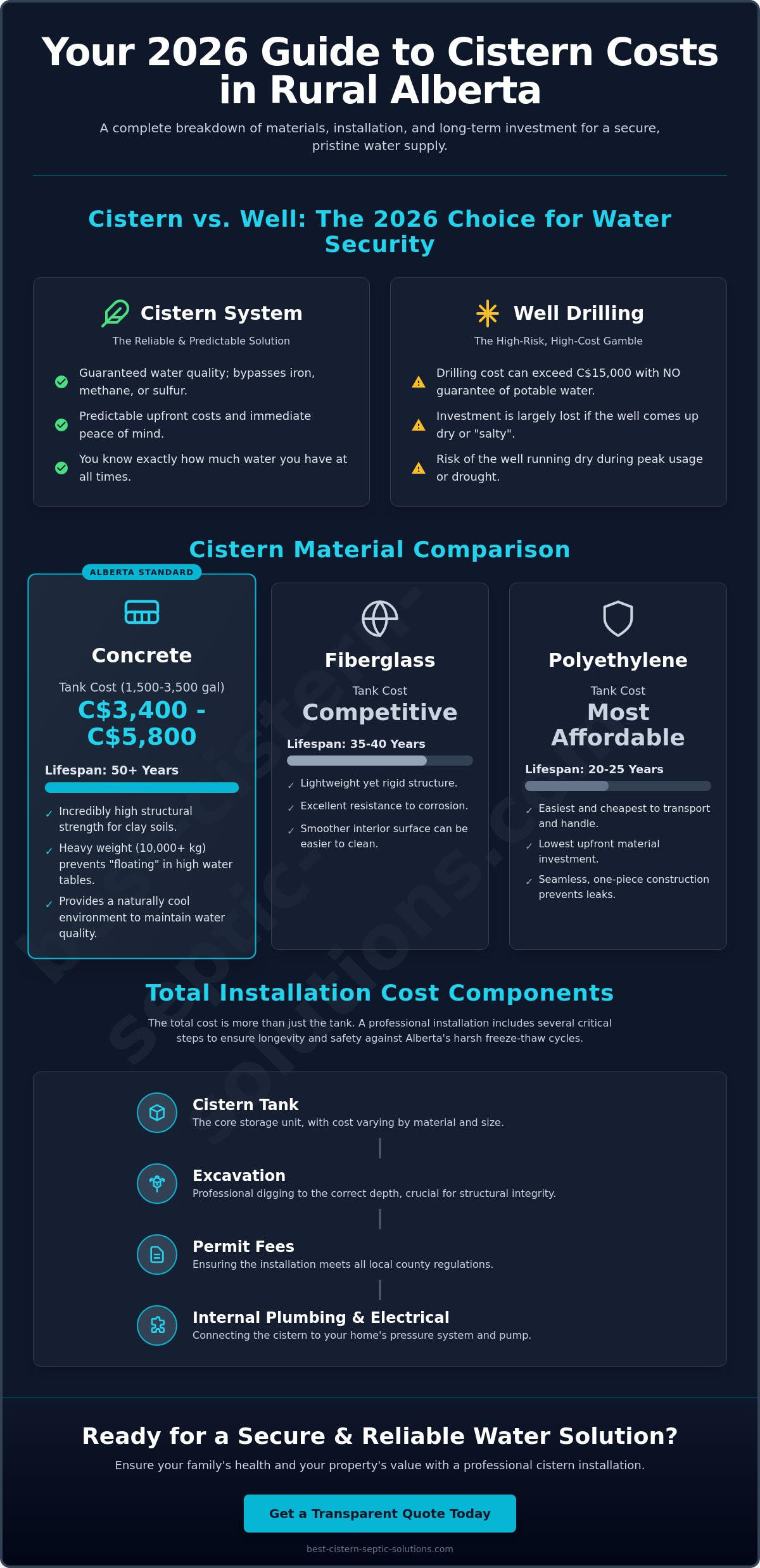
Evaluating water quality and yield risks is a primary concern for 2026 property buyers. Drilling a new well in Parkland County can cost upwards of C$15,000 with no guarantee of finding drinkable water. If the well comes up dry or "salty," that investment is largely lost. Choosing a cistern provides immediate peace of mind. You know exactly how much water you have at all times. For large families, this reliability is priceless. You don't have to worry about the well running dry during a long weekend with guests. While you'll pay for water delivery, the initial cistern cost alberta residents pay is often more stable and predictable than the uncertainty of deep-well drilling.
The Role of Potable Water Safety
Safety is the core of our business. Food-grade materials are non-negotiable for any cistern system we install. Lower-quality tanks can leach chemicals into your water or allow surface water contamination if the seals aren't airtight. A properly installed unit uses a heavy-duty, manhole-style lid to keep out insects, rodents, and runoff. Alberta standards for potable water storage require all tanks to be constructed from materials that meet NSF/ANSI 61 certification to ensure they're safe for human consumption. This protection ensures your family's health remains the top priority, safeguarding your home's most essential resource for decades to come.
Cistern Material Costs: Concrete, Fiberglass, and Poly
Selecting the right material is a foundational decision for your property's water security. Your choice impacts the total cistern cost alberta homeowners face, influencing both the upfront purchase and the long-term maintenance requirements. In regions like Sturgeon County, where soil composition varies from heavy clay to sandy loam, the material's structural integrity is paramount. Each material offers distinct advantages regarding longevity, installation ease, and environmental resilience.
- Concrete: 50+ year lifespan, high structural strength, best for high water tables.
- Fiberglass: 35 to 40 year lifespan, lightweight but rigid, excellent corrosion resistance.
- Polyethylene: 20 to 25 year lifespan, most affordable, easiest to transport.
Precast Concrete Cisterns: The Alberta Standard
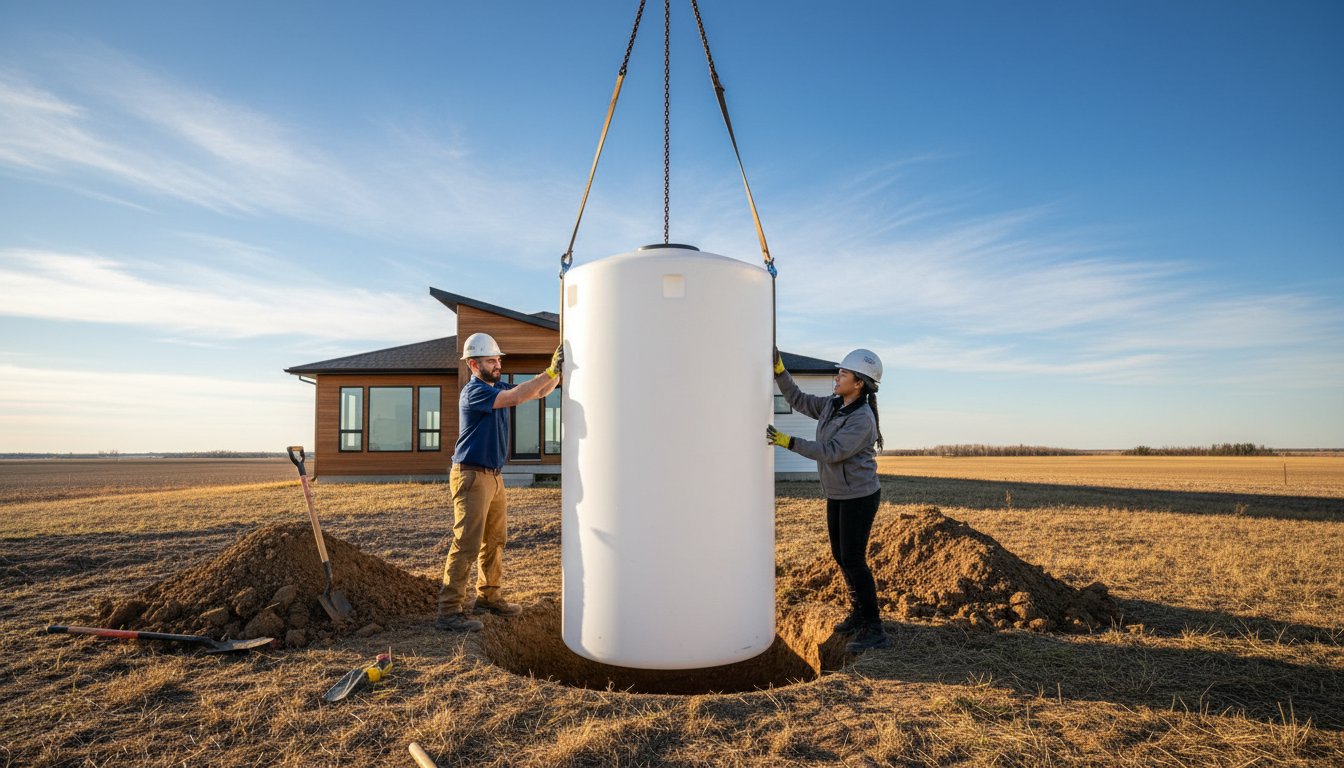
Concrete remains the most popular choice for potable water storage across the province. These tanks offer incredible structural strength, making them ideal for the shifting clay soils common in the Edmonton area. One major advantage is their weight. A 2,500-gallon concrete tank can weigh over 10,000 kg. This mass prevents the tank from "floating" or popping out of the ground when water tables rise during the spring thaw. Concrete also provides a naturally cool environment that helps maintain water quality.
For 2026, property owners should budget between C$3,400 and C$5,800 for standard residential concrete tanks in the 1,500 to 3,500-gallon range. While the material is durable, the weight requires heavy-duty crane trucks for delivery and specialized equipment for placement. Following Alberta's guidelines for private water systems ensures these heavy structures meet all sanitary requirements for long-term safety. This investment provides peace of mind, knowing the tank will not buckle under soil pressure.
Polyethylene (Plastic) and Fiberglass Options
Polyethylene and fiberglass tanks provide a lightweight alternative for rural properties with restricted access. These materials are easier to transport to remote sites where a massive concrete truck cannot safely travel. Fiberglass tanks are exceptionally durable and resistant to chemical breakdown. Polyethylene tanks are the most affordable entry point, though they require precise handling to ensure the integrity of the walls remains intact over time.
Installation is critical for these lighter materials. Without proper bedding and specific backfilling procedures, plastic tanks can collapse under soil pressure or shift during Alberta's intense freeze-thaw cycles. In 2026, high-quality fiberglass tanks in the 1,500 to 2,500-gallon range typically cost between C$4,800 and C$7,500. Polyethylene options are more budget-friendly, ranging from C$2,200 to C$4,600. Choosing the right material for your specific site helps protect your family's water supply for decades to come. Proper selection ensures your cistern cost alberta stays within budget while providing a reliable solution for your household needs.
Trickle Systems vs. Truck-Fill: Which is Right for You?
Choosing the right delivery model is a primary factor in determining the long-term cistern cost alberta homeowners must manage. The decision depends on your property’s existing infrastructure and your daily water demands. A truck-fill system relies entirely on external deliveries, while a trickle system uses a low-yield source to slowly fill a storage tank over 24 hours. Both methods provide a reliable solution for potable water, but they require different hardware and logistical planning.
Planning for Truck-Fill Delivery
Truck-fill models require a high-volume storage capacity, usually 2,000 gallons or more. This allows you to accept a full delivery from a water tender without leaving the tank nearly empty before the next visit. In the Edmonton Capital Region, standard delivery rates for a 2,000-gallon load generally fall between C$160 and C$260. You'll want to avoid "half-load" fees by sizing your tank to match local hauler capacities precisely. This ensures you get the most value out of every delivery fee you pay.
Driveway access is a critical logistical detail that many overlook. A fully loaded water tender weighs several tons; therefore, the path to your fill port must be stable and wide. If your driveway is too narrow or the ground is too soft, the truck cannot reach the fill port safely. This can lead to aborted delivery fees and a dry household. Ensuring a solid, wide path for these vehicles is a one-time investment that provides lasting peace of mind.
The Benefits of Trickle Storage
Trickle systems are ideal for properties with low-yield wells or restricted municipal lines. Instead of pulling water directly from a weak well, which can cause the pump to overheat or burn out, the water flows slowly into your cistern at a rate of 1 to 2 gallons per minute. This setup acts as a vital buffer. It protects your equipment and ensures you have a ready supply for high-demand periods like laundry day or morning showers. All installations must adhere to Alberta's Public Health Guidelines for Cisterns to maintain sanitary conditions for your family.
These systems require specific components like high-quality float valves and specialized control sensors. While these add to the initial setup expense, they prevent the catastrophic failure of your primary water source. Selecting the right hardware is essential for system longevity. You can find more detail on this in our guide to choosing the best cistern pump for rural properties.
Operating costs differ significantly between the two models. Truck-fill systems have higher monthly hauling fees but generally involve simpler mechanical setups. Trickle systems have lower water costs but require periodic inspections of the float valves and sensors to prevent overflows. We view both options as a vital investment in the health and safety of your home. A well-designed system ensures you never have to worry about the reliability of your water supply.
Total Installation Cost Breakdown for 2026
Understanding the total cistern cost alberta residents will pay in 2026 requires looking beyond the tank's sticker price. Real-world installation involves complex site logistics and precision engineering to ensure your water supply remains protected year-round. A functional system is a multi-layered investment in your property’s long-term health and autonomy.
Excavation and Winter Preparation
Excavation is the foundation of a reliable system. In Central Alberta, frost lines reach significant depths during the peak of winter. We bury tanks at least 8 feet deep to prevent freezing during -40°C stretches. Hiring an excavator in 2026 typically costs between C$150 and C$250 per hour. Mobilization fees for rural sites in areas like Parkland County often add a flat C$300 to C$600 to the total bill. If your site contains heavy clay or large rocks, expect the timeline to extend. You'll also need to decide if you want the excess soil hauled away or graded on-site. Disposal fees can add C$500 or more to your project budget depending on the volume of earth moved.
Pumps and Internal Components
The internal hardware determines your daily water pressure and quality. A standard submersible jet pump provides reliable service for most households. However, many 2026 builds now utilize variable demand pumps to maintain consistent pressure across multiple taps simultaneously. High-end filtration and UV sterilization systems typically range from C$1,200 to C$2,500. These systems remove sediment and neutralize bacteria, ensuring your family drinks pristine water. Integrating these components requires a skilled hand. Scheduling professional septic and cistern inspections during the setup phase prevents costly missteps and ensures your internal plumbing aligns with municipal codes.
Permits and Necessary Extras
Compliance is a non-negotiable part of the process. Permits in Strathcona County or Parkland County generally cost between C$150 and C$300 depending on the specific project scope. Don't overlook the "hidden" essentials that protect the integrity of the tank. A stable base requires roughly 5 to 10 tonnes of washed gravel bedding to prevent the system from shifting over time. Manhole extensions are also necessary to bring access ports to the surface for easy maintenance and cleaning. Finally, factor in C$1,000 to C$3,000 for landscaping restoration once the heavy machinery leaves your property. These finishing touches ensure your yard returns to its original state while your water system operates silently underground.
- Gravel Bedding: Essential for tank leveling and drainage.
- Manhole Extensions: Allows for safe, easy access for water deliveries and inspections.
- Pressure Tanks: Regulates the flow of water into your home's plumbing.
- Landscaping: Budget for sod, seed, or decorative rock to cover the disturbed area.
Calculating the full cistern cost alberta homeowners face means accounting for every pipe, permit, and hour of labor. When these elements are handled with professional care, the result is a seamless water delivery system that adds tangible value to your home.
Ready to secure your home's water future? Contact our specialists for a detailed installation quote today.
Protecting Your Investment: Maintenance and Longevity
A potable water system is a vital asset for any rural property. While the initial cistern cost alberta homeowners budget for is an important figure, the true value of the system is realized over decades of reliable service. Neglect is the primary enemy of water quality. Over time, fine particulates settle at the bottom of your tank, creating a layer of sediment. This organic matter can harbor bacterial growth and compromise the integrity of your pump and filtration components. By committing to a proactive maintenance schedule, you ensure your water remains pristine and extend the functional lifespan of your tank to 40 years or more.
Best Cistern Septic Solutions operates as your dedicated partner in home health. We focus on the invisible details that keep your system running smoothly. Our team understands that rural infrastructure can be a source of stress, so we provide a grounded, professional approach to every service call. We don't just fix problems; we provide lasting peace of mind by ensuring your family has access to safe, clean water every time a tap opens.
Cistern Cleaning and Sanitization
Effective maintenance involves a methodical process of draining, scrubbing, and shock-chlorinating the tank. Technicians remove every drop of water to access the floor and walls, physically scrubbing away biofilm and mineral deposits. After the physical cleaning, a calculated dose of chlorine is used to sanitize the entire interior surface. According to industry standards in Western Canada, professional cistern cleaning services generally range from C$350 to C$700, depending on the tank size and accessibility. You should watch for red flags like a "musty" odor, a change in water clarity, or a sudden increase in filter changes. These signs indicate that sediment levels have reached a critical point and require immediate professional attention.
The Value of Professional Installation
Choosing a "Solution-first" approach during the installation phase prevents the most common and expensive failures in rural water systems. DIY projects often overlook critical factors like soil compaction and proper venting, which can lead to structural tank failure or vacuum-related damage. Professional installation includes comprehensive warranty protection and ensures the system adheres to Alberta’s strict safety standards. Understanding the total cistern cost alberta residents face means recognizing that professional oversight prevents the C$12,000 expense of a premature system replacement. We prioritize the safety of your household by delivering a system that functions perfectly from day one. If you're ready to secure your home's water future, Contact us for a detailed cistern quote.
Secure Your Rural Water Future
Choosing the right potable water system is a vital investment in your property's health and your family's safety. Whether you select a durable concrete tank or a versatile poly system, understanding the cistern cost alberta homeowners encounter in 2026 helps you plan with total confidence. We've outlined how trickle systems and truck-fill options differ in utility, ensuring you find a fit for your specific daily needs. Proper maintenance protects this infrastructure, keeping your water pristine and your system functional for decades to come.
Best Cistern & Septic Solutions provides grounded, local advice for Parkland and Leduc County residents. Our team brings specialized expertise to both potable water storage and septic field installation across North Central Alberta. We handle the complex technicalities so you don't have to worry about the integrity of your home's infrastructure. Your property is a significant asset, and we're here to help you safeguard its longevity with professional, transparent service.
Get a Professional Cistern Installation Quote Today and take the first step toward a worry-free water supply. We look forward to helping you build a reliable solution for your home.
Frequently Asked Questions
How much does a 2,000-gallon cistern cost to install in Alberta?
According to 2024 industry benchmarks for rural Alberta, a 2,000-gallon potable water system typically costs between C$8,000 and C$12,000 for a full professional installation. This range includes the tank price, excavation, and all necessary plumbing connections. Your final cistern cost alberta investment depends on site accessibility and the specific tank material you choose for your property.
Do I need a permit to install a water cistern on my property?
Yes, you must obtain a plumbing permit and potentially a development permit through your local municipality or a private agency like Superior Safety Codes. Alberta’s Safety Codes Act requires these inspections to ensure your potable water system meets provincial health and safety standards. Securing these documents protects your home's integrity and ensures your installation is legally compliant from day one.
How often do I need to have my cistern cleaned and disinfected?
Alberta Health Services recommends a professional cleaning and disinfection at least once every 12 months to maintain water quality. Sediment naturally accumulates on the tank floor over 365 days, which can compromise your filtration system and pump. Annual maintenance prevents bacterial growth and ensures your family has access to a pristine, sanitary water supply throughout the year.
Which is better for Alberta soil: a concrete or plastic cistern?
Concrete cisterns are generally superior for Alberta's heavy clay soils because their weight resists the floating effect caused by high water tables. While high-density polyethylene tanks are easier to transport, concrete provides 40 to 50 years of structural longevity. Choosing a reinforced concrete tank safeguards your system against the shifting soil pressures common in our prairie landscape.
Can I use a cistern for both my house and my garden/livestock?
You can use a single cistern for multiple purposes, provided the tank capacity meets your total daily demand. A typical Alberta household uses 225 to 350 litres per person daily, so you must add your livestock or irrigation needs to this baseline. We recommend installing a dual-outlet system to prioritize indoor potable water while managing your outdoor agricultural requirements efficiently.
How deep should a cistern be buried to prevent freezing in Parkland County?
In Parkland County, you must bury your cistern and water lines at least 8 to 10 feet below the surface to stay below the frost line. Ground temperatures in central Alberta can drop significantly during January and February, risking pipe bursts and system failure. Proper burial depth is a vital investment in your home's health that prevents expensive winter repairs.
What is the average cost of water delivery for a cistern in the Edmonton area?
Water delivery rates in the Edmonton region currently range from C$150 to C$250 per 2,000-gallon load, depending on your distance from the municipal fill station. Many rural residents schedule monthly deliveries to maintain a consistent supply for their households. Understanding these recurring expenses is a key part of calculating your total cistern cost alberta over the long term.
How long does a professional cistern installation take?
A standard professional installation usually takes 2 to 3 business days from initial excavation to final backfilling. The first day focuses on site preparation and tank placement, while the second day involves plumbing connections and pressure testing. This methodical approach ensures your system's integrity and provides a reliable, long-term solution for your household's water storage needs.


