Imagine waking up on a -35°C morning in January only to find your taps dry because an overlooked soil pressure calculation led to a structural failure. For families in Parkland County, the integrity of your water supply is a vital investment in your home’s health, which is why a proper cistern installation is so critical. You already know that our North Central Alberta climate demands more than a standard setup; it requires a system built to survive shifting clay and deep frost lines without compromising safety.
This guide empowers you to master the process of a professional water storage setup tailored for our unique local conditions. We provide a clear path to achieving a reliable, year-round potable water supply that fully complies with the latest 2026 Alberta safety codes. You will learn how to select the right materials, manage soil pressure effectively, and ensure your system remains a pristine source of water for decades to come.
Key Takeaways
- Understand why a professional site assessment is the most critical step in safeguarding your water supply against Parkland County’s unique environmental challenges.
- Compare the durability of precast concrete and high-density polyethylene (HDPE) to determine which material offers the best structural integrity for Alberta’s clay-heavy soil.
- Master the technical requirements of a professional cistern installation, including the excavation depths needed to protect your system from the 8-foot frost line.
- Navigate the Alberta Safety Codes Act with confidence by learning the specific regulations that ensure your private water storage is both legal and safe.
- Learn how to implement a "clean and shock" maintenance routine as a proactive investment in your family’s health and the longevity of your potable water system.
Planning Your Cistern Installation in Parkland County
A cistern serves as a professional-grade potable water storage solution for rural properties where well water is either unavailable or unsuitable for consumption. To gain a foundational understanding of these systems, you can explore this overview of What is a Cistern? and how they have evolved. In Parkland County, a successful cistern installation begins with a rigorous site assessment. North Central Alberta's geography presents specific challenges, from heavy clay soils to deep frost lines, making the initial evaluation the most critical step in the process. We focus on these details early to provide you with long-term peace of mind.
Choosing the right spot for your tank involves more than just finding an empty patch of grass. Local soil testing is a mandatory part of our process to prevent future tank shifting or floating. High water tables in the spring can exert immense pressure on an empty tank, potentially dislodging it if the site isn't prepared correctly. We look for stable ground that guarantees the structural integrity of your water system for the next 30 years. This proactive approach ensures your home remains a safe, functional environment regardless of the season.
Determining Your Water Storage Needs
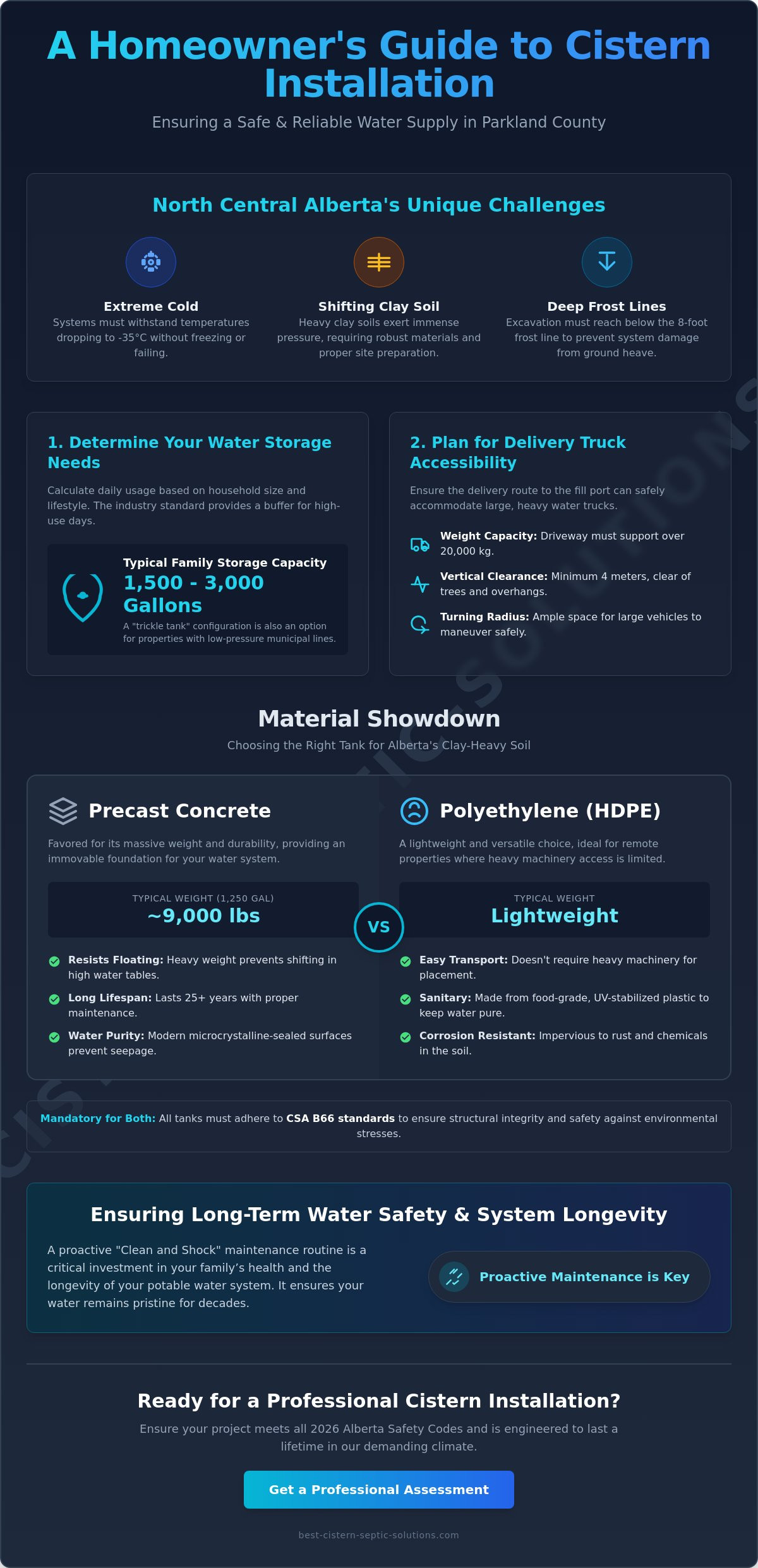
We help you calculate daily usage based on your household size and specific rural lifestyle requirements. For most Alberta families, a storage capacity between 1,500 and 3,000 gallons is the industry standard. This range provides a comfortable buffer for high-use days while ensuring the water stays fresh. In areas like Leduc, many homeowners utilize a "trickle tank" configuration. This system works with low-pressure municipal lines, slowly filling the cistern to ensure you always have high-pressure potable water available for showers and appliances whenever you need it.
Site Selection and Accessibility
The ideal location for your tank minimizes the distance to your home. Keeping this run short reduces plumbing friction and prevents significant heat loss during winter temperatures that often drop below -30°C. You must also account for the heavy water delivery trucks that service Sturgeon and Strathcona Counties. Consider these primary requirements for your delivery route:
- Weight Capacity: The driveway must support trucks weighing over 20,000 kg without cracking or sinking.
- Vertical Clearance: Trees and overhangs must be cleared to a minimum of 4 meters to avoid vehicle damage.
- Turning Radius: Large delivery vehicles need ample space to maneuver safely near the fill port.
Potable water integrity is the primary goal of site selection, ensuring your drinking water remains protected from environmental contaminants and external pressure. This methodical planning transforms a necessary utility into a reliable investment in your home's health. By addressing these logistics during the planning phase, we remove the stress of future maintenance and delivery issues.
Selecting Materials: Concrete vs. Polyethylene for Alberta Soils
Selecting the right material is the most vital step in a successful cistern installation. Parkland County homeowners typically choose between precast concrete and high-density polyethylene (HDPE). Each material reacts differently to the heavy clay soils common in the region. To ensure long-term safety, every tank must adhere to CSA B66 standards. This certification confirms the tank can handle the structural loads and environmental stresses of the Alberta climate. It gives you peace of mind that your water supply is protected from external contaminants and structural failure.
The Case for Precast Concrete
Concrete tanks are favored for their durability and massive weight. A typical 1,250-gallon precast unit weighs roughly 9,000 pounds. This weight is essential in areas with high water tables, as it prevents the tank from shifting or "floating" during heavy rain or spring snowmelt. Modern concrete tanks utilize microcrystalline-sealed surfaces to prevent seepage. These units often last 25 years or more when properly maintained. They provide a stable, immovable foundation for your home's water system, especially in the uneven terrain of Strathcona County where soil stability varies.
The Case for Polyethylene Tanks
Polyethylene tanks are a versatile choice for remote North Central Alberta properties. Because they are lightweight, they don't require heavy machinery for transport or placement. These tanks are manufactured from food-grade, UV-stabilized plastic, ensuring your potable water stays sanitary and free of contaminants. The key to a successful plastic tank installation is the backfill. Without a firm envelope of gravel, the surrounding clay soil can squeeze and deform the tank walls. When installed correctly, HDPE offers excellent chemical resistance and a long service life that rivals traditional materials.
Choosing the right material depends on your specific site and budget requirements. Consider these factors before making your final decision:
- Concrete: Best for high water tables and maximum structural longevity.
- Polyethylene: Ideal for hard-to-reach locations and budget-conscious projects.
- Soil Type: Heavy clay requires extra care during the cistern installation process to manage external pressure.
- Lifespan: Concrete generally offers a longer service life in aggressive soil conditions.
Investing in the right material today prevents expensive repairs tomorrow. If you're unsure which tank fits your property, our team provides expert onsite consultations to help you decide.
The Step-by-Step Cistern Installation Process
A successful cistern installation begins with precision digging and a deep understanding of local geography. In Parkland County, we must account for the deep Alberta frost line. This typically requires burying the tank with at least 2.4 metres of soil cover to protect your water supply from freezing during the harshest winters. This depth ensures your family has access to liquid, potable water even when temperatures drop below -30°C. Our team focuses on every centimetre of the excavation to guarantee the long-term safety of your home's water storage.
Excavation and Bedding Fundamentals
We require a 15-centimetre minimum bedding of compacted sand or 10mm washed gravel to create a level foundation. This layer prevents the tank from shifting or settling unevenly over time, which could cause stress fractures in the hull. Our crew ensures an over-dig allowance of at least 45 to 60 centimetres on all sides. This extra space allows for safe sidewall and end-wall compaction. We recommend using 10mm to 20mm pea gravel for the base because it offers superior drainage and won't shift like loose topsoil or clay. Using the right materials at this stage is an investment in the longevity of the system.
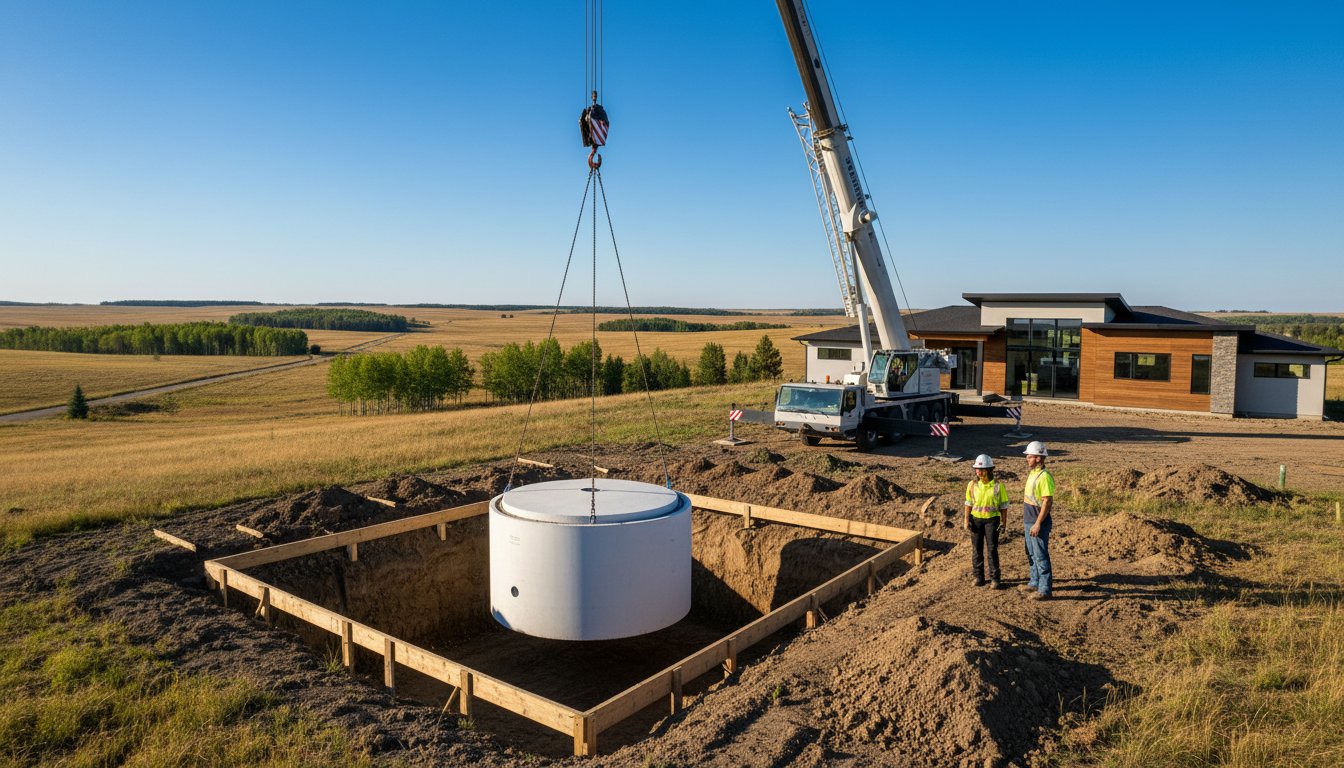
Lowering a heavy tank into the ground requires a professional crane or backhoe operator. It's a high-stakes moment where safety and precision are the primary concerns. Once the tank is perfectly level, the backfilling process begins. For plastic or polyethylene tanks, we use a specific fill-as-you-go method. We add water to the tank in 30-centimetre increments while simultaneously adding backfill around the exterior. This technique equalizes the internal and external pressure, preventing the walls from bowing or collapsing under the weight of the earth.
Plumbing and Pumping Integration
Integrating a high-quality cistern pump is the next critical step to ensure reliable house pressure. We connect the main supply line using a threaded brass outlet. Brass is the preferred material because it resists corrosion and maintains a sanitary, leak-proof connection for decades. We also install a dedicated venting system that extends above the ground surface. This vent allows air to move freely, preventing a vacuum from forming as water is drawn out. Proper venting protects your pump from burnout and ensures the tank remains structurally sound during heavy usage.
- Excavation: Digging to a depth of 2.4 metres to bypass the frost line.
- Bedding: 15 centimetres of 10mm washed gravel for a stable base.
- Pressure Control: The fill-as-you-go method protects plastic tank integrity.
- Connections: Using brass fittings to ensure a pristine, long-lasting seal.
Following these steps ensures your cistern installation provides a worry-free water source for your rural property. By focusing on mechanical integrity and local environmental needs, we turn a complex technical process into a reliable solution for your household.
Navigating Alberta Regulations and Frost Protection
Compliance with the Alberta Safety Codes Act ensures your water system remains safe and legally sound. For a successful cistern installation in Parkland County, the tank must sit below the 8-foot frost line. This depth prevents the water from freezing during the harsh winters common in the Alberta prairies. A professional cistern installation requires more than just digging a hole; it demands precise engineering to handle soil pressure and temperature shifts. We utilize ultra-rib plastic risers and insulated manhole extensions to create a thermal break between the surface air and the stored water. If your property connects to a municipal trickle system, Alberta regulations require a certified backflow prevention device. This safeguard prevents your stored water from re-entering the public supply, maintaining the integrity of the local infrastructure.
Winterization and Thermal Protection
Protecting your investment requires a proactive approach to thermal management. We apply 2 to 4 inches of rigid extruded polystyrene foam insulation over the tank roof and around the neck. This layer acts as a barrier against the deep cold. The supply line running from the tank to your home must also stay below the frost line or be equipped with self-regulating heat tape. During an extreme -40°C cold snap, monitoring your water temperature provides peace of mind. A simple remote sensor allows you to track thermal stability without opening the access hatch and losing valuable heat. These steps ensure your family has access to pristine water regardless of the temperature outside. It's a simple way to avoid the stress of a frozen line.
Permitting and Compliance in Leduc and Sturgeon Counties
Securing a rural water storage permit involves submitting a detailed site plan, a plumbing permit application, and proof of tank certification. Working with a Certified Installer is essential because they understand the nuances of the Alberta Private Sewage and Water codes. These professionals handle the heavy lifting of compliance, ensuring your project meets every provincial standard for safety and sanitation. This oversight prevents costly mistakes that could lead to system failure or legal issues later. For homeowners looking at their property’s systems as a whole, it’s helpful to review our septic systems guide to understand how water storage and wastewater management work together. Proper documentation and professional oversight protect your home’s value and guarantee long-term system performance. It's about building a foundation that lasts for decades.
Ensuring Long-Term Water Safety and System Longevity
Proactive maintenance is a direct investment in your family's health. Once a cistern installation is complete, the system becomes an invisible part of your daily routine. However, falling into the "out of sight, out of mind" trap leads to sediment buildup and potential contamination. Professional monitoring ensures that your potable water remains pristine and your infrastructure stays intact for decades. It's about more than just fixing leaks; it's about maintaining a sanitary environment for every drop of water your household consumes.
When your tank is first commissioned or if a water test shows bacterial presence, you must perform a "clean and shock" procedure. This involves a methodical scrubbing of the interior walls followed by a calculated dose of chlorine to eliminate pathogens. Alberta Health Services provides specific guidelines for this process to safeguard the system's sanitary integrity. By treating the tank as a food-grade storage environment, you prevent the development of harmful biofilms that can compromise your home's water quality.
Cleaning and Sanitization Schedule
Homeowners should schedule a professional inspection every 12 months. A deep cleaning cycle typically occurs every three years to remove the fine layer of sediment that naturally settles at the bottom of the tank. You might notice your water looks slightly cloudy or carries a faint earthy odor. These are clear signs that bacterial growth is present. For domestic water sanitization in rural Alberta, we use specific concentrations of chlorine that effectively kill microbes without damaging the tank's structure or leaving a permanent chemical taste.
Protecting the System Integrity
The area above your buried tank requires strict management to prevent structural damage. You must never plant trees near the site, as aggressive root systems can pierce the tank walls or shift the intake plumbing. Likewise, driving heavy machinery or parking vehicles over the burial site can cause structural failure under the weight. Maintaining the proper grade around the manhole is equally vital. The soil should slope away from the opening at a minimum 2 percent grade. This ensures surface water sheds away, preventing contaminated runoff from entering through the manhole seal.
A secure manhole seal acts as the final line of defense against insects and groundwater ingress. If you notice cracks in the lid or soil erosion around the riser, it's time for a professional assessment. You can Contact Best Cistern Septic Solutions for expert installation in Parkland County to ensure your water storage system remains a reliable, safe asset for your property. We focus on providing the technical expertise you need so you can enjoy the peace of mind that comes with a secure water supply.
Securing Your Parkland County Water Future
Investing in a reliable water supply is a vital step for your property's long-term health. Selecting the right materials, such as high-density polyethylene or precast concrete, ensures your system withstands Alberta's heavy clay soils and extreme temperature shifts. A professional cistern installation focuses on meticulous planning, from maintaining proper burial depths for frost protection to following the Alberta Private Sewage Systems Standard of Practice. These technical steps safeguard your household's potable water and prevent structural damage caused by seasonal ground shifting.
Best Cistern & Septic Solutions brings specialized expertise to every project in Parkland, Leduc, and Sturgeon Counties. Our certified installers provide comprehensive solutions that cover both water storage and septic system integrity. We take pride in performing these difficult tasks with precision, allowing you to focus on your family while we handle the technical details of your home's infrastructure. It's about more than just a tank; it's about providing a permanent resolution for your water needs.
Book Your Professional Cistern Installation Site Assessment
Your home deserves a system built to last through every Alberta winter.
Frequently Asked Questions
How much does it cost to install a cistern in Alberta?
A professional cistern installation in Alberta typically ranges from C$8,000 to C$15,000 depending on tank size and site conditions. These figures reflect 2026 market rates for high-density polyethylene or precast concrete systems. Your total investment covers the tank, excavation, and necessary plumbing connections to safeguard your home’s water security. Investing in a quality system now prevents the high costs of emergency water hauling or system failure later.
How deep should a cistern be buried in Parkland County to avoid freezing?
You should bury your cistern with at least 8 to 10 feet of soil cover to protect against Alberta’s deep frost. Parkland County winters often see the frost line reach depths of 7 feet, so extra depth or specialized R-20 insulation boards are necessary. Proper burial depth ensures your water supply remains liquid and your tank maintains its structural integrity throughout the coldest months of the year.
Can I use a cistern for both drinking water and household use?
You can use a cistern for both drinking and household use if you install a tank certified for potable water. These tanks must meet NSF/ANSI Standard 61 to ensure no chemicals leach into your supply. We recommend a multi-stage filtration system and UV sterilizer to keep your water pristine and safe for your family. This setup provides a complete water solution for rural properties without reliable well access.
How often does a cistern need to be cleaned in rural Alberta?
Most rural Alberta homeowners should schedule a professional cleaning every 3 to 5 years to remove accumulated sediment. If you notice a change in water taste or see more than 2 inches of buildup at the bottom, you'll need service sooner. Regular maintenance protects your pump and filtration components from premature wear, ensuring your system operates efficiently for decades while maintaining water purity.
Do I need a permit for cistern installation in Leduc County?
Yes, you need a plumbing permit for a cistern installation in Leduc County under the Alberta Safety Codes Act. You must submit a detailed site plan and ensure the installation meets the 2021 Alberta Private Sewage Systems Standard of Practice where applicable. Obtaining the correct permits protects your property value and confirms that your water storage system meets all provincial safety and sanitation requirements.
What is the difference between a cistern and a holding tank?
The primary difference is the type of liquid they store. A cistern holds clean, potable water for household use, while a holding tank stores wastewater and sewage before it's hauled away. Cisterns require high-grade food-safe materials and strict sanitization protocols. Holding tanks are built for heavy-duty containment of effluent and require different venting and structural considerations to prevent environmental contamination.
How long does a concrete cistern last compared to plastic?
A precast concrete cistern typically lasts 40 to 50 years, while high-quality plastic tanks usually have a lifespan of 20 to 30 years. Concrete offers superior weight and resistance to ground shifting, which is common in Alberta’s clay soils. Plastic tanks are easier to transport and resist chemical corrosion better. Both options provide a reliable solution for your home when installed correctly by a specialist.
Can a cistern be installed in the winter in North Central Alberta?
You can install a cistern in the winter in North Central Alberta, though it requires specialized equipment like ground heaters or hydrovac units. Frost can penetrate the soil up to 7 feet by February, which makes traditional excavation difficult. While winter work involves higher labor costs due to these conditions, it's a viable option if your current system fails and you need an immediate water storage solution.


