
In North Central Alberta, cisterns are far more than simple storage tanks; they're critical, engineered lifelines that protect your family's health and your property's value. You likely moved to Parkland County for the peace of rural living, but you shouldn't have to sacrifice water security to enjoy it. Whether you're facing an unreliable well or managing the $6.29/m³ bulk water rates at the Acheson Pump house, the stress of water scarcity is a burden no homeowner wants. It's frustrating to handle complex utility regulations while worrying about the integrity and safety of your potable supply.
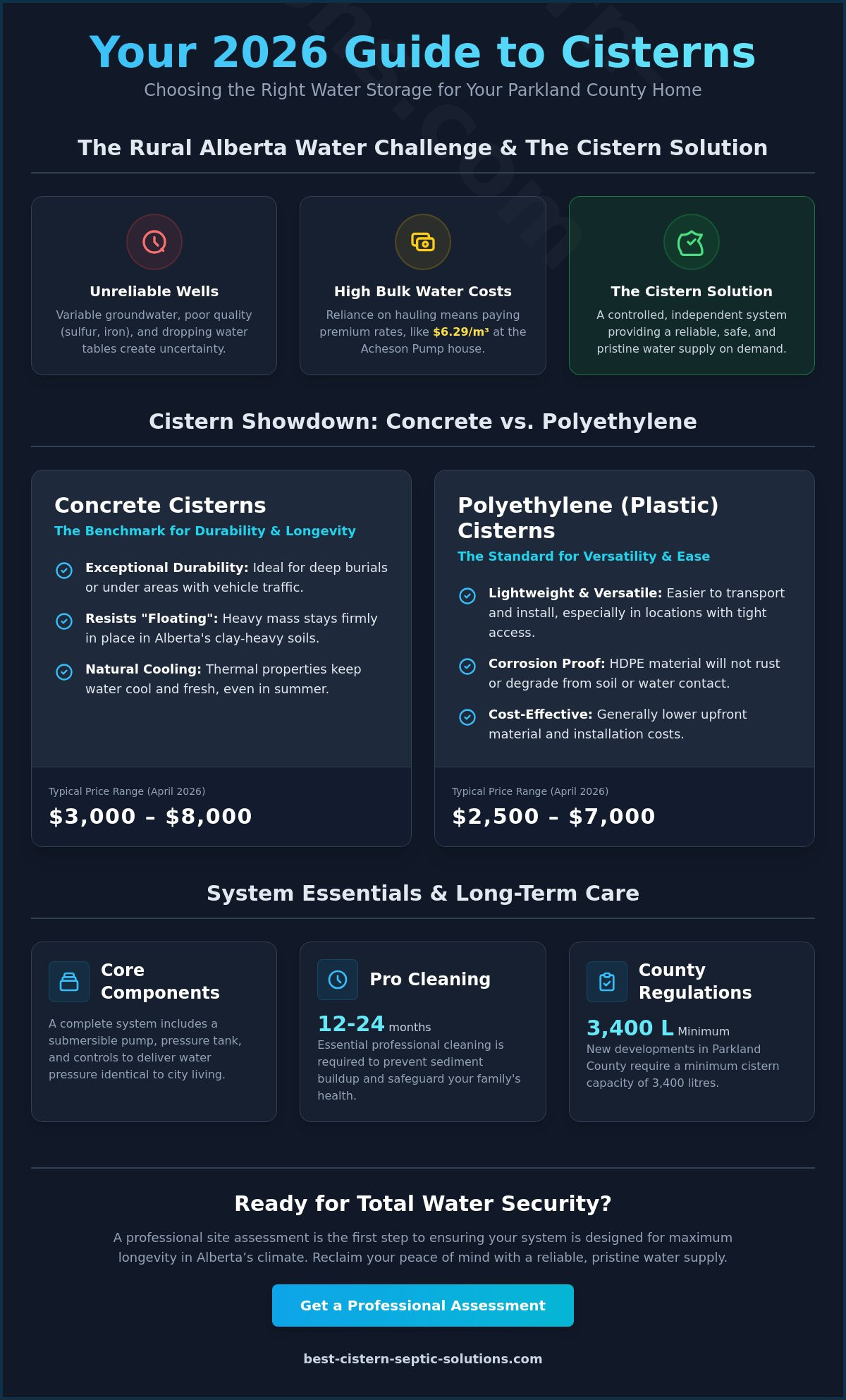
This 2026 guide helps you reclaim that peace of mind by showing how a professionally installed system provides a reliable, safe, and pristine water supply for your home. You'll discover how to choose between concrete and polyethylene options, understand the 3,400-litre minimum capacity requirements for new developments, and learn the essential maintenance steps that ensure your system withstands our harsh climate. We'll break down the latest costs and provincial regulations so you can make an informed investment in your home's long-term health.
Key Takeaways
- Understand how sub-grade cisterns provide a reliable, pristine water supply that remains completely independent of unpredictable local groundwater quality.
- Compare the durability of concrete and polyethylene tanks to make an informed investment in your rural property’s infrastructure and resale value.
- Identify the essential mechanical components, such as pumps and pressure tanks, that ensure consistent water pressure and system integrity.
- Learn why a professional cleaning every 12 to 24 months is a necessary step to safeguard your household’s health and prevent sediment buildup.
- Discover the critical role of professional site assessments in Parkland County to ensure your system is designed for maximum longevity in Alberta’s climate.
What are Cisterns? Reliable Water Storage for Parkland County Homes
A cistern is a waterproof, sub-grade receptacle specifically designed for the safe storage of potable water. Unlike a rain barrel or a pond, these systems are engineered to maintain the sanitary integrity of your drinking supply. For many residents in Parkland County, cisterns represent a shift from hoping for water to having it on demand. While a well draws directly from the local aquifer, a cistern is a controlled environment. It's an independent system that doesn't care if the local water table is dropping or if the neighbor's well has run dry. For homeowners who want to understand more about What is a Cistern and its historical role in water management, it's clear that modern engineering has turned these ancient concepts into high-performance household assets.
In regions like Leduc and Sturgeon County, where well production can be unpredictable or the water quality is poor, a cistern is the gold standard for residential utility. We often see homeowners surprised by the quality of life these systems provide. With a properly sized pump and pressure tank, your daily water experience is identical to city living. You can run the dishwasher, take a high-pressure shower, and water your garden simultaneously without worrying about a well pump burning out or your taps sputtering air.
Cisterns vs. Wells: Choosing Your Water Source
The primary difference between these two sources is reliability. Alberta's groundwater is notoriously variable; one property might have a high-yield well, while the neighbor 500 meters away struggles with high sulfur, iron, or manganese levels. Choosing a cistern removes this geological lottery from your life. It provides total peace of mind regarding water purity because you control exactly what enters the tank. Additionally, for properties with low-yield wells, we often install cisterns as "trickle systems." The well slowly fills the tank over 24 hours, and the cistern acts as a buffer to handle your family’s peak usage periods without stress.
Why Alberta Rural Properties Rely on Stored Water
The rural outskirts of the Edmonton Capital Region face specific geographic challenges. Recent drought cycles have highlighted the vulnerability of shallow wells. When the water table drops, a cistern remains a consistent solution, especially when paired with a reliable hauling service. Managing your water intake is only one part of the equation. Just as you need a reliable way to bring water in, understanding septic systems in Parkland County is essential for managing how that water leaves your home. Together, these systems form the backbone of a healthy, functional rural property.
Types of Potable Water Cisterns: Concrete vs. Polyethylene
Choosing the right material for your water storage is a long-term investment in your home's infrastructure and future resale value. In North Central Alberta, we primarily work with two materials: pre-cast concrete and high-density polyethylene (HDPE). Both options must meet strict FDA and provincial standards to ensure they're safe for potable water. While the tank itself is the primary focus, the nuances of cistern installation vary significantly between these two materials. Selecting the wrong type for your specific soil conditions can lead to structural issues or contamination risks that are expensive to rectify later.
Concrete Cisterns: Durability and Longevity
Heavy-duty concrete remains a top choice for Parkland County homeowners who prioritize structural integrity. These tanks are exceptionally durable and are the preferred option for deep burials or areas where vehicles might drive nearby. A significant advantage of concrete is its mass. In the clay-heavy soils of Strathcona County, lighter tanks can sometimes "float" or shift when the water table rises; concrete’s weight keeps it firmly in place. Additionally, concrete has natural thermal properties that keep your water supply cool and fresh even during the peak of an Alberta summer. As of April 2026, the price range for concrete cisterns in Alberta typically falls between $3,000 and $8,000, depending on the capacity and local delivery requirements.
Plastic (Poly) Cisterns: Versatility and Ease
High-density polyethylene (HDPE) tanks offer a seamless, corrosion-proof alternative that is increasingly popular for modern rural builds. These tanks are manufactured using FDA-approved resins, ensuring that no chemicals leach into your drinking water. Poly tanks are significantly lighter than concrete, making them the ideal solution for remote sites or properties where heavy equipment access is restricted. When choosing a poly tank, it's vital to ensure it includes UV inhibitors to prevent degradation if any part of the system is exposed to sunlight during the setup phase. Retailers like UFA provide a variety of sizes, with current 2026 pricing reflecting their portability and ease of handling. These cisterns are easy to clean and provide a smooth interior surface that resists sediment buildup over time.
If you're unsure which material best suits your property's unique soil composition, our team at Best Cistern Septic Solutions can perform a detailed site assessment to help you make the most secure choice for your family's water needs.
Essential Components of a Functional Cistern System
A successful installation involves more than just burying a tank; it requires a carefully integrated system of mechanical components. While the choice between concrete or poly cisterns provides the foundation, the mechanical heart of the home dictates your daily water experience. We refer to the "potable water envelope" as the sealed, sanitary environment that protects your water from the moment of delivery until it flows from your tap. This envelope relies on high-quality seals, screened vents for pressure equalization, and secure access manholes. These manholes must be positioned above grade to prevent surface water runoff from entering the system, ensuring that your stored supply remains sanitary and safe for consumption.
The reliability of your system depends on how these parts work together. If a single seal fails or a vent becomes clogged, the integrity of your entire water supply is at risk. By viewing the setup as a complete engineered solution rather than just a storage container, you ensure the long-term health of your household infrastructure. This proactive approach to system design prevents the stress of emergency repairs and guarantees a consistent flow of water for your family's needs.
Selecting High-Performance Cistern Pumps
The pump acts as the engine of your household utility. Choosing between a submersible pump and a jet pump depends on your property's layout and your preference for noise levels. Submersible models sit quietly inside the tank and push water toward the house, while jet pumps typically reside in a basement or utility room. For a modern home, we recommend constant pressure valves or variable demand pumps. These components ensure that your shower pressure doesn't drop when someone starts the laundry or flushes a toilet. For technical specifications on these units, consult our guide on choosing the best cistern pump.
Filtration and Potable Water Safety Standards
Maintaining water safety requires a multi-stage approach to filtration. Even though bulk water from the Acheson Pump house is treated, fine sediment can still settle at the bottom of your tank over time. We install micron-level filters to catch these particles before they reach your fixtures. To provide ultimate peace of mind, many Parkland County homeowners now include UV sterilizers in their setup. These systems use ultraviolet light to neutralize 99.9% of bacteria and viruses, ensuring your water remains pristine. Finally, backflow prevention devices are a non-negotiable component. They act as a one-way gate, protecting your home's internal plumbing from potential contamination and ensuring the integrity of your entire water supply.
Maintaining Your Cistern in North Central Alberta’s Climate
Proper maintenance of cisterns isn't just a household chore; it's a vital investment in your family’s health and the longevity of your home’s infrastructure. Even when you use the highest quality water hauling services, sediment buildup is an inevitable byproduct of long-term storage. Fine minerals and microscopic particles eventually settle at the bottom of the tank, creating a layer that can compromise water clarity and harbor bacteria over time. We recommend a professional cleaning and sanitary inspection at least once every 12 to 24 months to maintain the pristine quality of your supply. This proactive approach ensures that your potable water envelope remains secure and your system functions at peak efficiency.
A "Trusted Specialist" approach to maintenance moves beyond a simple rinse. It involves a methodical evaluation of every mechanical and structural component. By identifying minor wear before it leads to a system failure, you avoid the high cost of emergency water hauling and the stress of an unexpected outage. Our goal is to provide you with a reliable system that operates silently in the background, giving you total peace of mind regarding your water purity.
Seasonal Cleaning and Inspection Protocols
The cleaning process begins by safely draining the tank to access the interior surfaces. We scrub the walls to remove biofilm and mineral deposits before performing a thorough chlorination to sterilize the environment. During this time, we conduct a critical integrity check to look for hairline cracks or seal degradation. In the clay soils of Parkland County, preventing groundwater seepage is essential to avoid contamination. We also inspect the high-level alarm system and float switches. Ensuring these electronic components are responsive prevents the frustration of running out of water during a busy weekend.
Winterizing Your Water Storage System
Alberta’s climate demands specific engineering to prevent freeze-ups. To stay protected, cisterns must be buried below the local frost line, which typically reaches depths of 7 to 8 feet in the Edmonton Capital Region. If your site conditions require a shallower burial, we utilize industrial-grade heat tape and insulated mounds to safeguard the lines. The access lid is a frequent point of thermal loss. On a -30°C night, an uninsulated or poorly sealed lid can allow frost to penetrate the tank, potentially damaging the pump or pressure sensors. We ensure every lid is airtight and properly insulated to withstand the harshest winter cycles.
If your system hasn't been serviced in the last two years, you can schedule a professional cistern inspection to ensure your water remains safe and your system stays reliable throughout the changing seasons.
Professional Cistern Installation in the Edmonton Capital Region
Professional installation is the bridge between purchasing a storage tank and owning a reliable, lifelong utility. It's a process that requires far more than just a backhoe and an open patch of ground. We approach every project as a precision engineering task designed for decades of service. In Parkland and Sturgeon Counties, the soil conditions vary wildly, from sandy patches to heavy, expansive clay. A thorough site assessment is the first step to ensure your investment remains stable and secure. We also look at how your water supply interacts with other infrastructure, such as your septic field installation, to ensure both systems function safely without interference or contamination risks.
Viewing cisterns as a permanent utility upgrade changes how you value the installation process. It isn't just about placing a tank; it’s about creating a sealed, high-pressure environment that mirrors the convenience of a municipal connection. When done correctly, this system adds significant resale value to your rural property by proving to future buyers that the home has a sophisticated and secure water source.
Site Assessment and Excavation Requirements
Soil matters. We conduct compaction tests to ensure the ground can support the weight of a full tank without shifting. For context, a standard 3,400-litre tank weighs several tons when full. Without proper bedding, such as six inches of leveled sand or pea gravel, the pressure from Alberta's heavy clay can cause tanks to shift or lines to shear. We also plan for truck accessibility. Many water haulers in Alberta carry between 9,000 and 13,500 litres. Your installation site must allow these heavy vehicles to approach safely without crushing underground lines or the tank itself.
Why Local Expertise Matters for Sturgeon and Strathcona Counties
Local knowledge is your best defense against project delays and mechanical failures. We understand the specific municipal bylaws and permit requirements that govern rural utilities in the Edmonton Capital Region. This expertise ensures your system is compliant from day one. Beyond the initial setup, having a local partner means you aren't left waiting during an emergency. Whether you need a rapid pump replacement or a mid-winter repair, we're positioned to respond quickly. Best Cistern Septic Solutions provides more than just hardware; we provide the definitive solution for a worry-free home. We take pride in performing these essential tasks with a level of care that safeguards your property and your family's health for years to come.
Investing in Your Home’s Water Security
Your rural property deserves a water system that works as hard as you do. We've explored how high-quality cisterns provide a reliable, sanitary alternative to the unpredictable nature of Alberta's groundwater. From choosing between durable concrete and versatile polyethylene to ensuring your mechanical components are winterized for -30°C nights, every decision you make is an investment in your home's longevity. Maintaining the integrity of your potable water envelope through professional cleanings every 12 to 24 months safeguards your family’s health and prevents the stress of emergency repairs.
As potable water safety specialists serving Parkland, Leduc, and Sturgeon Counties, we take pride in being grounded, professional rural infrastructure experts. You don't have to navigate the complexities of water storage or municipal regulations on your own. We're here to provide the proactive partnership and technical expertise your property requires. Secure your family's water future with a professional cistern consultation. We look forward to providing a reliable solution that brings you total peace of mind for years to come.
Frequently Asked Questions
What is a cistern and how does it differ from a rain barrel?
A cistern is a waterproof, sub-grade receptacle designed specifically for the storage of potable drinking water. Unlike a rain barrel, which sits above ground and collects untreated runoff for gardening, a cistern is a sealed environment integrated into your home's pressurized plumbing. It protects your water from contaminants, algae growth, and temperature extremes to ensure a sanitary supply identical to a city connection.
Is cistern water safe to drink in Alberta?
Yes, water stored in a cistern is safe for consumption if you follow consistent sanitary protocols. You must fill the system with treated water from a licensed hauler and maintain the tank's integrity. Alberta Health Services provides free bacteriological testing for private systems. We recommend testing your supply annually to ensure your household water remains pristine and safe for your family.
How much water storage capacity does a typical Parkland County family need?
Parkland County requires a minimum capacity of 3,400 litres for new developments. However, since the average Canadian uses 251 litres of water daily, most families find that a 9,000 to 13,500-litre tank is a better investment. This larger size allows you to accept a full truckload from a hauler, which reduces delivery fees and provides a secure two-week reserve for a typical household.
Can a cistern freeze during an Alberta winter?
A correctly installed cistern won't freeze if it's buried at the proper depth. In the Edmonton Capital Region, we place tanks 7 to 8 feet below the surface to stay beneath the frost line. For shallower installations, we use industrial-grade insulation and heat tape to protect the lines. These engineered safeguards ensure your water flows reliably even during our harshest -30°C winter nights.
How often should I have my cistern professionally cleaned?
We recommend a professional cleaning and inspection every 12 to 24 months. Even with high-quality hauling services, fine sediment eventually settles at the bottom of cisterns. Regular cleaning removes this mineral buildup and allows a specialist to verify the integrity of the seals and structural walls. This proactive maintenance is a vital investment in your home's health and the longevity of your pump.
What happens if my cistern runs out of water?
Running out of water can cause your pump to run dry, which often leads to mechanical failure or a burnt-out motor. Most modern systems include a low-water shut-off sensor to prevent this damage. If your tank empties, you'll need to arrange an emergency delivery and potentially have a technician bleed the lines to remove air locks or sediment that entered the system.
Do I need a permit to install a cistern in Leduc County?
Yes, a plumbing permit is typically required for the installation of a new potable water storage system in Leduc County. These permits ensure the system meets provincial sanitary codes and safety standards. It's best to consult with the Leduc County Planning and Development department or your installer to confirm the specific 2026 bylaws and setback requirements for your property.
Can I fill my cistern with rainwater for household use?
You shouldn't use rainwater for indoor potable use in a standard residential system. Rainwater often contains bacteria, debris, and chemicals from roofing materials that make it unsafe for drinking or bathing. In Alberta, cisterns are designed to store treated water from licensed bulk stations. Using rainwater without industrial-grade sterilization equipment poses a significant risk to your household's safety and system hygiene.


