

The most important financial document in your construction project isn't a contractor's quote; it's the soil test report that determines your property's hydraulic loading rate. Understanding the cost to install septic system on rural property Alberta requires a look beneath the surface before any excavation begins. It's common for homeowners to feel a sense of unease when faced with the technical complexities of the 2021 Private Sewage Systems Standard of Practice. You want a system that protects your family and your land, but the fear of unexpected site variables or confusing regulatory hurdles can be overwhelming.
We're here to provide the clarity you need to plan with confidence. This guide outlines the critical factors that influence your total investment, including mandatory soil evaluations and the specific requirements of the National Plumbing Code of Canada 2020. You'll discover how different system types perform in Alberta's unique environment and learn about the essential permits required by local municipalities. By the end of this article, you'll have a methodical roadmap for budgeting your project, ensuring your rural utility system remains a silent, reliable asset for decades to come.
Key Takeaways
- Identify the core components of a complete rural utility system, including why the treatment field and piping are just as critical to your budget as the septic tank.
- Learn how soil texture and percolation rates serve as the primary variables that dictate the total cost to install septic system on rural property Alberta.
- Compare the functional differences between gravity-fed, pressure distribution, and treatment mound systems to determine which design fits your land's topography.
- Navigate the Alberta permitting process with ease by understanding the role of certified installers in securing your Private Sewage Permit.
- Protect your property's long-term value by recognizing the environmental and financial risks associated with uncertified installations.
Budgeting for a Rural Septic System in Alberta: More Than Just a Tank
Building a home in rural Alberta involves many moving parts, but few are as vital as your waste management system. When homeowners research the cost to install septic system on rural property Alberta, they often focus solely on the price of a tank. However, a functional system is a multi-stage utility. It includes the septic tank, the treatment field (or leach field), and the network of piping that connects them. In Alberta, these installations must adhere to the Private Sewage Systems Standard of Practice 2021. This regulation ensures your system protects the local groundwater and your property's soil health for decades. We view a septic installation not as a hidden expense, but as a long-term engineered asset that preserves your property's value and safety.
The Three Pillars of Septic Investment
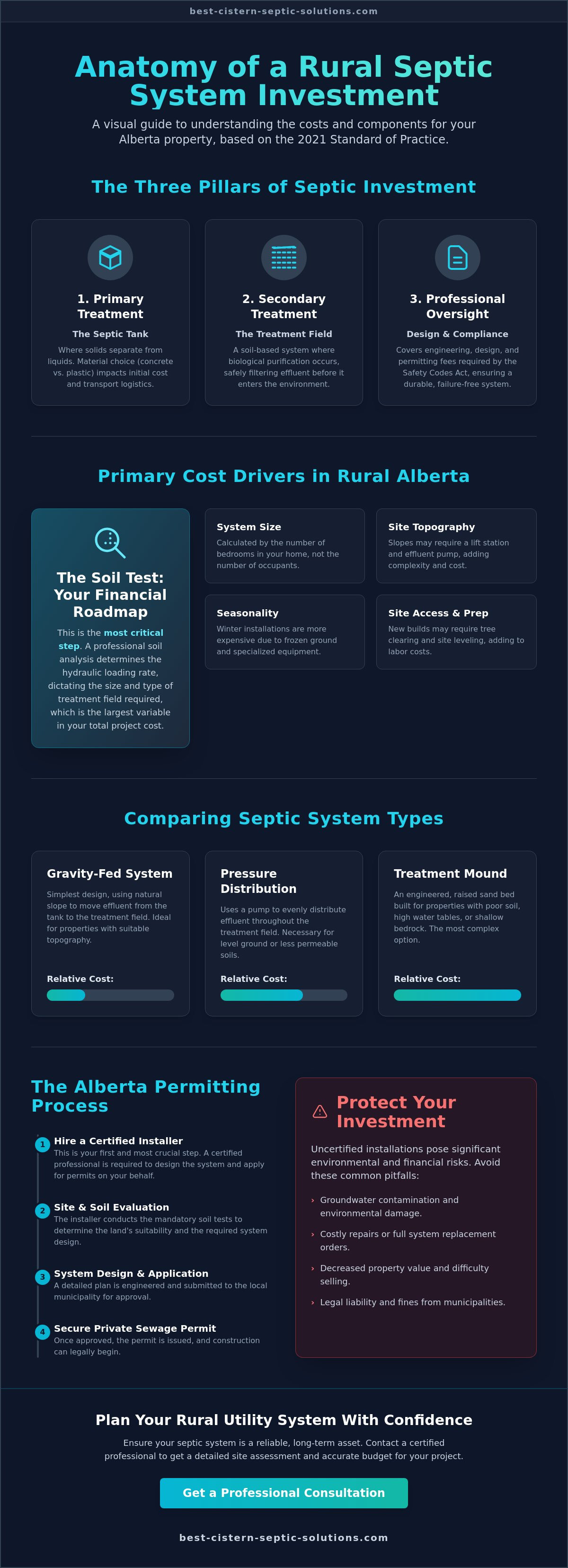
Professional Onsite sewage facilities (OSSF) are built on three distinct investment pillars. First, primary treatment occurs in the septic tank, where solids separate from liquids. The material choice, whether durable concrete or lightweight plastic, affects both the initial outlay and the ease of transport to remote sites. Second, the secondary treatment component, usually a soil-based field, is where the biological purification happens. This area requires specific soil conditions to filter effluent safely before it returns to the environment. Finally, professional oversight covers the design, engineering, and compliance fees required by the Safety Codes Act. These steps aren't just red tape; they're the foundation of a durable system that functions without failure for thirty years or more.
New Build vs. System Replacement
Starting from scratch on a virgin lot presents different challenges than replacing an aged system. New builds often require clearing and grubbing, which involves removing trees and leveling the site to accommodate heavy equipment for a septic tank installation. You must also consider how your septic layout integrates with other infrastructure, such as your well or cisterns. Getting the placement right during the initial design phase prevents future contamination risks and saves significant money on remedial landscaping later. While a replacement might reuse some existing piping, a new installation requires a comprehensive site evaluation to ensure the land can handle the hydraulic load of a modern household. Taking the time to plan this layout correctly the first time provides the ultimate peace of mind for any rural property owner.
Primary Cost Drivers for North Central Alberta Septic Installations
Determining the exact cost to install septic system on rural property Alberta involves analyzing several site-specific variables. While the tank itself is a standard component, the landscape where it resides is not. Your daily peak flow requirements, calculated by the number of bedrooms in your home rather than just the current number of occupants, dictate the minimum size of your septic tank installation. Beyond size, the timing of your project matters. Alberta's deep frost line means winter excavations are technically demanding and often more costly due to the specialized equipment needed to break through frozen earth. Planning your installation for the warmer months ensures a smoother process and more predictable labor costs.
Geography and elevation also play a significant role in your budget. If your building site sits lower than your designated treatment area, gravity won't do the work for you. In these cases, we must integrate a lift station and an effluent pump to move waste to the field. Many homeowners find it efficient to coordinate their septic project with other utility needs to maximize their budget. For instance, scheduling a cistern installation at the same time as your septic field can reduce overall mobilization fees for heavy machinery. This proactive approach ensures your entire rural utility footprint is established with professional precision from the start.
The Soil Test: Your Financial Roadmap
A professional soil analysis is the most critical step before any dirt is moved. This test determines the soil's hydraulic loading rate, which is the speed at which it can safely process and treat effluent. In regions like Parkland County, high clay content is a common occurrence. While clay has a slower percolation rate, it simply means the system design must be adjusted to provide a larger drainage area. Following the Alberta Private Sewage Systems Standard of Practice ensures your design matches your soil's specific capacity. This upfront investment in testing prevents the anxiety of premature system failure and protects the long-term health of your land.
Logistics and Site Accessibility
The distance from supply hubs like Spruce Grove or Edmonton influences material delivery costs. Transporting heavy concrete tanks and multiple loads of washed rock requires accessible roads and clear paths for large delivery trucks. If your rural acreage is heavily treed or features steep slopes, additional site preparation is necessary to create a stable workspace for excavators. These logistical challenges are manageable with proper planning, but they should be accounted for in your initial budget. A thorough site assessment identifies these hurdles early, allowing for a transparent and methodical approach to your installation that removes the fear of hidden fees.
Comparing System Types: Gravity, Pressure, and Treatment Mounds
The specific technology chosen for your property determines the final cost to install septic system on rural property Alberta. If your land features ideal, sandy soil with a deep water table, a gravity-fed system is often the most straightforward and cost-effective approach. These systems rely on natural slopes to move effluent from the tank to the field. However, many properties in Parkland and Leduc Counties deal with dense clay or uneven terrain that prevents natural drainage. In these scenarios, a pressure distribution system is the professional resolution. It utilizes an effluent pump to ensure waste is spread evenly across the entire treatment area, preventing any single section of the field from becoming oversaturated or failing prematurely.
While these mechanical components add to the initial investment, they provide a level of control that gravity alone cannot offer. For properties with very restricted space or sensitive environmental conditions, Advanced Treatment Plants (ATPs) provide a sophisticated alternative. These units treat effluent to a higher standard within a specialized chamber before it even reaches the soil, allowing for a much smaller field footprint. This is a strategic choice for smaller acreages where land use must be maximized. Choosing the right system type isn't just about the upfront price; it's about matching the technology to your land's specific "hydraulic loading rate" to ensure a lifetime of worry-free service.
When a Standard Field Isn’t Enough
In areas where the native soil is too heavy or the water table is too high, a traditional underground trench isn't a viable option. This is where a treatment mound becomes the necessary standard. A mound is an engineered structure built above the natural grade using specific layers of sand, gravel, and topsoil. Because the treatment happens within this constructed hill, it requires a more intensive septic field installation process. Hauling in specialized sand and the precision required for the piping layout makes this a more complex project, but it's often the only way to ensure legal compliance on difficult lots. If you're unsure which design your land requires, our team provides comprehensive septic solutions tailored to North Central Alberta's unique geography.
Maintenance Costs Over the System Lifespan
Your budget should account for the long-term operation of these mechanical parts. Gravity systems have almost zero power requirements, while pressure and mound systems rely on pumps that will eventually require maintenance or an effluent pump replacement. Protecting Your Investment involves more than just the initial build; it requires a commitment to a regular schedule of professional septic tank maintenance. Systems with advanced treatment units or electrical alarms typically require more frequent inspections to ensure the safety of your household. Budgeting for these small, proactive steps prevents the significant expense of a total system failure down the road.
The Alberta Permitting Process and Site Assessment Requirements
Securing a Private Sewage Permit is the first formal step in managing the total cost to install septic system on rural property Alberta. This permit is a legal requirement under the Safety Codes Act and ensures your system meets the National Plumbing Code of Canada 2020. A Certified Installer must typically handle the application process, as they possess the specific competency certificate required to design and submit technical plans. This professional oversight protects you from the stress of administrative delays and guarantees that your system's design is compliant before the first shovel hits the dirt.
During the installation, the county requires mandatory inspections before any components are backfilled. Inspectors verify that all setback distances are strictly maintained, such as the mandatory gaps between your treatment field and property lines or water wells. Once the project is complete, you receive "As-Built" drawings. These documents are vital for your property's long-term value, providing a clear map of your underground infrastructure for future owners or maintenance needs. If you need assistance with this complex regulatory path, our team provides expert septic system inspections to ensure every detail is handled correctly.
Navigating County-Specific Regulations
While provincial standards are uniform, permit fees and local bylaws vary between Parkland, Leduc, and Sturgeon Counties. For example, in Parkland County, an inspection for a new subdivision typically costs $215.00, while a variance review is $162.00. These local nuances might also influence whether you need a specific type of septic alarm or effluent pump. Partnering with a local septic service Edmonton provider ensures your project aligns with these regional requirements, preventing costly penalties that can double your permit fees if work begins without approval.
Site Assessment and Safety Standards
A methodical site assessment is the bedrock of a safe installation. This sequence begins with identifying all underground utilities to prevent dangerous and expensive service disruptions. Professional diagnostics during this phase confirm the soil's suitability and identify any hidden landscape challenges. This thoroughness removes the anxiety of unexpected excavation hurdles and ensures your system is built on a foundation of verified data. By following this disciplined process, you turn a complex technical requirement into a manageable step toward a reliable home utility.
Protecting Your Investment: Professional Installation in Parkland County
Attempting a DIY septic project might seem like a way to manage the total cost to install septic system on rural property Alberta, but the hidden risks often outweigh the initial savings. A single error in slope calculation or pipe bedding can lead to environmental contamination or a premature system failure that requires expensive remediation. We take a methodical approach to ensure every component, from the tank to the treatment field, is installed with technical precision. This diligence protects your household's safety and preserves the integrity of your land. Professional installation is the only way to guarantee your system meets the strict standards of the 2021 Standard of Practice while maximizing your septic system lifespan.
We believe in a "Neighborly Expert" approach that prioritizes transparent communication and methodical execution. Once the heavy excavation is finished, we don't just backfill and move to the next job. Our team prioritizes site restoration to return your property to a clean, stable state. We also provide comprehensive homeowner education, ensuring you understand how to monitor your system and respond to alarms. This process ensures you feel empowered rather than overwhelmed by your rural utilities. A professional fix is the only way to turn a complex installation into a long-term property asset.
The Value of Local Expertise
Understanding the specific environmental challenges of North Central Alberta is non-negotiable for a successful build. Local knowledge of Alberta’s frost lines is critical; piping must be buried at specific depths or insulated correctly to prevent freezing during our deep winter cycles. We also leverage long-standing relationships with local material suppliers. This ensures that high-quality washed rock and durable concrete tanks are available and delivered on time, keeping your project on schedule. Having a local partner means you have a reliable neighbor to turn to for future septic solutions and routine maintenance.
Next Steps for Your Rural Property
Preparing for your first consultation is simple and helps ensure an accurate estimate. Gather your property's site plan, any existing soil data, and your building permit information. When you request a detailed installation quote, look for a breakdown that includes excavation, material costs, and all mandatory permit fees. This level of detail prevents the anxiety of unexpected costs and confirms you're working with a transparent provider. A professionally designed and installed system is the invisible foundation of rural comfort, providing the peace of mind you deserve as a homeowner.
Establishing a Foundation for Rural Comfort
Planning your utility infrastructure is a methodical journey that begins with understanding your land's unique soil profile. You've learned that the cost to install septic system on rural property Alberta is shaped by your soil's hydraulic loading rate, the specific topography of your lot, and the rigorous standards of the 2021 Private Sewage Systems Standard of Practice. By prioritizing a professional design and navigating the county permit process with expert guidance, you remove the anxiety of unexpected site variables. Each step you take today ensures the long-term integrity of your household's essential services.
As Certified Private Sewage Installers serving Parkland, Leduc, and Sturgeon Counties, we specialize in managing complex rural terrain with technical precision. We're here to ensure your waste management system becomes a durable, invisible asset that protects your property value for decades. A professional fix is always available to provide you with the security you need for your new home. Take the first step toward a worry-free installation by reaching out to a local expert who understands your land.
Request a Professional Site Assessment for Your Alberta Property
Frequently Asked Questions
How long does it take to install a new septic system in Alberta?
The physical installation typically takes between three to seven days once your design is finalized and permits are issued. This timeline includes excavation, tank placement, field installation, and the mandatory county inspection before backfilling. While weather and site conditions can influence the schedule, a methodical approach ensures your project moves steadily toward a successful and clean resolution.
Do I need a separate permit for my cistern and my septic system?
Yes, these systems fall under different regulatory categories and require individual permits. You must secure a Private Sewage Permit for your septic system and a separate plumbing permit for your cistern installation. Coordinating these applications during the planning phase is a proactive way to ensure your property's infrastructure is fully compliant and properly documented for the future.
Can I install a septic system myself on my own Alberta property?
Alberta regulations allow homeowners who reside on the property to apply for permits and install certain types of systems themselves. However, you must still adhere strictly to the Alberta Private Sewage Systems Standard of Practice 2021 and the National Plumbing Code. Many owners choose professional installers to handle these technical complexities, ensuring the system remains a reliable long-term asset for the household.
What is the most expensive part of a septic system installation?
The treatment field is usually the most significant investment in the project. If your soil analysis indicates a low percolation rate, you may need a treatment mound or a pressure distribution system rather than a simple gravity trench. These advanced designs require specialized sand, gravel, and additional labor, which naturally impacts the total cost to install septic system on rural property Alberta.
How does the number of bedrooms in my house affect the septic cost?
Your bedroom count is the primary metric used to calculate the system's daily peak flow requirements. Alberta codes assume a specific volume of water usage per bedroom to ensure the system isn't overwhelmed. A higher bedroom count requires a larger septic tank installation and a correspondingly larger treatment field, which directly influences the scale of the excavation and the necessary material needs.
Are there any government grants for septic system installation in Alberta?
There are currently no broad provincial grant programs that cover the initial cost to install septic system on rural property Alberta. Homeowners are entirely responsible for the investment in their private utilities. It's best to view a professional installation as a long-term property asset; a well-designed system prevents the need for expensive repairs or premature replacements that can occur with poor planning.
What happens if my soil fails the initial percolation test?
A "failed" test simply means the native soil cannot process effluent through a traditional gravity system. It's a signal that a specialized resolution is required, such as a treatment mound or an Advanced Treatment Plant. These systems use engineered technology to treat waste before it reaches the soil, ensuring your property remains safe and compliant regardless of the natural ground conditions.
How far must a septic field be from my water well in Alberta?
The Alberta Private Sewage Systems Standard of Practice requires a minimum setback distance of 15 meters between a treatment field and a water well. Maintaining this distance is a vital safety standard that prevents cross-contamination and protects your household's drinking water quality. Professionals verify these setbacks during the site assessment and final inspection to ensure your household's health is never compromised.


