
Your brewery wastewater isn't just extra-dirty sewage; it's a concentrated industrial effluent that can destroy a standard residential drain field in a single season. Most craft producers quickly realize that a specialized septic system for a brewery or distillery must do much more than just move water. It has to process high levels of sugars, yeast, and proteins that would otherwise overwhelm natural soil bacteria and lead to a total system failure.
It's understandable if you feel frustrated by the high cost of wastewater hauling or confused by the Alberta Private Sewage Systems Standard of Practice (SOP) 2021. You've worked hard to build your business, and you shouldn't have to worry about a failing utility system threatening your investment. This article explains how to design and maintain a robust system that handles high-strength waste while keeping you in full regulatory compliance. We will walk through the essential pre-treatment steps, local Parkland County requirements, and the proactive maintenance habits that ensure your property remains a long-term asset and a source of pride rather than a headache.
Key Takeaways
- Understand why high-strength wastewater requires more than a standard residential setup to prevent "sugar-clogged" drain fields and premature system failure.
- Learn how to use pre-treatment tools like aerobic treatment units and solids interceptors to protect your septic system for a brewery or distillery.
- Discover essential cold-weather design strategies to ensure your biological treatment processes stay active and efficient during Alberta's harsh winters.
- Navigate the Alberta Private Sewage Systems Standard of Practice to ensure your commercial operation remains fully compliant with provincial and local Parkland County regulations.
- Identify how professional inspections and custom engineering turn your wastewater management into a durable, long-term asset that protects your property investment.
Why Standard Septic Systems Fail for Breweries and Distilleries
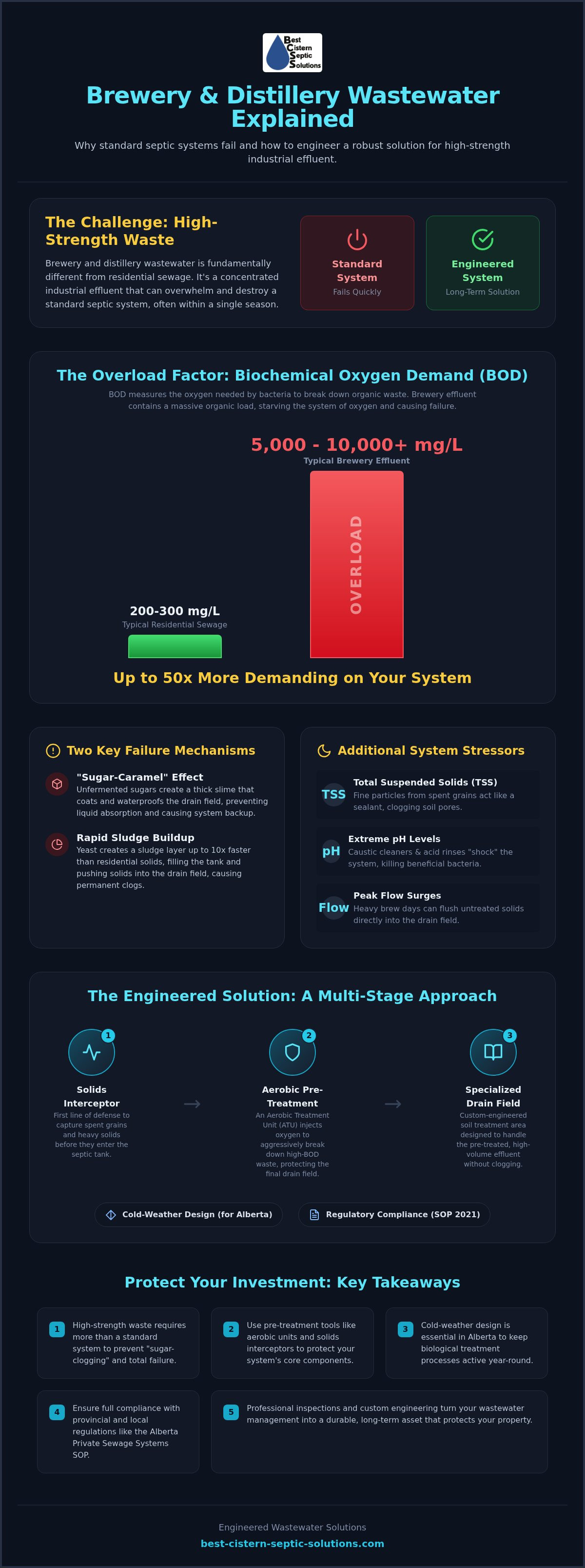
Most rural business owners assume that if their total water volume is manageable, a standard septic tank will handle the load. This is a common misconception that often leads to expensive property damage. A residential septic system is designed to process domestic waste, which has a relatively low organic load. In contrast, a septic system for a brewery or distillery must contend with "high-strength" wastewater. This effluent contains significantly higher concentrations of organic matter that can quickly overwhelm the natural biological processes of a traditional system.
One of the most destructive phenomena is the "sugar-caramel" effect. When unfermented sugars and complex carbohydrates from the brewing process enter a standard drain field, they don't simply break down. These sugars can undergo a biological reaction that creates a thick, slime-like substance. This residue coats the drain rock and the soil interface, effectively waterproofing your leach field. Once the soil can no longer absorb liquid, the system inevitably backs up, often requiring a complete and costly field replacement.
Yeast management is another critical hurdle. Yeast cells are hardy, resilient, and reproduce quickly. When they enter a septic tank, they create a sludge layer that can build up ten times faster than residential solids. This rapid accumulation reduces the "clear zone" in your tank. When the tank is too full of sludge, it begins pushing solids out into the drain field. This process causes permanent clogging and destroys the long-term viability of your property's infrastructure.
High-Strength Waste vs. Residential Sewage
To understand the technical challenge, we must look at Biochemical Oxygen Demand (BOD). This metric measures how much oxygen bacteria need to break down organic matter in the water. Residential sewage typically has a BOD of around 200 to 300 mg/L. Brewery effluent, however, can easily exceed 5,000 or even 10,000 mg/L. This massive disparity is why The Science of Craft Beverage Waste requires a more sophisticated engineering approach. Total Suspended Solids (TSS) from spent grains also play a role, as these fine particles act like a sealant on your soil's pores. Additionally, the heavy use of caustic cleaners and acid rinses can "shock" the beneficial bacteria in your tank, killing the microbial colony you rely on for waste treatment.
The Warning Signs of Commercial Septic Failure
Identifying trouble early can save your business from a total system shutdown. Keep a close eye on your brew house drains. If they begin to gurgle or drain slowly while your taproom toilets still flush perfectly, the issue likely lies in your processing lines. You might also notice odors that smell more like sour mash or rotting fruit than typical sewage. Out in the yard, look for patches of grass that are exceptionally lush or dark green. This indicates that the soil is saturated with nutrient-heavy effluent that isn't being properly filtered. If you suspect your system is struggling, a professional septic service edmonton provider can perform a diagnostic inspection to see if your field can be restored before the damage becomes permanent.
Managing High BOD and pH: The Science of Craft Beverage Waste
Bacteria are the silent partners in your business. While yeast drives your fermentation, anaerobic microbes in your septic tank perform the heavy lifting of waste breakdown. These microbes thrive on organic matter, but they require a stable environment to function. In a septic system for a brewery or distillery, the sheer concentration of organic waste can create a "biological bottleneck." If the bacteria can't keep up with the incoming load, the untreated waste moves into your soil, leading to the clogging issues discussed previously.
Designing for success requires a shift in how you view water usage. Most residential systems are sized based on average daily discharge, but breweries operate in cycles. You might have low flow during the week followed by a massive surge on a brew day or during a heavy cleaning shift. Calculating your daily peak flow is critical. If your system is sized only for your average output, a single heavy brew day can hydraulically "flush" your tank, pushing solids and high-BOD effluent directly into your drain field before the bacteria have a chance to work.
The pH Problem: Balancing Your Effluent
Microbial colonies are highly sensitive to their environment. Standard domestic sewage is usually close to a neutral pH, but beverage production is different. Sending acidic mash tun runoff or highly alkaline caustic cleaners directly into your tank creates a "chemical shock" that can kill your entire bacterial colony. This biological die-off stops all treatment and leads to foul odors and system backups. Installing a simple pH neutralization tank is an essential step. This secondary tank allows different waste streams to mix and stabilize before they enter the main septic chamber. Monitoring your discharge with simple test strips or digital sensors ensures you aren't accidentally poisoning the very microbes that protect your property investment.
Side-Streaming: Keeping Solids Out of the Tank
The most effective way to protect your system is to keep the most difficult waste out of it entirely. This practice, known as side-streaming, is your first line of defense. Spent grains and hops should never enter your floor drains; they are better suited for compost or local livestock feed. Many successful craft producers also use a "Yeast Brink" strategy. By collecting the thick yeast and trub from the bottom of fermenters into separate containers for off-site disposal, you remove the highest BOD load before it ever touches your plumbing.
Aggressive side-streaming doesn't just prevent clogs; it directly extends the life of your septic field installation. By reducing the burden on your soil, you ensure that the system remains a durable asset rather than a recurring maintenance headache. If you're planning a new facility, a professional design consultation can help you integrate these capture points into your floor plan from day one, saving you thousands in future repair costs.
Engineering the Solution: Pre-treatment and Specialized Septic Fields
While some industry voices claim that hauling 100% of your waste is the only safe path, a properly engineered septic system for a brewery or distillery provides a more sustainable, long-term solution. The key lies in creating a "treatment train" that processes effluent in stages before it ever touches your soil. It begins with specialized grease traps and solids interceptors. These units act as a physical barrier, catching spent hops, grain fragments, and heavy sediment that would otherwise turn your main tank into a maintenance nightmare.
Once solids are removed, the next priority is tackling the high Biochemical Oxygen Demand (BOD) discussed earlier. Aerobic Treatment Units (ATUs) are often the centerpiece of a commercial-grade setup. By forcing oxygen into the wastewater, these systems foster the growth of aerobic bacteria. These microbes are far more aggressive than their anaerobic counterparts, allowing them to digest organic matter much faster and more thoroughly. This pre-treatment step significantly reduces the "strength" of the water, ensuring that what eventually leaves the tank is much closer to domestic-strength sewage.
The treatment train typically follows this logical sequence to protect your property:
- Solids Interception: Removing grains and heavy sediment at the source to prevent tank sludge.
- Flow Equalization: Buffering brew-day surges to protect the bacterial colony from being flushed out.
- Biological Digestion: Using oxygen-rich ATUs to reduce the organic load.
- Timed Dosing: Precisely controlling when and how much effluent reaches the soil absorption field.
Flow Equalization and Surge Management
Brew-day surges are arguably the greatest mechanical threat to a rural septic setup. A sudden influx of hundreds of liters of water can cause "slug loading," which physically pushes untreated waste through the tanks and into the drainage bed. Integrating cisterns as flow equalization tanks allows you to capture these surges and release them slowly over a 24-hour period. This timed dosing ensures your field is never overwhelmed and has the necessary "rest" periods to maintain oxygen levels in the soil, which is vital for long-term durability.
Advanced Treatment Options for Craft Producers
For facilities with limited space or particularly sensitive soil, advanced technologies like Moving Bed Biofilm Reactors (MBBR) offer a compact way to treat high-load waste. These systems use small plastic media to provide a massive surface area for bacteria to grow. Additionally, sand or textile filters can provide a final "polish," removing any remaining fine particles. Selecting the right septic tank types is also vital. Commercial-grade concrete or heavy-duty reinforced polyethylene tanks are often preferred for their durability against the slightly corrosive nature of beverage effluent. Finally, a pressure distribution field ensures that this treated effluent is spread evenly across the entire soil surface, preventing localized saturation and protecting your property investment for years to come.
Cold-Weather Considerations for Alberta Brewery Septic Systems
Alberta's climate adds a layer of complexity to any septic system for a brewery or distillery. While the wastewater leaving a brew house is often warm, it must travel through frozen ground to reach the treatment field. During low-flow periods, such as a holiday shutdown or a mid-winter production break, stagnant water in the pipes can freeze quickly. We use high-density foam insulation and specific burial depths to ensure your lines remain clear during a -30°C deep freeze. This proactive design prevents the ice dams that lead to catastrophic backups during your busiest production weeks.
Cold soil also significantly reduces the metabolic rate of the microbes in your drain field. In the summer, these bacteria aggressively digest organic matter. In winter, they slow down. You cannot rely on the soil to do all the treatment work when the ground is frozen. This is why the pre-treatment steps discussed in previous sections are so vital. By removing the high BOD load before it reaches the soil, you ensure the system remains functional even when biological activity is at its lowest. Snow management is another critical factor. You should never plow the area over your septic field to create extra parking or storage. Snow acts as a natural insulating blanket. Removing it allows frost to drive deeper into the ground, which can freeze your distribution pipes or the soil interface itself.
Winter Maintenance and Monitoring
Monitoring your system becomes a daily priority during extreme cold snaps. Your septic alarms are the first line of defense; they provide the warning you need if an effluent pump fails. If a pump stops working in February, the lack of warm water movement will cause the system to freeze solid within hours. Dealing with a septic system repair in the middle of winter is three times more difficult and significantly more expensive due to the need for specialized ground-thawing equipment. Keeping your pump chamber and alarm system in top condition provides essential peace of mind when the temperature drops.
Soil Conditions in North Central Alberta
Designing a septic system for a brewery or distillery in Parkland County requires a deep understanding of local geology. The region is known for heavy clay and silt, which already struggle with drainage compared to sandy soils. When you add the high-strength waste from a brewery, the risk of "biomat" buildup increases. Professional perc tests are mandatory for commercial sites in Leduc and Sturgeon County to determine if the soil can handle the intended load. A custom field design, such as a raised mound or a pressure-jacketed system, is often necessary to overcome these geological challenges. If you are concerned about how your property's soil will handle production waste, you can schedule a professional site evaluation to identify the best engineering path forward.
Designing Your Custom Brewery Septic System in Parkland County
Navigating the regulatory landscape of North Central Alberta requires more than just a standard permit application. When you're planning a septic system for a brewery or distillery, you're moving beyond the realm of domestic sewage and into specialized industrial effluent management. The Alberta Private Sewage Systems Standard of Practice (SOP) 2021 provides the framework for these systems, but it places heavy emphasis on high-strength wastewater requirements. If your peak daily flow exceeds 5.7 m³, the standards become even more rigorous. Failing to document your treatment train correctly can lead to permit denials or a system that isn't legally allowed to operate once your production begins.
This is where a dedicated septic service edmonton partnership becomes a vital asset for your business. We don't just install tanks; we help you interpret the complex intersection of provincial standards and local county bylaws. Investing in the right infrastructure from the start protects your property value and ensures that your focus remains on your craft rather than your plumbing. By treating your wastewater system as a long-term property asset, you avoid the stress of future failures and the high costs of emergency repairs.
The Permitting Process for Commercial Septic
Working with the planning departments in Parkland County or Leduc County involves specific steps that differ from a typical home build. For example, Parkland County requires all applications to go through their PLANit Parkland portal, specifically under the "Commercial (Advanced)" category. You can't simply use a residential permit for a brewery operation because the organic load is fundamentally different. You must provide detailed soil analysis reports and a design prepared by a certified professional that accounts for your specific BOD and pH management strategies. If your process wastewater contains contaminants not covered by the SOP, we also help you navigate the necessary consultations with Alberta Environment and Parks (AEP) to ensure full environmental compliance.
Your Next Steps: Assessment and Design
The first step toward a compliant and durable system is a professional site evaluation. We perform a diagnostic inspection of your current or proposed site to understand how the local soil will interact with your production volume. This collaborative approach allows us to design a septic system for a brewery or distillery that grows with you. Whether you're starting with a small pilot system or planning for a full-scale production facility, your infrastructure should be built for durability.
We take pride in performing these difficult, technical tasks with a high level of care and transparency. Our goal is to provide a professional fix that removes future worries, allowing you to operate with total peace of mind. When your utility systems are handled by diligent experts, you can trust that your business and your property are secure. Once the job is done, the invisible benefits of a well-engineered system allow you to focus entirely on the growth of your brand.
Building a Sustainable Foundation for Your Craft
Developing a robust septic system for a brewery or distillery is a vital investment in the long-term viability of your property. By prioritizing effective pre-treatment and surge management, you move away from the stress of potential clogs and toward a reliable, hardworking infrastructure. The combination of managing high BOD levels and preparing for Alberta's specific climate conditions ensures that your drain field remains a durable asset rather than a recurring headache.
Your business deserves a foundation as carefully crafted as your beverages. We bring decades of experience in rural Parkland County infrastructure and a deep understanding of North Central Alberta's unique soil conditions to every project. Our specialized commercial diagnostic reporting provides the technical clarity needed for regulatory compliance and operational peace of mind. We take pride in delivering a professional fix that secures your investment and protects your property for years to come.
Secure your brewery's future with a professional septic consultation from Best Cistern Septic Solutions. We are ready to help you turn a complex utility requirement into a permanent, manageable solution for your business.
Frequently Asked Questions
Can I dump spent yeast down my brewery septic system?
No, you should never dump spent yeast directly into your septic system. Yeast cells are resilient and reproduce quickly, creating a thick sludge layer that builds up ten times faster than domestic waste. This rapid accumulation reduces the clear zone in your tank and eventually pushes solids into your drain field. To protect your property, you should use a side-streaming strategy to collect this high-density waste for off-site disposal instead of sending it down the drain.
How often does a brewery septic tank need to be inspected?
Professional inspections should occur at least once a year. Because a septic system for a brewery or distillery handles such high-strength effluent, monitoring sludge levels and bacterial health is vital. Regular checks allow you to catch "sugar-clogging" or pH shocks early, before they cause permanent damage to your drain field. This proactive approach ensures your utility system remains a reliable asset for your business and prevents the need for emergency repairs.
What is the best type of drain field for a distillery?
A pressure distribution field is often the best choice for commercial beverage production. This design uses a pump to spread treated effluent evenly across the entire soil surface at specific intervals. This prevents any single area from becoming saturated with high-BOD waste. In North Central Alberta's heavy clay soils, this even distribution is essential for maintaining the aerobic conditions needed to process brewery waste effectively and prevent long-term system failure.
Will cleaning chemicals kill the bacteria in my septic tank?
Yes, concentrated caustic and acid cleaners can shock your system and kill essential microbes. When these bacteria die, the treatment process stops, leading to foul odors and potential clogs. To prevent this biological die-off, you should use a pH neutralization tank to balance your effluent before it enters the main septic chamber. Monitoring your discharge ensures you are maintaining a safe environment for the bacteria that protect your property and drain field.
Do I need a separate septic system for my taproom restrooms?
It is not a legal requirement, but separating your taproom restrooms from your production waste is a smart strategy. Domestic waste is much easier for a standard tank to process than high-strength brewery effluent. By keeping them separate, you ensure that your public facilities remain operational even if your production system requires maintenance. This separation also simplifies the permitting process and provides an extra layer of security for your property investment.
How much does a commercial-grade septic system cost for a small brewery?
The investment for a commercial-grade system depends on your specific production volume, wastewater strength, and local soil conditions. While these systems require more advanced engineering and pre-treatment components than a home setup, they save money over time by reducing the need for expensive wastewater hauling. A professional site evaluation is the only way to get an accurate understanding of the infrastructure required for your specific location and production goals.
What happens if my brewery septic system freezes in the winter?
If your system freezes, you'll experience an immediate backup that can force you to halt production. Ice dams in the lines prevent wastewater from reaching the treatment field, which is especially risky during Alberta's extreme cold snaps. Repairing a frozen system in February is difficult and costly. We use specialized insulation and proper burial depths to prevent these issues, ensuring your brewery stays operational and your property remains safe all winter.
Can I use a cistern to help manage my brewery's wastewater flow?
Yes, integrating a cistern as a flow equalization tank is a highly recommended practice. These tanks capture large surges from brew days and release them slowly into the septic system for a brewery or distillery over twenty-four hours. This timed dosing protects your bacterial colony from being flushed out by sudden water influxes. It ensures your system operates at peak efficiency without overwhelming the soil's absorption capacity or risking a field backup.


