

Imagine waking up on a brisk Alberta morning, turning the kitchen tap for your first cup of coffee, and hearing nothing but a hollow hiss. For rural homeowners in Parkland or Strathcona County, this sudden silence is more than a simple inconvenience; it often feels like a looming, expensive disaster. You're likely wondering if your system has reached the end of its typical 10 to 15 year lifespan or if you need immediate cistern pump troubleshooting to identify a simple electrical hiccup. It is natural to feel stressed when you can't immediately distinguish between a minor mechanical glitch and a total motor failure.
This guide replaces that uncertainty with a clear, methodical plan of action. We've designed this systematic approach to help you identify and resolve common issues that affect rural property owners across the region. You will learn how to verify power sources, check pressure switches, and determine if your pump is actually burnt out or just needs a professional adjustment. By following these steps, you can restore your household water flow today and implement preventative care that secures your property's utility systems for the long term.
Key Takeaways
- Learn to distinguish between total water loss and low pressure to determine if your issue is a simple electrical trip or a mechanical failure.
- Master the foundational steps of cistern pump troubleshooting by verifying power supply integrity and inspecting pressure switch contacts.
- Understand how common mechanical components like foot valves and pressure tank bladders can cause your pump to lose its prime or cycle too frequently.
- Discover how to protect your system from Alberta's harsh winters by identifying frozen lines and ensuring proper burial depth for all water components.
- Recognize the signs that a professional inspection or a pump upgrade is necessary to ensure the long-term safety and durability of your home's water supply.
Common Symptoms of Cistern Pump Failure
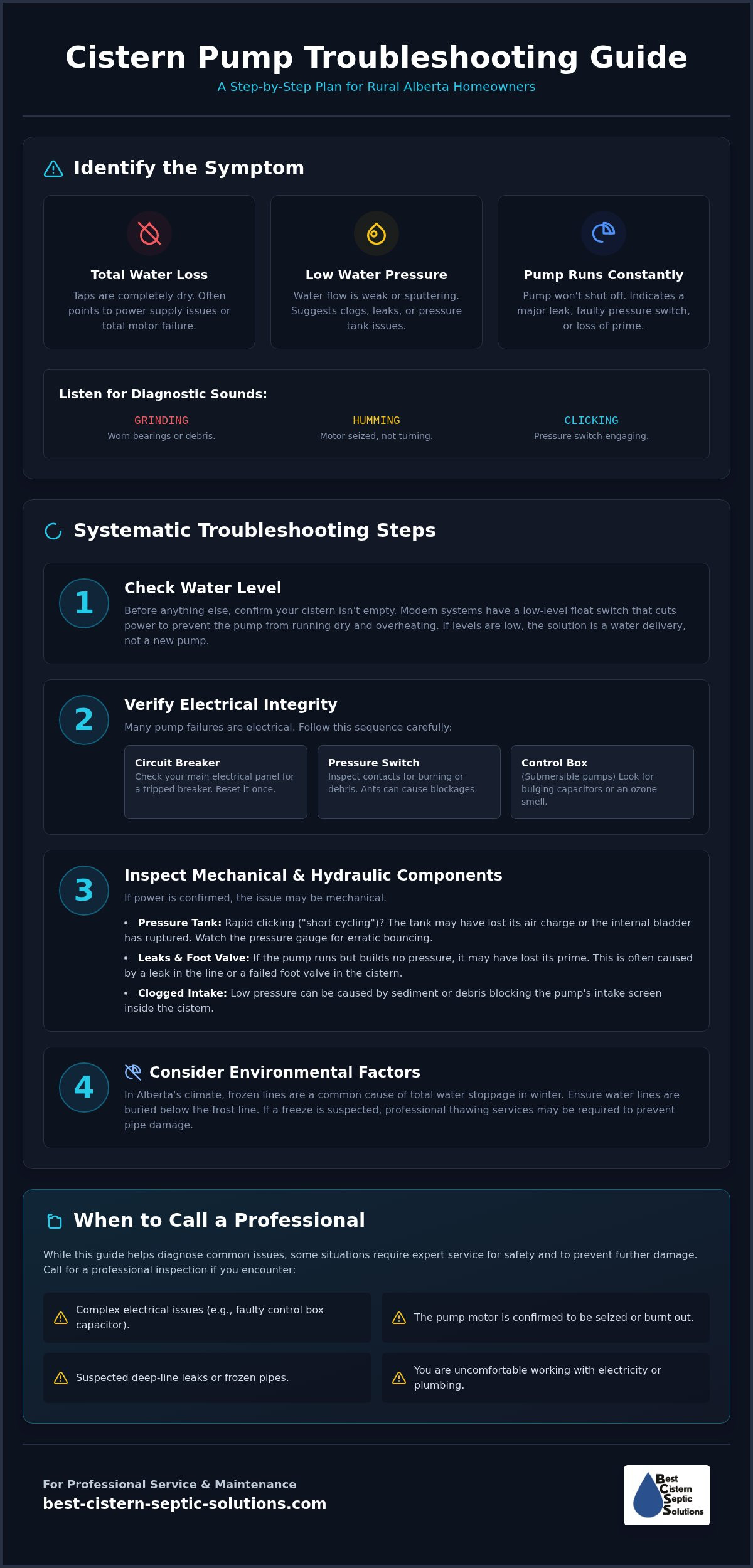
Identifying the specific way your system fails is the first step toward a resolution. A total loss of water often points to a different root cause than a gradual drop in pressure. When the taps go dry, the issue usually lies with the power supply or a total motor failure. In contrast, low pressure typically suggests a clogged intake screen or a leak in the distribution line. Effective cistern pump troubleshooting begins by observing these patterns before you start dismantling any components.
You must also distinguish between the two primary types of systems found in rural Alberta homes. Submersible pumps reside inside the cistern, making them nearly silent during operation. If you have a jet pump, it likely sits in your utility room or basement. Gaining a foundational knowledge of understanding pump mechanics helps you realize that while a jet pump uses suction to pull water, a submersible pump pushes it from below. This distinction is vital because a humming noise from a jet pump is easy to hear, but a silent submersible might require an electrical test to confirm it's even receiving power.
Constant running is another red flag. If your pump won't shut off, it's likely trying to reach a "cut-off" pressure it can't achieve. This happens because of a significant leak in the plumbing or a pressure switch that has physically worn out. A methodical approach to cistern pump troubleshooting helps you avoid unnecessary replacement costs by catching these issues early. Listen for distinct sounds that indicate mechanical distress:
- Grinding: Often suggests worn bearings or debris in the impeller.
- Humming: Usually indicates the motor is getting power but is physically seized.
- Clicking: Generally the sound of the pressure switch contacts opening and closing.
Visual and Auditory Diagnostic Cues
Listen closely to the system's rhythm. A clicking sound near the pressure tank often indicates the pressure switch is engaging and disengaging. If this happens rapidly, you're experiencing "short cycling," which usually means your pressure tank has lost its air charge or has a ruptured bladder. Watch the pressure gauge; the needle should move steadily. If it bounces erratically or stays at zero while the motor hums, the pump may be seized or unable to move water due to an internal blockage.
The Impact of Water Levels on Pump Performance
Sometimes the pump is fine, but the cistern is simply low. Most modern systems include a low-level float switch designed to prevent the motor from running dry. When water levels drop below a safe threshold, this switch cuts power to protect the motor from overheating. If your pump stops working after a period of heavy use, check your water levels first. A professional cleaning can also remove sediment that might be tricking your sensors or clogging the pump intake, ensuring your system remains a durable asset for your property.
Electrical Troubleshooting: Power and Controls
Electrical failures often mimic mechanical breakdowns, but they're frequently simpler to resolve if you follow a logical sequence. Start your cistern pump troubleshooting at the electrical panel. A tripped circuit breaker is a common culprit, especially after a summer storm or a power surge in rural Parkland County. If the breaker is fine, move to the pressure switch, which is usually located on the piping near the pressure tank. Remove the cover to see if the metal contacts are burnt or if debris is preventing them from closing properly.
Maintaining electrical integrity is a core part of long-term pump system efficiency, as high resistance from corroded wires can lead to premature motor wear. For homeowners with submersible systems, the control box is another vital checkpoint. This box, typically mounted on a wall near the cistern, contains capacitors that help start the pump. If you notice a bulging capacitor or a distinct ozone smell, the pump won't be able to kick on regardless of how much water is in the tank. If these components seem complex, scheduling a professional Cistern Pump inspection can provide the peace of mind that your electrical controls are safe and reliable.
The Role of the Pressure Switch
The pressure switch acts as the brain of your water system. It uses "cut-in" and "cut-out" settings, usually set to 30/50 or 40/60 PSI, to tell the pump when to start and stop. Over time, dust or even small insects like ants can get lodged between the electrical contacts, preventing the signal from reaching the motor. You can gently clean these contacts with a piece of fine sandpaper, but always turn off the power at the breaker first. Touching high-voltage components while the system is live is dangerous and should be avoided; for more information on professional electrical safety and panel maintenance, visit Satrack Electric.
Float switches serve as a safety net for your pump. They're designed to cut power if the water level in your cistern drops too low, preventing the motor from running dry and burning out. You can test a tethered float by manually lifting it with a hook to see if the pump engages. If the float is vertical, ensure it moves freely up and down its rod. Sometimes a pump becomes "air-locked" if the water level was low enough for air to enter the intake. Once the cistern is refilled, you may need to prime the system to restore flow. Methodical cistern pump troubleshooting ensures you don't overlook these simple safety resets before assuming the pump itself is dead.
Mechanical and Hydraulic Issues: Getting the Water Moving
Once you confirm the electrical system is sending power, your cistern pump troubleshooting must pivot to the mechanical components that physically move the water. Mechanical failures are often more gradual than electrical ones. You might notice a slow decline in pressure or a pump that takes longer to reach its shut-off point. A frequent culprit for this behavior is a failed foot valve. This one-way valve sits at the bottom of your intake line and keeps the pipe full of water. If it leaks, the water drains back into the cistern, causing the pump to lose its prime and run dry the next time it tries to start.
For homeowners with above-ground jet pumps, air leaks in the suction line are a persistent nuisance. Even a pinhole leak can introduce enough air to create "air binding," where the impeller spins but can't grab the water. In contrast, submersible systems are less prone to air leaks but more susceptible to clogged intake screens. Sediment or biofilm can accumulate over time, starving the pump of water and forcing it to work harder. While many cisterns rely on hauled water, those integrated with well systems should stay informed on Alberta groundwater management to understand how local water quality might impact their mechanical longevity.
Pressure Tank Maintenance and Air Pre-charge
The pressure tank acts as a buffer for your system, storing pressurized water so the pump doesn't have to start every time you wash your hands. To check its health, find the air valve on top of the tank and use a standard tire gauge. The air pressure should be exactly 2 PSI below your pump's "cut-in" setting. If you see water leaking from this air valve, it's a definitive sign of a ruptured bladder. A waterlogged tank loses its air cushion, leading to rapid "short cycling" that can quickly burn out a motor if you don't address it immediately.
Prime and Suction Line Integrity
If your jet pump won't move water, it likely needs a manual prime. You can do this by removing the prime plug on the pump housing and filling the cavity with clean water until it overflows. Tighten the plug and start the pump; you may need to repeat this process two or three times to purge all the air. If the system continues to lose its prime overnight, the foot valve at the bottom of the cistern is likely stuck open or leaking. Replacing this valve is a standard part of cistern pump troubleshooting that restores the mechanical integrity of your water supply and prevents future motor strain.
Alberta Environmental Factors: Freezing and Climate
Alberta winters present unique challenges for rural water systems. In Parkland County, frozen lines represent the most frequent cause of winter system failure. Effective cistern pump troubleshooting during a cold snap often involves checking the integrity of heat tape or verifying that lines are buried below the local frost line, which typically reaches depths of seven to eight feet in this region. If your pump runs but no water reaches the house, a blockage of ice is likely the culprit rather than a mechanical failure.
Temperature shifts also impact your pressure tank. Cold air is denser, which can cause the air pre-charge to fluctuate as the seasons change. If your tank was serviced in a warm July, it might need a minor adjustment by January to prevent short cycling. Additionally, spring runoff in North Central Alberta can introduce fine sediment into your cistern. This debris often clogs intake screens or settles in the bottom of the tank, mimicking a mechanical pump failure by restricting flow. Regular maintenance ensures these environmental factors don't compromise the safety of your water supply.
Winterizing Your Cistern Pumping System
Inspecting your pitless adapter and well cap for frost penetration is a vital autumn task. Ensure your cistern manhole is properly insulated with high R-value foam to prevent the cold from reaching the water surface. If you encounter a frozen line, don't use an open flame to thaw it, as this can damage PVC pipes or create a fire hazard. Instead, use a space heater or a heat gun in the utility room to gently restore flow. This methodical approach protects your system's integrity while resolving the immediate outage.
DIY vs. Professional Troubleshooting Safety
While many homeowners feel comfortable with basic maintenance, certain tasks require specialized equipment and local expertise. Pulling a submersible pump from a deep cistern is physically demanding and carries the risk of dropping the unit, which can cause permanent damage to the tank. Local soil conditions in Alberta, often heavy with clay, can also make excavating and repairing lines a complex job that requires professional precision.
| Task | DIY Approach | Professional Resolution |
|---|---|---|
| Power Supply | Resetting tripped circuit breakers | Diagnosing short circuits in underground wiring |
| Tank Pressure | Checking PSI with a tire gauge | Replacing ruptured internal bladders |
| Submersible Pumps | Monitoring water levels and floats | Pulling and testing pumps with specialized hoists |
| Frozen Lines | Applying gentle heat to exposed pipes | Deepening shallow lines to prevent future freezing |
If your system requires more than a simple breaker reset, it is often safer to contact an expert who understands the specific mechanical needs of rural properties. For reliable assistance with your system, explore our professional Septic Solutions and cistern maintenance services to ensure your home stays functional regardless of the weather.
Professional Cistern Solutions and Maintenance
While initial cistern pump troubleshooting can resolve immediate outages, long term water security depends on a proactive care strategy. Professional inspections go beyond surface level fixes to identify microscopic cracks in the tank or early signs of electrical fatigue in the motor windings. Cleaning your cistern every few years removes the accumulated sediment that often leads to clogged intake screens and premature pump wear. By treating your water system as a durable asset rather than just a utility, you ensure it continues to serve your household safely for decades.
Upgrading to high efficiency submersible pumps provides a significant boost to reliability. These modern units are designed to handle the specific pressures of rural Alberta properties while operating silently beneath the water's surface. Integrating cistern and septic alarms into your home provides an essential early warning system. These devices alert you to low water levels or mechanical malfunctions before they escalate into a total household water loss. This layer of security is a vital component of property preservation in Parkland and Leduc Counties.
Preventative Maintenance Schedules
Establishing a routine for your property's mechanical systems prevents the stress of emergency failures. Annual testing of the pressure tank and switch contacts ensures your system operates at peak efficiency. It's often helpful to coordinate your cistern maintenance with your septic system repair schedule. Since both systems rely on similar mechanical principles and electrical controls, a single comprehensive inspection can secure your entire property's utility infrastructure. This methodical approach saves money by catching minor wear before it leads to expensive component failures.
When Replacement is the Best Option
Sometimes, even the most thorough cistern pump troubleshooting reveals that a component has reached the end of its functional life. Terminal motor failure often manifests as a seized bearing or a winding short that repeatedly trips the circuit breaker. In these cases, replacement is the most logical path to restore reliable service. Selecting the correct pump size is vital to meeting your household's peak demand without overworking the motor. When you're ready for a definitive, professional fix, contacting the experts at Best Cistern Septic Solutions ensures your new installation is tailored to the specific environmental challenges of North Central Alberta. Our team takes pride in performing these essential tasks with a level of care that removes future worries and preserves the integrity of your home.
Securing Your Household Water Supply for the Long Term
Maintaining a reliable cistern system is about more than just reacting to a dry tap. It requires a clear understanding of how electrical controls and mechanical components work together under Alberta's unique environmental pressures. By following a logical path for cistern pump troubleshooting, you can often identify simple fixes like a tripped breaker or a waterlogged tank. This prevents expensive motor damage. Your water system is a vital property asset that thrives on regular, professional care and preventative maintenance.
We provide the specialized diagnostic expertise needed to keep rural utilities running smoothly across Parkland, Leduc, and Sturgeon Counties. Our grounded approach ensures that every mechanical issue has a manageable resolution, helping you avoid the stress of unexpected outages. Restore your water security; contact Best Cistern Septic Solutions today. You don't have to manage these essential systems alone. A professional fix is always available to provide the lasting peace of mind your household deserves.
Frequently Asked Questions
Why is my cistern pump clicking on and off every few seconds?
This rapid clicking is known as "short cycling," and it's usually caused by a waterlogged pressure tank. When the internal bladder ruptures or the air charge escapes, the tank loses its air cushion. The pump must then start every time a faucet opens to maintain pressure. Checking the air valve for water leaks is a vital step in cistern pump troubleshooting to prevent motor burnout.
Can I run my cistern pump if the water level is low?
You shouldn't run the pump when water levels are low because it risks drawing in air or sediment. Most modern systems use a low-level float switch to automatically cut power and prevent dry running. Operating a pump without sufficient water causes internal components to overheat, leading to warped impellers or motor failure. Always ensure your cistern is refilled before attempting to restart the pumping system.
How do I know if my cistern pump has burnt out?
A burnt-out pump often presents as a motor that won't start despite having full power at the breaker. You might hear a heavy humming sound or notice that the circuit breaker trips immediately when the pump tries to kick on. Using a multimeter to check for continuity in the motor windings can confirm a short circuit. If the motor is seized, a professional replacement is usually the only resolution.
What should I do if my cistern pump is frozen?
If your lines are frozen, you must thaw them slowly using gentle heat sources like a space heater or heat tape. Avoid using open flames, as these can melt plastic pipes or damage electrical insulation. Once the lines are clear, verify that your heat tape is functioning and that your cistern manhole has enough insulation. This prevents future ice blockages during Alberta's severe winter temperature drops.
How often should I check the air pressure in my cistern's pressure tank?
You should check your pressure tank's air charge at least twice a year, preferably during your spring and fall maintenance routines. Ensuring the air pressure stays exactly 2 PSI below your pump's cut-in setting prevents short cycling and extends the life of your motor. Regular monitoring allows you to catch slow air leaks or bladder failures before they cause a total system breakdown or an emergency.
Why does my pump run but no water comes out of the faucets?
This scenario typically indicates that the pump has lost its prime or there's a blockage in the intake line. If you have an above-ground jet pump, air might be trapped in the housing. For submersible systems, a clogged intake screen or a frozen line is more likely. During cistern pump troubleshooting, verify that the foot valve is holding water and that the cistern isn't empty before assuming the pump is broken.
Is it safe to replace a cistern pump myself?
While a handy homeowner can manage basic electrical resets, replacing the pump itself involves high-voltage wiring and heavy mechanical lifting. Submersible pumps are especially difficult to pull without specialized hoist equipment. Errors in wiring or pipe sealing can lead to electrical shorts or persistent leaks. Hiring a professional ensures the new installation meets safety codes and provides the long-term reliability required for essential residential water systems.
What causes a cistern pump to lose its prime?
A pump loses its prime when water drains out of the suction line, usually due to a leaking foot valve or a pinhole leak in the piping. If air enters the system, the pump can't create the vacuum needed to pull water. This is a common mechanical failure in shallow well jet systems. Replacing the foot valve or tightening the suction line fittings usually restores the vacuum and ensures consistent water flow.


