
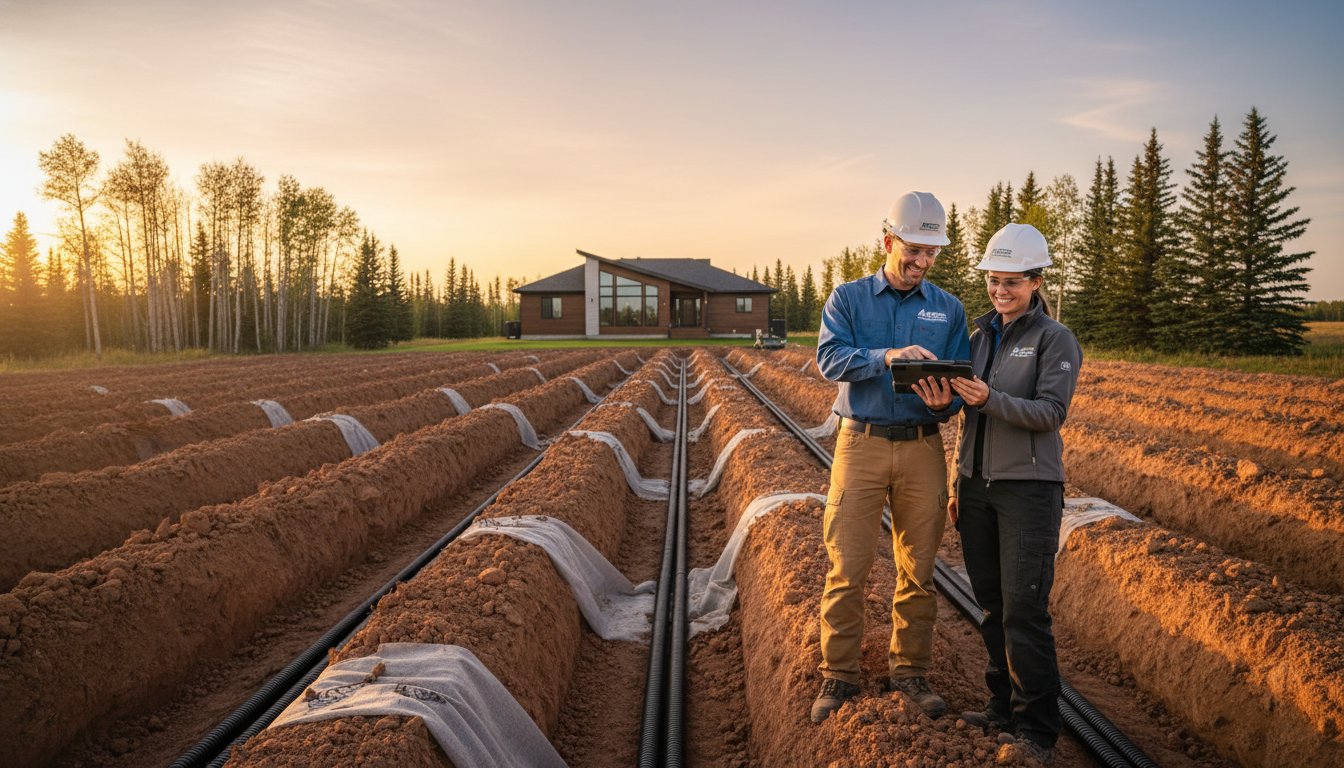
Your septic field isn't just a drainage area; it's a living biological filter that protects your family's health and your property's long-term value. You likely understand that living in North Central Alberta means taking full responsibility for your own utilities. It's a significant commitment that often comes with a fair share of technical confusion and worry about potential repair costs. We know that the thought of a system failure is stressful, but a properly engineered septic field installation is a manageable project when you have the right data and professional support.
This guide will help you master the complexities of the process, from interpreting the Alberta Private Sewage Systems Standard of Practice to selecting a system that handles our specific regional soil conditions. You'll learn exactly how soil testing and provincial regulations impact your long-term investment. We will walk through the essential steps of permitting in Parkland County and the engineering choices that ensure your system remains a silent, reliable asset for decades. By the end, you'll have a clear roadmap to a compliant, high-performing system that safeguards your home and provides total peace of mind.
Key Takeaways
- Understand how a septic field functions as the final treatment stage for your wastewater, ensuring the long-term sanitary protection of your rural property.
- Learn why North Central Alberta’s heavy clay soils and unique climate make mandatory site evaluations and soil percolation tests essential for a successful system design.
- Determine whether to repair or replace your system by identifying "biomat" buildup and why a new septic field installation provides the best return on your home investment.
- Master the five-step installation journey-from provincial permitting to final inspection-to ensure your project remains compliant with Alberta’s strict environmental regulations.
- Discover the value of working with a Certified Onsite Wastewater Practitioner to safeguard your family’s health and provide a permanent solution to complex drainage issues.
What is Septic Field Installation and Why is it Critical for Your Rural Property?
A septic field installation represents the final, most critical stage of your home's wastewater treatment process. While many homeowners focus on the septic tank, the field, often called a leach field or drain field, is where the real work happens. It's a sophisticated biological engine designed to return clean water to the environment. Without a properly engineered field, your property faces risks ranging from soggy lawns to the contamination of local Alberta aquifers. Professional installation ensures that this process remains invisible and effective for decades.
The core of the system relies on a natural biological process. As wastewater enters the soil, a community of beneficial microbes goes to work. These organisms break down organic matter and neutralize harmful pathogens. This isn't just a disposal method; it's a treatment facility located right under your grass. Because this process depends on the specific chemistry and structure of your land, a professional septic field installation is the only way to ensure the water reaching the groundwater is pristine and safe for your community.
The Anatomy of a Modern Septic System
A functional system relies on a two-step process to keep your property sanitary. First, the septic tank acts as a primary clarifier. Inside the tank, heavy solids settle to the bottom while oils and greases float to the top. This leaves a middle layer of liquid known as effluent. This effluent moves from the tank into the distribution network of the field through a series of perforated pipes or chambers.
The soil mantle acts as your property’s natural filtration system. As effluent trickles through the soil layers, the earth captures fine particles and provides a home for the bacteria that clean the water. This provides a high level of protection for the environment, turning household waste into a resource that recharges the local water table. It's a vital investment in your home’s health that prevents the mechanical failure of your plumbing.
Why "Standard" Solutions Don’t Work in Alberta
Every septic field installation must adhere to the Alberta Private Sewage Standard of Practice. These provincial regulations ensure that systems are tailored to the specific soil profile of your land. You might notice that your neighbour’s system looks completely different from yours, and there's a good reason for that. One lot might consist of sandy loam that drains quickly, while another lot just 200 metres away might sit on heavy clay that requires a more complex engineering approach.
Generic, "one-size-fits-all" systems often lead to surface discharge, where untreated wastewater pools on the ground. This creates an immediate environmental hazard and violates local health codes. By following the 2015 Alberta Standard of Practice, we ensure your system is sized correctly for your daily water usage and your soil's capacity. This diligent approach provides the peace of mind that comes from knowing your home infrastructure is built to last and designed to protect your family's safety.
The Alberta Site Evaluation: Why Soil and Climate Dictate Your System Design
Every successful septic field installation begins with a rigorous site evaluation mandated by the Alberta Private Sewage Systems Standard of Practice. In Spruce Grove and surrounding Parkland County, we don't just guess what's underground. We must account for North Central Alberta’s heavy clay soils, which often possess low hydraulic conductivity. This means the soil resists the flow of water, potentially leading to surface ponding if the system isn't sized correctly. A professional evaluation ensures your investment remains functional and sanitary for decades.
The "Frost Factor" is a non-negotiable reality in our region. With Edmonton winters frequently dipping below -30°C, frost can penetrate deep into the earth. We typically install lines at depths of 1.5 to 2 meters or utilize specialized insulation to prevent the system from freezing solid. Additionally, the groundwater table in Parkland County varies significantly. If the water table is too high, it can flood the drainage field, causing a total system failure and risking environmental contamination.
Soil Classification: More Than Just Digging a Hole
Modern standards have moved beyond the simple "perc test" of the past. Today, we conduct detailed soil profile assessments by digging 2.5-meter deep test pits to analyze soil texture and structure. This process identifies how effectively the effluent will be treated before it reaches the water table. We look for signs of "gleying" or mottling, which indicate seasonal high water levels that could compromise the system. A limiting layer is the specific depth where the soil's ability to treat and filter wastewater effectively stops due to saturation, bedrock, or impermeable clay.
Topography and Setback Requirements
Your property’s layout dictates where a system can legally and safely exist. Alberta regulations require strict setbacks to protect your family and the local environment. For instance, a septic field must be at least 15 meters from any water well and 5 meters from your property line. These distances prevent cross-contamination and ensure the longevity of your home’s infrastructure.
- Slope Dynamics: Steep grades may require pressure-distribution systems to ensure effluent is spread evenly across the field.
- Gravity vs. Pressure: While gravity-fed systems are simpler, many Spruce Grove acreages benefit from the precision of a pump-assisted setup.
- Location Selection: We look for high, dry ground that diverts surface runoff away from the drainage area.
Choosing the right spot is an investment in your property’s long-term health. If you're planning a new build or replacing a failing system, starting with a professional assessment for your septic field installation provides the peace of mind that your infrastructure is built to last.
Repair vs. Full Septic Field Installation: Making the Right Long-Term Investment
When a drain slows down or a yard begins to smell, the first instinct for many Spruce Grove homeowners is to ask if a quick pipe cleaning can fix the problem. While minor blockages in the main line are repairable, most field issues stem from the soil's inability to absorb effluent. Over decades, a biological layer known as "biomat" develops. This is a dense mat of bacteria and organic solids that naturally forms where the pipe meets the soil. While it helps filter waste, it eventually grows so thick that it acts like a waterproof seal. Once this barrier becomes impermeable, the soil is effectively exhausted. No amount of pipe flushing or chemical additives will restore its original absorption capacity.
Choosing a new septic field installation is a strategic move for your property's health. In the Alberta real estate market, a failing system is a significant liability. Home inspections often identify aged fields, leading to price reductions of C$20,000 or more during negotiations. By proactively replacing a reaching-end-of-life system, you protect your home's equity and avoid the stress of an emergency failure during a sale.
Signs Your Current Field has Reached its Limit
Watch for spongy, wet patches in your yard even during dry spells. Lush, bright green grass over the lateral lines might look healthy, but it's a classic red flag. This indicates that effluent is rising to the surface to find moisture rather than soaking deep into the ground. If you notice gurgling sounds in your plumbing or persistent sewer odors outdoors, your system is likely at its capacity. A professional inspection costs significantly less than an emergency cleanup after a full backup into your basement. Identifying these signs early allows for a planned septic field installation rather than a panicked response to a flood.
New Installation Benefits: Efficiency and Peace of Mind
Modern technology has changed how we handle wastewater. Traditional gravel trenches are often replaced by high-efficiency chamber systems, such as Infiltrator products, which provide more surface area for treatment and better oxygen flow. You can also opt for Type 2 or Type 3 systems. These advanced setups use specialized treatment components to remove more contaminants before the water even reaches the soil. This higher level of treatment protects your property's environmental integrity for 25 years or more. A properly sized, modern field lowers your long-term maintenance costs and ensures your family's daily comfort remains uninterrupted.

The Installation Journey: From Permitting to Final Backfill
A successful septic field installation follows a methodical path to ensure your home remains sanitary and your property value stays protected. In North Central Alberta, this process typically spans 14 to 21 days from the initial site visit to the final completion. Every project is led by a Certified Onsite Wastewater Practitioner (COWP), a professional specifically trained to meet the 2015 Alberta Private Sewage Systems Standard of Practice. This certification is mandatory in Alberta and guarantees that your system is designed to handle the specific clay-heavy or sandy soil conditions found around Spruce Grove.
- Design: Your COWP conducts a soil profile and percolation test to determine the field's size and depth.
- Permitting: Technical drawings and site plans are submitted to the local municipality for approval.
- Excavation: Heavy machinery clears the area and installs the septic tanks and lateral distribution lines.
- Inspection: A municipal safety codes officer verifies the installation before any soil covers the components.
- Completion: The team backfills the soil and prepares the surface for final landscaping.
Navigating Alberta Permits and Regulations
Permit requirements vary depending on whether you're located in Parkland County, Leduc County, or Strathcona County. Each jurisdiction has specific setback distances from property lines and water sources that must be strictly followed. You don't need to worry about the administrative burden; Best Cistern Septic Solutions manages the entire application process. We ensure your site-specific design plan meets all safety codes before the first shovel hits the ground, preventing costly delays or fines from municipal authorities.
Heavy Equipment and Site Impact
When the excavators arrive, they'll be moving significant volumes of earth to accommodate the 4,500-litre or 6,800-litre tanks common in modern residential systems. This process will temporarily disrupt your landscape, but it's a necessary step for long-term system health. The backfill phase is the most critical for winter protection in our climate. We mound the soil slightly higher than the surrounding grade to account for natural settling over the first 12 months. This prevents water from pooling over the field, which can lead to freezing during -30°C Alberta winters. Once the soil stabilizes, establishing a healthy grass cover within 30 days is essential to prevent erosion and protect the integrity of the septic field installation.
Safeguarding Your Rural Home with Best Cistern Septic Solutions
Choosing a partner for your home infrastructure is a significant decision that affects your property's value and your family's daily comfort. In Spruce Grove and the surrounding Parkland County, a septic field installation represents a long-term investment in your land's health. We don't view these systems as mere underground pipes; they are the silent protectors of your home's sanitary environment. Our team approaches every project with a commitment to professional integrity and technical precision, ensuring that once we leave your site, you have total peace of mind. We take pride in being the trusted specialist that homeowners turn to when they need a system that works reliably for 20 to 25 years.
Our Local Expertise in North Central Alberta
The geography of North Central Alberta presents specific challenges that generic contractors often overlook. Parkland County is characterized by heavy clay soils that require specialized design to facilitate proper drainage and effluent filtration. We understand how the intense freeze-thaw cycles of the Edmonton area impact pipe depth and tank insulation requirements. Our team maintains a 100% compliance record with the 2015 Alberta Private Sewage Systems Standard of Practice. We coordinate directly with municipal permit offices and local inspectors to ensure your system meets every provincial regulation. If your current drainage area is showing signs of age but hasn't failed completely, we also offer expert Septic Field Repair services to restore functionality without the cost of a full replacement.
The "Solutions" Promise: Beyond the Installation
Our company name reflects our core philosophy. We provide solutions, not just services. This means we look at your rural property holistically, often integrating septic systems with cistern water storage to create a complete, secure water cycle for your household. We believe an informed homeowner is a protected homeowner. After a septic field installation, we walk you through a customized maintenance plan. This education helps you avoid common pitfalls like soil compaction or the introduction of harmful chemicals into your bacterial ecosystem. Our support continues long after the soil is leveled.
- Site-Specific Engineering: We tailor every design to your property's unique slope and soil composition.
- Regulatory Management: We handle all paperwork and inspections with Parkland County authorities.
- Proactive Monitoring: We offer guidance on long-term system health to prevent emergency backups.
- Integrated Water Security: We align your wastewater management with your potable water storage needs.
Your home deserves a wastewater system that functions flawlessly beneath the surface. We are here to ensure that your rural lifestyle remains uninterrupted by infrastructure failures. We treat your property with the same care we would our own, focusing on longevity and sanitary safety above all else. Contact us for a professional site evaluation today.
Securing Your Property’s Future with a Reliable Septic System
Investing in a professional septic field installation is one of the most significant steps you'll take to protect your rural North Central Alberta home. By prioritizing a thorough site evaluation and adhering strictly to the 2021 Alberta Standard of Practice, you ensure your wastewater system remains sanitary and functional for decades. A well-designed system isn't just about regulatory compliance; it's a vital investment in your property's health and your family's peace of mind.
Our team at Best Cistern Septic Solutions manages every detail of the journey. We provide end-to-end service, handling everything from the initial soil testing and municipal permitting to the final backfill and inspection. We're proud to serve our neighbors with certified expertise that transforms a complex technical requirement into a straightforward, manageable project. You don't have to navigate the technicalities of effluent management alone when a local specialist is ready to help.
Take the first step toward a worry-free home today. Book Your Professional Septic Site Evaluation in Spruce Grove. We look forward to helping you safeguard your property for years to come.
Frequently Asked Questions
How long does a typical septic field installation take in Alberta?
A typical septic field installation takes 3 to 5 business days for the physical construction once the design is approved. The entire process, including the site evaluation and the mandatory 14 day waiting period for permit processing in Alberta, usually spans 3 to 4 weeks. We ensure every stage follows a methodical timeline so your property remains safe and the system’s integrity is never compromised.
Can I install my own septic field if I own the property in Parkland County?
You cannot install your own septic field in Parkland County unless you hold a valid Private Sewage Installer certificate issued by the Safety Codes Council. Alberta regulations require a certified professional to pull the necessary permits and oversee the work to protect local groundwater. Hiring a specialist ensures your system meets the 2021 Alberta Private Sewage Standard of Practice, safeguarding your family and the environment.
What is the average lifespan of a new septic field in North Central Alberta?
A properly designed septic field in North Central Alberta typically lasts between 20 and 25 years. This longevity depends on regular maintenance, such as pumping your tank every 2 to 3 years to prevent solids from reaching the soil. We view a high quality installation as a long term investment in your home’s health. By managing effluent flow correctly, you prevent soil clogging and ensure the system protects your property for decades.
Will a new septic field installation increase my property value?
A new septic field installation can increase your property value by ensuring the home meets modern health codes and environmental standards. Prospective buyers in Spruce Grove often prioritize the integrity of wastewater systems during inspections. Having a certified, documented system provides peace of mind and eliminates the risk of a C$15,000 to C$30,000 replacement cost for the next owner, making your home a more secure investment.
What is the best time of year for septic field installation in Edmonton?
The best time for installation in the Edmonton area is between May and October when the ground is thawed and dry. Construction during these months allows for accurate soil compaction and prevents frost from damaging the new pipes. We schedule most projects during this window to ensure the soil maintains its natural drainage capacity, which is vital for the long term performance of your system.
How much space do I need on my lot for a modern septic field?
Most modern septic fields require between 1,500 and 5,000 square feet of dedicated space depending on your home’s bedroom count and soil quality. Alberta regulations also mandate specific setback distances, such as 15 metres from a water source and 5 metres from a property line. Our team calculates these precise dimensions during the site evaluation to ensure your system operates safely within your lot’s specific footprint.
What happens if my soil fails the percolation test?
If your soil fails a standard percolation test due to high clay content or a high water table, we implement alternative solutions like a mound or at-grade system. These designs use imported sand or specific chambers to treat effluent before it reaches the restricted soil layer. While these systems require different engineering, they provide a reliable way to manage wastewater while maintaining the sanitary integrity of your property.
Does the 2021 Alberta Standard of Practice affect my existing system?
The 2021 Alberta Private Sewage Standard of Practice does not require you to upgrade a functioning existing system immediately. However, if you plan a major renovation or if your current field fails, the new installation must comply with these updated safety and environmental rules. We help homeowners navigate these 2021 standards to ensure any repairs or replacements provide the highest level of protection for their household.


