
What if the most expensive component of your rural property was something you never actually saw until it failed? For many homeowners in North Central Alberta, the septic system is a silent partner that only demands attention when something goes wrong. It's completely natural to feel a sense of unease about what's happening beneath your lawn, especially when you consider the high cost and significant disruption of a full system replacement. You want the security of knowing your home is protected, and focusing on extending the life of your septic drain field is the most effective way to ensure that safety.
This guide shares professional strategies used by local experts to protect your investment and maintain system integrity. We'll show you how to manage the heavy "Edmonton Clay" and harsh winter frost lines that define our region's environment. You will learn how a proactive maintenance schedule and smart water habits can prevent backups and keep your system functioning efficiently for decades. By the end of this article, you'll have a practical roadmap for system durability and the peace of mind that comes with a job well done.
Key Takeaways
- Understand how the biomat acts as a biological engine to treat effluent and why maintaining this delicate bacterial balance is vital for system health.
- Learn how managing your household's daily hydraulic load is the single most effective strategy for extending the life of your septic drain field.
- Identify the best practices for protecting the physical area above your field from compaction and weight to ensure proper oxygen exchange.
- Discover specific strategies for North Central Alberta to protect your pipes and bacterial activity from deep frost during the winter months.
- Recognize how regular professional inspections provide a clear diagnostic report of your system's health, offering peace of mind and preventing costly replacements.
Understanding the Biological Engine: How Your Septic Drain Field Works
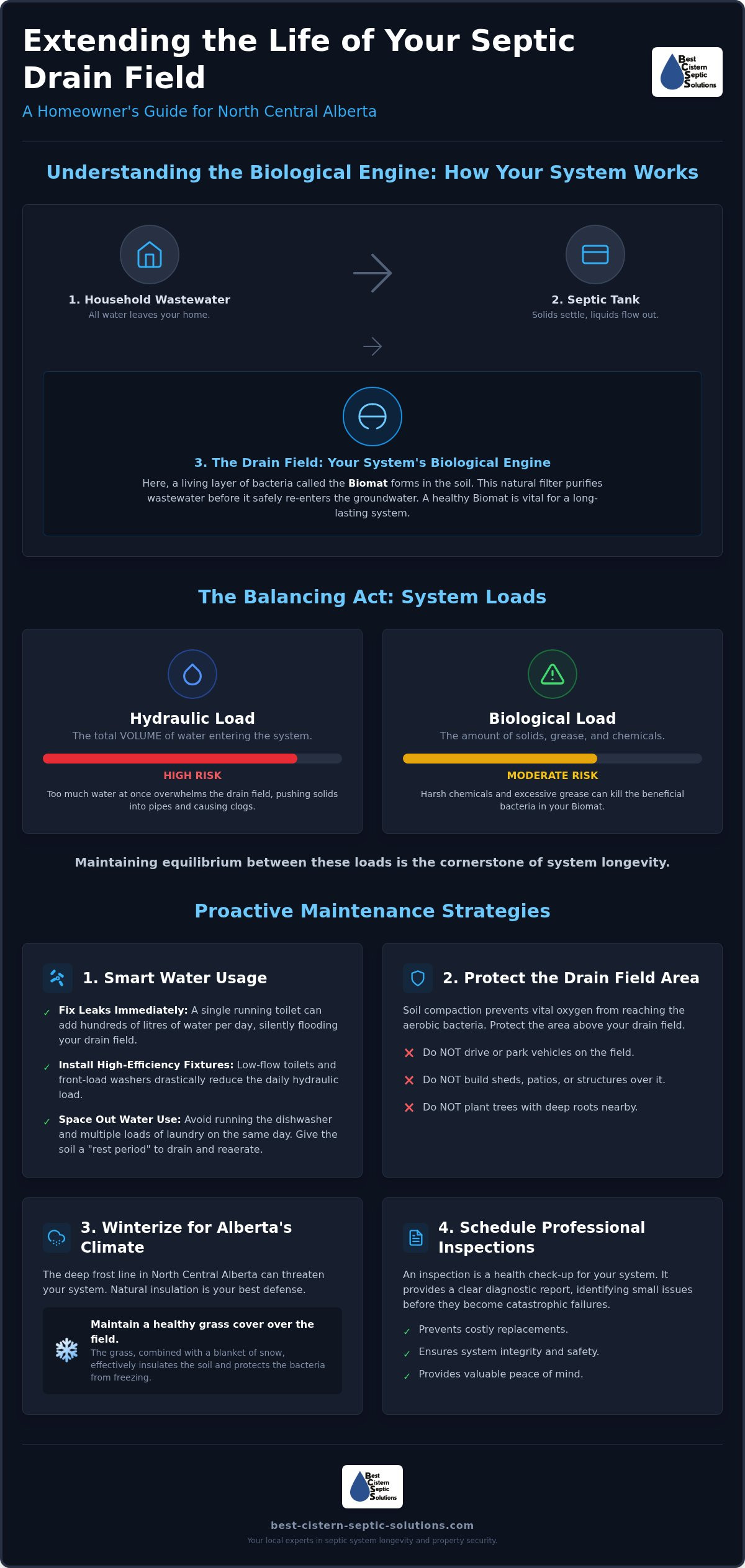
A septic system is much more than a simple holding tank buried in the yard. While the septic tank acts as a primary settling chamber to separate solids from liquids, the septic drain field serves as the system's biological engine. In North Central Alberta, where we often manage dense "Edmonton Clay" and significant frost depths, understanding this distinction is the first step toward property security. The drain field is the final treatment stage where wastewater undergoes purification before safely returning to the groundwater. Viewing this infrastructure as a long-term property asset, rather than a "set and forget" utility, is essential for extending the life of your septic drain field.
The heart of this treatment process is the "biomat." This is a concentrated layer of specialized bacteria that naturally forms where the gravel trenches meet the soil. This living filter slows the flow of effluent, allowing microbes to consume pathogens and organic matter. A healthy biomat ensures that the water leaving your system is clean and safe. However, this biological layer is delicate. It requires a specific environment to thrive, and its health directly dictates how long your system will remain functional.
The Role of Soil Microbes in Wastewater Treatment
Soil microbes are the silent workers that keep your rural property safe. Both anaerobic bacteria (which live without oxygen) and aerobic bacteria (which require it) work in tandem to break down contaminants. Oxygen transfer through the soil is vital for these aerobic microbes to perform their duty. When soil becomes saturated or compacted, oxygen levels drop, which can stall the biological treatment process. Additionally, using harsh chemical cleaners or excessive bleach acts as a toxin to these beneficial microbes. Once you "kill" the biological engine, the field can no longer process waste, leading to premature failure and the need for a professional fix.
Hydraulic Load vs. Biological Load: Finding the Balance
Proper management involves balancing two distinct pressures on your system:
- Hydraulic Load: This is the total volume of water entering the system. If you run multiple heavy loads of laundry while the dishwasher is operating, you risk "surcharging" the field with more liquid than the soil can absorb.
- Biological Load: This refers to the amount of organic matter, fats, and chemicals in the wastewater.
An imbalance occurs when excessive water pushes solids out of the tank before they've settled, or when high concentrations of organic waste overwhelm the bacteria. Maintaining this equilibrium is a cornerstone of extending the life of your septic drain field. By managing these loads, you ensure the biomat remains an efficient filter rather than a clogged barrier.
Managing the Hydraulic Load: Water Conservation Strategies
Excessive water volume is the primary cause of premature field failure in rural Alberta. When too much water enters the tank at once, it lacks the necessary time to settle. This forces suspended solids and grease into the soil pipes, where they clog the pores of the "Edmonton Clay" common in our region. Following established guidelines for septic system maintenance is a fundamental defense against these avoidable repairs. By controlling the amount of liquid your system processes, you protect the biological engine from being overwhelmed.
Soil requires a "rest period" to function effectively. This is the time between water usage events when liquid drains away and oxygen returns to the soil pores. Without this oxygen, the aerobic bacteria essential for treatment cannot survive. Fixing leaky fixtures is a vital part of this process. A single running toilet can leak hundreds of litres of water per day, causing a "silent flood" that keeps the drain field permanently saturated and unable to breathe.
High-Efficiency Fixtures and Appliances
Upgrading to high-efficiency fixtures is a proactive step toward extending the life of your septic drain field. Low-flow toilets and aerated showerheads significantly reduce the daily hydraulic load without sacrificing performance. Front-loading washing machines are particularly beneficial because they often use significantly less water than traditional top-loading models. Effluent surging occurs when a sudden, massive volume of water enters the tank, stirring up settled solids and pushing them directly into the absorption trenches where they cause permanent damage.
Managing Surge Flows: Laundry and Dishwashing Habits
The habit of a "Laundry Day," where a week's worth of clothes is washed in a single afternoon, is a common mistake for rural homeowners. Spreading these loads across the week allows the system to recover and process effluent at a manageable pace. Similarly, you should avoid running the dishwasher at the same time as the shower or the washing machine. For those using stored water, proper cistern maintenance ensures that your pump delivers consistent pressure without creating unnecessary water waste from fluctuating flows.
Managing these daily habits creates a predictable environment for your system. It removes the stress of potential backups and ensures your infrastructure remains a durable asset for your property. If you are concerned about your current water usage or notice slow drains, a professional septic system inspection can provide the clarity you need to move forward with confidence. By respecting the hydraulic limits of your soil, you are making a long-term investment in your household's safety.
Protecting the Physical Infrastructure: Above-Ground Best Practices
Treating the area above your drain field as a "sacred" space is one of the simplest yet most effective ways to protect your property's value. While the biological engine discussed earlier does the heavy lifting, the physical environment surrounding your pipes is equally critical. To succeed in extending the life of your septic drain field, you must ensure the surface remains undisturbed and well-drained. Many homeowners mistakenly believe that lush, vibrant green grass over the trenches is always a sign of a healthy system. In reality, exceptionally green, spongy, or wet turf often indicates that the field is surcharging and failing to process effluent properly. Referencing Septic System Basics can help you visualize how the soil surface interacts with the underlying treatment process.
Landscaping Dos and Don'ts for Septic Fields
Choosing the right vegetation is a vital part of proactive property care. Shallow-rooted grasses and local wildflowers are the only recommended choices because they stabilize the soil without interfering with the buried infrastructure. Conversely, trees and large shrubs are known "system killers" whose invasive roots naturally seek out the nutrient-rich water inside your pipes. These roots can penetrate joints and cause massive, expensive blockages. When planning your yard, keep in mind that professional septic field installation involves precise engineering of slopes and runoff patterns. Adding heavy mulch, plastic liners, or landscape fabric over the field can trap moisture and prevent the soil from "breathing," which ultimately drowns the essential bacteria your system relies on.
Preventing Soil Compaction and Structural Damage
Soil compaction is a silent threat that many rural residents overlook until it's too late. When you drive a vehicle, park a trailer, or allow livestock to graze over the field, the weight compresses the earth. This pressure does more than just risk cracking or crushing lateral pipes. It seals the microscopic pores in the soil, which is particularly problematic in the dense clay found across North Central Alberta. These pores are necessary for oxygen to reach the aerobic microbes that treat the wastewater. Without this airflow, the treatment process stalls and the field becomes a clogged mass. To maintain system integrity, keep the following off your field:
- Personal vehicles, trailers, and snowmobiles
- Heavy garden equipment or construction machinery
- Permanent structures like sheds, above-ground pools, or decks
Redirecting surface water is also a key responsibility. Ensure that downspouts, driveway runoff, and sump pump discharges are pointed away from the drain field. Excess surface water can saturate the soil from the top down, leaving no room for the effluent coming from the tank. By maintaining a clear, porous, and dry surface, you are actively extending the life of your septic drain field and ensuring your system remains a reliable asset for your home.
Winterization and Local Challenges in North Central Alberta
Winter in North Central Alberta presents a unique set of challenges for rural property owners. In Parkland and Leduc Counties, the extreme cold doesn't just affect your comfort; it directly impacts the biological and mechanical health of your utility systems. When temperatures plummet, the microbial activity within the biomat slows down significantly. This makes the system less efficient at processing waste. Protecting the residual heat within the tank and field is a critical component of extending the life of your septic drain field during the harshest months of the year.
One of the most effective tools you have is actually free: snow. A thick layer of uncompacted snow acts as a natural thermal blanket, insulating the ground against deep frost penetration. Homeowners who clear snow off their field for winter activities or use the area as a snowmobile path inadvertently drive frost deeper into the soil. This can lead to frozen lateral pipes and a complete system backup that can't be resolved until the spring thaw.
Managing Freeze-Thaw Cycles in the Capital Region
The freeze-thaw cycles common in the Edmonton area can be particularly damaging to infrastructure. While we often think of "the big freeze," it's the small, consistent "drip" leaks that cause the most trouble in winter. A slow-leaking faucet or toilet creates a constant, low-volume trickle of water that can freeze inside the pipe before it reaches the tank, leading to ice damming. In Alberta, typical frost depths can reach up to 2.5 metres, making the thermal protection of septic systems a top priority for preventing seasonal failure.
Dealing with Alberta’s Heavy Clay Soils
The heavy clay soils found in areas like Sturgeon County retain moisture much longer than sandy alternatives. If these soils are saturated when the first hard frost hits, the water inside the clay expands as it freezes, which can shift pipes or crush the delicate soil pores needed for treatment. Because percolation rates are already low in clay, any structural damage from ice expansion further restricts the system's capacity. If you've noticed slow drainage in the fall, a professional septic system repair may be necessary to remediate clogged areas before the ground stays frozen.
To ensure your system remains operational throughout the winter, follow this simple readiness checklist:
- Stop mowing the grass over the field in late September to help trap the first snowfall.
- Insulate your septic tank lids with specialized foam covers or a layer of straw.
- Ensure all internal plumbing leaks are repaired before the first frost.
- Keep all vehicles and heavy equipment off the field to prevent snow compaction.
Taking these proactive steps provides the security you need to face an Alberta winter without the stress of a utility failure. If you haven't had your system checked recently, don't wait for the ground to freeze. Schedule a winter readiness inspection to confirm your system is prepared for the cold months ahead.
The Professional Advantage: Inspections and Timely Repairs
Regular professional inspections are the most cost-effective form of insurance for your rural property. While daily habits like water conservation and proper landscaping are vital, they cannot replace the technical insight provided by a diagnostic evaluation. Many homeowners only think about their system when a backup occurs, but by then, the damage to the soil may already be significant. Committing to a scheduled review is the most reliable method for extending the life of your septic drain field. These visits allow experts to identify small mechanical failures before they escalate into an environmental or financial crisis.
During a professional evaluation, a technician performs several critical checks. They measure the sludge and scum levels within the tank to ensure that solids aren't nearing the outlet pipe. They also verify the integrity of the baffles, which are the physical barriers that prevent grease and floating debris from entering the absorption trenches. If you notice early warning signs like gurgling pipes, slow drains, or a persistent "rotten egg" odour near the field, don't assume the worst. A smelly field is often a symptom of a manageable issue, such as a clogged vent or a temporary biological imbalance, rather than a total system failure.
Why Inspections Prevent Total Field Replacement
Identifying a failing effluent pump or a broken baffle early can save your entire drain field from contamination. When these components fail, the field is often flooded with untreated solids that seal the soil pores permanently. Modern diagnostic tools, such as high-resolution camera inspections, allow us to see inside the lateral lines to find root intrusions or crushed pipes without digging up your yard. This level of detail is a hallmark of professional septic service in Edmonton, providing you with clear compliance reports and a definitive plan for system longevity.
When to Call Best Cistern Septic Solutions
If your system is struggling, a total replacement isn't always the only answer. Our team specializes in field rejuvenation and targeted repairs that can restore functionality to a sluggish system. We understand the specific regulatory requirements in Alberta and the unique soil challenges of Parkland and Leduc Counties. Whether you need a simple baffle repair or a complex diagnostic report, our goal is to provide you with the clarity and peace of mind that your essential utilities are secure. We take pride in being a proactive partner in your property care, ensuring that every professional fix is a long-term asset for your home. Contact us for a professional septic system evaluation to protect your investment and ensure your system continues extending the life of your septic drain field for years to come.
Secure the Future of Your Rural Property
Maintaining a healthy septic system is a continuous process of balancing biological health with mechanical integrity. By managing your daily water volume and protecting the soil surface from compaction, you are actively extending the life of your septic drain field. These proactive habits, combined with an understanding of Alberta's deep frost lines and heavy clay soils, ensure your system remains a reliable asset rather than a source of stress. You don't have to manage these complexities alone.
We specialize in rural utility system longevity across Parkland, Leduc, and Sturgeon Counties. Our team provides the expert diagnostic reporting and specialized repairs needed to keep your infrastructure functioning efficiently for decades. Whether you are moving into a new rural home or looking to restore a sluggish field, a professional evaluation is the definitive way to remove future worries. Protect your property with a professional septic inspection from Best Cistern Septic Solutions. With the right care and local expertise, a professional fix is always available to keep your household safe and secure.
Frequently Asked Questions
How long does a typical septic drain field last in Alberta?
A well-maintained septic system in the Edmonton area typically has a functional lifespan of 25 to 40 years. However, factors like the heavy clay soil and harsh winters can impact this duration. Regular maintenance and water conservation are the most effective ways of extending the life of your septic drain field beyond the average timeframe. Ensuring your system complies with the 2021 Standard of Practice also protects its long-term viability.
Can I use septic tank additives to extend the life of my drain field?
Most industry professionals agree that additives are unnecessary for a healthy system. A properly functioning septic tank already contains all the bacteria needed to break down waste naturally. In some cases, chemicals can actually disrupt the biological engine or cause solids to stay suspended longer, allowing them to flow into and clog the drain field. Focus on regular inspections rather than retail products to ensure your system remains a durable property asset.
What are the first signs that my septic drain field is failing?
Common early warning signs include slow-draining sinks, gurgling sounds in your plumbing, or persistent sewage odors near the field. You might also notice patches of exceptionally lush, green, or spongy grass over the trenches even during dry weather. If you see these symptoms, it's a signal that the soil can no longer absorb effluent efficiently. Addressing these signs early through professional repair can often prevent the need for a total system replacement.
Is it safe to plant a vegetable garden over my septic field?
You should never plant a vegetable garden or any edible crops over a septic drain field. There is a significant risk of bacterial or viral contamination from the effluent being treated in the soil. Additionally, the frequent digging and watering required for a garden can interfere with the field's ability to breathe and process waste. Stick to shallow-rooted grasses or native wildflowers to keep the area secure, functional, and safe for your family.
How often should I have my septic system professionally inspected?
We recommend a professional inspection every one to three years depending on your household size and water usage. These regular checkups allow a technician to monitor sludge levels and verify that mechanical components, like baffles and pumps, are in good working order. Consistent monitoring is a proactive strategy for extending the life of your septic drain field by catching minor issues before they require expensive and disruptive replacements.
Does a garbage disposal impact the lifespan of my drain field?
Garbage disposals significantly increase the biological load on your system by introducing finely ground organic matter and grease. These solids take much longer to break down and can quickly fill your tank, leading to a higher risk of carryover into the drain field. If you choose to use one, you'll need to pump your tank much more frequently to prevent these solids from clogging the microscopic soil pores in your field.
What should I do if I notice standing water over my septic field?
Standing water is a clear sign that your system is surcharged and can no longer process wastewater. You should immediately reduce your household water usage to an absolute minimum and contact a specialist for a diagnostic evaluation. Avoid driving any equipment over the wet area, as this will compact the saturated soil and cause further damage. A professional can determine if the issue is a simple blockage or a more complex soil failure.
Can a failing septic drain field be repaired without replacing the whole system?
Yes, many failing fields can be restored through professional rejuvenation or targeted repairs. If the issue is caught early, we can often clear blockages, replace broken components, or use specialized techniques to restore soil porosity. A professional diagnostic report will identify whether your field can be saved or if a new installation is required. This approach provides a manageable resolution that avoids the high cost and stress of a total system replacement.


