
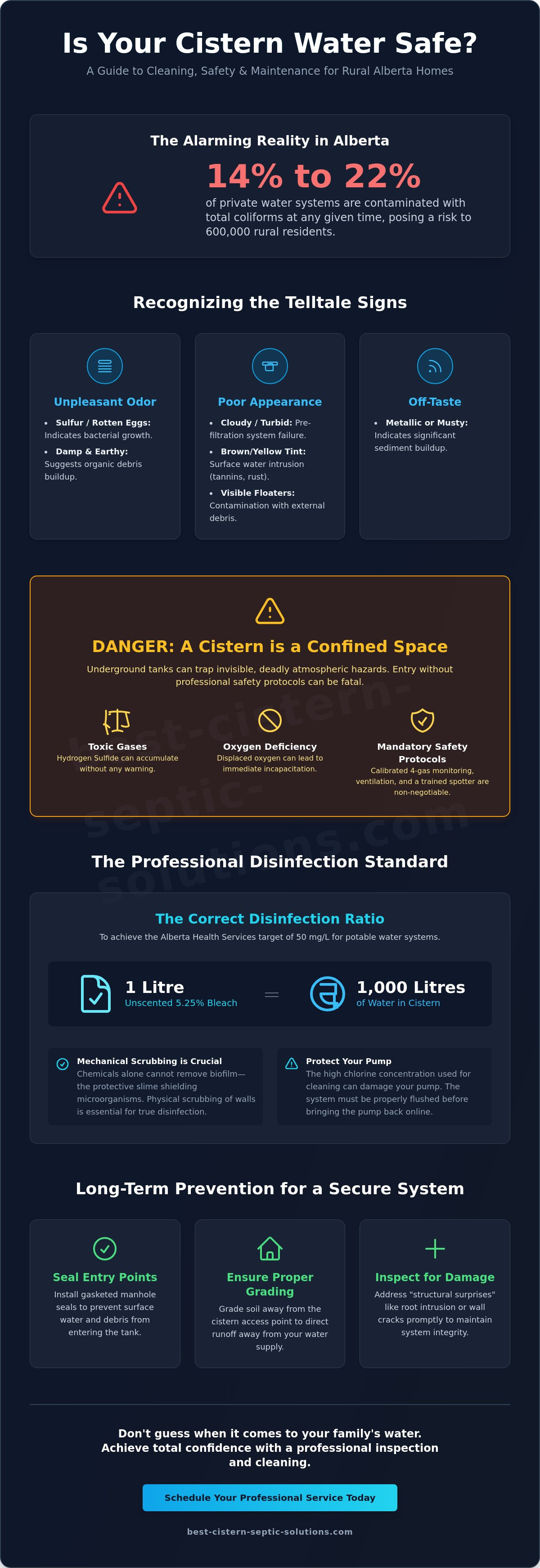
Did you know that between 14% and 22% of private water systems in Alberta are contaminated with total coliforms at any given time? For the 600,000 rural residents relying on independent water supplies, the safety of your household depends on the invisible conditions inside your storage tank. It's common to feel a sense of unease when you suspect your water quality is slipping, especially when the technical details of maintenance seem complex or physically daunting. You deserve to feel total confidence every time you turn on the tap.
We understand that identifying the specific signs your cistern needs cleaning is the first step toward a more secure home. This 2026 guide will help you spot critical warning signs of contamination and outline the professional safety protocols required to restore your rural water supply. We'll walk through the latest Alberta OHS confined space regulations and provide a clear maintenance checklist. You'll learn how to achieve a safe disinfection without damaging your cistern pump, ensuring your system remains a reliable, long-term asset for your property.
Key Takeaways
- Learn how to identify the specific signs your cistern needs cleaning, from subtle "earthy" odors to visible sediment that indicates a failure in your pre-filtration system.
- Understand the essential safety protocols required for confined space entry in Alberta, including why 4-gas atmospheric monitoring is a non-negotiable step for any tank inspection.
- Discover the precise ratios for using unscented household bleach to effectively disinfect your potable water supply while protecting the integrity of your cistern pump.
- Find out how simple structural upgrades, such as gasketed manhole seals and proper soil grading, can prevent future contamination and serve as a long-term asset for your property.
- Determine when a "structural surprise" like root intrusion or wall cracks requires a professional solution to ensure the safety and durability of your water storage system.
Recognizing the Signs Your Cistern Needs Cleaning & Understanding the Risks
After a heavy spring melt or a significant rainfall in North Central Alberta, your water system faces its toughest test. Runoff often carries organic debris and fine silt into your storage system, leading to distinct signs your cistern needs cleaning. You might notice a sharp sulfur smell, similar to rotten eggs, or a damp, earthy odor coming from your taps. These scents aren't just unpleasant; they indicate active bacterial growth and the presence of hydrogen sulfide gas. When these odors peak, it's a clear signal that the biological balance in your tank has shifted.
Visible floaters or cloudy water, known as turbidity, often mean your pre-filtration system has been bypassed or overwhelmed by external debris. In concrete tanks, a complex layer called biofilm develops on the interior walls over time. This biological "slime" acts as a protective shield for microorganisms, allowing them to resist standard chlorination treatments. To understand the fundamental role and structural requirements of these systems, you can learn more about What is a Cistern? and how it functions as a vital household utility. Addressing biofilm requires mechanical scrubbing rather than just adding chemicals, ensuring the long-term health of your water supply.
Sensory Red Flags: Taste, Odor, and Appearance
Your first clue that maintenance is overdue often comes from the kitchen tap. A metallic or musty taste suggests that sediment has accumulated to the point where it's affecting the water chemistry. If you see a brownish or yellowish tint in your bathtub, surface water has likely intruded into your supply, bringing tannins or rust with it. A simple way to verify this is the "clear glass test." Fill a clean glass with water and hold it against a white background in bright light. If you see fine, swirling particles or a lack of clarity, your tank requires a professional inspection to restore its potability.
The Hidden Danger: Atmospheric Hazards in Underground Tanks
The most critical risks in water systems aren't always visible or tasted. According to Alberta safety guidelines, a cistern is classified as a "Confined Space." These underground environments can trap toxic gases like Hydrogen Sulfide or become oxygen-deficient without any warning. Entering a tank without professional atmospheric testing is extremely dangerous and can be fatal. You should never attempt to enter a cistern without a trained spotter, specialized safety gear, and mechanical ventilation. Professional teams use calibrated 4-gas monitors to ensure the air is safe before any work begins, providing the security and peace of mind your household deserves. Proper maintenance is a long-term asset for your property that removes future worries once the job is done right.
Preparation for a Safe Cistern Cleaning in North Central Alberta
Setting the stage for a thorough cleaning ensures the process is efficient and safe. Before you begin, you'll need to secure a 24-hour backup water supply for your household, as the system will be offline during the disinfection and flushing phases. This proactive step prevents the stress of being without potable water while you address the signs your cistern needs cleaning. Handling these systems with care is a long-term investment in your home’s utility integrity and your family's health.
Essential Tools and Alberta-Approved Disinfectants
Choosing the correct chemical agent is the most critical part of the preparation phase. You should only use plain, unscented 5.25% household chlorine bleach. Avoid "splashless" or scented varieties, as these contain surfactants and perfumes that aren't safe for human consumption. According to the Alberta Health Services cistern cleaning guidelines, the target concentration for effective disinfection is 50 mg/L. This requires adding 1 litre of bleach for every 1,000 litres of water in your tank.
You'll also need full personal protective equipment (PPE), including waterproof gear, chemical-resistant gloves, and eye protection, to handle these concentrations safely. Beyond chemicals, you should have high-volume fans ready to cycle air into the tank for at least 15 minutes before any entry. This ensures any lingering gases are displaced and replaced with fresh, breathable air. Using the right tools is part of being a diligent property owner who values safety above all else.
Timing Your Maintenance with Seasonal Runoff
Timing is equally important, particularly for those living in Parkland and Leduc Counties. The spring thaw is the most critical season for cisterns in rural Alberta. As snow melts, the resulting heavy runoff can force bacteria and fine silt through aging manhole seals or compromised soil grading. By scheduling your maintenance immediately after the spring melt, you clear out any contaminants that entered during the runoff period.
This ensures your system remains a durable asset throughout the summer and prevents heavy sediment buildup that could lead to winter freeze-up issues later in the year. If you discover that your tank requires more than just a surface scrub, a professional Septic Maintenance review can help identify structural vulnerabilities before they become emergencies. Taking these steps now provides the peace of mind that comes with a reliable, clean water supply.
The Step-by-Step Disinfection Process for Potable Water Systems
Once you've identified the signs your cistern needs cleaning, the resolution involves a methodical, five-step process to restore water quality. The first step is to drain the tank safely. You must direct this water away from your home's foundation and septic field to prevent soil saturation or basement flooding. Using a submersible pump allows for a controlled discharge. It's essential to leave a few inches of water at the bottom to help suspend the remaining sediment, making it easier to remove during the muck-out phase.
Mechanical Cleaning and Sediment Removal Protocols
Biofilm thrives at the "water line" where oxygen and moisture meet. This sticky layer protects bacteria from chemical treatment, so manual agitation is necessary. Use stiff-bristled brushes to break down mineral deposits and organic slime on the walls. If you use a pressure washer, keep the nozzle at a safe distance to avoid etching the concrete walls, as pitted surfaces provide more hiding spots for future bacterial growth.
After scrubbing the walls, focus on the tank floor. You must manually remove the "sludge" or muck that has settled over time. This heavy material is often filled with fine silt and organic matter that can't be easily pumped out. Be careful not to let large debris enter your primary cistern pump intake, as this can cause mechanical failure or clog your household plumbing lines. Removing these solids ensures the shock chlorination that follows is actually effective rather than being neutralized by organic waste.
Shock Chlorination and Distribution Line Sanitization
Once the tank is scrubbed and refilled with fresh water, it's time for shock chlorination. This stage requires a critical 24-hour contact period to ensure total disinfection of the tank and all connected lines. You must draw the chlorinated water through every tap, showerhead, and outdoor hydrant until you smell a distinct chlorine scent. This process treats the entire distribution network, not just the storage tank itself.
Protecting your household infrastructure is a vital part of this process. It's essential to bypass any carbon filters, water softeners, or UV systems before you start, as high chlorine concentrations can damage delicate membranes and filter media. Don't forget to run the chlorinated water into your hot water tank and pressure vessels to ensure no pockets of untreated water remain. After the 24-hour period, flush the system thoroughly until the chlorine scent is completely gone. This methodical approach provides the peace of mind that your water is safe, turning your utility system back into a reliable, long-term asset for your property.
Professional vs. DIY: When to Call the Experts
While many homeowners are comfortable with basic property maintenance, the physical reality of entering an underground tank introduces risks that require a specialized approach. Once you've identified the signs your cistern needs cleaning, you must decide if the task exceeds your available safety equipment. In Alberta, a cistern is classified as a confined space under Part 5 of the Occupational Health and Safety (OHS) Code. These regulations aren't just for commercial sites; they exist to prevent accidents in residential systems where ventilation is naturally poor.
Professional teams bring high-volume vacuum systems that extract deep sediment more effectively than manual scrubbing alone. This equipment ensures that fine silt, which often harbors bacteria, is completely removed from the tank floor. Beyond the cleaning itself, a professional presence ensures your maintenance aligns with broader provincial septic systems regulations, protecting the long-term value of your property. This thoroughness turns a routine chore into a durable asset for your home.
Technical Advantages of Professional Atmospheric Testing
The most significant advantage of hiring an expert is the use of calibrated 4-gas monitors. These devices detect odorless, lethal gases like hydrogen sulfide and methane, while simultaneously monitoring oxygen levels before any entry occurs. Professionals also implement "Lock-Out, Tag-Out" procedures to ensure pumps don't activate while someone is inside the tank. A trained "spotter" remains at the surface at all times, equipped for emergency extraction and constant communication. This level of security provides a resolution to safety concerns that DIY methods simply cannot match.
Structural Inspections and Repairing Tank Integrity
A deep cleaning often reveals the "Structural Surprise," which is damage hidden beneath the water line or sediment layer. Experts look for root intrusion through seams, compromised vent screens that allow rodents entry, and "spalling," where concrete begins to flake and weaken. If a cleaning reveals that your tank is losing water or allowing surface runoff to seep in, you may need a septic system repair or a specialized cistern patch to prevent contamination. Identifying these issues early prevents a total system failure and ensures your household's security. For a comprehensive evaluation of your water storage and waste systems, explore our professional Septic Solutions to ensure your home remains safe and functional.
Preventative Maintenance: Keeping Your Alberta Water Storage Clean
Maintaining a clean water supply is an ongoing commitment to your property's health. While recognizing the signs your cistern needs cleaning helps you react to immediate threats, a proactive approach prevents those issues from ever taking root. By investing in high-quality components and regular site maintenance, you transform your water system into a durable asset that provides peace of mind for your family. Prevention is always more manageable and cost-effective than a total system restoration.
One of the most effective upgrades you can make is installing a watertight, gasketed manhole cover. Standard concrete lids often lack a proper seal, allowing dust, insects, and fine debris to enter the tank. Replacing worn gaskets ensures a secure barrier against the elements. Additionally, your landscaping plays a vital role in water safety. You should grade the soil to slope away from the cistern opening in all directions. This prevents surface water from pooling around the lid, which is a common cause of bacterial intrusion during Alberta's heavy rain cycles.
Upgrading Pre-Filtration and Manhole Security
Effective pre-filtration catches sediment before it even reaches your storage tank. High-quality basket filters or calming inlets reduce the turbulence that stirs up existing floor sediment. You should also check your vent pipes to ensure they're equipped with 24-mesh stainless steel screens. These screens are fine enough to block small pests and debris while still allowing the tank to breathe. Unlike some suggestions that maintenance can wait a decade, Alberta's harsh environmental shifts mean these components should be inspected every spring to ensure they haven't been damaged by ice or shifting soil.
Establishing a Reliable Inspection Schedule for Rural Properties
A professional inspection rhythm every 3 to 5 years is the gold standard for rural homeowners. While you should test your water for bacteria annually, a professional technician can identify structural vulnerabilities that a water test might miss. They'll check for hairline cracks, pump wear, and the integrity of your distribution lines. This schedule ensures your system remains compliant with provincial standards and functions harmoniously with other household utilities.
There is also a direct link between a well-maintained septic field installation and your overall water security. Ensuring that your wastewater is processed correctly prevents cross-contamination of the surrounding soil and groundwater. A clean cistern is a long-term asset for your property. By staying diligent with your maintenance schedule, you remove future worries and ensure your rural home remains a safe, secure sanctuary for years to come.
Securing Your Household Water Future
Your water system is the heart of your rural home. By learning to identify the early signs your cistern needs cleaning, you've taken the first step toward protecting your family's health and your property's value. We've explored how sensory changes like odor or turbidity indicate deeper biological issues and why the Alberta OHS safety protocols for confined spaces make professional expertise a vital resource for any underground tank maintenance.
Maintaining a potable water supply shouldn't be a source of stress. Whether it's upgrading to a gasketed manhole cover or scheduling a deep disinfection after the spring melt, every proactive step ensures your system remains a reliable, long-term asset. We specialize in rural North Central Alberta systems and provide comprehensive cistern and septic inspections with full confined space safety certification. Our goal is to provide the technical expertise and peace of mind you deserve.
Ensure your water is safe with professional cistern maintenance from Best Cistern Septic Solutions. Our team is here to provide the thorough, honest service you need to remove future worries and keep your household running safely.
Frequently Asked Questions
Is it safe to clean a cistern by myself?
Cleaning a cistern involves entering a confined space, which is not recommended for untrained individuals. Under the Alberta OHS Code, these tanks are high-risk environments due to potential oxygen deficiency and toxic gas buildup. While you can perform surface-level maintenance from the outside, any physical entry requires specialized safety equipment, including a 4-gas monitor and a trained spotter, to ensure your security and peace of mind.
How much bleach do I need to disinfect my cistern?
You should use 1 litre of 5.25% unscented household bleach for every 1,000 litres of water in your tank. This ratio achieves the target chlorine concentration of 50 mg/L recommended by Alberta Health Services. It's vital to use plain bleach only; scented or "splashless" varieties contain chemicals that aren't safe for potable water systems and can leave behind persistent, soapy residues.
How often should a water cistern be cleaned in Alberta?
Alberta Health Services recommends a thorough cleaning at least once a year to prevent sediment and sludge buildup. If you notice specific signs your cistern needs cleaning, such as a change in water taste or clarity, you should schedule maintenance sooner. Regular annual care prevents the growth of stubborn biofilm on concrete walls and ensures your water system remains a durable, long-term asset for your property.
Can I drink the water immediately after disinfecting the cistern?
No, you must wait for the chlorine contact period to finish and then flush the entire system. The high chlorine concentration used during shock treatment is unsafe for consumption or bathing. After allowing the solution to sit for six to 24 hours, run every tap in your home until the strong chlorine scent completely disappears. This ensures all distribution lines are safe and ready for daily use.
What should I do if my cistern water smells like rotten eggs?
A rotten egg smell indicates the presence of hydrogen sulfide gas produced by bacteria, and you should stop using the water for drinking immediately. This is one of the most urgent signs your cistern needs cleaning and suggests that organic matter is decomposing at the bottom of your tank. A professional cleaning and shock chlorination are required to remove the source of the odor and restore water safety.
Do I need to turn off my water heater while cleaning the cistern?
Yes, you should turn off the power or gas to your water heater and bypass the unit before starting the disinfection process. High concentrations of chlorine can be hard on the internal lining of the tank and the heating elements. Bypassing the heater also prevents sediment from the cistern from being pulled into your hot water system during the draining and refilling phases.
What is the best way to remove sediment from the bottom of the tank?
The most effective and thorough method is using a professional high-volume vacuum system. While manual scooping can remove large debris, fine silt and "muck" often stay suspended in the water or settle back into the corners. Professional equipment extracts these solids completely, ensuring the tank floor is clean and preventing the sediment from quickly clogging your cistern pump or household filters again.
How do I test my water after a cleaning to ensure it is safe?
You should submit a water sample to an Alberta Health Services laboratory for a bacteriological analysis once the chlorine has been flushed. This test checks for total coliforms and E. coli to confirm the disinfection was successful. It's a good practice to test your water twice a year to maintain total confidence in your supply’s potability and the overall integrity of your system.


