
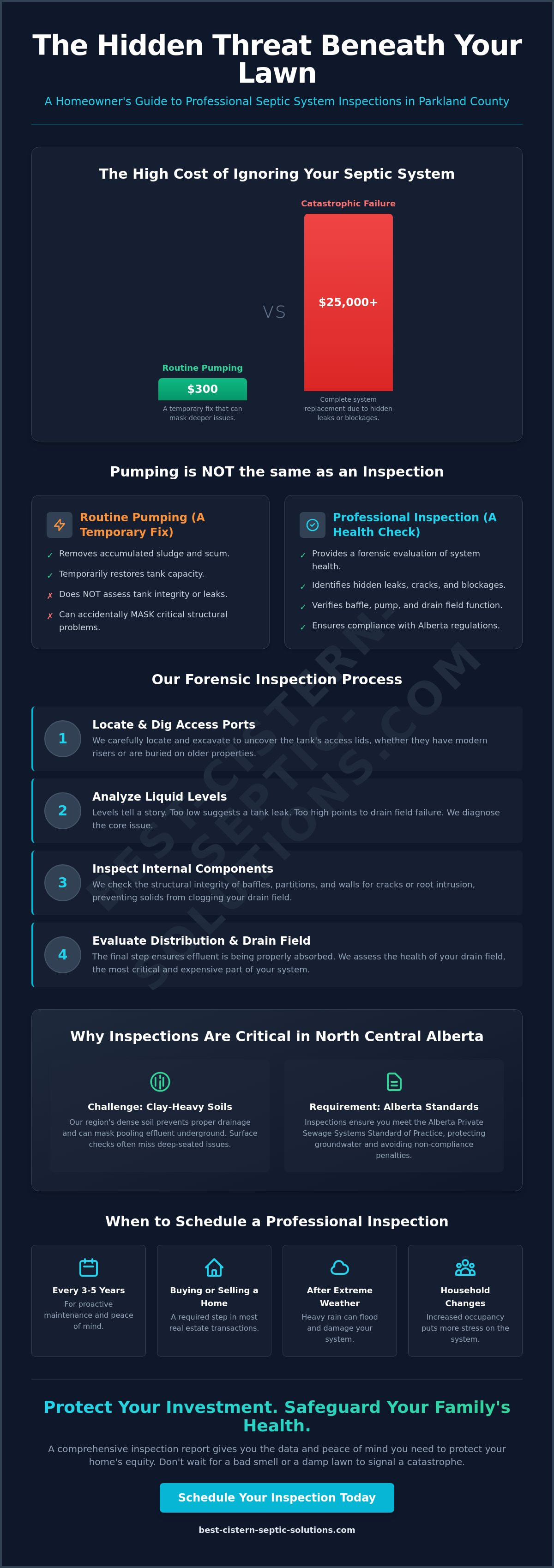
What if the $300 you spend on regular pumping is actually masking a $25,000 system failure beneath your Parkland County backyard? Many North Central Alberta homeowners believe that as long as the toilets flush, the underground infrastructure is healthy. It's natural to feel a sense of dread when you notice a damp patch on the lawn or a faint odor near the tank, especially as the 2024 Alberta Private Sewage Systems Standard of Practice places more responsibility on the owner. A professional septic tank inspection is more than just a quick look; it's a forensic health check for your property's most vital utility.
We understand that your home is your most significant investment. This guide helps you master everything required for a professional inspection to safeguard your family's health and your home's equity. You'll discover the specific steps of the 2026 inspection process, how to stay compliant with local regulations, and the exact signs that indicate your system needs professional attention before a crisis occurs. By the end of this article, you'll have a clear roadmap to ensure your private sewage system remains a silent, reliable partner in your home's longevity.
Key Takeaways
- Learn why a professional septic tank inspection is a forensic health check rather than a simple visual survey.
- Understand the critical difference between routine pumping and diagnostic inspections to avoid accidentally masking hidden structural leaks.
- Discover how Alberta’s updated private sewage standards and our local clay-heavy soils impact your system's long-term compliance.
- Identify the specific steps of the "dig" phase to ensure your system’s access ports and liquid levels are thoroughly assessed.
- Gain peace of mind by learning how a detailed evaluation protects your home's equity and ensures your household's safety.
What is a Professional Septic Tank Inspection in Parkland County?
A professional septic tank inspection is far more than a cursory glance at your backyard. It's a comprehensive forensic evaluation designed to uncover the hidden state of your onsite wastewater system. In Parkland County, where clay-heavy soils are the norm, surface-level checks often fail to reveal deep-seated issues. While your lawn might look pristine, the soil's low permeability can cause effluent to back up or pool underground long before it reaches the surface. A professional septic tank inspection is a multi-point integrity audit of tanks, baffles, and drainage fields that provides a definitive verdict on your system's health.
There's a significant difference between a basic visual check and a comprehensive diagnostic report. A basic check might only confirm that the tank isn't overflowing today. In contrast, a comprehensive diagnostic involves a technical review of every mechanical and structural component. This includes checking the integrity of the concrete or plastic walls and ensuring the baffles are correctly directing flow to prevent solids from entering the drainage field. This level of detail transforms a simple service call into a strategic investment in your property's longevity.
The Goal of a Septic System Evaluation
The primary objective is ensuring your system meets the Alberta Private Sewage Systems Standard of Practice. These regulations, updated in 2021 and continuing to guide 2026 requirements, protect our local groundwater from contamination. We focus on identifying structural integrity issues, such as cracks in aging concrete tanks or shifting in plastic models. Beyond the tank, we verify the health of the effluent distribution. If the septic field cannot absorb liquid at the required rate, the entire system is at risk of premature failure. Our goal is to catch these minor irregularities before they become catastrophic expenses.
When Should You Schedule an Inspection?
Timing is critical for maintaining system safety and financial security. Most real estate transactions in the Edmonton Capital Region now require a formal inspection as a condition of sale. This protects both the buyer and seller from the shock of a failing system. For established homeowners, we recommend an inspection every 3 to 5 years as part of a proactive septic maintenance schedule. You should also call a specialist following extreme weather events, such as the heavy rainfall patterns seen in 2023, or if your household occupancy increases significantly. These changes can stress older systems, making an expert health check a wise precaution for your family’s peace of mind.
The Forensic Process: What Happens During the Inspection?
A professional septic tank inspection is a methodical, step-by-step procedure that goes far beneath the surface of your lawn. We begin with the "dig" phase, which involves locating and uncovering the access ports of your tank. While many modern systems have risers at the surface, older properties in Parkland County often require careful excavation to reach the lids. Once we establish access, we perform a visual assessment of the liquid levels. These levels tell a story; a level that is too low suggests a structural leak, while a level sitting above the outlet pipe indicates that the drainage field is struggling to process effluent. We then move into a detailed physical check of the internal partitions to ensure the tank is effectively separating solids from liquids.
Understanding the internal health of your system provides the peace of mind that routine pumping simply cannot offer. During a septic tank inspection, we evaluate the structural integrity of the entire unit, looking for signs of wear that could lead to environmental contamination or property damage. This forensic approach ensures that every component is functioning as intended, protecting your family and your investment.
Component-by-Component Breakdown
We focus heavily on the inlet and outlet baffles because their condition often determines the entire system's lifespan. Baffles are the gatekeepers that prevent scum and solids from flowing into your drainage field and causing a permanent clog. If your system relies on an effluent pump to move wastewater to a higher elevation, we test this "heart" of the system to ensure it triggers correctly and maintains proper pressure. Finally, we examine the tank floor and walls for root intrusion or hairline cracks. In the shifting soils of North Central Alberta, even a small crack can eventually compromise the sanitary integrity of the entire vessel.
The Distribution Field Analysis
The health of your drainage field is just as vital as the tank itself. We use specialized diagnostic tools to probe the soil, looking for signs of excessive saturation or the buildup of a thick "biomat" that prevents water from filtering away. Technicians use hydraulic load tests to simulate heavy household usage by introducing a controlled volume of water into the system, allowing us to observe how effectively the distribution field absorbs the surge. We also look for surface indicators like unusually lush, green grass or persistent odors that signal the field may be reaching the end of its functional life. Investing in a professional septic system evaluation ensures these technical details are handled with precision, giving you a clear, honest picture of your property's health.
Septic Inspection vs. Septic Pumping: Knowing the Difference
Many homeowners in Parkland County mistakenly use the terms pumping and inspection interchangeably. Pumping is a vital maintenance task that involves removing the accumulated sludge and scum from your tank. Think of it as a thorough cleaning. A septic tank inspection, however, is a diagnostic health check. You wouldn't expect a car wash to identify a failing transmission; similarly, a pumper's primary goal is volume removal, not mechanical analysis. While pumping clears the vessel, only an inspection verifies that the vessel is actually holding water and protecting your property's integrity.
One common mistake we see is homeowners pumping their tank immediately before an inspector arrives. This can actually hide critical leaks. If the tank is empty, an inspector cannot observe the resting liquid level or perform a hydraulic load test to see how the system handles a surge. A full tank allows us to see if effluent is leaking out through cracks or if groundwater is seeping in. By coordinating these services correctly, you can often avoid a costly septic system repair by catching minor component failures before they escalate into an environmental hazard.
Why Pumping Alone Isn’t Enough
Pumpers are specialists in logistics and waste management. They focus on the efficient removal of waste, but they don't typically evaluate the structural functionality of your inlet baffles or the saturation levels of your soil. In rural Alberta, the "out of sight, out of mind" mentality can be dangerous. A tank can be pumped clean every year while the drainage field slowly fails due to biomat buildup. Without a technical diagnostic, you're only seeing half the picture. A clean tank doesn't guarantee a functional system; it only guarantees an empty one.
The Value of a Professional Report
A professional report provides documented proof of your system's integrity, which is essential for real estate disclosures in Leduc County and the surrounding Edmonton Capital Region. This transparency builds trust with potential buyers and protects you from future liability. It also serves as a strategic roadmap for your property's health. If the inspection reveals that your field is nearing the end of its life, you can begin long-term planning for a septic field installation rather than facing an emergency replacement. Ultimately, this documentation offers the definitive assurance that your household's sanitary environment is secure and your home's equity is protected.
Alberta Regulations and Local Environmental Challenges
The Alberta Private Sewage Systems Standard of Practice 2021, which remains the cornerstone for the 2026 guidelines, ensures that every system operates without compromising public health. The Safety Codes Council sets these benchmarks to standardize how we evaluate onsite wastewater systems across the province. During a septic tank inspection, our technicians don't just look for mechanical failure; we verify that your system aligns with these specific provincial mandates. This regulatory oversight provides a layer of protection for homeowners, ensuring that any installation or repair meets the highest sanitary standards.
Soil composition in North Central Alberta varies significantly between neighboring counties, which directly impacts how we interpret inspection data. Parkland County is characterized by heavy clay soils that have very low absorption rates. If an inspection reveals standing water in the field here, it often indicates a total lack of permeability. Conversely, Sturgeon County frequently features silty soils that may drain better but are more prone to erosion or shifting. Understanding these geological nuances is essential for providing an accurate assessment of your system’s integrity and long-term viability.
County-Specific Requirements
We prioritize permit history checks to confirm your system was built to code from the start. In Leduc County, for instance, strict setback requirements dictate the distance between a septic field and a private water well to prevent cross-contamination. Sturgeon County also maintains specific environmental protection zones where septic impact is closely monitored. By verifying these details, we ensure your property remains compliant with local bylaws and remains a safe environment for your family. This diligence prevents unexpected legal or environmental issues during future property assessments.
Cold Weather Considerations
Winter presents unique challenges for rural infrastructure in Alberta. Frost depth can reach over 2 meters during prolonged -30°C stretches, potentially leading to frost-heaved tanks or frozen effluent lines. Proper venting is critical during these months to prevent sewer gases from backing up into the home when the ground is sealed by ice. Rural homeowners can protect their systems during deep freezes by maintaining a healthy layer of insulating snow or straw over the tank and field areas to trap geothermal heat. If you're concerned about how the winter has affected your system's health, it’s time to book a professional septic tank inspection to confirm everything is still operating safely.
Solutions from Best Cistern Septic Solutions
We serve as the Trusted Specialist for families across the Edmonton Capital Region, providing clarity where there is often confusion. Our team understands that your home's wastewater system is a critical piece of infrastructure that requires a methodical, expert touch. By focusing on technical accuracy and transparent communication, we ensure that every homeowner feels empowered to make informed decisions about their property's health. We don't just identify problems; we provide the professional path forward to resolve them.
Our flat-rate professional septic tank inspection includes the labor-intensive "dig" phase to uncover access ports, a full mechanical audit of baffles and pumps, and a detailed liquid level analysis. You receive a comprehensive diagnostic report that serves as a permanent record for your property files. This transparent approach eliminates the guesswork often associated with underground utilities. We prioritize the integrity of your system, ensuring that every component meets the 2026 safety standards required in North Central Alberta.
Many rural properties rely on both a septic system and a cistern for their daily needs. We offer a total water solution by evaluating your cistern’s sanitary integrity alongside your septic components. This holistic view prevents cross-contamination risks and ensures your family has access to safe, potable water and a reliable waste management system. It's a proactive partnership designed to protect your household from the stress of unexpected infrastructure failure.
Transitioning from a one-time diagnostic to a recurring schedule of septic maintenance near me is the most effective way to extend your system's lifespan. Regular check-ups allow us to catch minor wear on effluent pumps or early signs of field saturation before they require a full replacement. We view every inspection as an investment in your home’s longevity, helping you avoid the high costs of emergency repairs through diligent, expert care.
The Best Cistern & Septic Advantage
You receive detailed, easy-to-read reports that translate technical findings into actionable insights. Our deep local expertise in Parkland, Leduc, and Strathcona Counties means we understand how specific soil conditions and weather patterns affect your equipment. We focus on prevention, identifying small structural shifts or baffle wear that could save you thousands in future field repairs. This diligent attention to detail is why your neighbors trust us to safeguard their most valuable assets.
Next Steps for Your Property
Scheduling a diagnostic evaluation is a straightforward process that begins with a simple phone call or online booking. To prepare for our visit, please ensure the area around your tank is clear of debris and have any previous permit records or system maps available. Our technicians handle the difficult work of uncovering and assessing the system, so you don't have to worry about the technicalities. If you've been feeling overwhelmed by wet spots in the yard or upcoming real estate requirements, remember that every system issue has a manageable solution. We are here to provide the expertise and reassurance you need to keep your home running smoothly.
Secure Your Property’s Future Health
Your home represents years of hard work and investment. Protecting its foundation starts with understanding the invisible systems beneath your lawn. We have explored how a professional septic tank inspection differs from routine pumping by providing a technical audit of structural integrity. Whether you are navigating a real estate transaction or simply want to ensure your family's safety, having a clear diagnostic report is the only way to confirm your system meets the 2021 Alberta Private Sewage Standards. Relying on guesswork can lead to expensive surprises, but proactive diagnostics offer a manageable path forward.
Best Cistern & Septic Solutions brings specialized expertise to Parkland, Leduc, and Sturgeon Counties. We provide the detailed documentation required for smooth property sales and the technical insight needed to extend your system's lifespan. Don't wait for a wet spot in the yard to signal a crisis. Book Your Professional Septic Inspection Today to gain the peace of mind that comes from a healthy, compliant home. We are ready to help you safeguard your property and your family's well-being for years to come.
Frequently Asked Questions
How much does a septic tank inspection cost in Parkland County?
Costs for a professional inspection vary depending on the system's depth and the complexity of the components. While we don't provide a single fixed price here, home inspectors in Alberta typically charge between $400 and $700 for specialized septic assessments according to 2023 industry data. We provide a clear quote before starting any work to ensure you feel comfortable with this investment in your property's health.
Is a septic inspection required to sell a home in Alberta?
Most lenders and real estate contracts in the Edmonton Capital Region require a formal inspection as a condition of sale. This ensures the system complies with the Alberta Private Sewage Systems Standard of Practice. Providing a documented health check protects both the buyer and seller from the liability of a failing system, ensuring the transaction proceeds with transparency and peace of mind.
How long does a professional septic system inspection take?
A thorough diagnostic evaluation usually takes between 2 and 4 hours to complete on-site. This timeframe allows our technicians to locate the tank, perform the necessary excavation for access, and conduct a hydraulic load test. We take the time to be methodical because a rushed assessment can miss subtle structural issues. You'll receive a detailed report shortly after the physical work is finished.
What happens if my septic system fails the inspection?
An inspection failure is not a catastrophe; it's a diagnostic starting point. If we identify a cracked baffle or a failing effluent pump, we provide a clear list of manageable solutions to restore system integrity. We specialize in septic field repair and component replacement to bring your system back into compliance. Our goal is to resolve the issue quickly so you don't have to worry about long-term property damage.
Can I perform my own septic inspection to save money?
While homeowners can monitor surface conditions, a professional septic tank inspection requires specialized tools and technical knowledge of Alberta’s safety codes. DIY checks often miss internal structural cracks or deep soil saturation issues in our local clay soils. Professional documentation is also the only form of proof accepted by most insurance providers and real estate lawyers during a property transfer.
Should I have my septic tank pumped before the inspection?
No, you should avoid pumping your tank immediately before a scheduled inspection. Technicians need to see the resting liquid level to check for signs of leaks or backups. Pumping the tank can hide these critical indicators, making it impossible to perform an accurate hydraulic load test. we recommend waiting until after the diagnostic is complete to determine if pumping is necessary for your maintenance schedule.
What is the difference between a visual inspection and a full diagnostic?
A visual inspection only looks at surface conditions like wet spots or odors, whereas a full diagnostic involves a forensic look at the internal components. We uncover the tank lids to inspect the baffles, tank walls, and effluent levels. This deeper level of detail is essential for identifying 90% of system failures that happen underground where they are invisible to a simple walk-through.
How often do I need a septic inspection for a rural Alberta property?
We recommend a professional health check every 3 to 5 years for most rural properties in Parkland County. This frequency aligns with the 2021 provincial standards and helps identify minor wear before it leads to a total system failure. If your household size increases or you experience extreme weather patterns, such as the heavy rainfall seen in 2023, scheduling an earlier inspection is a wise precaution.


