

Imagine waking up to find your backyard saturated with effluent and the primary drain in your basement gurgling with every flush. It's a scenario every rural Alberta homeowner dreads, yet it's often the first sign that you need to begin the septic system replacement process. Facing a full system failure is stressful, especially when you're caught between the fear of sewage backup and the confusion of complex provincial regulations.
We understand that you want a solution that protects your home's health without turning your yard into a permanent construction site. Interpreting the Alberta Private Sewage Systems Standard of Practice shouldn't feel like a barrier to your peace of mind. This guide clarifies the 2026 regulatory requirements and technical steps to provide a clear, methodical path forward. We'll walk through everything from initial site diagnostics and local permit acquisition to the final inspection. You'll gain the confidence that your new installation meets every safety code while remaining a durable, long-term asset for your property.
Key Takeaways
- Identify the critical warning signs of system failure, moving beyond the "greener grass" myth to understand when a total replacement is truly necessary.
- Navigate the Alberta Private Sewage Systems Standard of Practice with ease by learning exactly which permits and soil tests are required for compliance.
- Gain a clear understanding of the professional septic system replacement process, including how experts protect your landscape while decommissioning old components.
- Prepare for the practicalities of installation, including realistic 2026 timelines and strategies for managing household water use during the project.
- Ensure your new system remains a durable property asset by implementing a specialized maintenance plan that protects your long-term investment.
Recognizing the Need: When is Septic System Replacement Necessary?
Replacing a septic system is a significant decision for any Alberta property owner. While many homeowners understand what a septic system is and how it handles wastewater, it's harder to distinguish between a minor repair and a total failure. We generally categorize the need for replacement into two areas: physical failure and capacity failure. Physical failure occurs when components like the tank or the distribution lines structurally degrade. In contrast, capacity failure happens when the soil in your drainage field can no longer process the volume of liquid your household produces.
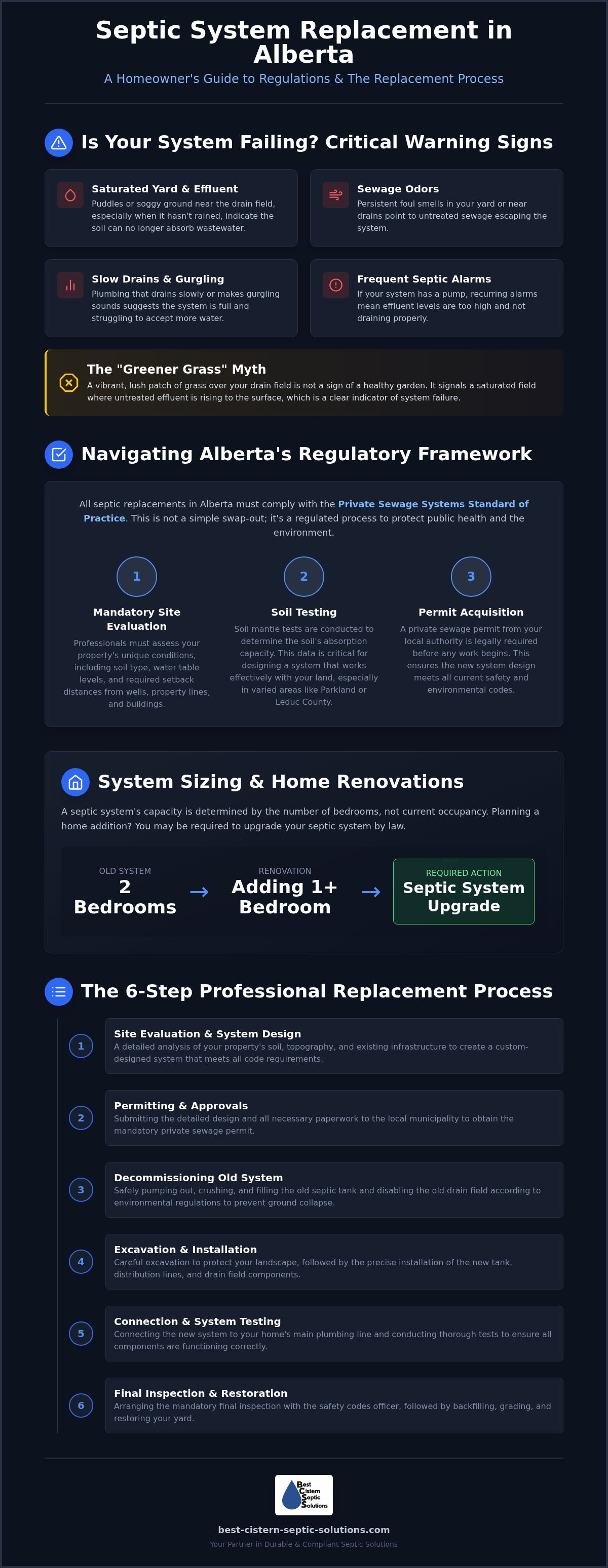
One of the most common misconceptions we encounter is the "greener grass" phenomenon. While a lush, vibrant patch of lawn over your drainage field might look healthy, it's often a sign that the field is saturated. When the soil can't absorb effluent, the moisture and nutrients rise to the surface, feeding the grass but signaling that the biological treatment process has stalled. If your system is approaching the 20 to 30 year mark, these biological or structural issues become more likely. Starting the septic system replacement process early prevents emergency excavations and ensures you have time to choose the best technology for your specific soil conditions. A professional septic inspection is the only way to determine if a targeted repair can extend the system's life or if a full replacement is the only professional fix available.
Signs of a Failing Septic Field
Signs of a Failing Septic Field
Sometimes, a replacement is necessary even if the current system functions perfectly. In Alberta, septic systems are sized based on the number of bedrooms in a home, which serves as a proxy for potential occupancy. If you're planning a renovation that adds a bedroom, you may be legally mandated to upgrade your system to meet the Alberta Private Sewage Systems Standard of Practice. An older system designed for a small family often cannot handle the increased wastewater load of a modern, larger household. When we help clients plan for property growth, we ensure the new system provides the necessary volume to support future additions without risking a premature failure. This proactive approach ensures your utility remains a reliable asset for decades.
The Alberta Regulatory Framework: Permits and Soil Testing
Alberta law treats wastewater management as a vital public health priority rather than a simple property maintenance task. Because of this, the Alberta Private Sewage Systems Standard of Practice dictates every technical requirement for your project. When you begin the septic system replacement process, the first step isn't excavation; it's a deep dive into the specific environmental conditions of your land. In Parkland County and Leduc County, soil profiles can vary significantly within a single township, meaning a design that works for your neighbor might not be suitable for your property. Following these regulations ensures your new system remains a durable asset rather than a liability.
Compliance with the Safety Codes Act is mandatory for all rural homeowners. You can't simply swap an old tank for a new one without a private sewage permit. This permit serves as a legal record that your system meets current safety and environmental standards, protecting both the local groundwater and your property value. If you're unsure where your current system stands, a professional septic system inspection can clarify your compliance status before you commit to a full design.
The Site Evaluation Process
We begin every project with a thorough site evaluation to understand how your land handles water. This involves conducting soil mantle tests, where we examine the soil layers to determine their absorption capacity and identify any restrictive layers like heavy clay or high water tables. We also map out critical setback distances to ensure the system is safe. For example, a septic tank must be at least 3 meters from any building, while the entire system generally requires a 30 meter clearance from water wells. The perc test serves as the technical foundation for every Alberta septic design. By measuring the rate at which water percolates through your soil, we can determine the exact size and type of drainage field your household requires.
Securing Your Private Sewage Permit
A successful permit application requires a partnership between a certified installer and a Safety Codes Officer. In rural areas around Edmonton, your installer must hold a Private Sewage Certificate of Competency to design and submit the plans. The documentation includes detailed site maps, soil test results, and the specific mechanical specifications of the proposed system. In 2026, permit approval timelines in Parkland and Leduc Counties typically range from a few days to two weeks, depending on the complexity of the site. Once the permit is issued, it provides the green light for mobilization, ensuring that every step of the installation is performed under the oversight of local safety authorities.
The 6-Step Septic System Replacement Process
Once the design is finalized and the permit is secured, the physical septic system replacement process moves into the mobilization phase. This initial stage involves bringing in specialized equipment like excavators and skid steers. We take great care to protect your property by identifying access routes that minimize soil compaction and avoid damage to existing landscaping. Following mobilization, we move immediately to decommissioning the old system. This is a critical step to ensure that outdated or failing components don't interfere with the functionality of your new installation. By following a methodical sequence, we transform a complex utility project into a manageable series of professional fixes.
Decommissioning the Old System
Properly retiring an old system is about environmental stewardship and property safety. We ensure the old tank is fully pumped before it's either removed from the property or crushed and filled with clean aggregate. This process prevents the formation of dangerous sinkholes as the old structure degrades over time. By carefully managing this stage, we eliminate the risk of cross-contamination between the old failure site and the fresh treatment area. Finally, we restore the ground to its original grade to prevent future settling issues that could trap surface water and saturate the soil.
Installing the New Infrastructure
The installation phase requires surgical precision to ensure long-term durability. We begin by excavating the treatment area according to the specific depths identified in your site evaluation. Setting the new septic tank is the next priority; it must be perfectly level on a stable base to prevent structural stress or pipe shear. For the drainage field, precise grading is non-negotiable. Even a slight deviation in the slope of your distribution lines can lead to uneven effluent distribution and premature field saturation.
As part of a modern installation, we integrate a septic alarm installation to provide you with an early warning system. This technology monitors effluent levels and pump performance, offering peace of mind that your system is operating within its design limits. Every component we install adheres to the Alberta Private Sewage Systems Standard of Practice to ensure the system remains a reliable asset for decades.
Before any soil is moved back into place, a local Safety Codes Officer must perform a mandatory inspection. They verify that the tank depth, line grading, and field dimensions match the approved permit. This third-party verification is your final assurance that the work is performed to the highest provincial standards. Only after this sign-off do we proceed with the final backfilling and site stabilization, leaving you with a fully functional, code-compliant utility that protects your household and the local environment.
What to Expect: Timelines, Costs, and Property Impact
Understanding the logistical side of a project helps transform anxiety into a manageable plan. While the physical septic system replacement process usually requires only three to five days of heavy excavation, the entire journey from the initial soil evaluation to the final sign-off typically spans three to five weeks. This timeline accounts for site testing, permit processing in Parkland or Leduc County, and the coordination of local Safety Codes Officers. We prioritize efficiency to ensure your household returns to normal as quickly as possible, treating your property with the same care we would our own.
Weather plays a significant role in our scheduling. In Alberta, the shoulder seasons of late spring and early autumn are often the most productive times for replacement. During these windows, the ground is workable and stable, which minimizes the risk of heavy equipment sinking or causing excessive soil compaction. We strategically plan equipment paths to protect your driveway and existing landscaping, ensuring that the necessary machinery does not leave a permanent footprint on your rural lot. If you're ready to begin planning your project, you can contact us for a professional diagnostic to determine the best timing for your site.
Living Through a Replacement
Disruption to your daily routine is inevitable, but we work to keep it minimal. You will face temporary water usage restrictions, particularly during the critical four to eight hour window when we disconnect the old lines and tie in the new tank infrastructure. We recommend postponing laundry and heavy dishwashing during the active construction phase. You should also prepare for the noise and vibration associated with excavators and skid steers. For the safety of your family, we maintain clear boundaries around open trenches and staging areas. We ask that children and pets remain indoors or supervised away from the work zone until the final backfilling is complete.
Restoration and Landscaping
Once the technical installation is finished, your yard will enter a restoration phase. We perform a final grade to ensure water sheds away from the new components, though you should expect the soil to settle over the first 90 days. We recommend waiting for this settling period to conclude before finishing your final seeding or sodding. To protect your investment, you must follow two non-negotiable rules: never plant trees near the distribution lines and never drive vehicles over the drainage field. These simple precautions prevent root intrusion and pipe crushing, ensuring your new system remains a high-performing, invisible asset for your home for decades to come.
Long-Term Asset Protection with Best Cistern Septic Solutions
A new septic system is more than a utility; it's a foundational investment in your property’s future. Completing the physical septic system replacement process provides immediate relief from failure, but protecting that investment requires a proactive mindset. We view our installations as long-term assets that enhance the market value and environmental safety of your home. To ensure this durability, establishing a consistent schedule for septic tank maintenance is essential. Regular inspections prevent the accumulation of solids that can migrate into your new drainage field and cause premature saturation. A professional fix today is only as good as the care it receives tomorrow.
For many rural homeowners in North Central Alberta, water management is a two-part equation. While we address your wastewater needs, it's often the ideal time to evaluate your potable water storage. Checking your cisterns alongside your septic system ensures your entire water cycle is secure. This holistic approach identifies potential pump issues or structural leaks before they lead to service interruptions. Professional diagnostics during this phase save thousands of dollars by preventing small mechanical wear from turning into total system failures. We believe that property preservation starts with understanding how these systems work in tandem to support your household.
Custom Solutions for North Central Alberta
Our team brings specialized knowledge of the unique soil conditions found in Parkland, Leduc, and Sturgeon Counties. We understand how the heavy clays and varying water tables of the Edmonton Capital Region impact system longevity. We guide you through the entire septic system replacement process, ensuring each component meets Alberta Safety Codes. We provide a transparent, grounded service that prioritizes your family’s safety and peace of mind. By linking mechanical integrity to property preservation, we ensure that the professional fix we provide today remains effective for decades. Our reputation is built on being a reliable neighbor who happens to be the leading expert in these vital utility systems.
Next Steps for Homeowners
Don't wait for a total backup to begin exploring your options. Booking a professional diagnostic inspection allows us to assess your current system's health before a crisis peaks. We provide detailed, project-based quotes that outline every step of the installation tailored to your specific lot. This transparency ensures you feel informed and empowered throughout the journey. When you're ready to secure your property’s future, Contact Best Cistern Septic Solutions for a professional evaluation. Taking this proactive step ensures your home remains a safe, functional, and valuable environment for your family.
Securing Your Property’s Future with a Modern Septic Solution
Replacing a failing system is a significant undertaking, but it's also an opportunity to enhance your home's value and safety. By identifying the early signs of failure and navigating the Alberta regulatory framework with precision, you ensure that your new utility serves your household for decades. We've explored how the septic system replacement process involves much more than simple excavation; it requires a deep understanding of local soil conditions and a strict commitment to the 2026 provincial safety standards. Every step we take is designed to provide you with a durable, invisible asset that protects your land and your family.
As Certified Private Sewage Installers, we take pride in expertly serving Parkland and Leduc Counties with comprehensive water and wastewater solutions. We handle the complexities of permits and inspections so you don't have to worry about the technical details. If you're ready to move from a failing system to a high-performing property asset, our team is prepared to deliver a reliable, long-term fix. Request a Professional Septic Replacement Quote today to restore your property's integrity and secure your peace of mind. Your rural property deserves a system built for both longevity and peak performance.
Frequently Asked Questions
Do I need a permit to replace my septic system in Alberta?
Yes, you must obtain a private sewage permit before beginning any work. This is a legal requirement under the Safety Codes Act for both new installations and full replacements. The permit verifies that your design complies with the Alberta Private Sewage Systems Standard of Practice. It protects your property value and ensures the system operates safely without contaminating local groundwater. We handle the technical documentation and submission as part of our professional service.
Can I live in my house during the septic replacement process?
You can certainly remain in your home throughout the project. While the heavy machinery operates in your yard, your indoor life continues with minor adjustments. We typically require a short window of four to eight hours where you must refrain from using any water. This occurs when we disconnect the old lines and tie in the new tank. Planning laundry and dishwashing around this schedule ensures a smooth transition with minimal disruption.
How long does a typical septic system replacement take from start to finish?
The entire project generally spans three to five weeks from the initial soil evaluation to the final inspection. While the actual septic system replacement process on your lot only takes three to five days of active excavation, the earlier stages involve permit processing and scheduling local Safety Codes Officers. We coordinate these timelines carefully to ensure the work is performed methodically and that all regulatory sign-offs are obtained before we backfill the site.
What happens to my old septic tank during a replacement?
Your old tank is decommissioned following a strict safety protocol. First, the tank is thoroughly pumped out. Depending on the site layout and your preference, we then either remove the structure entirely or crush it in place and fill the cavity with clean aggregate. This essential step prevents the ground from settling or collapsing in the future. It ensures your backyard remains a stable and safe environment for your family and pets.
Why is a soil test (perc test) required before replacing a septic field?
A soil percolation test is mandatory because it dictates the size and type of your new drainage field. By measuring how quickly water moves through your specific soil layers, we can determine the absorption capacity of your land. This technical data prevents system failure by ensuring the field is large enough to treat the wastewater volume your household produces. It’s a vital diagnostic step that turns your replacement into a reliable, long-term property asset.
How much does it cost to replace a septic system in North Central Alberta?
Several variables influence the final investment for a system replacement in North Central Alberta. The size of your home, the specific soil conditions on your lot, and the type of treatment system required all play a role. For example, a property with heavy clay may require a different design than one with sandy soil. We recommend a professional diagnostic inspection to provide a precise, project-based quote that reflects the unique environmental needs of your specific rural property. Just as electrical contractors utilize electrical estimating software no monthly fees to provide clear and predictable pricing, our goal is to ensure you have a transparent understanding of your project costs from the start.
In Alberta, you cannot legally install your own septic system unless you hold a Private Sewage Certificate of Competency. The provincial regulations require that a certified professional designs and installs the system to ensure it meets strict environmental and safety codes. Attempting a self-installation can lead to permit denials, legal fines, and potential system failure. Hiring a certified expert ensures the work is performed correctly and that your investment is protected by law.
What is the difference between a septic repair and a full replacement?
A repair typically involves replacing a mechanical component, such as an effluent pump or a septic alarm, while the main field remains functional. In contrast, a full replacement is necessary when the drainage field has reached its biological limit and can no longer absorb liquid. If a professional inspection reveals structural damage to the tank or a saturated field, a replacement is the only professional fix that restores the long-term integrity of your wastewater system.


