

In late 2025, a Spruce Grove family nearly lost their dream home sale because a last-minute septic concern surfaced just days before the closing deadline. You likely already feel that the health of your wastewater system is the most critical factor in your property's value, especially when a failing field can lead to C$25,000 in replacement fees. It's natural to feel overwhelmed by varying quotes and the technicalities of effluent levels or tank baffles during a high-stakes real estate transaction.
Understanding the septic system inspection cost upfront prevents these stressful surprises and ensures your system's integrity remains intact. This 2026 guide helps you discover exactly what determines inspection pricing in North Central Alberta and how a professional evaluation safeguards your property investment. We provide a clear breakdown of Alberta inspection standards and the specific factors that influence pricing in Parkland County. You'll gain the peace of mind that comes from knowing your system is pristine and ready for a professional report that satisfies any buyer or lender.
Key Takeaways
- Understand how regional labor rates and tank accessibility, such as the presence of risers, influence your final quote in Parkland County.
- Learn what a comprehensive multi-point audit entails, from evaluating baffle integrity to measuring sludge levels for optimal system performance.
- Identify the critical differences between a mandatory real estate inspection for lenders and a proactive maintenance check for long-term property health.
- Compare the modest septic system inspection cost—typically ranging from C$600 to C$1,200—against the C$25,000+ expense of a preventable field failure.
- Discover why navigating North Central Alberta’s heavy clay soils and local municipal bylaws requires a specialist who understands our unique environmental conditions.
Understanding the Factors Influencing Septic System Inspection Cost
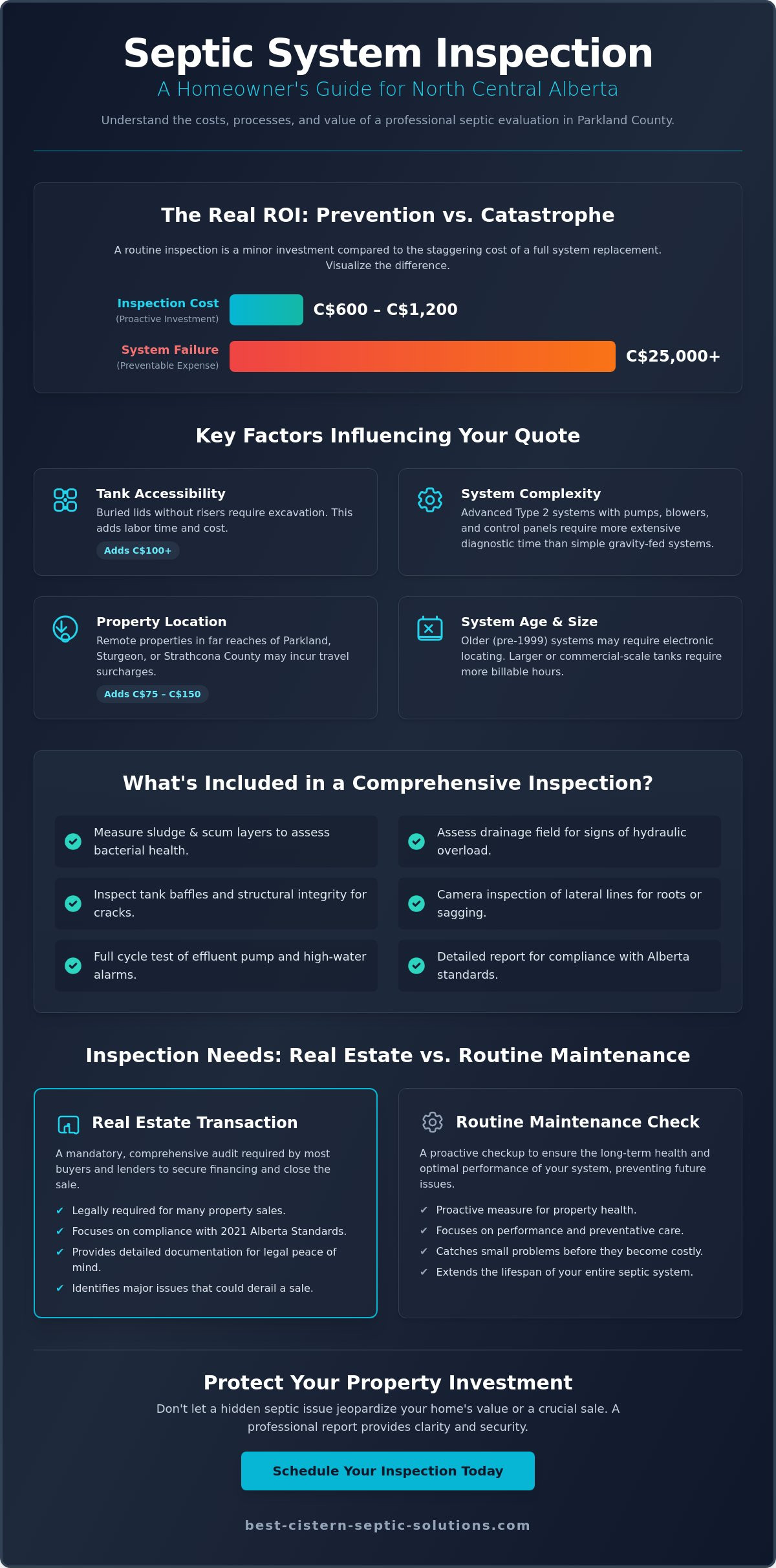
Calculating the septic system inspection cost in Parkland County requires looking beyond a single flat fee. Professional labor rates across the Edmonton Capital Region typically range from C$150 to C$250 per hour for specialized technicians. This rate reflects the high level of expertise needed to evaluate underground infrastructure. To truly understand these variables, homeowners should first grasp what is a septic system and how its components interact with the local soil. When a technician arrives at your property, the first thing they look for is accessibility. If your tank lids are buried 3 feet deep without risers, the technician must spend extra billable time excavating the site. This physical labor can add C$100 or more to the final invoice.
The complexity of your specific wastewater setup also dictates the final price. A standard gravity-fed system is relatively straightforward to assess. However, advanced treatment plants or Type 2 systems involve mechanical blowers, electrical control panels, and specialized filters. These components require a methodical, component-by-component diagnostic process that extends the inspection duration. Location also plays a role. While we are local to the region, properties in the far reaches of Sturgeon County or Strathcona County may incur travel surcharges between C$75 and C$150. These fees ensure that a qualified specialist can reach your remote acreage with all the necessary diagnostic tools.
Basic Visual vs. Comprehensive Diagnostic Costs
A simple "walk-over" inspection is rarely sufficient for real estate transactions or long-term safety. While a visual check might cost less, it doesn't reveal the tank's internal integrity. A comprehensive diagnostic often includes a full tank pump-out to inspect the concrete baffles and floor for cracks. This deeper look is an investment in your home’s health. It ensures your system meets the 2021 Alberta Private Sewage Standard of Practice. Detailed reporting for compliance adds to the fee but provides the documentation needed for legal peace of mind.
The Impact of System Size and Age
Older systems, especially those installed before the 1999 regulatory updates, often lack digital blueprints or site maps. Locating these "hidden" tanks using electronic transmitters takes additional time. Residential inspections for a 1,000-gallon tank are standard, but commercial-scale systems at local businesses or multi-tank arrays on large estates require more billable diagnostic hours. We treat every inspection as a step toward safeguarding your property. Larger systems simply involve more points of failure to check, from distribution boxes to larger field footprints, ensuring the entire assembly remains sanitary and functional.
What is Included in a Professional Septic Inspection?
A professional septic inspection is a comprehensive structural and functional audit of your home's wastewater infrastructure. It's far more than a simple visual check. This process involves a methodical evaluation of how waste moves from your house to the soil. While the septic system inspection cost reflects the technician's time and specialized equipment, it serves as a vital investment in your property's longevity. We begin by measuring the sludge and scum layers within the tank. These measurements tell us if the bacterial balance is healthy or if the tank is overdue for a pump-out. Keeping these levels in check prevents solids from escaping into the secondary treatment area.
We also test the mechanical components that keep the system running safely. This includes a full cycle test of the effluent pump and a check of the high-water alarm systems. These alarms are your last line of defense against a backup. We ensure the floats trigger correctly and the control panel responds as intended. The final phase involves an assessment of the drainage field or leaching bed. We look for signs of hydraulic overload, such as surfacing effluent or unusually lush vegetation, which indicates the soil is no longer absorbing liquid at the required rate.
The Diagnostic Toolkit: Cameras and Flow Tests
Modern diagnostics take the guesswork out of underground maintenance. We use fiber-optic cameras to inspect lateral lines for root intrusion or pipe sagging. This visual evidence allows homeowners to see exactly what's happening inside their pipes. To ensure the field can handle daily life, we perform a high-volume water flow trial. This stress test pushes a calculated amount of water through the system to simulate peak usage. For properties where maps are missing, we use electronic transmitters and flushable "slugs" to locate hidden components. Following routine septic maintenance standards ensures these diagnostic tools identify minor obstructions before they cause a total system failure.
Structural Integrity and Component Checks
The physical condition of the tank is just as important as its function. We inspect the inlet and outlet baffles for signs of corrosion or blockage. These baffles are critical for preventing solids from clogging the pipes. We also check the integrity of the tank manhole and safety lids to ensure they're secure and watertight. Every part of the evaluation verifies that your septic systems meet the current Alberta Private Sewage Systems Standard of Practice. Adhering to these provincial regulations protects your family's health and maintains the value of your Parkland County home. The total septic system inspection cost often pays for itself by catching small structural cracks that could lead to environmental contamination. If you're concerned about the age of your components, reaching out to Best Cistern & Septic Solutions can help you establish a proactive care plan.
Comparing Inspection Needs: Real Estate vs. Routine Maintenance
The reason for your septic evaluation dictates the depth of the process and the finality of the report. While both types of assessments share common technical steps, their goals differ significantly. A real estate inspection functions as a high-stakes risk assessment for a financial transaction. A routine maintenance check serves as a health monitor for your home's infrastructure. Understanding these differences helps you justify the septic system inspection cost as a strategic investment in your property's value.
The scope of work varies because the audience changes. In a sale, lenders and buyers require proof of system integrity to finalize a mortgage. During a check-up, the homeowner needs actionable data to prevent future failures. Inaccurate reporting during a real estate sale carries heavy legal liabilities. If an inspector fails to identify a saturated field or a cracked tank, they may face professional negligence claims, while the seller could be held liable for non-disclosure. This pressure ensures that real estate inspections are rigorous, documented, and strictly objective.
Real Estate Transaction Requirements in Alberta
Realtors in Leduc and Sturgeon County typically use standardized inspection forms to comply with the Alberta Private Sewage Systems Standard of Practice. These documents provide a clear snapshot of the system's current state. Findings often trigger price negotiations or financial holdbacks. It's common to see holdbacks ranging from C$10,000 to C$25,000 if the system shows signs of imminent failure. You must hire an independent certified inspector rather than just a pumper. While a pumper removes waste, an inspector evaluates the mechanical components and the biological health of the soil, providing the detailed reporting that banks demand.
Routine Maintenance Inspections for Homeowners
For established residents, a three-year inspection cycle is the Alberta gold standard for system longevity. These visits allow you to identify "silent" failures that don't yet show surface symptoms. A slow-leaking tank or a damaged baffle can cause effluent to bypass treatment, eventually destroying your drain field. Catching these issues early allows you to schedule a septic system repair before the damage becomes irreversible. This proactive approach ensures your family’s safety and protects the pristine condition of your property. Regular monitoring is the most effective way to manage the long-term septic system inspection cost by avoiding the C$30,000 price tag of a total system replacement.
- Lender Security: Real estate reports provide the "pass/fail" data banks need for loan approval.
- Asset Protection: Routine checks focus on extending the lifespan of the tank and field.
- Liability Mitigation: Professional documentation protects sellers from post-sale legal disputes.
- Operational Peace of Mind: Maintenance visits confirm that your household waste is being treated safely and effectively.
The Real ROI: How Inspection Costs Prevent Massive Failures
Viewing the septic system inspection cost as a strategic insurance policy helps put the numbers into perspective. In Parkland County, a comprehensive professional inspection typically ranges from C$600 to C$1,200. While this is a direct upfront cost, it stands as the primary barrier between your household budget and a C$25,000 drainage field replacement. We've seen many homeowners save tens of thousands of dollars simply by identifying a failing component during a routine check.
Regular testing focuses on the mechanical and biological health of your system to ensure long-term performance. For example, testing the effluent pump ensures it triggers at the correct levels, which prevents the motor from burning out prematurely. This proactive check also safeguards your local well water and the surrounding groundwater from nitrogen or pathogen contamination. It's about maintaining a sanitary environment for your family while avoiding the stress of an emergency failure.
Early Detection of Septic Field Problems
Our technicians look for signs of uneven distribution within the septic field installation. If one side of the field is working harder than the other, it often indicates a leveling issue or a partial clog. Catching this early allows for simple adjustments or high-pressure jetting rather than waiting for a total biomat failure. A biomat is a dense layer of bacteria that is necessary for treatment, but if it grows too thick due to poor maintenance, it completely seals the soil and stops all drainage. Replacing a damaged C$500 outlet baffle during an inspection is a minor task that prevents solids from entering the field, saving you from a C$10,000 tank replacement or an even costlier field overhaul.
Protecting Your Property Value
For acreage owners in Alberta, the septic system is a major factor in property appraisal and resale potential. A common myth among homeowners is that exceptionally green, lush grass over the drainage area is a sign of a healthy system. In reality, this "greener grass" often indicates the field is saturated and effluent is rising to the surface because it can no longer soak into the ground. Professional inspections identify these saturation points before the smell of sewage reaches your doorstep or your basement. A documented history of maintenance provides potential buyers with peace of mind and justifies a higher asking price. A failed septic system can instantly decrease a property's appraised value by C$30,000 or more, often exceeding the actual cost of the physical repairs.
Don't wait for a backup to understand your system's health. Contact Best Cistern & Septic Solutions to book your comprehensive 2026 inspection and protect your investment.
Why Local Expertise Matters for Parkland County Homeowners
Parkland County homeowners deal with environmental factors that differ significantly from other parts of Canada. The region is known for heavy Alberta clay soils. This soil type is notoriously dense and slow-draining. It expands when wet and contracts when dry, putting physical pressure on septic tanks and potentially shifting drain field pipes. A technician who isn't familiar with these soil conditions might misinterpret slow drainage as a mechanical failure when it's actually a soil saturation issue. Knowledge of municipal bylaws is equally vital. Whether your property is in Spruce Grove, Stony Plain, or Leduc, each municipality may have specific expectations for wastewater management. We stay updated on these local requirements to ensure your system remains compliant with regional safety standards. Understanding your septic system inspection cost is easier when you partner with a "Trusted Specialist" who provides transparent, flat-rate diagnostic fees. This approach removes the stress of hourly billing and ensures you know exactly what you're paying for before the work begins.Serving North Central Alberta Communities
Our team provides deep local insights for properties throughout Sturgeon County and Strathcona County. The unique terrain of the Edmonton Capital Region requires a specialized approach to wastewater. Local weather patterns, specifically our extreme deep freezes, can drive the frost line deep into the ground. This creates a risk for frozen effluent lines or damaged baffles. We look for these specific thermal vulnerabilities during every assessment to prevent a mid-winter emergency. Our goal is to ensure your system's longevity despite the harsh Alberta climate.Booking Your Professional Inspection
Preparation helps us provide the most accurate assessment possible. Before your inspector arrives, try to have your property maps, original installation permits, and previous maintenance records ready. This data allows us to verify the system's design capacity against your current household needs. Best Cistern Septic Solutions operates on a promise of thoroughness and honesty. We don't use alarmist language; instead, we provide clear, actionable steps to maintain your system’s integrity. We view a professional assessment as a proactive investment in your home’s health and your family's safety. By choosing a local expert, you ensure that your septic system inspection costSecure Your Property’s Future with Proactive Maintenance
Prioritizing a professional assessment is about more than just checking a box; it's about safeguarding your property's long-term health and your family's safety. While the septic system inspection cost represents a manageable upfront expense, it functions as essential insurance against the C$20,000 or more often required for a total drainage field replacement in rural Alberta. We've spent years serving homeowners across Parkland, Leduc, and Sturgeon Counties, providing the technical clarity needed for both routine maintenance and high-stakes real estate transactions. Our specialists deliver detailed diagnostic reports that ensure your wastewater system maintains its integrity and meets provincial standards. You'll receive a clear roadmap for your system's longevity, moving from uncertainty to a documented state of health. We take pride in being a diligent, transparent partner for our neighbors. Every inspection we perform is a commitment to keeping your home's infrastructure pristine and reliable throughout 2026 and beyond.
Book Your Comprehensive Septic Inspection Today
Protecting your home starts with professional insight, and we're ready to provide the solutions you need.
Frequently Asked Questions
How much does a septic system inspection cost in Alberta in 2026?
A professional septic system inspection cost in Alberta typically ranges from C$400 to C$800 depending on the complexity of your setup. This investment covers a detailed assessment of the tank's structural integrity and the functionality of all mechanical components. By 2026, most homeowners in Parkland County view this as a vital step in maintaining their property's long-term health and market value.
Is a septic inspection required to sell a house in Parkland County?
Parkland County doesn't strictly mandate a septic inspection by law for every property transfer, but 90% of rural real estate contracts include it as a condition of sale. Most lenders and insurance providers require a certified health report for the system before they'll finalize any financing. It's a standard practice that provides peace of mind for both the buyer and the seller during the closing process.
What is the difference between septic pumping and a septic inspection?
Septic pumping is a routine maintenance task that involves removing accumulated sludge and scum, while an inspection is a diagnostic evaluation of the entire system's condition. During an inspection, specialists examine the baffles, test the effluent levels, and check for structural leaks. While pumping keeps the system clear, the inspection provides the technical data needed to confirm that every part of your infrastructure is operating safely.
How long does a professional septic inspection take?
A thorough professional septic inspection usually takes between 1.5 and 3 hours to complete. This timeframe allows the technician to locate the tank, uncover the access lids, and perform necessary stress tests on the drain field. If you have an advanced treatment system with electronic controls, the process might require an additional 45 minutes to ensure every mechanical component meets current safety standards.
Can I perform a septic system inspection myself?
You shouldn't attempt to perform a septic inspection yourself because it requires specialized diagnostic tools and carries risks from exposure to toxic gases like methane. Professionals use high-resolution cameras and dye tests to identify hidden issues that aren't visible to the untrained eye. Relying on a certified specialist ensures you receive an accurate report that protects your family's safety and satisfies all legal requirements.
What happens if my septic system fails the inspection?
If your system fails the inspection, the technician provides a detailed report outlining the specific deficiencies and the necessary steps for restoration. Minor issues like a damaged baffle or a clogged filter are often resolved with simple repairs, while significant drainage failures might require a partial system redesign. Addressing these findings immediately prevents environmental contamination and safeguards the integrity of your property's soil.
Does a septic inspection include the leaching field?
Yes, a comprehensive inspection always includes a detailed evaluation of the leaching field to ensure it's processing effluent correctly. Technicians look for signs of soil saturation, surface pooling, or unusual vegetation growth that indicates the field is struggling to absorb liquid. Since the leaching field is the most expensive part of the system to replace, verifying its health is a core part of the service.
Should the septic tank be empty or full for an inspection?
The septic tank should be at its normal operating level when the inspection begins so the technician can observe the flow of wastewater and check for leaks. In many cases, the specialist will recommend a pump-out during the appointment so they can inspect the interior walls and floor for cracks once the liquid is removed. Starting with a full tank allows for a realistic assessment of how the system manages daily household loads.


