

It is 2:00 AM on a Tuesday when the high-water alarm starts its relentless buzzing, signaling that your effluent pump has finally reached its limit. You likely feel the immediate weight of uncertainty, wondering if a quick fix is possible or if you are facing a massive repair bill. A failing pump isn't just a mechanical nuisance; it's a threat to your property's health and your long-term peace of mind. The stress of potential environmental fines or a flooded drainage field is real, especially with the strict 2021 Standard of Practice (SOP) now governing every system in the province.
This guide will help you handle septic pump replacement alberta with total confidence, ensuring your new equipment meets every mandatory setback and safety requirement. We will break down the essential steps for a professional replacement, explain how the 2021 SOP updates protect your property value, and show you how to find a certified installer who handles the complex permit process on your behalf.
Key Takeaways
- Understand how the 2021 Standard of Practice (SOP) mandates specific soil loading rates and effluent quality for all modern equipment upgrades.
- Learn to identify the early warning signs of failure, such as persistent alarms or spongy turf, before they lead to a total drainage field collapse.
- Navigate the technical requirements of septic pump replacement alberta by calculating total dynamic head to ensure your system operates efficiently for decades.
- Discover why professional diagnostic reports and maintenance records are essential for protecting your property value and passing real estate inspections.
- Find out why hiring a certified installer with a Certificate of Competency is the most reliable way to manage regional permits and regulatory compliance.
Understanding the Effluent Pump’s Role in Alberta Septic Systems
The effluent pump is the mechanical heart of your wastewater management. It sits in the final chamber of your tank, waiting for the liquid level to rise. Once triggered, it pushes clarified liquid out to your disposal field. This process is a fundamental part of the Role in Alberta Septic Systems, ensuring that wastewater doesn't just sit in the tank but moves safely into the soil for final treatment. If this pump fails, the entire process halts, making a timely septic pump replacement alberta essential to prevent household backups and soil contamination.
Alberta's landscape often requires "high-head" pumps. These units provide the extra pressure needed to push liquid uphill or across long distances to a raised mound. You shouldn't confuse these with sewage ejector or grinder pumps. While grinder pumps macerate raw solids from a basement, an effluent pump is designed specifically for filtered liquid. It's a precision tool built for durability and steady pressure rather than raw crushing power. It works in tandem with your septic alarm, which acts as the primary safeguard for your home. When the pump stops working, the water level in the chamber rises, lifting a high-water float that triggers the buzzing alarm in your utility room. This alert gives you a small window of time to resolve the issue before an overflow occurs.
Pressure Distribution vs. Gravity Systems
Most modern rural properties in the province have moved away from simple gravity systems. The 2021 Standard of Practice (SOP) heavily favors pressure distribution. This method uses the pump to spray effluent evenly across the entire footprint of the drainage field. It prevents "saturated spots" that lead to premature soil failure. A professional septic pump replacement alberta ensures your system remains compliant with these pressurized standards, effectively extending the system's lifespan to the 30 to 40 year range expected by provincial code.
Anatomy of the Pump Chamber
Inside the chamber, three main components work in silence to protect your property. Float switches act as the brain, turning the motor on and off at precise levels. The effluent filter acts as a shield, catching any stray lint or debris before it can reach the pump's intake. Finally, the check valve ensures that once liquid is pumped into the line, it stays there. It prevents heavy backflow from rushing back into the tank, which protects the motor from "short-cycling" and unnecessary wear. Each part must be calibrated correctly to ensure the long-term integrity of your septic field.
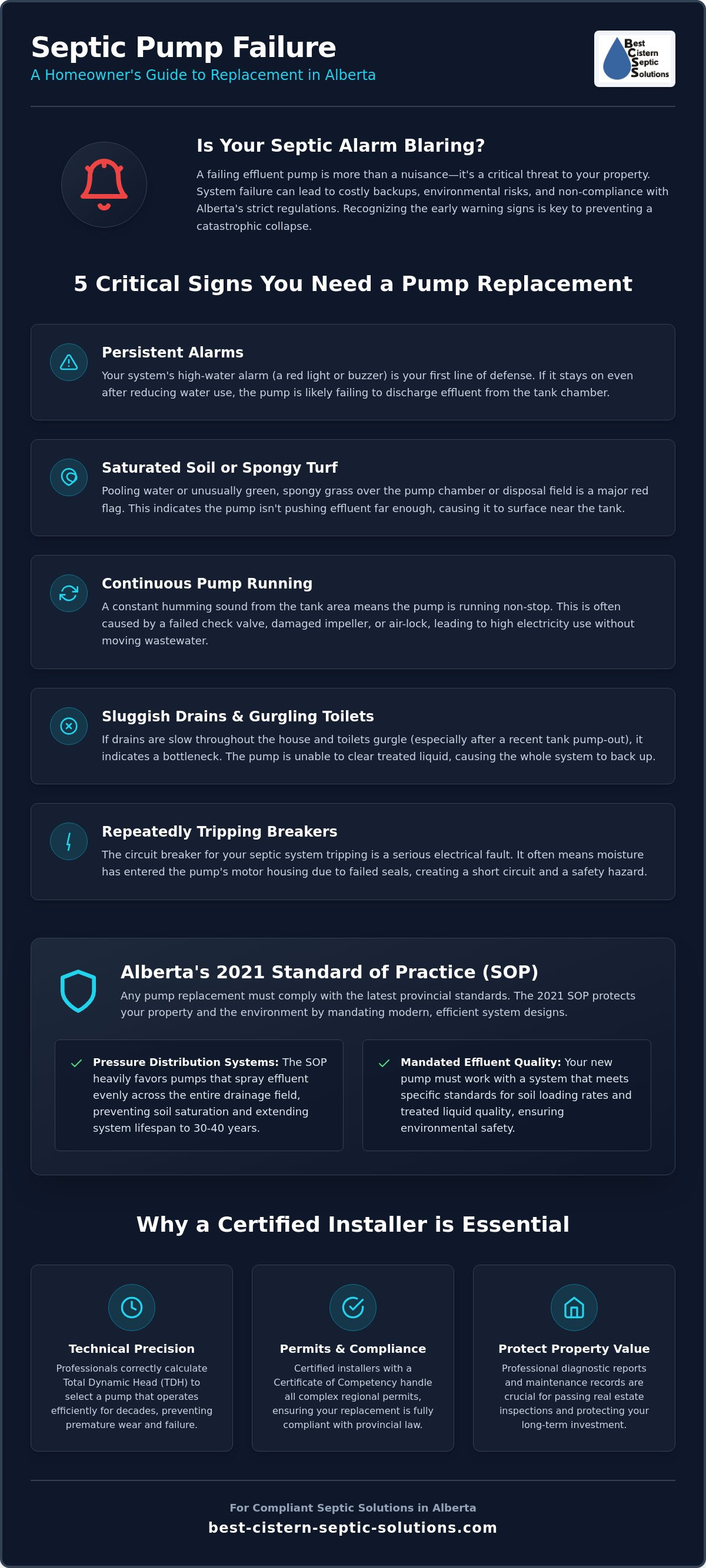
5 Signs You Need a Septic Pump Replacement
Identifying a failing effluent pump before it leads to a total system collapse is the best way to protect your property investment. While some issues are subtle, others are loud and immediate. Recognizing these signals allows you to act before wastewater backs up into your basement or saturates your yard. If you notice any of these signs, a professional septic pump replacement alberta may be necessary to restore your system’s integrity.
- Persistent Alarms: Most systems feature a control panel with a red light or an audible buzzer. This alarm triggers when the water level in the pump chamber exceeds its safe limit. If the alarm continues after you've reduced water usage, the pump likely isn't discharging liquid.
- Saturated Soil: Look for pooling water or unusually lush, spongy grass specifically over the pump chamber or the line leading to the field. This often indicates a leak in the discharge pipe or a pump that is failing to push effluent through the distribution lines.
- Continuous Running: You might hear a constant hum coming from the tank area. A pump that runs without stopping is often "air-locked" or has a damaged impeller. It's consuming electricity without moving any wastewater.
- Sluggish Drains: If your sinks drain slowly or your toilets gurgle, don't assume you just need a pump-out. If your tank was recently serviced and these issues persist, the pump is likely failing to move the clarified liquid out of the chamber.
- Tripping Breakers: If the circuit breaker for your septic system trips repeatedly, it's a sign of a serious electrical fault. This often happens when the motor seals fail, allowing moisture to enter the pump housing and cause a short circuit.
Diagnostic Checklist for Homeowners
Before assuming the worst, perform a basic check of your control panel to ensure no breakers have tripped. In the Edmonton Capital Region, frozen discharge lines are a common winter culprit. Inspect the area around the tank for any signs of ice heaving that might have pinched a pipe. For more detailed troubleshooting, you can refer to our guide on septic alarms to determine if the issue is a simple float adjustment or a mechanical failure. If the power is on but the water level remains high, it's time for a professional assessment.
Repair vs. Replacement: Making the Call
In some cases, a technician can save a pump by replacing a faulty float switch or a clogged effluent filter. However, if your pump is older than 12 years, a full septic pump replacement alberta is usually the more cost-effective choice. Modern pumps are designed to meet the Alberta Regulations: The 2021 Standard of Practice, which ensures better efficiency and longer field life. Investing in a new unit prevents the catastrophic expense of a field failure, which can cost tens of thousands of dollars. If you're unsure about the state of your equipment, scheduling a septic inspection can provide the clarity you need to move forward with a permanent resolution.
Alberta Regulations: The 2021 Standard of Practice and Your Pump
The 2021 update to the Alberta Private Sewage Systems Standard of Practice 2021 shifted the focus from simple mechanical function to environmental precision. When you arrange a septic pump replacement alberta, the new unit isn't just chosen based on horsepower. It must now align with specific "Soil Loading Rates." These rates determine how much effluent the soil on your specific property can safely absorb without becoming saturated. In many parts of Parkland and Leduc County, this often means moving toward Treatment Level 2 standards. This level of treatment requires the pump to deliver highly clarified effluent, which protects the soil’s long-term ability to process waste and prevents the field from clogging.
Ignoring these standards isn't just a technical oversight; it's a legal and financial risk. In regions like Parkland County, a non-compliant system can lead to the denial of home insurance claims or complications during a property sale. Insurance providers increasingly look for "compliance-ready" documentation when assessing rural properties. If your pump fails and the replacement doesn't meet the current SOP, you may find yourself liable for any environmental damage or system failures that follow. A professional installation ensures that your system remains a long-term asset rather than a liability.
Mandatory Setbacks and Safety Codes
Setback distances are strictly enforced to protect public health and the local water table. For instance, your pump chamber must maintain a minimum distance of 10 meters from your home’s foundation and at least 30 meters from any water well. Modern 2026 compliance also mandates the presence of high-level alarms and effluent filters. These components aren't optional additions. They are safety requirements verified by the Safety Codes Council to ensure your replacement provides a lasting resolution for your household.
Why DIY Pump Replacement is Legally Risky
While homeowners can sometimes perform their own maintenance, the complexity of the 2021 SOP makes DIY work a significant legal gamble. Unpermitted or uncertified work often surfaces during real estate transactions, forcing sellers to pay for expensive corrective measures before a title can transfer. Under the Safety Codes Act, all private sewage system alterations must be completed by a contractor holding a valid Private Sewage Certificate of Competency. This certification guarantees that the work adheres to provincial safety standards and that all necessary permits are filed correctly with the local municipality. Choosing a certified expert provides the peace of mind that your septic pump replacement alberta is fully documented and legally sound.
Choosing and Installing a Compliant Effluent Pump
Choosing the correct pump is a technical task that requires more than just matching horsepower. We begin by calculating the "Total Dynamic Head." This figure represents the total resistance the pump must overcome, including the vertical lift from the tank to the field and the friction loss within the pipes. If the calculation is off, the pump will either fail to move liquid or will move it too forcefully, damaging the delicate soil structure in your disposal area. A professional septic pump replacement alberta ensures these calculations are precise, protecting the integrity of your property for years to come.
Material choice also plays a vital role in longevity. Thermoplastic pumps are highly resistant to the corrosive environment inside a septic tank, making them a popular choice for residential systems. In contrast, cast iron pumps offer significant weight and stability, though they require specific soil conditions to avoid premature rusting. We also integrate smart control panels that feature event logging. These panels track how often the pump runs, providing a clear history that helps identify potential leaks or high water usage before they become crises. This technological approach ensures your new hardware is fully compatible with your septic field installation.
The Installation Process: What to Expect
A standard installation starts with safe excavation to reach the pump chamber. We prioritize your property's aesthetics, minimizing soil disturbance whenever possible. Once the old pump is removed, our certified technicians install the new unit and update the wiring to comply with local electrical safety codes. We finish the process by testing the dosing volume. This step confirms that the pump delivers the exact amount of effluent required by your system's design, ensuring the field is never overwhelmed by a sudden surge of liquid. This methodical approach ensures a quiet, functioning system that performs exactly as intended.
Winter-Proofing Your New Pump
In the Edmonton Capital Region, winter-proofing is a non-negotiable part of the service. We verify that all discharge lines are buried at a depth that prevents freezing, typically 1.8 to 2.4 meters deep. For shallower lines, we install high-grade insulation or heat tapes to maintain flow during extreme cold snaps. We also ensure that your pump chamber lids remain accessible, allowing for routine maintenance even when snow piles up. Taking these proactive steps removes the worry of winter failures, providing a resolution that lasts through every Alberta season. If you are ready to secure your system's future, request a professional pump installation today to ensure your utility systems remain durable and dependable.
Ensuring Long-Term Performance and Property Value
A well-maintained septic system is a significant asset that directly influences the market value of your rural property. In Alberta, savvy buyers and real estate agents now look for "compliance-ready" inspection reports before finalizing a sale. These documents prove that your equipment meets the current 2021 Standard of Practice and that the system has been managed with care. When you invest in a professional septic pump replacement alberta, you aren't just fixing a mechanical failure. You're securing the documentation necessary to protect your equity and ensure a smooth property transfer in the future.
Maintaining detailed records of every service call and component upgrade is the best way to extend your septic system's lifespan. These logs provide a clear history of the system's performance, allowing you to catch subtle signs of non-compliance, such as improper float levels or aging wiring, before they escalate into environmental hazards. At Best Cistern Septic Solutions, we bridge the gap between complex provincial codes and your daily residential needs, providing the technical expertise required to keep your utility systems running quietly and efficiently.
Professional Inspections and Maintenance
A professional diagnostic report offers a complete overview of your pump chamber’s health. It includes an assessment of the pump’s electrical draw, the physical condition of the float switches, and a full test of the high-level alarm. We also emphasize the importance of cleaning the effluent filter every 6 to 12 months. This simple task prevents debris from reaching the pump intake, which is the most common cause of motor burnout. Regular inspections and proactive filter care are your primary defenses against the need for a full septic system repair, saving you from the high costs of field restoration.
The Best Cistern Professional Advantage
Our team remains deeply committed to the communities of Parkland, Leduc, and Sturgeon County. We understand that navigating the Safety Codes Act can feel overwhelming for many homeowners, so we handle the regulatory heavy lifting on your behalf. We manage the permit applications and ensure every septic pump replacement alberta we perform is fully certified by local authorities. Our professional design services ensure your pump operates within its optimal parameters, allowing the unit to last its full intended lifespan while protecting the downstream field. This thorough approach provides a permanent resolution to your septic concerns, leaving you with a durable, reliable system and total peace of mind.
Securing Your Property's Future with Professional Septic Care
Modern septic management in Alberta requires a balance of mechanical precision and strict adherence to the 2021 Standard of Practice. By identifying early warning signs and choosing equipment that aligns with current soil loading rates, you protect both your household's safety and your home's long-term value. A professional septic pump replacement alberta is the most reliable way to ensure your system operates within provincial safety codes while avoiding the high costs of a total field collapse.
Our team at Best Cistern Septic Solutions serves the Parkland, Leduc, and Sturgeon County communities with specialized expertise. As certified Safety Codes Council installers, we provide the detailed regulatory compliance reporting you need for total peace of mind. We handle technical complexities and permit requirements so you can focus on your life without the stress of utility failures. A professional fix is always available to resolve these challenges permanently.
Ensure your property is compliant-book a professional septic pump inspection today.
We are here to ensure your septic system remains a durable, silent asset for decades to come.
Frequently Asked Questions
Do I need a permit to replace my septic pump in Alberta?
A Private Sewage Disposal Systems (PSDS) permit is required for any significant alteration to your wastewater system, including a septic pump replacement alberta. These permits ensure the new equipment meets current safety codes and environmental standards. Application fees for these permits typically range from C$200 to C$500 depending on your specific county or municipality.
How much does a septic pump replacement cost in the Edmonton area?
The total cost depends on the pump's horsepower, the required head height, and whether your control panel needs an upgrade to meet 2026 standards. While permit fees are a fixed government cost, the equipment price varies based on material choices like thermoplastic or cast iron. Investing in a high-quality unit prevents the catastrophic expense of a field failure, which can cost upwards of C$30,000 to remediate.
Can I install my own septic pump if I live on an acreage?
Alberta law allows homeowners of single-family dwellings to perform work on their own systems, but you must still obtain the proper permits and follow the 2021 Standard of Practice. Most rural residents find that the technical requirements for calculating dosing volumes and wiring high-level alarms are best handled by a professional. Incorrect installation can void your home insurance or complicate future real estate transactions.
What is the 2021 Standard of Practice and how does it affect my pump?
The 2021 Standard of Practice (SOP) is the provincial regulation that mandates how wastewater systems are designed and maintained. It requires that replacement pumps be sized accurately to match the soil's absorption rate on your property. This often means moving to pressurized distribution, which ensures effluent is spread evenly across your drainage field to prevent soil saturation and premature failure.
How long should a septic effluent pump last in Alberta's climate?
A high-quality effluent pump typically lasts between 10 and 15 years when maintained correctly. Environmental factors like heavy frost or high water usage can impact this lifespan. Ensuring your discharge lines are buried at the proper depth of 1.8 to 2.4 meters prevents frozen lines, which is a leading cause of motor burnout during Alberta's extreme winter months.
What should I do if my septic alarm is buzzing right now?
Stop all indoor water usage immediately to prevent a backup into your home. You can silence the alarm at the control panel, but this doesn't fix the underlying issue. Check your circuit breaker to see if the pump has lost power. If the breaker is on and the alarm persists, the water level in your chamber is too high, and you should contact a certified technician to inspect the pump and float switches.
Is there a difference between an effluent pump and a sewage pump?
Yes, these pumps serve very different roles. An effluent pump is designed to move clarified liquid from the final chamber of your tank to the disposal field. A sewage or grinder pump is built to handle raw solids and macerate waste. Using a sewage pump in an effluent chamber can lead to inefficient dosing and may damage your drainage field by introducing solids that clog the soil.
How do I find a certified septic installer in Parkland County?
You should always verify that your contractor holds a current Private Sewage Certificate of Competency. This certification is required to obtain permits and ensure work meets the Safety Codes Act. Best Cistern Septic Solutions specializes in Parkland County regulations, providing the professional design and installation services needed to keep your system compliant and your property value secure.


