
A failing septic field isn't just a messy inconvenience; it's a significant financial burden that can cost an Alberta homeowner tens of thousands of dollars to replace. When you live in North Central Alberta, your utility systems face unique pressures, from heavy clay soils to deep frost lines that test even the most robust designs. It's understandable why many rural residents feel a sense of septic stress whenever the temperature drops or the drains slow down. To keep your home safe and your property value intact, following a consistent septic system maintenance checklist is the most effective way to turn a complex mechanical system into a long-term, worry-free asset.
We understand that managing your own wastewater treatment can feel overwhelming, especially with the current provincial Standard of Practice requirements in place. You shouldn't have to guess whether your system will survive the next deep freeze. This guide provides a clear, professional roadmap to protect your investment and ensure your household's safety. We will walk through essential daily habits, seasonal outdoor tasks, and the specific technical inspections required to keep your system running smoothly through every season.
Key Takeaways
- Learn why proactive maintenance acts as an essential insurance policy for your property's value, helping you avoid the significant costs of a full field replacement.
- Discover how simple daily habits and smart water management inside the home protect your system from hydraulic overloading and preventable blockages.
- Master the septic system maintenance checklist for your outdoor spaces, including how to safeguard your drainfield from soil compaction and harmful root systems.
- Understand the specific seasonal requirements for Alberta's unique climate, from managing spring snowmelt to preparing your system for extreme winter frost.
- Identify the critical warning signs that indicate you need a professional diagnostic inspection to ensure your system remains a durable, long-term asset.
Why a Septic System Maintenance Checklist is Your Best Insurance Policy
Owning a rural property in Alberta comes with unique responsibilities that extend beneath the surface of your lawn. While your home's roof and foundation are visible indicators of property health, your septic system is an invisible asset that requires just as much vigilance. Maintaining this system isn't a one-time chore but a proactive, ongoing process. It involves a combination of professional diagnostic inspections, scheduled pumping, and daily habit adjustments. Utilizing a comprehensive septic system maintenance checklist serves as your best insurance policy against the sudden, high financial stakes of system failure.
The Alberta Private Sewage Standard of Practice (SOP) 2021 outlines clear expectations for how these systems must be managed to protect public health. As a homeowner, the responsibility for compliance rests with you. By staying ahead of maintenance, you transform a potential liability into a durable part of your home's infrastructure. This proactive stance ensures that every problem remains manageable rather than escalating into a property-wide emergency. Taking the time to understand your system today removes future worries and preserves the safety of your household.
The True Cost of Neglect on Rural Properties
In Parkland County and across North Central Alberta, the integrity of your septic field directly impacts your property's resale value. During a real estate transaction, a failed inspection can lead to significant price concessions or even the cancellation of a sale. The environmental stakes are equally high. A malfunctioning system can allow untreated pathogens to enter the local groundwater, potentially affecting your own well or those of your neighbors. Septic failure occurs when the surrounding soil becomes so saturated or clogged with biomat buildup that it can no longer absorb and treat effluent, causing wastewater to surface or back up into the home.
Anatomy of a Healthy System: Tank to Field
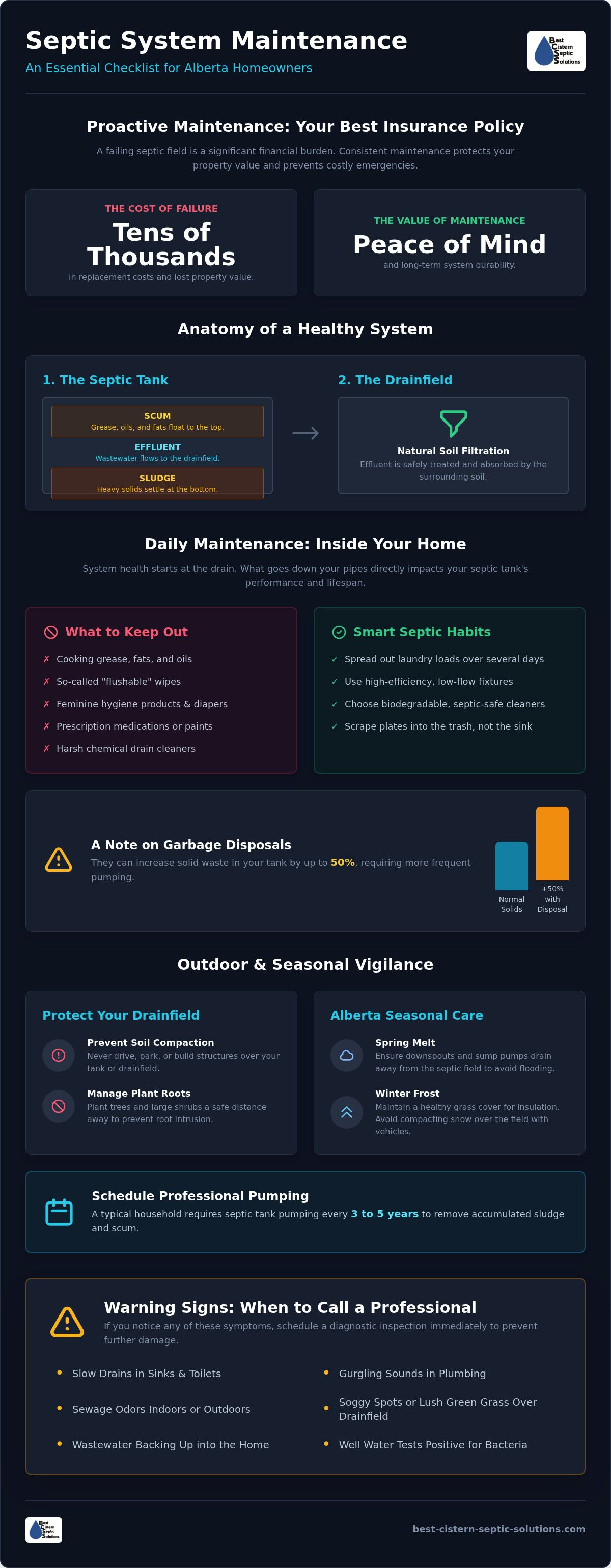
A functional system relies on a delicate balance of biology and mechanics to process waste safely. Inside the primary tank, wastewater separates into three layers: a top scum layer of fats, a middle layer of relatively clear effluent, and a bottom sludge layer of heavy solids. The tank's primary role is to retain solids while the effluent flows to the drainfield for final filtration. Understanding the septic system on your property is essential for long-term durability. Because How Septic Systems Work involves beneficial bacteria breaking down organic matter, your septic system maintenance checklist must focus on protecting this biological environment from hydraulic overload and chemical interference.
Indoor Habits: The Daily Maintenance Checklist
Effective property care begins at the drain. While the physical components of your system are buried outside, their performance is dictated by what passes through your pipes every day. Adopting a consistent septic system maintenance checklist for your indoor habits is the most direct way to prevent hydraulic overloading and biological failure. The primary rule is simple: if a substance doesn't naturally decompose, it has no place in your septic tank.
Household chemicals and 'flushable' wipes are common culprits that compromise system integrity. Even products labeled as safe for septic systems can disrupt the bacterial balance required to break down solids. According to EPA Maintenance Guidelines, protecting your system involves being mindful of every item that enters the wastewater stream. This proactive approach ensures your system remains a reliable, long-term asset for your home. By treating your drains with respect, you ensure the mechanical and biological parts of your system can do their jobs without interference.
The 'Septic-Safe' Household Filter
Treat your drains with care to avoid unnecessary solids buildup. Garbage disposals, for instance, can increase the volume of solids in your tank by up to 50 percent. This significantly shortens the interval between required pump-outs, which typically occur every three to five years. To maintain a healthy environment, avoid flushing these items:
- Cooking grease, fats, and oils
- Feminine hygiene products and diapers
- Prescription medications, paints, or thinners
- Chemical drain openers and harsh bleaches
These materials either don't break down or actively kill the beneficial bacteria your system needs to function. If you're concerned about how your household habits are affecting your system's health, scheduling a professional septic maintenance assessment can provide the clarity you need.
Smart Water Usage Strategies
Managing water volume is just as vital as managing what you flush. Your drainfield has a limited capacity to process liquid at any given time. When you send too much water into the system at once, a process called 'slug loading' occurs. This can push unsettled solids out of the tank and into the drainfield, leading to premature clogging. Spacing out laundry loads over several days and installing high-efficiency fixtures are excellent ways to regulate this flow. A single leaking toilet can quietly discharge hundreds of gallons of water per day, potentially flooding your field within a week. Regular checks for leaks are a small task that yields significant protection for your property.
Outdoor Vigilance: Protecting Your Drainfield and Tank
While your indoor habits protect the biological balance of your tank, your outdoor vigilance ensures the physical longevity of your drainfield. This area of your property is often the most expensive to replace, yet it remains the most vulnerable to environmental stress and physical damage. Your septic system maintenance checklist must prioritize the preservation of the "sacred space" above your treatment field. Keeping this area clear and dry allows the soil to perform its final filtration role effectively, ensuring the safety of your property for decades to come.
Surface water management is a critical component of this vigilance. In North Central Alberta, heavy rainfall or rapid snowmelt can quickly saturate the ground, leaving your drainfield unable to accept effluent from the tank. You should ensure that eavestroughs, downspouts, and landscape grading all direct water away from the septic area. If the soil becomes waterlogged from external sources, your system can't process wastewater, leading to backups or surfacing sewage that requires immediate professional attention.
Field Protection and Landscaping
The only recommended cover for a treatment field is healthy, mowed grass. Grass roots are shallow enough to stabilize the soil without interfering with the buried pipes. You should avoid planting deep-rooted trees or shrubs, such as poplars or willows common in Alberta, near your system. These roots are naturally drawn to the moisture and nutrients inside your pipes, which can lead to structural damage and total field failure. Additionally, soil compaction is a silent killer of septic systems. You must never drive vehicles, park heavy equipment, or place permanent structures like sheds or decks over any part of the tank or field. Compressed soil loses the oxygen required for aerobic bacteria to treat wastewater, effectively suffocating the system.
Cistern and Pump Integration
Many rural properties in Parkland and Sturgeon County utilize dual systems where cistern maintenance plays a vital role in the property's overall water balance. If your property relies on an effluent pump to move wastewater to a treatment mound, checking the health of that pump is essential. Mechanical components like effluent pumps and floats have a finite lifespan and require periodic professional assessment to prevent sudden failures. Ensuring your septic alarm installation is functional and audible provides a vital safety net. An alarm that triggers correctly gives you the necessary lead time to call for a professional fix before a high-water situation becomes a household emergency. Proper access is also a requirement; as of 2026, regulations in areas like Sturgeon County emphasize that all tanks must have secure, bolt-down lids and surface-level risers to ensure safe and efficient maintenance.
The Seasonal Alberta Septic Schedule
Alberta’s climate dictates the rhythm of property care. While some tasks are universal, your septic system maintenance checklist must adapt to the seasonal shifts that define our region. In North Central Alberta, the transition from deep winter frost to rapid spring snowmelt creates specific pressures on your wastewater infrastructure. Managing these shifts proactively ensures that your system remains a durable, long-term asset rather than a source of seasonal stress.
During the summer months, your focus should be on monitoring and accessibility. Ensure that your tank risers are clear of tall weeds or debris and that your bolt-down lids are secure and undamaged. This is also the best time to observe the vegetation over your drainfield. If you notice grass that is significantly greener or faster-growing than the surrounding area, it may indicate that the field is receiving more effluent than it can process. Following a seasonal septic system maintenance checklist ensures you identify these subtle signs before they escalate into mechanical failures.
Winterizing Your System for Alberta Frost
The Alberta frost line can reach significant depths, making winter protection a priority. One of the most effective tools you have is actually the snow itself. You should avoid driving snowmobiles or walking frequently over the septic field, as compacted snow loses its insulating properties and allows frost to drive deeper into the ground. If your system has shallow lines or if you're expecting a period of extreme cold without adequate snow cover, adding a layer of clean straw or specialized septic mulch can provide the necessary thermal protection. If you suspect your system has frozen, don't attempt to add antifreeze or salt; instead, seek a professional fix to safely thaw the lines without damaging the biological balance of the tank.
Spring Thaw and Runoff Management
Spring is the most demanding season for any rural utility. As the snow melts, you must remain vigilant for "swampy" spots or standing water over the drainfield. These are clear indicators of soil saturation. You should also check your tank for Inflow and Infiltration (I&I), where groundwater enters the system through small cracks or unsealed joints. This extra water can hydraulically overload your field, leading to premature failure. Scheduling your septic service during the spring allows for a professional assessment of these risks before the busy summer season begins. If you want to ensure your system is prepared for the year ahead, a professional Septic Maintenance review can provide the peace of mind you need.
When to Call a Professional: Beyond the Checklist
While a homeowner’s septic system maintenance checklist provides the foundation for proactive property care, certain technical assessments require a specialized eye. There is a common misconception that having your tank pumped is the same as having it maintained. A pumper’s primary role is waste removal, which is essential, but it doesn't include a comprehensive diagnostic review of the system’s mechanical and biological health. Professional septic repair is often avoidable if a technician identifies a minor baffle issue or a failing effluent pump before it leads to a total field failure.
In regions like Leduc and Parkland County, detailed reporting is a standard requirement for real estate transactions. Waiving a professional inspection during a home purchase is a risk that can lead to unforeseen expenses, as a complete system replacement can cost between $15,000 and $30,000. Professional diagnostics act as a safeguard, providing a clear picture of the system's remaining lifespan. By identifying small issues early, you protect your home’s equity and ensure the property remains a safe, functional environment for your family.
The Professional Inspection Protocol
A diagnostic inspection goes deep into the mechanical integrity of your system. Technicians check the sludge and scum levels to determine if your pumping frequency is adequate for your household size. They also verify the integrity of the inlet and outlet baffles, which prevent solids from escaping the tank and clogging the drainfield. Advanced camera inspections allow us to see inside the lateral lines, identifying root intrusions or pipe collapses that aren't visible from the surface. Best Cistern Septic Solutions focuses on diagnostic accuracy to ensure every homeowner receives a transparent, long-term resolution rather than a temporary patch.
Emergency Signs vs. Routine Care
You should learn to recognize the early warning signs that your system is struggling. Gurgling sounds in your pipes often mean the tank is overfull or the main line is partially blocked. If your septic alarm triggers, it’s a direct signal that the water level in the pump chamber has reached a critical point. In a rural Alberta setting, responding quickly to these alarms can be the difference between a simple pump replacement and an expensive field reconstruction. When caught early, a professional fix can often restore a system's function, preserving the integrity of your property without the need for a full replacement. Keeping your septic system maintenance checklist updated with professional inspection dates ensures you're never caught off guard by a preventable emergency.
Securing Your Property's Future with Professional Care
Maintaining a rural property in Alberta doesn't have to be a source of constant anxiety. By integrating a consistent septic system maintenance checklist into your routine, you've already taken the most important step toward long-term property preservation. From managing daily water volumes to protecting your drainfield from the deep Alberta frost, these proactive measures ensure your system remains a durable asset rather than a liability. However, even the most diligent homeowner benefits from the specialized eye of a professional technician who understands the unique soil and climate conditions in Parkland, Leduc, and Sturgeon Counties.
Best Cistern Septic Solutions is a local, family-owned provider specializing in high-level diagnostic inspections and field restoration. We move beyond simple waste removal to provide a complete, end-to-end service journey that prioritizes your family's safety and your property's integrity. When you choose a professional fix, you remove future worries and gain the definitive peace of mind that comes from expert care. Our diligent, detail-oriented approach ensures that your essential utility systems perform with the high level of sophistication your home deserves.
Book Your Professional Septic Inspection with Best Cistern Septic Solutions today to ensure your utility systems are prepared for the years to come. We're here to be your proactive partner in property care.
Frequently Asked Questions
How often should I have my septic system inspected in Alberta?
A professional septic system inspection is recommended every one to three years for most Alberta households. If your system is older or serves a large family, an annual check is the safest approach to ensure compliance with the 2021 Standard of Practice. These inspections verify that your tank baffles, effluent filters, and pumps are functioning correctly, which is a vital part of your long-term septic system maintenance checklist.
Can I use septic tank additives to avoid pumping?
You shouldn't rely on septic tank additives to replace regular pumping. While some products claim to break down solids, they can actually stir up sludge and push it into your drainfield, causing premature clogging and expensive repairs. The most reliable way to maintain your system is through physical waste removal every three to five years combined with healthy biological habits and regular professional assessments.
What are the most common signs of a failing septic field?
The most common signs of a failing field include persistent sewage odors, slow-moving indoor drains, and "swampy" patches of soil in your yard. You might also notice wastewater backing up into your basement or gurgling sounds in your plumbing. If you see these indicators, you should schedule a professional diagnostic inspection immediately to identify the specific cause and prevent a total failure of your property's wastewater system.
Is it safe to plant a vegetable garden over my septic field?
It is not safe to plant a vegetable garden over your septic field. While the nutrients might help plants grow, there is a significant risk of bacterial or viral contamination from the effluent. Additionally, the regular digging and watering required for a garden can interfere with the soil's ability to treat wastewater and may damage the buried pipes or the protective soil cover.
Why is my grass greener over the septic tank area?
Greener grass over your septic field can be a normal result of the extra moisture and nutrients provided by the effluent. However, if that grass is exceptionally lush, dark green, and stays wet even in dry weather, it often indicates a hydraulic overload. This means the field is struggling to absorb the volume of water being sent from the tank, which is a key item to monitor on your septic system maintenance checklist.
What should I do if my septic alarm goes off during a heavy rain?
If your septic alarm sounds during heavy rain, you should immediately minimize your indoor water usage. The alarm typically indicates a high-water situation in the pump chamber, often caused by groundwater entering the system or a pump that can't keep up with the flow. Check your breaker panel first; if the power is on and the alarm continues, you'll need a professional diagnostic to determine if the pump or float requires repair.
How does the Alberta frost affect my septic system's performance?
Alberta frost can reach depths that threaten shallow lines and tanks if they aren't properly protected. Deep frost can freeze the effluent, causing backups and mechanical damage to pumps and pipes. Maintaining a healthy layer of snow over your system acts as natural insulation, helping to keep the underlying soil warm enough for the biological treatment process to continue effectively throughout the winter months.
Can I drive my lawn tractor over the septic drainfield?
You should avoid driving a heavy lawn tractor or any heavy equipment over your septic drainfield. The weight of these machines can compact the soil, which reduces the oxygen levels required for treatment bacteria and can crush buried pipes. Stick to using a lightweight push mower or a small riding mower to maintain the grass cover without risking structural damage or soil compaction that leads to system failure.


