
That monthly packet of "miracle" bacteria you're flushing might actually be the fastest way to clog your drain field. It's understandable why so many homeowners reach for septic tank additives in Alberta. When the ground freezes and the risk of a system failure looms, the thought of a C$30,000 replacement is enough to make anyone look for an easy fix. You want to feel confident that your utility systems are secure, especially during our harsh winter months when repairs are most difficult.
We agree that protecting your property's long-term value is a top priority. In this 2026 guide, you'll discover why most retail products fail to deliver on their promises in our specific soil conditions and climate. We'll provide clear, evidence-based maintenance steps that actually protect your drain field and extend its lifespan. You'll gain a better understanding of the Alberta Private Sewage Systems Standard of Practice and learn how to keep your system running cleanly and safely without wasting money on biological band-aids. This methodical approach ensures your home remains a place of security rather than a source of stress.
Key Takeaways
- Learn why Alberta’s frozen ground and specific soil conditions make most retail additives ineffective at preventing system failures.
- Understand the risks of using septic tank additives alberta homeowners often buy, including how they can emulsify fats and lead to expensive drain field clogs.
- Identify the difference between biological and chemical supplements to ensure you aren't accidentally introducing harmful substances into your home's ecosystem.
- Discover evidence-based maintenance habits and professional inspection schedules that align with the Alberta Private Sewage Systems Standard of Practice.
- Shift your focus from "quick fix" products to long-term preservation strategies that protect your property value and ensure household safety.
What Are Septic Tank Additives and Why Are They Popular in Alberta?
Septic additives are supplemental products intended to enhance or restore bacterial activity in a tank. These products generally fall into two categories: biological stimulants, such as specialized bacteria or enzymes, and chemical additives, which often use inorganic acids or alkalis to break down solids. In rural communities across the province, these products have become a staple on hardware store shelves. The popularity of septic tank additives alberta homeowners see today is largely driven by the desire for a "quick fix" for common household plumbing frustrations.
When a drain begins to slow or a faint odor lingers near the tank, the immediate reaction is often one of concern. Replacing a drainage field is a significant investment that can cost upwards of C$30,000. Because of this high stakes environment, many people look for a proactive way to protect their system. Marketing campaigns often capitalize on this anxiety, presenting additives as a miracle cure that can dissolve years of accumulation with a single flush. However, these promises often overlook the sophisticated natural processes already occurring beneath your lawn.
The Promise of "Maintenance-Free" Septic Systems
Homeowners in Parkland and Leduc County often turn to additives because they want to ensure their property remains a secure, worry-free asset. Many retail products are marketed with the suggestion that they can eliminate the need for regular professional maintenance. It is a common misconception that a monthly packet of enzymes can replace the physical removal of solids through pumping. While some products claim to "kill" smells or "digest all sludge," these are often temporary masks for underlying issues. Relying on a retail product to solve a mechanical or structural problem can lead to a false sense of security while a larger issue develops quietly underground.
The Natural Biology of an Alberta Septic Tank
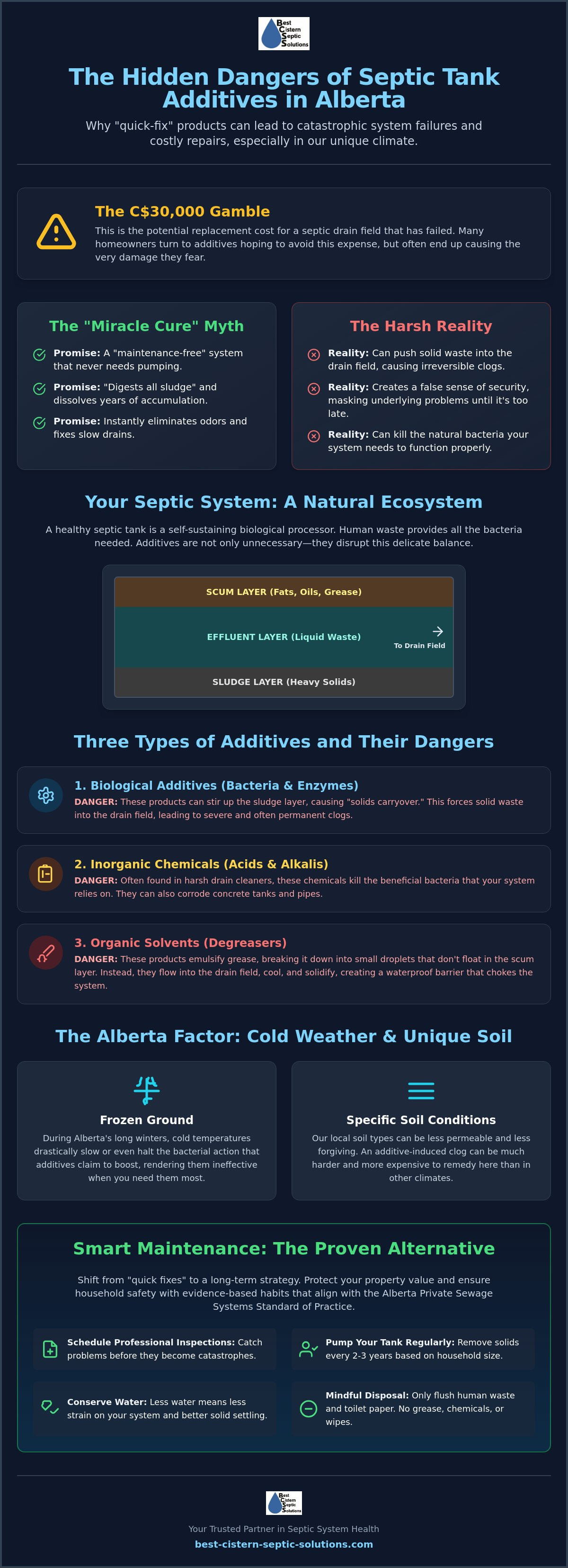
A healthy system is actually a living ecosystem that does not require outside help to begin its work. You can find detailed information on how septic systems function through anaerobic digestion, a process where bacteria thrive in an oxygen-free environment. Human waste naturally provides all the necessary bacteria required to break down organic matter. Inside the tank, the waste separates into three distinct layers: a top layer of floating scum, a middle layer of relatively clear effluent, and a bottom layer of heavy sludge.
Under normal conditions, septic systems are remarkably self-sustaining. The bacteria already present are highly efficient at processing household waste. When you understand that your tank is already a high-performing biological processor, the need for septic tank additives alberta retailers promote becomes less clear. Maintaining the integrity of this natural balance is the most effective way to ensure the long-term durability of your drainage field and the safety of your home.
Understanding the Three Main Categories of Septic Additives
Choosing the right maintenance strategy often starts with identifying what is actually in the bottle of septic tank additives alberta retailers provide. These products aren't all created equal, and their effects on your system can range from benign to outright destructive. To protect your property's long-term value, it's helpful to categorize these supplements into three primary groups: biological starters, inorganic chemicals, and organic solvents. Understanding these distinctions allows you to move away from guesswork and toward a more methodical approach to system care.
Most products found in local home improvement stores are biological, but many homeowners accidentally introduce harsh inorganic or organic chemicals through heavy-duty drain cleaners. While the marketing might suggest these products "clean" your system, they often interfere with the delicate settling process required for a healthy tank. A professional septic system inspection is a more reliable way to assess your tank's health than any store-bought chemical, as it provides a clear picture of the physical integrity of your system.
Biological Starters: Are They Necessary?
Biological additives include yeast, bacteria, and enzymes designed to boost the digestion of solids. While these aren't usually toxic, they can create a phenomenon known as "solids carryover." In a naturally functioning tank, solids need time to settle at the bottom as sludge. If you add aggressive enzymes, they may break down these solids into tiny particles that remain suspended in the effluent. Instead of staying in the tank, these micro-solids flow out into your drainage pipes, where they can quickly clog the soil pores in your drain field. This disruption of the natural settling process often does more harm than good, especially in high-flow households where the system is already working hard to keep up.
Chemical Killers: Acids, Bases, and Solvents
Inorganic additives, such as strong acids or bases, are frequently sold as powerful drain openers. These substances are highly corrosive and can damage concrete tanks and metal components over time. More importantly, they are "bactericides" that kill the very microorganisms your system relies on for waste processing. Using these products is a direct violation of the principles laid out in the Alberta Private Sewage Systems Standard of Practice, which emphasizes maintaining a healthy biological environment.
Organic solvents and degreasers pose an even greater risk. These chemicals don't break down easily and can leach through your drain field into Alberta’s groundwater. This not only threatens the safety of your own well water but can lead to significant environmental liability. Because these chemicals emulsify fats and oils, they allow grease to bypass the tank's baffles and enter the soil, which is the leading cause of premature field failure in rural Alberta. Maintaining a clean, chemical-free system is the most effective way to ensure household safety and property preservation.
The Alberta Factor: Cold Weather, Soil, and Regulations
The effectiveness of septic tank additives alberta homeowners choose is inextricably linked to the local climate. Our province faces extreme temperature fluctuations that directly impact the biological performance of any wastewater system. While a product might claim to boost bacterial growth, these claims are often based on laboratory settings that don't account for the frozen ground in Sturgeon County or the heavy clay soils found in parts of Strathcona County. Understanding these environmental constraints is essential for maintaining a reliable system that survives the deep freeze.
Relying on supplemental products during a cold snap is often a misallocation of resources. In Alberta, the physical design of the system and the preservation of the natural soil structure are far more important than any store-bought additive. A professional approach focuses on the integrity of the mechanical components and the health of the soil profile, ensuring that your property remains safe and functional regardless of the weather outside.
Biological Activity in Cold Climates
Bacterial activity is temperature-dependent. When soil temperatures drop during a typical Alberta winter, the microorganisms responsible for breaking down waste naturally slow their metabolism. Most "bacteria-in-a-bottle" products contain strains that simply go dormant when they hit the cold effluent in an uninsulated tank. Adding more bacteria to a cold environment won't force them to work faster; it simply adds more organic matter to the system.
A more effective strategy is ensuring your tank has proper insulation or a healthy layer of snow cover to retain the heat generated by natural decomposition. Without this thermal protection, you may experience "sludge bulking," where solids fail to settle properly and begin to migrate toward the outlet. This often results in a sudden need for septic system repair once the spring thaw arrives and the drainage field becomes overwhelmed by these unsettled solids.
Compliance with Alberta Private Sewage Codes
The Alberta Private Sewage Systems Standard of Practice 2021 is the governing document for all rural wastewater systems in the province. This standard emphasizes rigorous design and soil assessment rather than the use of unproven additives. In fact, many professional installers and manufacturers warn that introducing unauthorized chemicals or biological stimulants can void the warranty on a new septic field installation.
Regulatory compliance is about ensuring your system protects the surrounding environment and public health. The provincial standards are designed to ensure that the soil does the heavy lifting of treatment. When you introduce additives that disrupt the natural biomat or emulsify greases, you're working against the engineering of the system. Professional inspections remain the only reliable method for ensuring your system meets these provincial codes while providing you with the peace of mind that your home's vital utilities are in peak condition.
The Risks: How Additives Can Destroy Your Septic Field
The "clean" feeling of a free-flowing household drain can be deeply deceptive. While the septic tank additives alberta homeowners use might clear a minor sink blockage, they often do so by pushing the problem further down the line. In a healthy system, the "biomat"-a thin layer of beneficial organisms at the soil interface-acts as a final filter. When aggressive chemicals or excessive enzymes disrupt this layer, the soil’s ability to absorb liquid is compromised. This leads to a terminal failure of the drainage field, a situation where the only resolution is a complete and costly replacement.
In the Edmonton region, industry data shows that the cost to replace a failing septic system can range from C$15,000 to C$30,000, and complex sites with difficult soil conditions can even reach C$50,000. These are significant expenses that can be avoided by focusing on the physical health of the tank rather than chemical shortcuts. A professional approach ensures that your system remains a quiet, invisible asset rather than a source of financial stress.
The Danger of Emulsification
Degreasers and certain solvent-based additives are particularly hazardous because of how they interact with fats, oils, and grease (FOG). Normally, these substances float to the top of your tank to form a protective scum layer. Some additives can emulsify these fats, essentially hiding them within the effluent liquid. Instead of being trapped safely in the tank, the grease travels directly into the distribution pipes and out to the soil. Once there, it cools and permanently seals the soil pores. This creates a waterproof barrier that prevents the ground from accepting wastewater, turning a minor maintenance concern into a terminal field failure.
Disrupting the Sludge Layer
Aggressive biological additives can also cause a cascading failure by stirring up the settled sludge at the bottom of the tank. When these solids are agitated by gas production or chemical reactions, they become suspended in the liquid and flow out toward the distribution box. This physical migration of solids is the primary cause of pipe blockages and soil compaction. Many septic service edmonton experts avoid recommending retail additives because they understand that a stable, quiet tank is the key to longevity.
Maintaining your system’s integrity is about preservation rather than intervention. If you are concerned about slow drains or system performance, a professional assessment is the most reliable way to identify the root cause and provide a definitive fix. You can book a professional septic system inspection to ensure your drainage field remains a long-term asset for your property and your family's safety.
Better Alternatives: Evidence-Based Septic Maintenance
Instead of searching for the right septic tank additives alberta retailers suggest, focus on protecting the biological engine already in your backyard. The most effective maintenance strategy is one that respects the natural settling and treatment process. By adopting proactive habits, you ensure your system remains a durable, long-term asset for your property. Maintaining this balance doesn't require complex chemicals; it requires a methodical approach to what enters your tank and how often you monitor its performance.
One of the simplest ways to maintain system health is following the "Three Ps" rule: only flush pee, poop, and paper. Modern household items like "flushable" wipes, feminine hygiene products, and heavy paper towels don't break down quickly enough. These items create physical blockages that no additive can dissolve. Additionally, managing your water load is vital for system longevity. Spreading out laundry loads throughout the week prevents "drowning" the beneficial bacteria in your tank. This practice gives the microorganisms the time they need to process waste effectively without being flushed out prematurely by a surge of water.
A Proactive Maintenance Schedule
A consistent 3-5 year pumping cycle is significantly more effective than any store-bought supplement. This physical removal of sludge prevents solids from ever reaching your drainage field, which is the most common cause of system failure. For homeowners in Spruce Grove and surrounding areas, a professional diagnostic inspection can identify early warning signs before they become emergencies. Look for patches of unusually lush grass over the field, slow-draining fixtures, or gurgling sounds in the pipes. These are signals that your system needs attention from a specialist, not a chemical treatment from a bottle.
When to Call the Experts at Best Cistern Septic Solutions
It’s important to distinguish between a simple plumbing clog and a terminal field failure. Our team uses specialized diagnostic tools to provide a clear, transparent view of your system's health. While "magic" pills and retail products offer vague promises, we provide definitive resolutions based on the physical state of your tank and soil. We take pride in being a proactive partner in your property care, ensuring your utility systems operate cleanly and safely for years to come. Our goal is to remove the stress of system management by providing thorough, honest assessments.
Schedule your professional septic inspection today to gain complete peace of mind and protect your home's most vital infrastructure. A professional fix is always available to ensure your property remains a secure and healthy environment for your family.
Protecting Your Property with Evidence-Based Care
Your home's septic system is a vital, invisible asset that requires a steady, methodical approach to maintenance. While the marketing behind septic tank additives alberta homeowners see might promise a "maintenance-free" future, the evidence points toward preservation rather than intervention. You now understand that your tank's natural biological environment is its strongest defense against failure, especially when supported by sensible water usage and a consistent pumping schedule. Relying on the system's engineered design ensures that your drainage field remains a durable part of your property for decades.
We provide grounded, professional advice you can trust for your rural property. Our team specializes in long-term septic field health and restoration, offering expert diagnostic services for Parkland and Leduc County. Instead of relying on a bottle, choose the clarity that comes with a technical assessment. You can Book a Professional Septic Inspection in North Central Alberta to ensure your household systems remain secure and efficient. Every challenge has a manageable resolution, and a professional fix is always available to give you complete peace of mind.
Frequently Asked Questions
Are septic tank additives required by Alberta law?
No, there are no legal requirements in Alberta to use septic tank additives. All private sewage systems in the province are governed by the Safety Codes Act and the Alberta Private Sewage Systems Standard of Practice. These regulations focus on proper engineering, soil assessment, and physical components. The government does not mandate or officially endorse any supplemental products for standard system operation.
Do additives really eliminate the need for septic pumping?
Additives do not eliminate the need for regular septic pumping. While some marketing claims suggest these products can digest all solids, they cannot process inorganic materials or the heavy sludge that naturally accumulates. Physical removal of solids every 3 to 5 years remains the only reliable method to prevent sludge from migrating into and permanently damaging your drainage field.
Can I use yeast or baking soda as a natural septic additive?
You don't need to use yeast or baking soda to maintain a healthy system. While these are often suggested as home remedies for septic tank additives alberta residents consider, human waste already provides all the necessary bacteria. Adding yeast can actually cause excessive fermentation. This agitates the settled sludge and risks sending suspended solids into your disposal field pipes, which leads to clogs.
Will additives help fix a failing septic field with standing water?
No, additives cannot resolve a structural or mechanical failure characterized by standing water. Surface ponding usually indicates that the soil has become saturated or sealed by an excessive biomat. Using chemicals at this stage often worsens the situation by further disrupting the soil chemistry. A professional inspection is required to determine if a specific repair or a full septic field restoration is necessary.
Are there any septic additives approved by the Alberta Standard of Practice?
No specific septic additives are officially endorsed or approved by the Alberta Private Sewage Systems Standard of Practice. The 2021 update to these standards emphasizes system design and maintenance rather than supplemental products. Most experts agree that a properly functioning system is a self-sustaining ecosystem that requires no outside biological or chemical help to process waste safely and effectively.
How do I restart my septic tank bacteria after using heavy cleaners?
The most effective way to restart bacterial activity is simply to resume normal use of the system. Your household waste naturally introduces the microorganisms required for anaerobic digestion. If you've used heavy disinfectants or bleach, stop using those harsh chemicals immediately. The tank will repopulate its bacterial colonies naturally over several days without the need for expensive "starter" cultures.
What is the best way to prevent septic smells without using chemicals?
Ensuring your plumbing vents are clear and the tank is structurally sound is the best way to prevent odors. Smells often occur when vent stacks on the roof are blocked or if the tank's physical baffles are damaged. Regular professional inspections can identify these mechanical issues. This provides a definitive resolution that addresses the root cause rather than temporarily masking the scent with a chemical fragrance.
Do additives work better in the summer than in the Alberta winter?
Biological activity is naturally higher in the summer because bacteria thrive in warmer temperatures. During a cold Alberta winter, the metabolism of microorganisms slows down significantly. Most septic tank additives alberta retailers sell will simply go dormant in cold effluent. This makes them even less effective during the freezing months when homeowners are often most concerned about their system's performance.


