That persistent soggy patch in your backyard isn't just a landscaping nuisance; it's often the first sign that your underground infrastructure needs professional attention. Whether you're planning a new build or upgrading an aging system, understanding the requirements for septic installation parkland county homeowners must follow is the first step toward a dry, functional yard. You want a system that works silently in the background, providing peace of mind rather than a recurring list of chores.
We understand that managing rural wastewater can feel overwhelming, especially with the strict requirements of the Alberta Private Sewage Systems Standard of Practice. You've likely wondered if a simple pump-out will fix your drainage issues or if a more permanent structural repair is required. This guide will help you master the essentials of septic field installation and cistern management for your property. We'll explore how to identify the root cause of backups, the latest standards for Alberta rural residences, and how a proactive approach to your infrastructure ensures your household stays safe and secure.
Key Takeaways
- Learn how the 2026 Alberta Private Sewage Systems Standard of Practice impacts your property requirements and the mandatory permit process.
- Understand why a professional septic installation parkland county project addresses the structural root causes of field failure that simple pumping cannot resolve.
- Discover the essential role of cistern installation in maintaining a reliable, safe supply of potable water for your rural household.
- Identify the critical diagnostic markers used during professional inspections to ensure your system is code-compliant and ready for real estate transactions.
- Master the signs of structural septic field failure to prevent future backups and protect the long-term value of your acreage.
Navigating Private Wastewater Systems in Parkland County
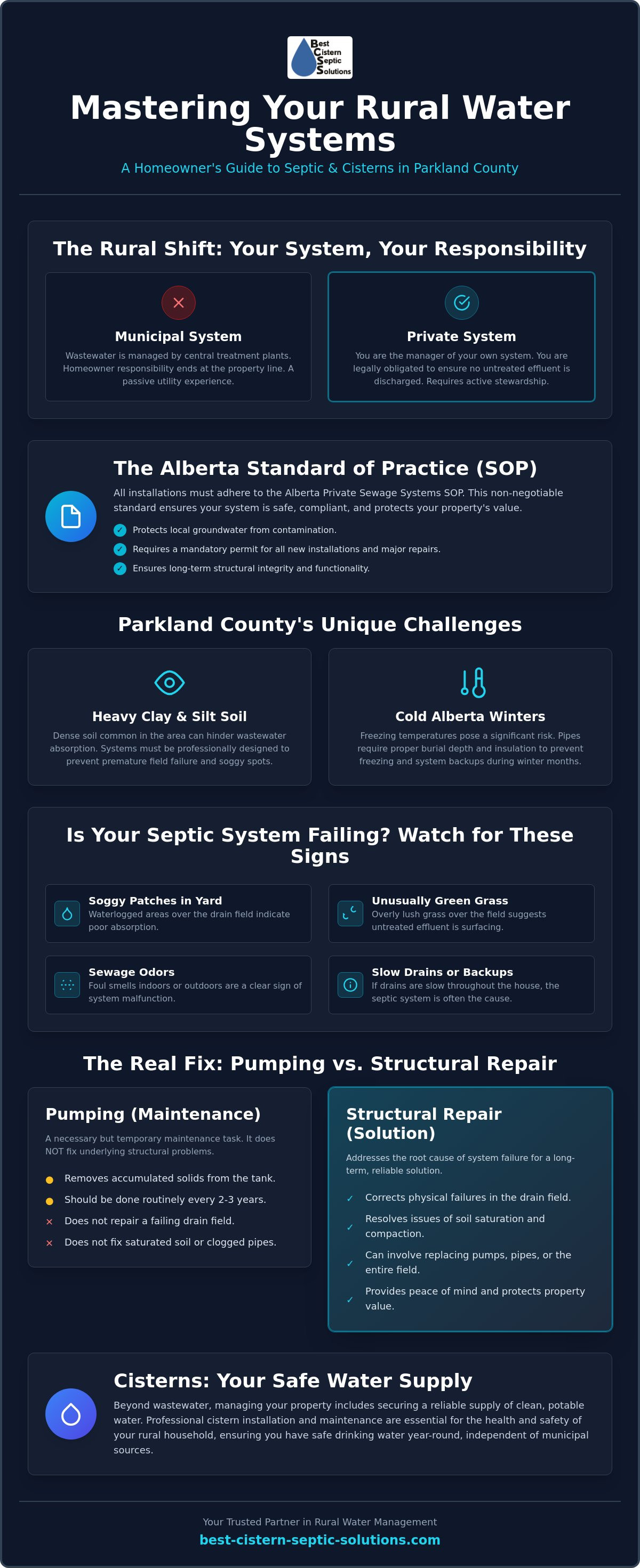
Moving from city limits to an acreage in Parkland County changes your relationship with your home's utilities. In a municipal setting, wastewater management happens behind the scenes, handled by central treatment plants. Once you transition to rural living, you become the manager of your own private utility system. This shift requires moving away from passive use toward active stewardship of your property's infrastructure. It's a new way of living that rewards proactive care and professional design.
A successful septic installation parkland county project relies on engineering rather than just simple hauling. It requires strict adherence to the Alberta Private Sewage Systems Standard of Practice (SOP). While the last major update occurred in 2021, these regulations remain the definitive authority for all installations in 2026. These rules ensure that your septic tank and treatment field protect the local groundwater and your property’s long-term value. Homeowners should prioritize structural integrity over routine maintenance. A well-designed field treats wastewater naturally through the soil, turning a complex mechanical process into a reliable, invisible asset.
Most properties in North Central Alberta utilize either a conventional treatment field or a treatment mound. The choice depends heavily on your specific soil profile and the space available on your lot. Working with a certified professional ensures your system is sized correctly for your household's daily water usage, preventing the stress of unexpected backups and ensuring your home remains a place of comfort.
Private vs. Municipal: Defining Your Responsibility
When planning a septic installation parkland county residents must recognize that the legal boundary is straightforward. The county manages infrastructure up to your property line; however, everything from the house to the final discharge point is your personal responsibility. You are legally obligated to ensure your system doesn't discharge untreated effluent into the environment. Maintaining an up-to-date site assessment is vital for every rural property owner. This document tracks your system's components and soil conditions, serving as a factual roadmap for future repairs or property sales.
The Local Landscape: Soil and Climate Factors
Parkland County is well-known for its heavy clay and silt soil types. These dense materials can hinder the natural absorption of wastewater if the system isn't tailored to the terrain. If your soil isn't tested by a certified expert, you risk the appearance of soggy spots or premature field failure. Additionally, our North Central Alberta winters present unique challenges. Without proper insulation and correct burial depth, pipes can freeze when temperatures drop. Understanding septic systems in Parkland County and how they interact with our specific climate is the first step to ensuring your infrastructure lasts for decades.
Septic Field Installation and Repair: Beyond the Pump
Many homeowners assume that a vacuum truck is the only service their wastewater system will ever need. While regular pumping removes accumulated solids, it doesn't address the structural health of your drainage pipes or the soil's ability to absorb effluent. When we discuss septic installation parkland county residents often find that their issues aren't caused by a full tank, but by a physical failure in the field itself. Structural integrity is the foundation of a worry-free property; a healthy field should function silently without the need for emergency interventions.
Recognizing the early warning signs of field failure can save you from a total system collapse. If you notice unusually lush, green grass over your drainage area, lingering sewage odours, or slow-moving drains inside the house, your system is likely struggling to process liquid waste. These symptoms often point to saturated soil or clogged distribution lines. In many cases, an effluent pump replacement can restore the necessary pressure to a sluggish system, effectively pushing wastewater to the treatment area and extending the life of your existing infrastructure. All structural work we perform strictly adheres to the Private Sewage Disposal Systems Regulation to ensure your property remains safe and compliant.
The complex engineering behind a professional septic field installation involves more than just digging a hole. It requires a precise understanding of how water moves through your specific plot of land. If you're experiencing recurring issues, specialized septic solutions can identify whether your system needs a targeted repair or a complete modernization to meet modern household demands.
When to Repair vs. Replace Your Septic Field
Determining the right path forward begins with a thorough diagnostic inspection. We look for specific indicators like biomat buildup or crushed distribution pipes that might be restricting flow. If the core structure of your field is sound, advanced restoration techniques can often clear blockages and rejuvenate the soil's absorption capacity. However, if the system was undersized for your home's current water usage, modernizing the aging infrastructure is often the most cost-effective long-term asset for your property. A total replacement provides a fresh start with updated materials designed for durability.
2026 Standards for New Septic Field Installation
For new rural builds, the installation process starts with rigorous site preparation. We use heavy equipment to clear the area and ensure the grade allows for proper gravity or pressure-assisted flow. Selecting the correct tank size is vital; it must match your household capacity to prevent the system from being overwhelmed. In 2026, integrating smart septic alarms has become a standard practice for proactive property care. These sensors provide an early warning of high water levels or pump failures, allowing you to resolve a problem before it leads to a messy backup or an expensive emergency.
Cistern Installation and Maintenance for Reliable Water
Living in rural Alberta means taking full control of your water cycle. While a professional septic installation parkland county project manages the exit of wastewater, a properly installed cistern ensures the entry of clean, potable water. In many parts of Parkland County, high-yield wells are rare or provide water with high mineral content. This makes a bulk water storage system the most reliable way to maintain a steady household supply. We see these two systems as the lungs of your home; one brings in what you need, and the other safely removes what you don't.
Choosing between a standalone potable water storage tank and a well-integrated system depends on your property's specific geology. A well-integrated cistern allows a low-yield well to trickle-fill a large tank over time, ensuring you have enough pressure for high-demand tasks like laundry or showering. For technical design grounding, many industry standards align with the Onsite Wastewater Treatment Systems Manual, which emphasizes the need for structural integrity in all onsite water facilities. By prioritizing a robust setup, you remove the stress of water scarcity and gain a predictable, safe utility system.
New Cistern System Setup and Design
Selecting the right materials for an Alberta cistern requires a focus on thermal stability. Concrete and high-density polyethylene are the standard choices because they resist the shifting pressures of our clay-heavy soil. Burial depth is the most critical factor for frost protection. In the Edmonton Capital Region, we install tanks deep enough to remain below the frost line, ensuring your water flows even during a January cold snap. When coordinating a cistern setup alongside a septic installation parkland county project, we ensure all components are strategically placed to maintain required setbacks and maximize property utility. Your cistern pump must also be sized correctly to balance your household's peak demand with long-term energy efficiency.
Cleaning and Longevity of Water Storage
A cistern isn't a "set it and forget it" utility. Over time, even the cleanest hauled water can leave behind sediment or a thin layer of biofilm on the tank walls. Regular professional cleaning is a health necessity that prevents bacterial growth and protects your internal plumbing. If you notice your water pressure fluctuating or the pump cycling more frequently than usual, it's often a sign of mechanical wear. Addressing these small issues early prevents total system failure and ensures your household remains secure. Investing in these systems correctly means cisterns for rural properties act as a significant value-add during any future property appraisal or real estate transaction.
Professional Septic Inspections and Diagnostics
A quick glance at your yard won't tell you the real story of your wastewater system. In Parkland County, professional evaluations are a staple of real estate transactions for good reason. They go far beyond a simple visual check. We examine the structural integrity of the tank, the condition of the baffles, and the performance of the effluent pumps. These components must work in harmony to ensure safe discharge. A comprehensive report acts as a safeguard against "buyer’s remorse," providing a factual assessment of the infrastructure before a purchase agreement is finalized.
When planning for a septic installation parkland county residents should view diagnostics as a recurring investment in property value. In the specific climate of North Central Alberta, we suggest a technical evaluation every two to three years. Our heavy clay soils and deep frost lines can put unique stress on underground pipes. Regular checks allow us to spot subtle shifts in field saturation or pump wear before they become emergency failures. It’s a methodical approach that replaces stress with certainty.
Real Estate Septic Inspections in Alberta
Rural real estate in Alberta operates under strict provincial safety codes. Most general home inspectors aren't certified to provide the depth of analysis required for a private sewage system. Our inspections verify that the existing setup is code-compliant and properly permitted. We provide a transparent breakdown of the system’s health, including an estimate of its remaining functional lifespan. This level of detail helps sellers justify their asking price and gives buyers peace of mind that their new home's most vital utility is sound. We focus on identifying unpermitted alterations or aging fields that could lead to significant costs shortly after a move-in date.
Diagnostic Tools for Invisible Problems
We utilize advanced technology to identify problems hidden beneath the soil. Specialized sensors and diagnostic equipment help us locate blockages or determine if a field has reached its absorption limit without unnecessary excavation. These tools allow for precise resolutions rather than expensive guesswork. We also evaluate the integration of septic alarms, which are your first line of defense against overflows. By adopting a proactive maintenance mindset, you treat your septic field as a long-term asset rather than a ticking clock. If you need a clear picture of your system's current condition, a professional septic system inspection is the most reliable way to secure your property's future.
Choosing Best Cistern Septic Solutions in Spruce Grove
Acreage living is a significant investment that requires a partner who understands the "bones" of your property. At Best Cistern Septic Solutions, we've dedicated our expertise to the structural side of rural utilities. While many companies in the region focus on waste hauling, we specialize in the technical engineering and physical integrity of the systems themselves. This distinction is vital for a successful septic installation parkland county homeowners can trust for decades. Our focus remains on the durability of your tanks, fields, and pumps, ensuring that we address the root causes of system failures rather than just managing the symptoms.
We pride ourselves on being a proactive partner in your property's care. By choosing a specialist who understands the specific environmental needs of North Central Alberta, you're protecting your household from the stress of sudden backups and potential environmental hazards. We take the time to explain the technical reasons behind every repair, empowering you to make informed decisions about your home's most vital infrastructure. Our goal is to provide a definitive, professional fix that turns a complex utility into a silent, reliable asset for your household.
Local Infrastructure Expertise You Can Trust
Our team serves a wide region, including Spruce Grove, Stony Plain, Leduc, and Sherwood Park. We've built our reputation on a grounded, professional approach to complex wastewater and potable water problems. Whether we're designing a new system for a rural build or restoring a failing field, we prioritize durability and strict code compliance. Alberta’s climate is unforgiving; your infrastructure must be built with that reality in mind. We ensure every component is installed with the precision required to withstand deep freezes and the heavy pressure of our local clay soils.
Your Next Steps for a Healthy System
Maintaining a healthy system shouldn't be a source of anxiety. If you're dealing with a septic alarm that won't stop or a field that isn't draining correctly, we're ready to provide a manageable resolution. We offer specialized services designed to keep your property functional and safe year-round:
- Emergency effluent pump replacement to restore system flow immediately.
- Structural septic field repairs that target the physical source of failure.
- Comprehensive technical site assessments for real estate transactions or system upgrades.
- Seasonal cistern cleaning and pump maintenance to ensure your potable water remains safe.
A professional fix is always available when you work with experts who treat your property with the same care they would their own. Taking action now prevents small mechanical issues from becoming expensive property liabilities. Request a professional septic or cistern consultation today to secure your home's long-term utility and gain the peace of mind you deserve.
Securing Your Property’s Future with Reliable Infrastructure
Managing a rural property in Parkland County is a rewarding experience when your essential utilities are built for longevity. As we've explored, successful wastewater management goes beyond surface-level fixes; it requires a focus on the structural health of your tanks and drainage fields. A professional septic installation parkland county project provides a code-compliant foundation that removes the worry of future backups. By combining robust field design with expert cistern maintenance, you ensure your home stays supplied with reliable water and safe drainage throughout our demanding Alberta winters.
We're here to be your proactive partner in property care. We specialize in infrastructure installation and repair, serving North Central Alberta with professional diagnostics that uncover invisible issues before they become emergencies. Whether you need a structural field restoration or a comprehensive cistern setup, our team provides the expert guidance required to keep your household secure. Ensure your rural property’s integrity with expert septic and cistern services. Taking these steps now means you can enjoy the quiet of acreage life with the confidence that your home’s most vital systems are in expert hands.
Frequently Asked Questions
How much does a new septic field installation cost in Parkland County?
The total cost for a new system depends on several variables, including your property's soil composition, the required treatment capacity, and the specific type of system mandated by local regulations. A complex treatment mound generally requires more material and labor than a conventional gravity-fed field. Permit fees and mandatory soil percolation tests also factor into the final investment. Because every septic installation parkland county project is unique to the terrain, a professional site assessment is the only way to determine the specific requirements for your land.
Do I need a permit for septic repair in Leduc County?
Yes, a private sewage permit is mandatory for any significant alteration, replacement, or repair of a septic system in Alberta. This includes structural work on treatment fields, mounds, or the installation of new tanks. These permits ensure that all work complies with the Alberta Private Sewage Systems Standard of Practice. Since all installations must be performed by a contractor holding a Private Sewage Certificate of Competency, your service provider will typically manage the application process through the local municipality to ensure your system remains code-compliant.
What is the difference between a septic tank and a holding tank?
A septic tank is a primary treatment component designed to separate solids from liquids before discharging effluent into a treatment field for natural soil filtration. In contrast, a holding tank has no outlet and simply stores all wastewater until a vacuum truck hauls it away. While holding tanks may have lower upfront costs, they require frequent, expensive pumping. A full septic installation parkland county homeowners choose usually includes a treatment field, providing a more sustainable, long-term solution for managing household waste on-site.
How often should a cistern be cleaned for potable water safety?
You should have your cistern professionally cleaned at least once per year to maintain water quality and household safety. Over time, sediment can settle at the bottom of the tank, and a thin layer of biofilm can develop on the interior walls, even if you only use treated hauled water. Annual cleaning removes these contaminants and provides an opportunity to inspect the structural integrity of the tank. Regular maintenance prevents bacterial growth and ensures that your potable water storage remains a reliable asset for your property.
Can a failing septic field be repaired without replacing the whole system?
Often, a struggling field can be restored if the underlying issues are identified before a total collapse occurs. If the problem is caused by a mechanical failure, such as a broken distribution pipe or a malfunctioning effluent pump, a targeted repair can resolve the issue. We use diagnostic tools to determine if the soil is simply saturated or if there's a physical blockage. In many cases, rejuvenating the existing infrastructure is a viable, cost-effective alternative to a complete system replacement.
What are the signs that my effluent pump needs replacement?
The most immediate sign of a problem is the sounding of your septic alarm, which indicates that water levels in the pump chamber have risen too high. You might also notice that your drains are sluggish or that the pump is cycling on and off much more frequently than usual. If the pump is running but the water level isn't dropping, the internal impeller may be worn or the discharge line could be blocked. Replacing a failing pump early prevents effluent from backing up into your home or saturating your yard.
Does Best Cistern Septic Solutions provide septic tank pumping?
No, we do not provide vacuum truck services or waste hauling. Our expertise is focused exclusively on the structural integrity of your system, including installation, diagnostic inspections, and technical repairs. We believe that a specialized focus on infrastructure allows us to provide a higher level of care for the mechanical components of your septic and cistern systems. We work as a proactive partner to ensure your tanks, fields, and pumps are built and maintained to last for decades.
How do Alberta winters affect my septic system and cistern?
Extreme cold can lead to frost heaving and frozen pipes if your system isn't installed at the correct burial depth. In North Central Alberta, we prioritize deep burial and proper insulation to ensure that wastewater and potable water continue to flow during sub-zero temperatures. Snow cover actually acts as a natural insulator for your septic field, so it's important to avoid compacting the snow with vehicles or heavy equipment. A well-designed system accounts for these climate challenges to prevent emergency freeze-ups during the winter months.


