
A septic system that meets the bare minimum of today's regulations might still fail your property within five years if it isn't built for Sturgeon County's specific soil profile. When you're planning a new build or a system replacement, the technical requirements can feel overwhelming. You're likely concerned about the high cost of a system failure or the complexity of municipal bylaws that seem to change every season. It's a heavy responsibility to ensure your home's wastewater is handled safely and efficiently.
We believe that every homeowner deserves a utility system that provides peace of mind through durability and compliance. This guide simplifies the process of securing a professional septic system design in Sturgeon County, ensuring your project meets the Alberta Private Sewage Systems Standard of Practice 2021. We'll walk you through the essential site and soil evaluations, the differences between low-pressure sewer (LPS) connections and private fields, and the precise steps to move from a blueprint to a permit-ready installation. By the end, you'll have a clear path toward a system that protects your property and passes every inspection with ease.
Key Takeaways
- Understand how Sturgeon County’s varied terrain, from heavy clay to sandy loam, dictates the specific engineering required for a durable wastewater system.
- Learn to navigate the Alberta Private Sewage Systems Standard of Practice 2021 to ensure your system remains compliant and passes every municipal inspection.
- Discover the methodical 5-step process for a septic system design Sturgeon County homeowners can rely on for permit approval and long-term property protection.
- Compare the functional differences between Low-Pressure Sewer (LPS) connections and traditional drainage fields to identify the most efficient solution for your acreage.
- Explore the benefits of integrated utility planning, ensuring your septic field and fresh water cistern are positioned safely to preserve your household's health.
Why Site-Specific Septic System Design Matters in Sturgeon County
A professional septic system design in Sturgeon County is more than a regulatory hurdle; it's the critical engineering phase that must happen before any heavy equipment arrives on your property. This blueprint serves as the master plan for your home's most vital utility. It ensures that the system is sized correctly for your family's needs while respecting the natural limitations of your land. By treating the design as a specialized engineering task, you transform a hidden utility into a long-term asset that protects your property value and provides daily peace of mind.
The design process reconciles the technical requirements of Onsite sewage facilities with the specific environmental conditions of North Central Alberta. Without this step, homeowners face the significant financial risk of a system that functions today but fails under the stress of a heavy rainfall or a growing household. A proper design is a proactive investment in durability, ensuring that your wastewater management is invisible, odorless, and entirely reliable.
The Consequences of Poor Design
Skipping a professional assessment or relying on a generic, "cookie-cutter" layout often leads to visible and costly failures. In our region, the spring thaw is the ultimate test for any septic system. As the frozen ground begins to saturate, a poorly designed field can easily become overwhelmed, leading to effluent breakout where wastewater pools on the surface. This isn't just a nuisance; it's a health risk and a potential source of groundwater contamination. Systems that lack a site-specific plan frequently fail the strict safety code inspections required in Alberta, often necessitating expensive retrofits before a permit is ever granted. We focus on removing these future worries by identifying potential risks during the initial drafting phase.
Sturgeon County Soil Profiles
The foundation of every successful septic system design in Sturgeon County is a thorough understanding of the local soil morphology. Our county features a varied terrain that can shift from heavy, slow-draining clay to porous silt within a single township. These differences dictate exactly how much space your drainage field requires and what type of system will work best. We use detailed percolation tests to measure how quickly the soil can safely absorb and treat effluent.
Heavy clay soils, for instance, often require a larger footprint or a specialized mound system to prevent the soil from becoming "waterlogged" and failing. Conversely, silt-heavy areas might allow for a more compact design but require precise protection from soil compaction during the construction phase. We often use data from professional septic system inspections on adjacent properties to build a clearer picture of the underground conditions. This methodical approach ensures your system remains a durable part of your home's infrastructure for decades to come.
Navigating Alberta Private Sewage Standard of Practice
Compliance with provincial law is the foundation of a durable wastewater utility. In Alberta, the Safety Codes Act governs how residential waste is managed. Every septic system design in Sturgeon County must strictly adhere to the Alberta Private Sewage Systems Standard of Practice. This 2021 standard ensures that every component, from the initial tank to the final discharge point, protects the local environment and your household's health. By following these rules, you're not just checking a box; you're building a system that will serve your property for decades.
Only certified private sewage installers are authorized to apply for and obtain permits for most system types. This requirement exists because a professional design must account for complex variables like land slope, soil depth, and mandatory setbacks. Your design must maintain precise distances from water wells, property lines, and existing buildings to prevent cross-contamination. Most local applications require a two-stage septic tank. This setup allows heavy solids to settle in the first chamber, ensuring only clarified liquid moves to the second stage. It's a simple, methodical process that significantly extends the life of your drainage field.
The Safety Codes Act in Sturgeon County
A Private Sewage permit is mandatory for any new or replacement system on your land. The Safety Codes Administrator reviews your plans to verify they meet all technical requirements before construction begins. A professional septic system design in Sturgeon County ensures that the county sees a compliant, permit-ready plan from the start. While contractors handle the technical drafting, homeowners are responsible for ensuring their property remains compliant. Working with a specialized expert helps you avoid the stress of unpermitted work penalties, which can double your application fees.
Technical Specifications for 2026
Modern designs prioritize durability through high-quality materials. We often choose between reinforced concrete and high-density plastic tanks based on your site's specific soil pressure and groundwater levels. A critical addition to any 2026 design is an effluent filter. This small device prevents lint and fine solids from entering the drainage area, which is a major factor in a successful septic field installation. Integrating these modern standards ensures your system remains a reliable asset rather than a hidden liability. If you're ready to start your project, our team provides comprehensive septic solutions tailored to your specific land requirements.
Low-Pressure Sewer (LPS) vs. Private Drainage Fields
In many Sturgeon County acreage communities, the direction of your wastewater management is dictated by local zoning and the proximity of municipal infrastructure. Understanding the technical differences between a Low-Pressure Sewer (LPS) connection and a private drainage field is the first step toward a successful septic system design in Sturgeon County. Each approach has distinct mechanical requirements and long-term maintenance considerations that must be addressed during the engineering phase to ensure your utility remains a reliable asset for your property.
Determining which system your specific lot is zoned for usually requires a quick consultation with the Sturgeon County Utilities department. While an LPS system offers a streamlined approach that reduces the footprint of your wastewater infrastructure, a private field provides total independence on your land. A professional design reconciles these options with your land's topography, ensuring that whichever path you take, the result is a durable, permit-ready solution that protects your household.
Designing for the LPS Force Main
An LPS system functions by pumping clarified liquid effluent from your property into a municipal wastewater collection main. Even with this connection, you still require a two-stage septic tank to ensure solids are captured before the liquid reaches the pump chamber. The design must specify a high-performance effluent pump capable of moving wastewater to the necessary elevations of the force main. A unique requirement in our county is the installation of a CC (curb cock) valve at the property line. This shutoff valve allows the Sturgeon County Utilities department (UWMS) to manage the connection safely. Following the Alberta Private Sewage Systems Standard of Practice ensures that your pump and tank configuration meet all municipal pressure and safety requirements.
When a Private Field is the Better Choice
A private drainage field is often the preferred or only choice for larger parcels where municipal services aren't available. This setup offers total independence; your system handles both the treatment and disposal of wastewater on-site. In areas of North Central Alberta with high water tables or heavy clay, a "Mound" system is frequently the most reliable design. These raised fields use specific sand layers to treat effluent before it reaches the natural soil. If you're dealing with an aging system that no longer drains effectively, you may need a professional septic system repair to restore functionality and ensure compliance with modern standards. A site-specific design ensures that your property remains safe and your utility stays reliable, regardless of your connection type.
The 5-Step Septic Design and Permit Process
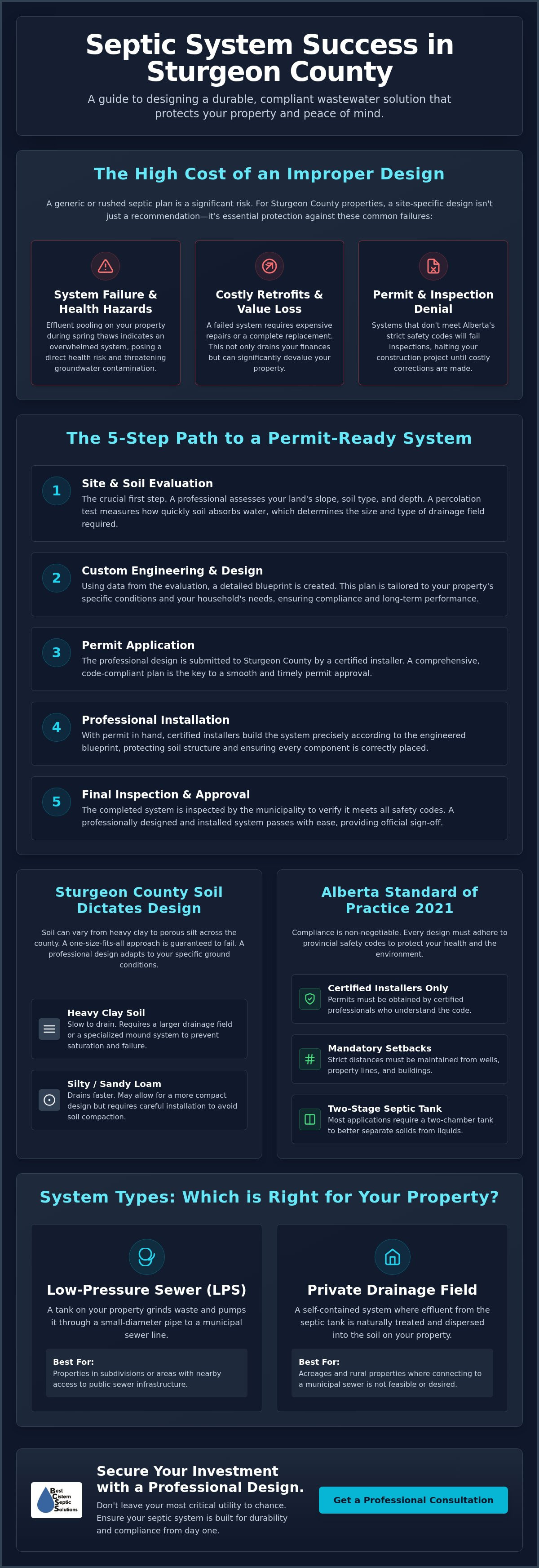
Moving from an empty lot to a fully functional utility requires a methodical approach that leaves no room for guesswork. A professional septic system design in Sturgeon County follows a structured path to ensure your project meets every provincial standard while respecting the unique layout of your property. This process is designed to remove the stress of municipal applications and provide you with a durable, long-term wastewater solution. By following these five steps, we ensure that your system is permit-ready and built to last.
The journey begins with Step 1: an initial site consultation where we align the system's capacity with your household goals. Step 2 involves technical soil testing and topography mapping to identify the best location for your drainage field. In Step 3, we engineer the system layout, selecting the specific tanks, pumps, and filters required for your site. Step 4 is the formal submission of your Private Sewage Permit application to the county. Finally, Step 5 is the pre-construction review, where we finalize the installation plan and ensure all site conditions are ready for the physical work to begin.
Working with the Safety Codes Administrator
For specific inquiries regarding your application, the county's safety codes team can be reached at [email protected]. Your design submission must be comprehensive, including detailed site plans, soil morphology reports, and specific component data. While approval timelines can vary, most Sturgeon County permits are reviewed within 10 to 14 business days. A high-quality septic system design in Sturgeon County minimizes the chance of the county requesting additional information, which keeps your project on schedule. If you're ready to move forward with a professional plan, our team offers complete Septic Solutions to manage the entire design and permitting phase for you.
Pre-Construction Checklist
Before any excavation starts, it's essential to have all underground utilities marked through the "Call Before You Dig" service. We also recommend reviewing your design against any future property plans, such as a detached shop or a swimming pool, to ensure mandatory setbacks are maintained. Finally, always verify that your chosen contractor is provincially certified. This step ensures that the person executing the design has the specialized training required to maintain the integrity of your new wastewater system and the safety of your property.
Comprehensive Utility Planning: Septic and Cistern Integration
Rural living requires a holistic view of your property’s infrastructure. We often see homeowners treat water supply and wastewater as separate projects, but a truly effective septic system design in Sturgeon County must integrate both. When you design these systems in tandem, you ensure that the placement of your drainage field doesn't interfere with your potable water storage. Mandatory setback distances are strictly enforced to prevent any risk of contamination. By coordinating the layout from the beginning, we create a safe, efficient utility footprint that preserves the integrity of your land and the health of your family.
Designing for Reliable Water
Many Sturgeon County residents deal with low-yield or poor-quality wells. In these cases, cisterns provide a reliable source of fresh water. Your daily water usage rates don't just determine how often you need a water delivery; they also dictate the capacity requirements for your septic tank and field. If your family uses more water, your septic system must be engineered to process that volume without becoming saturated. We look at the whole picture, designing pump systems that handle both your household’s potable water pressure and the effluent management needs of your specific lot. This ensures your septic system design in Sturgeon County is perfectly scaled to your lifestyle.
The Best Cistern Septic Solutions Advantage
Our team approaches rural engineering with a focus on durability and property safety. We don't just install components; we build long-term assets for your home. This dual-system coordination removes the stress of managing multiple contractors and ensures every piece of your utility puzzle fits perfectly. Our professional fix is always available to ensure your property remains a secure, healthy environment for your family. We take pride in performing these essential, difficult tasks with a high level of sophistication and care. If you are ready to secure your property's future, Contact us for a professional septic design consultation in Sturgeon County.
Securing Your Property’s Long-Term Utility Health
A successful rural build starts with a blueprint that respects the unique biology of your soil and the technical requirements of the Alberta Private Sewage Systems Standard of Practice. By prioritizing a professional septic system design in Sturgeon County, you transform essential utilities into reliable, long-term assets for your home. It's a methodical approach that removes the stress of municipal inspections and eliminates the risk of premature system failure during the spring thaw.
We're Alberta Municipal Affairs Certified Installers who specialize in both Sturgeon County LPS connections and private field designs. Our team provides the technical expertise needed for comprehensive septic and cistern integration, ensuring your fresh water and wastewater systems function in perfect harmony. We believe every homeowner deserves the peace of mind that comes from a diligent, detail-oriented engineering process. When you're ready to move from planning to a permit-ready reality, we're here to provide the specialized care your property requires.
Request a Professional Septic Design Consultation today and take the first step toward a durable, worry-free utility system.
Frequently Asked Questions
Do I need a permit for septic system design in Sturgeon County?
Yes, a Private Sewage Disposal System (PSDS) permit is mandatory for any new or replacement system. This requirement ensures that your wastewater management complies with the Alberta Private Sewage Systems Standard of Practice 2021. For traditional fields or mounds, the permit fee is $370.00, while connections to a municipal line cost $160.00. Obtaining this permit before starting work protects you from penalties that can double your application costs.
What is a Low-Pressure Sewer (LPS) system and do I have one?
An LPS system uses a high-performance pump to move clarified effluent from your septic tank into a municipal wastewater main. This is common in many Sturgeon County acreage developments where traditional drainage fields aren't used. You can confirm if you have an LPS connection by checking for a CC (curb cock) shutoff valve at your property line. The County Utilities department can also verify your specific lot's zoning and utility requirements.
How much does a professional septic system design cost in Alberta?
A standalone professional design for a private sewage system generally costs between $1,000 and $2,000. This fee covers the essential engineering phase, including the detailed site evaluation and soil morphology reports required for permit approval. While this is an upfront investment, a precise design ensures your system is durable and sized correctly for your land. This prevents the high cost of a system failure or an expensive re-design later on.
Can I design my own septic system for my acreage?
While Alberta regulations allow homeowners to apply for a permit for a soil-based system on their own property, the technical design must be completed by a qualified professional. The engineering requirements are highly specialized and must adhere to the 2021 Standard of Practice. Most residents find that hiring a certified expert provides peace of mind. It ensures the plan is permit-ready and will pass the mandatory Safety Codes inspection without delays.
How far does a septic field need to be from my house or well?
Mandatory setback distances are strictly defined to prevent contamination and protect your household's health. A septic field must be at least 15 meters from a water well and 10 meters from any water body. It also requires a minimum 1.5-meter distance from your property lines. A professional septic system design in Sturgeon County maps these setbacks precisely, ensuring your system functions safely without compromising your fresh water supply or neighboring lands.
What happens if my septic design is rejected by the County?
If the Safety Codes Officer identifies deficiencies in your plan, they will provide a list of required revisions. Common reasons for rejection include incorrect setbacks or insufficient soil data. You must address these issues in the engineering blueprint and resubmit the application for review. Working with a specialized expert from the beginning minimizes this risk. It helps you avoid the stress of a rejection and the $160.00 re-inspection fee that follows.
How long does the septic design and permit process take?
The transition from initial site testing to an issued permit typically takes about 3 to 4 weeks. Site evaluations and the drafting of the technical design generally require 7 to 10 days to complete. Once the application is submitted, Sturgeon County usually finishes its review within 10 to 14 business days. Starting this process early in the spring ensures your project is ready for installation before the busy summer construction season begins.
Does a septic design include a soil perc test?
Yes, a comprehensive septic system design in Sturgeon County always begins with a thorough soil and site evaluation. This process involves digging test pits to analyze soil morphology and performing percolation (perc) tests to measure absorption rates. These results are the foundation of your system’s engineering. They dictate whether a traditional field or a mound system is needed to safely treat wastewater based on your land's specific soil texture and water table.


