

What if that gurgling sound in your drains isn't just a minor blockage, but a signal that your drainage field has lost its ability to process wastewater? Discovering a backup is an immediate crisis that brings up valid fears about unsanitary living conditions and the potential for significant repair costs. Understanding the specific septic system backup into house causes is the first step toward reclaiming your home's safety. You're likely wondering if a simple pump-out will solve the issue or if you're facing a more complex mechanical failure. It's a stressful situation, but every septic challenge has a manageable, professional resolution that can restore your peace of mind.
Since approximately 9% of Alberta households rely on private septic systems, these challenges are a known part of rural and suburban property care. This article identifies why these failures occur, from tree root intrusion to the specific challenges of our local clay soils. We'll outline the professional steps required to stop the backup immediately and implement long-term fixes that protect your property's value. You will learn how modern diagnostic tools and specialized maintenance can turn a temporary emergency into a durable, worry-free system. Our goal is to ensure your home remains a secure environment for your family.
Key Takeaways
- Distinguish between a localized pipe blockage and a total system failure to determine the most effective path toward a resolution.
- Identify the primary septic system backup into house causes, focusing on how hydraulic overload in the drainage field forces wastewater back into your home.
- Understand how North Central Alberta's heavy clay soils and seasonal snowmelt create unique challenges for your system's absorption capacity.
- Learn to use your septic alarm and tank levels as diagnostic tools to pinpoint whether you're facing a pump failure or a field saturation issue.
- Explore professional repair and maintenance strategies that provide a long-term fix, moving beyond temporary measures to ensure your property's lasting safety.
Immediate Causes: Why Wastewater Returns to Your Drains
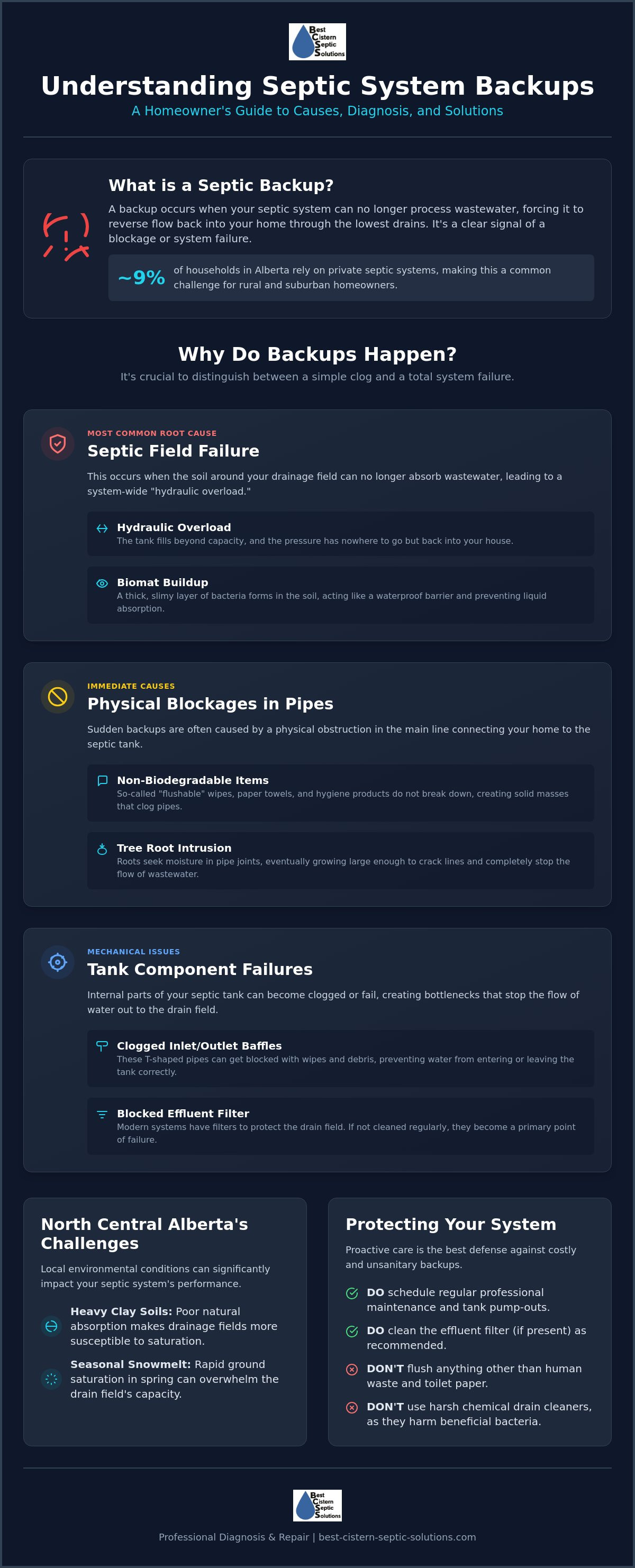
A septic backup occurs when the delicate balance of wastewater exit is disrupted. Instead of moving away from your home, effluent is pushed back through the lowest drains in your house. While this feels like an immediate emergency, it's actually a physical signal that the outward flow has met a barrier. Understanding the specific septic system backup into house causes helps you determine if you're dealing with a simple pipe obstruction or a more complex mechanical failure. It's a manageable situation once you identify the exact point of resistance.
One common misconception is that a backup always means the tank is full and needs pumping. While regular maintenance is vital, simply removing the liquid from the tank won't fix a structural blockage or a saturated drainage field. To understand the underlying mechanics, it's helpful to review How a Septic System Works. The system relies on gravity and pressure to move water. If any component in that chain fails, the water has nowhere to go but back toward the source. Our goal is to find that failure point and implement a durable fix.
Non-biodegradable items are often the primary culprit for sudden backups. Items labeled as "flushable" wipes don't actually break down like toilet paper. They snag on pipe joints or accumulate at the tank's inlet, creating a physical wall. Over time, these materials trap hair and grease. This creates a solid mass that seals the pipe and forces sewage back into your living space. This is a common issue that requires a professional eye to clear safely and thoroughly.
Physical Blockages in the Main Line
When the backup is localized to one area or occurs quickly, the problem often lies in the main sewer line connecting your home to the tank. Tree roots are a frequent offender in older properties. They seek out the moisture in pipe joints, eventually growing large enough to crack the line and stop all flow. We also advise against using standard chemical drain cleaners. These harsh substances can kill the beneficial bacteria in your tank, leading to even more significant issues with solids management later on. A mechanical clearing is always a safer, more effective resolution, and Simple Plumbing Inc demonstrates how modern diagnostic inspections can identify these root intrusions before they cause a major blockage.
Tank Inlet and Outlet Baffle Failures
Baffles are the unsung heroes of your septic tank. These T-shaped pipes ensure that incoming waste enters the tank smoothly and that floating scum doesn't escape into your drainage field. If an inlet baffle becomes clogged with wipes or debris, the water will back up into the house immediately. Modern systems often include an effluent filter at the outlet baffle. This filter provides an extra layer of security by catching fine particles, but it requires regular cleaning to prevent it from becoming a bottleneck. Keeping these components clear is a vital part of proactive property care.
Septic Field Failure: The Most Common Root Cause
While a localized pipe blockage is a frustrating event, a failing drainage field represents a broader system challenge. This is the most frequent of all septic system backup into house causes. When the soil surrounding your lateral lines can no longer absorb effluent, the wastewater has nowhere to go but back toward the source. Once the tank exceeds its operating capacity, the resulting pressure forces sewage back through the main line and into your home's lowest drains. This condition is known as hydraulic overload. It often indicates that the field has reached its biological or physical limit, but it doesn't always mean you need a total replacement.
A primary factor in these failures is the development of a biomat layer. This is a slimy, black layer of anaerobic bacteria that naturally forms where the gravel meets the soil. While a thin biomat is necessary for waste treatment, excessive buildup acts like a waterproof seal. It prevents effluent from percolating into the ground. For a deeper look at these mechanics, you can read our guide on understanding septic systems. When this layer becomes too thick, the field effectively "drowns," leading to the backups you are currently experiencing. Identifying this early is the key to a manageable resolution.
Signs of a Failing Drainage Field
Recognizing the early Signs of a Failing Septic System can prevent a full household emergency. You might notice areas of unusually lush, green, or spongy grass over the septic bed, even during dry Alberta summers. This occurs because the effluent is surfacing rather than soaking in. You should also listen for a distinct gurgling sound in your pipes when you run the dishwasher or laundry. Unlike a single clogged sink, a failing field causes slow drainage throughout the entire house. These are clear indicators that your system requires professional Septic Maintenance to restore its integrity.
Long-Term Soil Compaction and Sodium Issues
Physical damage often accelerates field failure. Heavy equipment, vehicles, or even livestock walking over the drainage area can crush lateral lines or compact the soil. This compaction destroys the air pockets needed for wastewater treatment. Additionally, the salt from water softeners can chemically alter clay soil, causing particles to swell and lose their permeability. Over time, these factors lead to a system that cannot breathe. Professional field restoration often provides a definitive fix, reviving the soil's natural ability to process water and ensuring the long-term safety of your property.
Environmental Factors Specific to North Central Alberta
Living in North Central Alberta requires a specific understanding of how our local environment interacts with utility systems. While mechanical failures are common, our geography often dictates how and when a system fails. The heavy clay soils prevalent in our region act differently than the sandy soils found elsewhere. These fine particles pack tightly together, which naturally limits the rate at which they can absorb wastewater. Understanding these environmental septic system backup into house causes is essential for rural homeowners who want to maintain a durable, high-performing system. It's not just about the equipment; it's about how that equipment handles the land it sits on.
In areas like Leduc County, high water tables add another layer of complexity. When the groundwater level rises, it occupies the same soil pores needed for your effluent to disperse. This creates a "backstop" effect where the system cannot push water out because the ground is already saturated from below. Following the Alberta Private Sewage Systems Standard of Practice 2021 ensures that systems are designed for these specific conditions, but even the best design can struggle during extreme weather cycles. Recognizing these patterns helps you move from emergency repairs to proactive property preservation.
Spring Runoff and Saturated Ground
The spring thaw is a critical time for septic health in Parkland County and surrounding areas. Rapid snowmelt can send thousands of gallons of surface water across your property in a few days. If your landscaping doesn't direct this runoff away from the drainage field, the soil becomes temporarily overwhelmed. You might find your system backs up only during this period or after a heavy summer downpour. This is often a sign of temporary saturation rather than a total system failure. Managing your property's grade is a simple, professional fix that protects your system's long-term integrity.
Winter Freezing and Pipe Insulation
Alberta winters present the unique risk of frozen septic lines, especially in shallow installations or areas with low snow cover. Snow acts as a natural insulator; without it, the frost line can reach your main sewer pipe. We often see backups caused by "ice dams" within the pipe. These frequently start because of a trickling faucet or a leaking toilet flapper. The small, slow flow of water freezes layer by layer until the pipe is completely sealed. Ensuring your lines are properly insulated and maintaining a "tight" plumbing system inside the house are vital steps to prevent these winter emergencies. A well-insulated system provides the security of knowing your home will stay functional even in sub-zero temperatures.
Diagnostic Steps: Is it a Clog, the Pump, or the Field?
Identifying the source of a backup requires a methodical approach that moves from the house outward to the drainage area. When you encounter wastewater returning through your drains, start by determining the scope of the problem. If only one sink or toilet is affected, you likely have a localized plumbing clog. However, if multiple fixtures on the lowest level are backing up simultaneously, you are dealing with a system-wide issue. Determining the specific septic system backup into house causes starts with checking the liquid level in your septic tank. A tank that is filled above its normal operating level indicates that the blockage is downstream, either in the pump or the drainage field.
Your septic alarm is another vital diagnostic tool. In modern systems, this alarm triggers when the water level rises too high, usually due to a pump failure or a saturated field. If the red light is on or the buzzer is sounding, stop using water immediately. You can perform a simple stress test by limiting water usage for several hours and then monitoring if the levels recede. If the backup is restricted to the basement, it often suggests a problem with the main sewer line or a backwater valve failure. This systematic check provides the clarity needed to choose the right professional resolution.
Effluent Pump and Float Switch Troubleshooting
In pressurized systems, a burnt-out pump or a stuck float switch leads to an immediate tank overflow. Before assuming the worst, check your home's electrical panel for a tripped breaker or a blown fuse. If the power is on but the pump remains silent, the motor may have reached the end of its service life. While environmental factors play a role, mechanical failures are often the leading septic system backup into house causes in pressurized systems. If a mechanical failure is confirmed, an effluent pump replacement is a standard procedure that restores your system's functionality and protects your home from further damage.
Professional Inspection Tools
When visual checks aren't enough, professional diagnostic tools provide a transparent look into your system's health. We use high-definition sewer cameras to navigate the pipes, locating tree root intrusions or collapsed sections that are invisible from the surface. Dye testing is another effective method; it helps us confirm if the drainage field is truly saturated or if a specific lateral line has failed. If you are uncertain about the state of your system, scheduling a professional septic inspection is the most reliable way to identify the root cause. This level of detail ensures that any repair work performed is a long-term asset for your property. For a definitive answer to your system's current challenges, explore our comprehensive Septic Solutions today.
Restoring Your System: Professional Repair and Prevention
When wastewater enters your home, an emergency pump-out is often the first reaction. It provides immediate relief by lowering the tank level, but it doesn't address the underlying septic system backup into house causes. To ensure your home remains a safe and sanitary environment, you must transition from emergency response to a definitive mechanical resolution. A professional repair targets the specific point of failure, whether it’s a crushed pipe or a saturated soil bed, turning a stressful event into a long-term asset for your property. Our approach focuses on thoroughness to ensure the problem doesn't return next season.
A professional fix is always available, even when a system seems completely overwhelmed. By identifying whether the failure is mechanical, environmental, or structural, we can implement a solution that restores the integrity of your property's utility infrastructure. This methodical process moves from identifying the risk to providing a definitive fix that removes future worries. You deserve the peace of mind that comes from knowing your essential systems are functioning as designed. For broader home upkeep, CFS group Limited provides comprehensive property maintenance and refurbishment solutions. Investing in a permanent repair is the most effective way to protect your household's safety and preserve your land's value.
Septic Field Repair and Restoration
Restoring a failing field often involves specialized techniques designed to revive soil porosity. We can sometimes break up an excessive biomat layer through mechanical or biological means without excavating the entire yard. If the damage involves crushed lateral lines or a shifted distribution box, targeted repairs can often restore the outward flow of effluent and save the existing system. In cases where the soil is completely compromised or the system is decades old, a new septic field installation may be necessary. This ensures your home meets the Alberta Private Sewage Systems Standard of Practice 2021 and provides a fresh start for your property's drainage needs.
Preventing Future Backups
Prevention is the most cost-effective way to manage your utility systems and avoid the common septic system backup into house causes. Adopting a "Septic Diet" is a simple but powerful step; this means keeping grease, harsh chemicals, and non-biodegradable items out of your drains entirely. You should also consider upgrading your system with modern effluent filters and high-level alarms to provide an early warning system. Establishing a consistent septic maintenance schedule allows a professional to catch minor issues before they escalate into a full backup. These proactive measures reduce the hydraulic load on your field and extend the lifespan of every mechanical component. By being a proactive partner in your property care, you ensure that a professional fix is always within reach and that your home remains a secure, worry-free environment.
Secure Your Home’s Future with Professional Septic Care
Managing a drainage crisis is a significant task, but identifying the specific septic system backup into house causes is the first step toward a permanent resolution. You now understand that while surface clogs appear suddenly, the root cause often lies in the health of your drainage field or the efficiency of your effluent pumps. By moving beyond temporary measures and focusing on expert diagnostics, you protect your property from recurring failures. A well-maintained system serves as a long-term asset that ensures your home remains a safe and secure environment for your family.
Our team provides detailed diagnostic reporting and specialized septic field restoration for rural properties throughout Parkland, Leduc, and Sturgeon Counties. We take pride in delivering thorough work that prevents future worries. Don't wait for a total system failure to compromise your household's safety. Contact Best Cistern Septic Solutions for a professional diagnostic inspection today. Every septic challenge has a manageable, professional fix, and we are ready to help you restore your system’s integrity.
Frequently Asked Questions
Can I use my water if the septic system is backing up?
You must stop all water usage immediately. Every gallon you send down the drain adds to the volume currently sitting in your pipes or basement. This includes toilets, showers, and appliances. Shutting off your main water valve is a proactive step to ensure no accidental usage occurs while you wait for a professional resolution.
Will pumping my septic tank fix a backup into the house?
Pumping the tank is often a temporary measure that doesn't address the primary septic system backup into house causes. While it creates space in the tank for a few days, it won't fix a saturated drainage field or a mechanical pump failure. A professional diagnostic check ensures you find a long-term fix rather than just a short-term reset.
How can I tell if the backup is in the main sewer line or the septic tank?
You can determine the failure point by checking the liquid level in your septic tank. If the tank level is normal but your house is backing up, the clog is likely in the main sewer line. If the tank is overflowing or flooded, the resistance is coming from a failing pump or a saturated drainage field downstream.
Why does my septic system back up only when I do laundry?
Laundry creates a high-volume surge of wastewater that can overwhelm a struggling drainage field. If your soil's absorption rate has slowed due to biomat buildup or clay compaction, it cannot process the sudden discharge from a washing machine. This indicates your system is reaching its hydraulic limit and needs a professional assessment.
What should I do immediately when I see sewage in my basement?
Stop using all water and keep family members away from the affected area. Wastewater contains pathogens that pose a health risk, so avoid direct contact. You should also check your septic control panel for a triggered alarm. Once the area is secure, contact a specialist to perform a thorough diagnostic inspection and identify the point of failure.
Is a septic backup covered by homeowners insurance in Alberta?
Coverage for septic backups in Alberta usually requires a specific insurance endorsement. Most standard homeowner policies don't automatically include Sewer Backup or Service Line coverage. It's best to review your policy documents or speak with your broker to confirm if your specific mechanical failure is a covered peril under your existing plan.
How much does it cost to fix a septic system backup?
The cost to resolve a backup depends entirely on the nature of the failure. Clearing a simple main line clog is a straightforward process, while restoring a saturated drainage field or performing an effluent pump replacement involves more specialized labor and components. A professional inspection provides a transparent breakdown of the necessary steps for a durable fix that protects your property.
Can tree roots cause a septic system to back up?
Tree roots are a common cause of physical blockages in septic systems. They seek out the moisture found in pipe joints and can eventually grow large enough to crack lines or block the flow of effluent. This physical obstruction is one of the leading septic system backup into house causes in older properties with established landscaping near the tank or field.


