

Imagine waking up to a quiet house, only to discover that your septic pump failed overnight and wastewater is now backing up into your basement. It's a scenario that every rural Alberta homeowner fears, yet many systems remain silent until the damage is already done. A professional septic alarm installation ensures you never have to guess whether your infrastructure is functioning correctly or worry about the high costs of a sudden system failure.
We understand that managing a private sewage system in Parkland or Strathcona County comes with its own set of anxieties, from following the Alberta Private Sewage Systems Standard of Practice 2021 to ensuring complex electrical requirements are met. This early warning advocate provides the peace of mind you deserve by alerting you to issues before they escalate into environmental hazards or expensive repairs. It's about turning a potential property crisis into a manageable maintenance task.
In this article, you'll learn how these fail-safe devices work, how they ensure your property remains compliant with provincial regulations, and why early detection is the most effective way to avoid emergency service fees. We'll provide a clear path toward protecting your home's long-term health with a reliable, professional solution that removes future worries.
Key Takeaways
- Understand why a septic alarm is the most critical fail-safe for preventing basement backups and protecting your rural Alberta property.
- Discover how float switches and control panels work together to provide an early warning signal before your system reaches a critical state.
- Learn about the benefits of professional septic alarm installation, including modern wireless options that eliminate the need for extensive trenching.
- Ensure your system meets the Alberta Private Sewage Systems Standard of Practice 2021 by following correct electrical and safety protocols.
- See how proactive monitoring acts as a long-term asset, protecting your drainage field and helping you avoid thousands of dollars in emergency repair fees.
Why Every Rural Alberta Septic System Needs a Reliable Alarm
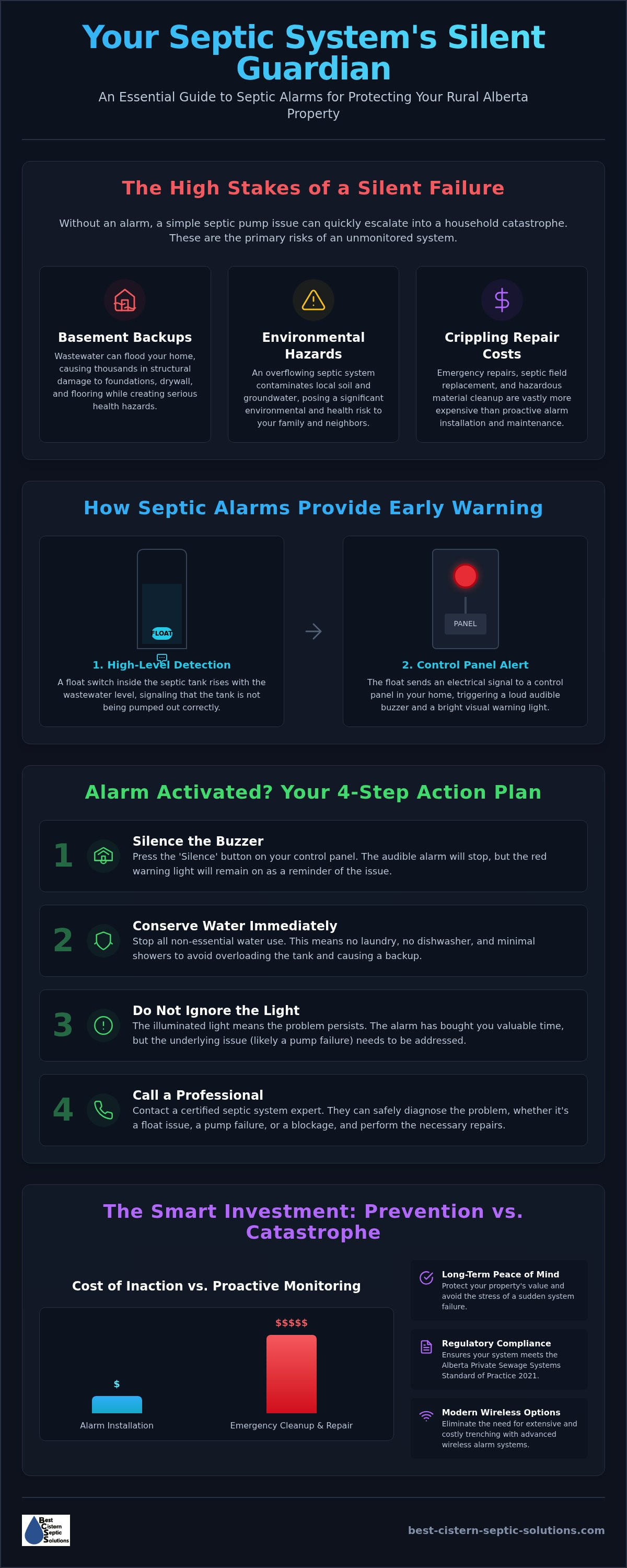
A septic alarm acts as the only voice for your property's most vital utility. While most of your system remains buried and out of sight, this small device provides a critical fail-safe. It stands between a manageable mechanical issue and a catastrophic basement backup. For homeowners in Parkland County and the Edmonton region, where property maintenance is a primary responsibility, understanding the role of this early warning system is essential for long-term security.
The "invisible" nature of these systems makes manual monitoring nearly impossible. Because the primary components are underground, you can't simply glance at your tank to see if the effluent pump is struggling or if a high-water event is occurring. Gaining a foundational understanding of how septic systems work reveals that by the time wastewater surfaces in your yard, the system has already reached a state of failure. A professional septic alarm installation removes this guesswork by providing a real-time status report on your tank's levels.
The Consequences of a Silent Failure
When a pump fails without an alarm to signal the trouble, the results are often devastating. Structural damage is a primary concern; sewage backups can permeate home foundations and drywall, leading to extensive remediation requirements. Beyond the walls of your home, the environmental stakes are high. An overflow can contaminate local Alberta soil and groundwater, creating a health hazard for your family and neighbors.
The financial burden of neglect is perhaps the most compelling reason to act. A high-level alarm is a proactive tool that protects your larger investment. When you compare the modest cost of an alarm to the significant expense of a full septic field installation, the value becomes clear. It's a small price to pay for the removal of future worries.
First Response: What to Do if Your Alarm is Buzzing
If your alarm begins to sound, don't panic. The goal is to manage the situation calmly to prevent an overflow. Most control panels feature a "Silence" button and a "Test" button. Pressing "Silence" will stop the audible buzzer while keeping the warning light illuminated. This allows you to think clearly while the system remains in an alert state. The "Test" button is for routine maintenance and should only be used to verify the alarm's functionality.
Once you've silenced the noise, take immediate water conservation steps. Stop all laundry loads, delay running the dishwasher, and limit showers to the absolute minimum. This reduces the volume of wastewater entering the tank, buying you valuable time. After these steps are taken, it's time to contact a professional for a septic system repair. A specialized expert can diagnose whether the issue is a simple float adjustment or a more complex pump failure, ensuring your property remains safe and compliant.
Inside the System: How Septic Alarms Detect Potential Failures
A septic system is more than just a tank; it's a carefully balanced mechanical process. To protect this balance, the alarm system acts as the primary sensory organ for your property. During a professional septic alarm installation, we focus on two main components: the float switch in the tank and the control panel near your home. These parts must communicate flawlessly to provide the early warning you depend on.
The system typically utilizes a combination of visual and audible signals to keep you informed. A steady red light usually indicates a high-water condition, while a loud buzzer ensures you notice the problem even if you aren't looking at the panel. Some advanced setups use dual-alarm logic to differentiate between a high-water alert and a low-water alert. This distinction is vital for troubleshooting, as it tells you whether the tank is overfilling or if the effluent level has dropped below the pump's intake, which could damage the motor.
- Steady Red Light: Indicates a high-water condition requiring immediate water conservation.
- Audible Buzzer: Ensures you are notified of a problem even if the panel is out of sight.
- Flashing Light: Often signifies a specific mechanical fault, such as a pump power loss.
The Role of the High-Level Float
The float switch is a sealed, buoyant device that hangs inside the tank. As effluent levels rise, the float tilts, closing a mechanical circuit that sends a signal to the control panel. Precision is vital during this stage of the setup. We tether the float at a specific depth to ensure you have a "buffer" period. This gives you time to react before an actual backup occurs. Over time, grease buildup or "hang-ups" on other pipes can impede the float's movement. Maintaining these components through professional septic services ensures these mechanical triggers remain clean and responsive.
Indoor vs. Outdoor Control Panels
Where we mount the control panel depends on your property's layout and personal preference. Outdoor panels must meet strict NEMA ratings to withstand the harsh Alberta winters. These weather-proof enclosures protect the electrical logic from moisture and freezing temperatures. In accordance with Alberta Safety Codes, the alarm must be on a separate circuit from the pump. This ensures that if the pump trips a breaker, the alarm still has power to notify you of the failure.
By July 2026, smart monitoring has become a standard upgrade for many rural properties. These systems integrate with your home Wi-Fi to send alerts directly to your smartphone. This technology is particularly valuable for seasonal properties or for homeowners who travel frequently. It transforms septic alarm installation from a simple buzzer into a comprehensive property management tool that provides constant peace of mind.
Choosing Your Alarm: Wireless, High-Level, and Smart Monitoring Options
Selecting the right hardware for your septic alarm installation is a balance between your property's layout and your preferred level of oversight. While every alarm serves the same primary purpose, the technology behind them varies significantly. For most rural Alberta homeowners, the choice comes down to how they want to receive information and how much they want to invest in long-term monitoring. Proper septic system maintenance often starts with choosing a device that matches your lifestyle, whether you're home every day or manage a seasonal property from a distance.
Basic high-level alarms remain the industry standard for their simplicity and cost-effectiveness. These systems use a straightforward mechanical float to trigger a buzzer and light. They are incredibly reliable because they have fewer electronic components that can fail. However, for properties with established landscaping or long distances between the tank and the house, traditional wiring can be a challenge. In these cases, wireless septic alarms provide a sophisticated alternative. These units use radio frequencies to send signals from the tank to an indoor receiver, eliminating the need for difficult trenching through frozen ground or decorative garden beds.
Standard Wired Alarms: The Reliable Choice
Wired systems are often preferred for new residential developments because the direct-burial wiring can be installed alongside other utilities. A high-quality mechanical float switch in a wired setup typically has a lifespan of seven to ten years. Because these panels are hardwired into your home's electrical system, they require very little maintenance beyond a semi-annual test. The primary drawback is the potential for wire damage during future excavation, but for many Parkland County residents, the "set it and forget it" nature of a wired alarm provides the consistent peace of mind they need.
The Rise of Smart Septic Technology
For those living on acreages in Stony Plain or Leduc, smart septic technology is transforming property management. WiFi-enabled alarms integrate with your home automation system to send real-time alerts to your smartphone. This is a vital asset for frequent travelers. If a pump fails while you're away, you'll know immediately, allowing you to schedule a professional fix before you return home to a crisis. Cloud-based logging also tracks how often your pump cycles, which helps identify leaks or fixture failures early.
Regardless of the tech level you choose, a battery backup is a non-negotiable feature. Parkland County is no stranger to sudden power outages. An alarm that relies solely on grid power will go dark exactly when you need it most. Ensuring your septic alarm installation includes a dedicated battery backup keeps your fail-safe active, protecting your home's integrity even when the lights go out.
The Installation Process: Wiring, Float Settings, and Alberta Safety Codes
A professional septic alarm installation is a precision task that goes far beyond simply dropping a sensor into a tank. The process begins with a detailed site assessment to determine the optimal depth for the alarm float. We calculate this "trigger point" based on your specific pump cycle and the reserve capacity of your tank. This careful calibration ensures that the alarm sounds with enough lead time for you to stop water usage before a backup reaches your home's drains.
Electrical safety is our primary focus during the setup. We strictly adhere to the Alberta Private Sewage Systems Standard of Practice to ensure the system is both safe and reliable. One critical requirement is placing the alarm on a separate electrical circuit from the effluent pump. This ensures that if the pump motor fails and trips a breaker, the alarm remains powered and ready to notify you of the problem. We use heavy-duty conduit for all underground wiring, protecting the connection from local rodents and the natural shifting of the earth.
Once the components are in place, we perform a series of tests to verify the system's integrity. We manually lift the float to simulate a high-water event, confirming that the indoor buzzer and the outdoor warning light respond immediately. This final testing phase provides the definitive proof that your property is protected. If your current system lacks a reliable fail-safe, you can request a professional septic alarm installation to secure your infrastructure.
Compliance with Alberta Regulations
Following provincial regulations is about more than just avoiding fines; it's about protecting your long-term investment. In Alberta, significant electrical modifications often require a permit to ensure the work meets current safety codes. We use only CSA or UL-certified components that are designed to handle the corrosive environment inside a septic tank. This commitment to quality ensures your property insurance remains valid, as many providers require proof of professional installation and code compliance in the event of a claim.
Winter-Proofing Your Alarm System
Alberta's climate presents unique challenges for underground utilities, particularly during the deep freeze of January and February. Proper float positioning is essential to prevent "ice-lock," where a float becomes frozen in place and fails to rise with the effluent level. We also recommend insulating the tank lid to maintain a slightly higher internal temperature, which keeps the mechanical triggers functional even at -30°C. Frost heave occurs when water in the soil freezes and expands, physically pushing conduits and tank components out of alignment. By using flexible connections and proper trenching depths, we mitigate these risks, ensuring your system remains a durable asset for your property through every season.
Professional Septic Alarm Installation in Parkland County
Best Cistern Septic Solutions serves as a dedicated partner for rural property owners across North Central Alberta. We don't just sell components; we provide a complete technical resolution for your property's utility needs. Our team understands the specific environmental challenges and regulatory requirements of Sturgeon and Strathcona County. This local expertise ensures that every septic alarm installation we perform is tailored to the unique soil conditions and climate of the Edmonton region. We take pride in being the reliable neighbor you can call for thorough, honest service.
A professional septic alarm installation is most effective when integrated with a consistent septic maintenance schedule. By coordinating these services, we ensure your early warning system is tested and calibrated at the same time your tank is inspected. This proactive approach identifies small mechanical drifts before they become emergency failures. It's about maintaining a steady rhythm of care that removes future worries and keeps your infrastructure functioning at peak efficiency.
Our Diagnostic and Installation Process
Our process begins with a comprehensive on-site evaluation of your current setup. We don't believe in a one size fits all approach. Instead, we examine your tank's depth, the distance to your home, and your current electrical capacity to select the right alarm hardware. We walk you through every step of the process, explaining the technical reasons behind our recommendations. This commitment to transparency ensures you feel empowered and informed about your home's safety systems. Once the hardware is selected, we perform the installation with a focus on durability, ensuring all connections are sealed against moisture and frost.
Protecting Your Rural Investment
Think of your alarm as a vital component of a healthy, long-lasting septic system. It's a small investment that preserves the integrity of your drainage field, which is often the most expensive part of your property's infrastructure to replace. By providing an immediate alert at the first sign of trouble, the alarm allows for minor repairs that prevent the total saturation of your soil. This protection ensures your home remains a safe and functional asset for your family for many years to come.
A professional fix is always available when you work with experts who prioritize property preservation and household safety. We're ready to help you secure your rural property with a fail-safe warning system you can trust. Contact Best Cistern Septic Solutions for a professional alarm evaluation today.
Secure Your Rural Infrastructure for the Future
A reliable warning system is more than just a mechanical addition; it's a long-term asset for your household's safety. By choosing professional septic alarm installation, you ensure that your property remains compliant with the Alberta Private Sewage Systems Standard of Practice while avoiding the stress of silent system failures. These fail-safe devices transform invisible risks into manageable notifications, allowing you to address pump issues before they escalate into costly basement backups or field overflows.
Best Cistern Septic Solutions provides comprehensive rural utility solutions across Parkland, Leduc, and Sturgeon Counties. We specialize in protecting your property's integrity through diligent assessments and expert technical care. Whether you need a simple high-level alert or a modern wireless upgrade, a professional fix is always available to remove future worries. We're ready to help you preserve your investment with a system designed for durability and peace of mind.
Get a Professional Septic Alarm Installation Quote today and enjoy the security of a truly protected home.
Frequently Asked Questions
How much does it cost to install a septic alarm in Alberta?
Costs for a professional septic alarm installation depend on the distance between your tank and home, the type of technology selected, and any required electrical upgrades. While basic wired models are often the most economical, wireless units or smart monitoring systems involve different hardware expenses. We provide detailed evaluations to ensure you receive a solution that fits your property's specific layout and long-term needs.
Can I install a septic alarm myself?
Professional installation is required because these systems involve high-voltage electrical connections in a damp, corrosive environment. Improper wiring can lead to premature failure or safety hazards that could void your property insurance. Our experts ensure every component meets the Alberta Private Sewage Systems Standard of Practice, giving you the peace of mind that your fail-safe is installed correctly and safely.
Why is my septic alarm red light on but there is no sound?
A red light without a buzzer usually indicates that someone has pressed the "Silence" button on the control panel. This feature allows you to stop the noise while you wait for a technician, but the light remains active to remind you of the high-water condition. If the light is on and nobody silenced it, the internal buzzer may have reached the end of its functional lifespan and requires replacement.
How long do septic alarm floats usually last?
You can expect a high-quality mechanical float switch to function reliably for approximately seven to ten years. Harsh conditions inside the tank, such as excessive grease or chemical exposure, can shorten this lifespan. Regular inspections help identify when a float is becoming sticky or heavy with buildup, allowing you to replace it before it fails to trigger the alarm during a critical event.
Does my septic alarm need its own electrical circuit?
Yes, your alarm should be on a dedicated circuit as a standard safety requirement for rural properties. If the effluent pump fails and trips its own breaker, an alarm on the same circuit would also lose power and fail to warn you. By separating these circuits, you ensure the warning light and buzzer remain active even if the pump motor experiences a complete electrical failure.
What is the difference between a high-water alarm and a pump alarm?
A high-water alarm alerts you when the effluent reaches a specific depth, while a pump alarm focuses on the electrical health of the motor itself. While they often work together, a high-water signal might simply mean you've used too much water too quickly. A pump alarm specifically indicates that the mechanical heart of your system isn't functioning, requiring immediate professional attention to prevent a backup.
Will a septic alarm work during a power outage?
Your alarm will only function during a power outage if it is equipped with a battery backup system. Standard wired panels often go dark when the grid fails, which is a significant risk during Alberta's frequent storm seasons. We prioritize septic alarm installation setups that include reliable battery power, ensuring your home remains protected even when your property is without primary electricity.
How often should I test my septic alarm system?
We recommend testing your alarm system at least twice a year to ensure the mechanical and electrical components remain responsive. You can use the "Test" button on your indoor panel for a quick check, but a manual float test inside the tank is also important. This thorough approach confirms that the float moves freely and accurately triggers the circuit, providing a definitive fix for your maintenance worries.


