Imagine waking up on a -30°C January morning in Stony Plain only to find your taps have run dry because your water storage system couldn't withstand the deep Alberta frost. It's a stressful scenario that highlights why your rural water supply is one of your home's most critical assets. Partnering with professional cistern installers Stony Plain homeowners trust ensures your system is built to handle these environmental extremes from the start. You likely worry about the integrity of your tank or whether your water remains safe from contamination, but every storage challenge has a manageable, professional resolution that prioritizes your peace of mind.
In this guide, you'll discover how professional cistern installation provides Stony Plain homeowners with a reliable, safe, and winter-proof potable water storage solution. We'll explain the importance of adhering to CSA Standard B126 Series-13, how to determine the perfect tank size for your family's daily needs, and the maintenance steps required to keep your water clean. By the end, you'll understand how to secure a durable, long-term asset that protects your household's health and property value for years to come.
Key Takeaways
- Learn why cisterns provide a more consistent water volume than local wells, offering security against drought and groundwater fluctuations.
- Understand the essential components of a pressurized delivery system, including the storage vessel and venting, that keep your water safe and flowing.
- Discover how specific trenching techniques and proper burial depth protect your water lines from the extreme Alberta frost line.
- Find out why hiring professional cistern installers Stony Plain homeowners trust is vital for navigating local excavation permits and Parkland County soil conditions.
- Gain peace of mind by choosing a full-service provider who understands the link between system integrity and your family's long-term safety.
Why Reliable Water Storage is Essential for Stony Plain Rural Properties
Life in Parkland County requires a proactive approach to home utilities. While the area is stunning, the groundwater doesn't always cooperate with modern household needs. Many residents deal with high iron content or heavy minerals that can damage appliances and affect the taste of their water. This is why professional cistern installers Stony Plain residents rely on are seeing a shift in how new builds are planned. Instead of gambling on a low-yield well, homeowners are choosing the security of a dedicated storage system. A professional installation ensures your home remains a functional, long-term asset regardless of local environmental shifts.
A cistern acts as a reliable reservoir, providing your family with a consistent volume of water. It's vital to distinguish between simple rainwater harvesting and a true potable water system. Rainwater setups are excellent for gardens, but a potable cistern is a strictly regulated utility designed for drinking, bathing, and cooking. By following the cisterns for rural properties in Parkland County guidelines, you ensure your home meets modern safety standards and maintains its market value.
The Challenges of Groundwater in North Central Alberta
North Central Alberta presents a mixed bag for well water. Some properties sit above healthy aquifers, while others struggle with "hard" water that requires expensive softening systems. Low-yield wells can be particularly frustrating, often failing during high-demand periods like laundry day or when guests visit. Choosing a hauled-water cistern system removes this uncertainty. You gain total control over your supply, knowing exactly how much water you have at any given time. This predictability is a significant stress-reducer for rural families who don't want to worry about their taps running dry.
Understanding Potable Water Safety Standards
Potability is the gold standard for household water. It means the water is safe for human consumption and free from harmful bacteria or chemicals. Achieving this starts with the tank material. Professional installers use high-density polyethylene or reinforced concrete that won't leach chemicals into your supply. A key part of the job for professional cistern installers Stony Plain homeowners hire is ensuring the system is completely sealed. This prevents surface water, insects, or rodents from infiltrating the tank. When your system is installed correctly, it functions as a clean, pressurized environment that preserves the quality of every drop delivered to your home.
The Technical Anatomy of a Potable Cistern System
A high-quality potable water system is a sophisticated piece of infrastructure. It is more than just a buried tank; it is a pressurized delivery system designed for safety, consistency, and longevity. When you work with professional cistern installers Stony Plain homeowners trust, the process begins with a meticulous site evaluation. This step is critical because Stony Plain's clay-heavy soils can exert significant external pressure on buried structures. Installers must assess soil stability, drainage patterns, and the proximity to potential contamination sources to ensure your water remains pure.
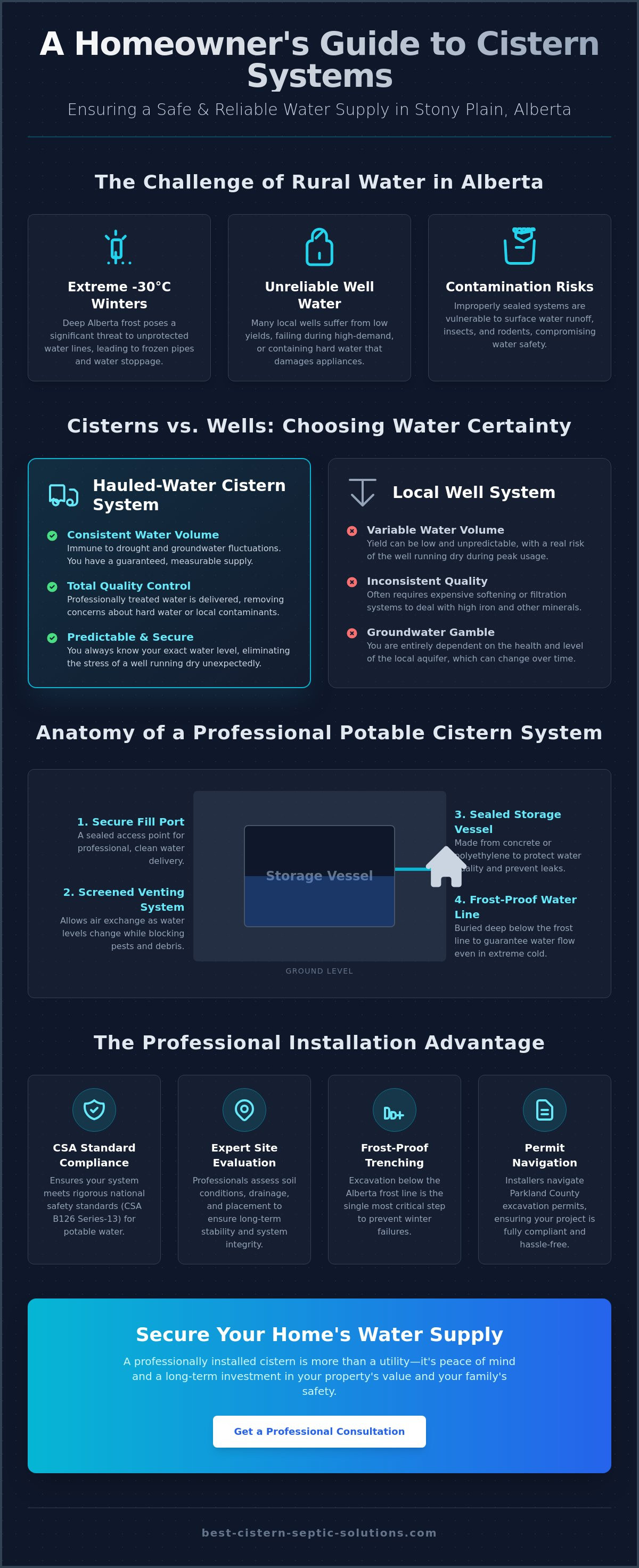
The system itself consists of several integrated components that must work in harmony. The storage vessel holds your water, while the intake or fill port provides a secure point for water haulers to connect. A screened venting system is also essential. It allows the tank to "breathe" as water levels fluctuate, preventing pressure imbalances that could lead to structural fatigue. Professional planning ensures these components are accessible for maintenance while remaining protected from the elements. If you are currently designing a new home, consulting with an expert on cistern installation early in the process can prevent costly site layout errors later.
Concrete vs. Polyethylene: Choosing the Right Tank Material
Choosing the right material is a balance of durability and site conditions. Concrete cisterns are traditional favorites because their immense weight keeps them anchored in areas with high water tables. They are incredibly durable and can last for decades when properly sealed. Polyethylene tanks offer a modern alternative. They are seamless, corrosion-resistant, and much lighter, making them ideal for sites with tight access. In Stony Plain's shifting clay, polyethylene often performs well because it has a slight flexibility that concrete lacks. Understanding the nuances of Private Water Systems helps homeowners decide which material provides the best long-term security for their specific property.
The Pumping System: Moving Water into Your Home
The pump is the heart of your water supply. Most modern systems utilize a submersible cistern pump, which sits inside the tank to push water into the house quietly and efficiently. To maintain steady pressure at every tap, a pressure tank is installed inside the home. This tank acts as a buffer, preventing the pump from "short-cycling" every time you wash your hands. We also recommend integrating a low-water alarm. This simple device provides an audible alert if your water level drops too low, protecting your pump from running dry and burning out. These technical layers work together to provide a worry-free experience for your household.
Comparing Water Solutions: Why Cisterns Often Outperform Wells
Choosing between a well and a cistern is a pivotal decision for any Parkland County property owner. While wells are traditional, they come with inherent risks that many modern families prefer to avoid. Consulting with professional cistern installers Stony Plain homeowners trust can help clarify which system fits your property's specific geology. A well's initial cost can spiral if the first hole comes up dry or yields poor-quality water. In contrast, a cistern represents a fixed investment with a guaranteed outcome. You aren't just buying a tank; you're securing a predictable utility that functions regardless of underground aquifer shifts.
Water quality is another area where cisterns often take the lead. Hauled water is typically sourced from municipal treatment plants, meaning it's already filtered and disinfected. Well water often requires expensive on-site treatment systems to manage iron, manganese, or bacterial concerns. By choosing a cistern, you bypass the need for complex filtration arrays, reducing your indoor maintenance footprint. This simplicity translates to a more reliable household experience where the water is consistently soft, clean, and safe for your family.
Reliability in a Changing Climate
Fluctuating water tables in North Central Alberta can turn a once-reliable well into a source of stress. During dry seasons, a well's recovery rate might slow down, forcing you to ration water. A cistern eliminates this anxiety. You'll always know exactly how many litres of water you have in reserve. If a system failure occurs, troubleshooting a cistern is straightforward because every component is accessible. You don't have to worry about pulling hundreds of feet of pipe from the ground just to identify a simple mechanical issue.
Maintenance and Longevity Factors
The upkeep for these systems is remarkably different. Well rehabilitation can be a technical and costly nightmare if the casing fails or the screen clogs. However, cistern maintenance is a manageable, periodic task. A professionally installed concrete cistern can easily last 40 to 50 years with basic care. Regular cleaning every two years prevents sediment buildup and ensures the interior remains pristine. This proactive approach to property care protects your pump's longevity and guarantees that your water storage remains a high-value asset. By partnering with professional cistern installers Stony Plain, you're investing in a system designed to provide security for your home's future.
Professional Installation Standards: Preventing Freezing and Contamination
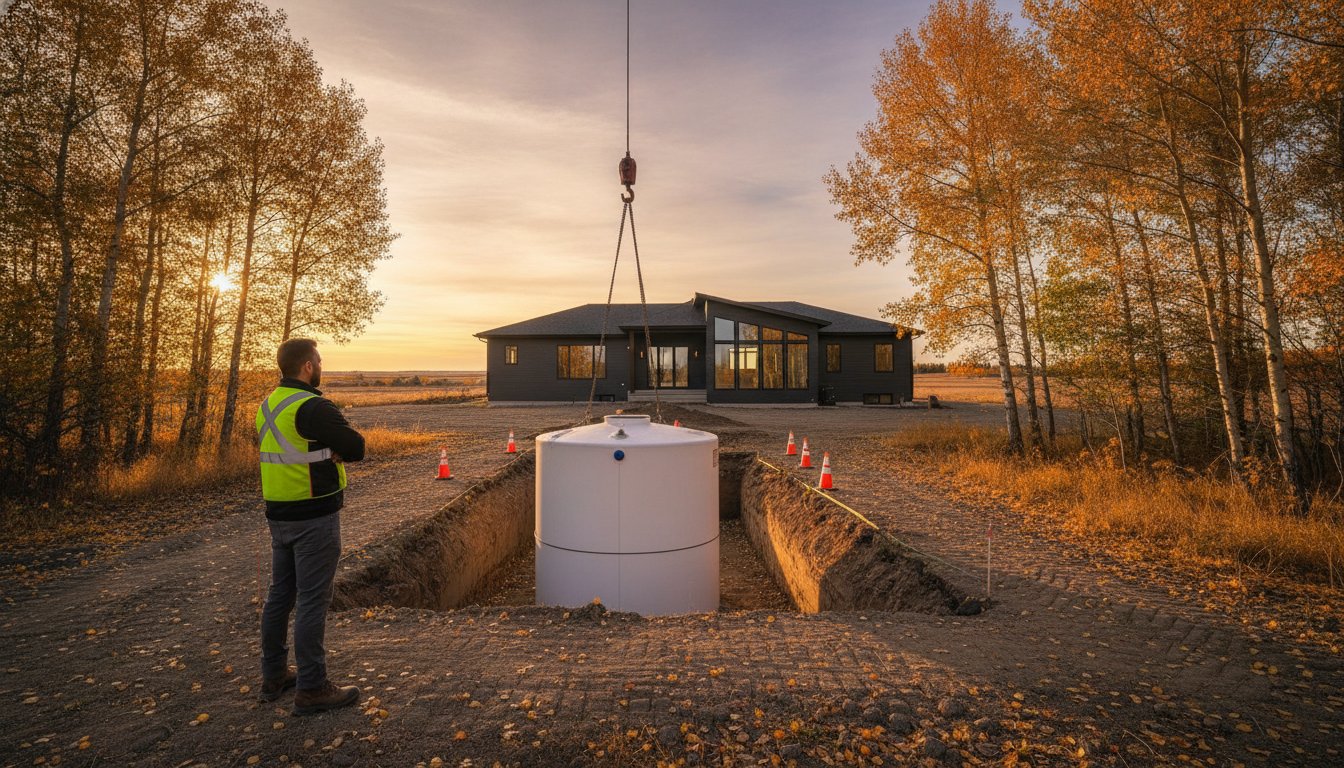
In Stony Plain, the ground is more than just soil; it's a dynamic force that shifts with the seasons. professional cistern installers Stony Plain residents trust must account for the extreme temperature swings that define our winters. If a tank is buried too shallowly, the water inside can freeze. This can crack the vessel or leave you without a supply for months. Every installation we perform is designed to eliminate these worries through technical precision. By prioritizing depth and structural integrity, we ensure your water system remains a reliable, long-term asset for your property.
Frost heave is a specific concern in clay-heavy regions like Parkland County. As the ground freezes and expands, it can shift tanks or shear through water lines if they aren't properly bedded. We use specialized trenching techniques to ensure that the line between your tank and your home is protected by the earth's natural thermal mass. Watertight seals at every entry point are equally important. These seals prevent contaminated surface runoff or meltwater from entering your potable supply during the spring thaw. If you're ready to secure your property's water future, reach out to our team for a professional cistern installation today.
Winter-Proofing Your Stony Plain Water Supply
For North Central Alberta, we typically recommend a burial depth of 8 to 10 feet. This ensures the system stays well below the frost line even during prolonged cold snaps. In cases where site conditions require a shallower burial, we utilize high-density foam insulation to maintain safe temperatures. The riser design is another critical detail. A properly insulated riser allows for winter water deliveries without exposing the main tank to freezing air, keeping your system functional in any weather.
The Installation Process: What to Expect
We approach every project with a methodical, four-step process to ensure total system integrity:
- Step 1: We begin with a thorough site assessment and utility marking to ensure safety and compliance.
- Step 2: Excavation includes preparing a level gravel or sand bed to prevent the tank from settling unevenly over time.
- Step 3: After precision tank placement, we complete all plumbing connections before backfilling with appropriate materials.
- Step 4: Every system undergoes rigorous testing and initial chlorination to guarantee it's safe for potable use from day one.
This steady, detail-oriented rhythm ensures that once the soil is replaced, you won't have to think about your water system again. You can simply enjoy the peace of mind that comes with a job done right.
Choosing the Right Professional Cistern Installers in Stony Plain
Selecting a partner for your home's water system is a decision that impacts your daily comfort and your property's future value. It's about more than just moving earth; it's about understanding the specific regulatory and environmental landscape of Parkland County. Local knowledge is non-negotiable when it comes to navigating excavation permits and soil stability. professional cistern installers Stony Plain homeowners trust must have a deep familiarity with the region's unique clay composition. This expertise ensures that your system is positioned correctly and anchored safely, preventing structural issues years down the road.
There is immense value in working with a full-service provider who understands the entire lifecycle of rural utilities. When a single team manages both your potable water storage and your waste management systems, the integration is seamless. You won't have to worry about conflicting site layouts or mismatched utility depths. This holistic approach simplifies the construction process and provides a single, reliable point of contact for all your essential services. It's a methodical way to build a property that is both functional and resilient.
The Best Cistern Septic Solutions Difference
We approach every project with the mindset that we're installing a long-term asset, not just a temporary fix. Our team prides itself on technical sophistication and a transparent, grounded communication style. We don't hide behind jargon; we provide clear explanations for every step of the process. Because we have extensive experience in septic field installation in North Central Alberta, we understand how to balance the diverse needs of a rural property. This dual expertise allows us to design a utility footprint that prioritizes safety, cleanliness, and ease of maintenance.
Requesting a Site Evaluation
The first step toward a worry-free water supply is a professional site evaluation. When you prepare for your consultation, it's helpful to have a few details ready. We'll look at your household size, your typical daily water usage, and your property's topography. This data helps us determine the optimal tank size to ensure you never face an unexpected shortage. We'll walk you through the placement options, explaining how we'll protect the system from the Alberta frost. If you're ready to secure your rural water supply with a system built to last, contact Best Cistern Septic Solutions for a professional quote. We are here to provide the definitive, professional fix your property deserves.
Securing Your Home’s Water Future in Stony Plain
Your household's water supply is too vital to leave to chance. As we've discussed, a professionally installed cistern provides a level of reliability and quality control that traditional wells often can't match. By prioritizing proper burial depths and watertight seals, you protect your system from the unique challenges of the Parkland County climate. Every detail, from pump selection to frost-line protection, works together to provide the peace of mind your family deserves. When these systems are designed with precision, they function as a silent, dependable foundation for your rural lifestyle.
Best Cistern Septic Solutions brings over 30 years of rural utility expertise to every project. We specialize in North Central Alberta frost-line protection and offer comprehensive design, installation, and maintenance services. Choosing professional cistern installers Stony Plain homeowners rely on means investing in a durable, long-term asset for your property. Secure your rural water supply with professional cistern installation in Stony Plain. Contact us today.
A reliable water system is the anchor of a comfortable home. We look forward to helping you build a secure, worry-free future for your property.
Frequently Asked Questions
How big of a cistern do I need for a family of four in Stony Plain?
A family of four typically requires a cistern with a capacity of 2,500 to 3,000 gallons (approximately 11,300 to 13,600 litres). This size generally provides a two-week water supply based on average indoor usage patterns. Having this reserve ensures you have a comfortable buffer between scheduled water deliveries, even during periods of higher demand like laundry days or when hosting guests.
Do cisterns freeze in the winter in Alberta?
Cisterns will not freeze if they are installed at the correct depth and properly insulated. We recommend burying the main tank 8 to 10 feet deep to remain well below the North Central Alberta frost line. Professional cistern installers Stony Plain residents hire also focus on insulating the access risers and using heat tape on shallow lines to ensure the system remains fully functional during -40°C cold snaps.
How often should a potable water cistern be cleaned?
You should have your potable water cistern professionally cleaned every one to two years. Regular cleaning removes any sediment that may have entered during deliveries and prevents the growth of biofilm on the tank walls. This simple maintenance task is the most effective way to ensure your water remains clear, tastes fresh, and stays safe for your family's consumption.
Can I use a cistern if I also have a low-yield well?
Yes, integrating a cistern with a low-yield well is a highly effective "trickle-fill" strategy. The well pump slowly fills the cistern over 24 hours, while the cistern pump provides the high pressure and volume needed for your household's peak demand. This setup prevents the well from being over-pumped and ensures you never run out of water during a shower or while running appliances.
What is the lifespan of a concrete cistern vs. a plastic one?
A professionally installed concrete cistern can last 40 to 50 years or longer due to its immense structural strength. High-density polyethylene (plastic) tanks typically have a lifespan of 20 to 30 years. While plastic is completely corrosion-resistant and easier to install in tight spaces, concrete remains the gold standard for long-term durability in the shifting clay soils found around Stony Plain.
Do I need a permit for cistern installation in Parkland County?
Permits are required for cistern installations to ensure the system meets safety and health regulations. This typically involves a private sewage or plumbing permit, depending on how the system integrates with your home's existing infrastructure. Working with professional cistern installers Stony Plain ensures that all necessary paperwork is filed correctly and that your installation complies with the CSA B126 Standard.
Is cistern water safe to drink without additional treatment?
Water delivered by truck from a municipal source is already treated and safe to drink. However, you must maintain its quality by ensuring your tank is sealed and cleaned regularly. Many homeowners choose to add a small amount of unscented bleach (about 20 mL per 1,000 L) to maintain a safe chlorine residual, or they install a simple UV filtration system for an extra layer of protection.
How much space is required for a professional cistern installation?
The physical footprint of the tank itself is relatively small, but you need a clear area of approximately 15 by 15 feet for the excavation equipment to work safely. Additionally, regulations require the cistern to be located at least 10 metres from a septic tank and 15 metres from a septic field. We evaluate these setbacks during your site assessment to find the most secure location on your property.


