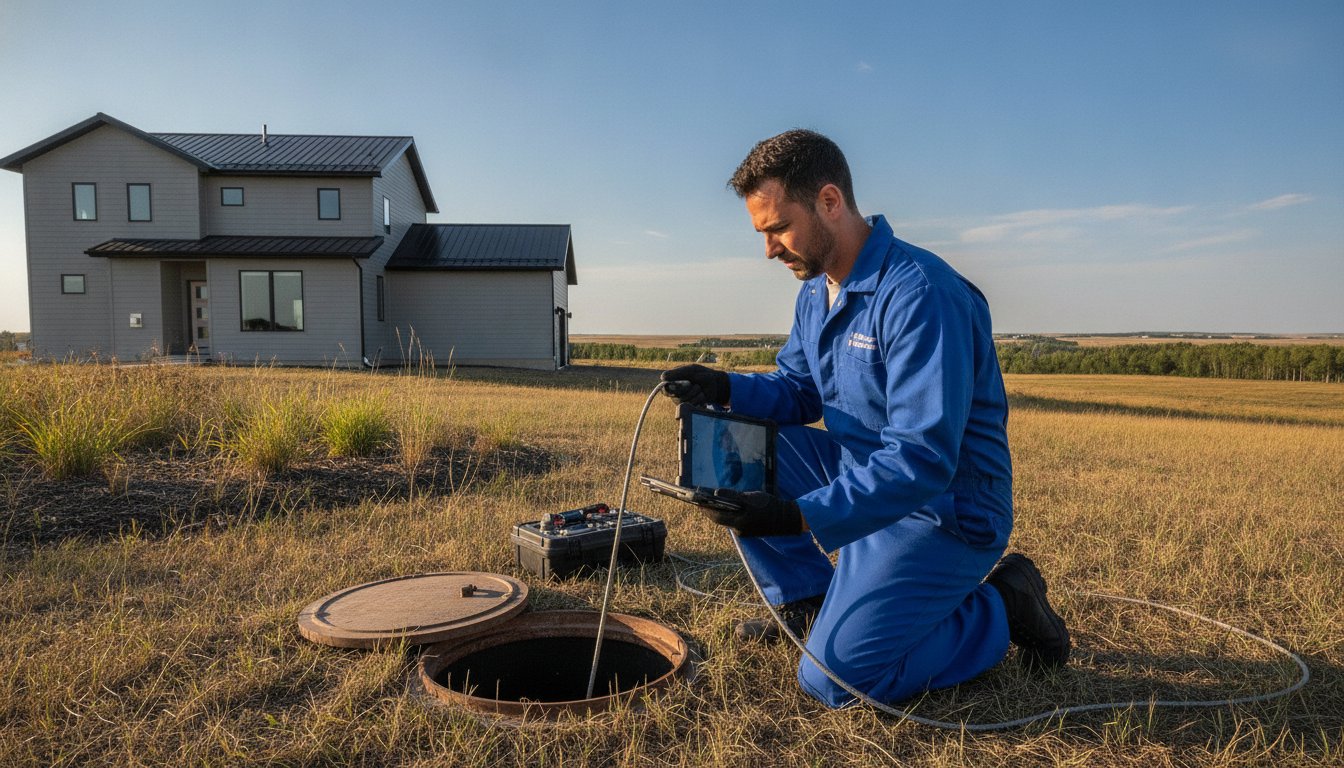
In rural Alberta, your cistern is more than just a utility; it's the lifeline of your home that requires specialized care to survive a -40°C winter. Finding a professional cistern cleaning service Alberta homeowners can trust is the first step in protecting your family's health and your property's long-term value. You likely understand the stress of worrying about bacterial contamination or the sudden silence of a failed pump during a January cold snap. It's a common concern for those of us living outside municipal lines, where the responsibility for water safety rests entirely on our shoulders.
This 2026 guide will show you how to ensure your property has a safe, winter-proof, and reliable potable water supply through professional maintenance. We'll explore the latest Health Canada cleaning standards, the technical requirements for winterizing your system, and how detailed diagnostic reporting can actually boost your home's market value. By understanding the proactive steps needed for system integrity, you can move from worrying about your water to enjoying the peace of mind that comes with a professionally managed utility. Every system has a manageable resolution, and it starts with a methodical approach to upkeep.
Key Takeaways
- Understand the vital role of annual cleaning and bi-annual water testing in maintaining a safe, bacteria-free potable water supply for your rural household.
- Learn how a professional cistern cleaning service Alberta homeowners rely on uses specialized scrubbing and disinfection to remove sediment and mineral buildup.
- Gain technical insights into maintaining the "heart" of your system, including pump care and winter-proofing strategies designed for the harsh Alberta climate.
- Establish a proactive 12-month maintenance schedule that includes monthly visual checks to ensure your system's integrity and long-term durability.
- Discover how professional diagnostic reporting can serve as a valuable asset for real estate transactions and property value preservation.
Understanding Potable Water Storage: Why Cistern Service in Alberta is Vital
Reliable water is the backbone of rural Alberta living. For many families in Parkland and Leduc Counties, a cistern is a critical potable water storage system that bridges the gap between municipal infrastructure and rural independence. To get the most out of these systems, understanding What is a Cistern? helps homeowners appreciate the specialized engineering behind their daily water supply. Unlike municipal lines, these systems require active stewardship to remain safe and functional throughout the year.
In regions like Spruce Grove and Sturgeon County, residents often rely on dedicated water hauling services to fill their tanks. This makes the storage environment just as vital as the water source itself. A professional cistern cleaning service Alberta homeowners trust ensures that hauled water remains safe for consumption once it enters the tank. While a water well provides a continuous flow, it's often susceptible to seasonal mineral shifts and unpredictable quality. A cistern allows for total control over your water, but that control demands regular maintenance to prevent the system from becoming a liability.
Because these tanks are buried underground, they often suffer from neglect. This "invisible" nature means that sediment accumulation and bacterial growth can go unnoticed for years. Over time, this buildup can strain your pump and degrade your water quality. Proactive care is the only way to transform an out-of-sight utility into a long-term asset for your property. A professional fix is always available to address these hidden issues before they lead to a system failure.
Cistern Materials: Concrete vs. Polyethylene in Alberta Soil
The heavy clay soils of North Central Alberta exert significant pressure on buried structures. Concrete tanks have been the traditional choice for decades due to their weight and structural durability. However, modern polyethylene alternatives are popular because they resist the corrosive nature of certain soil chemistries. Regardless of the material, professional installation is necessary to prevent shifting during our intense freeze-thaw cycles. A shifted tank can compromise seals, allowing groundwater to seep in. We understand these local environmental challenges and ensure every tank remains a secure, durable vessel for your household water.
The Potable Water Standard for 2026
According to current Alberta Health Services (AHS) standards, potable water must be free from pathogens and harmful contaminants. Over time, even high-quality hauled water can lead to biofilm development on the tank walls. This thin layer of bacteria, combined with fine sediment, creates an environment where water safety is compromised. Maintaining these standards requires a methodical approach to sanitization rather than a simple rinse. We focus on removing these hidden risks to ensure your system meets every health requirement. Potable water safety is the primary goal of every professional service we perform, providing you with the removal of future worries once the job is done.
The Professional Cistern Service Lifecycle: Cleaning, Disinfection, and Inspection
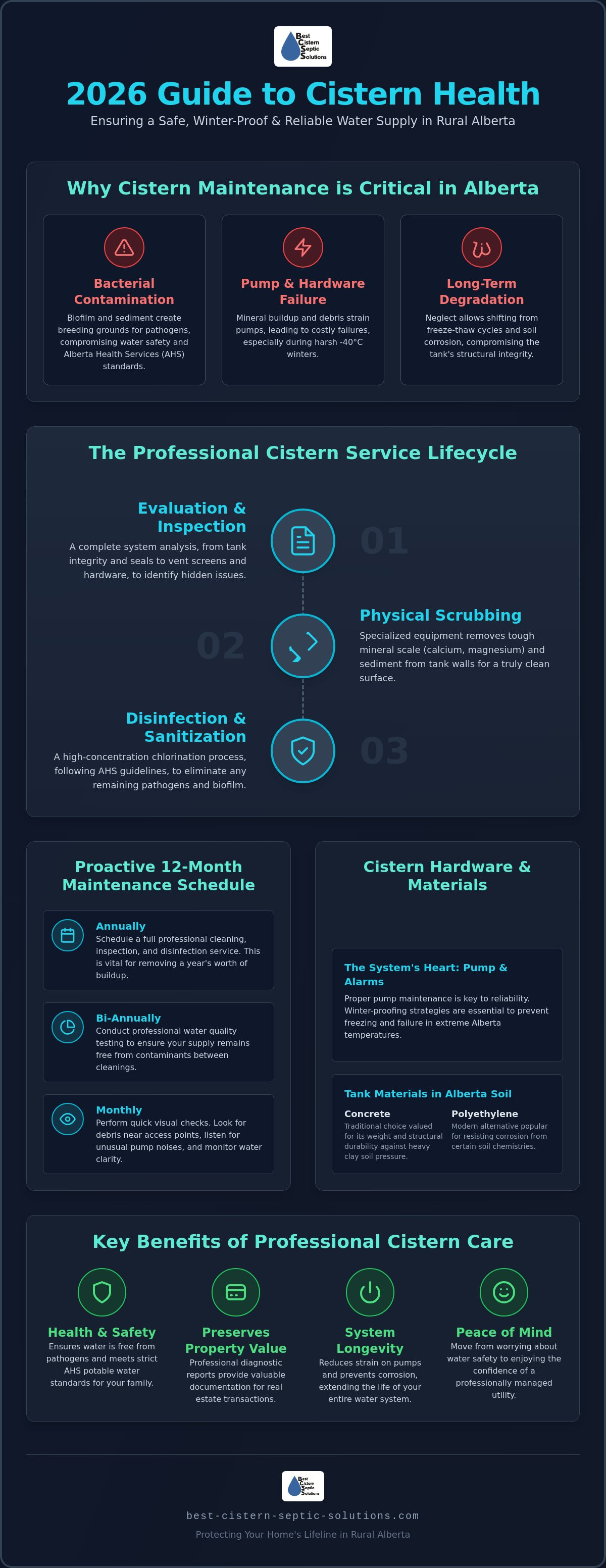
Maintaining a cistern involves a sequence of technical steps that go far beyond basic hygiene. A standard annual visit for a cistern cleaning service Alberta homeowners schedule begins with a complete system evaluation. We don't just look at the water; we look at the environment holding it. This methodical approach ensures that every component, from the tank floor to the vent screens, is functioning as a single, cohesive unit to protect your household.
The physical scrubbing process is the most labor-intensive phase of the lifecycle. Over a year, minerals like calcium and magnesium can bond to the tank walls, creating a rough surface where bacteria thrive. We use specialized equipment to strip these deposits away without damaging the structural integrity of the tank. Removing this "scale" is vital because chemical treatments are less effective when pathogens can hide behind mineral buildup. A clean surface is the only foundation for a truly sanitary water supply.
Once the physical debris is removed, the system undergoes a high-concentration chlorination process. Following the Alberta Health Services guidelines, we shock the system to eliminate any remaining pathogens or biofilms. This isn't a simple splash of bleach; it's a calculated chemical treatment designed to sanitize every internal surface, including the lines and the pump. This high-level disinfection provides the peace of mind that your water is safe for everything from drinking to bathing.
Our Ten-Point Visual Inspection concludes the lifecycle. This methodical check looks for early signs of stress, such as hairline cracks in concrete or seal degradation around the lid. Identifying these issues early prevents small leaks from becoming expensive system failures during a deep freeze. A professional fix is always more manageable when a problem is caught in its infancy.
Professional Cleaning vs. The Risks of DIY Maintenance
Many homeowners consider a DIY approach, but the risks are significant. Alberta Health Services warns that cisterns are confined spaces where toxic fumes or a lack of oxygen can be fatal. Household bleach is often insufficient because it lacks the concentration needed to penetrate established biofilms. We use industrial-grade vacuums and specialized scrubbing tools that ensure a level of cleanliness a garden hose simply can't achieve. Entrusting this task to experts ensures the job is done thoroughly while keeping you safe from the hazards of confined space entry.
Diagnostic Inspections for Rural Real Estate
In Stony Plain and the surrounding Edmonton region, a cistern inspection is a non-negotiable step for any property transaction. A professional diagnostic report provides a transparent look at the tank's seals, the pump's health, and the overall water quality. This documentation serves as a long-term asset, proving the property's utility systems are in peak condition. Many buyers also request septic system inspections at the same time to ensure a complete evaluation of the home's infrastructure. If you're preparing to sell or have recently moved in, securing a professional cistern assessment is the best way to ensure your water supply is ready for the years ahead.
Cistern Hardware: Maintaining Pumps, Alarms, and Winter-Proofing
A reliable water supply depends on more than just a clean tank; it requires a mechanical system that functions with precision. The submersible pump is the critical heart of your household water delivery. It's responsible for moving potable water from the reservoir into your home at a consistent pressure. While many homeowners focus on the reservoir itself, neglecting the hardware can lead to sudden outages. A professional cistern cleaning service Alberta residents rely on should always include a thorough check of these mechanical components to ensure long-term durability.
It's important to distinguish between the types of pumps used on rural properties. Potable water pumps are designed for high-purity environments, whereas effluent pumps used in septic systems handle gray water and solids. Mixing these up or using improper hardware can compromise your health. To keep your system running smoothly, pressure tanks act as a vital buffer. They regulate the flow and prevent the pump from "short-cycling," which is the leading cause of premature motor burnout. Additionally, high-level alarms provide an essential safety net. These devices alert you to potential overflows or dry-running conditions before they escalate into expensive repairs. Following the Alberta public health guidelines for drinking water ensures your hardware setup meets the necessary safety and performance standards.
Winterization and Frost Protection in North Central Alberta
In the Edmonton Capital Region, winter-proofing isn't optional. To stay below the frost line, cisterns and their primary lines must be buried at a depth of 8 to 10 feet. If your lines are shallower due to property topography, we use insulated risers and specialized heat tape to prevent freezing. Protecting the utility room or pump house is equally vital. Even a small draft can freeze a pressure switch in -40°C weather, cutting off your water entirely. We take a methodical approach to identifying these thermal weak points, providing a professional fix that secures your water supply against the harshest Alberta winters.
Signs You Need a Pump Replacement
Mechanical failure rarely happens without warning. You might notice surging water at the tap, a significant drop in household pressure, or unusual clicking noises coming from your pressure tank. These symptoms suggest your pump is struggling to maintain its duty cycle. Replacing a pump requires a technical touch to ensure no contaminants enter the potable system during the swap. Because we specialize in total property utility management, we often handle hardware issues that overlap with septic system repair, ensuring every pump on your property is optimized for performance. Taking these proactive steps turns your water system into a durable asset rather than a source of winter stress.
Maintenance Schedules and Alberta Regulatory Compliance
A proactive maintenance schedule is the difference between a durable property asset and a system prone to unexpected failure. In Alberta, where environmental factors shift rapidly between seasons, following a methodical checklist ensures your household water remains safe and your equipment stays functional. This isn't just about following rules; it's about establishing a predictable routine that removes the stress of the unknown. By staying ahead of sediment buildup and mechanical wear, you ensure a professional fix is always within reach before an emergency occurs.
- Step 1: Perform a monthly visual check of the cistern lid seal and vent screens to ensure no debris, pests, or runoff have compromised the tank's entry points.
- Step 2: Schedule a professional cistern cleaning service Alberta homeowners trust every 12 months to remove the inevitable sediment and biofilm that accumulates on the tank floor and walls.
- Step 3: Test your water quality for bacteria and nitrates at least twice per year, ideally in the spring and fall when shifting groundwater levels can impact your supply.
- Step 4: Inspect the pressure tank and pump electrical connections every two years to prevent minor wear from leading to a total system outage.
- Step 5: Verify all alarm sensors are functional before the first frost in October, ensuring you have an early warning system in place before the ground freezes.
Health Canada Guidelines for 2026
Alberta's provincial stance for 2026 emphasizes that the responsibility for private water safety rests entirely with the property owner. If a water sample reveals the presence of E. coli or persistent total coliforms, a "Boil Water Advisory" is triggered for the household until the system is professionally disinfected and cleared by a follow-up test. For homes with infants, elderly residents, or immunocompromised individuals, Alberta Health Services recommends that a professional cleaning and disinfection be performed at least every 12 months to maintain a sterile environment. These guidelines are designed to protect the most vulnerable members of your household from preventable waterborne risks.
Water Sampling and Local Testing Protocols
In the Edmonton Capital Region, water samples are typically dropped off at Alberta Health Services Environmental Public Health offices or authorized provincial laboratories. When you receive your lab results, it's vital to understand the distinction between "Total Coliforms" and "E. coli." Total coliforms often indicate general environmental contamination, while E. coli signals a high-priority health risk. It's a technical reality that you cannot successfully disinfect a tank that is physically dirty. Biofilm and sediment act as a protective shield for pathogens, meaning that a successful water test result is directly linked to the physical cleanliness of the cistern. To ensure your system meets these rigorous standards before the winter season, you can schedule a professional 10-point inspection today.
Choosing Best Cistern Septic Solutions for Your Alberta Property
Selecting the right partner for your property's water infrastructure requires a balance of technical sophistication and local reliability. Best Cistern Septic Solutions operates with a grounded, professional approach that prioritizes the long-term integrity of your home. Our team understands the specific environmental pressures of Parkland, Leduc, and Sturgeon Counties, where heavy clay and extreme temperature swings are the norm. We don't just perform a task; we provide a methodical resolution to the challenges of rural living, ensuring your utility systems remain a durable asset rather than a source of stress.
Managing a rural property is a complex undertaking. It's often more efficient and safer to work with a single expert who can handle both your septic service and your potable water requirements. This integrated approach ensures that your entire water cycle is monitored by a team that understands how one system impacts the other. Every cistern cleaning service Alberta homeowners book with us is treated as a comprehensive health check, where we apply our diligent, detail-oriented standards to every component of your water delivery system.
Expert Installation and Repair Services
We believe in building systems that survive the harshest conditions. Our commitment to using durable, Alberta-tested materials ensures that every Cistern Installation or Cistern Pump replacement is a permanent solution. By performing thorough diagnostic reporting, we identify potential failures before they lead to expensive emergency water loss or frozen lines. This proactive stance is a core part of our philosophy, and you can learn more about these technical standards in our guide on cisterns for rural properties. We focus on property preservation, ensuring that your mechanical systems contribute to the overall value and safety of your household.
Serving Spruce Grove, Stony Plain, and Beyond
Our service area extends across the Edmonton Capital Region, including Spruce Grove, Stony Plain, Sherwood Park, and the surrounding rural municipalities. We take pride in being the reliable neighbor who happens to be the leading expert in these vital utility systems. Whether you're moving into a new property or maintaining a long-term family home, our communication rhythm is steady and transparent. You'll always know the underlying reasons for our maintenance recommendations and the specific details of the resolution we provide. You can book a maintenance visit or request a system evaluation by contacting our local office to ensure your property is ready for the seasons ahead. Secure your potable water system with a professional cistern service today and enjoy the peace of mind that comes with a professionally managed utility.
Securing Your Rural Property’s Water Future
Maintaining a safe and reliable potable water supply in rural Alberta requires a diligent approach to both hygiene and mechanical integrity. By prioritizing annual disinfection and hardware winterization, you transform a hidden utility into a long-term asset for your household. A professional cistern cleaning service Alberta homeowners trust provides more than just a clean tank; it offers the removal of future worries through technical expertise and methodical care. Whether you're preparing for a real estate transaction or simply protecting your family's health, clear diagnostic reporting ensures your system remains resilient against our harsh climate.
Best Cistern Septic Solutions specializes in rural North Central Alberta utility systems, serving Parkland, Leduc, and Sturgeon Counties with specialized expertise. We understand the specific environmental needs of our neighbors and take pride in performing difficult tasks with sophistication. Don't wait for a system failure to address your water needs. Book Your Professional Cistern Service in Alberta Today and secure the peace of mind that comes with a professionally managed home. Every problem has a manageable resolution, and we're here to provide the definitive fix for your property.
Frequently Asked Questions
How often should I have my cistern cleaned in Alberta?
You should have your cistern professionally cleaned and disinfected at least once every 12 months to comply with Alberta Health Services recommendations. Regular maintenance prevents the accumulation of sludge and biofilm that can harbor harmful bacteria like E. coli. Scheduling a professional cistern cleaning service Alberta homeowners trust ensures that sediment is physically removed before it can impact your household's health or damage your submersible pump.
What are the most common signs that my cistern pump is failing?
Common signs of failure include surging water at the tap, a sudden drop in household pressure, or persistent clicking noises from your pressure tank. You might also notice your pump running more frequently than usual or failing to turn on entirely. These symptoms often indicate mechanical wear or electrical issues that require a professional fix to prevent a complete loss of water supply during a deep freeze.
Is it safe to clean my own cistern to save money?
Cleaning your own cistern is not recommended because these tanks are classified as confined spaces under the Alberta Occupational Health and Safety Code. Entering a tank without specialized training and air monitoring equipment exposes you to significant risks like oxygen deficiency and toxic gas accumulation. Professional crews use industrial grade vacuums and strict safety protocols to ensure the job is done thoroughly without putting your safety at risk.
How deep does a cistern need to be buried in Edmonton to prevent freezing?
A cistern in the Edmonton Capital Region must be buried at a depth of 8 to 10 feet to remain safely below the frost line. This depth protects the tank and the primary water lines from freezing during extreme -40°C winter temperatures. If your property's topography requires a shallower installation, we use specialized insulation and heat tape to provide a methodical layer of frost protection for your utility lines.
What should I do if my cistern water has a strange smell or taste?
If you notice a strange smell or taste, you should stop using the water for drinking and schedule a professional inspection immediately. Odors often signal the presence of sulfur reducing bacteria or advanced biofilm buildup on the tank walls that a simple rinse cannot fix. A methodical cleaning and high concentration chlorination process will typically resolve these issues and restore the purity of your potable water supply.
Is a professional cistern inspection required when selling a rural home in Alberta?
While the province doesn't legally mandate a cistern inspection for every sale, most lenders and buyers in Parkland County require a professional diagnostic report before closing. Providing a documented 10-point inspection proves the system's integrity and serves as a long term asset for the property value. It offers the buyer peace of mind that the home's primary utility is in peak condition and free from structural leaks.
What is the main difference between a cistern and a holding tank?
The main difference lies in the purpose of the liquid being stored. A cistern is a dedicated vessel for clean potable water used for household consumption and bathing. In contrast, a holding tank is part of a septic system designed to store household wastewater until it can be pumped and hauled away. It's vital to use the correct tank material and professional cistern cleaning service Alberta experts provide to maintain the safety of your drinking water.
Can I use my cistern for both drinking water and garden irrigation?
You can use cistern water for both drinking and irrigation, but you must be mindful of your total storage volume and delivery capacity. Since most rural Alberta homes rely on hauled water, heavy garden use can quickly deplete your supply and potentially strain your pump if the tank levels get too low. If you plan to irrigate frequently, ensure your system's alarms are functional and that your water hauling schedule can keep up with the increased demand.


