You are halfway through a morning shower when the steady stream suddenly turns into a frustrating trickle, right as your dishwasher kicks into its rinse cycle. Dealing with low water pressure from cistern system setups is more than a minor inconvenience; it is a source of genuine anxiety for the nearly 2% of Albertans who depend on private water storage. You likely feel that every drop in flow is a warning sign of an expensive pump failure or a system that simply cannot keep up with modern household demands.
We understand that your water security is the foundation of your home's comfort. This article provides a methodical diagnostic approach to help you identify the root cause of your pressure issues and discover professional solutions to restore a consistent flow. We will examine essential troubleshooting steps, from checking pressure switch settings to evaluating the latest IoT-powered pump technology. You will also learn how 2026 updates to the Alberta Water Act and regional funding programs can help you maintain a high-performing, durable system that removes future worries and protects your property's long-term value.
Key Takeaways
- Understand the three-part cycle of storage, pumping, and regulation that governs your home's water delivery and protects your hardware from premature wear.
- Identify the most frequent causes of low water pressure from cistern system equipment, including simple sediment clogs and failed pressure tank bladders.
- Follow a methodical, safety-first checklist to inspect your pressure gauge and electrical components to determine if a professional fix is required.
- Learn how modern solutions like Constant Pressure Systems (VFD) and precise pump sizing can eliminate inconsistent flow and accommodate high-demand appliances.
- Discover the value of a professional diagnostic process to find hidden leaks, providing you with a definitive resolution and long-term peace of mind.
Understanding the Mechanics of Your Cistern Pressure System
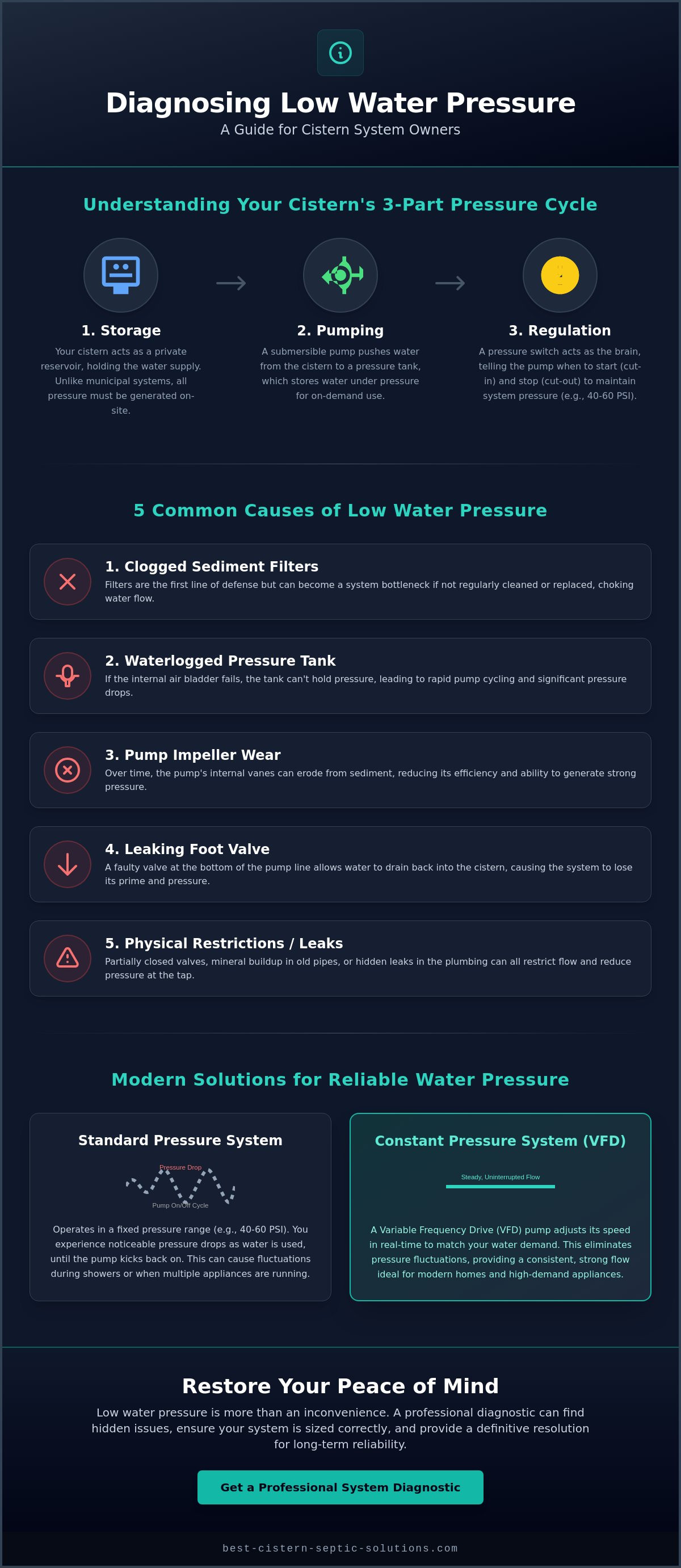
A reliable water supply depends on a delicate balance of mechanical components working in a continuous three-part cycle: storage, pumping, and regulation. To understand why you are experiencing low water pressure from cistern system equipment, it's helpful to look at how these parts interact. Unlike municipal setups that rely on massive public infrastructure for constant force, your rural home is its own utility provider. You store your water in a specialized tank, and your system must generate and maintain every pound of pressure required to reach your faucets.
If you're asking what is a cistern in the context of modern home engineering, it's essentially your private reservoir. While the tank holds the volume, the pump and pressure tank work together to create flow. This self-contained nature means that even a minor imbalance in one component can lead to a noticeable drop in performance throughout the house. Because there is no external municipal line to provide backup pressure, your system's integrity is the only thing standing between a high-flow shower and a frustrating trickle.
The Role of the Cistern Pump and Pressure Tank
The heart of your delivery system is the pump. Most modern Alberta homes use a submersible cistern pump, which sits inside the tank and pushes water upward into the home. This design is typically quieter and more efficient than older jet pumps, which are located in a basement or utility room and pull water from the tank. Regardless of the type, the pump doesn't run every time you turn on a tap. Instead, it fills a pressure tank. This tank contains an air bladder that compresses as water enters, acting as a pressurized buffer for your plumbing. The drawdown volume is the specific amount of water the tank can deliver before the internal pressure drops enough to trigger the pump. If this volume is too low, you'll notice frequent pressure fluctuations and a pump that works harder than it needs to.
How Pressure Switches Control Your Household Flow
The pressure switch acts as the brain of the operation. It monitors the internal pressure of the system and tells the pump when to start (cut-in) and when to stop (cut-out). In our region, standard settings are usually 30/50 PSI or 40/60 PSI. If your system is set to 30/50, the pump starts when pressure hits 30 and stops at 50. A miscalibrated or aging switch can cause a significant delay in the cut-in point. This results in a frustrating period of low water pressure from cistern system fixtures where the flow feels weak until the pump finally engages. Ensuring these settings are precise is a fundamental step in maintaining a consistent, high-pressure experience for your family and protecting your pump from unnecessary wear.
5 Common Causes of Low Water Pressure in Cistern Systems
Identifying the specific cause of low water pressure from cistern system setups requires a methodical look at the delivery path. While it’s tempting to assume the pump has failed, the reality is often simpler or more nuanced. Mechanical issues frequently stem from a lack of routine upkeep or the natural wear of moving parts. According to standards promoted by the National Ground Water Association, maintaining the integrity of every component in the delivery chain is essential for preventing system-wide failure. We find that most pressure issues fall into five distinct categories, ranging from basic filtration blocks to internal mechanical fatigue.
- Clogged Sediment Filters: These act as the first line of defense but can quickly become a bottleneck if not serviced.
- Waterlogged Pressure Tanks: When the internal air bladder fails, the tank loses its ability to push water through your pipes.
- Pump Impeller Wear: Over time, the internal vanes of the pump erode, reducing its ability to lift and move water efficiently.
- Leaking Foot Valves: A valve that doesn't seal properly allows water to drain back into the cistern, causing the system to lose its prime.
- Physical Restrictions: Partially closed shut-off valves or a buildup of mineral scale inside older pipes can physically choke the flow.
Clogged Filtration Systems and Alberta Sediment Issues
Rural water hauling and roof collection systems naturally introduce fine silt and particulates into your storage. If your sediment filter is overloaded, it creates a physical barrier that the pump cannot easily overcome. You might notice that your pressure starts strong but drops off almost immediately as the filter restricts the flow rate. Regularly reviewing your cistern maintenance schedule is the most effective way to prevent these clogs from disrupting your morning routine. A transparent filter housing allows for a quick visual check, ensuring your water remains clean and your flow remains steady.
Pressure Tank Bladder Failure and Waterlogging
The pressure tank relies on a precise balance of compressed air and water. If the internal bladder ruptures, the tank becomes "waterlogged," meaning there is no air left to provide the necessary push. You can perform a simple "tap test" by knocking on the top of the tank. A healthy tank sounds hollow at the top, while a failed one produces a dull thud. This condition leads to short-cycling, where the pump turns on and off every few seconds. This rapid cycling is a major threat to your equipment, as it can lead to motor burnout and an eventual need for an effluent pump replacement or a new cistern pump. Identifying a failing tank early is a proactive way to protect your long-term property assets.
Troubleshooting Low Flow: Is it a Simple Fix or a Major Repair?
Troubleshooting low water pressure from cistern system setups begins with a clear distinction between pressure and volume. Pressure is the force that pushes water through your pipes, while volume is the actual amount of water available at the tap. If your shower starts strong but fades to a trickle, you likely have a volume restriction. If the flow is consistently weak from the moment you turn the handle, the issue is usually related to the pressure settings or the pump's mechanical health. Before touching any electrical components or adjusting valves, always turn off the power at the breaker to ensure your safety.
A methodical visual inspection is your most powerful tool. Start at the pressure gauge, which is typically located near the pressure tank. Watch the needle as someone else turns on a high-demand fixture like a bathtub. A healthy system should show a steady drop until it hits the "cut-in" point, followed by a smooth climb once the pump engages. If the needle jumps erratically or drops to zero before the pump starts, you are likely dealing with a mechanical failure rather than a simple adjustment issue. Research from Penn State Extension highlights that proper system sizing and regular monitoring are the primary factors in preventing these sudden performance drops.
Checking Your Pressure Gauge and Switch Settings
To accurately diagnose the system, you must compare the static pressure (when no water is running) to the dynamic pressure (while a tap is open). If the static pressure is high but the dynamic pressure collapses, your pump may be struggling to keep up. It's also vital to check the air pre-charge in your pressure tank. With the pump off and the tank drained, the air pressure should be exactly 2 PSI below your switch's cut-in setting. If your switch is set to 40/60, your tank needs 38 PSI of air. Be cautious here; adjusting the switch without verifying the air charge can cause the pump to stay on indefinitely, leading to a costly failure. A flickering or "buzzing" gauge often indicates a failing pressure switch that requires professional attention.
Inspecting for Leaks in the Delivery Lines
Leaks between your cistern and the pressure tank are often "invisible" because the water drains back into the storage tank or the ground. You can perform a "silent leak" test by turning off all water in the house and watching the pressure gauge for thirty minutes. If the needle drops while no water is being used, you have a leak in the delivery line or a failing foot valve. A leaking foot valve is particularly troublesome because it allows the pump to lose its prime, forcing it to work against air pockets. This results in sputtering faucets and a significant drop in delivery force. If these basic checks don't reveal a clear path forward, it is time to contact a specialist in Spruce Grove to perform a comprehensive diagnostic before the pump sustains permanent damage.
Professional Solutions for Restoring Reliable Water Pressure
Once you have identified that your low water pressure from cistern system equipment is not a simple filter clog, it is time to look at professional, long-term resolutions. Many homeowners mistakenly believe that simply installing the highest horsepower pump available will solve their problems. In reality, an oversized pump can create excessive stress on your plumbing joints and lead to premature tank failure. A professional solution begins with a precise calculation of your household fixture count to ensure your pump is perfectly matched to your peak demand. This methodical approach ensures that your system performs reliably without wasting energy or risking mechanical damage.
Modern engineering has moved beyond the traditional "on-off" cycle of older systems. If you have a growing family or high-performance appliances like rain-head showers and high-efficiency dishwashers, a standard setup might struggle to keep up. Upgrading to a larger pressure tank is one way to provide a more significant buffer, reducing the frequency of pump starts. However, the most effective way to guarantee a consistent flow is through a professional cistern pump replacement that utilizes modern, high-efficiency components designed for the specific water conditions in North Central Alberta.
The Benefits of Constant Pressure (VFD) Upgrades
Variable Frequency Drive (VFD) controllers are the current gold standard for rural water delivery. Unlike a traditional pump that runs at 100% speed or 0%, a VFD system varies the motor speed to maintain an exact PSI regardless of how many taps are open. This technology provides a "city-like" water experience where the pressure does not drop when someone starts the laundry while you are in the shower. Beyond the immediate comfort, VFD systems are significantly more energy-efficient and reduce physical wear on the pump motor by eliminating the harsh "kick" of traditional starts. This investment turns your water system into a long-term asset that preserves your property's utility and your family's daily comfort.
When to Replace vs. When to Repair Your Cistern System
In our region, a high-quality cistern pump typically has a lifespan of 10 to 15 years. If your pump is approaching this age and requires a major repair, replacement is often the more cost-effective choice for your peace of mind. We often find that a comprehensive water system audit is most effective when performed alongside a septic system repair or inspection, as these two systems represent the core of your home's utility health. If you are tired of inconsistent flow and want a definitive resolution, contact us today for a professional cistern pump consultation to restore the performance your home deserves.
Expert Cistern Services in Parkland County: Restoring Your Peace of Mind
Best Cistern Septic Solutions stands as the dedicated partner for rural homeowners in Parkland County. When you face low water pressure from cistern system equipment, the stress can impact every part of your daily routine. We don't believe in temporary patches or guesswork. Instead, we apply a diligent, detail-oriented diagnostic process to uncover the root cause of your flow issues. Whether it is a hairline fracture in a delivery line or a subtle electrical fault in the control box, our goal is to provide a definitive resolution that restores your home's utility and your own peace of mind.
Our team understands the specific environmental challenges of North Central Alberta. We know that a minor pressure drop in October can become a total system failure by January if left unaddressed. Proactive maintenance is more than just a service; it is a strategy to protect your property from the harsh realities of our climate. By treating your water system as a long-term asset, you ensure that your household remains secure and comfortable regardless of the weather outside. We take pride in performing these essential, difficult tasks with a high level of sophistication, ensuring that your water security is never in question.
Professional Diagnostic and Maintenance Services
A professional cistern system inspection goes far beyond a simple visual check. Our methodical approach includes a comprehensive audit of your pump's electrical draw, the integrity of the pressure tank's air bladder, and a precision calibration of your switch settings. We also look for "invisible" leaks in the delivery lines that can cause your system to lose prime and struggle with low water pressure from cistern system components. Having a local expert who understands the unique sediment levels and water hauling conditions in Parkland County means your system receives care tailored to its specific environment. This thoroughness ensures that every component is optimized for durability and peak performance.
Schedule Your Cistern System Audit Today
If you are tired of inconsistent flow and the constant worry of a failing pump, it is time to choose a professional fix over temporary DIY efforts. A comprehensive audit provides the clarity you need to make informed decisions about your home's infrastructure. We invite you to experience the reassurance that comes from a system that works perfectly every time you turn on the tap. For those looking to ensure their entire property is managed with the same level of care, we also offer a wider septic service Edmonton residents trust for long-term reliability. Contact us today to secure your water supply and remove the burden of utility worries from your future.
Securing Consistent Water Flow for Your Rural Home
Maintaining a reliable water supply shouldn't be a source of daily stress. By understanding the mechanical balance between your storage, pump, and regulation components, you can move from reacting to emergencies to proactively managing your property's utility health. We've explored how identifying the specific root cause of low water pressure from cistern system setups is the first step toward a permanent resolution. Whether the issue stems from a simple sediment clog or a failed pressure tank bladder, a methodical approach ensures your water delivery remains stable and efficient.
Modern upgrades like Constant Pressure Systems and precise pump sizing offer a high-performance experience that protects your mechanical hardware and enhances your household comfort. As specialized experts in rural water storage serving Parkland, Leduc, and Sturgeon Counties, we provide the detailed diagnostic reporting needed to remove future worries. A professional fix ensures your system remains a durable asset for your family. Contact Best Cistern Septic Solutions for a professional cistern pressure diagnostic in Parkland County today. Our team is ready to help you achieve the consistent flow and water security your home deserves.
Frequently Asked Questions
Why does my water pressure drop when I turn on a second faucet?
This drop occurs when the total demand for water exceeds the flow capacity of your pump or the diameter of your delivery lines. It often suggests that your system is undersized for your household's peak usage or that the pump is losing its ability to maintain flow under load. A professional evaluation can determine if a larger pressure tank or a pump upgrade is necessary to handle multiple tasks simultaneously.
How do I know if my cistern pump is failing?
Common indicators of a failing pump include sputtering faucets, unusual humming noises from the tank, or a sudden increase in your monthly electricity bill. If you experience persistent low water pressure from cistern system equipment despite having clean filters, the internal impellers may be physically worn. These mechanical issues require a specialized diagnostic to prevent a total loss of water at an inconvenient time.
Can a clogged water filter cause low pressure in the whole house?
Yes, a single sediment or carbon filter can act as a significant bottleneck for your entire plumbing system. When the filter media becomes saturated with fine silt or minerals, it creates physical resistance that the pump cannot easily overcome. We recommend checking your filter housing first, as replacing a dirty cartridge is the simplest and most cost-effective way to restore your home's flow.
What should my cistern pressure tank PSI be set at?
Your pressure tank's air pre-charge must be set exactly 2 PSI below the "cut-in" setting of your pressure switch. For a system operating on a standard 40/60 PSI cycle, the air pressure in the tank should be 38 PSI when the tank is completely empty of water. Maintaining this precise balance is vital for protecting the internal bladder and ensuring the pump doesn't cycle unnecessarily.
Why is my cistern pump turning on and off every few seconds?
This behavior, known as short-cycling, is almost always caused by a waterlogged pressure tank where the internal air bladder has ruptured. Without the air cushion to provide pressure, the pump must engage the moment any water is drawn from the system. This rapid cycling puts extreme stress on the motor and can lead to a premature need for a cistern pump replacement if not corrected quickly.
Is it worth upgrading to a constant pressure (VFD) system for my cistern?
Upgrading to a VFD system is a valuable investment for any rural property owner who desires a "city-like" water experience. By varying the pump speed to match your real-time demand, these systems eliminate the pressure fluctuations common in traditional setups. This technology also reduces energy consumption and extends the lifespan of your pump by providing softer starts and stops for the motor.
How often should I have my cistern pump and tank inspected?
We recommend a professional inspection every two to three years to ensure your system remains a durable asset for your property. These regular audits allow us to identify "invisible" leaks in delivery lines or minor switch miscalibrations before they escalate into major repairs. Proactive maintenance is especially important in Alberta to ensure your water security remains intact throughout the freezing winter months.
Can low water pressure damage my appliances like the dishwasher?
Inconsistent or weak flow can definitely impact the performance and lifespan of modern, high-efficiency appliances. Dishwashers and washing machines rely on specific flow rates to fill within timed cycles and to operate their internal solenoids correctly. If the pressure is too low, these valves may chatter or fail to close, leading to incomplete cleaning cycles or even internal mechanical damage over time.


