
A septic permit isn't just an administrative hurdle; it's a professional blueprint for your home’s long-term health and environmental safety. You likely feel the weight of this responsibility, especially when you consider that misidentifying soil is the leading cause of system failure across the 150,000 private systems in Alberta. It's natural to feel anxious about the $370.00 application fee or the technical requirements of the Alberta Private Sewage Systems Standard of Practice 2021. We'll show you how to secure the septic system permit Sturgeon County requires to ensure your property remains pristine and compliant for years to come.
We understand that the approval process can feel overwhelming, but every requirement exists to protect your family and your investment. This guide provides a clear, step by step roadmap through the 2026 Sturgeon County Bylaw 1696/25. You'll learn exactly what inspectors look for during a site evaluation, how to avoid the $160.00 re-inspection fee, and how to maintain the integrity of your wastewater solution from the first shovel in the ground. By following these professional steps, you can move forward with the confidence that your home infrastructure is built to last.
Key Takeaways
- Understand the legal necessity of the Private Sewage Disposal System (PSDS) permit to protect your property under the Alberta Safety Codes Act.
- Identify why a professional soil profile and test pit are the most critical steps in preventing long-term system failure.
- Avoid costly delays by learning how to submit a complete septic system permit Sturgeon County application with accurate site drawings.
- Master the step-by-step process of working with a certified installer to navigate the 2026 Sturgeon County application requirements.
- Gain peace of mind by ensuring your installation meets every safety requirement in the Alberta Private Sewage Systems Standard of Practice.
Understanding Septic System Permit Requirements in Sturgeon County
A Private Sewage Disposal System (PSDS) permit is more than a formality in Sturgeon County; it's a necessary safeguard for your property’s environmental integrity. Before you break ground, it's vital to understand What is a Septic System and why the province regulates its installation so strictly. Under the Alberta Safety Codes Act, every new system or significant modification requires a permit to ensure that wastewater is treated safely without contaminating the local water table. This legal requirement applies to everyone, whether you're building a new home or upgrading an existing site. Only contractors with a current certificate of competency or homeowners who reside in the home can legally apply for these permits.
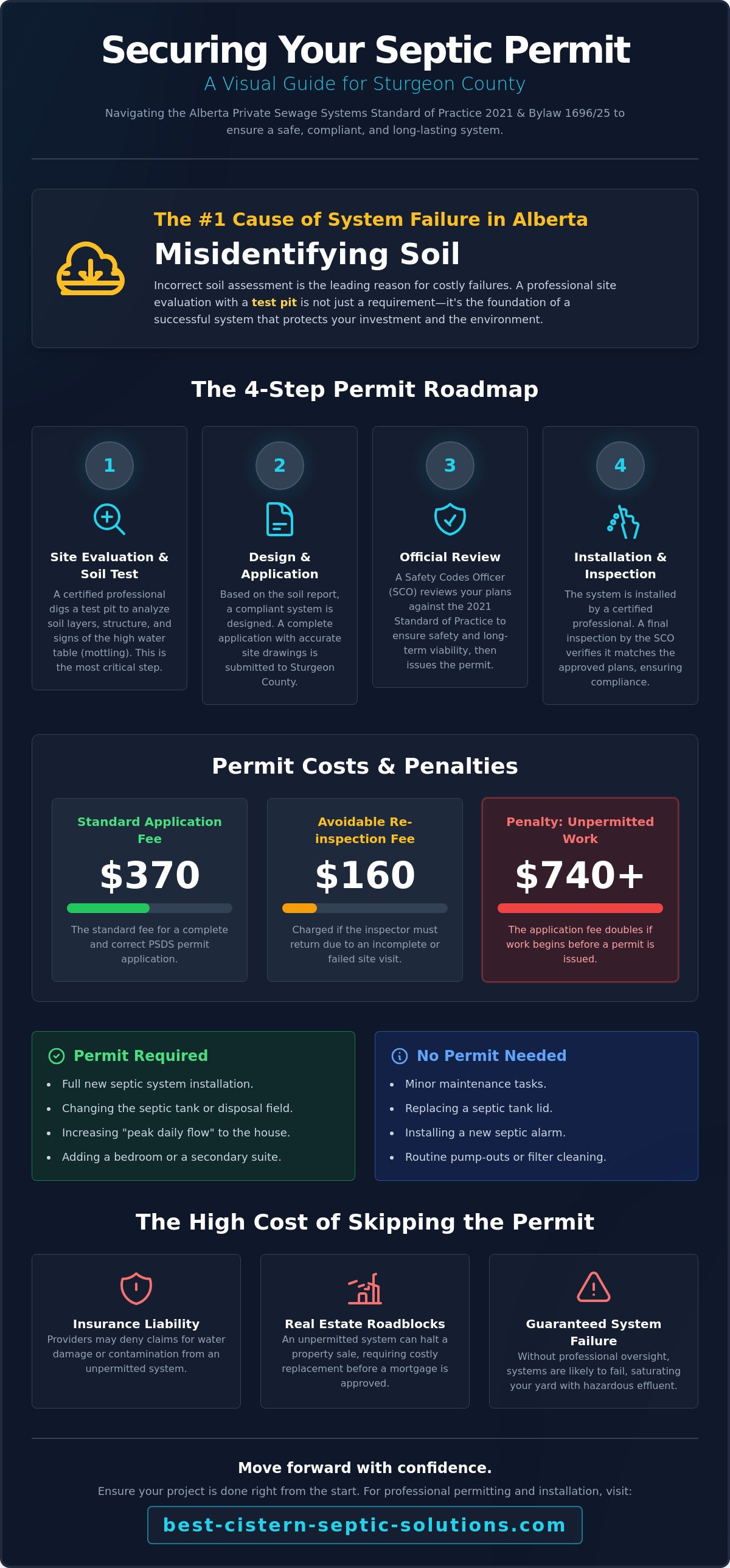
Securing a septic system permit Sturgeon County homeowners can trust means following the Alberta Private Sewage Systems Standard of Practice 2021. Skipping this step carries heavy consequences that can haunt a property owner for years. If the county discovers unpermitted construction, the standard $370.00 application fee doubles immediately as a penalty. Beyond fines, unpermitted systems create significant liabilities:
- Insurance Liability: Many providers won't cover water damage or environmental contamination caused by an unpermitted system.
- Real Estate Roadblocks: You'll likely have to uncover and inspect or even replace the system before a bank approves a buyer's mortgage during a sale.
- System Failure: Without a permit and inspection, there's no professional verification that your system won't fail and saturate your yard with effluent.
When is a Permit Legally Required?
Not every fix requires a trip to the county office, but most substantial projects do. You must obtain a permit for a full installation or significant septic system repairs that involve changing the tank or the disposal field. Sturgeon County specifically triggers permit requirements when you increase the "peak daily flow" of the house. This usually happens if you're adding a bedroom or a secondary suite, as these additions put more strain on the system's capacity. Minor tasks, like replacing a tank lid or installing a septic alarm, typically fall under maintenance and don't require a full PSDS permit.
The Role of the Safety Codes Officer
The Safety Codes Officer (SCO) acts as the final gatekeeper for your project’s safety. They review your technical drawings and soil reports to confirm the design aligns with the 2021 Standard of Practice. Their authority ensures that the system won't fail prematurely due to poor planning or unsuitable soil conditions. While the SCO provides the oversight, the responsibility for a compliant design rests with the applicant. Professional designs lead to first-pass approvals, saving you from the frustration of repeated rejections and the $160.00 re-inspection fees that come with failed site visits.
The Site Evaluation: Preparation for Your Sturgeon County Permit
Every successful installation begins beneath the surface. You cannot obtain a septic system permit Sturgeon County officials will approve without a verified site evaluation. This process isn't just a hurdle; it's a diagnostic tool that ensures your property can safely handle wastewater for decades. During this phase, a certified professional examines the landscape, identifies potential obstacles like high water tables, and determines exactly how the soil will interact with your system’s effluent. This data forms the backbone of your application, proving that your proposed design won't lead to groundwater contamination or surface ponding.
The most critical part of this evaluation is the soil profile. We typically use a backhoe to dig a test pit, allowing us to see the distinct layers of earth. We look for "mottling," which are spots of color that indicate where the water table sits during the wettest parts of the year. In many parts of Sturgeon County, homeowners face high water tables that require specialized designs. If we discover saturated soil near the surface, a standard trench might not work. Instead, we may recommend a raised mound or a specialized treatment plant to maintain the integrity of your property’s environment. This proactive assessment prevents the stress of a system failure after your home is already occupied.
Soil Testing and Percolation Rates
Soil texture determines your "loading rate," which is the amount of effluent the ground can absorb daily. Sand allows water to move quickly, while heavy clay requires a much larger septic field installation to prevent backups. Sturgeon County inspectors strictly follow the Alberta Private Sewage Systems Standard of Practice to ensure these rates match your household’s water usage. If you have a large family, your soil must be able to keep up. If you're unsure about your soil's capacity, our team can provide detailed septic solutions to help you plan accurately before you apply for your permit.
Setback Distances and Property Lines
Your site drawing must account for more than just the soil. The province mandates specific setback distances to protect your family and the community. Your disposal field must be at least 15 meters from any water well and 5 meters from your house. Sturgeon County’s rolling hills and frequent sloughs add complexity to these measurements. We must ensure the system is far enough from seasonal runoff zones to prevent environmental damage. Your "as-built" drawings, which you submit after the job is done, must reflect these distances with 100% accuracy to pass the final inspection and close out your permit file.
Common Pitfalls in the Septic Permit Application Process
Securing a septic system permit Sturgeon County officials will approve on the first try requires meticulous attention to detail. One of the most frequent misconceptions we encounter is the belief that a general building permit for a new home automatically includes the wastewater system. In reality, these are separate applications under different safety codes. If you wait until your home's framing is complete to think about your septic permit, you may find your project stalled by technical requirements you haven't yet addressed. This separation ensures that the critical infrastructure protecting your family’s health receives its own dedicated professional review.
Inaccurate site drawings remain the number one reason for permit delays in Sturgeon County. A drawing that lacks precision—omitting the exact location of a neighbor's well or failing to mark a seasonal runoff path—will result in an immediate request for revisions. While some homeowners attempt a "DIY design" to save on initial costs, the technical complexity of the 2021 Standard of Practice makes this a high-risk strategy. A design that doesn't perfectly match the soil profile identified in your site evaluation will be rejected, potentially costing you double in application fees if construction begins before the permit is finalized. We focus on getting these details right the first time to provide you with a smooth, predictable approval process.
Inaccurate Water Usage Estimates
System sizing is dictated by the potential occupancy of the home, not your current family size. In the eyes of the Safety Codes Officer, the number of bedrooms determines the daily sewage volume. If you have a five-bedroom home but only two residents, you must still design and permit a system capable of handling the full five-bedroom capacity. You must also disclose plans for future secondary suites or detached shops with plumbing during the application phase. Undersizing a system to save on installation costs is a common mistake that leads to system saturation, foul odors, and eventual field failure.
Ignoring Seasonal Timing for Inspections
The Alberta climate plays a decisive role in the permitting timeline. Frozen ground typically halts site evaluations and final inspections from late November through early April. We recommend that homeowners initiate their site assessments between May and September to ensure the soil can be properly analyzed. While winter installations are technically possible, they often require specialized permit terms and extra equipment to manage the frost. Planning your application during the warmer months ensures that your system’s integrity is verified under ideal conditions, safeguarding the longevity of your investment.
Step-by-Step Guide to Applying for Your Private Sewage Permit
Securing a septic system permit Sturgeon County officials will approve requires a logical, sequential approach. This process ensures that every component of your wastewater infrastructure meets the 2021 Standard of Practice before any soil is moved. By following these professional steps, you transform a complex regulatory requirement into a manageable project plan. We recommend starting this process at least 30 days before your intended construction date to account for review times and potential design adjustments.
- Step 1: Hire a Certified Private Sewage Installer. Professional installers possess the required certificate of competency to conduct the site evaluation and sign off on technical designs.
- Step 2: Complete the Sturgeon County PSDS Permit Application. This form identifies the property owner, the legal land description, and the specific type of system you intend to install.
- Step 3: Submit the Technical Design and Evaluation Report. You must include the soil profile data and a detailed site drawing that shows all required setback distances.
- Step 4: Pay the Permit Fee. Refer to the 2026 Fees and Charges Bylaw 1696/25 for current rates. Remember that construction started without a permit results in an automatic double-fee penalty.
- Step 5: Receive the Permit. Once the Safety Codes Officer verifies your design, you'll receive the legal authorization to begin the installation phase.
If you're ready to begin your project with a team that understands every nuance of the local regulations, you can contact our specialists for a professional site assessment today.
The Final Inspection and Approval
The most critical phase of the permitting journey occurs just before the job is finished. Sturgeon County requires an "open-hole" inspection, which means the Safety Codes Officer must view the system while the pipes and tank are still visible. During this visit, the inspector verifies the pipe slope to ensure proper effluent flow and checks the tank level to prevent future structural stress. They also confirm that all materials used match the high quality specified in your original application. Once they're satisfied, they'll issue the final sign-off, often referred to as a "Permit to Operate," which legally closes your file.
Documentation You Must Keep
Your responsibility doesn't end once the soil is backfilled. You must retain a copy of your final "as-built" drawing, which shows the exact location of every component as it was actually installed. This document is an invaluable resource for future septic maintenance and troubleshooting. In rural Alberta, having a complete permit history and an accurate site map is a significant asset during property sales. Prospective buyers and home inspectors will ask for these records to verify the system’s integrity. We suggest keeping a dedicated folder with your permit number, inspection dates, and the contact information of your certified installer to safeguard your home’s health for the long term.
Professional Permitting and Installation with Best Cistern Septic Solutions
Managing the various requirements for a septic system permit Sturgeon County demands can feel like a full-time job for a homeowner. We act as your Trusted Specialist, handling the technical red tape so you can focus on the other aspects of your home build or renovation. Our team doesn't just install hardware; we provide complete Septic Solutions that start with a deep understanding of the Alberta Private Sewage Systems Standard of Practice 2021. We ensure every step, from the initial soil profile to the final open-hole inspection, meets or exceeds provincial safety codes to protect your household's safety.
Our deep experience in this region is a significant advantage for local property owners. We've spent years working with Sturgeon County’s unique environmental challenges, such as the heavy clay deposits and variable water tables found in many local subdivisions. We maintain a professional, transparent relationship with local Safety Codes Officers, which helps streamline the approval process. This local insight means we anticipate potential issues before they become costly delays or result in the double-fee penalties mentioned in the 2026 Fees and Charges Bylaw. We take pride in protecting your property’s integrity from the very first day of the project.
Why a Professional Design Matters
A well-engineered design serves as the best insurance policy for your home’s long-term health. We take a methodical approach to every site evaluation, analyzing soil saturation indicators to ensure your system can handle daily effluent volumes without risk of surface ponding. Our designs prevent premature failure, which in turn protects your family from the hazards of environmental contamination. When we manage your project, we handle the entire journey to ensure a positive outcome:
- Detailed site assessments and professional soil analysis
- Precision drafting of technical site drawings and setback maps
- Direct coordination with county permit offices for first-pass approval
- Sophisticated installation and final backfill with as-built documentation
Get Started on Your Sturgeon County Property
Don't wait until construction is already underway to address your wastewater needs. A proactive site visit before you finalize your home's layout can save thousands in potential redesign costs. We offer peace of mind through diligent diagnostic services and professional designs that turn a complex legal requirement into a secure investment in your home's longevity. If you're ready to secure the septic system permit Sturgeon County requires for a safe, sanitary, and legally compliant home, request a professional consultation and quote from our team today.
Secure Your Home’s Future with Professional Permitting
Navigating the 2026 local regulations doesn't have to be a source of stress for your household. You now understand that a successful septic system permit Sturgeon County application relies on a precise soil profile and a design that respects every required setback distance. These steps aren't just bureaucratic requirements; they're essential protections for your property’s environment and your family’s safety. By strictly following the Alberta Private Sewage Systems Standard of Practice 2021, you ensure your infrastructure remains a reliable asset for decades to come. This professional approach prevents the costly failures that can arise from misidentified soil or improper drainage planning.
As Certified Private Sewage Installers, we bring deep expertise in provincial standards directly to your property. We handle the technical details and county coordination so you can enjoy the peace of mind that comes with a pristine, compliant system. Our team is ready to provide the grounded, professional solutions your Sturgeon County property deserves. Let Best Cistern Septic Solutions Handle Your Sturgeon County Permit and Installation today to begin your journey toward a worry-free home. We take pride in building systems that protect your investment and your community.
Frequently Asked Questions
How long does it take to get a septic permit approved in Sturgeon County?
Most permit applications are reviewed and processed within 10 to 15 business days. This timeline can extend to 20 days during the peak summer construction months or if the Safety Codes Officer requires revisions to your site drawings. We recommend submitting your application at least three weeks before your planned start date to ensure your project stays on schedule and avoids seasonal frost delays.
Can I install my own septic system in Sturgeon County without being a certified installer?
Yes, homeowners can legally apply for a permit and perform the installation themselves if they own and reside in the single-family dwelling. However, the system must still meet 100% of the requirements in the Alberta Private Sewage Systems Standard of Practice 2021. Most homeowners find that hiring a certified specialist provides essential peace of mind, as professional installers ensure the system passes the mandatory open-hole inspection on the first attempt.
Do I need a new permit if I am only replacing my effluent pump or septic alarm?
No, you don't need a new septic system permit Sturgeon County application for minor maintenance like replacing a pump or an alarm. These tasks are considered "like-for-like" repairs that don't change the system's design or capacity. You only need a permit when you're installing a new tank, expanding a disposal field, or making significant modifications that alter how the wastewater is treated or discharged on your property.
What happens if my soil fails the percolation or site evaluation test?
A "failed" soil test simply means the ground cannot support a traditional trench system; it doesn't mean you cannot build on your property. If the soil loading rates are too low for a standard field, we pivot the design to a more sophisticated solution like a raised sand mound or a treatment plant. These alternative systems are specifically engineered to provide safe, sanitary wastewater treatment even in challenging clay or high-water conditions.
How much does a septic permit cost in Sturgeon County for 2026?
According to the 2026 Fees and Charges Bylaw 1696/25, a standard Private Sewage Disposal System permit costs $370.00. This fee covers the initial application review and the required site inspections. If the installation fails an inspection and requires a follow-up visit, a $160.00 re-inspection fee applies. It's vital to wait for your permit approval, as construction started without one results in an automatic double-fee penalty of $740.00.
Does a septic permit expire if I don’t start the installation immediately?
Yes, permits generally expire if the work doesn't begin within 90 days of issuance or if construction is suspended for more than 120 days. Sturgeon County adheres to these provincial timelines to ensure that the site conditions and soil stability haven't changed since the original evaluation. If your permit expires, you'll need to re-apply and pay the $370.00 fee again to ensure your project remains legally compliant with local safety codes.
Is a permit required for a holding tank versus a full septic field?
Yes, both systems require legal authorization, but the permit type and cost vary. A holding tank requires a Plumbing Permit, which costs $160.00 under the current 2026 fee schedule. A full septic field or mound requires the more comprehensive $370.00 Private Sewage permit. Regardless of the system type, the installation must be professionally planned to protect your home’s health and prevent environmental contamination in your neighborhood.
Who is responsible for scheduling the final inspection—the homeowner or the installer?
The individual who applied for the permit is legally responsible for scheduling the inspection. If a certified contractor pulled the permit on your behalf, they will coordinate the "open-hole" visit with the Safety Codes Officer. If you applied as a homeowner, you must contact the county yourself before backfilling any part of the system. This inspection verifies that the pipes, tank, and field materials match the approved professional blueprint exactly.


