
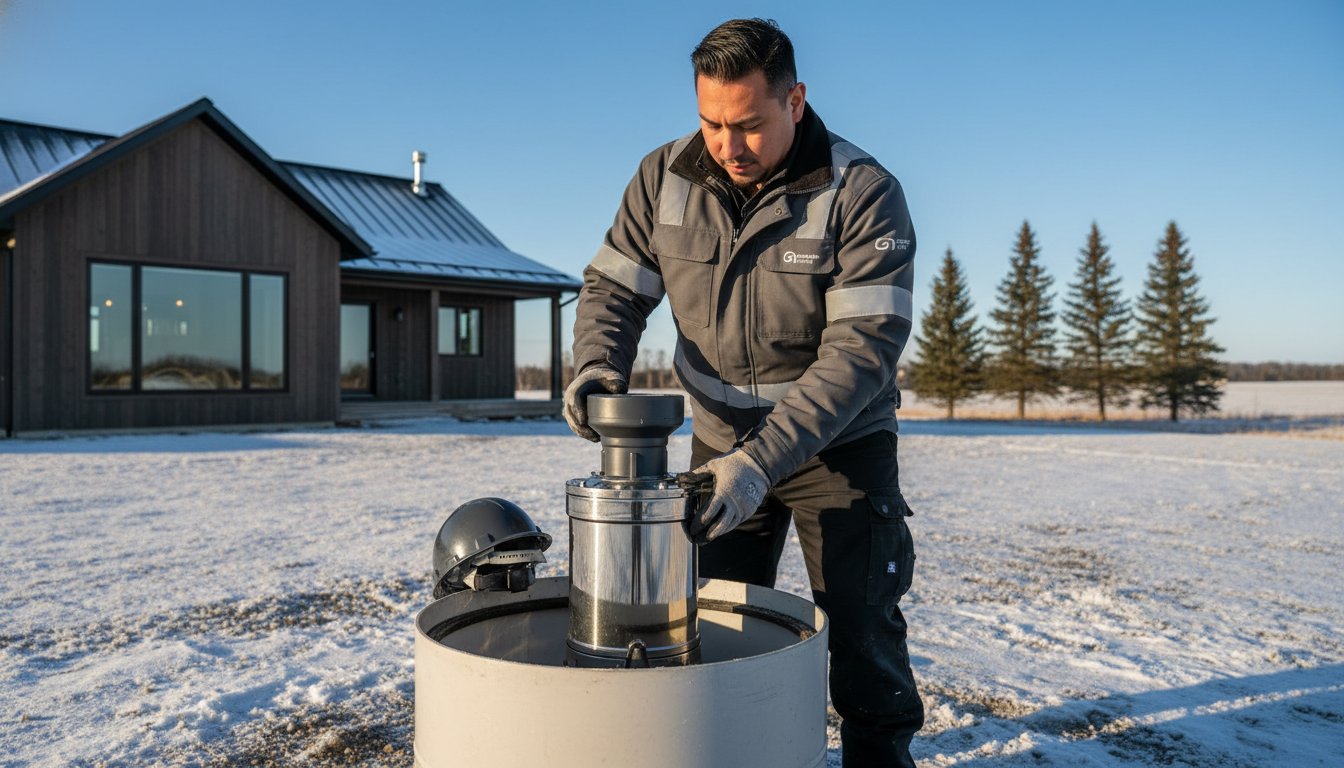
On a Tuesday morning in mid-January, a homeowner in Spruce Grove discovers their basement drain is gurgling just as the outdoor temperature hits -32°C. This scenario is a common reality in Parkland County when a critical component fails during our harshest weather. Proactive effluent pump replacement is the most effective way to safeguard your property from the stress of raw sewage backups and the high costs of system failure. You likely already view your septic system as a vital investment in your home's health, and you deserve to feel confident that it will perform when you need it most.
This guide provides the professional clarity you need to navigate the selection and installation process with ease. We'll help you distinguish between effluent, grinder, and sewage pumps while ensuring your new equipment is perfectly sized for your specific household needs. By following these steps, you'll protect the long-term integrity of your septic field and enjoy the peace of mind that comes from a reliable, professionally maintained system.
Key Takeaways
- Understand why the effluent pump is the heart of your septic system and how it protects your property by managing treated wastewater flow.
- Identify critical warning signs of failure, such as septic alarm activations or unusual mechanical noises, before they lead to costly property damage.
- Learn how to calculate "Total Dynamic Head" to ensure you select a replacement pump with the correct horsepower for Alberta’s specific environmental demands.
- Follow a professional, step-by-step approach to effluent pump replacement that prioritizes safety, proper ventilation, and long-term mechanical integrity.
- Discover proactive maintenance strategies that safeguard your home’s health and extend the lifespan of your new equipment through regular system care.
Understanding the Role of Your Effluent Pump in Alberta Systems
The effluent pump serves as the mechanical heart of your rural home’s wastewater management. In the Edmonton region, these units typically power "pump-to-gravity" or "pressure-distribution" setups. Unlike a standard gravity system, these configurations rely on a pump to move treated liquid from the second compartment of your septic tank to the dispersal area. This liquid, known as effluent, is the clarified wastewater that remains after solids have settled in the primary tank. Because Effluent sewer systems are designed to handle only liquids, the pump must be specifically engineered for this task. It acts as a final gatekeeper, ensuring that only filtered water reaches your septic field installation. Without a functional pump, the entire system stalls, leading to backups or environmental contamination.
Alberta’s climate adds a layer of complexity to these systems. Frost lines in the Edmonton region often reach depths of 2.5 meters during a standard winter. This reality requires pumps to be housed in insulated risers or buried at specific depths to prevent freeze-ups. Local soil types, ranging from heavy Parkland clay to the sandier pockets in Leduc County, also dictate how hard a pump must work to distribute liquid. When these environmental pressures eventually wear down the hardware, a professional effluent pump replacement becomes a necessary investment to protect your property's sanitation.
Effluent Pump vs. Sewage Ejector: What is the Difference?
The primary difference lies in the impeller design. Effluent pumps use high-head impellers meant to push liquid over long distances or uphill. They aren't built to handle solids larger than 1.25 centimeters. In contrast, sewage ejectors grind or pass large solids from the house to the tank. Installing a sewage ejector where an effluent pump belongs often agitates the settling tank. This pushes raw solids into the drainfield and causes a premature need for septic system repair. You can identify your system by checking the discharge pipe size; effluent lines are usually 3.8 to 5 centimeters in diameter.
Why Effluent Pumps Fail in Parkland and Leduc Counties
Local environmental factors significantly impact pump longevity. In Parkland and Leduc Counties, groundwater often carries high mineral concentrations, including calcium and iron. These minerals create scale buildup on pump seals, eventually allowing moisture into the motor housing. Another major factor is the electrical environment. Alberta’s summer storms frequently cause power surges that can fry internal capacitors. While a high-quality pump is a robust investment, most residential units have a predictable lifespan of 7 to 10 years. Planning for an effluent pump replacement within this window prevents the stress of a sudden failure during a deep freeze or a heavy rain event.
- Mineral Scaling: Common in Leduc groundwater, leads to seal failure.
- Electrical Surges: Alberta's 2023 storm season saw record lightning strikes, damaging many rural control panels.
- Component Age: Most mechanical seals and floats degrade after 2,500 to 3,000 cycles.
5 Signs You Need an Effluent Pump Replacement
Detecting a failing pump before a sewage backup occurs is a vital investment in your property's integrity. While some signs are obvious, others require a keen eye. Your pump is the heart of your wastewater system, and its failure can lead to costly repairs if ignored.
- Septic Alarm Activation: Most modern systems feature a dual-light or sound system. A flashing red light often indicates a high-water event, suggesting the pump can't keep up. A steady, piercing tone usually signals a total pump failure.
- Unusual Noises: A healthy pump hums quietly during its cycle. If you hear rhythmic grinding, the internal bearings are likely failing. Complete silence during a high-water event often means the motor has seized or lost electrical continuity.
- Slow Drainage: If your sinks and toilets move slowly even after a professional septic tank pumping within the last 90 days, the pump isn't moving wastewater to the field effectively.
- Surface Water: Puddles or unusually lush, vibrant green grass over your septic field are red flags. This indicates the field is saturated because the pump is delivering water at incorrect intervals or volumes.
- Electrical Issues: A pump that consistently trips its dedicated 15-amp or 20-amp breaker is drawing too much current. This is a classic sign of a dying motor or a short circuit within the housing.
The "Float Test": Is it the Pump or the Switch?
You can often determine if an effluent pump replacement is truly necessary by checking the float switch. Use a long PVC pipe or rake handle to gently lift the float while the power is on. If the pump kicks in immediately, the motor is likely fine, but the switch has failed. Replacing a C$60 float switch is a far more manageable solution than a C$700 pump replacement. In the cramped septic chambers common in rural Edmonton, tethered floats often get snagged on the walls. Vertical floats offer more reliable operation in these tight spaces because they move straight up and down on a stationary rod.
When to Call a Professional for Diagnostics
Septic systems contain hydrogen sulfide and methane. These gases are toxic and can be fatal within minutes. You should never enter a septic tank or lean deep into the manhole. Electrical testing in a wet, corrosive environment requires specialized multimeters and insulation testers to prevent dangerous shocks. Best Cistern Septic Solutions uses these professional tools to validate the amp draw and winding resistance of your motor. This methodical approach ensures we only recommend a full effluent pump replacement when the mechanical integrity of the system is truly compromised, providing you with long-term peace of mind.
Choosing the Right Replacement Pump for Your Septic System
Selecting a unit for your effluent pump replacement requires more than just matching the label on your old machine. Most residential systems in Sturgeon County and Parkland County utilize a 1/2 HP pump as the baseline standard. This power level provides the necessary torque to move liquid through 2-inch discharge pipes without over-pressurizing the system. You must account for Total Dynamic Head (TDH) during the selection process. TDH combines the vertical lift, the height from the tank bottom to the highest point in the pipe, and the friction loss caused by the length and diameter of the piping. A pump that cannot overcome the TDH will fail to deliver effluent to the field, leading to a backup.
Material choice directly impacts how long your investment lasts. While thermoplastic housings resist corrosion, heavy-duty cast iron is superior for heat dissipation. Alberta's effluent can fluctuate in temperature during heavy use, and cast iron prevents the motor from warping during long cycles. For homes with pressure distribution fields, the Gallons Per Hour (GPH) rating is the most critical metric. The pump must deliver enough volume to distribute effluent evenly across the entire field. This ensures no single area becomes oversaturated, protecting the integrity of your soil.
Sizing the Pump to Your Septic Field
Installing a pump that's too powerful can be as damaging as choosing one that's too weak. High-velocity flow can scour the biological mat in your drainage field or cause internal pipe erosion. We analyze your household's daily wastewater volume and the original Alberta Standard of Practice design specs for your specific site. Matching these variables ensures the effluent pump replacement maintains the delicate balance of your soil's absorption rate and prevents surface breakouts.
Top Features to Look for in a Replacement Pump
High-quality pumps feature dual-seal technology. This design uses two mechanical seals to prevent liquid from entering the motor housing, which is vital in areas with high sediment levels. Thermal overload protection is another non-negotiable feature. It acts as a safety switch, cutting power if the motor exceeds safe operating temperatures. This prevents permanent damage during unexpected continuous run cycles. Always verify the warranty terms before purchase. A 3-year manufacturer warranty is the benchmark for professional-grade units in North Central Alberta, providing peace of mind for your home infrastructure.

How to Replace an Effluent Pump: A Step-by-Step Overview
Replacing an effluent pump requires a methodical approach to ensure the long-term health of your home's wastewater system. Safety is the first priority. Before opening the access lid, turn off the dedicated breaker at the main electrical panel. Septic chambers can collect hazardous gases; leave the lid open for at least 15 minutes to allow for proper ventilation. Always wear heavy-duty waterproof gloves and eye protection to guard against pathogens found in household effluent.
Once the area is safe, disconnect the discharge pipe. Most modern systems in the Edmonton area use a union joint, which allows you to unscrew the pipe by hand or with a pipe wrench. If your system lacks a union, you will need to cut the PVC pipe about 12 inches above the pump. When you are ready to remove the old unit, use a stainless steel chain or a dedicated pull rope. Never lift the pump by its electrical power cord, as this often breaks the watertight seal on the motor housing and ruins the unit instantly.
Lower the new pump into the chamber and ensure it sits on a level surface. Stability is vital for preventing vibration damage. After reconnecting the plumbing, fill the tank with a garden hose to test the system. Watch the float rise to confirm the "on" cycle triggers correctly and listen for the "off" cycle once the water level drops. This simple test confirms your effluent pump replacement is successful and your home is protected from potential backups.
Critical Tools and Materials Needed
Successful effluent pump replacement depends on using the right materials for a wet environment. You must use waterproof wire nuts and heat-shrink tubing for all electrical connections. Standard electrical tape will fail in the high-moisture atmosphere of a septic tank, leading to short circuits. You should also replace the check valve during every pump swap. A new check valve ensures that once effluent is pumped out, it doesn't flow back into the tank, which prevents the motor from working harder than necessary. Keep a PVC saw and primer on hand for any required pipe modifications.
Common DIY Pitfalls to Avoid
One of the most frequent errors is setting an incorrect float tether length. If the tether is too short, the pump will "short cycle," turning on and off rapidly. This creates excessive heat and can burn out a motor in less than 12 months. Conversely, a tether that is too long might allow the float to get stuck against the chamber wall, causing the pump to run dry. Additionally, homeowners often forget to clean the bottom of the pump chamber. Removing accumulated sediment prevents debris from entering the new impeller, which preserves the mechanical integrity of your investment.
Ensuring Long-Term Reliability After Your Pump Replacement
Completing an effluent pump replacement marks a significant step in protecting your property's sanitation system. To ensure this investment lasts its full 10 to 15 year lifespan, you must commit to a consistent maintenance rhythm. We recommend a visual inspection of the pump chamber every 12 months to check for sludge buildup or float interference. This proactive approach prevents the pump from running dry or burning out prematurely. A steady maintenance schedule transforms a reactive emergency into a manageable, predictable home care task.
A critical part of this routine is regular septic tank maintenance, which involves pumping the primary solids tank every 3 to 5 years. When the primary tank is neglected, solids overflow into the second chamber, forcing the pump to work harder against thick debris. In Leduc County, winterization is another non-negotiable task. You should ensure discharge lines are buried below the 1.2-meter frost line or equipped with heat tape to prevent ice blockages during Edmonton's -30°C cold snaps. Finally, always treat your septic alarm as a priority. If the light or buzzer activates, it indicates a high-water event that requires immediate attention before wastewater backs up into your basement.
The Importance of Clean Effluent
The mechanical components of your pump are designed to handle liquid, not solid waste. Reducing the intake of fats, oils, and grease (FOG) is vital because these substances solidify as they cool, coating the pump’s sensors and shortening its operational life. Additionally, installing a lint filter on your washing machine discharge line prevents synthetic fibers from tangling around the pump’s impeller. Effluent quality serves as the primary driver of pump longevity.
Professional Solutions for Peace of Mind
Best Cistern Septic Solutions provides turn-key effluent pump replacement and testing to ensure your new system meets all Alberta Private Sewage Systems Standard of Practice requirements. A professional inspection following a major component replacement offers a baseline for future performance; it also confirms that all electrical connections are watertight and secure. Our team focuses on the details that safeguard your family’s health and the integrity of your land. Schedule your effluent pump diagnostic or replacement with our Parkland County experts today.
Secure Your Home’s Septic Health and Peace of Mind
Your septic system represents a significant investment in your property’s long-term functionality. Recognizing early warning signs like persistent alarms or unusual cycles prevents costly field damage before it starts. By choosing the correct pump for Alberta’s unique climate and ensuring a professional installation, you protect the sanitary integrity of your household. Best Cistern & Septic Solutions has served homeowners across Parkland, Leduc, and Sturgeon Counties for over 10 years. Our team specializes in rural Alberta septic field integrity, providing the technical expertise required for a seamless effluent pump replacement.
We believe in transparency and thoroughness. Our technicians perform comprehensive diagnostics to ensure you only replace components that are actually broken, saving you unnecessary expenses. Since 2014, we've focused on delivering manageable solutions that remove the stress of infrastructure maintenance. You deserve a system that works silently and reliably in the background. If you suspect your pump is struggling, reach out to a trusted specialist who understands the specific needs of our local environment.
Get Expert Effluent Pump Replacement in Parkland County
Taking proactive steps today ensures your family enjoys a safe and pristine home environment for years to come.
Frequently Asked Questions
How much does it cost to replace an effluent pump in Alberta?
Professional effluent pump replacement in Alberta typically costs between C$700 and C$1,500 including parts and labour. The pump unit itself usually ranges from C$400 to C$900 depending on the horsepower and brand. Investing in a high-quality pump protects your home's sanitary integrity and prevents much more expensive repairs to your septic field later on.
Can I replace my septic effluent pump myself?
You can replace an effluent pump yourself if you're comfortable with basic plumbing and electrical wiring, but professional installation provides essential peace of mind. Handling wastewater requires strict sanitary precautions to protect your health. A specialist ensures that the float switches are set at the correct levels and that all electrical connections are 100 percent watertight to prevent future system failure.
How long should a typical effluent pump last in a rural home?
A standard effluent pump in a rural home lasts between 10 and 15 years when maintained correctly. You can reach the upper end of this lifespan by cleaning your effluent filter every 6 months to keep debris away from the motor. Systems that handle high water volumes or lack proper filtration might see a pump fail in as little as 5 years.
What is the difference between an effluent pump and a grinder pump?
An effluent pump moves treated liquid waste after solids have settled in the tank, while a grinder pump uses metal blades to shred raw sewage. You only need an effluent pump if your system already has a septic tank to capture solids. Grinder pumps are typically reserved for homes that must pump waste uphill to a municipal sewer line or a specialized treatment plant.
Why is my septic alarm still going off after I replaced the pump?
Your septic alarm might stay on because the liquid level hasn't dropped below the alarm float or because the float switch is stuck in the up position. Check that the pump is receiving power and that the discharge pipe isn't blocked or frozen. If the pump runs but the water level doesn't move, you might have a clogged distribution pipe or a saturated drain field.
What size effluent pump do I need for a standard 3-bedroom home?
A standard 3-bedroom home in the Edmonton area usually requires a 1/2 horsepower pump capable of moving 150 to 200 litres per minute. This size provides the necessary force to move liquid from your pump chamber to the disposal field. We calculate the exact size based on your total dynamic head, which accounts for the elevation change and the friction in your pipes.
Does a new effluent pump come with a float switch included?
Many professional-grade effluent pumps are sold as manual units, meaning the float switch is a separate component you must purchase. We recommend using a piggyback float switch because it allows for easier maintenance. If the switch fails in the future, you can replace it for roughly C$100 without needing a full effluent pump replacement, saving you significant money and time.
Can cold Alberta winters cause my effluent pump to fail?
Extreme Alberta winters with temperatures hitting -30°C can cause pump failure if your discharge lines aren't buried below the frost line or properly insulated. If a line freezes, the pump will run continuously until the motor burns out. Ensuring your pipes have a 2 percent slope allows the water to drain away completely between cycles, protecting your mechanical system from ice damage.


