
What if your septic system did more than just hide waste; what if it actually improved the soil health of your Alberta acreage? Many homeowners view their wastewater setup as a hidden liability, often worrying about the day it might fail and contaminate the family well. It is a valid concern, especially when you are trying to decipher the complex Alberta Private Sewage Systems Standard of Practice (SOP) 2021. By choosing eco-friendly septic systems Alberta residents can rely on, you turn a potential risk into a long-term property asset that provides true peace of mind.
You deserve a solution that protects your family's health without the constant worry of system failure or municipal fines. This 2026 guide will show you exactly how advanced treatment technologies safeguard your groundwater and enhance your property value. We will explore high-performance options like aerobic treatment units and natural filtration media that ensure your system remains efficient for over 25 years. From understanding permit fees in your municipality to selecting the right soil-based treatment, we provide the clarity you need to make an informed, sustainable choice for your home.
Key Takeaways
- Understand the transition from traditional gravity systems to advanced Type 2 treatment plants that act like a mini municipal facility for your backyard.
- Identify why your land's soil morphology dictates the design of eco-friendly septic systems Alberta homeowners need to handle challenging clay conditions.
- Preserve the delicate microbiome of your system by identifying and removing common "septic killer" chemicals that compromise wastewater treatment.
- Learn how specialized installation techniques and high-standard repairs create a durable property asset that functions reliably for decades.
- Gain clarity on how to match advanced dispersal methods to your specific site to ensure your wastewater is safely returned to the environment.
What Defines an Eco-Friendly Septic System in Alberta?
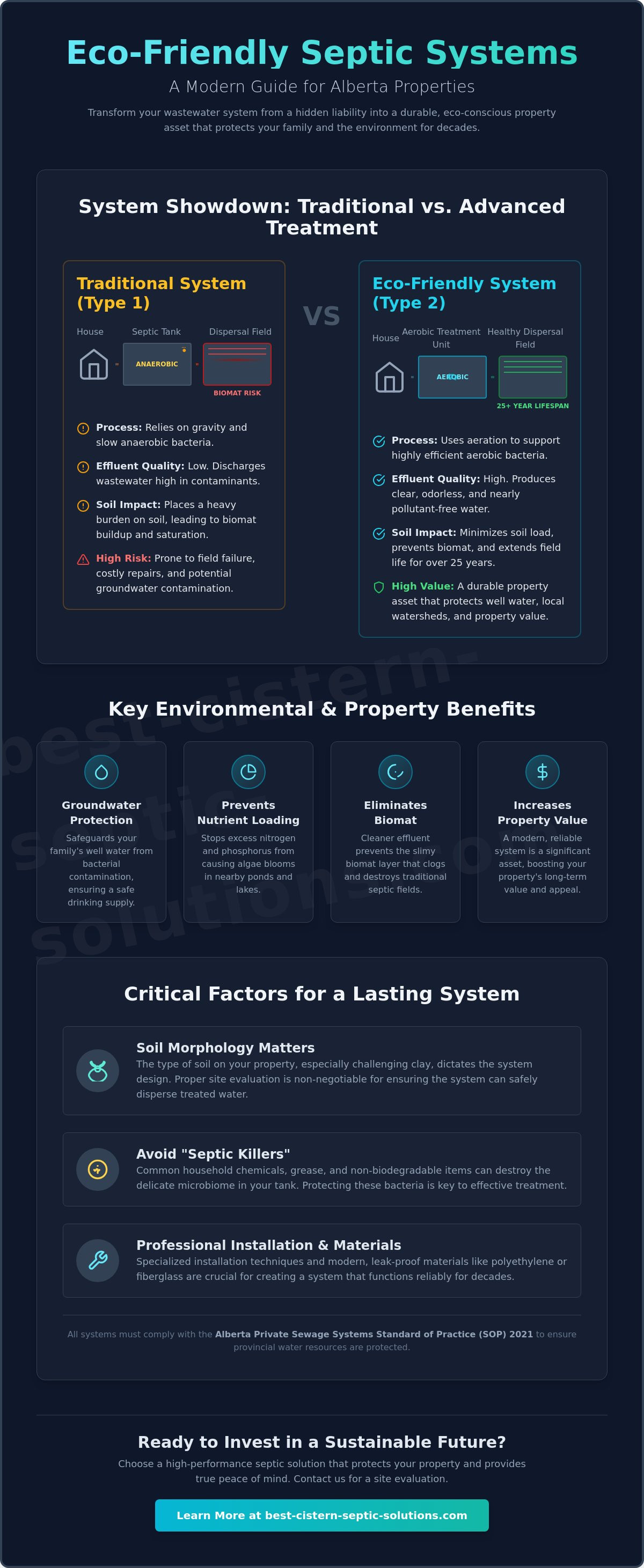
An eco-friendly septic system in Alberta is defined by its ability to treat wastewater thoroughly before it is released into the environment. While older designs simply separated solids and liquids, modern eco-friendly septic systems Alberta homeowners choose today act like miniature municipal treatment plants. These advanced systems shift the focus from simple disposal to high-level wastewater renovation. This transition is largely guided by the Alberta Private Sewage Systems Standard of Practice (SOP) 2021, which established rigorous rules for design and material quality to protect our province's water resources. These regulations apply to systems handling less than 25 cubic metres of sewage per day, ensuring that rural developments remain sustainable.
Traditional "Type 1" systems rely on gravity and anaerobic bacteria in a septic tank. These are often less efficient at breaking down contaminants, leaving the soil to finish the heavy lifting. In contrast, "Type 2" systems use advanced technology to provide secondary treatment. On-site sewage facilities that incorporate these methods ensure that the liquid leaving the tank is significantly cleaner, which directly extends the life of your drainage field and prevents soil saturation.
The Role of Secondary Treatment
Secondary treatment introduces oxygen into the wastewater to support aerobic bacteria. These organisms are much more aggressive than their anaerobic counterparts, breaking down organic matter with far greater speed and efficiency. This process drastically reduces Total Suspended Solids (TSS) and Biological Oxygen Demand (BOD), which are the primary indicators of wastewater strength. By the time the effluent leaves the treatment unit, it is clear and odorless. Type 2 effluent is the gold standard for eco-protection because it enters the dispersal field nearly clear and free of most organic pollutants.
Environmental Benefits for Alberta Landscapes
For properties in Parkland and Leduc County, groundwater protection is a top priority. High-level treatment prevents nutrient loading, specifically the buildup of nitrogen and phosphorus, which can seep into local watersheds and cause algae blooms in nearby ponds or lakes. Beyond the broader environment, these systems protect your specific property. They safeguard your well water from bacterial contamination and preserve the integrity of the surrounding vegetation. One of the most practical benefits is the reduction of "biomat" buildup. Biomat is a slimy layer of bacteria that forms in the soil of a septic field; when it becomes too thick, the field fails. Because eco-friendly systems deliver cleaner water, this buildup is minimized, ensuring your system remains a durable asset for decades.
Advanced Treatment Technologies: Aerobic vs. Traditional Systems
Traditional gravity systems have served rural Alberta homeowners for decades. They offer a lower initial investment but place a significant burden on your soil to filter out contaminants. Over time, this reliance can lead to soil saturation and potential groundwater issues if the land cannot keep up with the waste load. To combat these risks, many acreage owners are now choosing eco-friendly septic systems Alberta professionals recommend: Aerobic Treatment Units (ATUs). These units function like a mini municipal treatment plant in your backyard, using forced oxygen to accelerate waste breakdown before it ever reaches your dispersal field.
The choice of system is not just about preference; it is about meeting the rigorous requirements of the Alberta Private Sewage Systems Standard of Practice. This regulatory framework ensures that whether you choose a simple tank or a complex treatment plant, the environment remains protected. Modern materials also play a vital role in this protection. While concrete was once the default, high-density polyethylene and fiberglass are gaining ground because they offer superior watertight integrity and a lower lifecycle carbon footprint. A leak-proof tank is your first line of defense against environmental contamination.
How ATUs Work in the Alberta Climate
A common myth suggests that aerobic systems cannot handle our harsh prairie winters. In reality, the biological activity within an ATU generates its own heat. This constant microbial process keeps the internal temperature high enough to prevent icing in most conditions. For shallow components in North Central Alberta, we use high-grade insulation to provide an extra layer of security against deep frost. While ATUs require more frequent mechanical checks than traditional tanks, the trade-off is a much cleaner effluent that protects your property for the long term. This high-level treatment ensures that your soil remains healthy and porous for decades.
Choosing Sustainable Materials
Watertight integrity is the most critical factor for any sustainable system. Fiberglass and poly tanks are less prone to the cracking and root intrusion that can plague older concrete models. We also emphasize the importance of septic alarm installation to monitor your system's health in real time. These sensors provide an early warning for leaks or pump issues, allowing for a professional fix before a small mechanical glitch becomes a costly emergency. If you are unsure which technology fits your specific land, consulting with a specialist at Best Cistern Septic Solutions can provide the technical clarity you need to move forward with confidence.
Matching the System to Your Land: Soil and Site Selection
In Alberta, the soil is rarely a simple partner in wastewater management. The heavy, dense clay found throughout regions like Leduc and Parkland County presents a specific challenge for traditional drainage. Because clay particles are tightly packed, they don't allow water to move freely. This often leads to surface ponding or "short-circuiting" where wastewater bypasses the natural filtration process. Truly eco-friendly septic systems Alberta acreage owners rely on must be designed with soil morphology in mind. This study of soil layers helps us understand how your land "breathes" and determines its capacity to treat effluent effectively.
Understanding the environmental impacts of septic systems is the first step in realizing why soil selection is so critical. If a system is placed in an area with a high water table or near a slough, the risk of contaminating the deep aquifer increases significantly. A professional site assessment is the most eco-friendly step you can take. It replaces guesswork with data, ensuring that your system is sized and positioned to handle your household's specific needs without overwhelming the local ecosystem.
Sand Treatment Mounds vs. At-Grade Systems
When your land has high water tables or restrictive clay layers, a sand treatment mound is often the best resolution. These mounds provide the necessary vertical separation, using a layered sand filter to treat wastewater before it ever touches the native soil. In contrast, at-grade systems are ideal for the wooded areas of Strathcona County. These systems utilize the natural forest floor and its organic "duff" layer to disperse treated effluent. Both designs act as biological filters, ensuring that the water returning to the earth is safe and clean.
The Importance of Effective Setbacks
Proper placement is about more than just convenience; it is a regulatory requirement designed to protect your family and your neighbors. Strict setbacks dictate the distance your system must maintain from wells, property lines, and open water bodies like dugouts. These gaps ensure that the soil has enough time and space to complete the purification process. By respecting these boundaries, you prevent untreated nutrients from entering your drinking water supply. Ultimately, being eco-friendly starts with the right map, not just the right tank. This careful planning ensures your system remains a durable, invisible asset for your property.
Sustainable Maintenance: Extending the Life of Your Field
A septic system is more than a mechanical utility; it is a living biological environment. Maintaining the eco-friendly septic systems Alberta acreage owners invest in requires a proactive approach to protecting the delicate microbiome within the tank. This community of beneficial bacteria is responsible for breaking down solids and purifying effluent. When you introduce "septic killers" such as bleach, harsh chemical cleaners, or non-biodegradable items, you effectively stall the treatment process. This leads to poor water quality and puts your drainage field at risk of premature clogging.
Viewing septic tank maintenance as a routine environmental duty ensures your system remains a durable asset. A stressed system often provides subtle warnings before a total failure occurs. You might notice patches of unusually green, lush grass over the drainage area, or find that drains in the house are performing slower than usual. That distinct "rotten egg" smell is another clear indicator that the biological balance is off. Addressing these signs early with a professional inspection can prevent a manageable repair from turning into a full field replacement.
The Professional Inspection Schedule
We recommend a professional inspection cycle every two to three years. This schedule is far better for the environment than waiting for a visible failure to occur. A thorough evaluation involves more than just a quick look; it includes checking the integrity of baffles, testing effluent pumps, and assessing the saturation levels of the dispersal field. In Alberta, documented maintenance is also a critical factor in property value and real estate compliance. Buyers want the peace of mind that comes with a verified, well-functioning wastewater system.
Water Conservation and Septic Health
Managing the hydraulic load on your system is just as important as managing what goes down the drain. High volumes of water can push solids out of the tank and into the drainage field, causing permanent damage. Installing low-flow fixtures is a simple way to reduce this daily stress. We also advise against "slug loads," such as running five loads of laundry in a single afternoon, which can overwhelm secondary treatment units. Many rural residents are now integrating cisterns into their property design to better manage water usage and ensure a steady, manageable flow to their septic system.
The health of your property depends on the invisible work happening beneath the surface. If you have concerns about your system's performance or need to schedule a routine check, you can find professional Septic Solutions to keep your home running smoothly and safely.
Investing in the Future: The Best Cistern Septic Solutions Approach
Viewing your wastewater system as a buried liability is a common mistake for rural homeowners. At Best Cistern Septic Solutions, we frame every project as a long-term property asset. Our approach to eco-friendly septic systems Alberta families depend on focuses on durability that lasts for decades. While many contractors aim for the minimum provincial standards, we prioritize a septic field installation that exceeds those basic requirements. This commitment to quality ensures that your system remains invisible and effective, providing the peace of mind that comes from knowing your home is prepared for the next generation.
We take great pride in serving the rural communities of North Central Alberta, including Spruce Grove, Leduc, and Sturgeon. These areas have unique environmental needs and varying soil profiles that require a specialized touch. By choosing a system designed for longevity, you are not just managing waste; you are protecting the local watershed and securing your property's resale value. A robust, environmentally conscious system is a definitive professional fix that removes future worries for you and your family.
Expert Design and Compliance
Navigating the permit process in Parkland and Strathcona Counties can feel overwhelming without the right partner. We handle the technical complexities, ensuring your project complies with all local regulations from the start. Our site assessments are thorough and data-driven, confirming that your chosen system actually works for your specific soil conditions. We believe in transparent communication, moving away from technical jargon to offer clear property solutions. You will always understand the "why" behind our design choices, empowering you to feel confident in your investment.
Restoring Failing Systems
Not every problematic system requires a total overhaul. In many cases, a strategic septic system repair can save an existing field through eco-friendly restoration techniques. We specialize in upgrading old gravity systems to modern, environmentally conscious standards, often extending their lifespan by years. Whether you need an effluent pump replacement or a high-level diagnostic, our goal is to restore the mechanical integrity and safety of your household. Contact us for a professional diagnostic today to secure your property's future and ensure your wastewater management remains a reliable, long-term asset.
Secure the Future of Your Rural Property
Choosing a modern wastewater solution is an investment in your family's health and your property's long-term value. By moving beyond basic disposal to advanced treatment, you ensure your land remains a safe and sustainable environment for decades. We've discussed how the right technology, paired with a deep understanding of Alberta's unique soil profiles, creates a system that works with nature. When you prioritize eco-friendly septic systems Alberta residents can trust, you're choosing a durable asset that provides genuine peace of mind.
Our team brings specialized rural expertise to every project, ensuring full compliance with the latest provincial standards. We provide the comprehensive inspections and detailed site assessments needed for true property preservation across Spruce Grove, Leduc, and Sturgeon County. You don't have to navigate complex regulations or technical challenges alone. Secure your property’s future with a professional septic assessment from Best Cistern Septic Solutions. We look forward to helping you build a cleaner, safer home for the next generation.
Frequently Asked Questions
Are eco-friendly septic systems required by law in Alberta?
While the law doesn't use the specific term "eco-friendly," the Alberta Private Sewage Systems Standard of Practice 2021 mandates specific treatment levels based on your site's soil and location. Many properties with restrictive clay or high water tables effectively require Type 2 advanced treatment systems to meet these legal safety standards. Ensuring your system complies with provincial codes is the best way to avoid fines and protect your property's legal standing.
How much more does an aerobic treatment system cost compared to a standard tank?
Aerobic treatment systems generally involve a higher initial investment than traditional gravity tanks because they include advanced mechanical components like aerators and specialized pumps. This upfront cost is balanced by the long-term protection of your dispersal field. By delivering cleaner effluent, these systems significantly reduce the risk of soil clogging, which can save you from the much higher expense of a full field replacement in the future.
Can an eco-friendly septic system freeze during a North Central Alberta winter?
Properly designed systems are built to withstand the harsh North Central Alberta climate without freezing. The biological activity inside an aerobic treatment unit generates consistent natural heat that keeps the internal components functional. When we perform a professional installation, we also use high-grade insulation for shallow pipes and tanks to provide an extra layer of security against deep frost penetration during extreme cold snaps.
What are the best plants to grow over an eco-friendly septic field?
Shallow-rooted plants like native Alberta grasses and wildflowers are the ideal choice for covering your dispersal area. these species help manage moisture levels through transpiration without sending aggressive roots deep enough to damage your pipes. You should strictly avoid planting trees, large shrubs, or vegetable gardens over the field, as deep roots can cause structural failures and interfere with the soil's ability to filter wastewater.
How often do advanced treatment units need to be inspected compared to traditional systems?
Advanced units typically require more frequent oversight, often once or twice per year, to ensure the mechanical aerators and sensors are performing at peak efficiency. Traditional gravity systems are usually inspected on a two to three year cycle. Regular monitoring of eco-friendly septic systems Alberta homeowners install is vital for maintaining the high-level treatment that protects your groundwater and ensures the system remains a durable asset.
Does an eco-friendly septic system increase my property value in Parkland County?
A modern, high-performance septic system is a major selling point for rural properties in Parkland County. Savvy buyers recognize that a Type 2 treatment plant offers superior environmental protection and a lower risk of future failure compared to aging gravity systems. Providing a documented history of professional maintenance and compliance with provincial standards gives potential buyers the peace of mind they need to invest in your home.
What household products should I avoid to protect my septic system's biological balance?
You should avoid using harsh chemical drain cleaners, high concentrations of bleach, and antibacterial soaps that can destroy the beneficial bacteria in your tank. These microbes are essential for breaking down organic waste. It's also important to keep non-biodegradable items, solvents, and excessive fats or oils out of your drains. Protecting this biological environment ensures your system continues to function as a reliable, self-sustaining utility.
Can I use a garbage disposal with an eco-friendly aerobic system?
Using a garbage disposal is generally discouraged because it introduces a heavy load of organic solids and grease into the treatment tank. These extra solids can overwhelm the aerobic process and lead to more frequent maintenance needs or premature field saturation. To keep your system running smoothly, it's better to compost food scraps rather than sending them down the drain, which preserves the capacity of your treatment unit.


