

In the harsh freeze-thaw cycles of an Alberta winter, a hairline fracture in your concrete tank isn't just a minor flaw; it's a ticking clock for your property's environmental safety. Discovering a structural issue often leads to immediate stress over groundwater contamination and the fear of a massive replacement bill. You aren't alone in feeling overwhelmed by the technical requirements of the Alberta Private Sewage Systems Standard of Practice 2021. It's natural to worry that a single crack might signal the end of your system's functional life and require a total, costly overhaul.
We're here to provide a clear path forward. This guide explains how cracked septic tank repair can often restore your system's integrity and protect your long-term property value. We'll walk you through the professional diagnostic process, explain the difference between surface wear and structural failure, and help you understand the specialized repair options available in 2026. By the end of this article, you'll have the insight needed to make an informed decision and regain the peace of mind that comes with a safe, durable, and compliant home utility system.
Key Takeaways
- Identify subtle early warning signs, such as unusually vibrant grass patches, to catch tank leaks before they lead to costly groundwater contamination.
- Understand how Alberta’s deep frost lines and frost heave cycles put unique structural stress on your system, requiring site-specific protection strategies.
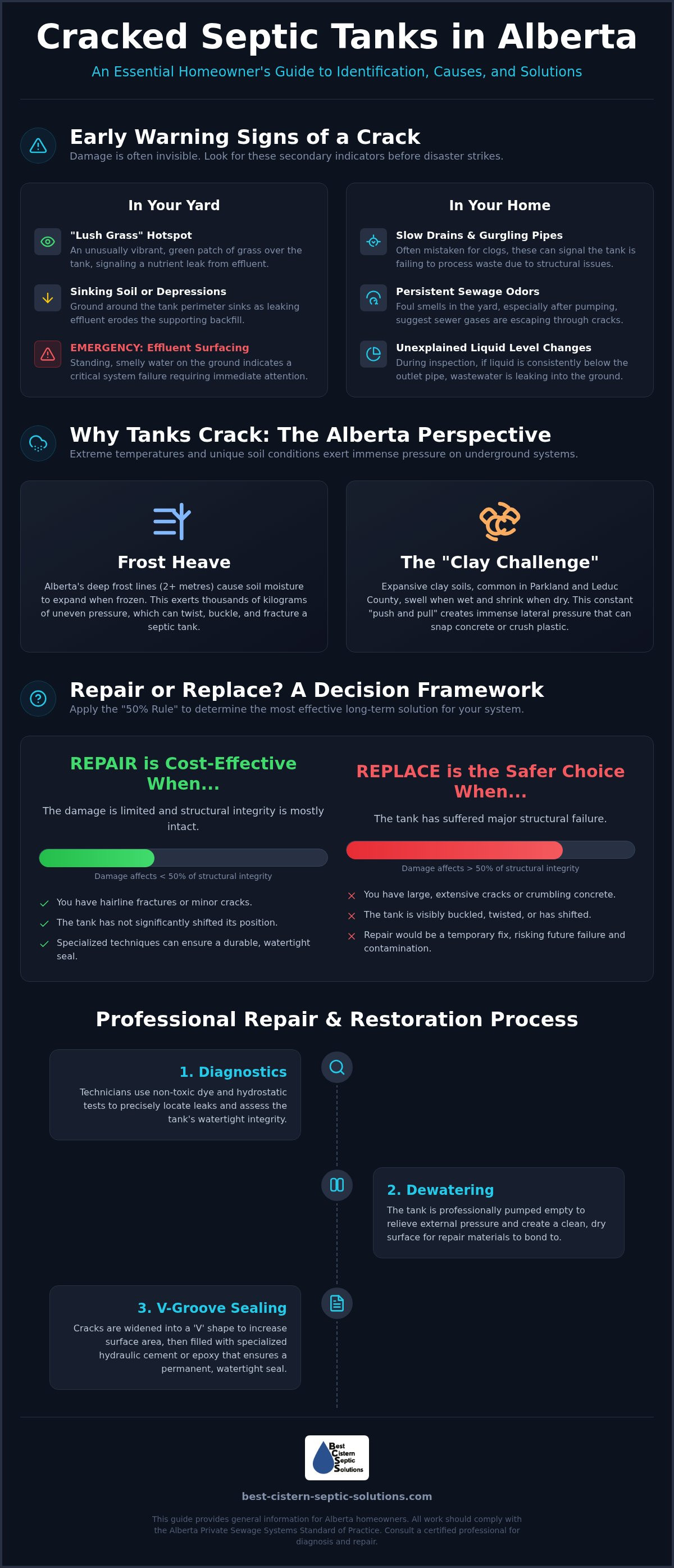
- Apply the "50% Rule" to determine if cracked septic tank repair is a cost-effective professional fix or if a full system replacement is the safer long-term choice.
- Learn why specialized techniques like dewatering and V-Groove sealing are critical for ensuring a watertight, durable restoration that meets provincial standards.
- Discover how proactive maintenance and holistic water management preserve your rural property’s resale value and ensure compliance with the Alberta Private Sewage Standard of Practice.
Identifying a Cracked Septic Tank Before Disaster Strikes
A septic tank is designed to be a silent, underground workhorse. Because it is buried beneath layers of Alberta soil, structural damage is rarely obvious to the naked eye. Most fractures remain invisible from the surface, meaning you won't see a physical crack while walking across your lawn. Instead, you must look for secondary environmental indicators that suggest the vessel's integrity is compromised. Catching these signs early is the difference between a manageable cracked septic tank repair and a complete, high-cost yard excavation.
One of the most reliable indicators is the "Lush Grass" sign. If you notice a patch of vibrant, unusually green grass directly over or adjacent to the tank, it's often a red flag. While it might look like a healthy lawn, this localized growth happens because nutrient-rich effluent is escaping through a fissure and over-fertilizing the soil. This "hot spot" remains green even during dry spells, signaling that the tank is no longer watertight.
During routine maintenance, pay close attention to unexplained changes in liquid levels. If the liquid level is consistently below the outlet pipe during an inspection, wastewater is likely leaking into the ground. Conversely, if you observe "sinking soil" or small depressions forming around the tank's perimeter, the backfill material is likely being eroded by leaking effluent. This erosion can shift the tank's position, leading to further structural stress and eventual failure.
Subtle Warning Signs in Your Home
Slow drains or gurgling pipes in your basement are often dismissed as simple clogs, but they can signal that the tank is failing to process waste correctly due to structural issues. You might also notice persistent sewage odors in the yard, even weeks after a scheduled pumping. These smells suggest that sewer gases are escaping through cracks in the tank's lid or upper walls. If you see "effluent surfacing," which is standing, smelly water on the ground, your system has reached a critical emergency state that requires immediate professional attention.
Diagnostic Tools Used by Professionals
Confirming a leak requires specialized equipment and a methodical approach. Technicians often use dye testing, where a non-toxic, high-visibility tracer is introduced to the system to track liquid loss through fissures. For a more definitive result, hydrostatic testing measures the watertight integrity of the vessel by monitoring water levels over a specific period. These methods, combined with professional septic inspections, allow experts to identify hairline fractures that would otherwise go unnoticed until the system fails completely. This proactive approach ensures your property remains safe and compliant with provincial standards.
Why Septic Tanks Crack: The Alberta Perspective
Living in Alberta means managing a property through some of the most extreme temperature swings on the planet. While most homeowners worry about their furnace or pipes during a -40°C cold snap, the real stress is often happening several feet underground. Alberta’s deep frost lines can reach depths of two metres or more, creating a volatile environment for buried utilities. When the ground freezes, the moisture in the soil expands, leading to a phenomenon known as frost heave. This process doesn't just move the dirt; it exerts thousands of kilograms of physical pressure against the walls of your tank. If the soil shifts unevenly, it can cause the structure to twist or buckle, making a professional cracked septic tank repair a necessity rather than an option.
The "Clay Challenge" is particularly relevant for residents in Parkland and Leduc County. These areas are known for heavy, expansive clay soils that hold significant amounts of water. Unlike sandy soils that drain freely, clay swells when wet and contracts when dry. This constant "push and pull" creates lateral pressure that can eventually snap a concrete seam or crush a plastic tank wall. This risk is significantly higher if the initial installation involved improper backfilling. Using native clay to fill the space around a new tank, rather than washed rock or sand, creates a "frozen sleeve" that grips the tank and pulls it upward during the winter months.
Understanding these environmental pressures is the first step toward protecting your investment. If you suspect your system is struggling against the elements, a thorough septic inspection and diagnostic can identify issues before the next deep freeze arrives.
Age and Material Fatigue
Every material has a limit. Concrete tanks are incredibly durable, but they aren't immortal. Over several decades, the natural byproduct of wastewater treatment, hydrogen sulfide gas, can react with moisture to form sulfuric acid. This acid slowly eats away at the concrete ceiling and walls, thinning the structure until it becomes brittle. Polyethylene tanks don't corrode, but they can become "egg-shaped" or develop stress fractures if they weren't rated for the specific burial depth required in northern climates. Older systems are especially vulnerable during the spring thaw, when the ground is saturated and structural integrity is tested to its limit.
External Loads and Surface Pressure
Your septic system is designed to handle the weight of soil and snow, but it isn't a driveway. Driving a truck, tractor, or even heavy landscaping equipment over the tank area can cause immediate structural failure. Even excessive snow piles from clearing your driveway can add enough weight to trigger a collapse. To properly maintain your septic system, you must also keep the area clear of large trees. Roots are opportunistic; they'll seek out the moisture inside your tank, entering through tiny pores and expanding until they force a wide crack in the structure. Maintaining a clear "buffer zone" ensures that surface pressure doesn't translate into a subsurface disaster.
Repair vs. Replacement: A Homeowner’s Decision Framework
Deciding whether to fix a damaged unit or invest in a full replacement is a significant moment for any rural property owner. When evaluating a cracked septic tank repair, we often recommend the "50% Rule." If the estimated cost to restore the structural integrity of your tank approaches half the price of a new installation, a full replacement is usually the more responsible long-term investment. This framework ensures you don't pour resources into a system that may fail again in a few seasons. While a repair can extend the life of your system, understanding the underlying reasons for septic system failure is essential to ensure you aren't just applying a temporary patch to a permanent problem.
The location of the damage is just as important as the cost. Cracks found in the bottom of a concrete tank are often non-repairable. The base of the tank bears the weight of the entire structure and the liquid inside; a compromise here creates a high risk of total collapse or persistent groundwater contamination. Additionally, all decisions must align with the Alberta Private Sewage Standard of Practice. Provincial regulations are strict about watertight integrity, and attempting "band-aid" fixes with unapproved materials can lead to failed inspections and much larger septic system repair requirements during a future real estate transaction.
When Repair is a Viable Option
Repair is often a highly effective solution for hairline cracks located in non-load-bearing areas, such as the upper walls or the lid. Modern restoration techniques use specialized epoxy injections that bond with the existing concrete to create a seal that's often stronger than the original material. Issues involving leaking risers or damaged lids are also excellent candidates for repair. These "top-down" problems can often be resolved by replacing the seals or the risers themselves, preventing surface water from entering the tank without the need for a full excavation.
Signs That Replacement is Non-Negotiable
Structural "bowing" or visible wall collapse in a concrete tank is a definitive sign that the material has reached the end of its life. If you see multiple cracks or a "spider-web" pattern across the surface, it indicates that the concrete has become brittle and lost its structural capacity. In these cases, cracked septic tank repair is no longer safe or cost-effective. Upgrading to a modern, watertight polyethylene unit is often the best path forward. These units are engineered to withstand the lateral pressure of Alberta's clay soils and provide a reliable, worry-free solution for decades to come.
Professional Repair Methods and Structural Restoration
Restoring a compromised tank requires a methodical approach that goes far beyond simply filling a visible gap. The first and most critical step in any cracked septic tank repair is dewatering. We must completely pump out the tank and perform a thorough high-pressure cleaning of the interior walls. Industrial sealants cannot bond to surfaces covered in sludge or biological film. Once the concrete is clean and dry, we can accurately assess the full extent of the damage and ensure the repair material creates a permanent, watertight seal.
We utilize the "V-Groove" technique to prepare the site. This involves using specialized tools to grind the crack into a V-shape, which increases the surface area for the bonding agent and allows the sealant to penetrate deeper into the structure. After prepping the area, we apply high-strength, waterproof epoxy resins specifically engineered for the harsh, acidic environment of a septic system. Unlike standard mortars, these resins remain slightly flexible to accommodate minor soil shifts while maintaining an airtight bond. In cases where the crack was caused by significant ground movement, we may also install structural reinforcement to prevent the fissure from reopening under environmental stress.
If you're dealing with a failing tank, our team provides the specialized cracked septic tank repair services needed to secure your property. For a detailed assessment of your system's integrity, contact our septic specialists for professional diagnostic support.
The Sealing Process: Step-by-Step
It's a common mistake to assume that a bag of hardware store cement will fix a leaking tank. Standard cement is porous and brittle; it will eventually shrink, crack, and pull away from the old concrete. Professional repairs require industrial-grade epoxies that need specific curing times and controlled environmental conditions to bond correctly. These materials are chosen because they must withstand constant hydrostatic pressure from the surrounding groundwater and the internal weight of the effluent. A successful bond ensures the tank remains a closed loop, protecting your soil from contamination for years to come.
Testing the Repair
Once the application is complete, we don't simply walk away. We verify the success of the work through a "Water Test" or "Vacuum Test" to confirm the vessel is once again 100% watertight. These tests provide immediate proof that the leak is resolved. We also recommend a follow-up inspection roughly six months after a major restoration. This allows us to ensure the repair has held up through a change in seasons and soil moisture levels. Choosing a professional service gives you the peace of mind that comes with a formal guarantee, turning a stressful utility failure into a reliable, long-term asset for your home.
Long-Term Protection for Your Septic System and Property Value
Rural property value in Alberta is intrinsically tied to the health of its utility systems. A septic system isn't just a buried concrete box; it's a vital piece of infrastructure that dictates the safety and marketability of your home. When it's time to sell, a documented history of professional care and timely cracked septic tank repair serves as a powerful signal to potential buyers. It demonstrates that the property has been managed with diligence and that the "invisible" components of the home are in peak condition. Treating your system as a long-term utility asset rather than a hidden burden ensures that its value remains intact for decades.
A truly resilient property requires a holistic approach to water management. In many parts of North Central Alberta, this includes balancing your wastewater output with your potable water storage. Regular cistern maintenance plays a hidden role in septic health. By managing water flow and ensuring your cistern pump operates efficiently, you prevent hydraulic overloading of your septic tank. This balance is essential for preventing the structural stress that can lead to fissures and leaks over time.
Maintenance must also include regular pumping every one to three years, depending on your household size. This process does more than just remove solids; it prevents the buildup of hydrogen sulfide gas. This gas can corrode concrete over time, weakening the tank's ceiling and inviting structural failure. By staying ahead of this corrosion, you preserve the watertight integrity of the vessel and avoid the high costs associated with emergency remediation or total system failure.
The Importance of Professional Inspections
For homeowners in Sturgeon or Strathcona County, we recommend a professional inspection at least every two years. Alberta's soil conditions can change rapidly with the seasons. A system that was functional last year might develop issues after a particularly harsh spring thaw. Early detection of hairline cracks through a professional diagnostic report can save you thousands of dollars. Catching a leak before it saturates your drain field prevents a total field failure, which often carries a replacement cost of C$20,000 or more. Best Cistern Septic Solutions provides the detailed, transparent data you need to make proactive decisions about your system's health.
Securing Your Rural Infrastructure
If you suspect a structural issue, the steps are clear: assess the area for surface changes, protect the site from heavy traffic, and call a specialized expert. Attempting to ignore a leak only invites environmental contamination and deeper financial stress. A professional fix is the only way to ensure your property remains compliant with the Alberta Private Sewage Standard of Practice and safe for your family. We take pride in being the reliable neighbors who handle these difficult tasks with sophistication and care. Contact Best Cistern Septic Solutions for a professional septic evaluation to secure your home's most vital infrastructure today.
Securing Your Property’s Future with Professional Septic Care
A cracked septic tank doesn't have to mean a total system failure. By understanding the unique environmental pressures of Alberta’s frost lines and heavy clay, you can take proactive steps to protect your home’s infrastructure. Early detection of leaks and structural fissures is the key to avoiding the massive expense of a full drain field replacement. We've seen how specialized techniques like V-Groove sealing and epoxy injections can provide a permanent cracked septic tank repair that restores your peace of mind and preserves your property value.
Your septic system is a vital long-term asset. Maintaining its integrity ensures your property remains compliant with the Alberta Private Sewage Standard of Practice and safe for your household. We specialize in the specific soil conditions of Parkland, Leduc, and Sturgeon Counties, providing the detailed diagnostic reports you need for real estate transactions or routine upkeep. Don't let a small fracture turn into a major disaster when a professional fix is readily available.
Book Your Septic Tank Diagnostic in Spruce Grove Today and take the first step toward a worry-free utility system. Every problem has a manageable resolution when you have a reliable local expert by your side.
Frequently Asked Questions
Can I repair a concrete septic tank crack myself with epoxy?
No, a successful cracked septic tank repair requires professional equipment and materials that aren't available at standard hardware stores. To ensure a permanent bond, the tank must be completely dewatered and high pressure cleaned to remove biological films. Industrial grade epoxies are specifically engineered to withstand constant hydrostatic pressure and the acidic environment of a waste system, whereas consumer products often shrink and fail within a single season.
How much does it typically cost to repair a cracked septic tank in Alberta?
The cost of restoration varies based on the depth of the tank, the length of the fissure, and the accessibility of the site. Minor repairs involving riser seals or surface hairline cracks are relatively affordable, while structural restoration requiring excavation and reinforcement involves a higher investment. Investing in a professional fix is almost always more cost effective than the C$10,000 to C$20,000 required for a full tank replacement in the Alberta market.
What happens if I leave a small crack in my septic tank unaddressed?
Small cracks never stay small in Alberta's climate. The freeze-thaw cycle forces moisture into the fissure, where it expands and pushes the concrete apart during the winter. Beyond structural damage, even a tiny leak allows untreated effluent to saturate your soil, which can lead to groundwater contamination and significant environmental liabilities on your property.
Will a cracked septic tank cause my drain field to fail?
Yes, a compromised tank is a leading cause of premature drain field failure. If a crack allows groundwater to leak into the tank, the system becomes hydraulically overloaded, pushing solids into the drainage pipes. Conversely, if effluent leaks out, it can erode the soil around the tank and cause the backfill to collapse, leading to expensive cracked septic tank repair needs or total system failure.
How do I know if my septic tank crack is structural or just a hairline fracture?
Determining the severity of a crack requires a professional diagnostic. Hairline fractures are typically thin and don't compromise the shape of the tank, while structural cracks often involve "bowing" of the walls or a spider web pattern of multiple fissures. We use hydrostatic testing and dye tracers to confirm if a crack is leaking, providing a clear answer on whether the vessel is still watertight.
Does Alberta law require me to replace a leaking septic tank immediately?
The Alberta Private Sewage Systems Standard of Practice 2021 requires all systems to be watertight and structurally sound. While the law doesn't always mandate an immediate replacement, it does require that any leak be resolved to prevent environmental contamination. If you're selling a property, an unaddressed leak will likely fail a real estate inspection and must be repaired to complete the transaction.
Can tree roots actually cause a septic tank to crack?
Tree roots are opportunistic and will seek out the moisture and nutrients inside your tank. They can enter through microscopic pores or small existing fissures in the concrete. Once inside, the roots expand as they grow, exerting enough pressure to split thick concrete walls. It's vital to keep large trees and shrubs at least several metres away from your septic infrastructure.
How long does a professional septic tank repair last in a cold climate?
A professional restoration using high strength epoxy resins is designed to last for the remaining life of the tank, often 20 years or more. These materials are flexible enough to handle the expansion and contraction of Alberta's soil while maintaining a permanent seal. When combined with proper maintenance and regular pumping, a repaired tank remains a durable and reliable asset for your rural property.


