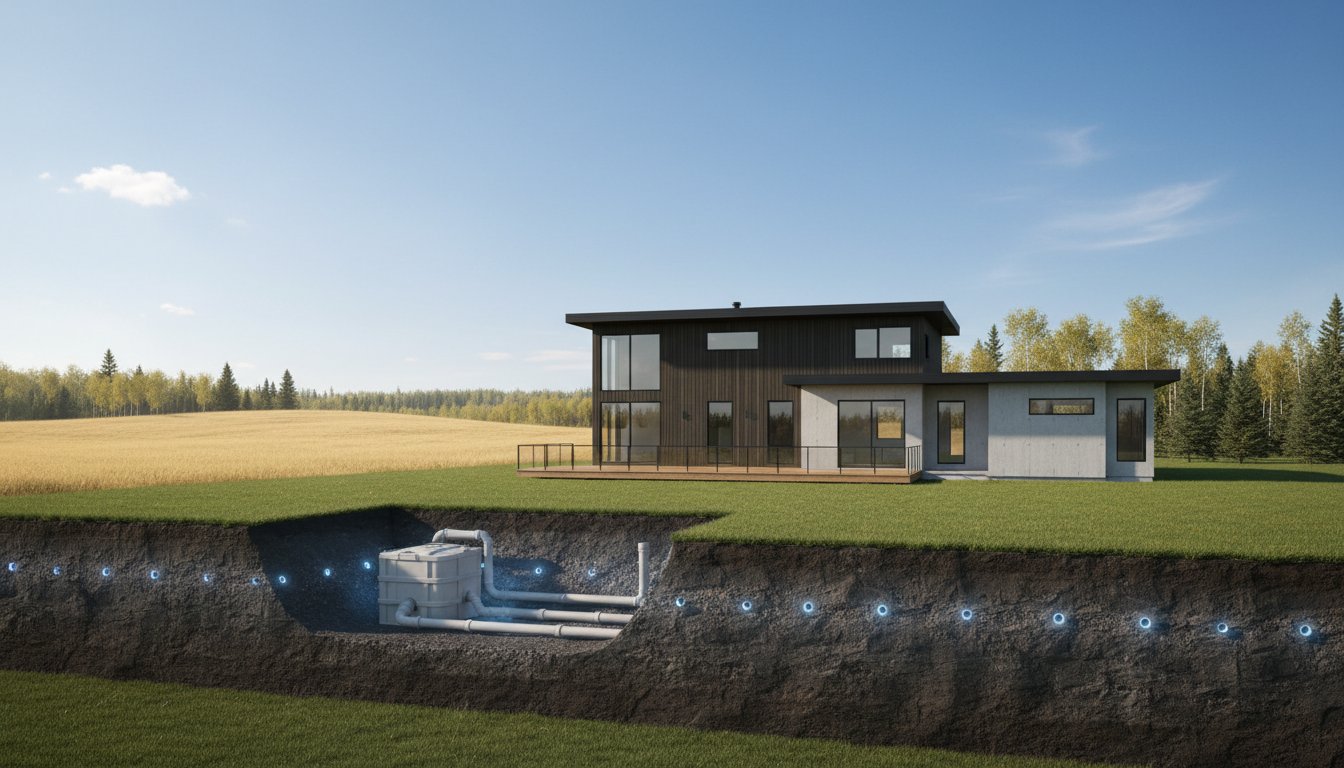
In May 2023, a homeowner in Parkland County watched their backyard transform into a saturated marsh after a single week of heavy rain, proving that the wrong choice in underground infrastructure costs far more than just a repair bill. It's a common stressor for those living in North Central Alberta, where heavy clay soil and deep frost lines put immense pressure on residential systems. You likely understand that your septic system is more than just a utility; it's a vital investment in your property’s health and your family’s safety. Choosing between different septic tank types requires a balance of technical durability and strict adherence to the 2015 Alberta Private Sewage Systems Standard of Practice.
We promise to help you identify the most reliable options specifically suited for the unique geological conditions of Leduc and Parkland County. This ensures you achieve a lifetime of worry-free wastewater management without the constant fear of system failure. In this guide, we'll examine the structural integrity of concrete versus plastic materials and explain how the right configuration protects your property value and keeps your home compliant with local municipal permits.
Key Takeaways
- Discover which septic tank types provide the necessary structural integrity to handle the unique clay soil pressures found in North Central Alberta.
- Learn why choosing between concrete, polyethylene, and fiberglass is a critical investment in your home’s infrastructure and long-term health.
- Understand how soil permeability determines whether your land requires a standard gravity system or an advanced treatment unit for effective wastewater management.
- Navigate the 2026 Alberta Private Sewage Systems Standard of Practice to ensure your new installation remains compliant and fully protected.
- Recognize the value of a professional diagnostic to avoid the legal risks of DIY setups while securing a lifetime of worry-free system performance.
Comparing Septic Tank Types for Parkland County Properties
Living in Parkland County or Leduc County offers incredible freedom, but it also places the responsibility of wastewater management directly on the homeowner. Your septic tank acts as the silent guardian of your property's environmental health. It's the first line of defense in a complex biological process. Selecting from the available septic tank types isn't just a technicality; it's a long-term investment in your home's integrity. A well-selected tank ensures that effluent remains clear enough for the soil to process, preventing the premature failure of your drainage field.
The Role of the Septic Tank in Your System
Inside the tank, physics and biology work together to clean your water before it leaves the vessel. Heavier solids settle to the bottom as sludge, while oils and grease float to the top to form a scum layer. Primary treatment is the mechanical separation of wastewater components. This separation creates a middle layer of liquid, known as effluent, which eventually flows out to the field. By trapping the solids, the tank prevents clogs from reaching your drainage pipes. This protection is vital because a clogged field often requires a total, expensive replacement that can disrupt your daily life for weeks.
Why One Size Does Not Fit All in North Central Alberta
In the Edmonton Capital Region, soil conditions and lot sizes vary significantly from one township to the next. A three-bedroom home in Strathcona County has different requirements than a sprawling estate in Leduc County. Sizing depends heavily on the number of bedrooms and the estimated daily flow rates of your household. If a tank is too small, wastewater moves through it too quickly. This lack of "retention time" carries solids into your field, leading to system fatigue.
Lot size also dictates which septic tank types are viable for your specific site. Small acreages might require advanced treatment units or specific tank configurations to meet mandatory setback requirements. All installations must strictly follow the Alberta Private Sewage Systems Standard of Practice. This regulation ensures your system protects the local groundwater and meets provincial safety standards. Proper planning today prevents sanitary issues tomorrow, giving your family the peace of mind they deserve. Consider these factors before installation:
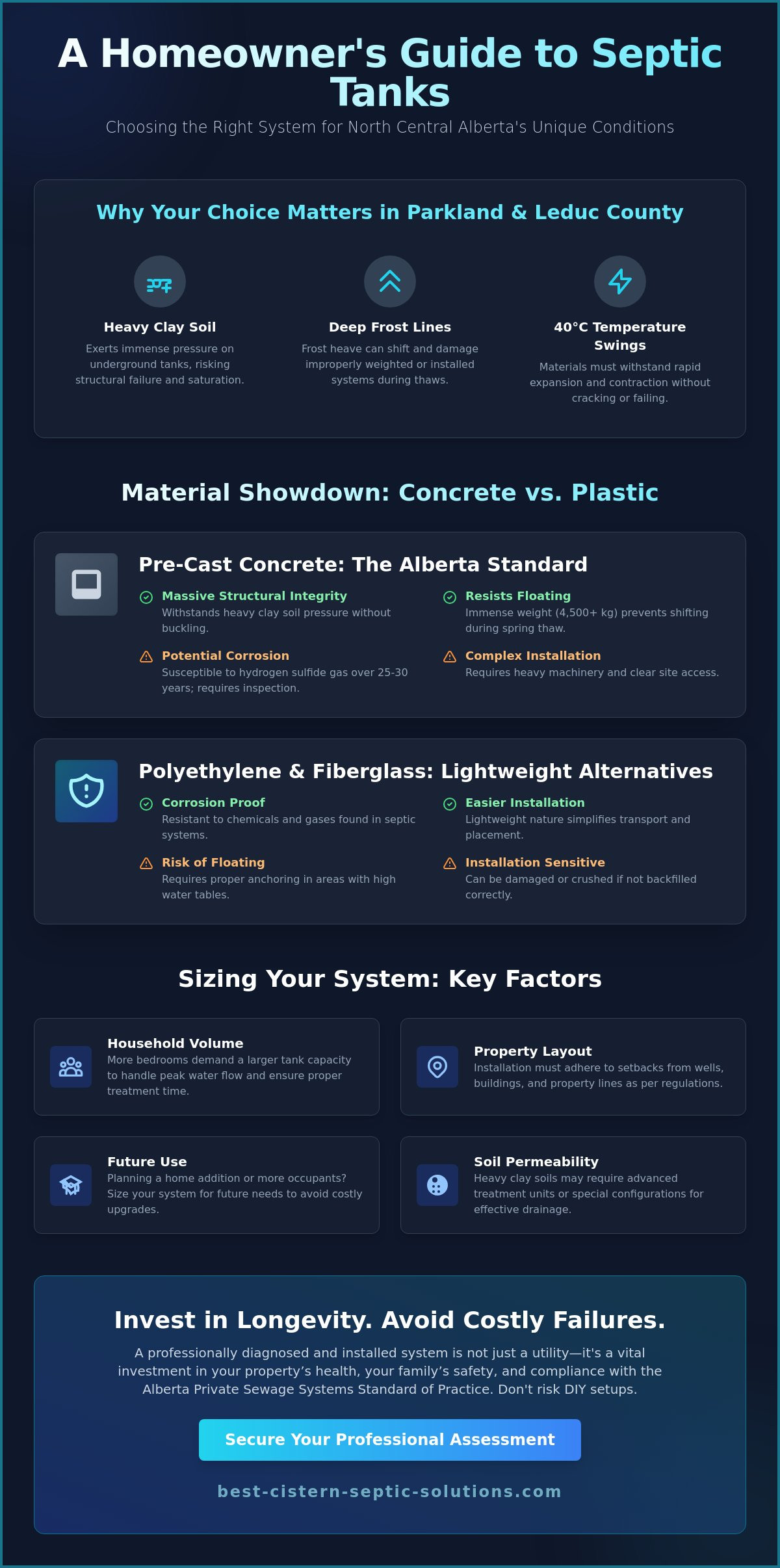
- Household Volume: More bedrooms require larger tank capacities to manage peak flow.
- Soil Composition: Heavy clay in parts of Parkland County may require specific tank discharge methods.
- Property Layout: Existing trees, wells, and buildings restrict where certain tanks can be placed.
- Future Use: Planning for a home addition means you should size your tank for future needs now.
Choosing the right system involves understanding these local variables. Our goal is to ensure your home remains a safe, pristine environment for years to come.
Material Matters: Concrete vs. Polyethylene vs. Fiberglass Tanks
Choosing between different septic tank types involves more than just picking a size. In the heavy clay soils common throughout Parkland County and Leduc County, the material you select dictates the long-term health of your property's infrastructure. Alberta's environment is notoriously demanding. Our systems must withstand 40-degree temperature swings and the relentless pressure of frost heave, which can shift even the most stable ground. Selecting the right material is a foundational investment in your home's safety and your family's peace of mind.
Pre-Cast Concrete Tanks: The Alberta Standard
Pre-cast concrete remains the most frequent choice for Alberta homeowners. These tanks offer massive structural integrity that handles the weight of saturated clay soil without buckling. A standard residential concrete tank often weighs over 4,500 kg. This immense weight is a benefit in wet areas because it prevents the tank from "floating" or shifting during the spring thaw. While concrete is durable, it's susceptible to corrosion from hydrogen sulfide gas over 25 to 30 years. We recommend regular inspections to ensure the baffles and walls remain pristine. Because of their weight, these tanks require heavy machinery and clear site access for a successful installation. They're ideal for properties with stable soil and plenty of room for a crane truck to maneuver.
Polyethylene and Fiberglass: Lightweight Alternatives
For remote properties or sites in Sturgeon County where heavy equipment might struggle with soft access roads, polyethylene and fiberglass are excellent alternatives. These materials are entirely corrosion-resistant, meaning they won't degrade when exposed to sewer gases. However, their light weight presents a unique challenge. If the water table rises, an empty plastic tank can act like a boat hull and "pop" out of the ground, which often destroys the connected plumbing. We prevent this by using specific anchoring systems and careful backfilling procedures.
When comparing these two, fiberglass generally offers superior structural retention over 20 years compared to polyethylene. Plastic tanks can sometimes "creep" or slightly deform under the constant pressure of deep soil. Understanding how these materials fit into various Types of Septic Systems is vital for determining which setup protects your land best. If you're feeling overwhelmed by the technicalities of soil pressure and buoyancy, we can help you find reliable septic solutions that match your specific lot conditions. Proper installation is the difference between a system that lasts decades and one that requires an emergency repair after the first deep freeze.
Primary vs. Secondary Treatment: Which System Fits Your Land?
Selecting from different septic tank types requires a clear understanding of how wastewater is processed before it returns to the environment. Primary treatment is the first stage, occurring inside the tank where solids settle and oils float. Secondary treatment is the crucial next step where the liquid effluent is purified. Your property's soil permeability, often called the "perc rate," is the primary factor that determines whether you can use a basic setup or if you require an advanced system. If your soil drains too slowly or your water table sits too high, a standard tank won't provide enough protection for your local ecosystem.
Every installation in our region must adhere to Alberta's Private Sewage Systems Standard of Practice. These regulations ensure that the system you choose provides adequate vertical separation between the wastewater and the groundwater. This protects your family's health and the long-term value of your property. We view these systems as a vital investment in your home's infrastructure rather than just a utility.
Conventional Gravity Systems
Conventional gravity systems are the simplest septic tank types available. They rely on the natural landscape to move effluent from the tank into a septic field installation. These systems are passive, meaning they don't require pumps or electricity to function. They are highly reliable if you have well-draining, sandy soil and a low water table. While they offer the lowest long-term operational costs, they do require a larger footprint on your land to ensure the soil can handle the liquid volume effectively.
Chamber and Mound Systems for Heavy Clay
Parkland County and Leduc County are well known for heavy clay soils that resist water absorption. In these areas, mound systems are the standard solution for high water tables or poor soil. We build a raised sand mound above the natural grade to provide a clean environment for effluent treatment. We often use plastic chambers within these mounds. These chambers increase the effective surface area for absorption by approximately 40 percent compared to traditional gravel trenches. This design allows for a smaller overall footprint while ensuring the treated water is safe by the time it reaches the natural soil level.
Aerobic Treatment Units (ATUs)
Aerobic Treatment Units (ATUs) act like a miniature municipal treatment plant for your home. Unlike standard tanks that use anaerobic bacteria, ATUs use an air pump to circulate oxygen, which supports more aggressive bacteria. This process produces high-quality effluent that is significantly cleaner than what comes out of a standard tank. These units are essential for smaller rural lots or properties near sensitive water bodies. While they require regular mechanical maintenance and a small amount of electricity, they offer a sophisticated solution that can extend the life of your drainage field and provide peace of mind in challenging environments.
Navigating Alberta Regulations and Soil Challenges
Installing a waste management system in North Central Alberta requires more than just digging a hole. You must align your project with the 2026 Alberta Private Sewage Systems Standard of Practice. These updated regulations ensure that your system protects local groundwater and operates safely for decades. Choosing between various septic tank types depends heavily on these legal requirements and the specific physical constraints of your property.
A "Perc Test," or soil percolation test, stands as the most critical step in your planning process. This test measures how quickly water moves through your soil. If the water drains too slowly or too quickly, it dictates the size and type of the entire system. Alberta standards also enforce strict setback requirements. For instance, your tank must maintain a minimum distance of 10 metres from a dwelling and 15 metres from any water well or watercourse. These distances prevent contamination and protect the structural integrity of your home foundation.
Local environmental factors like the frost line also play a major role. In the Edmonton and Parkland regions, frost can penetrate up to 2.4 metres deep during a severe winter. To prevent freezing, tanks must be buried at sufficient depths or equipped with specialized insulation. This level of planning transforms a potential winter emergency into a reliable, year-round utility that provides peace of mind even in -40°C weather.
Managing Heavy Clay in the Edmonton Region
The heavy clay soil common in Parkland and Leduc County presents a unique challenge for homeowners. Clay particles do not allow for rapid water infiltration, which can cause effluent to pool and lead to premature septic system repair if the wrong setup is installed. To protect your drainage field, we recommend using high-quality effluent filters. These filters catch small solids before they leave the tank, preventing the "clogging" effect that often ruins clay-based fields.
Permitting and Compliance in Leduc and Sturgeon County
Securing a private sewage permit is a mandatory step before any soil is moved in Leduc or Sturgeon County. You must work with a Certified Private Sewage Installer who understands the nuances of the local landscape and provincial codes. Your application must include a detailed site map. This map must show the location of both your septic system and any cistern systems; they must be mapped together to ensure the safety and integrity of your potable water supply.
Protect your property and ensure long-term compliance by consulting with a professional. Contact Best Cistern & Septic Solutions for an expert site evaluation today.
Investing in Longevity: Professional Installation and Maintenance
Installing a septic system isn't a standard weekend project for a homeowner. In Alberta, the Safety Codes Act and the Private Sewage Disposal Systems Regulation mandate that only certified professionals handle these installations. Attempting a DIY install is illegal, but more importantly, it's dangerous. An incorrectly placed tank can collapse, contaminate local groundwater, or lead to a total system backup that ruins your home's interior. Professional installers ensure your system meets strict provincial standards, protecting both your family's health and the local environment.
A professional diagnostic is the first step toward a functional home. We analyze your soil composition and the specific topography of your Parkland or Leduc County property before recommending a system. Selecting the right septic tank types depends on these variables. For instance, a heavy concrete tank might be the best choice for a property with stable soil, while a reinforced plastic tank could be better for areas with high water tables or difficult access. This technical precision reduces your long-term expenses by minimizing the need for emergency repairs and frequent pumping.
The Best Cistern & Septic Solutions Difference
Our team brings specialized experience to every project in Parkland, Leduc, and Strathcona Counties. We don't believe in one-size-fits-all fixes. Instead, we provide grounded, professional solutions that focus on the mechanical integrity of your system. We understand the unique challenges of the Alberta climate, from deep frost lines to heavy spring runoff. By focusing on precision engineering and high-quality materials, we safeguard your property investment and provide the peace of mind that comes with a sanitary, high-performing system.
Booking Your Local Site Assessment
During a professional septic inspection, we evaluate the current state of your tank, the condition of the baffles, and the efficiency of your effluent distribution. We look for signs of stress or wear that could lead to future failures. Once the assessment is complete, you'll receive a detailed quote tailored to your property's specific needs. We take the time to explain the "why" behind our recommendations so you feel empowered to make the best decision for your home. If you're ready to upgrade your infrastructure or need a new installation, contact us for a professional septic consultation today.
Secure Your Property’s Future with a Reliable Septic Foundation
Selecting from the various septic tank types is a vital investment in your home's long-term health. Whether you opt for a high-density polyethylene tank for its corrosion resistance or a precast concrete model for its structural weight, your choice must align with the 2015 Alberta Private Sewage Systems Standard of Practice. The heavy clay soils common in North Central Alberta require specific drainage strategies to prevent system failure. It's important to remember that a well-matched system handles effluent safely while protecting your family and the local environment.
Best Cistern & Septic Solutions serves as your local expert in Parkland, Leduc, and Sturgeon Counties. We're Certified Private Sewage Installers in Alberta who specialize in solving the challenges posed by local soil conditions. Our team focuses on the integrity of your infrastructure so you don't have to worry about what's happening underground. Taking a proactive step now ensures your property remains a safe, sanitary place for years to come.
Get a Professional Septic System Assessment in Parkland County
Your home deserves a system that works reliably every single day, and we're here to provide that lasting peace of mind.
Frequently Asked Questions
Is a concrete septic tank better than a plastic one for Alberta winters?
Concrete septic tanks remain the standard in Alberta because their weight prevents "floating" during spring thaws when groundwater levels rise. While high-density polyethylene (HDPE) tanks are easier to transport, they require specific backfilling with gravel to withstand the 1.5-meter frost line common in Parkland County. Both septic tank types are effective if installed according to the Alberta Private Sewage Systems Standard of Practice 2015.
Can I install a conventional septic system in heavy clay soil?
You cannot typically install a conventional gravel trench system in heavy clay soil because the percolation rate is too slow for proper effluent treatment. Clay particles are smaller than 0.002mm, which creates a dense barrier that prevents water from draining properly. In Leduc County, soil with high clay content often requires a raised sand mound or an Advanced Pressure Distribution system to ensure the environment remains sanitary and protected.
How much space do I need for a mound septic system in Parkland County?
A standard mound system for a three-bedroom home usually requires a footprint of approximately 185 square metres. This space ensures the sand layer can effectively filter 1,350 litres of daily effluent before it reaches the natural soil. You must also maintain a 15-metre setback from your home and a 30-metre distance from any water wells to comply with provincial safety regulations and protect your property’s integrity.
What happens if I choose the wrong size septic tank for my home?
Choosing a tank that's too small reduces the retention time needed for solids to settle, which forces raw waste into your disposal field. This leads to premature system failure and potential sewage backups into your basement. A tank sized for a four-bedroom home should hold at least 4,500 litres to provide the necessary 48-hour settling period. Investing in the correct capacity is a vital step in safeguarding your family’s health.
How often do different types of septic tanks need to be pumped?
Most residential systems require pumping every 2 to 3 years to remove accumulated sludge and scum. While the specific septic tank types don't change this interval, the number of residents and daily water usage are the primary factors. Regular maintenance prevents the 30% sludge accumulation threshold where solids begin to escape the tank. This proactive care is a simple way to ensure the long-term longevity of your entire wastewater infrastructure.
Are aerobic treatment units (ATUs) worth the extra cost for rural Edmonton homes?
Aerobic Treatment Units (ATUs) are an excellent investment for rural Edmonton homeowners dealing with limited space or poor soil quality. These systems use oxygen to accelerate bacterial growth, resulting in effluent that's up to 98% cleaner than traditional gravity systems. While the initial mechanical complexity is higher, the high-quality treatment protects your drainage field from clogging. This choice provides peace of mind by offering a reliable solution for difficult building sites.
What is the lifespan of a fiberglass septic tank compared to concrete?
Fiberglass tanks typically last between 30 and 50 years because they're completely resistant to the chemical corrosion that can affect other materials. Concrete tanks offer a similar lifespan of 40 years or more, though they can eventually suffer from hydrogen sulfide gas erosion if they aren't properly ventilated. Both options provide a durable foundation for your home's waste management. Choosing high-quality materials ensures your system remains a stable, long-term asset for your property.


