
A massive septic tank won't save your business if you haven't accounted for the invisible chemical blinding caused by waxes and grit. When you're planning a car wash septic system design, it's easy to focus solely on water volume, but the real challenge lies in protecting your soil's long-term absorption capacity. You likely already know that Alberta’s regulatory landscape is rigorous; the fear of environmental fines or a saturated drainage field is a significant source of stress for any rural property owner.
We understand that you need a solution that works silently and reliably in the background. This guide will show you how to build a high-performance system that meets the 2021 Alberta Private Sewage Systems Standard of Practice (SOP) while ensuring your investment remains a durable asset for years. We'll walk through the critical pre-treatment requirements, such as oil-water separators and sand interceptors, to help you navigate the complexities of Parkland and Leduc County compliance. By the end, you'll have a clear roadmap for a system that manages high volumes without compromising the safety of your land or the integrity of your property.
Key Takeaways
- Learn how a specialized car wash septic system design manages unique stressors like chemical surfactants and heavy grit that standard residential systems can't handle.
- Understand the role of flow equalization tanks in balancing peak water volumes to prevent drainage field flooding and soil saturation.
- Discover why sand interceptors and oil-water separators are essential for removing hydrocarbons and solids before they reach the sensitive disposal field.
- Gain clarity on navigating the 2021 Alberta Private Sewage Systems Standard of Practice and securing necessary permits in Parkland or Leduc County.
- See how professional installation and detailed 'As-Built' drawings protect your property value and simplify future system maintenance.
The Fundamentals of Car Wash Septic System Design
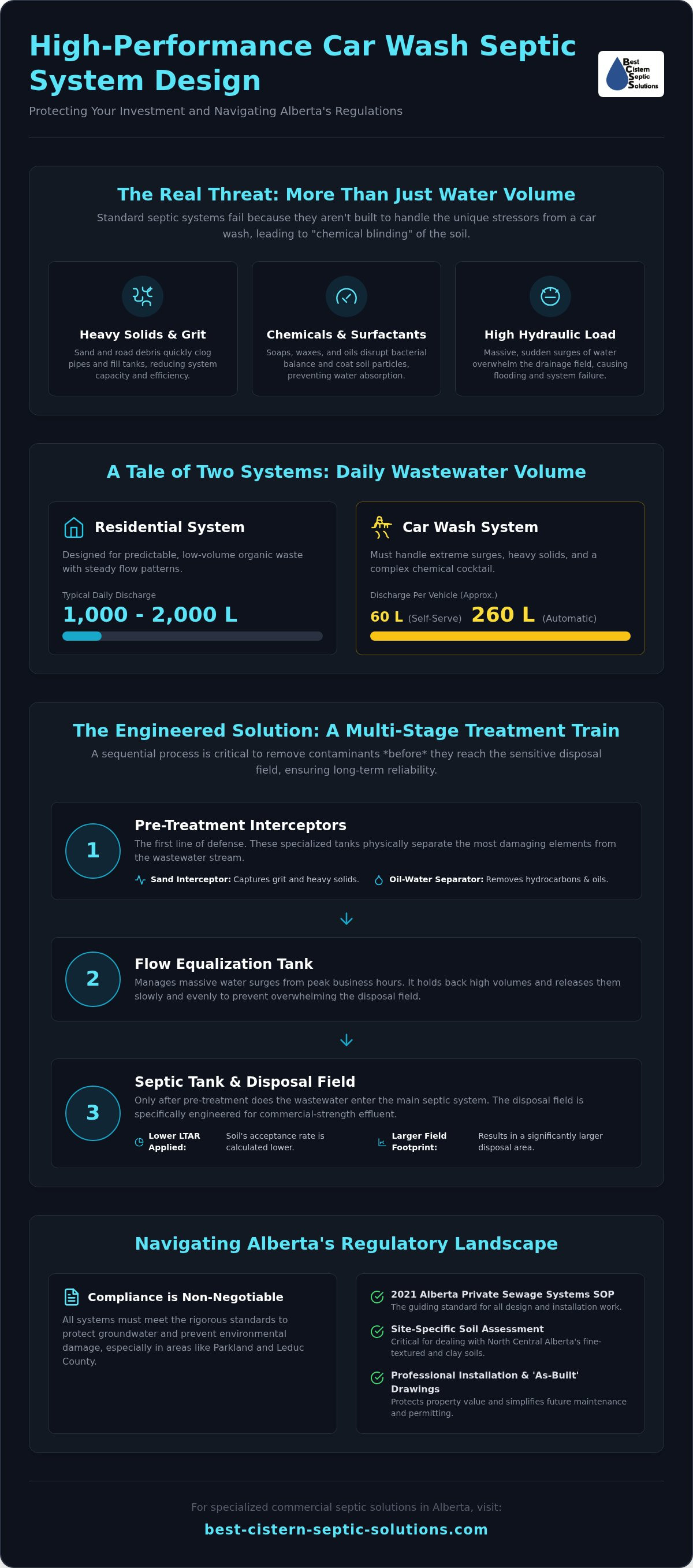
A car wash is essentially an industrial operation disguised as a service utility. Unlike a home, where the primary concern is organic waste, a commercial wash facility introduces a complex cocktail of sand, road salts, and synthetic chemicals into the ground. A successful car wash septic system design focuses on protecting the soil from "chemical blinding." This occurs when waxes and surfactants coat soil particles, effectively sealing them off and preventing wastewater from draining. When this happens, the system fails regardless of how large the tank is. To ensure longevity, we implement a multi-stage treatment train that captures these stressors before they ever reach your drainage field.
The three primary stressors we manage are hydraulic load, heavy solids, and chemical surfactants. Hydraulic load refers to the sheer volume of water hitting the system at once. Solids include the grit and sand washed off undercarriages, which can quickly clog pipes if not intercepted. Finally, surfactants are the soaps that break down oils but also disrupt the natural bacterial balance in a septic tank. By addressing these factors sequentially, we turn a high-risk utility into a reliable, long-term asset for your property.
Residential vs. Commercial Septic Requirements
The difference in daily wastewater volume is significant. A typical rural home in Parkland County might discharge 1,000 to 2,000 litres per day. In contrast, a commercial car wash can process much more. According to Natural Resources Canada, a self-serve bay uses approximately 60 litres per vehicle, while an automatic wash can average 260 litres. Standard residential tanks simply aren't engineered to handle these surges or the chemical complexity of professional-grade waxes. Integrating a specialized septic systems design ensures that your commercial operation remains compliant with the 2021 Alberta Private Sewage Systems Standard of Practice without risking soil saturation.
The Impact of Vehicle Wash Chemicals
Chemical surfactants and emulsified oils are the primary enemies of healthy soil absorption. These substances disrupt the anaerobic digestion process by altering the pH balance within the septic tank. Even when operators choose biodegradable products, the Environmental factors of car washing remain a challenge. These soaps are designed to keep oils in suspension, which means those oils can travel through the tank and deep into the drainage field. Without advanced filtration and proper separation, these chemicals eventually "blind" the soil pores. Our approach prioritizes pre-treatment to remove these contaminants, providing you with the peace of mind that your system will continue to perform even under heavy use.
Managing Hydraulic Load and Wastewater Volume
Managing the sheer volume of water is the next hurdle in a high-performance car wash septic system design. While a residential system sees steady peaks at morning and night, a car wash experiences massive surges on sunny weekends or during the spring thaw. If your system is designed only for "average" daily flow, these surge events will quickly overwhelm your drainage field. We calculate the peak flow to ensure the system can handle the busiest hour of the year without backing up. Properly managing this hydraulic load is the cornerstone of a resilient car wash septic system design.
In North Central Alberta, we often deal with fine-textured soils and heavy clay. These soil types have slow percolation rates, meaning the ground takes longer to absorb liquid. To stay compliant and protect your property, you must follow Alberta's Acceptable Industry Practices regarding wastewater discharge. Designing for these specific soil conditions prevents the "greener grass" syndrome that signals a failing field. We prioritize these local environmental factors to ensure your system remains a long-term asset.
Sizing the Septic Field for Commercial Use
Commercial effluent is typically higher in strength than residential waste. Because of this, we apply a lower Long Term Acceptance Rate (LTAR) when sizing your field. This measurement determines how many litres of effluent the soil can safely receive per square metre each day. Because the LTAR is lower for car wash waste, the resulting footprint of the septic field must be significantly larger than a residential setup. We often recommend pressure-distribution systems. These systems use a pump to spread effluent across the entire field at once, ensuring no single area becomes saturated or "drowned."
Flow Equalization Strategies
A flow equalization tank acts as a buffer for your system. Instead of sending 500 litres of water directly to the field after a single wash cycle, the surge tank holds the water and meters it out slowly over 24 hours. This steady dosing allows the soil time to breathe and process the liquid effectively. Effluent pumps are the heart of this process. They move treated water from the surge tank to the final disposal field at a controlled rate.
Regularly scheduled effluent pump replacement and inspections are vital to keep this mechanical heart beating. If a pump fails during a peak weekend, your entire operation could grind to a halt. We provide comprehensive septic solutions to monitor these mechanical components, giving you the security of knowing your system is ready for the next rush. By balancing the load, we transform a potential environmental risk into a manageable, durable utility.
Essential Pre-treatment: Sand Interceptors and Oil-Water Separators
While managing water volume is a priority, the physical quality of that water determines the lifespan of your system. In a professional car wash septic system design, we don't send raw wastewater directly into a septic tank. Instead, we utilize a multi-stage treatment train. This sequence—Interceptor, then Oil-Water Separator (OWS), then Septic Tank—acts as a rigorous filtration process. Each stage targets a specific contaminant that would otherwise cause catastrophic failure in your drainage field. By removing heavy grit and hydrocarbons early, we ensure the final effluent is clean enough for the soil to process safely.
Following the Alberta Private Sewage Systems Standard of Practice, these pre-treatment components must be sized according to your facility's specific output. Without this preliminary cleaning, your septic tank would quickly fill with sludge, and your pump system would face constant mechanical strain. Consistent maintenance of these interceptors isn't just a regulatory chore; it's a proactive strategy to protect your property's primary utility asset. It’s about ensuring that the difficult work of cleaning vehicles doesn't result in the long-term degradation of your land.
Sand and Grit Interceptor Design
Sand and road salts are the most immediate threats to your plumbing. We size these interceptors based on the number of wash bays and the expected vehicle turnover. These tanks use simple gravity separation; as the water slows down, heavy sediment sinks to the bottom before the liquid moves to the next stage. A sand interceptor serves as the first line of defense against field clogging by capturing heavy grit before it enters the rest of the system. Regular clean-outs prevent these solids from migrating downstream where they can cause permanent blockages in your pipes.
Oil-Water Separator (OWS) Functionality
Hydrocarbons from engines and undercarriages require specialized handling. We often choose between coalescing plate separators, which use a series of plates to pull oil droplets together, and standard gravity separators. Alberta regulations are strict regarding hydrocarbon discharge because even small amounts of oil can ruin soil structure. Maintaining your OWS is critical because it prevents oil from reaching the final stage of septic field installation, where hydrocarbons would otherwise seal the soil and lead to total system failure. This attention to detail ensures your business remains compliant and your land stays healthy for years to come.
Alberta Regulations and Site Assessment for Commercial Septic
In Alberta, the 2021 Private Sewage Systems Standard of Practice (SOP) serves as the primary legal framework for wastewater management. When you're planning a car wash septic system design, compliance isn't just about following the rules; it's about ensuring the safety of your local environment. Most commercial car wash applications in Parkland County or Leduc County require a Professional Engineer (P.Eng) to sign off on the plans. This is because high-volume effluent and chemical loads exceed the parameters of standard residential designs. The P.Eng ensures that every component, from the oil-water separator to the final disposal field, is engineered to handle the specific stressors of your business.
Navigating development permits can feel overwhelming, but we treat it as a methodical, step-by-step process. You'll need to account for strict setback requirements, ensuring the system remains a safe distance from property lines, water wells, and nearby water bodies. In Parkland County, for example, the permit fee for replacing a disposal field is $270.00 as of 2026, though new commercial installations often involve more complex application fees. Taking the time to get these details right at the start prevents costly delays and environmental fines later on.
Soil Profiles and Site Suitability in North Central Alberta
The Edmonton Capital Region is known for its heavy clay soils, which present unique challenges for drainage. Clay holds moisture and has a very low percolation rate, meaning the ground won't absorb water as quickly as sandy soil. This makes deep-hole testing and a professional septic inspection mandatory during the site assessment phase. We examine the soil layers to determine the exact depth of the water table and any restrictive layers. Your site's topography also dictates where the drainage bed can sit; for instance, we must avoid low-lying areas where surface water might collect and flood the system.
Winterization and Thermal Protection
Alberta winters are unforgiving, and a commercial septic system must operate flawlessly even at minus 40 degrees. High-volume pipes require specialized frost protection to prevent freezing during the long winter months. We utilize insulated tanks and ensure burial depths meet or exceed provincial standards to keep the wastewater warm enough for bacterial action. During low-flow periods, ice buildup in the distribution header can be a risk. We design these systems with a steady slope and thermal covers to ensure consistent performance. If you're ready to secure your property's future, we provide expert septic field installation services tailored to these harsh conditions.
Professional Installation and Maintenance Strategies
The physical transition from a car wash septic system design on paper to a functioning utility in the ground requires precision and heavy equipment. Because commercial systems demand a much larger footprint than residential setups, the excavation process is extensive. We use specialized machinery to ensure the soil structure isn't compacted during installation; compaction would ruin the percolation rates we worked so hard to calculate. Once the system is in place, we provide "As-Built" drawings. These documents are vital for any future system repairs or expansions. They act as a permanent map of your underground infrastructure so you never have to guess where a pipe or tank is located.
A reliable maintenance schedule is your best defense against business interruptions. While some online forums suggest DIY chemical "quick fixes," these products often do more harm than good by killing the beneficial bacteria your system needs. A successful car wash septic system design relies on biological health as much as mechanical integrity. Focus on identifying early warning signs of field failure, such as unusually lush, green patches of grass over the drainage bed or sluggish drains in the wash bays. These are clear signals of soil saturation. Catching these issues early allows for a professional fix before the situation escalates into a total system backup.
Choosing a Commercial Septic Installer
Selecting the right partner is about more than just finding someone with a backhoe. In Alberta, you must verify that your installer holds a Private Sewage Certificate of Competency. This ensures they're legally qualified to work under the 2021 Standard of Practice. A local partner who understands the specific clay-heavy terrain of Parkland and Leduc County will be better equipped to handle the nuances of your site. Our deep septic service edmonton expertise provides the technical diagnostic skills needed to keep your commercial operation running smoothly without unexpected downtime.
Long-Term System Stewardship
Stewardship means being proactive rather than reactive. We recommend professional inspections at least once a year to monitor sludge and scum levels in your tanks. This is also the time to check your sand interceptors and oil-water separators. One of the most effective tools for peace of mind is the installation of a smart septic alarm. These sensors provide early warnings of high water levels or pump malfunctions, allowing you to address a problem before it impacts your customers. Proactive maintenance protects your property value and business license by ensuring environmental compliance and system longevity.
Protecting Your Commercial Investment for the Long Term
A successful commercial operation relies on infrastructure that works as hard as you do. By prioritizing a multi-stage pre-treatment process and adhering to the 2021 Alberta Private Sewage Systems Standard of Practice, you transform a complex utility into a durable asset. We've explored how managing hydraulic surges and preventing chemical blinding are the true keys to a resilient car wash septic system design. These technical details ensure your property remains safe and your business stays compliant with Parkland and Leduc County regulations.
Expertise matters when the integrity of your land is on the line. As Alberta-certified specialists, we bring specialized heavy equipment and professional diagnostic tools to every project. We understand the specific soil conditions of North Central Alberta and provide the diligent care your rural development deserves. Secure your business with a professional car wash septic design from Best Cistern Septic Solutions. With a properly engineered system in place, you can focus on growing your business with the peace of mind that your essential utilities are handled with honesty and thoroughness. We're here to ensure your professional fix is always within reach.
Frequently Asked Questions
Can a car wash really run on a septic system in Alberta?
Yes, car washes can operate on private sewage systems in Alberta as long as the car wash septic system design incorporates specialized pre-treatment components. These systems must adhere to the 2021 Alberta Private Sewage Systems Standard of Practice to ensure that unique contaminants, such as road salts and waxes, don't damage the local environment. It's a manageable challenge that requires professional engineering to balance water volume with soil capacity.
How much space do I need for a commercial car wash septic field?
Space requirements vary based on soil type and water volume, but commercial fields are typically much larger than residential ones. Because car wash wastewater has a lower Long Term Acceptance Rate (LTAR), the soil needs a larger surface area to process the effluent effectively. We calculate this footprint during the site assessment to prevent future soil saturation and ensure the system remains a long-term asset for your property.
What is the difference between a sand trap and a septic tank?
A sand trap is a pre-treatment interceptor designed specifically to catch heavy grit and sediment before it enters the main system. A septic tank is the subsequent stage where finer solids settle and biological breakdown occurs. Using both in sequence ensures that heavy debris doesn't fill your septic tank prematurely or cause mechanical strain on your effluent pumps.
Do I need a special permit for a commercial septic system in Parkland County?
Yes, a private sewage permit is mandatory for any new commercial installation or significant alteration in Parkland County. These permits ensure your system meets provincial safety codes and local environmental standards. The application process often requires a Professional Engineer to sign off on the design due to the complexity and high water volume associated with car wash wastewater.
How often should a car wash septic system be inspected?
We recommend professional inspections at least once every year for commercial operations. Given the high hydraulic load and chemical usage, frequent checks on sludge levels and interceptor performance are vital. Regular monitoring helps you identify small mechanical issues before they become expensive, business-disrupting failures, providing you with essential peace of mind.
Can I use standard car wash soaps with my septic system?
You should prioritize biodegradable, septic-safe soaps, but even these require a professional car wash septic system design with an oil-water separator. Standard soaps can emulsify oils and carry them deep into the drainage field, causing soil pores to clog. A properly engineered system accounts for these chemicals to protect your drainage field's longevity and the integrity of your land.
What happens if my car wash septic system fails?
Failure typically leads to surface ponding, sewage backups into the wash bays, and potential environmental fines. In severe cases, a failing system can lead to the suspension of your business license until a professional fix is implemented. Proactive maintenance and the use of septic alarms are the most reliable ways to avoid these high-stress scenarios and protect your investment.
Is a cistern required for a rural car wash operation?
While not strictly mandatory for the septic system, a cistern is often essential for rural car wash operations to manage water supply. If your well cannot meet peak demand during busy weekends, a cistern ensures you have a reliable reservoir of water available. This setup allows you to keep the wash bays running without interruption while maintaining a steady draw on your well.


