
Could a single roll of luxury, ultra-plush toilet paper eventually cost you C$15,000 in septic field repairs? It's a question many homeowners in Parkland and Leduc Counties forget to ask until they're facing a slow drain or an unexpected backup. While a soft touch is a priority for your family, the wrong fibers can lead to a stubborn layer of sludge that refuses to break down in the cold Alberta soil. You likely feel the frustration of looking at "septic-safe" marketing labels that don't seem to mean much when your system starts acting up.
We understand that maintaining a healthy utility system is about more than just avoiding emergencies; it's about preserving your home's long-term value. This guide helps you find the best toilet paper for septic systems by prioritizing rapid dissolvability and mechanical integrity. You'll learn how different paper types affect your system’s lifespan and discover a simple way to test any brand right in your kitchen. By the end of this article, you'll have the confidence to choose a product that offers both comfort and the peace of mind that comes with a protected, durable drainage field.
Key Takeaways
- Understand how toilet paper travels through your system to prevent the sludge buildup that leads to expensive lateral line clogs.
- Identify the best toilet paper for septic systems by focusing on rapid fiber breakdown rather than just the marketing labels found on the shelf.
- Discover why recycled paper and bamboo options often outperform standard ultra-plush rolls in the cold soil conditions of North Central Alberta.
- Learn how to perform a simple two-minute jar test at home to verify that your preferred brand actually dissolves before it reaches your drainage field.
- Recognize that even the right paper choice works best when paired with regular professional inspections to ensure your system’s long-term durability.
Why Your Choice of Toilet Paper Matters for Septic Health
Every time you flush, a complex biological process begins inside your tank. Ideally, toilet paper should dissolve quickly into fine particles that settle at the bottom of the tank as part of the sludge layer. Many products marketed as soft or ultra are reinforced with long fibers that resist breaking down. In the unique climate of Parkland and Leduc Counties, this delay is amplified. Cold Alberta soil temperatures significantly slow down the bacterial activity required to decompose organic matter. When paper doesn't break down, it occupies valuable space. This leads to a faster accumulation of solids that can eventually compromise your system's integrity. Choosing the best toilet paper for septic systems is a proactive maintenance step that protects your property value.
The Connection Between TP and Septic Field Failure
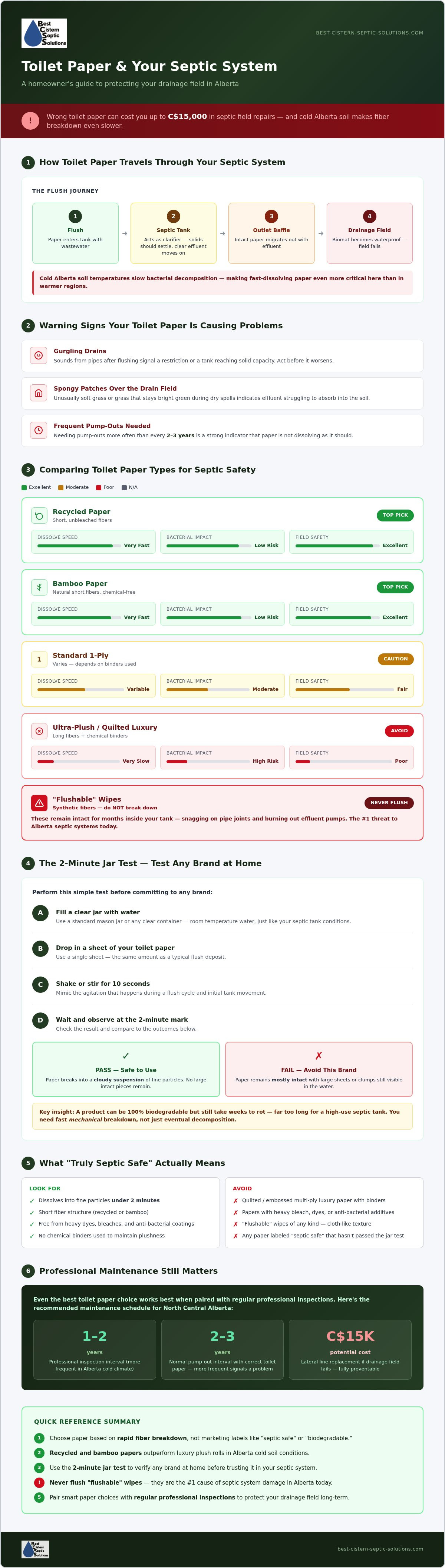
A septic tank is designed to act as a clarifier. It holds wastewater long enough for solids to settle so that only clear effluent moves toward your drainage field. When you use paper that stays intact, the tank fills prematurely. These suspended solids can then migrate out of the tank and into the perforated pipes of your drainage field. Once there, they contribute to the growth of a thick biomat layer. This biological slime is natural, but excess paper fibers cause it to become waterproof. This effectively seals off the soil and prevents drainage. Protecting a professional septic field installation requires keeping these solids exactly where they belong: inside the tank.
Common Signs Your Current Paper is Causing Problems
Identifying a problem early allows for a manageable resolution before a full system failure occurs. If your household habits are putting a strain on the system, you might notice these indicators:
- Gurgling drains: Sounds coming from your pipes after a flush often suggest a restriction or a tank that is reaching its capacity for solids.
- Spongy patches: Grass over your field that feels unusually soft or stays green during a dry spell may indicate that effluent is struggling to soak into the ground.
- Frequent pumping: While regular maintenance is vital, needing a pump-out more often than every two to three years might mean your paper isn't dissolving as it should.
Selecting the best toilet paper for septic systems ensures that your mechanical components function smoothly. It provides the long-term asset protection every homeowner deserves.
What Makes a Toilet Paper Truly 'Septic Safe'?
The "septic safe" label on a package is often more about marketing than mechanical reality. For a homeowner in Alberta, a truly safe product is one that dissolves rapidly into minute fibers within minutes of contact with water. This distinction is vital because the goal is to prevent large, intact sheets from floating toward the outlet baffle. While many people assume that 1-ply paper is the only option, the best toilet paper for septic systems is defined by its fiber structure rather than its thickness. Some modern 2-ply options are engineered to fall apart faster than a low-quality single-ply roll that uses heavy binders to maintain its strength.
We must also address the persistent myth of "flushable" wipes. These products are perhaps the single greatest threat to Alberta septic systems today. Unlike paper, these wipes are often made of synthetic materials or reinforced cellulose that does not break down in a tank environment. They remain intact for months, snagging on pipe joints and eventually burning out effluent pumps. In our experience, if a product feels like cloth, it should never enter your septic tank, regardless of what the packaging claims.
The Dissolvability Standard
There is a significant difference between biodegradability and dissolvability. A product can be 100% biodegradable but still take weeks to rot, which is far too long for a high-use septic tank. To protect your system, you need paper that breaks down mechanically. Many luxury "quilted" brands use chemical binders and glues to create that plush feel, but these agents resist water penetration. For the safety of your drainage field, septic-safe toilet paper should break down into a cloudy suspension in under two minutes when agitated in water.
Chemicals and Bacterial Health
Your tank is a living ecosystem that relies on specialized bacteria to liquefy solids. When you choose paper treated with heavy bleaches, dyes, or anti-bacterial coatings, you risk "stunting" this biological growth. Scent-free and dye-free options are always the superior choice for maintaining a healthy tank flora. These chemicals can quietly disrupt the understanding of septic systems and their natural balance, leading to a breakdown in the treatment process. If you suspect your tank's health has been compromised by harsh additives, a professional septic system inspection can help determine if your bacterial levels are sufficient for proper waste processing.
By focusing on rapid fiber breakdown and minimal chemical interference, you ensure your system remains a long-term asset for your property. This diligent approach to product selection prevents the invisible damage that leads to messy backups and expensive repairs.
Comparing TP Materials: Recycled, Bamboo, and Standard Cotton
The base material used in your toilet paper determines how it behaves once it hits the water. While most people choose based on price or feel, the technical composition of the fibers is what actually protects your utility system. Virgin wood pulp, recycled fibers, and bamboo each interact with your tank's ecosystem in different ways. Understanding these differences allows you to make a choice that serves as a long-term asset for your property rather than a hidden liability. When searching for the best toilet paper for septic systems, the goal is always to find a material that balances personal comfort with rapid mechanical breakdown.
Many homeowners fall into the "plush trap" by selecting ultra-soft, multi-ply papers made from virgin wood pulp. To keep these papers from falling apart during use, manufacturers often add synthetic resins or strengthening agents. These additives act like a glue, holding the fibers together even after they've been submerged in your tank for hours. This resistance to water is exactly what you want to avoid, as it leads to floating solids that can eventually clog your outlet baffle.
Recycled Paper Pros and Cons
Recycled paper is frequently the safest choice for tank health. The fibers in recycled products have already been processed and shortened during their previous life cycles. Because these fibers are shorter and weaker than virgin wood pulp, they lack the structural integrity to stay intact when wet. They pull apart almost instantly upon flushing. Modern manufacturing has significantly improved the texture of these products, moving away from the "rough" reputation they once had. For older systems in Parkland County that may be nearing their capacity, the rapid breakdown of recycled paper provides an extra layer of security against unexpected backups.
The Rise of Bamboo Toilet Paper
Bamboo has emerged as a high-performing middle ground for those who find recycled paper too thin. Bamboo fibers are naturally absorbent and strong when dry, yet they lack the heavy chemical binders found in premium quilted brands. This material offers a soft, luxury feel while maintaining a surprising level of dissolvability in water. It is an excellent hybrid solution for homeowners who want to prioritize sustainability without sacrificing comfort.
While bamboo or high-quality recycled options might have a slightly higher shelf price, the math is simple when you consider the alternative. The cost of a few extra cents per roll is negligible compared to the thousands of dollars required for a septic system repair. Investing in the best toilet paper for septic systems is a small, daily decision that prevents the mechanical failures that cause significant household stress. We recommend these materials as a proactive way to ensure your drainage field remains functional for decades to come.
How to Test Your Toilet Paper: The 2-Minute Jar Test
You shouldn't rely solely on marketing claims when your system's health is at stake. Many manufacturers use the "septic safe" label based on municipal sewer standards, which involve high-pressure pumps and long travel distances. In a rural septic tank, the environment is much more passive. The paper must break down on its own through simple water saturation and gentle agitation. Performing a home verification test is the most reliable way to ensure you've found the best toilet paper for septic systems. It's a simple process that takes less than five minutes and provides absolute clarity.
We recommend re-testing your preferred brand at least once a year. Manufacturers often update their "softness" formulas or change their fiber sourcing without changing the packaging. A brand that passed the test last year might use different binders today. This small effort acts as a proactive safeguard for your home's utility infrastructure.
Step-by-Step Testing Instructions
To conduct this test, you only need a clear glass jar with a lid, room temperature water, and two sheets of your current toilet paper. Follow these steps to verify dissolvability:
- Fill the jar approximately halfway with water.
- Drop the two sheets of paper into the water and let them sit undisturbed for 30 seconds.
- Secure the lid and shake the jar vigorously for exactly 10 seconds.
- Set the jar down and observe the contents immediately.
If the water looks cloudy and the paper has disintegrated into tiny, snowflake-like fibers, it's safe for your tank. If you see large clumps, intact sheets, or a "roping" effect where the paper twists together, it poses a significant risk to your septic field. These intact pieces are what eventually snag on baffles and lead to sluggish drainage.
What to Do If Your Paper Fails
A failed test is not a cause for panic, but it is a signal to take action. The immediate step is to stop using that specific brand and switch to a high-dissolvability alternative like recycled or bamboo paper. If you've been using a "failing" brand for several years, there may be an accumulation of undissolved solids near your outlet baffle. In such cases, scheduling a septic service in Edmonton is a wise move to assess the current state of your tank.
Professional technicians can also check the condition of your effluent filter. This component acts as the final line of defense, catching any paper that hasn't fully broken down before it can reach your drainage field. If you are concerned about your system's performance after a failed jar test, contact us for professional Septic System Inspections to restore your peace of mind. Regular testing ensures your best toilet paper for septic systems choice remains a durable asset for your home.
Professional Maintenance: Protecting Your Alberta Septic Field
While selecting the best toilet paper for septic systems is a critical daily habit, it is only one part of a complete property care strategy. In North Central Alberta, the cold soil temperatures create a biological environment that requires precise management. Bacterial activity slows down significantly during the winter months; this means your tank has less "processing power" to break down organic solids. A neglected system can fail even if you use high-quality paper, as the accumulation of sludge is an inevitable part of the system's life cycle. Professional maintenance ensures that these natural processes don't turn into expensive repairs.
The Role of Professional Inspections
Regular inspections are the most effective way to gain peace of mind regarding your rural utility systems. Technicians look for "paper bergs," which are large, floating masses of undissolved fibers that can obstruct the inlet or outlet baffles. These obstructions often lead to slow drains or sudden backups that cause significant household stress. For residents in Leduc and Sturgeon Counties, an inspection provides a clear look at the tank's internal health. We identify early signs of drainage field stress, such as biomat thickening, before they lead to a total system failure. This proactive approach treats your septic system as a long-term asset rather than a hidden worry.
Long-Term Solutions for Failing Fields
Sometimes, habit changes aren't enough to correct years of neglect or the use of improper paper. If you notice persistent odors, spongy grass, or gurgling pipes, the drainage field may already be struggling to absorb effluent. Our team specializes in diagnosing these issues and providing durable restoration solutions. We don't just treat the symptoms; we address the underlying mechanical and biological causes of the failure. Whether you need a simple component fix or a more complex field restoration, we focus on transparency and thoroughness throughout the process. Contact Best Cistern Septic Solutions for a professional inspection today to ensure your system remains reliable for years to come.
Maintaining a healthy system is a partnership between your daily choices and professional oversight. Use this final checklist to ensure your bathroom habits are truly septic-safe:
- Verify your paper: Only use brands that pass the two-minute jar test mentioned earlier.
- Ban the wipes: Keep all "flushable" wipes out of your plumbing system entirely.
- Monitor your field: Watch for unusually lush grass or damp spots over the drainage area.
- Stick to a schedule: Ensure a professional inspection occurs every two to three years to catch "paper bergs" early.
Securing the Long-Term Health of Your Septic System
Your septic system is one of the most vital utility assets on your property. By prioritizing rapid-dissolve fibers and using the simple jar test for verification, you've taken a significant step toward preventing mechanical failures. It's helpful to remember that even the best toilet paper for septic systems works most effectively when the rest of the system is in peak condition. Proper paper choice prevents new clogs, but it cannot remove years of existing sludge or restore a field that is already under stress.
Our team provides grounded, local expertise for rural Alberta properties across Parkland, Leduc, and Sturgeon Counties. We specialize in thorough septic field repair and restoration, ensuring your wastewater treatment remains reliable in our unique climate. Combining your diligent household habits with our professional oversight transforms your utility system into a durable, long-term asset rather than a source of stress.
Prevent costly clogs with a professional septic inspection from Best Cistern Septic Solutions. A professional check is the ultimate promise of a worry-free home.
Frequently Asked Questions
Is 2-ply toilet paper safe for septic systems?
Many 2-ply brands are perfectly safe if they are engineered for rapid dissolvability. You shouldn't assume that thickness alone dictates risk. The best toilet paper for septic systems is one that breaks down into fine fibers within minutes, regardless of the ply count. Use the jar test to verify your preferred 2-ply brand before committing to long-term use. This ensures your system's mechanical components remain clear and functional.
Can I use 'flushable' wipes if my septic tank was recently pumped?
You should never flush wipes, even if your tank was just serviced. Pumping removes the current waste, but it doesn't prevent new wipes from snagging on pipe joints or clogging the effluent pump. These products are reinforced with synthetic materials that don't break down in a passive tank environment. Using them is a leading cause of sudden, messy backups that require professional intervention and repair.
What happens if I use the wrong toilet paper in my septic system?
Using the wrong paper causes "paper bergs" to form, which are large masses of undissolved fibers that float in the tank. These solids can eventually bypass the outlet baffle and enter your drainage field. Once there, they plug the perforated pipes and seal the soil. This invisible damage often leads to a complete system failure, requiring an expensive restoration of the entire wastewater absorption area.
Are bamboo toilet papers actually better for septic tanks than recycled ones?
Both are excellent choices for maintaining tank health. Recycled paper generally breaks down the fastest because its fibers are already short and weak. Bamboo is a high-performing alternative that provides more comfort while maintaining excellent dissolvability. Both options are superior to premium virgin wood pulp brands that use chemical binders. Choosing either material is a proactive way to protect your utility system and ensure its long-term durability.
How often should I have my septic tank inspected in Parkland County?
We recommend a professional inspection every two to three years for residents in Parkland and Leduc Counties. This frequency allows us to monitor sludge levels and check the health of your drainage field before small issues become emergencies. Regular oversight is especially important in Alberta, where cold soil temperatures slow down the natural bacterial processes that keep your tank's solids layer under control.
Does bleach-free toilet paper make a difference for septic bacteria?
Bleach-free and scent-free papers are much safer for your tank's delicate ecosystem. Harsh chemicals can kill the beneficial bacteria that liquefy waste, leading to a faster accumulation of solids. When bacterial activity is stunted, your system becomes less efficient at processing the best toilet paper for septic systems. Maintaining a chemical-free environment ensures your tank functions as a living, self-sustaining treatment process for your rural household.
Why is my septic system gurgling when I use certain TP brands?
Gurgling is a common warning sign that your plumbing is struggling to vent or drain properly. If it happens with specific brands, it's likely that the thick paper is creating a temporary blockage at the inlet baffle. This restriction causes air to push back through the pipes, resulting in that distinctive sound. Switching to a more dissolvable product often resolves the issue and prevents a more serious backup from occurring.
Can undissolved toilet paper ruin a septic field?
Undissolved paper is a primary threat to the longevity of your septic field. When fibers migrate out of the tank, they settle in the drainage pipes and contribute to an overgrown biomat layer. This layer eventually becomes waterproof, preventing effluent from soaking into the ground. Once a field is sealed by these solids, professional repair or a full field installation is usually the only way to restore functionality.


