
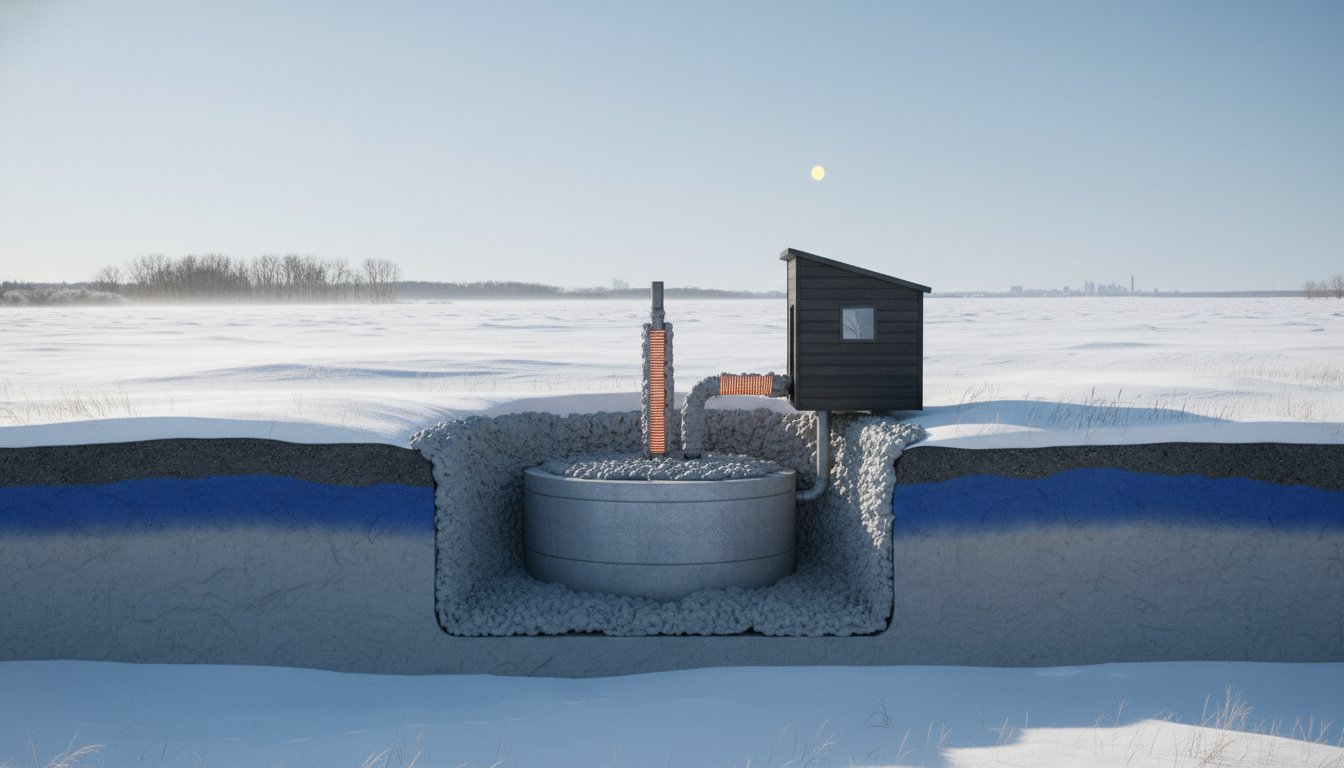
Last January, a homeowner near Edmonton woke up to a silent faucet during a week-long -40°C cold snap, discovering that their frost protection had failed at the most critical moment. It's a stressful scenario that many rural residents face, especially when the ground freezes deep enough to reach vulnerable infrastructure. You likely know that keeping the water flowing isn't just about comfort; it's about the safety and integrity of your home. Successfully winterizing a cistern in Alberta climate requires more than a simple layer of insulation. It demands a dual strategy of thermal mass management and mechanical redundancy to withstand our unique environmental pressures.
We agree that the uncertainty of local frost line depths, which can reach 1.8 meters or more, shouldn't keep you up at night. This guide provides the professional blueprint for protecting your rural water supply using the latest 2023 National Building Code standards and CSA B126 specifications. You'll learn how to implement high-performance solutions like closed-cell spray foam and self-regulating heat tracing to ensure uninterrupted water access all winter. We'll walk through the technical steps of deep-burial techniques and system maintenance that turn your cistern into a long-term asset for your property.
Key Takeaways
- Understand how the 7 to 8 foot frost line in North Central Alberta affects your system and why maintaining soil insulation is a critical first step.
- Identify why the pump house is the most common failure point and how to choose between heat tape and thermostatic heaters for reliable protection.
- Follow a structured timeline for winterizing a cistern in Alberta climate, starting with essential cleaning and inspections in early autumn.
- Learn to verify the mechanical integrity of your thermostats and heat tapes to prevent expensive emergency repairs during extreme cold snaps.
- Discover the value of professional diagnostics in identifying hidden vulnerabilities that a simple visual check might miss.
Why Alberta Winters Pose a Unique Threat to Your Cistern
Winterization is the process of securing water storage and delivery systems against sub-zero temperatures. In North Central Alberta, we experience extreme temperature swings that can compromise the structural integrity of your tank. These shifts aren't just uncomfortable; they're physically taxing on your infrastructure. To understand the foundation of your system, it's helpful to review What is a Cistern? and how it serves your rural property. This foundational knowledge helps you appreciate why a simple layer of insulation isn't enough to withstand a prairie winter.
Many homeowners adopt a "set it and forget it" approach, but this often leads to system failure during the deep freezes of January. Mechanical components like thermostats and heat tapes have finite lifespans. When these parts fail in -40°C weather, the cost of emergency repairs far exceeds the price of a proactive checkup. Successfully winterizing a cistern in Alberta climate means staying ahead of these mechanical risks. It ensures your water supply remains a reliable asset rather than a source of winter stress. A little preparation in the autumn prevents a major crisis in the dead of winter.
The Danger of Frost Heave in Parkland County
The clay-rich soil common in Parkland County presents a specific challenge. This soil holds moisture tightly, causing it to expand with incredible force when it freezes. This expansion, known as frost heave, puts direct pressure on the walls of your tank. Concrete cisterns are rigid and may crack if the ground shifts unevenly around them. Plastic models are more resilient to shifting but can still buckle under extreme pressure if the installation didn't account for soil expansion. Check for early warning signs like a misaligned access lid or visible stress in the pump house floor before the ground hardens.
Thermal Mass: Why Water Levels Matter
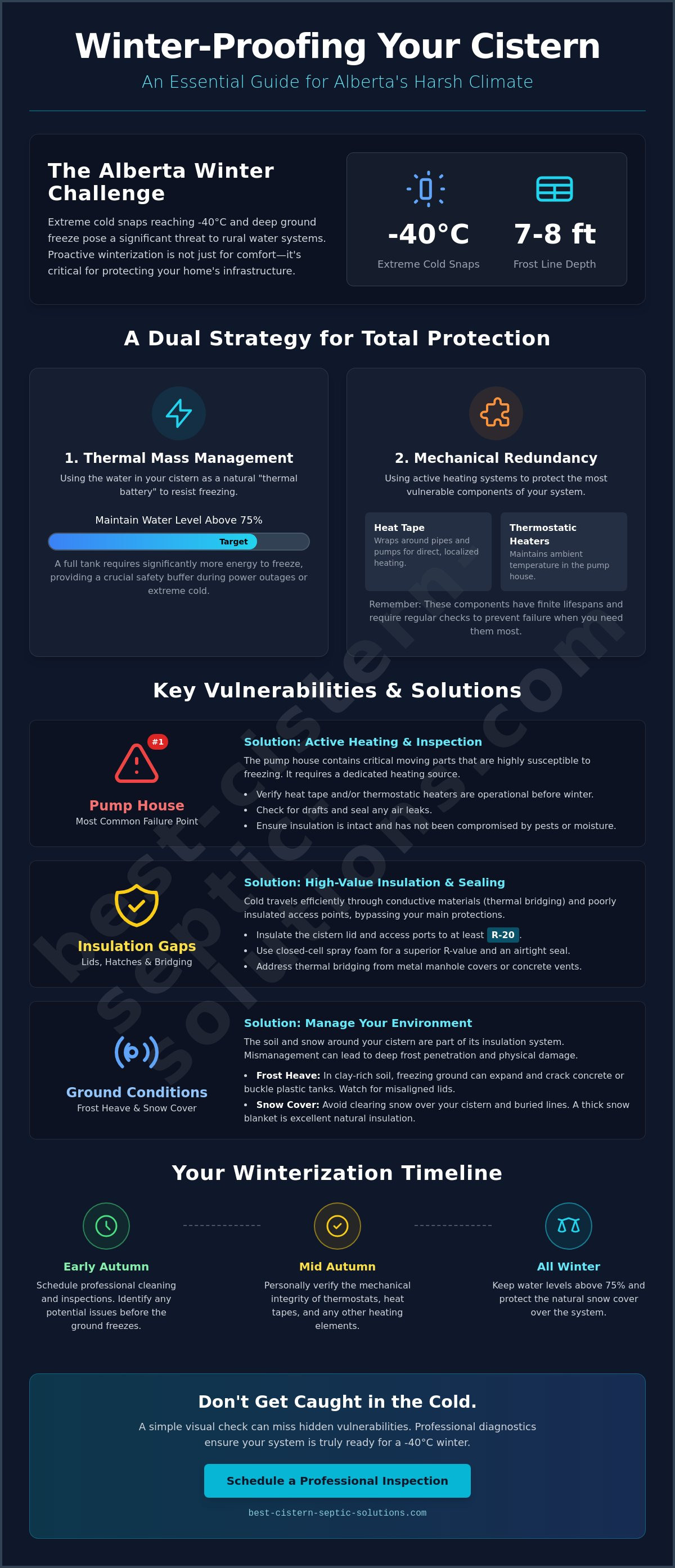
Thermal mass is the ability of a material, such as water, to absorb, store, and release heat energy, effectively slowing down temperature changes within the storage environment. A full cistern acts as a large thermal battery for your home. It takes significantly more energy for a large volume of water to freeze compared to a nearly empty tank. We suggest keeping your cistern at least 75% full during the coldest months of December and January. This simple habit provides a critical safety margin if your primary heating system experiences a brief power outage or mechanical hiccup.
The Science of Frost: Protecting Your Cistern from Deep Freeze
North Central Alberta presents a unique challenge for rural water systems. While southern parts of the province may see frost reach four feet, the Edmonton area and surrounding counties often experience a frost line between seven and eight feet deep. This depth is a critical benchmark for anyone winterizing a cistern in Alberta climate. If your tank or lines sit above this level, you're relying entirely on insulation and mechanical heat to prevent a freeze. Understanding these subterranean mechanics is the first step toward a reliable winter water supply.
Snow cover is your most effective natural ally. A thick layer of undisturbed snow acts as a thermal blanket, trapping ground heat and protecting the soil below. However, a phenomenon known as "frost driving" occurs under cleared driveways and walking paths. Removing snow allows the cold to penetrate much deeper and faster into the soil. This can push the frost line well below the standard depth, potentially reaching pipes that were previously considered safe. It's best to avoid clearing snow over your cistern or buried water lines whenever possible.
Thermal bridging is another silent risk to your system. Cold air travels efficiently through conductive materials like metal manhole covers or concrete vents. These components act as a highway for sub-zero temperatures to reach the water below. If you're concerned about how these factors affect your specific setup, a professional Septic System Inspection can identify hidden thermal leaks before they become a problem. Addressing these bridge points ensures your heating system doesn't have to work overtime.
Insulating the Cistern Lid and Access Ports
The access hatch is often the weakest link in your frost protection. For Zone 3 climates like ours, we recommend an insulation value of at least R-20 for the lid. Closed-cell spray foam is the superior choice here. It offers an R-value of 6 to 7 per inch and resists moisture absorption, which is vital in a damp cistern environment. Rigid foam board is a viable alternative if you seal it tightly against the hatch. A secure, airtight seal prevents cold drafts from entering the headspace above the water level.
Venting and Airflow Management
Cisterns must breathe to function. As water is pumped out, air must enter the tank to prevent a vacuum that could stress the walls or stall the pump. However, vent pipes are prone to frost-clogging when moist air from the tank hits the freezing exterior air. We suggest installing "T" or "U" shaped vent caps to prevent snow burial and ice buildup. You should also watch for the "chimney effect," where warm air escapes and pulls freezing air into the system. Properly sized and insulated vents balance these needs, keeping the tank safe and operational.
Critical Components: Pumps, Pipes, and the Pump House
While a buried tank benefits from the natural insulation of the earth, the above-ground components of your system face the full force of an Alberta winter. The pump house is the most frequent failure point in rural water systems. It acts as the vital transition between the protected cistern and your home, yet it remains exposed to ambient air temperatures and piercing wind chill. Successfully winterizing a cistern in Alberta climate requires a focused effort on this small but essential structure. A failure here can lead to a total loss of water access in minutes, making it the primary area for mechanical redundancy.
Choosing the right heating method for your pump house is a balance of efficiency and reliability. Many homeowners use thermostatic space heaters to maintain a steady temperature above five degrees Celsius. Others prefer the direct application of heat tape on the pipes themselves. We find that a combined approach offers the best peace of mind. If the space heater fails, the heat tape serves as a critical second line of defense. Redundancy is a core principle of property preservation in our environment. It's also wise to consider the placement of your pressure tank. If it sits in a semi-heated space, it requires dedicated insulation or a local heat source to prevent the internal bladder from freezing and rupturing.
Heat Tape and Pipe Insulation Best Practices
Self-regulating heat tape is the professional standard for pipe protection. These cables automatically adjust their heat output based on the pipe's temperature, which prevents energy waste and reduces the risk of overheating. You must never overlap the cable during installation. Overlapping creates concentrated hot spots that can damage the pipe or create a fire hazard. Pay special attention to elbows, valves, and T-junctions. These components have more surface area and hold less water volume than straight pipe sections, making them the first areas to succumb to a deep freeze.
Monitoring and Alarm Systems
Relying on a manual check of your pump house during a blizzard isn't a sustainable strategy. Modern monitoring systems provide a sophisticated layer of security by sending real-time data to your smartphone. A low-temperature alarm is a simple, effective tool that alerts you the moment your heating system fails. This proactive technology allows you to resolve a problem before the water lines actually freeze. This level of oversight is a standard part of a professional septic alarm installation, and applying the same logic to your cistern ensures your household remains safe and functional throughout the season.
A Step-by-Step Alberta Cistern Winterization Checklist
Preparation is the most effective tool you have against the unpredictable nature of our winters. Timing your maintenance is as vital as the maintenance itself. By following a structured schedule, you ensure that every mechanical component and structural element is ready before the ground hardens. Successfully winterizing a cistern in Alberta climate means acting while the weather is still cooperative, typically in early autumn. This proactive approach transforms a complex technical task into a manageable routine that preserves your property's value.
- Step 1: Conduct a thorough cleaning and inspection in September or October. Addressing sediment and structural checks while the ground is workable prevents mid-winter emergencies.
- Step 2: Verify the integrity of all heat tapes and thermostats. Test these systems manually to ensure they activate at the correct temperature thresholds.
- Step 3: Schedule a full water delivery before the first major snowfall. A high water volume increases your system's thermal mass, providing a natural buffer against freezing.
- Step 4: Insulate any exposed components and secure the cistern lid. Use weighted covers or bolts to prevent high prairie winds from shifting your frost protection.
- Step 5: Test your backup power sources. Ensure your generator is serviced and ready to power the cistern pump during potential winter utility outages.
The Pre-Winter Cleaning Ritual
Removing sediment from the bottom of your tank every autumn is a critical step that many homeowners overlook. Over time, fine particles settle and can be pulled into the intake, causing premature wear on your Cistern Pump or clogging internal filters. This cleaning also provides the perfect opportunity to inspect the interior walls for hairline cracks. In our climate, even a tiny fissure can be widened by the force of ice expansion or soil shifting. For a deeper look at long-term care, you can review our guide on cisterns for rural properties. If you notice any signs of wear during your checklist, our team provides professional Septic Maintenance and cistern diagnostics to ensure your system remains a reliable asset.
Winter Logistics: Water Hauling in the Cold
Logistics become significantly more difficult once the snow flies. Heavy water trucks require a stable, cleared path to reach your fill pipe safely. It's your responsibility to ensure driveways are plowed and sanded, and the area around the fill port is clearly marked and accessible. With the 2026 updates to the Alberta Water Act encouraging larger storage capacities, many residents are managing higher volumes than in previous years. We recommend never letting your water level drop below 25% during February. This month often brings our most sustained deep freezes, and a low tank is much more susceptible to frost penetration than a full one.
Professional Maintenance for Long-Term System Integrity
A visual check by a homeowner is a vital first step, but it cannot replace the depth of a professional diagnostic. While you might notice that a heater is running, a specialized technician verifies if that heater is operating at peak efficiency or if it's drawing excessive power due to an aging element. Successfully winterizing a cistern in Alberta climate requires this level of precision to ensure your water supply remains a reliable asset. At Best Cistern Septic Solutions, we evaluate your system through a lens of long-term durability. We look past the immediate symptoms to ensure the underlying mechanical integrity of your infrastructure is sound. This shift from reactive repairs to proactive care is what separates a stressful winter from a season of total peace of mind.
We treat every inspection as a property preservation strategy. When we identify a small vulnerability in October, we prevent a catastrophic failure in January. This methodical approach is designed to build trust gradually, moving from identifying a potential risk to offering a definitive professional fix. By viewing your cistern as a critical utility rather than just a storage tank, you protect the safety of your household and the value of your rural property. Our goal is to remove future worries so you can focus on enjoying your home, regardless of how low the temperature drops.
What a Professional Inspection Includes
Our diagnostic process utilizes advanced technology to see what the naked eye cannot. We perform ultrasonic tank wall testing to measure the thickness and integrity of your cistern, which is especially important for older concrete models that may be thinning due to soil acidity. We also use thermal imaging technology to identify "cold spots" in your pump house or around the cistern lid where heat might be escaping. Our technicians conduct a full review of electrical connections and heater safety to ensure every component meets the National Building Code – 2023 Alberta Edition standards. This thoroughness ensures your system operates safely and avoids the high costs of mid-winter emergency interventions.
Securing Your Rural Property's Future
A certified winter-ready system is a long-term asset for any rural home. Regular Septic Maintenance and professional cistern care can significantly extend the lifespan of your cistern installation, protecting your initial investment for decades. When your system is maintained according to CSA B126 standards, you gain the security of knowing your water supply is resilient against the harshest prairie conditions. We encourage you to take the next step in property care by booking your fall assessment before the ground freezes. A proactive checkup is the most effective way to ensure your household remains safe, hydrated, and worry-free all winter long.
Ensure a Worry-Free Winter for Your Rural Water Supply
Protecting your home from the harshest prairie conditions is a matter of proactive planning and technical precision. You've learned that winterizing a cistern in Alberta climate requires more than just a layer of foam. It demands a strategy that accounts for deep frost lines and mechanical redundancy. By maintaining high water levels for thermal mass and verifying your heating systems before October, you turn a potential seasonal stressor into a managed routine. These methodical steps preserve your property's value and ensure your family has uninterrupted water access when the temperature drops to -40°C.
Our team provides grounded, professional advice tailored to the specific environmental challenges of Parkland, Leduc, and Sturgeon Counties. We specialize in providing the peace of mind that comes from a resilient, well-maintained system. Secure your water supply with a professional cistern inspection from Best Cistern Septic Solutions today. Our local experts are ready to help you move toward a proactive care mindset. You can face the coming season with confidence, knowing your infrastructure is prepared for whatever the Alberta winter brings.
Frequently Asked Questions
How deep should a cistern be buried in Alberta to avoid freezing?
A cistern should be buried at least 1.8 to 2.4 meters deep in North Central Alberta to stay below the frost line. While southern regions like Calgary may find 1.2 meters sufficient, the Edmonton area requires greater depth due to more sustained cold periods. Ensuring your tank reaches these depths is a fundamental part of winterizing a cistern in Alberta climate. If your tank is shallower, you must compensate with high-performance insulation like closed-cell spray foam.
Can I use an immersion heater directly inside my potable water cistern?
You should generally avoid using standard immersion heaters inside a potable water cistern unless they are specifically certified for drinking water systems. Most common heaters are designed for livestock tanks and can leach chemicals or heavy metals into your supply. Instead, focus on heating the air in the pump house or using self-regulating heat tape on the intake lines. These methods provide a safer resolution for maintaining water temperature without risking contamination.
What is the best insulation for a cistern lid in a Zone 3 climate?
Closed-cell spray foam is the most effective insulation for cistern lids in our Zone 3 climate. It provides a high R-value of 6 to 7 per inch and creates an airtight seal that prevents cold drafts from entering the tank headspace. Unlike fiberglass or open-cell alternatives, closed-cell foam resists moisture absorption. This durability ensures your insulation remains effective even in the damp environment of a water storage system.
How do I thaw a frozen water line leading from my cistern to my house?
The safest way to thaw a frozen line is by using a specialized internal heat source or a professional pipe thawing service. You should never use an open flame or high-heat torch on buried lines, as this can damage the pipe material or create a fire hazard in the pump house. If your lines freeze frequently, it suggests a lack of adequate burial depth or failed heat tape. A professional diagnostic can help identify the exact point of failure.
Is it safe to let my cistern go empty during the winter months?
Leaving a cistern empty during the winter is not recommended because it removes the thermal mass that helps prevent the system from freezing. A full or partially full tank retains ground heat much longer than an empty one. Additionally, an empty tank is more susceptible to the pressure of frost heave, which can cause structural damage to the walls. We suggest keeping your water level at least 25% to 50% full throughout the coldest months.
How often should I check my pump house heater during a cold snap?
You should check your pump house heater at least once a day during an extreme cold snap. Mechanical failures often happen when the system is under the most stress, and a single night of sub-zero temperatures can lead to a total system freeze. For better peace of mind, consider installing a low-temperature alarm. This technology provides 24/7 monitoring and alerts you immediately if the temperature drops below a safe threshold.
Does snow cover help or hurt my cistern's temperature regulation?
Undisturbed snow cover helps your system by acting as a natural thermal blanket for the soil. Snow traps heat within the ground and prevents the frost line from driving deeper into the earth. You should avoid plowing or packing down snow directly over your buried cistern and water lines. Maintaining this natural insulation layer is one of the simplest ways to assist in winterizing a cistern in Alberta climate.
What should I do if my cistern pump stops working in -30°C weather?
Check your electrical breaker and the temperature inside your pump house first to see if a simple freeze is the cause. If the heater is running and the power is on, you likely have a mechanical failure or a frozen intake line. In these conditions, you should contact a professional for a Cistern Pump diagnostic. Attempting to force a frozen pump to run can burn out the motor, leading to a more expensive replacement.


