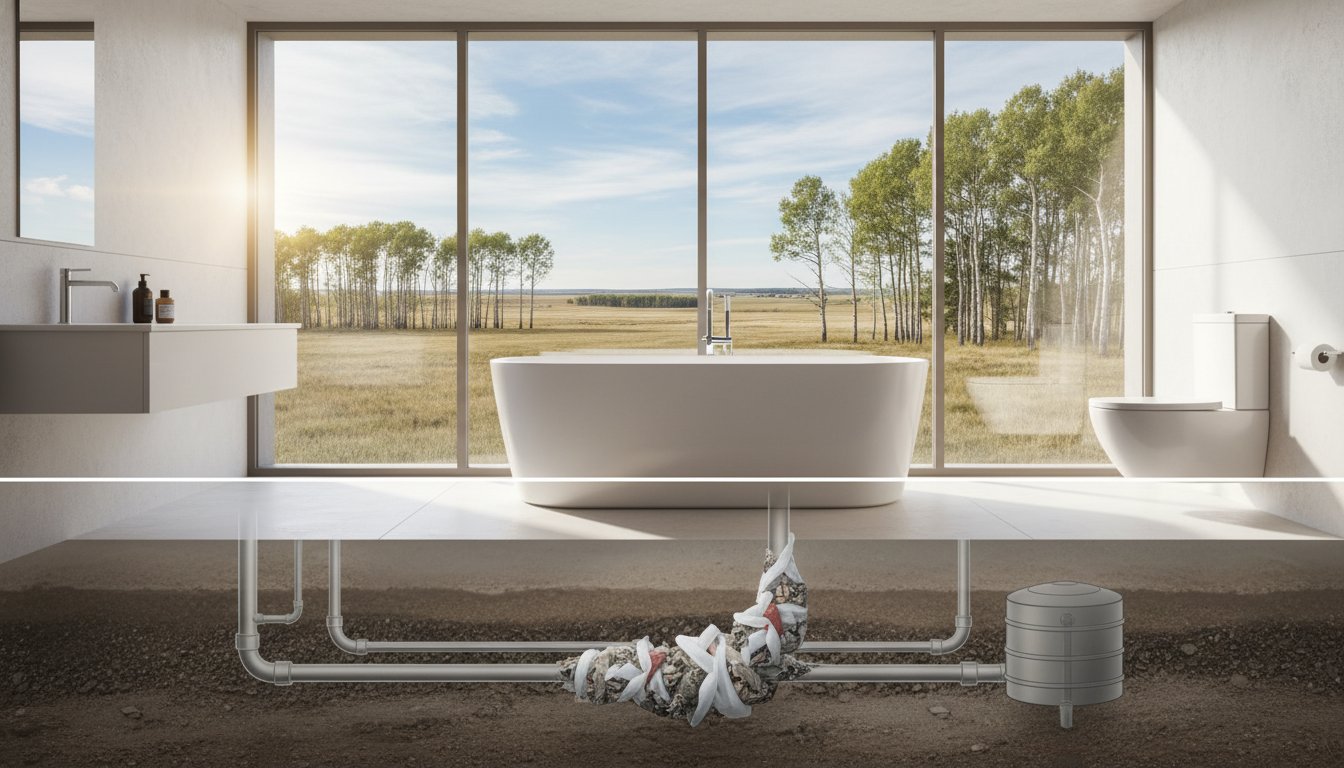
What if the "flushable" label on your household wipes is actually a silent threat to your property's most expensive utility? In Alberta, where upwards of 150,000 properties rely on private sewage systems, the line between a healthy yard and a costly drainage field failure is often thinner than you think. You likely understand that your septic system is a living, biological asset, yet it's easy to feel uncertain about which modern products are truly safe for your pipes. Understanding exactly what not to flush into a septic tank is the most effective way to prevent the stress of sewage backups and the high cost of premature system replacement.
We agree that your home should be a place of comfort, not a source of constant maintenance anxiety. You want to feel confident that your wastewater is flowing safely and that your property value is protected. By learning how to manage your system correctly, you can ensure it remains a durable, long term asset for your home. This article provides a clear, professional list of items and chemicals that sabotage your tank's performance. You'll also discover how to protect your soil's absorption capacity and maintain the structural integrity of your system for decades to come.
Key Takeaways
- Understand the three-layer structure of your tank to better visualize how non-degradable items disrupt the natural separation of scum, effluent, and sludge.
- Identify the definitive list of what not to flush into a septic tank, including the specific "flushable" products that often cause structural blockages in rural systems.
- Learn why common household chemicals like antibacterial soaps and caustic drain cleaners act as biological killers that stall your system's essential waste digestion.
- Discover the link between improper disposal habits and the growth of biomat, a primary cause of drainage field saturation and soil failure.
- Master a proactive five step protocol to manage accidental flushes and maintain your system as a durable, long term property asset.
The Septic Ecosystem: Why Your Alberta Home Isn't on City Sewer
Living in rural Alberta offers peace and space, but it also places you in charge of your own utility management. Unlike a city connection where waste simply disappears into a municipal grid, your home relies on a private septic tank. This is a sophisticated, living biological treatment facility. It isn't a trash can for household waste; it is a carefully balanced environment where nature performs the heavy lifting of sanitation. When you treat the system with care, it functions as a reliable, invisible asset for your property.
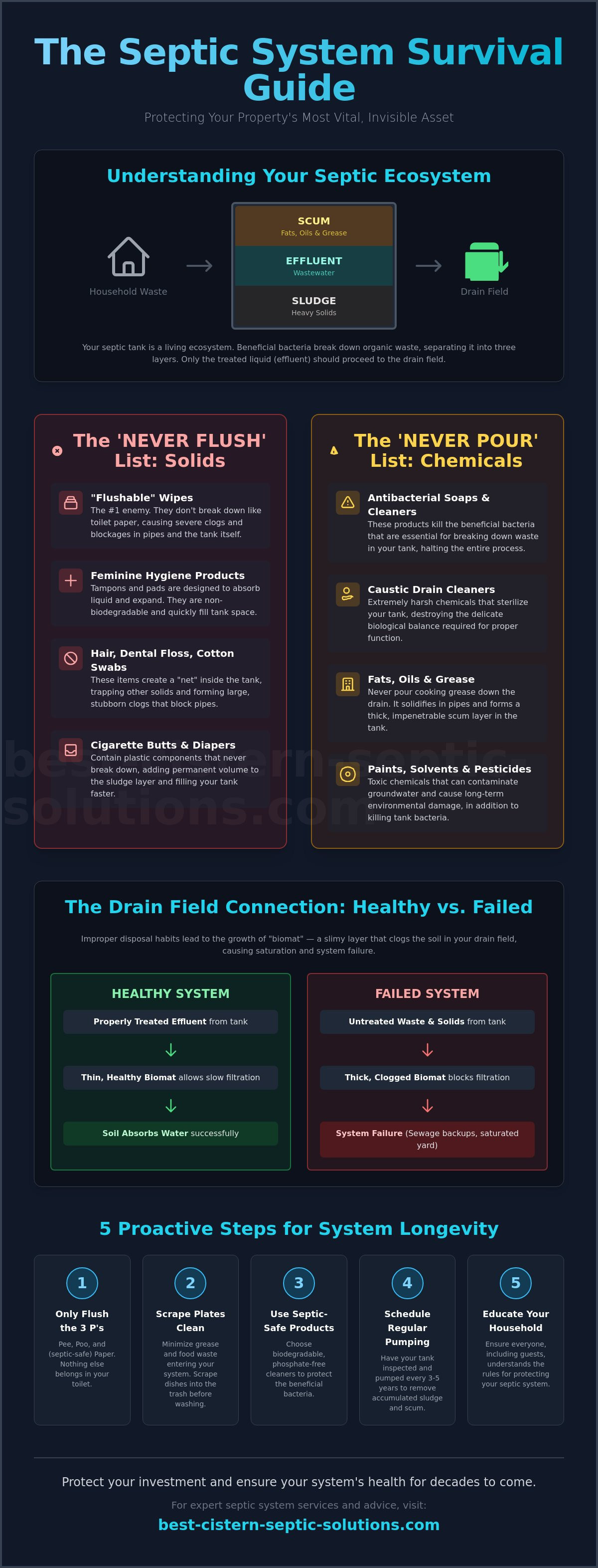
Within the tank, wastewater separates into three distinct layers. The top layer, known as the scum, consists of fats, oils, and grease that float to the surface. The bottom layer is the sludge, which contains heavier solids that sink. In between sits the effluent, the relatively clear liquid that eventually moves to your drainage field for final treatment. The success of this separation depends entirely on the stability of the tank. When homeowners disregard what not to flush into a septic tank, they risk mixing these layers, which can send solids into the field and cause permanent soil damage.
Alberta's climate adds a layer of complexity to this process. Our long, cold winters significantly lower the internal temperature of the tank and the surrounding soil. Cold temperatures naturally slow down the metabolic rate of the bacteria responsible for breaking down waste. This means your system is most vulnerable when the ground is frozen. A healthy biological balance is your best defense against failure during a deep freeze, as it ensures the system continues to process waste even when the environment is harsh.
The Role of Beneficial Bacteria
Anaerobic bacteria are the silent workers of your system. They thrive in the oxygen-free environment of the tank, where they digest organic solids to reduce the volume of the sludge layer. If you introduce harsh substances, you kill these colonies and stop the digestion process entirely. Without these microbes, sludge accumulates at an accelerated rate, leading to backups or the need for unexpected repairs. Septic flora is the microscopic engine of your wastewater system.
Why Rural Systems are More Sensitive
City sewer systems use mechanical aeration and massive chemical treatments to process waste. In contrast, your rural system is a low volume, biological process that relies on the natural absorption capacity of the earth. In areas like Parkland and Leduc Counties, the soil often has specific drainage characteristics that limit how quickly it can process effluent. If the biological treatment in the tank fails, the drainage field quickly becomes overwhelmed by untreated waste. You can learn more about these local soil conditions in our guide to Understanding Septic Systems. Maintaining this balance is a proactive way to ensure your property remains a safe, functional home for decades.
The 'Never Flush' List: Solid Waste That Destroys Septic Integrity
Every flush carries the potential to either support or sabotage your property's infrastructure. While it is tempting to treat the toilet as a universal disposal, your septic system requires a specific environment to function correctly. To maintain this balance, you must distinguish between items that belong in the tank and what not to flush into a septic tank. Solid waste generally falls into two dangerous categories: non-biodegradables that never break down and slow-decomposers that overwhelm the system's biological capacity before they can vanish.
Items like feminine hygiene products, contraceptives, and cigarette butts are primary offenders in the non-biodegradable category. These materials settle in the sludge layer or float in the scum, but they never truly disappear. Over time, they consume valuable space, forcing the tank to reach capacity much faster than intended. Additionally, seemingly harmless debris like hair and dental floss creates a "net" inside your plumbing. These fibers snag other waste particles, forming large, stubborn clogs that can obstruct the flow of effluent and lead to stressful household backups.
The 'Flushable' Myth Exposed
Marketing labels often use the word "flushable" to describe wet wipes, but this term only means the item will clear your toilet bowl. It does not mean the product is safe for a septic environment. Unlike toilet paper, which is designed to disintegrate within seconds of saturation, synthetic wipes remain intact for months. These wipes frequently drift toward the outlet and clog effluent filters or wrap around pump intake screens. This mechanical interference can cause your system to stall or trigger a high water alarm. Following a strict "trash only" policy for all wipes is a professional standard that provides long term peace of mind. You can find more detailed guidance on protective habits in this guide on How to Care for Your Septic System.
Kitchen Scraps and the Garbage Disposal Debate
In Alberta's rural communities, we generally discourage the use of garbage disposals. These units grind food into fine particles that significantly increase the organic load on your tank. Coffee grounds and eggshells are particularly problematic; they do not break down and instead increase sludge density, which can eventually migrate into your drainage field. This excess organic material accelerates the growth of biomat, a thick layer that can eventually choke your soil's ability to absorb liquid. When the soil becomes saturated, the risk of needing septic field repairs increases dramatically. Choosing to compost your kitchen scraps instead of washing them down the drain is a simple, effective way to ensure your septic solutions continue to protect your property value for decades.
Chemical Killers: Household Products That Sabotage Septic Biology
While solid waste creates physical barriers, chemical intruders cause a silent, biological collapse. Your system relies on a delicate balance of microbes to liquefy waste and maintain clear effluent. When considering what not to flush into a septic tank, liquid chemicals are often the most overlooked threat. These substances don't just sit in the tank; they alter the pH and sterilize the environment, effectively "turning off" the digestion process that prevents sludge from overflowing.
Products that claim to kill 99.9% of germs are highly effective at their job. Unfortunately, that percentage includes the beneficial anaerobic bacteria that keep your system healthy. Using these soaps and cleaners daily creates a toxic environment that halts natural decomposition. To maintain a healthy system, we recommend switching to biodegradable soaps and vinegar-based cleaners. These alternatives provide a thorough clean without compromising the microbial engine of your home. A single gallon of bleach can stop a 1,000-gallon tank's digestion for weeks.
The Danger of Antibacterial Everything
Many homeowners feel tempted to use "septic starters" or additives to boost performance. In a well-managed system, these products are generally unnecessary. They can even be harmful by causing solids to stay in suspension, allowing them to flow into the drainage field rather than settling in the tank. Caustic drain cleaners are another major concern. They are designed to burn through clogs but can also damage your internal plumbing and kill the tank's biology. Similarly, paints, solvents, and motor oils should never enter your drains. These chemicals can bypass the treatment process and contaminate the local groundwater, posing a risk to the surrounding Alberta environment. For a clear list of what not to flush into a septic tank to ensure your system continues to function properly, professional resources offer definitive guidelines on chemical safety, such as this guide on what not to flush.
Medications and Your Septic System
Your household's health can indirectly impact your septic health. Antibiotics are designed to eliminate bacteria, and they do not distinguish between an infection in your body and the beneficial colonies in your tank. Chemotherapy drugs and other high-potency medications are particularly disruptive because they can linger in the effluent for extended periods. You should never flush expired pills or liquid medications down the toilet. Residents in the Edmonton Capital Region should utilize local hazardous waste drop-off sites or pharmacy take-back programs. This small step ensures that potent chemicals stay out of your private utility and the shared water table, preserving the integrity of your property for the future.
The Drain Field Connection: Protecting Your Soil’s Absorption Capacity
While the tank handles the initial separation of waste, the drainage field is the true workhorse of your property's utility system. It is here that the effluent undergoes final purification as it filters through layers of gravel and soil. The health of this field is entirely dependent on the quality of the liquid leaving your tank. Knowing what not to flush into a septic tank is essentially an insurance policy for your yard. When the wrong materials enter the system, they bypass the tank's natural filters and settle in the soil, leading to a permanent loss of absorption capacity.
A critical component of this process is the "biomat," a layer of specialized bacteria that forms at the interface where the drainage trench meets the soil. In a balanced system, this layer helps filter out remaining pathogens. However, research indicates that over 95% of septic system failures result from the soil in the disposal field becoming clogged with excessive biomat. When you flush non-biodegradable solids or chemicals that stall the tank's biology, you provide the wrong kind of "food" for this layer. It grows too thick and creates a biological seal that prevents liquid from soaking into the ground. This often results in spongy, unusually lush green grass or persistent sewage odors near the field area.
Fats, Oils, and Grease (FOG)
Fats, oils, and grease are particularly destructive because they don't just stay in the tank. Small particles of FOG often remain suspended in the effluent and travel into the perforated pipes of your drainage field. Once there, they coat the interior of the pipes and the surrounding soil particles. This creates a "waterproofing" effect that is nearly impossible to reverse. Once the soil is coated in grease, it loses its ability to wick away moisture. In rural Alberta kitchens, we recommend a "scrape and wipe" policy. Use a paper towel to remove grease from pans before washing them to ensure these substances never reach your plumbing.
Hydraulic Overloading and Flushed Debris
The risk to your drainage field increases significantly during the Alberta spring thaw. When the ground is already saturated with melting snow, your soil's capacity to accept wastewater is at its seasonal low. Flushing excessive water along with heavy debris creates hydraulic pressure that forces solids out of the tank and directly into the treatment field. This can lead to immediate saturation and backup. If your system has already reached a point of no return, you may need a professional Septic Field Installation to restore your property's safety. For homeowners who want to prevent these issues before they start, proactive Septic Maintenance is the most reliable way to ensure your system remains a durable, long term asset.
Managing Your Rural Waste System: Proactive Steps for Longevity
Even with a clear understanding of what not to flush into a septic tank, accidents happen. A guest might use a "flushable" wipe, or a child might drop a toy down the drain. While these moments cause immediate stress, most issues are manageable if you act quickly. Beyond the biological risks discussed earlier, solid debris poses a significant threat to the mechanical components of your system. Items like dental floss or synthetic fibers often travel through the tank and become entangled in effluent pump impellers or snag the float switches on your septic alarm. When these mechanical parts fail, the risk of a basement backup becomes a reality. Maintaining your system as a long-term asset requires a blend of daily mindfulness and professional oversight.
What to Do If You've Flushed a 'Septic Killer'
If you realize a prohibited item has entered your plumbing, follow this five-step protocol to minimize potential damage:
- Stop further flushing: Immediately limit water use to prevent hydraulic pressure from pushing the item deeper into the system or out into the drainage field.
- Monitor your drains: Watch for slow drainage, gurgling sounds in the pipes, or water backing up into low-level showers, as these are early warning signs of a physical obstruction.
- Avoid chemical "fixes": Do not use caustic drain openers to dissolve the clog, as these will kill the beneficial bacteria your system needs to recover.
- Check the effluent filter: If your tank is equipped with an accessible filter, it may have caught the debris before it reached the pump or field.
- Schedule a diagnostic check: Contact a professional to assess sludge levels and ensure the item hasn't compromised your mechanical components.
The Value of Professional Diagnostics
In Alberta, we recommend a Professional Septic Inspection every two to three years. These evaluations are far more than a simple check; they are a comprehensive health assessment of your property's infrastructure. A professional technician can identify early signs of biomat accumulation or structural wear that a homeowner might miss. This is especially vital when preparing for the harsh Alberta winter, where a small mechanical glitch in October can lead to a frozen, non-functional system in January.
At Best Cistern Septic Solutions, we specialize in advanced diagnostics and septic field repair. We view ourselves as your proactive partner in property care, providing the technical expertise needed to resolve complex issues with transparency and thoroughness. By catching drainage field saturation early, we can often implement septic solutions that restore flow and absorption without the need for a total system replacement. Investing in regular inspections provides the ultimate peace of mind, ensuring your home remains a safe, secure environment for your family. Once a professional fix is applied, the worry of future failure disappears, leaving you with a healthy, durable utility system that performs its essential task with quiet reliability.
Securing Your Property’s Future with Proactive Care
Protecting your Alberta home starts with a clear understanding of your system’s biological and mechanical needs. By being mindful of what not to flush into a septic tank, you preserve the delicate microbial balance and protect the long term absorption capacity of your soil. This proactive approach prevents the physical clogs and chemical imbalances that lead to expensive drainage field saturation. Your septic system is a vital property asset, and treating it with care ensures it performs reliably through every season.
If you are concerned about past habits or simply want to ensure your system is prepared for the next deep freeze, professional guidance is available. Protect your rural property with a professional septic diagnostic from Best Cistern Septic Solutions. We specialize in North Central Alberta rural systems, providing detailed inspections for peace of mind and expert septic field restoration and repair. Taking these steps today removes future worries and ensures your property remains a safe, valuable environment for your family. A healthy system is a silent partner in your home's longevity; a professional fix is always within reach.
Frequently Asked Questions
Can I flush 'septic-safe' toilet paper?
Yes, you can flush toilet paper labeled as septic-safe because it is designed to dissolve rapidly upon contact with water. However, we recommend avoiding "ultra-plush" or thick multi-ply varieties, as these take significantly longer to break down in the tank. Rapid disintegration is essential to prevent solids from accumulating too quickly in the scum layer and potentially obstructing the outlet.
Are feminine hygiene products okay if I only flush one or two?
No, you should never flush feminine hygiene products, regardless of the quantity. These items are composed of synthetic fibers and cotton designed to absorb moisture rather than break down in wastewater. Even a single product can snag on internal plumbing or block the effluent filter. This is a primary example of what not to flush into a septic tank to avoid sudden, stressful backups.
What happens if I accidentally pour grease down the drain?
Pouring grease down the drain creates a "waterproofing" layer that coats your plumbing and can eventually migrate into your drainage field. If this happens accidentally, stop further grease disposal immediately and use hot water sparingly to avoid pushing the congealed mass further into the system. A professional diagnostic can determine if the grease has reached critical components like the effluent pump or the soil interface.
Can I use bleach in my laundry if I have a septic tank?
You can use bleach in moderation, but heavy or frequent use will sterilize the beneficial bacteria in your tank. A single gallon of bleach is powerful enough to halt the natural digestion process in a standard 1,000-gallon tank for several weeks. We recommend using oxygen-based bleaches or natural alternatives to ensure your system’s biological health and waste-processing capabilities remain intact.
How do I know if my septic field is already clogged?
Common signs of a clogged septic field include spongy or unusually green grass over the drainage area, persistent sewage odors, and slow-draining fixtures inside the home. In some cases, you may notice water pooling on the surface of your yard during the spring thaw. These symptoms suggest that the soil has lost its absorption capacity, often due to biomat buildup or the presence of items that are on the list of what not to flush into a septic tank.
Are septic tank additives like Rid-X necessary?
Most industry experts agree that septic tank additives are generally unnecessary for a well-maintained system. Your tank naturally produces the anaerobic bacteria required to digest organic waste through daily use. Some additives can actually cause harm by keeping solids in suspension, allowing them to flow into and clog your drainage field. Regular professional inspections and proper flushing habits are far more effective for system longevity.
Can I flush cat litter if it says it is biodegradable?
No, you should never flush cat litter, even if the packaging claims it is biodegradable or flushable. Litter is specifically designed to clump when it encounters moisture, which can lead to massive blockages in your pipes or the tank’s inlet. These materials settle at the bottom of the tank and increase the sludge volume rapidly, which significantly reduces the effective treatment capacity of your system.
Is it safe to use a garbage disposal with a septic system in Alberta?
We generally discourage the use of garbage disposals for rural Alberta properties. These units introduce a high volume of finely ground organic matter that the tank cannot process quickly enough. This excess organic load accelerates sludge buildup and can lead to premature drainage field failure. Composting kitchen scraps is a much safer alternative that protects your system's long-term integrity and prevents unnecessary maintenance costs.


