
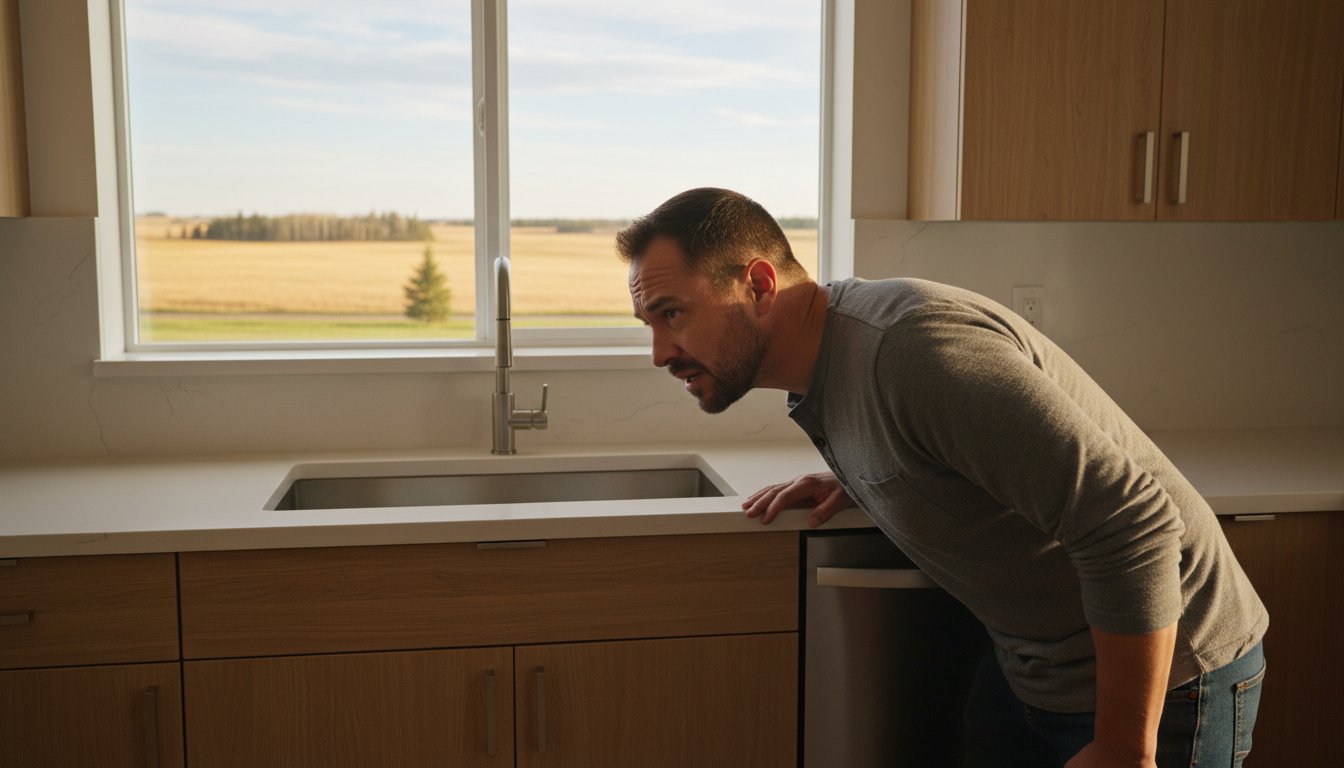
What if that rhythmic sound coming from your drains isn't just a minor plumbing quirk, but a distress signal from deep underground? You've likely spent the last few hours wondering if a simple clog is to blame or if you're facing a catastrophic sewage backup in your basement. It's a stressful position to be in; however, every sound your system makes has a logical explanation and a manageable resolution. Hearing a septic tank gurgling noise in house drains is often the first sign that your system is struggling to process wastewater correctly.
We understand that maintaining a private sewage system on an Alberta property comes with unique challenges and responsibilities. This article will help you identify exactly what your pipes are trying to tell you so you can restore safety and functionality to your home. You'll learn how to distinguish between minor vent issues and systemic failures, giving you the clarity needed to avoid a total septic field replacement. We will walk through the specific mechanical issues that trigger these noises and show you how early intervention protects your property and ensures your system remains a reliable, long-term asset.
Key Takeaways
- Understand why air escaping through your plumbing’s P-traps creates gurgling sounds and what this reveals about your system’s internal pressure.
- Learn why a septic tank gurgling noise in house plumbing is often linked to Alberta’s specific climate, including frost-blocked roof vents during winter.
- Differentiate between a minor plumbing annoyance and a critical environmental emergency using our specialized system severity scale.
- Identify manageable DIY troubleshooting steps to take before calling for help, such as safely checking your main septic tank baffle for obstructions.
- Discover how a professional diagnostic inspection provides a definitive resolution and protects your septic field as a valuable, long-term property asset.
What a Septic Tank Gurgling Noise Actually Means
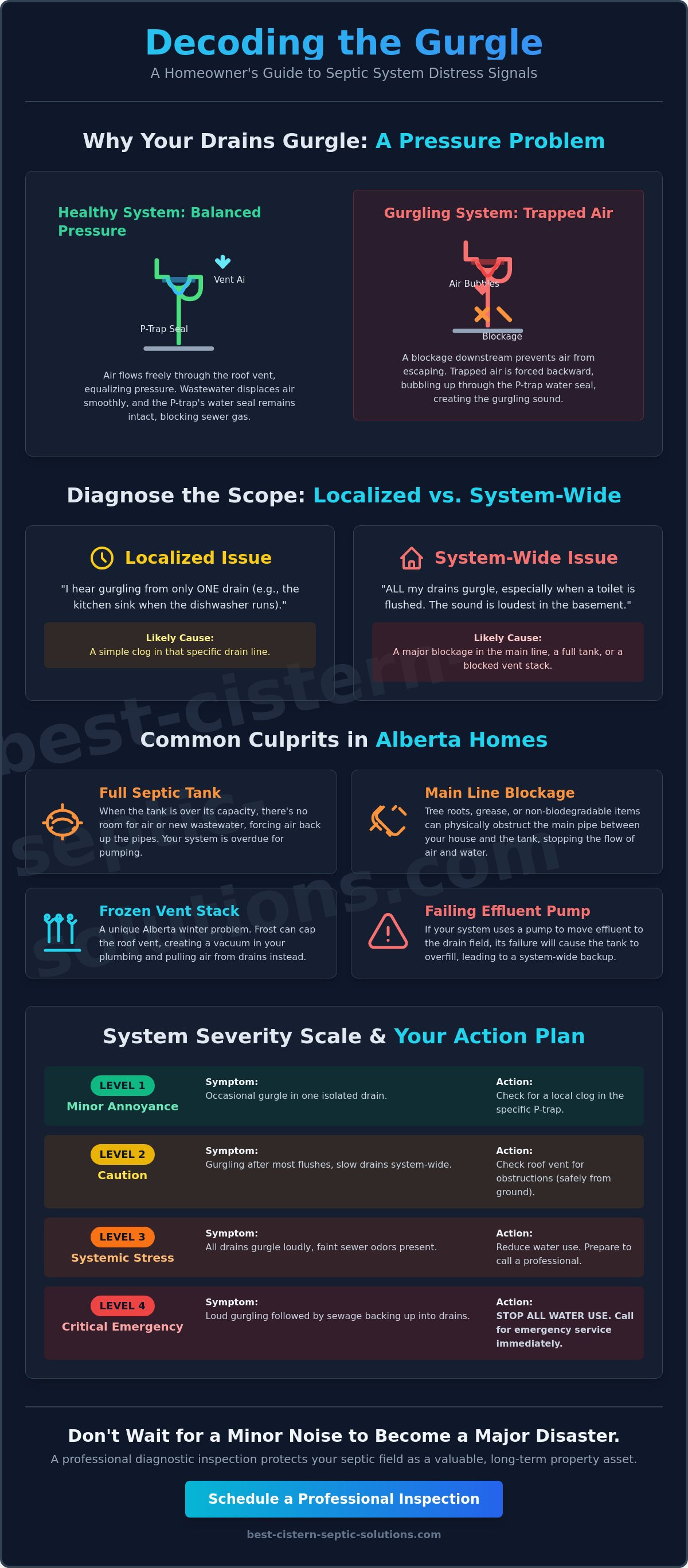
When you hear a septic tank gurgling noise in house drains, it's essentially your plumbing system gasping for air. This sound isn't just a random plumbing quirk; it's a specific mechanical response to a pressure imbalance within your pipes. Every drain in your home features a "P-trap," which is a U-shaped pipe designed to hold a small amount of water. This water acts as a critical seal to keep sewer gases from entering your living space. Under normal conditions, air flows freely through your vent stacks to keep the pressure equalized. However, when a blockage or a full tank restricts that flow, trapped air is forced to bubble up through those water seals. This creates the distinct, rhythmic glugging sound you're hearing.
It's helpful to identify the specific type of noise your system is making. A rhythmic, repetitive glugging often suggests a persistent air displacement issue, while a single, loud splash after a flush might indicate a more immediate obstruction. Regardless of the rhythm, you should view the gurgle as a symptom rather than the problem itself. It's a warning sign that the equilibrium between air and water has been disrupted, and addressing the root cause early can prevent a messy backup.
The Physics of the Gurgle: Air vs. Water
Think of your plumbing like a straw filled with water. If you place your finger over the top and try to let the water out, the liquid stays stuck because of the vacuum. Your septic system relies on constant air displacement to function properly. As wastewater moves toward the tank, it must push air out of its way. Understanding How a Septic Tank Works is vital here; the system is a delicate balance of liquids, solids, and gases. If a downstream blockage or a saturated drainage field prevents air from moving forward, that air has only one escape route: back up through your drains. This "burp" of air through the P-trap water is what produces the audible gurgle.
Is the Sound Localized or System-Wide?
Determining the severity of the issue starts with a simple audit of your home's drains. If only the kitchen sink gurgles when you run the dishwasher, you likely have a localized clog in that specific line. If every drain in the house reacts when you flush a single toilet, the issue is systemic. We recommend performing a house-wide flush test. Start at the highest floor and flush the toilets while someone listens at the lowest point in the house. Usually, the basement floor drain or a basement shower is the first place a septic tank gurgling noise in house pipes becomes apparent. If the lowest drain gurgles while the upstairs fixtures are in use, it indicates the main line or the tank itself is struggling to breathe.
Common Causes of Gurgling in Rural Alberta Homes
While the physics of air displacement remains constant, the specific triggers for a septic tank gurgling noise in house drains often depend on local environmental factors and mechanical health. Identifying the root cause requires looking beyond the sink. Structural blockages in the main line between your home and the tank, often caused by root intrusion or a buildup of non-biodegradable debris, frequently restrict the flow of both water and air. Additionally, if your system relies on mechanical components, a failing effluent pump can prevent the tank from discharging into the field. This leads to rising water levels that eventually submerge the inlet pipe, cutting off the natural path for air to escape.
Regular septic system maintenance serves as your best defense against these common stressors. By understanding how your system interacts with the Alberta landscape, you can move from a state of worry to a clear plan for resolution. If you're unsure whether the sound is a minor vent issue or a sign of mechanical trouble, a professional septic system inspection can provide the clarity needed to protect your property’s long-term value.
The Alberta Factor: Frozen or Blocked Vent Stacks
In our region, winter introduces a unique challenge: the frozen vent stack. As warm, moist air rises from your septic system and meets the frigid Alberta air at the roofline, it can condense and freeze. Over time, a frost cap forms, completely sealing the vent. This creates a vacuum within your plumbing. When you flush, the water tries to pull air behind it; since the roof vent is blocked, it pulls air through your sink or shower traps instead. This suction produces that worrisome gurgling sound and can even siphon water out of the traps, allowing sewer odors to enter your home. Beyond ice, bird nests or debris are common non-weather obstructions we see during the spring and summer months.
Septic Field Saturation and "Air Binding"
The heavy clay soils common in the Edmonton region and Parkland County present another hurdle, especially during the spring melt or periods of heavy rain. When the soil becomes saturated, it can no longer accept wastewater from your tank. This leads to a phenomenon known as air binding, where air trapped in the disposal field has nowhere to go but back toward the house. If your yard feels spongy or you notice pooling water near the field, it's a clear sign that the soil's absorption capacity has been reached. In these instances, proactive professional septic field repair is necessary to restore the system’s integrity and prevent a total failure of the asset.
Gurgling vs. Backing Up: Diagnosing the Severity
Hearing a septic tank gurgling noise in house drains is an early warning, but the context of that sound tells us how much time we have to act. We categorize these symptoms into a clear severity scale to help you prioritize your next steps. Identifying where your system sits on this scale allows you to move from a place of anxiety to a structured plan for resolution. By observing the secondary signs, you can determine if you are dealing with a simple venting issue or a more complex mechanical failure.
- The Warning Phase: You notice a gurgle, but your drains still move at a normal speed. This usually suggests a venting restriction or the very beginning of a downstream blockage.
- The Critical Phase: The gurgling is now accompanied by slow drainage in tubs or toilets. You might notice a faint "rotten egg" odor near the drains. These are classic signs of a failing septic system that require immediate attention to prevent a backup.
- The Emergency Phase: Wastewater begins surfacing in your yard, or worse, backing up into your basement fixtures. This indicates the system has lost its ability to process effluent entirely.
It's vital to remember that a noisy system is often more communicative than a silent one. Sometimes, a system that drains slowly without making any noise at all is in a more advanced state of failure because the air has been completely cut off by standing water. Recognizing these shifts in behavior protects your home and ensures your septic system remains a functional asset for your property.
Smell and Sight: Confirming the Gurgle
Take a walk out to your septic field. If you notice patches of lush, vibrant green grass during a dry spell, or if the soil feels spongy underfoot, your field is likely saturated. This saturation prevents air from moving through the system, which directly causes the septic tank gurgling noise in house pipes. Inside the home, the significance of a "rotten egg" smell cannot be overstated. If the smell is localized to the house, it often points to a dry P-trap or a venting issue. If the smell is prevalent both inside and outside near the tank, the system is likely struggling with a high water level that needs a professional diagnostic.
The "Pumping Trap": Why Pumping Isn’t Always the Fix
Many homeowners believe that pumping the tank is the universal solution for gurgling. However, if your disposal field is failing, pumping only buys you about 24 to 48 hours of relief. Once the tank refills with daily household water, the gurgling will return because the field still cannot accept the liquid. It is important to distinguish between a "full" tank, which is normal for a functioning system, and a "backed up" tank where the water level has risen above the outlet pipe. We encourage you to understand their septic system mechanics before ordering a pump-out. A professional inspection often reveals that a mechanical repair, rather than a simple pump, is the true path to a long-term resolution.
Immediate Steps and DIY Troubleshooting for Homeowners
When you first notice a septic tank gurgling noise in house drains, your immediate priority is to prevent a minor pressure issue from escalating into a major backup. Taking swift action can often mitigate the risk of a sewage spill and help you understand the severity of the situation. We recommend following these five steps to stabilize your system while you determine if professional intervention is required.
- Step 1: Check the roof vent safely. Look for physical obstructions or ice buildup that might be restricting airflow.
- Step 2: Inspect the septic tank’s main baffle. If your tank lids are accessible and safe to open, check for visible clogs at the inlet.
- Step 3: Monitor water usage. Stop all high-volume water activities, such as laundry or dishwashing, to reduce the load on the system.
- Step 4: Check the septic alarm. If you have a septic alarm installation, look for red lights or listen for audible alerts that indicate high water levels.
- Step 5: Document the details. Note which drains are making noise and whether the gurgling happens at specific times, such as after a shower.
If these initial steps do not resolve the sound, scheduling a professional septic system inspection is the most reliable way to secure your property's utility infrastructure and find a definitive resolution.
Safe Vent Inspection
During a cold Alberta winter, frost is the most likely culprit for a blocked vent. Instead of climbing onto a slippery roof, use binoculars from the ground to check the vent stack for a white frost cap. If you suspect ice, some homeowners use the "hot water trick" by carefully pouring warm water down the vent from a ladder, though this should only be done if it is entirely safe. Safety is paramount when troubleshooting. Never, under any circumstances, enter a septic tank. These systems produce lethal concentrations of methane and hydrogen sulfide (H2S) gases that can be fatal within seconds.
Water Load Management
Hydraulic overload occurs when the volume of water entering the tank exceeds the soil's ability to absorb it. This is common during the spring melt in Parkland County. By halting high-volume activities, you allow the field to rest and drain. This period of rest can sometimes clear the air binding issue mentioned earlier. Do not use chemical "septic additives" to clear a gurgle. These products often disrupt the natural bacterial balance or push solids further into the disposal field, potentially turning a simple venting issue into a permanent field failure.
When to Call a Professional: Restoring Your Septic System
While basic troubleshooting can sometimes resolve a frost-blocked vent, a persistent septic tank gurgling noise in house drains usually indicates a mechanical or structural issue that requires specialized equipment. Recognizing when your DIY efforts have reached their limit is essential for protecting your home from internal water damage. If the gurgling continues after you've reduced your water load or checked your vents, the problem likely resides deeper within the system, such as a failing effluent pump or a saturated disposal field.
Many homeowners instinctively call for a pump-out when they hear these noises. However, a simple pump-out is a temporary measure that often masks the underlying cause. At Best Cistern Septic Solutions, we prioritize a thorough septic system inspection to identify why the water level is high in the first place. By evaluating the health of your system in Parkland and Leduc County, we provide a definitive resolution rather than a short-term patch. This proactive approach treats your septic infrastructure as a long-term property asset, ensuring it remains durable and safe for years to come.
Professional Diagnostic Tools
Our team utilizes advanced sewer cameras to navigate your main lines, allowing us to pinpoint structural clogs or collapsed pipes without invasive digging. We also perform rigorous effluent pump testing to confirm that wastewater is moving effectively from the tank to the field. In cases where the disposal field appears compromised, soil analysis plays a vital role. This technical process determines if the soil's absorption capacity can be restored through targeted septic field repair or if the environmental conditions necessitate a new approach.
Long-Term Solutions for Alberta Properties
For systems that have reached the end of their functional life, a professional septic field installation offers the most reliable path forward. A correctly designed system accounts for the specific clay-heavy soil profiles of North Central Alberta, preventing the pressure imbalances that lead to a septic tank gurgling noise in house plumbing. Proper design and installation don't just stop the noise; they secure the safety of your household and preserve your land's integrity. If your system is signaling for help, contact Best Cistern Septic Solutions for an expert evaluation that provides total peace of mind.
Securing Your Home’s Long-Term Utility Health
Your septic system is a vital component of your property’s value and your family’s safety. While hearing a septic tank gurgling noise in house drains can be unsettling, it is simply a mechanical signal that the pressure balance requires professional attention. By understanding the difference between a minor venting restriction and a saturated disposal field, you can take control of the situation before it escalates into a costly emergency. We specialize in North Central Alberta rural properties and utilize a methodical diagnostic approach to identify the root cause of every sound.
Our team focuses on expert septic field restoration and installation to provide a definitive resolution that removes future worries. We believe that every homeowner deserves peace of mind regarding their essential utilities. Instead of relying on temporary measures, choose a partner who understands the specific environmental needs of Parkland County. Get a Professional Septic Diagnostic in Parkland County today to ensure your system remains a durable and functional asset. Every problem has a manageable solution, and we are ready to help you restore the integrity of your home.
Frequently Asked Questions
Why does my toilet gurgle when the shower drains?
This happens because wastewater from the shower is displacing air within your plumbing pipes. If the air cannot escape through the roof vent or move freely into the septic tank, it forces its way through the nearest water seal, which is often the toilet's P-trap. This interaction suggests a restriction in your venting system or a partial blockage in a shared drainage line.
Can a full septic tank cause gurgling noises in the house?
Yes, specifically when the water level in the tank rises above the inlet pipe. In a healthy system, there is an air gap that allows gases to move into the tank and out through the vents. When the tank is backed up, this gap disappears, and the resulting pressure imbalance creates a septic tank gurgling noise in house drains as air seeks an alternative exit.
Is a gurgling drain always a septic problem?
Not always, as a localized clog in a single sink's trap can cause similar sounds. You can usually tell the difference by checking other fixtures. If the noise is limited to one sink, it's likely a local plumbing issue; however, if multiple drains across the house react when you flush or run water, the problem is systemic and involves your septic infrastructure.
How do I clear a frozen septic vent stack?
You can attempt to melt the ice by carefully pouring warm water down the vent from a ladder, provided you can do so safely. In Alberta's frigid winters, frost caps often form at the roofline and seal off the system's airflow. If the vent is inaccessible or the ice is thick, professional assistance is the safest way to restore the vacuum seal without risking a fall.
Will pumping my septic tank stop the gurgling noise?
Pumping only provides a temporary fix if your disposal field is failing. While it empties the tank and restores the air gap for a few days, the gurgling will return as soon as the tank refills with daily wastewater. A professional diagnostic is necessary to determine if the issue is a simple maintenance requirement or a mechanical failure in the field.
What is the most common cause of gurgling in Alberta septic systems?
The most frequent culprits in our region are frozen vent stacks during the winter and saturated clay soils during the spring melt. These environmental factors are unique to the Alberta landscape. They directly interfere with the system's ability to displace air, leading to the distinct gurgling sounds that many rural homeowners experience during seasonal transitions.
Can heavy rain cause my septic system to make gurgling sounds?
Heavy rainfall can saturate the soil around your septic field, preventing it from accepting new effluent. This creates "air binding" where trapped air in the field is pushed back toward the house. If you notice a septic tank gurgling noise in house pipes specifically after a storm, it's a clear sign that your drainage field's absorption capacity is being tested by environmental water.
Is it dangerous to ignore a gurgling septic noise?
Ignoring these sounds is risky because they are often the final warning before a total sewage backup. Beyond the potential for property damage, a gurgling system can allow sewer gases like methane to enter your living space if the P-traps are siphoned dry. Addressing the noise early protects your household's safety and prevents the high costs associated with emergency environmental cleanups.


