
What if those slow drains with septic system performance aren't just a simple clog, but your home's way of signaling a specific mechanical need? It's natural to feel a sense of urgency when water lingers in the sink. You want a resolution that doesn't involve the fear of a sewage backup or the uncertainty of high repair costs. You've probably heard that a quick bottle of drain cleaner is the answer, but you likely suspect that harsh chemicals might do more harm than good to your system's essential bacteria.
We understand that your private sewage system is a vital asset to your property's long-term health and safety. You'll learn how to distinguish between a localized plumbing obstruction and a more serious septic field failure before you reach for any reactive treatments. This guide provides a clear, methodical path to understanding your system's current state. We'll walk through the diagnostic indicators that help you maintain a clean, functional home while avoiding the necessity of a total field replacement. By the end, you'll have the professional knowledge needed to ensure your system remains a durable part of your home's infrastructure.
Key Takeaways
- Learn the "Whole-House vs. Single-Fixture" diagnostic rule to accurately determine if your drainage issue is a simple pipe clog or a deeper system concern.
- Understand the mechanics of how slow drains with septic system configurations signal restricted airflow or a saturated drain field that requires professional attention.
- Discover why heat-generating chemical cleaners pose a risk to your system's physical PVC integrity and the beneficial bacteria required for effective waste breakdown.
- Gain insight into how North Central Alberta’s unique clay soil and heavy rainfall patterns influence your system’s drainage capacity and long-term durability.
- Move beyond temporary fixes by identifying professional restoration solutions that protect your property’s value and ensure the continued safety of your household.
Troubleshooting Slow Drains with a Septic System
Slow drains aren't just a minor household annoyance. They are a specific communication tool used by your plumbing to signal a disruption in the wastewater journey. When you experience slow drains with septic system setups, the issue typically stems from one of two things: a physical blockage or restricted airflow. Every drop of water that leaves your sink must travel through a network of pipes, into a main sewer line, and finally into the treatment components of your system. Understanding how a septic system works is the first step in recognizing where this journey is being interrupted.
Acting quickly when you notice these changes is vital. A sluggish drain is often the precursor to a complete backup. By diagnosing the issue early, you can often resolve a simple mechanical problem before it causes permanent structural damage to your drainage area. This proactive approach preserves the integrity of your property and ensures your home remains a safe, clean environment for your family.
Identifying Localized vs. System-Wide Issues
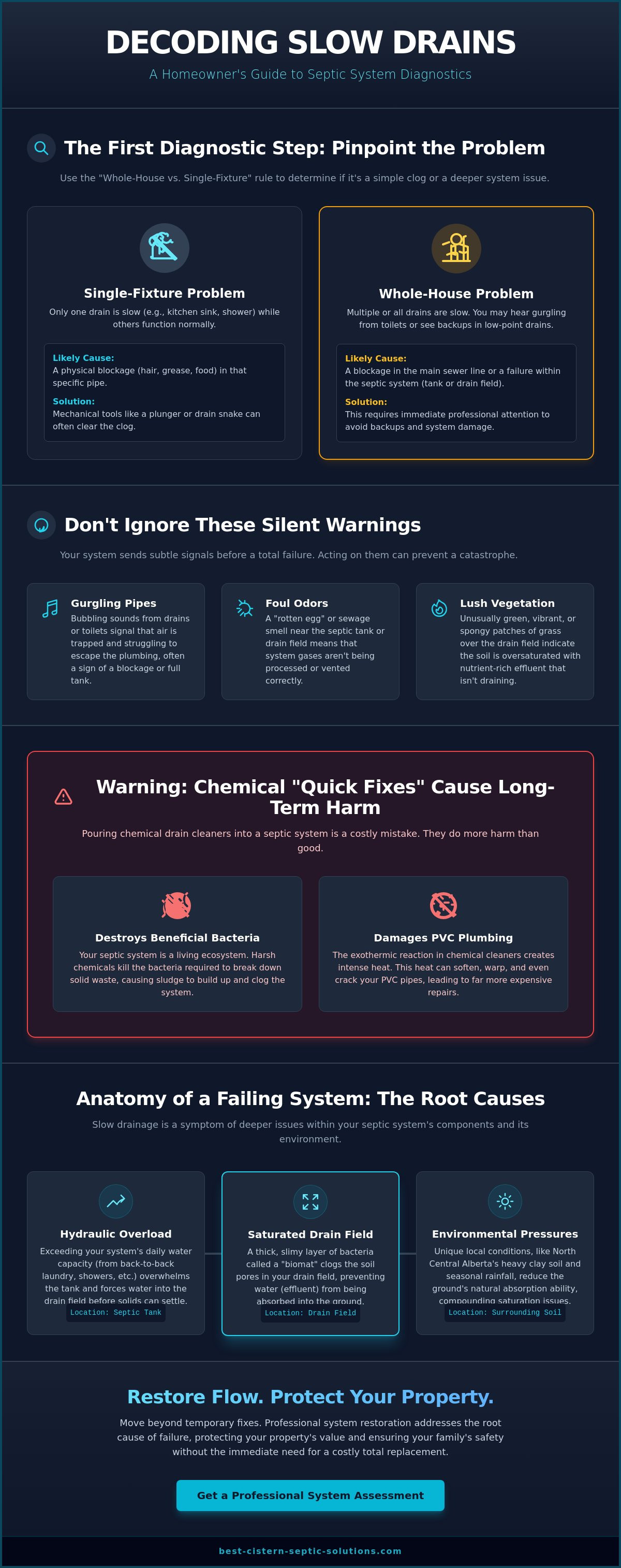
The most effective way to begin your diagnosis is the "Whole-House vs. Single-Fixture" rule. If only the kitchen sink is struggling to clear water while the bathroom shower drains perfectly, the problem is likely a localized clog in that specific run of pipe. You can often resolve these with mechanical tools like a plunger or a drain snake. However, if you notice multiple slow drains throughout the home, the restriction is further down the line. System-wide sluggishness, especially when accompanied by gurgling toilets, suggests that the main sewer line or the septic tank itself is reaching its capacity or facing a structural blockage.
The Silent Warning Signs You Should Not Ignore
Your system often provides subtle cues before a total failure occurs. You should watch for these specific indicators of a struggling septic field:
- Gurgling Pipes: Listen for a distinct bubbling sound in your drains when the laundry runs or after a long shower. This indicates that air is struggling to escape the system.
- Specific Odors: A faint "rotten egg" smell near the tank or the drainage field is a sign that gases aren't being processed correctly.
- Lush Vegetation: Patches of unusually vibrant, green grass over your drainage area might look healthy, but they often signal that the soil is oversaturated with effluent that isn't filtering downward.
Recognizing these signs early allows for a methodical resolution. Whether the fix requires a professional inspection or a specific component repair, catching the problem now prevents a manageable situation from turning into a property-wide emergency.
Why Your Septic System is Causing Slow Drainage
Your septic tank functions as a primary filter for your entire wastewater system. When everything works correctly, water enters the tank, solids settle to the bottom, and clear liquid, known as effluent, flows out to the drain field. However, when this balance shifts, you will often experience slow drains with septic system performance issues. The speed of drainage is directly related to the tank's ability to accept new water. If the tank is already at its operating level and the exit path is restricted, incoming water simply has nowhere to go. This creates a backlog that travels all the way back to your household fixtures.
The volume of water your family uses also plays a critical role in how quickly your pipes clear. Different Types of septic systems have specific daily flow capacities designed for the size of the home. If you exceed this volume through heavy laundry days or back-to-back showers, the tank cannot process the liquid fast enough. This is not just about a "full" tank; it's about the hydraulic load. When the system is overwhelmed, the drainage speed drops significantly to protect the field from flooding. Consistent monitoring through septic maintenance ensures these volume issues don't lead to long-term damage.
The Saturated Septic Field (Drain Field Failure)
A primary reason for persistent sluggishness is a saturated drain field. When the soil surrounding your drainage pipes becomes waterlogged, it loses its ability to absorb more effluent. This often happens due to the development of a "Biomat" layer. This is a dense growth of anaerobic bacteria that naturally forms over time. While it helps treat waste, an excessively thick Biomat acts like a waterproof seal. When this happens, water stands in the pipes, and your household drains lose their momentum. This indicates the soil has reached its physical limit for absorption.
Blocked Inlet Baffles and Effluent Filters
Mechanical obstructions within the tank itself can also halt drainage. Your system features inlet baffles designed to direct wastewater downward and prevent clogs from backing up into the house. If the scum layer, the floating layer of oils and fats, rises too high, it can block these baffles. Additionally, many modern systems include an effluent filter at the outlet. While this filter protects your drain field from solids, it can become clogged over time. A blocked filter provides a clear signal that the system needs professional attention, as it intentionally slows the flow to prevent a total field failure.
The Danger of Quick Fixes: Why Chemical Cleaners Fail
When you encounter slow drains with septic system setups, the temptation to reach for a bottle of liquid drain cleaner is strong. It's a quick, inexpensive fix that promises immediate relief from standing water. However, these chemicals often initiate a destructive process within your tank. Most commercial cleaners rely on caustic sodas or concentrated acids to dissolve hair and grease. While they might clear a localized blockage, they don't stop there. They travel down into the core septic system components, where they disrupt the delicate biological balance required for waste treatment.
The reaction between these chemicals and the organic matter in your tank is often exothermic, meaning it generates significant heat. In modern residential systems, this heat can reach temperatures high enough to soften or warp PVC baffles and pipes. A warped baffle can lead to structural failure, allowing solids to enter the drain field. This is how a $20 bottle of cleaner can eventually contribute to a field replacement that costs tens of thousands of dollars. Even products labeled as "septic-safe" should be used with extreme caution, as their cumulative effect can hinder the long-term durability of your infrastructure.
How Drano and Acids Destroy Beneficial Bacteria
Commercial cleaners are designed to kill organic matter, which unfortunately includes the beneficial anaerobic bacteria living in your tank. These microorganisms are the primary workers responsible for liquefying solids. When chemicals "sterilize" the tank environment, the breakdown process stops. This leads to a rapid accumulation of sludge. You might experience a "rebound effect" where the drain clears for a day, but because the tank can no longer process waste effectively, the system clogs even more severely a week later. Maintaining a healthy bacterial colony is essential for a clean and functional system.
Septic-Safe Alternatives for Minor Clogs
If you suspect a minor, fixture-specific clog, there are safer ways to restore flow without risking your system's integrity. These methods focus on mechanical removal or gentle dissolution:
- Baking Soda and Vinegar: This classic combination creates a gentle foaming action that can dislodge soft debris without killing beneficial bacteria.
- Hot Water Flushes: For kitchen sinks, a flush of hot water between 120 and 140 degrees Fahrenheit helps liquefy minor grease buildup.
- Mechanical Tools: A simple plastic "zip-it" tool or a manual hand snake can physically remove hair and soap scum from the drain.
Choosing mechanical solutions over chemical ones ensures your system remains a long-term asset for your property. By avoiding harsh additives, you protect the mechanical integrity of your home and ensure that every problem has a manageable, professional resolution.
Diagnosing the Root Cause in North Central Alberta
In North Central Alberta, your property faces specific environmental pressures that differ from other regions. When you experience slow drains with septic system setups during a heavy rainstorm in Parkland County, the culprit is often the soil rather than the pipes themselves. Our local landscape is defined by the "Clay Challenge," where dense clay particles trap moisture and limit the rate at which effluent can disperse. This leads to a temporary saturation of the drain field during peak moisture events like the spring thaw or intense summer storms. Understanding these local variables is essential for maintaining a durable system that complies with the Alberta Private Sewage Systems Standard of Practice 2021.
Environmental Factors: Heavy Rain and Soil Saturation
You might notice your drains only lose their speed after a major storm or during the rapid melting of a heavy snowpack. In the Edmonton Capital Region, high water tables can cause the soil to become "full" of groundwater. When this happens, there's no room for your septic effluent to go. You can check for this by walking over your drainage area. If the ground feels spongy or you see pooling water, your system isn't failing because of a clog. It's simply waiting for the local water table to recede so the soil can regain its natural absorption capacity.
Step-by-Step Diagnostic Checklist
Perform these five steps today to identify the root cause of your drainage issues. This methodical approach helps you determine if you're facing a simple plumbing fix or a need for professional intervention:
- Step 1: Check the cleanout pipe. Remove the cap from your main cleanout. If you see standing water, the restriction is between the house and the tank, or the tank itself is over capacity.
- Step 2: Compare drainage across floors. Test a sink in the basement and one on the upper floor. If only the basement is slow, the issue is likely a localized pipe blockage.
- Step 3: Inspect the septic alarm. If your system includes a septic alarm, check the control panel. A triggered alarm is a clear signal of an effluent pump issue or a high water level in the tank.
- Step 4: Review maintenance records. Check your last pumping and inspection date. If it's been more than three to five years, your system's mechanical components may need a professional review.
- Step 5: Visual yard inspection. Walk the length of your drain field. Look for unusually lush grass or damp spots that indicate the soil is struggling to process the daily wastewater load.
If your checklist reveals standing water in the cleanout or a triggered alarm, scheduling professional Septic Maintenance is the most reliable way to restore your system's capacity. Taking this step now ensures that a manageable mechanical issue doesn't evolve into a costly property concern. We focus on providing a thorough resolution that protects your home's integrity for years to come.
Restoring Flow: Professional Solutions for Failing Systems
Many homeowners believe that a quick pumping service is the definitive answer for slow drains with septic system setups. While removing accumulated solids is a necessary part of the diagnostic process, it's rarely a permanent fix for a failing system. Pumping simply resets the clock. If the underlying cause is a saturated drain field or a mechanical blockage, the tank will return to its problematic level within weeks. At Best Cistern Septic Solutions, we focus on moving beyond temporary "clog management" toward comprehensive system restoration. We view each diagnostic step as a way to identify the exact mechanical or soil-based failure point so we can implement a lasting fix.
A professional inspection is the cornerstone of this process, especially in the unique environmental conditions of Parkland County. We use technical precision to evaluate the health of your effluent pump and the absorption capacity of your soil. This methodical approach provides peace of mind. It transforms a stressful utility failure into a manageable project with a clear outcome. By identifying whether the issue lies in the tank's baffles or the field's saturation levels, we ensure that every repair is a long-term asset for your property's value and safety.
When Pumping Isn’t Enough: Repairing the Septic Field
If your drains remain sluggish shortly after a pump-out, your system is likely signaling a field-level issue. This is where targeted septic system repair becomes essential. Restoration might involve clearing a blocked distribution box or replacing a failed effluent pump. These specific interventions are often much more cost-effective than a full field replacement. We look for ways to restore the natural aerobic environment in your soil. This allows the ground to process wastewater effectively once again, removing the risk of future backups and protecting your home's infrastructure.
Long-Term Prevention and Maintenance Strategies
Maintaining a healthy system requires a proactive partnership. Establishing a schedule for regular septic tank maintenance is the most reliable way to prevent the recurrence of slow drains. You can also support your system's durability by practicing water conservation during heavy rainfall. Spacing out laundry loads and fixing leaky faucets reduces the hydraulic load on your drain field. These small adjustments, combined with our professional Septic Solutions, ensure your system operates at peak efficiency. Our goal is to provide a definitive, professional fix that allows you to focus on your home without worrying about what's happening beneath the surface.
Secure Your Home’s Long-Term Infrastructure
A functional septic system is more than just a utility; it's a vital asset that ensures the safety and comfort of your household. By looking beyond the surface of slow drains with septic system performance, you've taken a significant step toward informed property care. You now understand that while localized clogs are manageable, systemic sluggishness requires a methodical approach that respects the biological and mechanical integrity of your tank. Avoiding harsh chemicals and recognizing the impact of North Central Alberta's unique clay soil allows you to address the root cause rather than just the symptoms.
As specialists in septic field restoration, we bring grounded, local expertise to rural properties across Parkland, Leduc, and Sturgeon Counties. We believe that every drainage challenge has a manageable, professional resolution that preserves your property for the long term. If your diagnostic checklist has revealed a need for expert intervention, we are ready to provide a thorough assessment. Restore your system’s flow with a professional diagnostic from Best Cistern Septic Solutions. Taking a proactive step today removes future worries and ensures your system remains a durable, reliable part of your home.
Frequently Asked Questions
Is Drano safe for septic systems if I only use a little bit?
No amount of caustic chemical cleaner like Drano is considered safe for your septic system. These products are designed to dissolve organic matter, which includes the beneficial anaerobic bacteria required to break down household waste. Using these chemicals can lead to rapid sludge buildup and may even warp PVC components due to the heat they generate during the reaction. Mechanical methods are always the preferred choice for protecting your system's integrity.
Why are all my drains slow but my septic tank was just pumped?
If you still have slow drains with septic system setups after a recent pump-out, the issue likely resides in the drain field or the main sewer line. Pumping only empties the tank; it doesn't clear physical obstructions in the pipes or fix soil saturation issues in the drainage area. This often indicates that the field has lost its ability to absorb effluent, which requires a professional diagnostic to resolve permanently.
Can heavy rain cause my drains to slow down if I have a septic system?
Heavy rain is a common cause of sluggish drainage in rural Alberta properties. When the ground becomes saturated, the soil can no longer accept wastewater from your tank. This creates a temporary backup that slows down your household fixtures until the local water table recedes. It's a natural environmental reaction that usually resolves once the soil regains its absorption capacity, though frequent occurrences may suggest a need for field restoration.
What is the best septic-safe drain cleaner for a kitchen sink?
The best "cleaner" for a septic-safe home is a manual drain snake or a plastic zip-it tool. For a gentle alternative, use a combination of baking soda and vinegar followed by a hot water flush between 120 and 140 degrees Fahrenheit. These methods dislodge clogs without harming the essential bacteria that keep your tank functional. Avoiding harsh additives ensures that your system remains a durable, long-term asset for your property.
How do I know if my septic field is failing or if it’s just a clog?
You can distinguish between a clog and field failure by checking how many fixtures are affected. A single slow sink is usually a localized plumbing clog that you can fix with a plunger. If every drain in the house is sluggish or if you see unusually lush green grass over the drainage area, you're likely facing a systemic septic field concern. This type of slow drains with septic system performance requires professional expertise to diagnose the specific failure point.
Why does my toilet gurgle when I shower in a house with a septic tank?
A gurgling toilet during a shower signals that air is struggling to escape your plumbing system. This happens when the main sewer line is partially blocked or the septic tank is over its operating level. The displaced air bubbles back through the nearest trap, which is usually the toilet. It's a clear warning sign that the wastewater path is restricted and needs to be addressed before a total backup occurs.
How often should I have my septic system inspected in Alberta?
You should schedule a professional septic system inspection every three to five years to ensure mechanical health. In Alberta, these inspections help verify that your system meets the 2021 Standard of Practice and can handle the specific demands of our climate. Regular reviews catch minor component wear, such as a failing effluent pump, before they turn into expensive field failures, preserving the safety of your household.
What should I do if I see water pooling over my septic field?
If you notice pooling water over your field, you should immediately reduce your household water usage and contact a specialist for a professional inspection. Surface water indicates that the soil is no longer absorbing effluent or that a component has suffered a structural failure. We can perform a targeted septic field repair to restore the system's ability to process waste safely and prevent environmental contamination on your property.


