
What if the most critical factor in your property’s 2026 valuation isn't a new kitchen, but the invisible infrastructure beneath your backyard? Many homeowners in Parkland and Leduc County feel a sense of unease as the 2021 and 2025 updates to the Private Sewage Systems Standard of Practice take full effect. Understanding the latest septic system regulations alberta has become a priority for anyone looking to avoid the 2026 compliance deadline. You've likely heard that the rules are tightening, and it's natural to worry about how these technical shifts might impact your upcoming real estate transaction or your family's daily safety.
We agree that managing wastewater shouldn't feel like a legal gamble. You deserve to feel confident that your system protects your land rather than posing a risk to it. This guide simplifies provincial requirements so you can ensure your property remains safe and fully compliant. We'll walk you through critical setback distances, the necessity of hiring certified contractors, and exactly how the 2025 SOP updates safeguard your home’s long-term integrity. Maintaining a compliant system is a vital investment in your home’s health, and we are here to provide the professional solutions you need.
Key Takeaways
- Understand how the latest updates to the Alberta Private Sewage Standard of Practice impact your property’s safety and legal standing in 2026.
- Navigate the essential permit process and setback requirements in North Central Alberta to protect your property boundaries and local water sources.
- Learn why adhering to septic system regulations alberta requires a certified professional and how avoiding DIY pitfalls prevents system failure.
- Discover why a regulatory compliance inspection is a non-negotiable step for protecting your investment during any Alberta real estate transaction.
- Gain peace of mind by transforming complex sewage laws into a manageable maintenance plan that safeguards your family and the environment.
The Alberta Private Sewage Standard of Practice (SOP) Explained
The Alberta Private Sewage Standard of Practice (SOP) functions as the mandatory rulebook for the design, installation, and long-term maintenance of all onsite sewage facilities within the province. This document isn't just a suggestion; it's a provincial regulation that ensures every system handles wastewater safely and efficiently. Understanding septic system regulations alberta is the first step in protecting your home’s infrastructure and the surrounding environment.
The updates introduced in 2021 and refined in 2025 are vital for homeowners to understand as we enter 2026. These revisions focused on improving soil evaluation techniques and tightening the requirements for system setbacks from property lines and water sources. The Safety Codes Council plays a central role here, acting as the governing body that certifies installers and enforces these provincial standards. They ensure that the professionals working on your property possess the technical expertise required to maintain system integrity and public health.
Failing to comply with these regulations carries heavy risks that go beyond simple paperwork. You could face administrative fines or find yourself legally liable if a malfunctioning system contaminates a neighbor’s well or a local stream. Beyond the legalities, a non-compliant system often leads to premature mechanical failure, turning a manageable maintenance task into an expensive emergency repair. Staying informed about septic system regulations alberta helps you avoid these pitfalls while making a proactive investment in your property’s longevity and your family’s safety.
Who Does the Alberta Septic Code Apply To?
The code applies to every property owner in rural Parkland and Leduc counties who operates an on-site wastewater system. It also covers commercial sites not served by municipal lines and seasonal acreages across North Central Alberta. Whether you're managing a permanent residence or a vacation cabin, these rules ensure your waste treatment remains sanitary and functional year-round.
Key Regulatory Bodies in the Edmonton Region
Alberta Municipal Affairs provides the high-level oversight for these standards, while local Safety Codes Officers (SCOs) in Sturgeon and Strathcona Counties handle direct enforcement. These SCOs review your permits and perform the inspections that verify compliance. They ensure that broad provincial standards are applied correctly to meet specific local municipal bylaws and unique environmental conditions.
Navigating Permits and Setback Requirements in North Central Alberta
Securing a Private Sewage Permit is the first legal step for any new installation or major repair in North Central Alberta. This isn't just a bureaucratic hurdle. It's a critical safeguard for your property's value and your family's health. Under the current Alberta Private Sewage Systems Standard of Practice, every system must be designed to match the specific environmental conditions of your land. This process begins with a professional site assessment. By analyzing soil morphology, experts determine how effectively your ground can treat effluent before it reaches groundwater levels. Because soil profiles in areas like Sturgeon County can shift from heavy clay to sandy pockets within a few meters, this data is the only way to ensure your system functions for decades rather than years.
Setback Distances: Where Can You Build?
Setback distances are the physical gaps required between your septic components and other structures. These measurements are vital for preventing groundwater contamination and protecting the structural integrity of your home. Following septic system regulations alberta homeowners must adhere to these primary clearances:
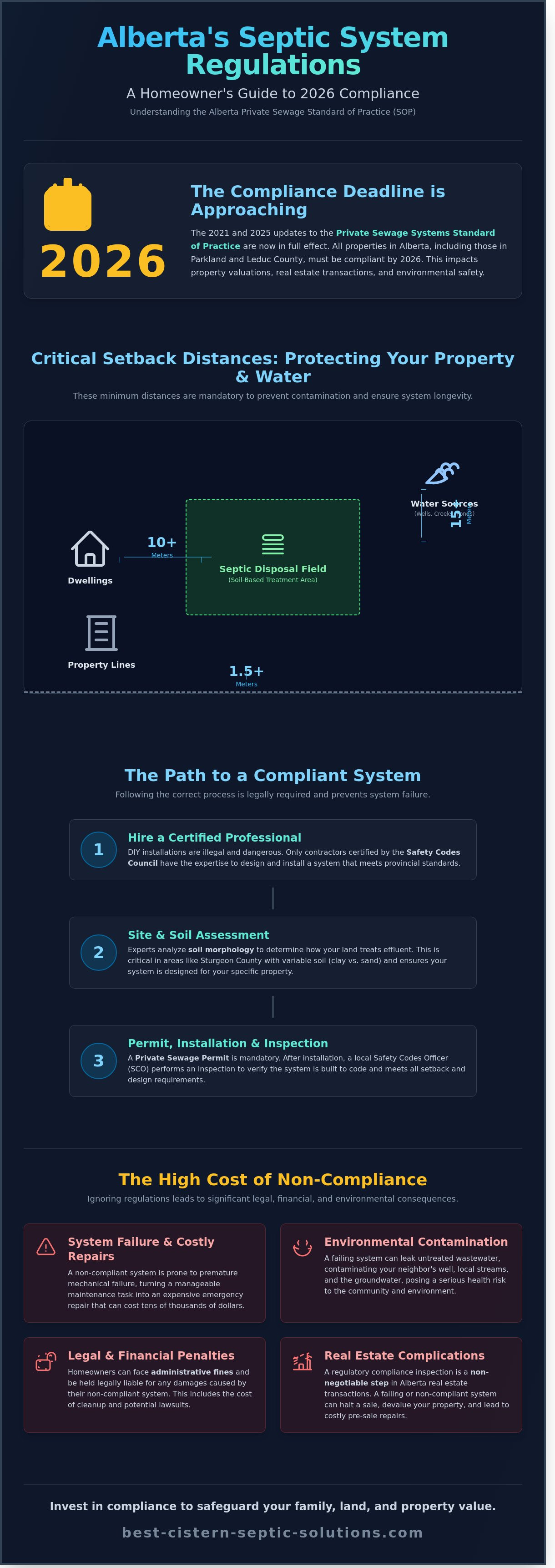
- Water Sources: You must maintain a minimum distance of 15 meters from water wells and surface water bodies like creeks or ponds.
- Property Boundaries: Disposal fields must stay at least 1.5 meters away from all property lines to avoid impacting neighboring land.
- Dwellings: A 10-meter clearance is required between a soil-based treatment area and your home's foundation.
These distances ensure that effluent has enough space to filter through the soil naturally. It's a proactive approach to keeping your drinking water pristine and your yard stable. If you're planning a new build, a professional site assessment and design can help you map out these distances accurately before any dirt is moved.
The Permitting Process: Step-by-Step
The permit process in Parkland County and Sturgeon County is designed to catch design flaws before they become expensive failures. It's a methodical journey that starts with gathering your technical data. You can't simply guess at the tank size or field location. You need a Level II Site Assessment, which includes soil profile descriptions and lab-tested percolation rates.
Once you have your site plan and soil results, you'll submit your application to your local municipality or an accredited agency such as Superior Safety Codes. They'll review the design to confirm it meets all safety standards. After approval, the installation begins. The most important part of this phase is the 'Request for Inspection.' You must contact the inspector before you backfill the system. This allows a certified official to verify that the pipes, tank, and field are installed exactly as planned. This final verification protects your investment and ensures your home remains a safe, sanitary environment for your family.
Certified Contractors vs. DIY: The Legalities of Septic Work
Alberta law is very clear about who can work on your wastewater infrastructure. Under the current Alberta Private Sewage Systems Standard of Practice, most repairs and all new installations must be performed by a certified Private Sewage Installer. While some homeowners feel tempted to handle repairs themselves to save on upfront costs, the legal and financial risks are high. A DIY repair that doesn't meet septic system regulations alberta standards can lead to immediate permit denials from your local municipality. It also creates a liability gap. If a system fails or causes environmental damage, insurance companies typically deny claims for work performed by uncertified individuals.
System failure isn't just a mechanical issue; it's a financial catastrophe. An improperly installed tank or drain field can fail within 24 to 36 months, requiring a total replacement that costs significantly more than the original job. Working with a certified professional ensures your system is designed for the specific soil conditions of your property. This protects your home's equity and provides a sanitary environment for your family. Professionals also carry specialized liability insurance. This coverage protects your property during the excavation and installation phases, ensuring that any accidental damage is fully covered without affecting your personal policy.
Why Certification Matters for Your Peace of Mind
Certified installers undergo rigorous training to stay updated on the latest environmental protections and technical requirements. They understand how to manage effluent effectively to prevent groundwater contamination. This expertise is vital for maintaining the longevity of your system. Most insurance providers now require proof of professional installation before they'll issue or renew a policy for a rural home. If you're planning a new build or a major upgrade, our professional septic field installation services ensure that every component meets the high standards required by provincial law. We take the guesswork out of compliance, so you can focus on enjoying your home.
Identifying 'Septic Cowboys' in the Industry
The industry sometimes attracts "septic cowboys" who offer lower prices by cutting corners. These operators often skip the mandatory soil testing or fail to pull the necessary permits. This leaves the homeowner responsible for any fines or future failures. You can protect yourself by verifying a contractor’s credentials through the Safety Codes Council. A legitimate specialist will always provide a detailed diagnostic report before starting any work. This report acts as a roadmap, explaining the "why" behind every repair or installation step. To stay safe, ask your installer these specific questions:
- Can you provide your Alberta Private Sewage Certificate of Competency number?
- Will you be obtaining the required permits from the local safety codes officer?
- How does your design account for the specific soil morphology on my site?
A professional who follows septic system regulations alberta will answer these questions clearly and provide written documentation. This transparency builds the trust necessary for a successful, long-term solution for your home's wastewater needs. Taking the time to verify your contractor today prevents expensive, stressful failures tomorrow. We believe every homeowner deserves a system that functions perfectly without constant worry.
Regulatory Inspections for Real Estate and Compliance
A professional septic inspection is a non-negotiable step in Alberta real estate transactions. Many homeowners confuse a pumper's receipt with a regulatory compliance inspection. While a pumper confirms the tank is empty, a compliance inspector evaluates the entire system's mechanical and structural health. This distinction is vital for meeting the septic system regulations alberta mandates to protect local groundwater and soil quality.
Inspectors look for specific indicators of system health. They check the tank integrity for cracks or leaks and ensure the baffle condition is sound to prevent solids from entering the drainage field. Field absorption is the most critical factor; an inspector will look for signs of hydraulic overload or soil clogging. If a local Safety Codes Officer issues an "Order to Comply," it means your system has fallen below provincial standards. These orders provide a clear path to restoration, ensuring your home remains a safe and sanitary environment for your family.
Selling Your Rural Property: Is Your System Legal?
Selling your rural property in Leduc or Strathcona County requires transparent documentation of your septic system's history. Buyers and lenders now demand proof that a system is both functional and compliant with current codes. A failing field or an unpermitted tank can derail a sale in days. Proactive inspections before you list your home offer a significant advantage. It allows you to address minor repairs on your own timeline, preventing the stress of emergency fixes during a closing period. Providing a clean inspection report builds immediate trust with potential buyers and justifies your property's value.
What Happens During a Professional Inspection?
The inspection process is methodical and thorough. The specialist tests the effluent pump to ensure it moves waste effectively and verifies that the septic alarm functions as intended. They evaluate the drainage field for signs of saturation, such as ponding or spongy soil, which suggests the field can no longer process wastewater. You'll receive a flat-rate report that satisfies the legal requirements of real estate agents and financial institutions. This document serves as an investment in your home's health, offering a clear snapshot of the system's longevity and performance.
If you're preparing to sell or need to resolve a compliance issue, our team provides the technical expertise you need. Schedule your professional septic inspection today to safeguard your property and ensure a smooth transaction.
Investing in Compliance: Safeguarding Your Family and Land
Adhering to the updated septic system regulations Alberta homeowners face in 2026 is about more than avoiding fines. It's about ensuring the invisible infrastructure of your home remains a silent, reliable partner in your daily life. Best Cistern Septic Solutions bridges the gap between complex provincial laws and practical home care by translating technical mandates into straightforward maintenance and installation plans. We provide 100 percent compliant installations and repairs across the Edmonton Capital Region, ensuring every project meets the Alberta Private Sewage Standard of Practice. Our team views compliance as a baseline for safety, moving beyond mere "code" to create systems that protect your family's health and the local environment.
A properly maintained, legal septic system offers a significant return on investment. In the Alberta real estate market, a non-compliant or failing system can decrease property value or lead to repair credits ranging from $15,000 to $35,000 during a sale. By investing in professional oversight now, you secure your property's equity and prevent the sudden, high costs associated with emergency effluent backups or soil contamination. Compliance ensures that your system processes waste effectively, preserving the sanitary integrity of your land for decades to come.
Custom Solutions for North Central Alberta
The geography of Parkland and Sturgeon Counties requires a specialized approach to wastewater management. We adapt our system designs to account for the heavy clay and varying silt concentrations common in these areas, which directly impact how quickly a drain field can process liquid. Whether we are installing a new treatment plant or performing a repair, our work restores the sanitary integrity of your property by ensuring every component, from the tank baffles to the distribution box, functions as intended. Our professional diagnostic fees provide a comprehensive analysis of your system’s current state and establish a precise roadmap for maximizing its functional longevity.
The Best Cistern & Septic Solutions Promise
We believe that clarity is the foundation of trust. Our team maintains transparent communication throughout the entire permitting and installation process, so you're never left wondering about the status of your application or the health of your soil. We focus on proactive prevention, identifying small issues like minor sediment buildup or pump wear before they evolve into regulatory headaches or system failures. Our goal is to provide a definitive, professional resolution that lets you focus on your life, not your wastewater.
Take the first step toward a worry-free, compliant home. Contact us today for a professional septic evaluation in Parkland County.
Protect Your Land and Home Value for 2026
Following the Alberta Private Sewage Standard of Practice ensures your rural property remains a safe, compliant sanctuary for your family. By 2026, homeowners should prioritize the 15-meter setback requirements and permit protocols defined by the Safety Codes Act. Choosing a certified professional for your wastewater needs protects your land from contamination and prevents the legal risks associated with unauthorized DIY work. We specialize in the specific regulatory landscapes of Parkland, Leduc, and Sturgeon County to provide you with clear, manageable solutions. Staying proactive with septic system regulations alberta transforms a technical obligation into a lasting investment in your property's integrity. Our team brings grounded expertise to every site, ensuring your system functions with peak efficiency and sanitary precision. We're ready to help you navigate these rules so you can focus on the joys of rural living.
Book Your Professional Septic Inspection Today
You'll find that with the right partner, maintaining a high-performing septic system is a straightforward process that offers total peace of mind.
Frequently Asked Questions
Do I need a permit to repair my septic field in Alberta?
You need a permit for any repair that involves the distribution header or the treatment field soil under the current septic system regulations alberta homeowners follow. Specifically, any structural change requires a Private Sewage Permit to ensure the work meets safety codes. Small maintenance tasks like replacing a 4 inch PVC cap don't require paperwork, but anything affecting effluent processing must be documented to protect your property's long term health.
How far does a septic tank need to be from my house in Parkland County?
You must place your septic tank at least 1 meter from any building according to the 2021 Standard of Practice. Parkland County inspectors often prefer a distance of 1.5 meters to prevent soil pressure from affecting your home's foundation. Keeping this gap ensures that heavy equipment can access the tank for pumping without risking the structural safety of your house or the tank itself. It's a simple step for lasting peace of mind.
Can a homeowner install their own septic system in Alberta?
Homeowners can legally install their own system if they own and reside in the single family dwelling where the work is performed. You'll still need to apply for a permit through an accredited agency and follow the 158 pages of technical requirements in the 2021 Standard. Most people hire a certified installer because a single mistake in soil morphology assessment can lead to a total system failure within 24 months.
What is the 2021 Alberta Private Sewage Standard of Practice?
The 2021 Alberta Private Sewage Standard of Practice is the primary regulatory framework that defines the rules for wastewater treatment in rural areas. It replaced the 2015 edition on November 1, 2022, to incorporate modern safety data. This document provides 52 specific tables for sizing treatment fields based on soil texture. Following these septic system regulations alberta guidelines ensures your system handles waste safely while protecting local groundwater from contamination.
How often are septic inspections required by law in Alberta?
Alberta law doesn't mandate a specific calendar interval for inspections, but the 2021 Standard requires systems to be maintained to prevent health hazards. Most local authorities recommend a professional check every 2 years to ensure mechanical integrity. If you own an Advanced Pressure Distribution system, your permit might require a maintenance contract that includes inspections every 6 to 12 months to ensure the pumps and baffles remain pristine.
What happens if my septic system is found to be non-compliant?
If an inspection reveals non-compliance, a Safety Codes Officer will issue a written order detailing the necessary corrective actions. You'll typically have 30 days to begin repairs before facing further legal action. Under the Safety Codes Act, failing to follow these orders can result in administrative penalties or fines reaching up to $100,000 for a first offense. We focus on proactive solutions to help you avoid these stressful legal complications.
Who is authorized to issue septic permits in the Edmonton Capital Region?
Accredited agencies like The Inspections Group Inc. or Superior Safety Codes Inc. issue the majority of septic permits in the Edmonton area. Some municipalities, like Strathcona County, manage their own permitting departments directly. You can verify the authorized provider for your specific legal land description by checking the Safety Codes Council website, which lists 100 percent of the accredited agencies operating in the province to ensure your project stays legal.
How much does a septic permit cost in Leduc County?
Leduc County sets its Private Sewage Permit fee at $200 for most residential installations according to their 2024 Schedule of Fees. You'll also pay a mandatory $4.50 Safety Codes Council levy on top of that base price. These fees cover the cost of the application review and the site inspection performed by a Safety Codes Officer once the installation is complete. It's a small investment to ensure your system's design is sanitary and safe.


