

Could the most important part of your new rural build be the one you never actually see? When you're planning a septic system for new home construction Sturgeon County projects require a precise balance of soil science and regulatory compliance. It's common to feel a sense of urgency or even confusion when weighing the differences between private fields and low-pressure sewer systems. You shouldn't have to worry about failing an Alberta Safety Codes inspection or facing doubled permit fees because of a simple timing error in your construction schedule.
We understand that true peace of mind comes from knowing your home's essential utilities are handled with professional care. This guide provides a clear roadmap to help you secure your permits, coordinate heavy equipment, and ensure your system meets the 2021 Alberta Private Sewage Systems Standard of Practice. We'll walk through the specific requirements for Sturgeon County in 2026, from initial soil evaluations to the final inspection. This ensures your project stays on track and your property remains a valuable, high-functioning asset for years to come.
Key Takeaways
- Learn how early site planning protects your future drainfield from soil compaction and ensures a seamless transition between construction phases.
- Discover the specific design requirements of the 2021 Alberta Standard of Practice to ensure your septic system for new home construction Sturgeon County is fully compliant.
- Follow a clear roadmap for the Sturgeon County permit application process to avoid application penalties and inspection delays.
- Identify the optimal window for installation within your build timeline to coordinate heavy equipment and protect your property’s landscape.
- Recognize how choosing a system tailored to local soil conditions creates a durable, long-term asset that preserves your home’s future value.
Planning Your Septic System for New Construction in Sturgeon County
Planning a septic system for new home construction Sturgeon County projects often feels like a secondary task compared to choosing floor plans or interior finishes. However, treating your wastewater infrastructure as an afterthought can lead to expensive design changes or property damage later in the build. According to Alberta standards, a private sewage system is a self-contained infrastructure designed to treat and dispose of domestic wastewater on the same property where it's generated. Because the 2021 Alberta Private Sewage Systems Standard of Practice governs every detail, your design should be finalized before you break ground on the main structure.
Sturgeon County's landscape is diverse. You might encounter heavy, slow-draining clays in one area and unexpected sandy pockets in another. These soil variations dictate whether you can install a traditional field or if you require a more complex treatment mound. Your home’s size also plays a direct role in the planning phase. Designers calculate daily peak flow based primarily on the number of bedrooms rather than the current number of occupants. This ensures the system handles the maximum potential load without failing, protecting your property's long-term value.
Private Sewage vs. Low-Pressure Sewer Systems (LPSS)
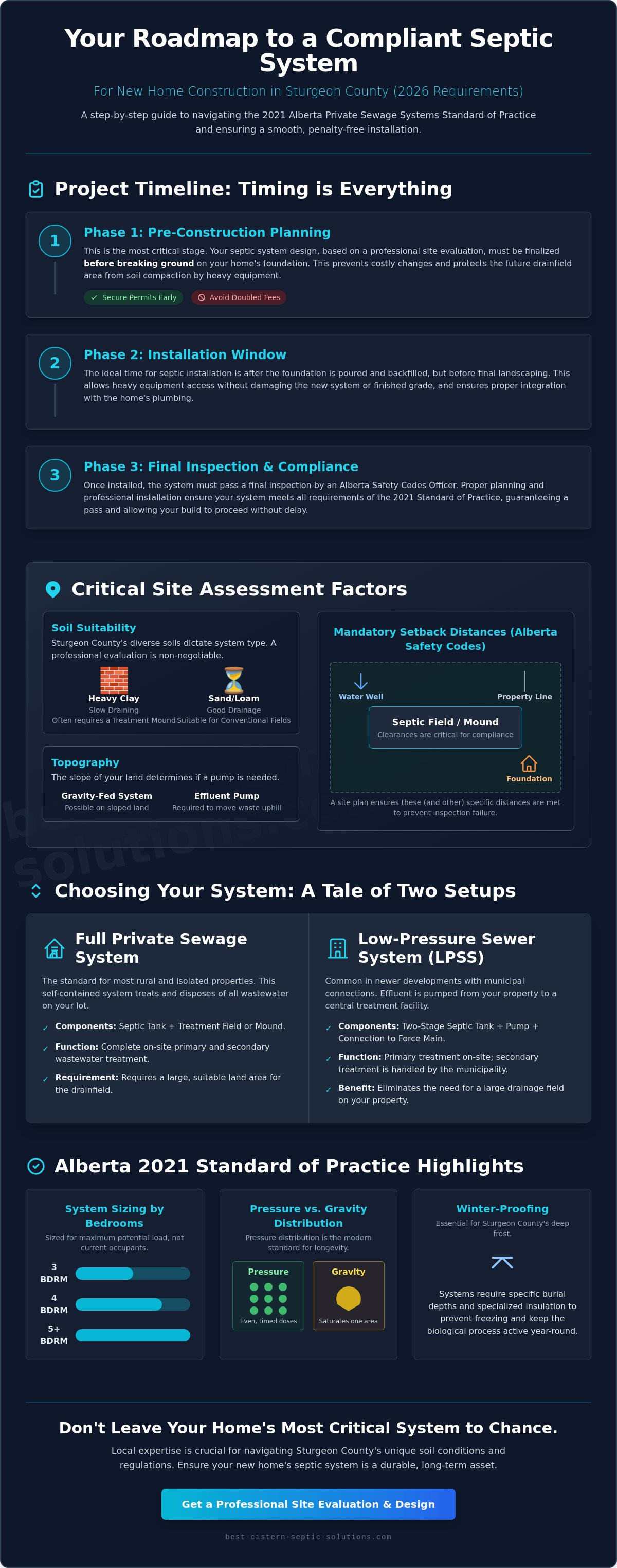
Understanding your connection type is the first step in the planning process. Some newer developments in Sturgeon County use a Low-Pressure Sewer System (LPSS). This setup uses a force main to transport effluent from your property to a municipal treatment facility. While it requires a two-stage septic tank on your lot, it removes the need for a large drainage field. In these setups, a "CC valve" connects your system to the main line. This valve is the property of the county; homeowners don't have the authority to operate it. If your acreage is isolated from these municipal lines, you'll need a full on-site sewage facilities solution like a treatment field or a raised mound to process waste safely.
Initial Site Assessment and Soil Suitability
A professional site evaluation is the only way to confirm what lies beneath your topsoil. Looking at the surface grass won't reveal the soil's percolation rate or the depth of the water table. We look at the property's topography to determine if a gravity-fed system is possible or if an effluent pump is necessary to move waste to higher ground. Choosing the right septic system for new home construction Sturgeon County requires identifying critical "setback" distances early. Your system must maintain specific clearances from your new foundation, water wells, and property lines to remain compliant with Alberta Safety Codes. Getting these measurements right prevents the risk of failing an inspection or facing costly relocation orders during the construction process.
Selecting the Right System: Alberta Private Sewage Standards
Every septic system for new home construction Sturgeon County residents install must strictly adhere to the Alberta Private Sewage Systems Standard of Practice. This document isn't just a list of rules; it's a technical blueprint that ensures your home's waste is handled safely and effectively. The process involves two distinct stages. Primary treatment occurs within the septic tank where solids settle and oils float. Secondary treatment is the critical biological process that happens in the soil of your drainfield. Because Sturgeon County faces deep frost penetration in winter, we prioritize specific tank burial depths and specialized insulation. This prevents the system from freezing and ensures the biological colony remains active during our harshest months.
Modern standards increasingly favor pressure distribution over traditional gravity-fed systems. Gravity systems often saturate one small area of the field while leaving other sections dry, which can lead to localized soil clogging. Pressure systems use a pump to distribute effluent evenly across the entire soil surface at timed intervals. This methodical approach extends the life of your field and prevents premature failure. Professional septic solutions help you decide which mechanical components, like high-head pumps or specialized alarms, best suit your specific site plan.
Conventional Fields vs. Treatment Mounds
Conventional fields work well in deep, well-draining soil where the water table is low. However, Sturgeon County's clay-heavy terrain often requires a raised sand mound to meet safety codes. Mounds provide the necessary vertical separation between the effluent and the groundwater. While at-grade systems are excellent for preserving natural vegetation, they require very specific soil conditions to function. A well-designed mound or field should provide reliable service for 20 years or more when maintained correctly, making it a lasting asset for your property.
Advanced Treatment Plants for Challenging Lots
When a lot is too small for a large mound or has significant slope constraints, we look toward Level 1 or Level 2 advanced treatment plants. These mechanical systems treat wastewater to a much higher standard before it ever reaches the soil. This cleaner effluent allows for smaller setbacks and more compact field designs. While these plants require more consistent mechanical maintenance than passive fields, they offer a sophisticated resolution for difficult building sites. They transform a challenging lot into a viable location for your new build while protecting the local environment.
Navigating Sturgeon County Permits and Safety Codes
The Safety Codes Administrator for Sturgeon County acts as a final safeguard to ensure your wastewater system operates without risking public health or the local environment. Securing a permit for a septic system for new home construction Sturgeon County homeowners are planning is a multi-step process that begins long before the first shovel hits the ground. You must submit a detailed design that complies with the 2021 Alberta Private Sewage Systems Standard of Practice. While a plumbing permit covers the drainage and venting systems inside the home, a private sewage permit specifically regulates the treatment components and disposal field located on your property.
Skipping this step is a costly mistake. Sturgeon County enforces strict penalties for proceeding without a safety code permit, which includes doubling the standard application fee. Currently, the permit fee for septic fields or mounds is $370.00, while tanks connecting to low-pressure lines cost $160.00. Beyond immediate fines, unpermitted systems can stall your final occupancy permit or create significant legal hurdles when you eventually decide to sell your property. Professional documentation provides the transparency needed for a smooth, stress-free approval process.
The Soil Profile and Perk Test Requirement
A mandatory site evaluation is the foundation of your permit application. Sturgeon County requires a certified professional to conduct a soil profile, which involves digging a test pit to examine the soil's distinct layers. This process identifies the "Loading Rate" of your land. This rate dictates exactly how many liters of effluent your soil can safely absorb per square meter each day. Understanding the soil texture and structure ensures we don't undersize the septic bed. This technical precision is what prevents premature system failure and protects your landscape from saturation.
Inspections and Final Compliance
Once construction begins, the Safety Codes officer performs an "Open Trench" inspection. They verify that the tank, piping, and distribution components match the approved design before any backfilling occurs. After the installation is complete, we provide an "As-Built" drawing. This document is a precise map of your system’s location and depth, serving as a permanent record for your property files. Final sign-off from the county is the last hurdle before you receive your occupancy permit. It gives you the confidence that your new home is safe, compliant, and ready for use.
Septic Installation Timeline: Coordinating with the Build
Timing the installation of a septic system for new home construction Sturgeon County homeowners are managing is a logistical dance. The ideal window for this work typically opens after the foundation is poured and backfilled, but before you begin final landscaping or driveway paving. This specific timing allows us to work efficiently without interfering with the framing or roofing crews. It's vital to coordinate with your home's plumber early in the process to establish the exact location and depth of the "stub-out." This exit point in the foundation dictates the entire slope of your exterior piping. If the stub-out is too deep, you might lose the ability to use a gravity-fed system, potentially adding the cost of an effluent pump to your project.
During the physical installation, we focus on methodical backfilling to ensure the long-term integrity of the system. We use specific bedding materials to stabilize the tank and prevent it from shifting. Without this careful approach, high groundwater levels can cause tank buoyancy, where a tank actually floats or heaves out of the ground. Proper compaction also prevents pipe shearing. This occurs when the soil around the house settles faster than the soil near the tank, putting immense pressure on the joints. For a professional and methodical approach to your utility setup, consider our septic tank installation services to ensure your new build starts on solid ground.
Managing Heavy Equipment and Soil Integrity
The area reserved for your future drainfield is surprisingly fragile. Soil relies on natural pores to process and treat effluent. When a concrete truck or a heavy excavator drives over this reserved space, it crushes those pores and destroys the soil's ability to absorb water. This compaction is often permanent and can ruin a field before it's even installed. We recommend fencing off the entire septic area the moment you break ground. You should also ensure that stockpiled topsoil from the foundation dig isn't dumped on this space, as the weight can compromise the site's natural drainage patterns.
Tank Placement and Access for Future Service
Strategic placement is about more than just meeting setbacks; it's about future peace of mind. We position your tank so it's easily accessible for maintenance vehicles in the years to come. We also install risers to grade, which means you'll never have to dig up your lawn for a routine inspection. During the build, we integrate septic alarms and effluent pumps directly into your home's electrical panel. This ensures you receive an immediate notification if the system requires attention, allowing for a professional fix before a minor issue turns into a significant problem.
Why Local Expertise is Critical for Your Sturgeon County Home
Sturgeon County's specific environmental profile requires more than just a standard utility setup. The heavy clay soils common in the region act as a natural barrier to drainage if the system isn't designed with technical precision. When you invest in a septic system for new home construction Sturgeon County properties need, you aren't just buying a tank; you're securing the biological safety of your land. Professional design prevents the unpleasant septic smells and groundwater contamination that can arise from poor soil loading or improper component selection. We view mechanical system integrity as a direct link to the safety of your household, ensuring that your wastewater is neutralized before it ever reaches the environment. This proactive approach transforms a necessary utility into a long-term asset that preserves your property value.
A specialized expert understands that every lot in the county has a unique story. Whether you're building near the Sturgeon Valley or on a more isolated acreage, the soil's ability to process waste determines the success of your build. Choosing a partner who recognizes these nuances provides a definitive resolution to the stress of rural construction. This expertise ensures that your system functions reliably through seasonal shifts, preventing the common worries of system failure or environmental infractions. By focusing on durability and mechanical excellence, we ensure that once the job is done, it stays done.
The Best Cistern Septic Solutions Difference
Our team provides a methodical approach to septic field installation that accounts for the specific frost depths and soil textures of North Central Alberta. We handle the complex permit logistics and regulatory filings with the Safety Codes Administrator so you can focus on the architectural details of your new build. For first-time acreage owners, we provide grounded, transparent advice that removes the mystery from rural utilities. We take pride in performing difficult tasks with a high level of sophistication, ensuring your septic system for new home construction Sturgeon County project meets every safety standard.
Integrating Water and Waste: Cistern Options
Total utility security often involves more than just waste management. Depending on your lot's water table and local well quality, a cistern installation might be a necessary companion to your septic system. A reliable, clean water supply is the foundation of a comfortable rural residence. By integrating your water storage and waste treatment plans, you ensure a balanced system that protects your property and your family's health. We can help you evaluate how a cistern pump and dedicated storage tank fit into your overall site plan. Contact us today for a specialized site assessment to ensure your Sturgeon County project is built for long-term durability and peace of mind.
Building a Foundation for Reliable Wastewater Management
A high-functioning home depends on essential systems that operate reliably without constant worry. By prioritizing a professional site evaluation and aligning your installation with the construction schedule, you protect your soil's integrity and ensure a smooth permit process with the county. A properly engineered septic system for new home construction Sturgeon County projects is a vital long-term asset that preserves your land and your peace of mind. We specialize in the unique clay-heavy soil conditions of our region and offer a comprehensive design-to-install service that meets the highest Alberta Safety Codes.
Our team is Alberta Private Sewage Certified and dedicated to providing grounded, transparent guidance for every new acreage owner. We handle the technical complexities so your transition to rural living is as stress-free as possible. Get a Professional Site Assessment for Your Sturgeon County Build to ensure your wastewater system is a permanent resolution rather than a future liability. You've worked hard to plan your dream home; let's make sure the infrastructure beneath it is just as sophisticated and dependable.
Frequently Asked Questions
Do I need a specific permit for a septic system in Sturgeon County?
Yes, you must obtain a Private Sewage Disposal System (PSDS) permit before starting any work. The fee for a standard septic field or mound is $370.00. Failing to secure this permit before construction results in the county doubling your application fee. This process ensures your design meets the 2021 Alberta Private Sewage Systems Standard of Practice and protects your property's legal standing.
How much space does a septic field require for a 4-bedroom home?
The footprint of your septic bed depends on your soil's loading rate and the number of bedrooms in your home. For a 4-bedroom residence, designers calculate space based on a specific daily peak flow to ensure the soil isn't overwhelmed. In the heavy clay soils often found in Sturgeon County, you'll likely need a larger area or a raised mound to process effluent effectively compared to sandy terrain.
What is the difference between a septic field and a mound system?
A septic field is installed below the natural grade and relies on deep, well-draining soil for treatment. A mound system is a raised sand bed constructed above the ground. We use mounds when the property has a high water table or slow-draining clay that doesn't meet the vertical separation requirements of the Alberta Safety Codes. Both systems provide effective treatment when designed for your specific site.
Can I build my septic system before the house foundation is poured?
We generally advise against installing the system before the foundation is backfilled. The "stub-out" depth from your house determines the slope of your pipes. Installing too early can lead to alignment issues or damage from heavy framing equipment. It's best to coordinate the septic system for new home construction Sturgeon County homeowners are building after the heavy excavation for the house is complete.
How does Sturgeon County's cold climate affect septic system design?
Deep frost penetration is a primary concern in our region. We design systems with deeper tank burial depths and specialized insulation for pipes and tank lids. These measures prevent the wastewater from freezing and ensure the biological treatment process continues throughout the winter months. Proper design protects your mechanical components from cold-weather failure and ensures year-round reliability.
Is a soil test mandatory for new home construction in Alberta?
Yes, a professional soil evaluation is a mandatory requirement for any new private sewage design in Alberta. This test typically costs between $700 and $2,000 depending on the site's complexity. A certified professional must dig a test pit to examine the soil profile and texture. This data determines the loading rate and the specific type of septic system for new home construction Sturgeon County regulations will allow on your lot.
What happens if my property is in a Sturgeon County LPSS zone?
If you are in a Low-Pressure Sewer System (LPSS) zone, you won't need a traditional drainage field. Instead, you'll install a two-stage septic tank that connects to the county's force main. The permit fee for these specific tank installations is $160.00. This setup moves effluent to a municipal treatment facility while the solids remain in your on-site tank for periodic maintenance.
How long does the installation of a new septic system typically take?
The total timeline for a new system spans 4 to 12 weeks from the initial consultation to final approval. While the physical digging and installation only take 1 to 5 days, the permitting and design phase can take up to 8 weeks. Final inspections by the Safety Codes officer usually add another 1 to 2 weeks to the schedule. Planning ahead ensures your system is ready when you move in.


