
What if the biggest risk to your new workspace isn't the construction cost, but the assumption that you can simply "tie in" to your home's existing wastewater lines? Building an outbuilding is a major milestone for any property owner, yet the logistics of a septic system for a barn or shop in Morinville often lead to more questions than answers. You might worry about over-investing in a massive system for a building with low daily water use, or perhaps you're feeling overwhelmed by the specific 2026 permit requirements in Sturgeon County.
We understand that you want a solution that's both compliant and cost-effective. It's frustrating to deal with red tape, but getting the infrastructure right from the start provides long-term peace of mind. This guide simplifies the planning process so you can choose the right tank size and avoid common installation pitfalls. You'll learn how to navigate the current $370 PSDS permit fees, understand critical setback rules, and select a setup that ensures your property remains a valuable, worry-free asset for decades to come.
Key Takeaways
- Learn how usage patterns for secondary buildings dictate whether a holding tank or a septic field is the most sustainable choice for your property.
- Discover why outbuildings with low daily water use require specialized sizing to prevent system dormancy and biological failure.
- Understand the mandatory soil evaluation and "Peak Daily Flow" calculations required to secure a permit for a septic system for a barn or shop Morinville.
- Navigate Sturgeon County’s 2026 regulations to ensure your installation complies with the Alberta Private Sewage Standard of Practice.
- See how professional installation acts as a long-term property asset by preventing environmental damage and future legal complications.
Planning a Septic System for a Barn or Shop in Morinville
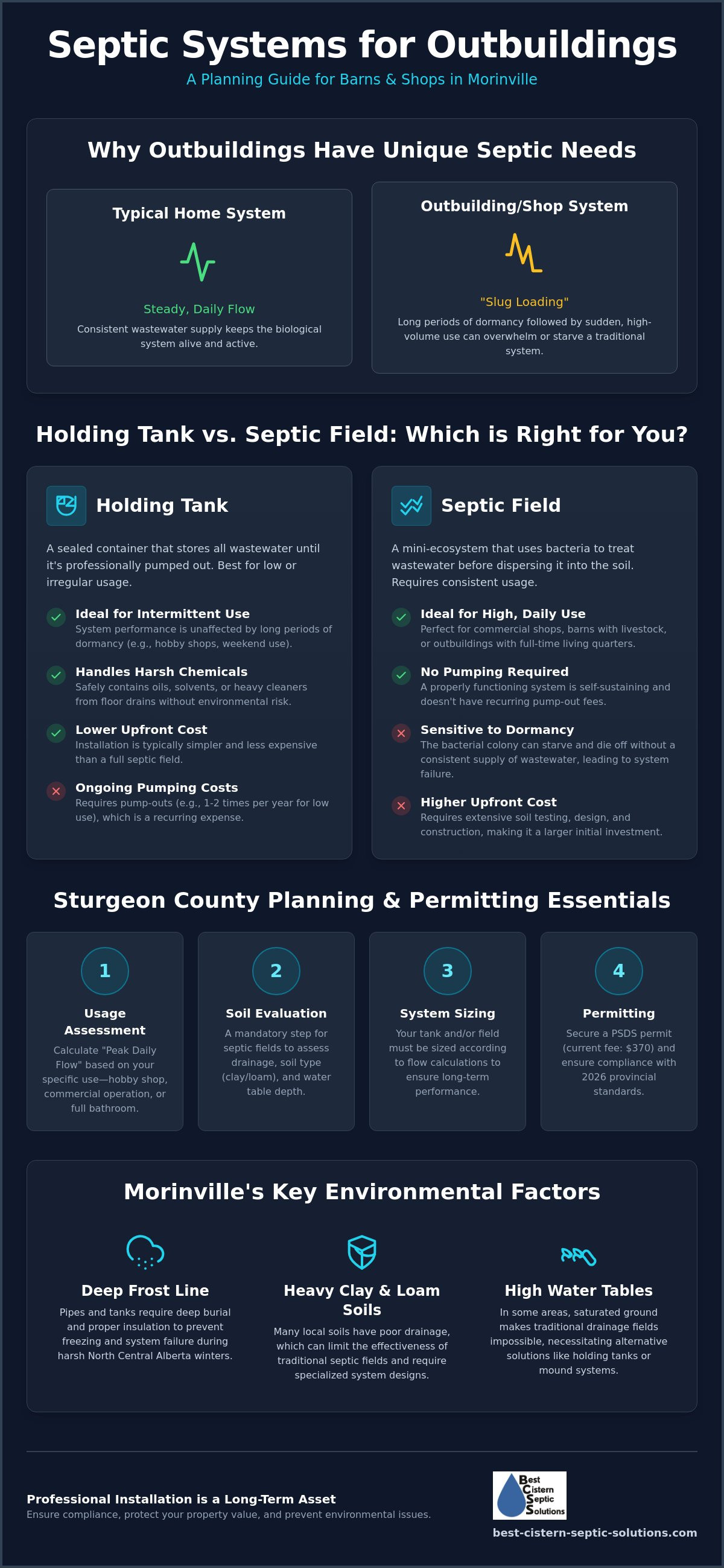
Adding a plumbed outbuilding to your property is an investment that increases both utility and value. However, the design requirements for a septic system for a barn or shop in Morinville differ significantly from those of a standard residential home. While a house sees a steady, predictable flow of wastewater, a workshop or barn often experiences "slug loading," where the system remains dormant for days before seeing a sudden burst of use. Understanding what a septic system is and how it manages these fluctuations is the first step in creating a reliable setup.
Your intended use dictates every technical specification of the design. For example, if you are planning a shop to store and maintain an RV or boat, your drainage and plumbing needs will differ from a standard woodworking space. While building a custom outbuilding is a popular choice, some owners prefer the specialized environment and security of facilities like S6 Storage for their large recreational assets. Whether you build or outsource storage, a hobby shop used for weekend projects produces mostly "greywater" from sinks or floor drains, which contains fewer pathogens than "blackwater" from toilets. In contrast, a commercial barn or a shop with a full bathroom requires a more robust approach to manage biological waste. Morinville properties often feature heavy clay or loam soils that resist drainage, making the distinction between these waste types critical for long-term soil health and system performance.
Can You Tie Into Your Existing House Septic?
Most property owners hope to save on costs by connecting their new shop to their current residential septic field. While this is technically possible in some cases, it's rarely the most reliable solution. Residential systems are sized precisely for the number of bedrooms in a home. Adding the load of a shop can easily exceed the daily volume the field was designed to disperse. Even if capacity isn't an issue, the distance between buildings creates a risk. Long-distance piping is prone to settling and freezing in our climate, and overloading a residential system often leads to premature field failure, which is a far more expensive problem than installing a dedicated tank for the shop.
Morinville Environmental Factors
The local environment in Sturgeon County presents specific challenges that require professional foresight. North Central Alberta is known for deep frost lines that can reach several feet during a harsh winter. If your shop plumbing isn't buried deep enough or lacks proper insulation, the entire system can seize up when you need it most. Additionally, Morinville’s topography includes pockets with high water tables. In these areas, a traditional drainage field may not be an option because the soil remains too saturated to treat effluent. We focus on identifying these soil constraints early in the planning phase to ensure your system remains a durable, invisible asset rather than a source of stress.
Choosing Between Holding Tanks and Septic Fields for Shops
Selecting a septic system for a barn or shop in Morinville requires a shift in perspective. Unlike your home, where water flows daily, a shop might sit empty for weeks. This intermittent use is the single most important factor in your decision. Septic fields rely on a living colony of bacteria to treat waste, and these microbes need a consistent supply of "food" to survive. In a workshop with only occasional use, the biological colony can actually starve. This leads to a system that doesn't function correctly when you finally do turn on the tap.
You also have to consider what's going down your drains. If your shop has floor drains where oils, solvents, or heavy cleaners might enter the system, a septic field is rarely an option. These chemicals kill the necessary bacteria and can contaminate the local groundwater. In these cases, a holding tank is the only compliant way to manage waste. Following The Permitting and Installation Process for Morinville ensures your choice meets provincial safety standards and protects your property's integrity.
The Case for Holding Tanks in Secondary Buildings
For many Morinville residents, a holding tank is the most practical choice for a secondary structure. It’s a sealed container that simply stores waste until it’s pumped out. Because there's no biological treatment happening in the soil, it doesn't matter if you use the shop every day or once a month. Sturgeon County regulations require these tanks to have a high-level alarm system to prevent overflows. Most owners of hobby shops find that with a standard tank, they only need a pump-out once or twice a year. This makes the lower upfront cost very attractive for low-use buildings.
When a Full Septic Field is Necessary
If your outbuilding is a working barn with livestock or a commercial shop with high daily water use, a septic field installation is likely the better long-term investment. Livestock operations generate significant volumes of wash water that would fill a holding tank in days. A field allows this water to be treated and dispersed back into the ground safely. You'll need adequate space on your Morinville parcel to meet setback requirements, but removing ongoing pumping fees can save thousands of dollars over the system's life. If you're still weighing the pros and cons, our team can provide septic solutions tailored to your specific building layout.
Sizing and Soil Requirements in Sturgeon County
Calculating the capacity for a septic system for a barn or shop in Morinville involves more than just counting sinks. Engineers and certified installers use a metric called "Peak Daily Flow." This represents the maximum volume of wastewater the system handles during its busiest 24-hour period. Even if you only use your shop on Saturdays, the system must be sized for that specific peak rather than a weekly average. Sizing too small leads to messy backups during a long workday. Conversely, sizing too large can exacerbate the dormancy issues mentioned earlier, as the tank won't stay warm or biologically active enough to process waste effectively.
Before any digging begins, a soil profile and percolation test are required. In Morinville, the presence of heavy clay often dictates whether a standard field is possible or if a more complex mound system is needed. This test measures how quickly water moves through your specific lot. It’s a vital step that prevents you from investing in a system that the ground simply can't support. We also recommend considering future plans during this phase. If you intend to add a small office or a secondary suite later, sizing the system for that future load now is much more cost-effective than a total replacement down the road.
Sturgeon County Setback Requirements
Sturgeon County enforces strict setback requirements to protect groundwater and structural integrity. For a septic system for a barn or shop in Morinville, your tank must sit at least 3 meters from any buildings and 1.5 meters from property lines. If you're installing a drainage field, those distances increase to 5 meters from buildings and 3 meters from property lines. Most importantly, any component of your system must maintain a 30-meter clearance from water wells. Properties near the Sturgeon River or local creeks may face additional environmental scrutiny to prevent effluent runoff into sensitive waterways.
The Impact of Shop Chemicals on System Health
A shop environment introduces substances that a standard residential system isn't built to handle. If you're running a mechanical shop with floor drains, provincial guidelines often require an oil-water separator. This device captures petroleum products before they reach your tank. Solvents, degreasers, and industrial-grade cleaners are "biocides" that kill the healthy bacteria needed for waste treatment. Protecting your septic systems from these chemicals ensures the biological colony remains healthy and the soil stays permeable, which preserves the long-term value of your property.
The Permitting and Installation Process for Morinville
Navigating the regulatory path for a septic system for a barn or shop in Morinville requires a methodical approach. The process begins with a mandatory site evaluation and soil profile. A certified professional must dig a test pit to analyze the soil layers and determine the restrictive layer depth. Once this data is collected, we move to the design phase. Every design must adhere strictly to the Alberta Private Sewage Standard of Practice to ensure the system treats waste effectively without harming the environment. It is not just about digging a hole; it is about building a compliant, long-term asset.
The next stage involves submitting your Sturgeon County Private Sewage Permit application. As of 2026, the fee for a PSDS permit covering septic fields or mounds is $370.00. If you are only installing a holding tank for a low-pressure sewer line, the fee is $160.00. It's vital to wait for permit issuance before breaking ground. Sturgeon County strictly enforces a double-fee penalty for any construction that starts prior to the safety code permit being issued. Once the permit is in hand, physical installation begins, culminating in a mandatory "open-hole" inspection before any soil covers the components.
Working with Alberta Safety Codes Officers
During the open-hole inspection, a Safety Codes Officer visits the site to verify the work. They check that the tank is level, the pipe slopes are correct, and all setbacks match the approved design. Common delays in the Morinville region often stem from incomplete applications or designs that don't account for local high-water tables. To avoid these setbacks, confirm your installer holds a Private Sewage Certificate of competency. This certification is your guarantee that the professional understands the nuances of Alberta’s safety codes. If a re-inspection is required due to errors, a $160.00 fee applies, so getting it right the first time is essential.
Winter Installation Challenges
While we can perform work in various conditions, summer and fall are the ideal windows for Morinville projects. Digging in frozen Alberta ground is significantly more difficult and often requires specialized equipment to break through the frost. These complications can increase labor costs and impact the final grade of the soil once it thaws in the spring. If you are planning a spring build, we recommend completing your soil testing and permit applications in the late fall. This preparation allows us to start as soon as the ground is workable. If you're ready to begin the permit process, our team provides expert septic tank installation services to guide you through every step.
Why Professional Installation is Essential for Your Outbuilding
Choosing to install a septic system for a barn or shop in Morinville yourself might seem like a way to save money, but it often invites long-term liability. Unpermitted or poorly designed systems can lead to environmental contamination, hefty Sturgeon County fines, and even property liens that complicate future sales. A professional installation ensures the system is an invisible, high-performing asset rather than a hidden risk. We treat these utility systems as foundational property investments that must be handled with precision.
When you work with a specialist, you're not just getting a tank in the ground; you're securing a system that meets the exact biological needs of your outbuilding. Even with a new installation, having a proactive septic system repair and maintenance plan is vital for longevity. Best Cistern Septic Solutions brings local expertise to every project, ensuring your barn or shop functions flawlessly from day one. Our team manages the technical complexities so you can focus on enjoying your new space.
Long-Term Reliability and Peace of Mind
A professional warranty provides security that a DIY project cannot match. We handle the heavy lifting, from the initial excavation to the final grading, ensuring the site is left clean and stable. One of the most common signs of a failed field is the "greener grass" syndrome, where effluent saturates the surface because it can't drain properly. Our expert designs prevent this by matching the system to your soil's specific absorption rate. This level of detail removes future worries and protects the long-term value of your property.
Next Steps for Your Morinville Project
Planning your outbuilding's utility needs doesn't have to be a guessing game. Every property in Sturgeon County has unique topography and soil conditions that require a personalized touch. Booking a site consultation allows us to evaluate your specific location and provide an accurate estimate based on real-world data. We help you navigate the permitting process and choose the right tank size for your actual usage patterns. Contact Best Cistern Septic Solutions for a professional Morinville shop septic consultation.
Secure the Future of Your Morinville Property
Planning the right wastewater solution for your new outbuilding is a step that protects both your property value and your peace of mind. As we have explored, the choice between a holding tank and a septic field depends heavily on your specific usage patterns and the local soil conditions in Sturgeon County. By calculating your peak daily flow accurately and respecting the 2026 setback requirements, you ensure your system remains a durable, invisible asset rather than a source of future stress.
Installing a septic system for a barn or shop in Morinville is a technical task that requires specialized expertise to navigate provincial safety codes and seasonal installation hurdles. Best Cistern Septic Solutions has served the Morinville region for years. Our team includes Certified Alberta Private Sewage Installers who specialize in rural outbuilding wastewater solutions. We manage the design and permitting process to ensure every detail meets regulatory standards. Get a Professional Septic Quote for Your Morinville Shop or Barn and take the first step toward a reliable build. We look forward to being your partner in property preservation.
Frequently Asked Questions
Do I need a permit for a shop septic system in Morinville?
Yes, you must obtain a Private Sewage Disposal System (PSDS) permit from Sturgeon County before starting any installation work. This requirement applies to both new constructions and any significant alterations to existing systems. Securing this permit ensures your project complies with the Alberta Private Sewage Standard of Practice, which protects your property value and prevents environmental liability.
Can I run a bathroom in my barn into my existing house septic tank?
It's technically possible in some cases, but we generally discourage it because residential systems are sized specifically for the home's bedroom count. Adding a barn bathroom can easily overload your existing drainage field, which leads to premature failure and expensive repairs. We recommend a dedicated capacity evaluation to determine if your current system can safely handle the additional load without risking your home's infrastructure.
Is a holding tank or a septic field better for a workshop with low use?
A holding tank is typically the better choice for a workshop used only on weekends or occasionally. Septic fields rely on a consistent biological load to keep treatment bacteria alive; intermittent use can cause these colonies to starve and fail. A holding tank provides a reliable, sealed solution for a septic system for a barn or shop Morinville owners use infrequently, as it simply stores waste for periodic pumping.
What happens if I put oil or chemicals down my shop floor drain?
Pouring oils, solvents, or harsh chemicals down the drain will kill the beneficial bacteria in your tank and can permanently clog the soil in a drainage field. This biological "kill" leads to system backups and potential environmental fines from the province. If your shop involves mechanical work, you should install an oil-water separator to capture these hazardous substances before they ever reach your septic components.
How far does a septic tank need to be from my shop in Sturgeon County?
In Sturgeon County, your septic tank must be placed at least 3 meters from any building and 1.5 meters from your property lines. These setbacks are mandatory to prevent structural settling and ensure that service equipment has enough room to access the tank for maintenance. If you're installing a drainage field, the setback distance increases to 5 meters from any buildings to protect the foundation from moisture.
How much space do I need for a septic field for a horse barn?
The footprint for a barn septic field depends on your daily water usage and the specific drainage rate of your soil. Horse barns often generate significant wastewater from stall cleaning and livestock care, which usually requires a larger field than a standard workshop. A professional soil percolation test is the only way to accurately calculate the space needed to meet Alberta’s safety standards for waste dispersal.
Can I install my own septic system for my shop in Alberta?
While Alberta allows some homeowners to install systems on their primary residence, we strongly recommend professional installation for shops and barns. Most outbuilding projects require a certified installer to obtain the necessary permits and ensure the design handles the unique waste types found in a shop. Professional installation also provides a warranty, which gives you long-term security and peace of mind for your property investment.
How does the Morinville frost line affect my outbuilding septic pipes?
The deep frost line in the Morinville region can cause shallow or poorly insulated pipes to freeze and crack during a typical Alberta winter. To prevent this, we bury lines at a specific depth and use high-grade insulation in areas where soil cover is limited. Proper planning ensures your septic system for a barn or shop Morinville remains fully operational and free from frost-related backups even during the coldest months of the year.


