
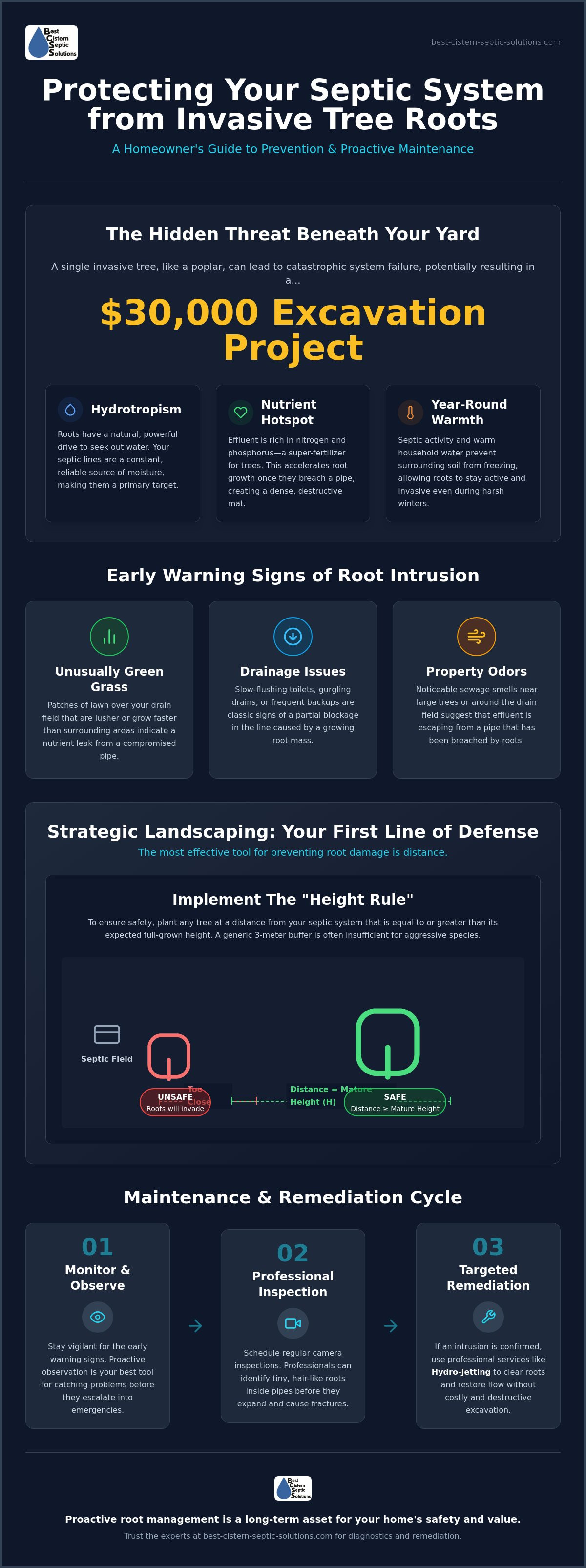
Could a single poplar tree in your backyard eventually lead to a $30,000 excavation project? For many Alberta homeowners, the answer is a quiet but firm yes as invasive roots seek out the moisture inside your pipes. It's a stressful situation, especially when you notice your toilets flushing slower than they used to or see lush, suspiciously green patches over your drain field. You want a beautiful landscape; however, you also need a functional home utility system that doesn't keep you up at night. This guide provides the professional strategies you need for preventing tree roots in septic lines, ensuring your system remains a durable asset for your property rather than a financial burden.
We understand that maintaining a rural or suburban property comes with unique challenges, and the health of your septic field is paramount to your family's comfort. By taking a proactive approach to your property care, you can avoid the high costs of a full field replacement and gain lasting peace of mind. We will walk through a clear map of safe planting distances based on Alberta standards, a reliable maintenance schedule for root prevention, and the modern diagnostic tools professionals use to catch issues before they escalate. Let's look at how you can balance a thriving garden with a secure, high-performing septic system.
Key Takeaways
- Learn how hydrotropism draws roots toward your system and how applying the "Height Rule" helps you choose safe planting locations.
- Discover effective strategies for preventing tree roots in septic lines by integrating biological tree selection with physical barriers.
- Establish a reliable maintenance routine that uses professional inspections to monitor your system’s health and prevent unexpected field replacements.
- Identify when to move beyond DIY efforts and utilize professional remediation options like hydro-jetting to restore your septic field's integrity.
- Gain peace of mind by understanding how proactive root management serves as a long-term asset for your home's safety and value.
The Science of Intrusion: Why Tree Roots Target Septic Lines
Roots are remarkably efficient at finding exactly what they need to survive. This biological drive is known as hydrotropism, which is the primary driver of septic line intrusion. Understanding The Science of Root Intrusion helps you see your property not just as a yard, but as a complex ecosystem where your utility lines represent a major resource for local vegetation. Trees don't "attack" pipes out of malice; they simply follow the path of least resistance to the best available resources.
While municipal sewer lines are often targets for thirsty trees, septic systems offer an even more enticing environment. The effluent flowing through your lines isn't just water; it's a high-nutrient solution rich in nitrogen and phosphorus. To a tree, your drain field looks like a massive, underground fertilizer spike. These nutrients accelerate root growth once they make contact, creating a feedback loop that draws even more of the root system toward the pipes. Even in the depths of an Alberta winter, the bacterial activity inside a septic tank and the constant influx of warm household water keep the surrounding soil from freezing solid. This "warmth factor" allows roots to remain active and invasive near your system while the rest of the landscape lies dormant.
The damage often begins with a single, hair-like filament. These tiny roots can find their way into the smallest microscopic cracks or loose joints in PVC and concrete pipes. Once inside, the root thrives on the constant supply of moisture and food. It expands in diameter, exerting incredible pressure from the inside out. This growth can eventually shatter heavy-duty pipes or displace entire sections of your line, leading to total system failure. Proactive strategies for preventing tree roots in septic lines are essential because once a pipe is physically compromised, the resolution usually requires professional excavation.
The Vulnerability of Septic Field Pipes
Your drain field is particularly susceptible because of its specific design. Unlike solid transport pipes, lateral lines are perforated to allow effluent to seep into the soil for treatment. These openings are an open invitation for thirsty roots. When roots enter these perforations, they don't just block the pipe; they "blind" the soil interface. This means they create a dense mat that prevents the ground from absorbing liquid. This structural interference stops the natural filtration process, often causing the system to back up into the house or pool on the surface.
Signs of Root Intrusion in Your System
Catching a problem early can save you from a major repair. It's helpful to stay observant and keep a close watch on your property for these specific indicators:
- Unusually green grass: If you notice patches of grass over your field that are much greener or grow faster than the rest of the lawn, it's often a sign that roots have tapped into the nutrient-rich effluent.
- Property odors: Sewage smells near large trees, even if they're located several meters from the tank itself, can indicate that a root has breached a line and allowed effluent to escape.
Identifying these signs allows for a methodical, professional diagnostic process rather than an emergency replacement. By staying observant, you protect the long-term integrity of your property's most vital utility and ensure the safety of your household.
Strategic Landscaping: Safe Distances and Tree Selection for Alberta
Landscaping isn't just about curb appeal; it's a structural decision for your property. When it comes to preventing tree roots in septic lines, the most effective tool is distance. While some general guides suggest a three-meter buffer, this is often insufficient for the aggressive species found across Parkland and Leduc County. A more reliable standard is the "Height Rule." You should plant any tree at a distance equal to or greater than its expected full-grown height. This ensures that even at maturity, the drip line and the most active moisture-seeking roots remain far from your lateral lines.
For rural acreages, the biggest threats are often the ones that look the most natural in our landscape. Trembling Aspen and Balsam Poplar are notorious for their rapid growth and extensive lateral root systems. These "water seekers" can send out runners that travel dozens of feet to find the nutrient-rich effluent in your drain field. If you're planning a new landscape or managing an existing one, choosing shallow-rooted perennials or native grasses for the area directly over the field is the safest choice. These plants stabilize the soil without interfering with the system's mechanical integrity. If you're worried about existing growth, you might consider chemical and physical root barriers to protect your investment.
The "Never Plant" List for Septic Owners
Certain species present such a high risk that they should never be planted near a septic system. These include:
- Willows: These are the highest risk due to their aggressive, moisture-seeking root systems that can penetrate even the smallest pipe joints.
- Poplars and Aspens: Their rapid growth means their roots expand quickly, often causing physical displacement of pipes.
- Silver Maples and Birches: These trees have shallow, wide-reaching roots that can "blind" the soil interface of your drain field, leading to surface pooling.
Septic-Safe Trees and Shrubs
If you want to add vertical interest to your yard without risking your utility lines, look for species with compact root balls. Slow-growing evergreens or small flowering trees like Crabapples and Serviceberries are generally safer. We recommend maintaining a buffer zone of at least 10 to 25 feet, depending on the species' mature size. For those unsure about their current layout, a professional septic system inspection can help map out your lines and identify potential landscaping risks before they become emergency repairs. This proactive planning turns your yard into a long-term asset rather than a hidden liability.
Active Defences: Chemical Inhibitors and Physical Root Barriers
While selecting the right trees is your first line of defense, active measures provide an extra layer of security for your system. These methods focus on creating an environment that roots simply cannot or will not enter. By combining chemical inhibitors with structural barriers, you create a multi-tiered strategy for preventing tree roots in septic lines that adapts to your property's specific needs. This dual-action approach ensures that your utility lines remain clear and functional for decades, protecting the long-term integrity of your home.
Chemical Root Killers: Pros and Cons
Many homeowners turn to chemical treatments as a cost-effective maintenance step. Copper sulfate was the traditional choice for decades; however, it can be problematic for local groundwater and may disrupt the delicate balance of your septic tank's "biota." The bacteria in your tank are essential for breaking down solids, and harsh chemicals can kill these microscopic workers, leading to system sluggishness. Modern foaming root killers offer a much more effective and safer alternative. Because roots often enter through the top of the pipe where condensation collects, liquid treatments that only flow along the bottom may miss the target entirely. Foaming agents expand to fill the entire pipe cavity, ensuring the inhibitor reaches every potential entry point. We recommend establishing a bi-annual maintenance routine to keep these chemical levels consistent without harming the beneficial bacteria that process your household waste.
Physical Barriers and Geotextiles
For those seeking a more permanent resolution, physical exclusion methods are the gold standard. These are most effectively integrated during a new septic field installation in North Central Alberta. Vertical root shields made of high-density polyethylene (HDPE) act as a physical wall that redirects growth downward and away from your lateral lines. Advanced systems like Biobarrier take this a step further by using geotextile fabrics impregnated with trifluralin. This non-systemic herbicide creates a narrow zone where root tips cannot grow, effectively "pruning" the roots without harming the rest of the tree. These fabrics are durable enough to withstand the unique soil conditions of the Alberta Parkland region. Physical barriers provide a lifetime of protection compared to temporary chemical fixes. Using heavy-duty plastic liners or specialized fabrics ensures your system remains a durable, long-term asset for your property. This proactive approach eliminates the recurring worry of root intrusion and provides the peace of mind every homeowner deserves.
Detecting the Invisible: Monitoring and Maintenance Protocols
Maintaining a rural Alberta property requires a shift from reactive fixes to proactive stewardship. While the landscaping and barriers discussed earlier provide a strong foundation, consistent monitoring is the only way to ensure your efforts are working. Professional diagnostics provide a level of certainty that a "wait and see" approach simply cannot match. Waiting for a backup to occur often means the damage is already extensive and expensive. For instance, monitoring effluent levels in the distribution box can reveal early signs of sluggishness before a single drop of water ever backs up into your home. This process is a vital part of preventing tree roots in septic lines, as it allows you to address minor intrusions before they become structural failures. There is also a direct link between regular pumping and root prevention. A clean tank prevents solid waste from entering the lateral lines. When solids escape the tank, they create a fertile environment that encourages roots to settle and expand rapidly within the pipes.
The Professional Camera Inspection
High-definition sewer cameras have revolutionized how we care for underground utilities. These specialized tools travel through your lines to provide a real-time view of the interior pipe walls. They allow us to identify the exact point of entry for invasive roots, saving homeowners from the stress of unnecessary digging. During a professional inspection, we can clearly differentiate between a simple root hair clog and a more serious structural pipe collapse. Catching these issues during their initial stages often means you only need a targeted septic system repair rather than a full field overhaul. This level of detail removes the guesswork and provides a clear, documented path to a resolution that preserves your property's value.
Septic Field Health Checks
Physical health checks of your drain field are equally important for long-term durability. You should regularly walk your property to look for "soft spots" or areas of unusually saturated soil. These signs often indicate that roots have begun to interfere with the soil's ability to absorb effluent, leading to a localized system failure. Your septic alarm system is another critical tool in your maintenance arsenal; it provides an immediate warning if water levels rise beyond normal operating parameters. We recommend documenting these patterns over several years to create a historical record of your system’s performance. This data makes it much easier for a professional to spot subtle deviations before they turn into costly emergencies. If you haven't had your system evaluated recently, scheduling a professional septic system inspection is the best way to secure your property's future and ensure your household's safety.
Professional Remediation: Restoring Integrity to Your Septic Field
There are moments when proactive maintenance and landscaping choices aren't enough to counteract decades of aggressive root growth. Perhaps you've moved into a property where a legacy system was poorly situated near a mature willow, or maybe a single hairline fracture has allowed a massive root structure to take hold inside your pipes. When you encounter persistent backups, sewage odors, or structural settling in your yard, it's a clear sign that professional intervention is required. At this stage, the focus shifts from preventing tree roots in septic lines to restoring the mechanical integrity of the system. We specialize in providing these resolutions for homeowners in Spruce Grove, Leduc, and across Parkland County, ensuring that a failing field doesn't lead to the loss of your home's most vital utility.
Professional remediation is a methodical process that begins with a definitive diagnosis. Once we identify the extent of the intrusion via camera inspection, we determine if the lines can be cleared or if the structural damage is irreparable. In many cases, we can save a field through advanced cleaning techniques. However, if roots have physically shattered concrete or PVC components, the only durable solution is a targeted repair or partial replacement. We approach these tasks with the goal of creating a long-term asset for your property, rather than just a temporary fix. Our team understands the local soil conditions and environmental stressors unique to the Alberta Parkland region, allowing us to implement fixes that stand up to our harsh climate.
Hydro-Jetting and Mechanical Removal
Strategic Field Restoration
In cases where roots have caused extensive damage, we look toward strategic field restoration. This isn't just about replacing what was broken; it's about improving the system's design to prevent future issues. We often replace damaged lateral lines with modern, root-resistant materials and may even re-design the field layout to create a larger buffer zone away from existing mature trees. This structural evolution ensures your system remains durable for another 20 to 30 years. If you suspect your system is under threat, you can contact Best Cistern Septic Solutions for a professional diagnostic evaluation. We take pride in performing these difficult tasks with transparency and care, turning a high-stress utility failure into a manageable, professional resolution.
Securing the Future of Your Alberta Property
Managing a rural property requires a balance between natural beauty and mechanical reliability. By understanding the biological drivers of root growth and applying the "Height Rule" to your landscaping, you've already taken the first step toward protecting your home's most vital utility. Integrating active defenses like physical barriers and committing to regular monitoring ensures that your system remains a durable asset for decades. Proactive care is always more manageable than an emergency replacement; therefore, preventing tree roots in septic lines is a strategic investment in your family's daily comfort.
If you're uncertain about the current state of your drain field, professional clarity is just a phone call away. We are specialists in rural septic field restoration, serving homeowners throughout Parkland, Leduc, and Strathcona Counties. Our team provides detailed professional camera diagnostic reporting to identify potential issues before they escalate into costly failures. Protect your property with a professional septic inspection from Best Cistern Septic Solutions. With the right maintenance schedule and expert guidance, you can enjoy the peace of mind that comes with a secure, high-performing septic system.
Frequently Asked Questions
Will copper sulfate kill the trees I am trying to protect?
Copper sulfate kills the specific root tissue it contacts; however, it typically doesn't travel far enough into the tree's system to kill the entire plant. While the tree remains safe, we generally advise against its use because it can disrupt the beneficial bacteria in your septic tank and potentially leach into local groundwater. Modern foaming inhibitors are a more precise and environmentally responsible choice for most homeowners.
How far should a septic field be from a mature spruce tree in Alberta?
You should ideally maintain spruce trees at a distance equal to their expected mature height, which can reach 20 meters or more. While basic setback requirements often suggest at least six meters, the "Height Rule" is the most reliable method for preventing tree roots in septic lines in the Alberta Parkland region. This distance ensures that even as the tree reaches full maturity, its primary moisture-seeking roots remain clear of your utility lines.
Can I use rock salt to kill roots in my septic line?
We do not recommend using rock salt to manage root intrusion. Salt is an indiscriminate killer that can permanently damage your soil structure and dehydrate the beneficial microorganisms in your septic tank. It is far more effective to use a professional-grade foaming inhibitor that targets roots without compromising the surrounding environment or the mechanical integrity of your pipes.
How much does it cost to have roots removed from a septic line professionally?
The investment required for professional root removal depends on the severity of the intrusion and the specific cleaning method used. Factors such as the total length of the lines, the density of the root mass, and whether you require high-pressure hydro-jetting will influence the final cost. A professional diagnostic inspection provides the most accurate assessment of the work required to restore your system's performance.
Is it possible to save a septic field once roots have entered the distribution box?
It is absolutely possible to save a field even after roots reach the distribution box, provided the structural integrity of the components hasn't been shattered. We often use specialized cleaning tools to remove the intrusion and then apply chemical barriers to ensure the roots don't return. Catching this early through regular monitoring is the key to a manageable and successful resolution.
What is the best ground cover to plant over a septic field in Parkland County?
The best ground covers for Parkland County septic fields are native grasses and shallow-rooted perennials like fescue or clover. These plants provide excellent soil stabilization without sending deep, moisture-seeking roots into your lateral lines. They allow the field to breathe and process effluent efficiently while maintaining your property's natural aesthetic and safety.
Do foaming root killers affect the bacterial balance in my septic tank?
Modern foaming root killers are specifically formulated to be safe for the vital bacterial balance inside your septic tank. These products target the root tissue directly rather than the waste-processing bacteria that keep your system healthy. Using these specialized inhibitors as part of your regular maintenance routine is a proactive way to protect your system's longevity without causing secondary issues.
How often should I have a camera inspection if I have trees near my septic lines?
We recommend a professional camera inspection every two to three years if you have large trees situated near your septic lines. This schedule allows you to identify microscopic root filaments before they expand and cause physical damage to your pipes. Regular monitoring is a small investment that prevents the stress of an unexpected field failure and ensures your property remains a long-term asset.


