Last Tuesday, a homeowner in Leduc County stood on their back porch and noticed a patch of grass that was far greener and softer than the rest of the yard. By Wednesday, the telltale odor of effluent confirmed their drainage field was failing, leaving them to face the stress of potential system backups. Finding effective septic solutions alberta homeowners can rely on is about more than just digging a hole; it's about protecting the health of your family and the integrity of your property.
You likely agree that your septic system should be the last thing on your mind, yet failing components or complex provincial regulations often make it a primary source of anxiety. We'll show you how professional intervention transforms these challenges into reliable, code-compliant infrastructure. This article examines two successful restoration case studies from 2023 in Parkland and Leduc County, providing a clear look at the repair versus replacement ROI that secures your home's future.
Key Takeaways
- Understand why generic septic kits often fail in the Edmonton Capital Region and how to choose a system built for Alberta’s unique environmental demands.
- Learn how high-performance concrete tanks provide the durability needed to withstand extreme freeze-thaw cycles and protect your property’s long-term integrity.
- Discover the specific diagnostic steps used to restore failing drainage fields in Parkland County, even when facing severe issues like biomat buildup.
- See how custom-engineered septic solutions alberta professionals design can overcome difficult soil conditions like the heavy clay and high water tables found in Leduc County.
- Gain the confidence to select a local partner who prioritizes technical transparency and proactive maintenance to safeguard your family’s home and investment.
The Challenge of Finding Effective Septic Solutions in Alberta
Living in North Central Alberta means taking full responsibility for your own utility management. In the Edmonton Capital Region, a failing system isn't just an inconvenience; it's a threat to your home's foundation and the local environment. Finding effective septic solutions alberta requires more than a quick fix. Generic, one-size-fits-all kits often fail here because they don't account for extreme temperature swings or the specific biological load of a modern household. Every septic tank and drainage field must be precisely calibrated to the local environment to ensure long-term performance.
The 2015 Alberta Private Sewage Systems Standard of Practice provides the framework for these installations. It isn't just a list of rules. It's a blueprint for longevity that protects your property. Best Cistern Septic Solutions bridges the gap between a panic-driven emergency repair and a long-term engineering strategy. We focus on restoring the integrity of your system so you can stop worrying about what's happening underground. Our approach moves from identifying immediate risks to implementing a definitive, professional resolution that secures your home's health.
Geological Variations: Parkland County vs. Leduc County
Soil defines your system's success. In Parkland County, the ground often consists of sandy loam. This allows for rapid drainage, but it also means effluent can move too quickly, potentially bypassing the natural filtration process. Conversely, Leduc and Sturgeon County are notorious for heavy clay. Clay restricts drainage; this often leads to surface ponding if a standard field is used. These specific conditions require soil morphology assessments to determine if a traditional field or a specialized mound system is necessary to protect your property's sanitary integrity.
Environmental and Regulatory Compliance
Compliance is a safeguard for your family. Mandatory setback distances from property lines and water sources are strictly enforced to prevent contamination. Professional site evaluations are mandatory before any heavy equipment arrives. This due diligence ensures your system remains safe and functional for decades. Investing in code-compliant septic solutions alberta adds measurable value to your property's resale price. It gives future buyers the peace of mind that the home's most vital infrastructure was handled by a trusted specialist. We treat every installation as a long-term investment in your property’s safety and cleanliness.
The Anatomy of a High-Performance Septic Solution
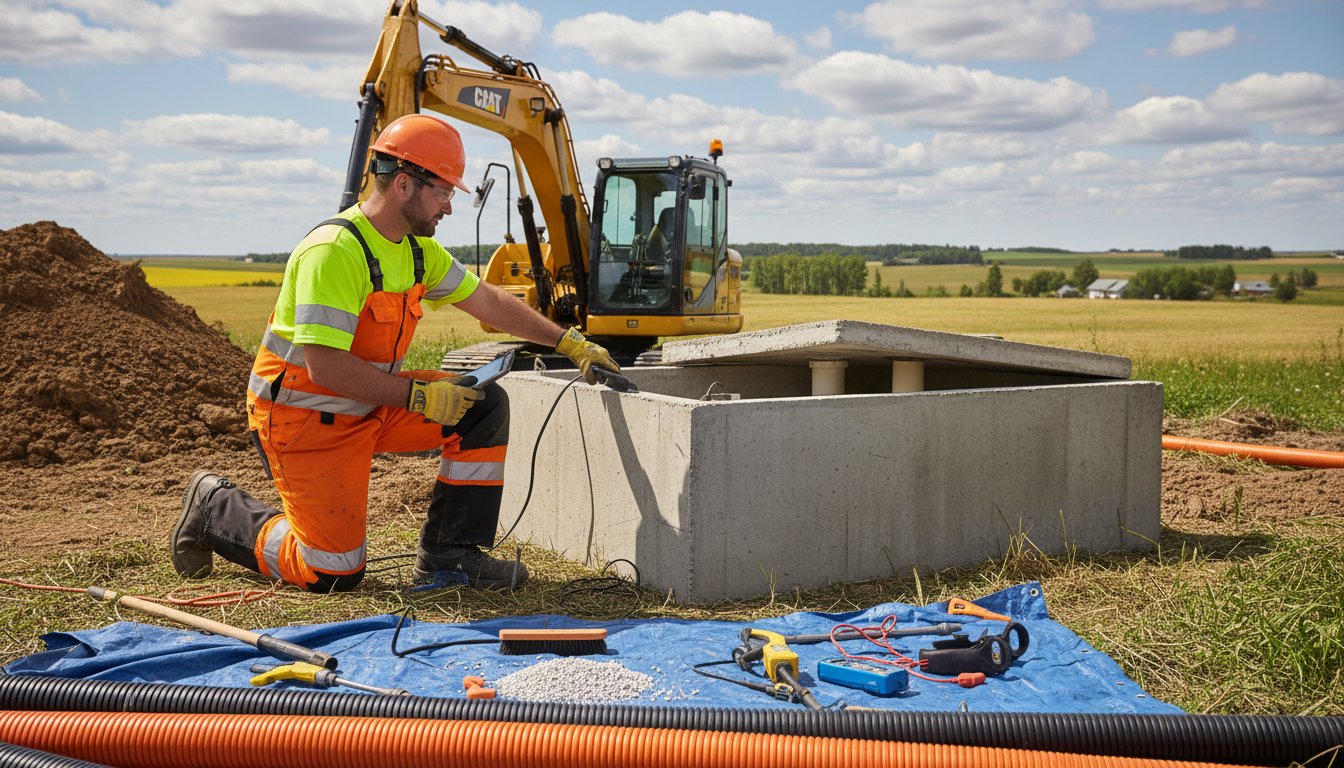
A true septic solution is far more than just a buried container; it's a sophisticated, multi-component ecosystem engineered to provide 20 or more years of reliable service. In our province, these systems must endure extreme temperature swings. High-quality concrete septic tanks remain the industry standard because they possess the structural mass to withstand Alberta’s intense freeze-thaw cycles. Unlike lighter materials that might shift or crack under the pressure of expanding frost, concrete provides the long-term integrity required to protect your home's foundation and the surrounding soil.
The success of these septic solutions alberta homeowners rely on depends largely on the final stage of treatment: the drainage field. This area isn't just a patch of grass. It's a biological filter where aerobic bacteria break down remaining organic matter. For these beneficial microbes to thrive, the soil environment must remain unsaturated and oxygen-rich. Adhering to the private sewage standards ensures that every component, from the tank's baffles to the distribution pipes, facilitates this critical biological process. When the environment is balanced, the system neutralizes pathogens effectively before they ever reach the groundwater.
Advanced Components: Pumps and Alarms
Pressurized systems often require effluent pumps to move liquid to the drainage field. Because these pumps work in a demanding environment, proactive replacement every 10 to 12 years prevents unexpected mechanical failure. Modern septic alarm installation adds a vital layer of protection for rural residents. A septic alarm is a proactive safeguard against tank overfill. These devices monitor fluid levels constantly, providing an immediate alert if the pump fails or if high water levels threaten a backup. This early warning transforms a potential emergency into a simple, scheduled repair.
Cistern Integration for Rural Water Security
Many acreage owners choose to bundle their wastewater management with professional cistern installation. This integrated approach creates a streamlined utility footprint and simplifies the management of the home’s entire water cycle. Maintaining a cistern involves regular sediment removal and pump inspections to ensure your potable water remains pristine and safe for your family. When the water supply and waste systems are designed to work together, it increases the overall efficiency of the property. If you're looking to improve your home's infrastructure, a comprehensive system evaluation can identify the best path forward for your specific site conditions.
Case Study 1: Restoring a Failing Septic Field in Parkland County
In June 2023, a residential property owner in Parkland County contacted us regarding surfacing effluent in their backyard. The homeowner reported that indoor drains were sluggish, particularly when the laundry and dishwasher ran simultaneously. These symptoms often signal a critical failure in the drainage field, which can compromise the home's sanitary integrity. Our team arrived to provide the grounded, professional assessment needed to turn a stressful situation into a manageable project.
Diagnostic Procedures and Soil Testing
Our team performed a comprehensive site assessment to locate the exact point of failure. We first inspected the septic tank baffles. We found them intact, which ruled out a primary mechanical failure at the tank level. However, the effluent levels in the distribution box were abnormally high. Soil conductivity tests and site excavations revealed a thick layer of biomat had formed in the aging gravel-and-pipe field. This organic slime layer acts as a waterproof barrier, preventing liquid from percolating into the soil. We determined the soil wasn't "tired" from age. Instead, it was suffocated by this biological buildup. Identifying this distinction is a core part of the septic solutions alberta homeowners need to avoid unnecessary excavation.
The Repair Strategy: Restoration vs. Replacement
The homeowner faced a significant decision. A full system replacement in Alberta's current market can cost between C$20,000 and C$35,000 depending on soil conditions and local permit requirements. We presented a targeted restoration plan as a more sustainable investment in the home's health. Our strategy involved several key steps:
- Implementing professional-grade aerobic treatments to chemically break down the biomat.
- Using mechanical aeration techniques to introduce oxygen into the soil, encouraging healthy bacteria.
- Flushing the lateral lines to remove accumulated sediment and clear the path for effluent flow.
This approach saved the homeowner approximately C$18,000 compared to the cost of a total new installation. It's a prime example of how professional septic solutions alberta can prioritize longevity and fiscal responsibility. We concluded the project by establishing a 24-month maintenance schedule. This proactive plan ensures the system remains a protected asset for the property. The drainage field now functions at 95% of its original design capacity. The family now enjoys a system that is both sanitary and reliable, proving that a failing field doesn't always require a bulldozer to fix.

Case Study 2: Engineering a New System for Leduc’s Heavy Clay
In Leduc County, homeowners often face a specific geological hurdle: dense, heavy clay soil. This was the exact scenario for a 2024 new-build project involving a 2,800-square-foot residential property. The site required a high-capacity system to support a five-bedroom household, but initial soil morphology tests revealed extremely low permeability. In this region, heavy clay acts as a barrier, preventing wastewater from draining at the rates required for a traditional gravity-fed trench field. Additionally, a high water table on the property meant that any standard system would risk contaminating the local groundwater.
To provide reliable septic solutions alberta families can trust, we designed a pressurized mound system. This engineered solution uses a raised bed of specific sand and gravel to treat effluent before it ever reaches the natural soil. By elevating the treatment process, we ensured that the wastewater underwent thorough biological filtration. The result was a robust, fully code-compliant system that met all requirements of the Alberta Private Sewage Systems Standard of Practice 2021, providing the homeowners with long-term peace of mind and environmental safety.
Step-by-Step Installation for New Builds
The process began with securing provincial permits and conducting a detailed site assessment to map out the safest location for the mound. Our team managed the excavation and placement of a 1,500-gallon primary septic tank and a secondary pump chamber. We then constructed a sand mantle, which serves as the primary filter. Finally, we installed pressurized lateral lines to ensure even distribution of effluent across the entire mound. This methodical approach prevents "hot spots" in the soil and extends the life of the field.
Long-Term Maintenance Planning
Success doesn't end at installation; it requires a proactive septic tank maintenance strategy. We worked with the Leduc homeowners to establish a routine inspection schedule starting from day one. Regular monitoring of the mound’s performance is vital, especially in the first two years as the system settles. We also educated the family on septic-friendly habits, such as managing water loads and avoiding harsh chemicals, to protect the delicate bacterial balance inside the tank. These small steps are an investment in the home's infrastructure that prevents costly future repairs.
If you're planning a new build in Leduc County or surrounding areas, our team can design a system tailored to your specific soil conditions. Contact us today for a professional site consultation.
Choosing the Right Partner for Septic Solutions in Alberta
Alberta’s climate and soil composition present unique challenges for wastewater management. In the Edmonton Capital Region, heavy clay soils often impede drainage, while extreme frost depths can threaten the integrity of shallow lines. Choosing a partner who understands these local variables isn't just a preference; it's a necessity for the longevity of your property. Best Cistern & Septic Solutions provides grounded professionalism that moves beyond simple maintenance. We focus on technical transparency, ensuring you understand the state of your baffles and effluent levels before any work begins. Our team treats every septic solutions alberta project as a vital investment in your home’s health and safety.
We take pride in performing the difficult, essential tasks that keep your household running smoothly. By managing the "dirty work" with sophisticated equipment and diligent care, we provide the peace of mind that comes from a sanitary and functional system. You won't have to worry about the invisible mechanics of your property when you have a specialist who understands how Alberta’s environment affects your tank's integrity.
Our Service Area and Commitment
We serve Parkland, Leduc, Sturgeon, and Strathcona Counties with dedicated local crews who live and work in your community. Our commitment to transparency starts with our pricing. We provide clear, project-based fees with no hidden surprises or sudden surcharges. Our diagnostic inspections are a core part of our service, designed to identify minor issues like pump wear or sediment buildup before they turn into emergency expenses. This proactive approach ensures the protection of your family and the long-term viability of your rural infrastructure.
Your Next Steps to a Worry-Free System
Restoring or maintaining your system starts with a professional diagnostic visit. During your initial consultation, our technical specialists perform a comprehensive audit of your system’s components. We don't hide behind jargon. Instead, we explain the mechanical state of your system and provide a logical path forward for repairs or routine cleaning. This methodical process ensures you feel empowered and informed about your property’s needs. We aim to be your proactive partner in home care, ensuring your wastewater system remains a silent, reliable part of your daily life.
Ready to ensure your system is operating at peak performance? Request your professional septic solution estimate today and experience the difference that local expertise makes for your septic solutions alberta needs.
Secure the Future of Your Rural Property
Your septic system is more than just underground infrastructure; it's a vital investment in your home's health and safety. The restoration case studies from Parkland County and Leduc demonstrate that even the most challenging soil conditions or system failures have manageable resolutions when approached with technical precision. Whether you're dealing with the heavy clay of Leduc or a failing field in Parkland County, professional septic solutions alberta homeowners trust focus on long-term integrity and environmental protection.
Our team consists of certified specialists in Alberta Private Sewage Systems, ensuring every project meets provincial standards. We've spent years serving residents across Sturgeon, Parkland, and Leduc Counties, providing both complex repairs and new installations that stand the test of time. You don't have to navigate wastewater challenges alone. Protecting your property starts with a proactive approach to system engineering. We take pride in performing these essential tasks with a high level of care so you can focus on enjoying your rural lifestyle without worry.
Get a Professional Septic Solution for Your Alberta Property
Expert support is just a call away, giving you the peace of mind that your home remains a safe and sanitary environment for years to come.
Frequently Asked Questions
What are the most common signs of septic field failure in Alberta?
You'll notice slow-draining sinks or gurgling sounds in your pipes when a system begins to fail. In Alberta’s rural landscapes, look for patches of unusually lush, green grass or spongy soil over the drain field even during dry spells. These signs indicate that effluent isn't filtering properly through the soil. Addressing these indicators early protects your property's integrity and prevents a full-scale sanitary emergency.
How much does a new septic system installation cost in Parkland County?
A new septic system installation in Parkland County typically ranges from C$15,000 to C$30,000 depending on soil composition and the specific system type required. These figures reflect 2024 market averages for professional installations that meet provincial safety standards. Investing in high-quality septic solutions alberta homeowners trust ensures your system handles wastewater safely for decades. Your final cost depends on whether you require a simple gravity-fed system or a complex secondary treatment plant.
Can a failing septic field be repaired without a full replacement?
You can often repair a failing septic field through specialized techniques like hydro-jetting or aerobic bacterial treatments without a full excavation. If the structural integrity of the pipes remains intact, restoring the soil's natural absorptive capacity can extend the system's life by 10 to 15 years. This approach provides a cost-effective way to safeguard your home's health without the disruption and expense of a total replacement.
How often should I have my septic system inspected in the Edmonton area?
You should have your septic system inspected every 2 to 3 years in the Edmonton area to ensure optimal performance and safety. Regular maintenance prevents the buildup of solids that can lead to expensive field failures. During these visits, a technician checks the sludge levels and the condition of the internal baffles. This proactive schedule is a vital investment in the longevity of your rural infrastructure.
What is the difference between a septic field and a septic mound?
A septic field consists of underground pipes buried in trenches, while a septic mound is an elevated, sand-filled structure built above the natural grade. Mounds are necessary in areas with high water tables or tight clay soils often found in parts of Alberta. Both systems aim to treat effluent safely, but the mound provides the extra vertical distance required for proper filtration when the natural ground isn't sufficient.
Are there specific Alberta regulations I need to know for a new septic tank?
The Alberta Private Sewage Systems Standard of Practice 2015 governs all new septic tank installations in the province. You must obtain a permit from your local municipality or an accredited agency before starting any work. These regulations ensure that tanks are set back at least 10 metres from your dwelling and 15 metres from a water source. Following these rules protects your family's safety and ensures your system's legal compliance.
What happens if my septic alarm starts going off?
Your septic alarm signals that the water level in the pump chamber has risen above the safe operating limit. When this happens, you should immediately reduce your water usage and check the breaker for the pump. It often indicates a pump failure or a float switch issue that needs professional attention. Resolving the alarm quickly prevents effluent from backing up into your home and maintains a pristine, sanitary environment.
How does Alberta’s cold winter climate affect septic system performance?
Alberta’s sub-zero temperatures can cause frost to penetrate deep into the ground, potentially freezing the lines if there isn't enough snow cover for insulation. To prevent this, you should let the grass grow longer over the field in the fall or add a layer of straw mulch. Using your system regularly also helps, as the warm wastewater provides a steady heat source that keeps the septic solutions alberta residents rely on functioning throughout the coldest months.


