
You might believe that keeping your tank pumped is the finish line for your system's health, but for high-load facilities, that's often where the real work begins. As a property manager in Strathcona County, you know that a single day of operational downtime due to a sewage backup is more than an inconvenience; it's a significant financial risk. Between the nuances of the Alberta Private Sewage Standard of Practice and the looming fear of a total septic field replacement, managing these utilities can feel like a constant balancing act.
We understand that you need more than just a quick fix. This guide explores how professional commercial septic maintenance Sherwood Park businesses rely on focuses on the technical integrity of your pumps and the long-term health of your drainage field. You'll discover how to move beyond basic pumping to a proactive strategy that ensures regulatory compliance and protects your property's most expensive underground asset. By shifting your focus to system performance and component health, you can secure the operational continuity and peace of mind your business deserves.
Key Takeaways
- Understand why high-load commercial systems require technical oversight beyond standard residential care to prevent business interruptions.
- Learn how regular commercial septic maintenance Sherwood Park property managers prioritize focuses on effluent pump health and lift station diagnostics.
- Discover the proactive steps that extend the lifespan of your drainage field and help you avoid the high cost of a total system replacement.
- Ensure your property remains fully compliant with the Alberta Private Sewage Standard of Practice through detailed documentation and professional inspections.
- Shift from guesswork to data by creating a maintenance schedule based on actual usage patterns rather than arbitrary timelines.
Why Commercial Septic Maintenance in Sherwood Park Requires a Specialized Approach
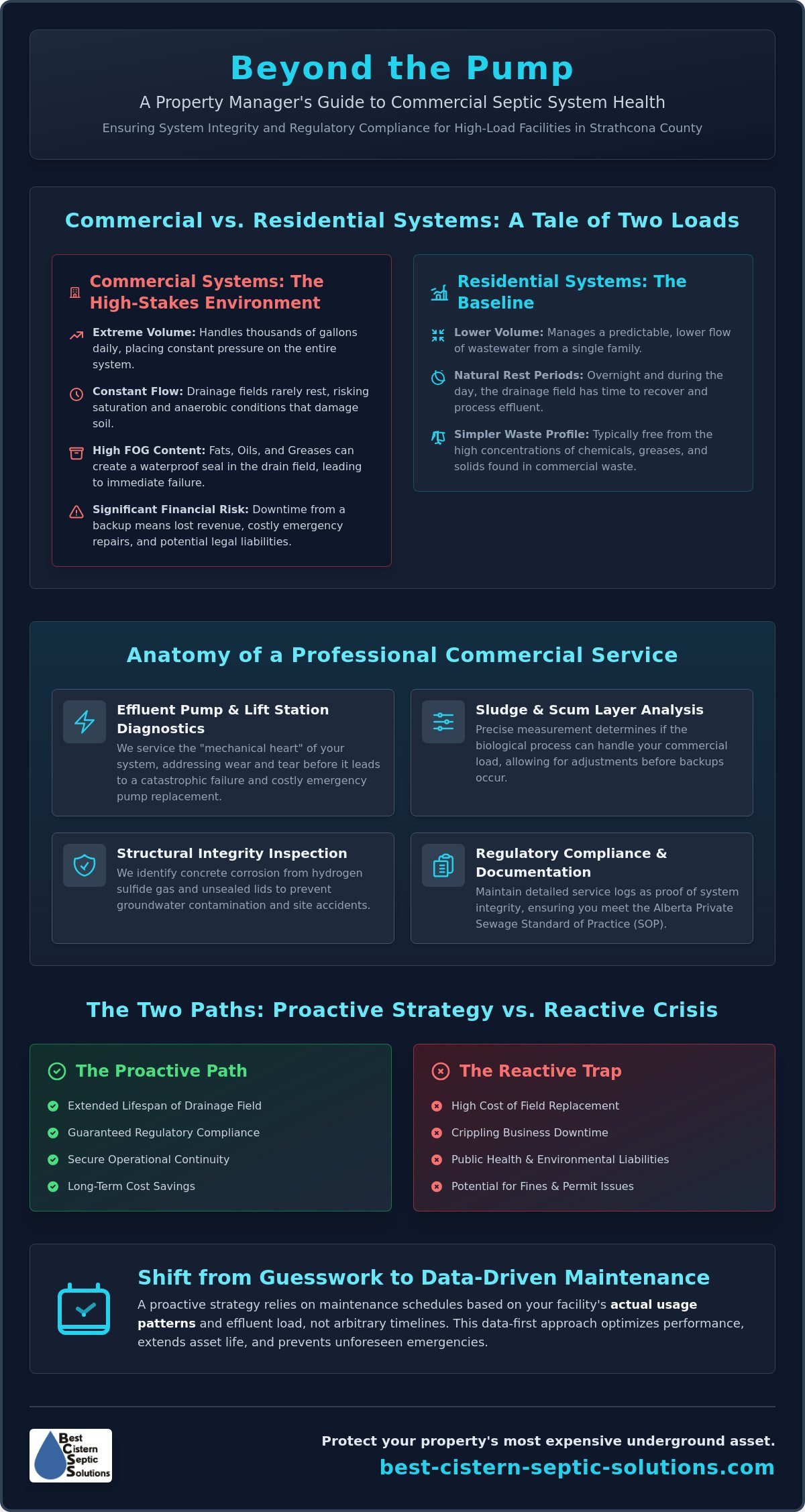
Commercial septic maintenance in Sherwood Park is often misunderstood as a simple pumping service. In reality, it involves the sophisticated technical oversight of high-capacity wastewater systems designed for non-residential use. Unlike a single-family home, a commercial property handles thousands of gallons of effluent every day. This constant pressure requires a proactive approach to ensure the system remains operational and safe for the public. Understanding how septic systems work at a commercial scale is vital for property managers who want to avoid the staggering costs of field failure.
In Strathcona County, the Alberta Private Sewage Standard of Practice (SOP) sets the rules. Compliance isn't optional. It's a legal requirement that protects the local environment and your business license. Our North Central Alberta winters add another layer of complexity. Deep frost can impact soil absorption and mechanical components; this makes specialized winter-ready maintenance essential. A failure in January is much harder to resolve than one in June, so your strategy must account for these environmental stressors.
The Impact of High-Volume Wastewater on Commercial Fields
High-volume flow rates mean your drainage field rarely gets a break. While a residential field has rest periods at night, a commercial system may face constant saturation. This leads to anaerobic conditions that can quickly degrade the soil's ability to process waste. Fats, oils, and greases (FOG) are another major hurdle. Even with grease traps, commercial wastewater often carries higher concentrations of these substances. If they reach the drainage bed, they create a waterproof seal that leads to immediate failure. This is why a standard residential maintenance schedule doesn't work for your business. Commercial properties need a plan built for their specific load and effluent strength.
Regulatory Compliance in Strathcona County
Local health inspectors and municipal authorities in Sherwood Park look for more than just a clean tank. They require proof of system integrity. Maintaining detailed service logs is a core part of professional commercial septic maintenance Sherwood Park businesses utilize to stay compliant. Detailed documentation shows you've followed the SOP. It provides a clear paper trail during business permit renewals or health inspections. Beyond paperwork, professional inspections identify small mechanical issues before they become public health liabilities. This diligent approach protects the property owner from the legal and financial fallout of a system failure.
Core Components of a Professional Commercial Septic Service
While a vacuum truck plays its part, the professional commercial septic maintenance Sherwood Park businesses require goes far beyond simply emptying a tank. It is a technical discipline that focuses on the mechanical and biological health of the entire system. Following septic system maintenance best practices ensures that every component, from the tank baffles to the distribution box, operates at peak efficiency. This comprehensive approach involves diagnostic tools that can see what a standard visual inspection might miss, allowing for a resolution before a crisis occurs.
Diagnostic testing includes measuring the sludge and scum layers to determine if the biological process is keeping up with your specific commercial load. We also evaluate the structural integrity of the tank itself. Over time, concrete can corrode due to hydrogen sulfide gas, or lids can become unsealed. Catching these structural flaws early prevents groundwater contamination and keeps your site safe for heavy vehicle traffic. If you are looking to secure your property's future, exploring advanced septic solutions can help you identify and fix these hidden vulnerabilities.
Effluent Pump and Lift Station Diagnostics
The effluent pump is the mechanical heart of your commercial setup. It works tirelessly to move treated wastewater to the drainage field against gravity or over long distances. In high-use scenarios, these pumps face significant wear and tear. You might notice unusual humming, vibrating pipes, or a sudden spike in utility costs. These are clear early warning signs that the motor is struggling. Addressing these issues early can prevent the need for an emergency effluent pump replacement, which often happens at the most inconvenient times for your tenants and customers.
Septic Alarm Systems: Your First Line of Defense
Early detection is your best protection against property damage and business interruption. Modern septic alarms provide a critical buffer between a mechanical issue and a full scale backup. High level alarms warn you when the tank is nearing capacity, while pump failure alerts tell you exactly when the mechanical heart has stopped beating. For many property managers, integrating these alerts with facility management systems provides the ultimate peace of mind. This ensures that a technician is on the way before anyone in the building even notices a problem. It's a proactive step that turns a potential disaster into a routine, manageable repair.
Monitoring the drainage field's capacity is equally vital. We look for signs of biomat buildup, a slimy layer of bacteria that can eventually clog the soil. By measuring how quickly the field absorbs water during a stress test, we can determine if the field is nearing its limit. If drainage is slow, technical restoration methods can often revive the field without the need for a total dig-up. This proactive care turns a potential six-figure replacement into a predictable maintenance task.
Preventative Maintenance vs. Emergency Septic Field Repair
Many property managers view septic care as an "out of sight, out of mind" utility until the ground becomes soft or drains begin to slow. By that point, you're often facing an emergency rather than a routine fix. The financial gap between these two scenarios is vast. A total system failure in 2026 can lead to a five-figure capital expenditure that most budgets aren't prepared to absorb. Professional commercial septic maintenance Sherwood Park facilities rely on is designed to keep your existing infrastructure functional for decades, rather than years.
One of the most common misconceptions is the "greener grass" phenomenon. If the area over your drainage bed is significantly lusher or greener than the rest of the property, it's not a sign of a healthy system. It's a red flag for field saturation. This happens when the soil can no longer process effluent, forcing moisture to the surface. Technical diagnostics can identify this stage before the field becomes "dead" soil. By measuring the biomat levels and checking distribution uniformity, we can implement a resolution that preserves your current drainage bed.
Calculating the ROI of a Maintenance Contract
When you compare the predictable cost of an annual maintenance contract to the high price of a complete septic field installation, the return on investment is clear. Beyond the physical hardware, you must consider the cost of business downtime. A sewage backup can force a multi-day closure, leading to lost revenue and damaged reputation. Regular servicing also ensures you remain in good standing with the Alberta Private Sewage Systems Standard of Practice. This documentation is often required by insurance providers to validate claims related to property damage, making a well-maintained system a vital asset for risk management.
Restoring Failing Drainage Fields
A failing field doesn't always require a backhoe and a total rebuild. If we catch the issue early, we can often save the system through technical restoration. This process involves clearing clogged distribution lines and using specific treatments to break down the restrictive biomat layer. We look for specific diagnostic criteria, such as the depth of the ponding in the trenches and the speed of soil percolation. Transitioning from reactive repairs to a proactive maintenance model allows you to extend the life of your property's drainage field, removing the stress of future failures and ensuring long-term operational security.
Creating a Commercial Septic Maintenance Schedule for 2026
A reliable maintenance schedule is the difference between a facility that runs smoothly and one plagued by unexpected utility failures. For property managers, this plan shouldn't be based on guesswork. It starts with a baseline professional septic inspection to identify the current health of your infrastructure. This initial diagnostic provides the data needed to build a custom strategy. Professional commercial septic maintenance Sherwood Park businesses rely on typically follows a four-step process to ensure total system integrity.
- Step 1: Baseline Inspection. We assess sludge levels, baffle integrity, and pump performance to establish a starting point.
- Step 2: Usage-Based Pumping. Instead of following a generic timeline, we determine pumping frequency by measuring actual wastewater load and solids accumulation.
- Step 3: Semi-Annual Testing. We test effluent pumps and septic alarms every six months to ensure mechanical components are ready for high-demand periods.
- Step 4: Seasonal Field Reviews. We conduct visual and technical checks of the drainage area in the spring and fall to monitor soil absorption.
By following this methodical approach, you transform your septic system from a hidden risk into a managed asset. If you're ready to establish a professional oversight plan for your property, you can book a comprehensive septic inspection to get started.
Spring vs. Fall Maintenance Priorities in Alberta
Our local climate dictates the rhythm of your maintenance tasks. During the spring thaw, the primary concern is runoff. Saturated soil can't absorb effluent as effectively, so we check for pooling and ensure surface water is diverted away from the field. In the fall, the focus shifts to winterization. We verify that all lines are properly buried and insulated to prevent deep-freeze blockages. During the winter months, it's vital to manage snow cover. While it might be tempting to plow the area, undisturbed snow acts as a natural insulator that protects your pipes from the biting Alberta frost.
Record Keeping and Documentation
Detailed documentation is your best tool for regulatory compliance and long-term planning. Every manager should maintain a dedicated service folder that includes a precise map of the system components. Knowing exactly where your tanks, lids, and distribution lines are located saves hours of labor during future service calls. This level of organization is a core part of understanding septic systems and their role in property preservation. Clear service logs also provide the transparency required by health inspectors and insurance providers, proving that you've taken every necessary step to protect the property and the environment.
Partnering with Best Cistern Septic Solutions for System Integrity
Managing a commercial property involves balancing countless operational priorities, and your wastewater system shouldn't be a source of constant stress. At Best Cistern Septic Solutions, we view ourselves as more than just a service provider; we're a proactive partner in your property's long-term health. Our expert-led approach to commercial wastewater management is built on the foundation of technical precision and transparent communication. We specialize in the complex needs of high-load systems, providing a level of oversight that goes far beyond the capabilities of a standard vacuum truck service.
We've spent years serving Sherwood Park, Strathcona County, and the Greater Edmonton area, developing a deep understanding of the local soil conditions and regulatory landscape. Our goal is to transform your septic system from a hidden liability into a reliable, long-term asset. When you invest in professional commercial septic maintenance Sherwood Park businesses can rely on, you're securing the operational continuity of your facility. We provide the peace of mind that comes from knowing every pump, alarm, and drainage line is being monitored by a specialized expert.
Why Technical Expertise Matters
It's vital to understand the difference between a waste hauler and a septic technician. While a hauler focuses on the removal of liquids, a technician focuses on the integrity of the mechanical and biological processes. Our diagnostic-first philosophy means we never guess at the cause of a problem. We use technical tools to find the root cause of slow drainage or pump alarms, ensuring the resolution is permanent rather than a temporary patch. This methodical approach is why so many property managers choose us for comprehensive septic service in Edmonton and the surrounding rural areas. We don't just treat the symptoms; we protect the system.
Next Steps for Your Sherwood Park Property
Taking control of your facility's utility health starts with a professional evaluation. We begin by conducting a thorough site assessment to understand your specific business load and current system status. From there, we develop a customized maintenance plan that aligns with your operational schedule and budget. This isn't a one-size-fits-all service. It's a tailored strategy designed to prevent emergencies and extend the lifespan of your drainage field. If you're ready to move toward a more secure, proactive maintenance model, you can contact Best Cistern Septic Solutions today. Let's work together to ensure your property remains compliant, operational, and worry-free for years to come.
Securing Your Property's Future with Technical Oversight
Ensuring the longevity of your commercial utility systems requires a shift from reactive repairs to a model of proactive system care. By focusing on the mechanical integrity of your effluent pumps and maintaining precise documentation for Alberta SOP compliance, you effectively remove the threat of sudden business interruptions. Professional commercial septic maintenance Sherwood Park experts provide the sophisticated diagnostic tools needed to catch minor issues before they escalate into high-cost field failures. Just as property managers prioritize technical oversight for physical utilities, businesses with broader operational needs often seek Managed IT Services Pearland TX to maintain their critical digital infrastructure. This methodical approach doesn't just fix problems; it preserves your property's value and ensures your business remains a good neighbor within the local environment.
Best Cistern Septic Solutions specializes in technical septic field diagnostics across Strathcona County and the Edmonton Capital Region. Our team focuses on long-term system durability and strict regulatory compliance to give you total peace of mind. Protect your commercial asset—book a professional septic inspection with Best Cistern Septic Solutions today. Taking these steps now ensures your wastewater system remains a silent, reliable asset that supports your operations for years to come. We're here to help you navigate every technical detail with honesty and thoroughness.
Frequently Asked Questions
How often should a commercial septic system in Sherwood Park be inspected?
You should have your commercial system inspected every 12 to 24 months. While residential systems can sometimes wait longer, the high wastewater volume of a business puts constant pressure on mechanical components. Annual inspections allow us to monitor sludge accumulation and effluent pump performance, ensuring your system remains compliant with Strathcona County regulations and avoiding unexpected operational delays.
What are the most common causes of commercial septic field failure?
Hydraulic overloading and the introduction of fats, oils, and greases (FOG) are the primary causes of failure. When a system processes more water than the soil can absorb, the drainage field becomes saturated and loses its ability to treat waste. Additionally, if grease traps aren't managed correctly, FOG can escape the tank and create a waterproof seal in your drainage bed, leading to a total system backup.
Does a commercial septic system require different permits than a residential one?
Yes, commercial systems are governed by specific sections of the Alberta Private Sewage Standard of Practice that account for higher daily flow rates. Property managers must ensure that any new installation or significant repair is supported by a permit issued through Strathcona County’s ePermits system. These permits ensure the system is sized correctly for the specific type of business and its expected wastewater load.
What should I do if my commercial septic alarm goes off?
Silence the alarm and immediately minimize water usage throughout the facility to prevent an overflow. Check your control panel to see if the alert indicates a high-water level or a pump failure. Once you've restricted water flow, contact a specialized technician to perform a diagnostic check. Quick action can often resolve a mechanical issue before it results in property damage or a forced business closure.
Can a failing commercial septic field be repaired without a full replacement?
In many cases, a field can be saved if the issues are caught before the soil is completely compromised. Technical restoration involves clearing distribution lines and using specific processes to break down the restrictive biomat layer. We use detailed diagnostics to determine if your field is a candidate for repair, which can save your business the significant capital expense of a total field replacement.
How does the Alberta winter affect commercial septic maintenance?
Extreme cold can lead to frozen lines and mechanical strain if the system isn't properly winterized. Deep frost can penetrate the ground and impact pipes that aren't adequately insulated or buried at the correct depth. We recommend maintaining a thick layer of snow over the drainage field to act as natural insulation. It's also vital to ensure your effluent pump is functioning perfectly before the ground freezes solid.
Is technical maintenance different from septic tank pumping?
Pumping is simply the removal of accumulated solids, but commercial septic maintenance Sherwood Park property managers rely on is a much deeper technical process. Professional maintenance includes testing septic alarms, checking the electrical draw of effluent pumps, and assessing the biological health of the drainage field. This comprehensive approach ensures that every part of the infrastructure is working together to prevent a system failure.
What records do I need to keep for my commercial septic system?
You should maintain a dedicated service folder that includes an accurate system map, all original permit documents, and a detailed log of every inspection and repair. To streamline this process, many property managers explore Field Service CRM Software to digitize their records and maintenance logs. These records are vital for demonstrating compliance during health department inspections and are often required by insurance providers. Having a clear history of professional maintenance also adds significant value and transparency during property appraisals or future business sales.


