
Imagine waking up to a -40°C morning in rural Alberta only to find your taps have run dry because a pump seized or a line froze. It's a high-stress scenario that every rural homeowner wants to avoid. You understand that your water system is the lifeblood of your property, and any threat of contamination or mechanical failure feels like a direct hit to your family's comfort and safety.
Securing a professional cistern service in Alberta is the most effective way to transform your water supply into a reliable, long-term asset. This article provides the clarity you need to ensure your potable water remains clean, safe, and fully functional throughout the year. We'll walk through the essentials of durable installation, the technical steps of preventative maintenance, and how to remain compliant with provincial health regulations. By the end, you'll know exactly how to protect your system from unexpected failures and ensure your home has the clean water it deserves, regardless of the weather outside.
Key Takeaways
- Understand the critical role of a modern cistern as a life-support utility and the vital distinction between potable water storage and greywater systems.
- Learn how expert cistern service in Alberta addresses site-specific challenges, such as soil stability and the choice between concrete and polyethylene tanks.
- Recognize early warning signs like pump cycling or unusual odors to address minor issues before they become expensive emergency repairs.
- Discover the precise cleaning and insulation steps required to keep your water supply safe from bacteria and functional during extreme winter temperatures.
- Gain peace of mind by understanding how a localized, holistic approach to both cistern and septic systems protects your property's long-term value.
Essential Cistern Service in Alberta: What Homeowners Need to Know
For many rural residents, a cistern is the most vital utility on the property. It functions as a critical life-support system, providing the water needed for drinking, bathing, and daily chores. While the historical definition of What is a Cistern? remains simple, modern systems in Alberta are sophisticated engineering marvels designed for extreme conditions. Unlike greywater collection systems, which harvest rainwater for non-potable uses like irrigation, a professional potable cistern is sealed and sanitized to ensure every drop is safe for human consumption. This distinction is vital for maintaining a healthy household and avoiding the risks associated with waterborne contaminants.
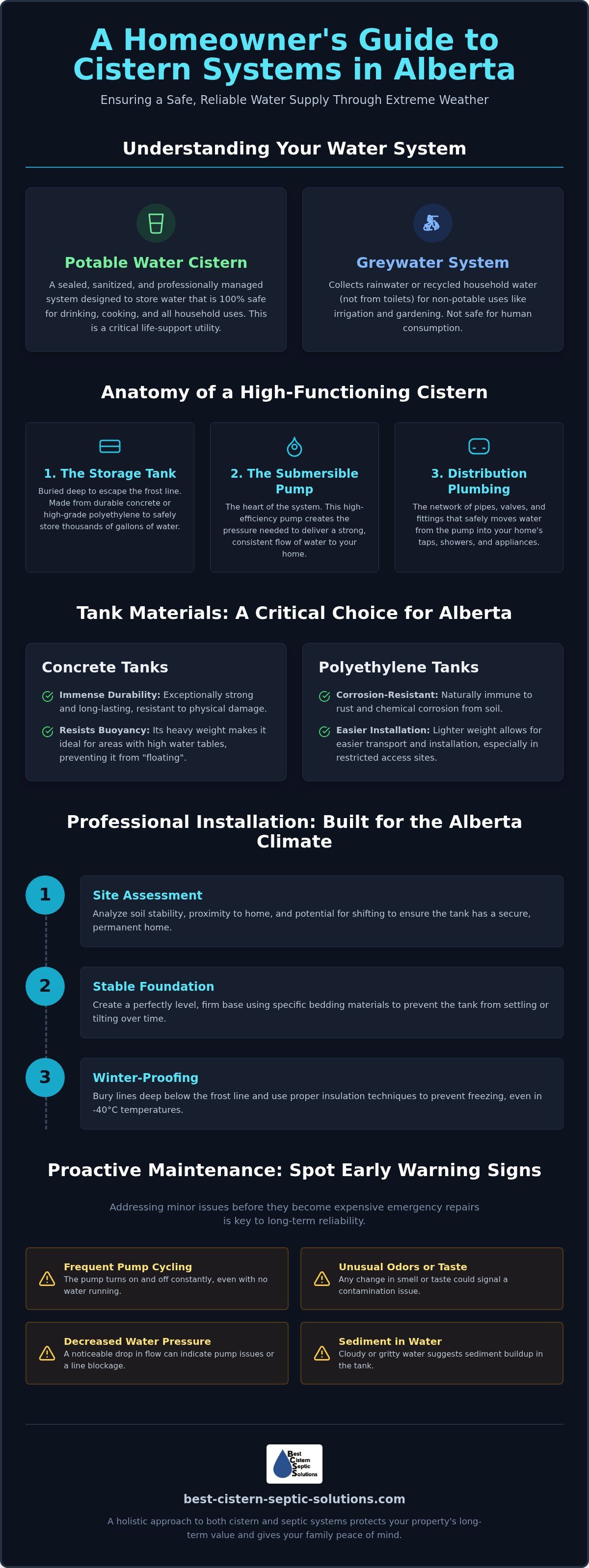
A high-functioning system consists of three primary parts: the storage tank, the pump, and the internal distribution plumbing. The tank, often made of durable concrete or polyethylene, is buried deep enough to escape the frost line. The pump, typically a submersible model, creates the pressure needed to move water into the home. When these parts work in harmony, you enjoy a seamless experience. However, when one component fails, the entire household stops. This is where professional cistern service Alberta becomes indispensable. By choosing a specialized expert, you move from reacting to emergencies to proactively maintaining a long-term asset. This professional oversight provides the peace of mind that your family's water security is never in question.
Whether managing a cistern or a complex well system, the quality of your equipment is paramount; organizations like Topline Borehole & Irrigation serve as an excellent example of how professional borehole and pump services ensure long-term water reliability.
Why Cisterns are the Preferred Choice in Parkland and Leduc Counties
The Scope of Professional Cistern Services
A full-lifecycle service provider manages everything from the initial site design to cistern inspections during real estate transactions. Maintaining these systems requires a technical eye for early warning signs like sediment buildup, unusual pump cycling, or faint odors. It's also helpful to recognize how these units interact with your waste management. A properly functioning cistern ensures there is enough water flow to keep septic systems operating effectively. This holistic approach to property care removes the burden of worry from the homeowner. Every mechanical detail is handled with precision to ensure durability and household safety.
Professional Cistern Installation: Designing for the Alberta Climate
Installing a potable water system in Alberta requires more than just digging a hole and dropping in a tank. The extreme temperature fluctuations and specific soil conditions of the region demand a disciplined engineering approach. A successful installation begins with a comprehensive site assessment. We analyze soil stability to ensure the ground can support the weight of a full tank without shifting. Proximity to the home is also a vital factor, as longer pipe runs increase the risk of thermal loss during a deep freeze. By prioritizing these technical details early, you ensure your water supply remains a reliable, long-term asset for your property.
Choosing the right material for your tank is the next critical decision. Concrete tanks are prized for their immense durability and natural resistance to buoyant forces in high water tables. Polyethylene tanks offer a lighter, corrosion-resistant alternative that is often easier to install in restricted spaces. Regardless of the material, the foundation must be level and stable. We use specific bedding materials to create a firm base, preventing the tank from settling unevenly. Integrating high-efficiency cistern pumps ensures that your household maintains consistent water pressure, even during peak usage hours. If you are planning a new build or upgrading an old system, a professional cistern installation ensures every component is calibrated for peak performance.
Determining the Right Tank Size for Your Household
Calculating your household's daily water usage is essential to avoid frequent, costly deliveries. A typical family home has different requirements than a commercial property, and your storage capacity should reflect your specific lifestyle. In Alberta, you must also factor in the schedules of local water hauling services to ensure you never run dry between visits. A standard four-person rural household typically requires a cistern with a capacity of approximately 2,500 gallons to maintain a consistent water supply. This volume provides a comfortable buffer for daily needs while remaining manageable for standard delivery trucks.
The Installation Process: From Excavation to Potable Water
A professional cistern service Alberta follows a methodical sequence to guarantee system integrity. The process moves through four distinct phases to ensure safety and compliance with local standards:
- Step 1: Site evaluation and obtaining necessary permits in Sturgeon or Strathcona County to ensure the project meets all municipal bylaws.
- Step 2: Professional excavation and precise trenching for water lines, ensuring they are buried well below the frost line.
- Step 3: Precise tank placement followed by backfilling with engineered materials to prevent future ground shifting.
- Step 4: Final pressure testing of all plumbing and thorough system sanitization following cistern disinfection and cleaning guidelines to ensure the water is safe for immediate use.
This structured approach transforms a complex mechanical task into a manageable project, leaving you with a secure and winter-proof water system.
Diagnostic Inspections: Maintenance vs. Emergency Repair
A diagnostic inspection is the bridge between hope and certainty. For those buying or selling rural property, professional cistern inspections are a standard requirement for a reason. They reveal the hidden health of the system, ensuring that a major investment isn't hiding a structural flaw. This proactive approach is a core part of cistern service Alberta, aligning with Alberta's public health guidelines. These regulations emphasize that the responsibility for water safety and system integrity rests entirely with the homeowner.
Early intervention is always more cost-effective than emergency recovery. Watch for subtle changes like sediment in the bottom of your glass, a pump that cycles on and off more frequently, or a faint, swampy odor. These are not just inconveniences; they are signals that your system is under stress. Alberta Health Services recommends that private water supplies be tested for bacteria at least twice a year to catch invisible issues before they affect your family. Paying a diagnostic fee now is a wise financial choice that prevents the massive expense and disruption of a total pump failure during a cold snap. Modern technology, such as smart water level alarms and leak detection sensors, provides an extra layer of security by alerting you to issues before they escalate.
Common Cistern Problems in North Central Alberta
In our region, the earth is rarely still. Frost heave and significant soil movement can cause concrete tanks to develop hairline fractures over time. If left unaddressed, these cracks allow groundwater or contaminants to seep into your potable supply. Additionally, cistern pump burnout is a frequent issue, often caused by low water levels or unexpected electrical surges. We also monitor for biofilm development. This thin layer of bacteria can cling to tank walls, eventually affecting both the taste and biological safety of your drinking water. Regular mechanical diagnostics ensure these issues are caught before they compromise your property's value.
When to Call for Immediate Cistern Repair
Some issues cannot wait for a scheduled appointment. A total loss of water pressure usually indicates a mechanical failure in the pump or a breach in the distribution line. If you notice visible debris or contamination in your water, stop consumption immediately and call for professional cistern service Alberta. While we focus on your potable water, we also recognize the importance of your septic health. A timely effluent pump replacement in your septic system can prevent backups that might otherwise compromise your entire property's utility infrastructure. Quick action ensures that a manageable mechanical glitch doesn't turn into a household crisis.
Sanitization and Winter-Proofing: Ensuring Year-Round Safety
Sanitizing your water storage system is a non-negotiable part of property maintenance. It prevents the accumulation of sediment and the growth of harmful bacteria that can compromise your family's health. A professional cleaning protocol follows a methodical sequence: draining the tank completely, scrubbing the interior surfaces to remove biofilm, and performing a shock chlorination treatment. This process ensures that the water entering your home meets the highest safety standards. By removing built-up debris, you also protect your pump from premature wear, making this a vital step for long-term system durability.
Homeowners must never attempt to enter a cistern tank. These are classified as confined spaces and can harbor toxic gases or lack sufficient oxygen, posing a fatal risk to anyone without specialized training. Professional teams use calibrated air monitors, specialized breathing apparatus, and safety harnesses to perform these tasks safely. Entrusting this work to a specialized cistern service Alberta provider protects your household while ensuring the interior of your tank is meticulously cleaned. This professional oversight removes the physical risk from the homeowner while delivering a definitive, safe result.
Health Canada Standards for Potable Water Storage
Professional cleanings include a 10-point visual inspection designed to identify structural cracks, seal failures, or signs of external seepage. Following the sanitization process, water sampling is conducted to test for the presence of bacteria and coliforms, providing documented proof of water safety. Maintaining these records is helpful for property preservation and future real estate transactions. Health Canada recommends that residential cisterns be professionally cleaned and sanitized at least once per year to ensure continued water safety and prevent contamination. Utilizing a consistent cistern service Alberta schedule ensures your system remains compliant with these essential health guidelines.
Alberta Winterization: Preventing the Deep Freeze
In the Edmonton Capital Region, the frost line typically reaches depths of 7 to 8 feet. Water lines buried shallower than this are at high risk of freezing during a prolonged cold snap, which can lead to burst pipes and total water loss. To prevent this "frozen line" nightmare, we utilize heat tape and ensure proper burial depths during any repair or installation. Insulating the tank riser and lid is equally important; these components are closest to the surface and are often the first to succumb to frost. Using non-frost-susceptible backfill materials around the tank also reduces the risk of frost heave damaging the structure during the spring thaw.
If your system hasn't been serviced this year, schedule a professional cistern maintenance and cleaning to protect your water supply before the next deep freeze arrives.
The Best Cistern Septic Solutions Advantage
Choosing a local partner for your utility needs makes a significant difference in the longevity of your property's infrastructure. Based in Spruce Grove, Best Cistern Septic Solutions possesses an intimate understanding of the specific soil conditions and climate extremes that define our region. We don't just perform repairs; we build durability into every installation and maintenance task. Our commitment to transparent, flat-rate diagnostic fees ensures that you receive a professional assessment without hidden costs. This transparency allows you to make informed decisions about your home's most vital systems, turning potential stress into manageable resolutions.
We believe in a holistic approach to rural property care. By combining septic service in Edmonton with expert cistern maintenance, we protect the entire water cycle of your home. A failure in your water storage can lead to issues in your waste management system, and vice versa. Our team identifies these interdependencies during our routine cistern service Alberta, providing a comprehensive safety net for your household. This integrated perspective prevents mechanical conflicts and ensures that both systems operate at peak efficiency throughout the year.
Serving Parkland, Leduc, and Sturgeon Counties
Our service footprint extends across the North Central Alberta region, reaching from the quiet acreages of Stony Plain to the developing properties in Sherwood Park. We support rural property development with heavy equipment expertise, ensuring that even the most complex excavations are handled with precision. Homeowners throughout Parkland, Leduc, and Sturgeon Counties rely on us to prevent the "frozen line" nightmares discussed earlier. Our clients frequently report that our detailed reporting and proactive inspections provided the peace of mind they needed to navigate the harshest -40°C winters without a single service interruption.
Your Next Steps for a Reliable Water System
Ensuring your water supply is winter-proof shouldn't be left to chance. The most effective way to protect your property is to book a professional diagnostic inspection before the first major frost arrives. Whether you need a quote for a new cistern installation, an effluent pump replacement, or a routine cleaning, our team is ready to provide a definitive fix. We pride ourselves on being the hardworking, detail-oriented neighbor you can trust with your essential utilities. Every water challenge has a professional resolution, and we're here to ensure your rural Alberta lifestyle remains comfortable and secure. Contact us today to secure your property's long-term water integrity.
Securing Your Water Security for Every Season
Maintaining a reliable potable water supply in rural Alberta requires a proactive approach to mechanical integrity and sanitization. By prioritizing professional installation and scheduled winter-proofing, you transform a complex utility into a durable property asset. We've explored how regular diagnostic inspections identify early warning signs like pump cycling or structural cracks before they escalate into costly emergency repairs. This proactive oversight is the most effective way to ensure your household remains functional throughout the harshest winter months.
Our specialized team provides expert cistern service Alberta across North Central Alberta, ensuring your system remains compliant with provincial health standards. We offer a holistic approach that integrates both cistern and septic solutions, backed by professional diagnostic reporting for your peace of mind. Every utility problem has a manageable resolution when you have the right local partner. You deserve a water system that works as hard as you do, regardless of the weather outside.
Secure Your Rural Water Supply-Contact Best Cistern Septic Solutions Today
Frequently Asked Questions
How often should I clean my cistern in Alberta?
You should professionally clean and sanitize your cistern at least once per year to maintain water safety. Regular maintenance prevents the buildup of sediment and biofilm that can harbor harmful bacteria. Scheduling this annually as part of your routine cistern service Alberta ensures your potable water remains clean and your pump system stays free from debris that causes premature wear.
What is the average lifespan of a concrete cistern tank?
A professionally installed concrete cistern tank typically lasts between 30 and 50 years. These structures are prized for their durability and natural resistance to shifting soil conditions in North Central Alberta. To maximize this lifespan, ensure regular inspections to catch hairline fractures early. Proper bedding and backfilling during the initial installation are critical factors in preventing structural failure over the decades.
Why is my cistern pump running constantly?
A pump that runs constantly usually indicates a leak in your distribution lines, a faulty pressure switch, or a failing check valve. It might also mean your water level is too low for the pump to reach the required pressure. Ignoring this issue can lead to pump burnout. A professional diagnostic inspection will identify the exact mechanical failure and provide a definitive resolution to protect your equipment.
Can a cistern freeze in an Alberta winter?
Yes, a cistern or its water lines can freeze if they aren't buried below the 7 to 8 foot frost line or properly insulated. Surface level components like the riser and lid are particularly vulnerable during -40°C cold snaps. We use specialized insulation and heat tape to protect these shallow points. Ensuring your system is winter-proofed is a vital part of professional cistern service Alberta.
What should I do if my cistern water smells like sulfur?
If your water smells like sulfur, it often indicates the presence of hydrogen sulfide gas produced by bacteria in the tank or biofilm on the walls. You should stop drinking the water and schedule a professional shock chlorination and cleaning immediately. This process neutralizes the odor and sanitizes the system. It's also wise to verify the quality of your water hauling source to prevent re-contamination.
Is it safe to clean my own cistern?
It's not safe to clean your own cistern due to significant confined space hazards. These tanks can contain toxic gases or lack enough oxygen to support life, making entry extremely dangerous without specialized safety gear and training. Professionals use air monitors and harnesses to perform this task safely. Entrusting this to an expert ensures a thorough sanitization while keeping you and your family out of harm's way.
How much water does a typical rural Alberta home need per month?
A typical four-person rural household in Alberta uses approximately 18,000 to 30,000 liters of water per month. This varies based on your daily habits and whether you have high-efficiency appliances. We recommend a storage capacity of at least 11,365 liters (2,500 gallons) to provide a comfortable buffer between water deliveries. Understanding your usage helps in planning a delivery schedule that ensures you never run dry.
Do I need a permit for cistern installation in Parkland County?
Yes, you generally need a plumbing permit for cistern installation in Parkland County to ensure the system meets safety codes. If the installation is part of a larger project involving private sewage, additional permits may apply. We handle the technical details of site evaluation and can guide you through the municipal requirements. Ensuring your system is permitted and inspected protects your property value and ensures long-term compliance.


