What if your peaceful mountain retreat became a logistical nightmare because of a single overlooked soil test or a frozen effluent line? For many rural property owners, the process of planning a septic system for a cabin feels like a high-stakes gamble against the elements. You want a system that works silently in the background, but the complexity of Alberta’s environmental regulations and the reality of our harsh winters often create more questions than answers.
We understand that you need certainty, not just a temporary fix. You've likely realized that a remote property demands a specialized approach to waste management, one that accounts for fluctuating use and extreme frost depths. This guide provides a clear roadmap to navigate the Alberta Private Sewage Systems Standard of Practice 2021 with confidence. You'll learn how to evaluate your lot, manage installation expectations, and choose a design that ensures long-term property preservation.
We will walk through the essential steps of site evaluation, permit requirements from Alberta Municipal Affairs, and the technical differences between various treatment systems. By the end, you'll have a professional perspective on how to build a durable utility system that protects your investment and provides total peace of mind.
Key Takeaways
- Understand how the Alberta Private Sewage Systems Standard of Practice 2021 impacts your design and why compliance is the foundation of a durable system.
- Identify the specific site factors that dictate your layout when planning a septic system for a cabin to avoid common failures in remote locations.
- Learn to distinguish between gravity-fed and pressure distribution systems to find the most efficient solution for your lot’s unique topography.
- Discover why a professional percolation test is the most critical step in protecting your property’s long-term environmental health and system integrity.
- Get a clear overview of the professional installation timeline so you can transition from a construction site to a functional, worry-free retreat.
Initial Considerations for Cabin Septic Systems in Alberta
When you begin planning a septic system for a cabin, the first step is to shift your perspective away from municipal expectations. In a city, waste management is an invisible service provided by the local government. On a rural Alberta lot, you are the utility manager. This means your system's design must account for the specific biology and geography of your property. Protecting the integrity of nearby Alberta lakes and groundwater is a primary goal of the Alberta Private Sewage Systems Standard of Practice 2021. A well-designed system ensures that treated effluent returns to the earth safely without compromising the local ecosystem.
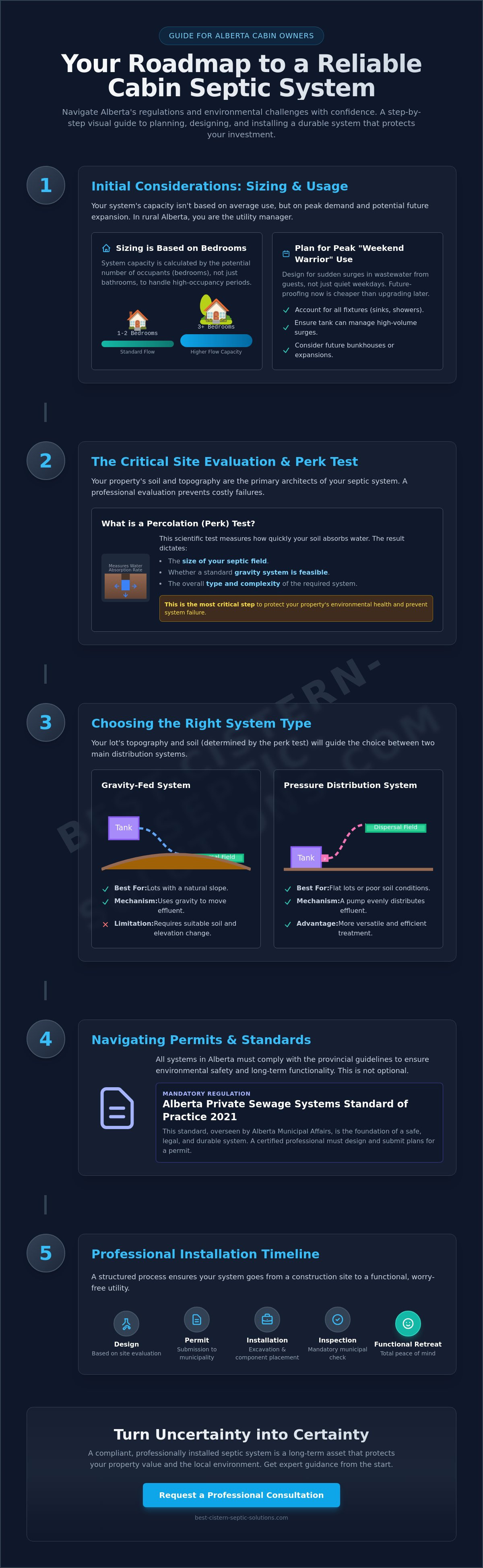
Before diving into the technical details, it helps to understand septic system basics to visualize how waste is processed. The size of your system is directly linked to the number of bedrooms in your cabin. Even if you only have one bathroom, a three-bedroom cabin has a higher potential daily flow than a one-bedroom unit. This bedroom-based calculation is the standard used to ensure your system doesn't become overwhelmed during high-occupancy periods. It provides a reliable buffer that keeps the system stable even when the cabin is full of guests.
Calculating Daily Flow for Seasonal Use
The "weekend warrior" phenomenon is a unique challenge for cabin owners. Your system might sit dormant for weeks before facing a sudden surge of use when guests arrive for a long weekend. When planning a septic system for a cabin, you must account for these peak flow events rather than just the average daily use. If you plan to expand your cabin or add a guest bunkhouse in the future, it's more cost-effective to size your system for that eventual capacity now rather than attempting a difficult upgrade later.
- Fixture Counts: Every sink, shower, and high-efficiency toilet adds to the total hydraulic load.
- Surge Management: Modern tanks and fields are designed to buffer sudden increases in water volume.
- Future-Proofing: Consider potential basement developments or additional sleeping quarters when determining tank size.
The "Outhouse vs. Modern Septic" Debate
While some may lean toward the nostalgia of a traditional outhouse, modern Alberta regulations and environmental concerns make them increasingly restricted, especially near water bodies. Transitioning to a professional septic solution offers the comfort of indoor plumbing and the security of a system that meets current health standards. In regions like Parkland County, a documented, compliant septic system is a major asset. It provides peace of mind for the current owner and significantly boosts property resale value by removing the uncertainty of outdated or non-compliant utility setups. Investing in a modern system turns a potential liability into a long-term property asset.
Site Evaluation and the Critical Alberta Perk Test
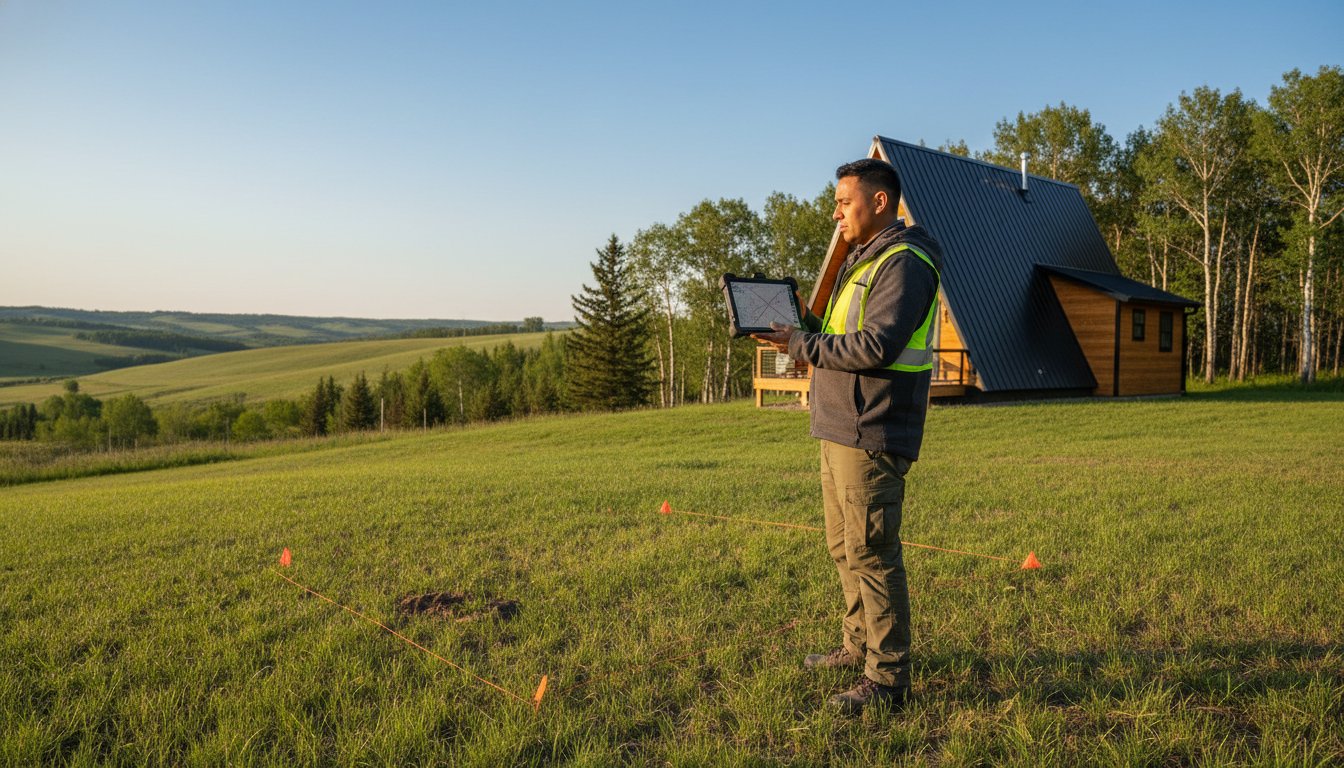
Every successful rural build begins with the ground beneath your feet. When you're planning a septic system for a cabin, your lot’s topography and soil composition aren't just details; they're the primary architects of your utility layout. Alberta’s landscape varies wildly. You might be dealing with the heavy, stubborn clay of the Edmonton Capital Region or the more porous, sandy loams found near the foothills. Clay soil holds water longer, requiring a larger field or a more complex distribution method, while loam allows for faster treatment. A professional site evaluation identifies these variables early, preventing the frustration of a system that fails during the first spring thaw.
This evaluation ensures your design aligns with the Alberta Private Sewage Systems Standard of Practice. Professionals look at more than just the dirt. They assess the natural slope of the land to determine where effluent will naturally migrate and identify potential obstacles like large tree root systems or rocky outcrops. If you're concerned about the current state of an existing lot, scheduling detailed septic system inspections can provide the clarity needed before construction begins.
What is a Soil Percolation (Perk) Test?
A percolation test measures how quickly your soil absorbs water. It’s a scientific baseline that determines if a standard gravity system is feasible. However, modern Alberta standards often require a full soil profile, which involves digging a test pit to examine the different layers of earth. If a perk test returns a slow rate, don't panic. It doesn't mean you can't build. It simply means your plan might require a "mound" system or a pressure distribution field to compensate for the soil's limitations. Understanding the science of your soil ensures the final installation is durable and safe for your family.
Mapping Your Cabin Lot Setbacks
Safety and property preservation rely on strict adherence to setback distances. These legal requirements keep your sewage treatment far enough away from your drinking water and your neighbors. In Alberta, a septic tank must be at least 3 meters from any building and 1.5 meters from property lines. If your cabin is near a lake or a steep slope, these distances may increase significantly to prevent runoff and erosion. We also consider the practical side of installation. Heavy excavators need a clear path to reach the site without damaging existing structures or getting stuck in soft terrain. Planning for this access now saves time and reduces stress during the physical installation week.
Choosing the Right Septic System Type for Your Cabin
Selecting the right hardware is a pivotal moment in planning a septic system for a cabin. Your choice depends on the soil profile and topography identified during your site evaluation. In Alberta, your system must also withstand extreme thermal stress. When temperatures drop to -30°C, the biological processes inside your tank and the mechanical components in your field face significant challenges. A design that ignores these climate realities is a liability. By following the Alberta Private Sewage Systems Standard of Practice, we ensure your system remains functional and safe throughout the deepest winter freeze.
Gravity-Fed Systems: Simple and Reliable
Gravity-fed systems are the traditional choice for properties with favorable soil and a natural downward slope. These systems don't require electricity to move effluent from the tank to the treatment field, making them an excellent option for off-grid cabins. They rely on a specific topographical "drop" to ensure waste moves consistently. While they are simpler to install, they require diligent maintenance to prevent solids from entering the field. Without a pump to create pressure, the distribution relies entirely on the soil's natural ability to pull moisture away through the trenches.
Pressure Distribution and Effluent Pumps
If your cabin sits on a flat lot or your ideal field location is uphill from the house, a pressure distribution system is the solution. These systems use a pump to deliver effluent to the field in controlled "doses." This ensures the entire field is used evenly, which extends the life of the system in poor soil conditions. Because these systems rely on mechanical parts, understanding the schedule for effluent pump replacement is vital for long-term reliability. We always recommend installing a high-water alarm. This small device provides an immediate alert if the pump stops working, giving you time to resolve the issue before a backup occurs.
Frost protection is a non-negotiable part of this process. In Alberta, we often use a combination of deep burial and specialized insulation to protect lines from freezing. Ensuring the pipes drain completely between pump cycles prevents ice from forming in the effluent lines during a cold snap.
Holding Tanks: A Short-Term Solution?
On some lots, such as those with extremely high water tables or very small footprints, a holding tank may be the only legal option. A holding tank simply stores waste until it can be hauled away. While the initial installation cost is lower than a full treatment field, the long-term expense of frequent hauling can be substantial. If you choose this route, you must ensure your lot remains accessible for heavy hauling trucks during the winter months. Snow clearing and road stability are essential considerations to prevent service disruptions when the tank reaches capacity.
Navigating Permits and Alberta Private Sewage Standards
Legal compliance isn't just about paperwork; it's about the long-term safety of your property and the surrounding environment. When you're planning a septic system for a cabin, your design must adhere to the Alberta Private Sewage Systems Standard of Practice (SOP) 2021. This document serves as the provincial rulebook, ensuring that every system installed can handle the specific biological load and environmental stresses of rural Alberta. In our province, only contractors certified by Alberta Municipal Affairs can legally design and install these systems. This requirement protects homeowners from the risks associated with amateur installations that might fail prematurely or contaminate local groundwater.
The permit process is a structured journey that begins long before the first shovel hits the ground. In counties like Leduc or Sturgeon, the timeline for approval often depends on the clarity and completeness of your initial submission. A safety codes officer will review your plans to ensure the proposed system fits the soil profile and meets all mandatory setback requirements. Once the installation is complete, a final inspection is performed before the system is covered. This verification provides peace of mind, confirming that the mechanical integrity of your utility meets the highest professional standards.
The Permit Application Process
Your permit application is a technical package that includes your site plan, soil profile report, and the specific design for your treatment field. Permit fees in Alberta typically range from $200 to $500, depending on your municipality's fee schedule and the complexity of the system. Applications are most commonly delayed when a site plan lacks detail or when the soil absorption rates don't align with the chosen system type. By working with a certified installer, you ensure that every technical detail is addressed, moving your project from the planning phase to the construction phase without unnecessary friction.
Compliance with the 2026 Standard of Practice
As of 2026, the SOP 2021 remains the foundational standard for all private sewage installations in Alberta. It's important to recognize that "grandfathered" systems—those installed under older codes—may require an upgrade if you plan a significant cabin renovation. Adding bedrooms or high-flow fixtures increases the demand on your system, which can trigger a mandatory compliance review. Installing a system without a permit or failing to follow current codes is a significant liability. It can lead to legal orders for removal and create major hurdles during a future property sale. Ensuring your system is fully permitted is the best way to protect your investment and ensure your cabin remains a worry-free retreat.
If you're ready to begin the design process for your rural property, our team provides the expert guidance needed for comprehensive septic solutions that meet all local Alberta regulations.
Professional Installation: Ensuring Long-Term Cabin Comfort
The successful execution of planning a septic system for a cabin relies on a precise physical installation. While some sources suggest that renting a backhoe makes this a feasible DIY project, the reality of soil science says otherwise. Amateur installation carries the high risk of soil compaction. When heavy machinery moves over a treatment field incorrectly, it crushes the soil structure and destroys the natural pores needed for effluent treatment. This damage is often irreversible. A professional installer uses specialized equipment and specific pathing to preserve the ground's integrity, ensuring your system functions as designed for decades.
During the installation week, your property will see significant activity. The process involves excavating the tank site, laying the distribution lines, and carefully backfilling with specific aggregates. We coordinate closely with safety codes officers to ensure every component is inspected before it is covered. Once the system is in the ground, protecting the field becomes your primary responsibility. You should never drive vehicles over the septic field or plant trees with aggressive root systems nearby. Transitioning into a consistent septic tank maintenance plan is the final step in securing your investment and maintaining a healthy retreat.
Why Local Expertise Matters in North Central Alberta
In regions like Parkland County and Strathcona County, local knowledge is a vital asset. Our team understands the regional soil anomalies and the specific frost depths that can vary from one township to the next. We maintain professional relationships with county inspectors, which helps the approval process move forward without unexpected delays. Having access to specialized heavy equipment designed for rural terrain allows us to work efficiently even on challenging cabin lots with limited space or steep inclines.
Finalizing Your Cabin Utility Plan
A functional cabin requires a balance of waste management and water supply. Many owners choose to integrate their waste system with a professional cistern installation to ensure a reliable source of potable water. Once your utilities are in place, we recommend creating a "Septic Map." This document should clearly mark the location of the tank, the distribution box, and the boundaries of the treatment field. It serves as an essential guide for future property owners and ensures that future landscaping projects don't accidentally compromise your system's integrity.
Ready to break ground on your rural retreat? Request a professional site assessment from Best Cistern Septic Solutions today to ensure your project begins with a foundation of technical excellence and local expertise.
Building a Foundation for Your Alberta Retreat
Successful execution when planning a septic system for a cabin depends on aligning technical design with the unique environmental realities of your lot. You now understand how soil science, setback distances, and frost protection work together to create a reliable utility system. By adhering to the Alberta Private Sewage Systems Standard of Practice 2021, you ensure your property remains safe, functional, and compliant for decades to come.
Our team of Certified Alberta Private Sewage Installers has served Parkland, Leduc, and Sturgeon Counties for over a decade. We bring specialized expertise in both modern septic fields and cistern water storage systems to ensure your rural property is fully equipped for comfort. We take pride in handling the technical complexities and regulatory hurdles so you don't have to. When you're ready to move from the drawing board to the build site, we're here to provide a durable, professional fix that serves as a long-term asset for your property.
Get a Professional Septic Installation Quote for Your Cabin
Your dream of a worry-free rural escape is within reach. With the right planning and professional partnership, your cabin's essential systems will provide peace of mind for years to come.
Frequently Asked Questions
Can I install my own septic system for a cabin in Alberta?
No, you cannot legally install your own system. All septic system installations in Alberta must be performed by contractors certified by Alberta Municipal Affairs. This requirement ensures that every project complies with the 2021 Standard of Practice. Professional installation protects your cabin from potential health hazards and ensures the long term integrity of your property's utility infrastructure.
How much does it typically cost to plan and install a cabin septic system?
While costs vary based on site complexity, the average replacement cost for a septic system in Alberta ranges between $15,000 and $30,000. Factors such as soil quality, system type, and remote location access influence the final price. When planning a septic system for a cabin, you should also factor in permit fees, which typically range from $200 to $500 depending on the municipality.
What is the best type of septic system for a seasonal cabin?
A chamber septic system is often considered a top choice for cabins with fluctuating occupancy. These systems handle varying input volumes effectively, though a conventional gravity-fed system remains the most cost-efficient option for sites with suitable soil. When planning a septic system for a cabin, the final choice depends on the results of your soil profile and the specific environmental needs of your lot.
How far must a septic field be from a lake or well in Alberta?
Setback distances are strictly defined by the Alberta Private Sewage Systems Standard of Practice. A septic tank must be at least 3 meters from a building and 1.5 meters from a property line. Distances from wells or lakes are significantly greater to protect water quality. These requirements ensure that treated effluent doesn't migrate into your drinking water or local ecosystems.
Does a cabin septic system need to be winterized if not in use?
Proper winterization is essential for systems left dormant during Alberta's cold months. This involves ensuring effluent lines are properly sloped to drain completely between uses, preventing ice from forming. In some cases, specialized insulation or deeper burial is required to protect the tank and pipes from frost. Taking these steps prevents mechanical failures and ensures the system is ready for use in the spring.
How often does a cabin septic tank need to be pumped?
Most cabin owners should have their septic tank pumped every 3 to 5 years. Regular pumping prevents solids from building up and overflowing into the treatment field, which is the leading cause of system failure. Because cabins often experience surge usage during holidays, staying on a consistent maintenance schedule is the best way to prevent unexpected backups and costly repairs.
What happens if my cabin lot fails a percolation test?
A failed percolation test simply indicates that a conventional gravity system isn't suitable for your soil. It doesn't end your building plans. Instead, you'll need to explore alternative systems like mounds or pressure distribution fields. These designs are specifically engineered to treat effluent in challenging soil conditions, ensuring your cabin remains functional even on a lot with poor drainage or high clay content.
Are composting toilets a legal alternative to septic systems in Alberta?
Composting toilets are permitted in some cases, but they don't exempt you from managing greywater from sinks and showers. Alberta regulations usually require a certified system to handle all wastewater generated on the property. Before deciding on an alternative toilet, consult with a certified professional to ensure your overall wastewater plan meets the 2021 Standard of Practice and local health codes.


