Would you step into a confined space without a safety plan if you knew it was the most hazardous part of your property maintenance? For many rural homeowners, the reality of maintaining a potable water system feels like a daunting trade-off between health and physical risk. Understanding how to clean a cistern tank safely is not just about scrubbing walls; it's about managing a vital utility system with the precision of a professional to protect your household's long-term security.
We understand that the thought of water contamination or the technicalities of bleach-to-water ratios can cause significant stress. You want a reliable water source, but you don't want to compromise your safety in the process. This guide provides the peace of mind you need by detailing the essential safety protocols and step-by-step methods to sanitize your tank effectively. We will cover the updated 2026 safety standards, including the Alberta OHS Code requirements for confined spaces, and provide clear instructions on the scrubbing and disinfection process. By the end of this article, you'll have a manageable resolution for your water system's upkeep, ensuring your cistern remains a durable asset for your home.
Key Takeaways
- Identify the atmospheric risks of confined spaces to ensure you never enter a tank without a proper safety plan.
- Discover the essential tools, such as wet-vacs and stiff-bristled brushes, needed to remove biological fouling effectively.
- Learn the precise steps for how to clean a cistern tank safely by following a top-down scrubbing method that leaves no surface untreated.
- Calculate the exact chlorine ratios required for a 50mg/L shock treatment to sanitize your potable water system for at least six hours.
- Establish clear criteria for when to call an expert for high-volume extraction to preserve your system's durability and your family's health.
Understanding the Risks: Why Cistern Safety Starts Above Ground
Safe maintenance begins before you ever touch a brush. To understand What is a Cistern? in a modern residential context, you have to view it as a specialized utility system rather than just a storage hole. Under the Alberta Occupational Health and Safety (OHS) Code, which saw significant updates in early 2025, a cistern is classified as a confined space. This means it has limited entry and exit points and was never intended for humans to stay in for long periods. Learning how to clean a cistern tank safely requires you to respect these boundaries first to ensure your home's water supply remains a long-term asset.
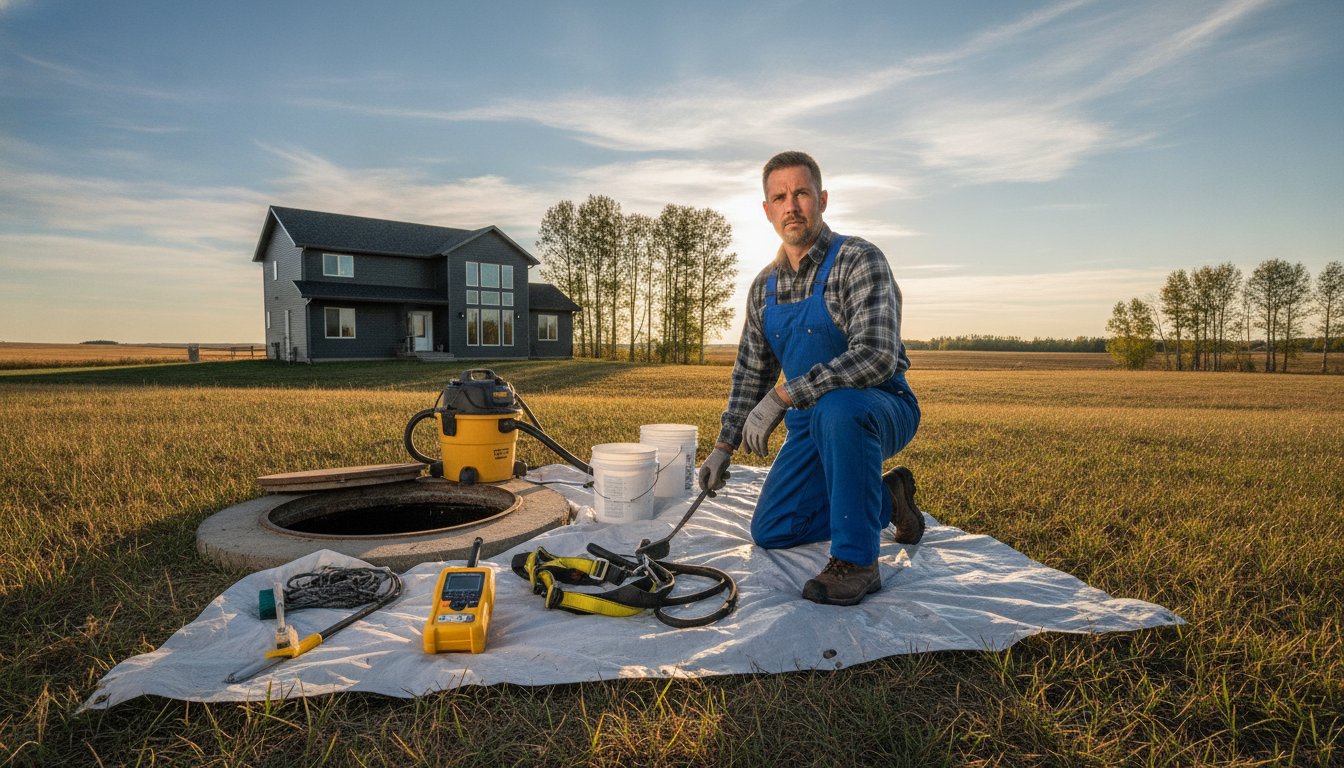
Invisible threats are the most common cause of accidents in rural water systems. Gases like hydrogen sulfide, which smells like rotten eggs, or odorless methane can displace oxygen without warning. If you feel lightheaded or notice a strange, sweet smell, you must evacuate immediately. These atmospheric risks are why you should never attempt a deep clean alone. A dedicated 'spotter' must remain outside the tank at all times, ready to call for help but never entering to attempt a rescue themselves. If your equipment doesn't include a gas detector or a retrieval harness, the task has likely moved beyond a safe DIY project. Understanding how to clean a cistern tank safely means knowing when the physical environment requires professional intervention.
Atmospheric Hazards and Ventilation
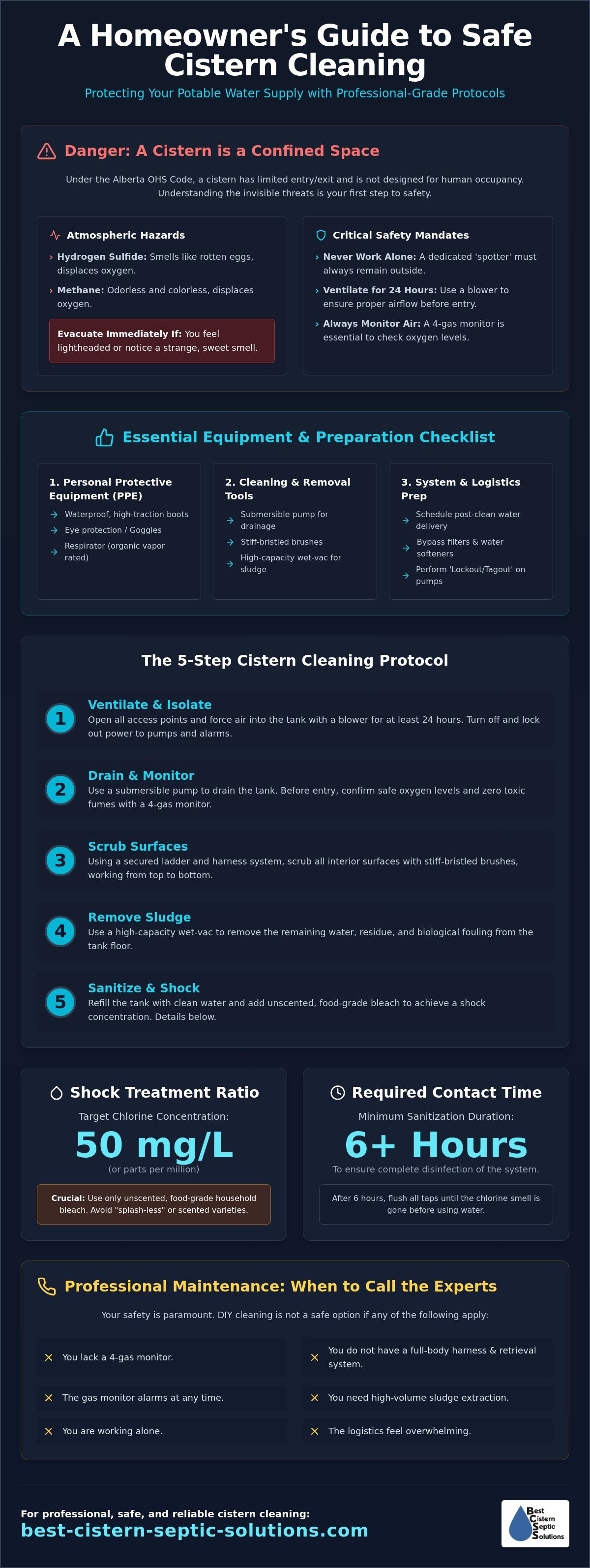
Proper airflow is your first line of defense against toxic buildup. You should open all access points and use a specialized blower to ventilate the tank for at least 24 hours before anyone steps inside. Even with constant ventilation, a 4-gas monitor is essential to confirm that oxygen levels are safe and toxic fumes are absent. This isn't just professional jargon; it's a life-saving protocol that protects the health of everyone involved. If the monitor alarms, the air is too thin or contaminated to support life, and you must pause the process until the atmosphere is cleared. This methodical approach removes the guesswork from the cleaning process.
Physical Safety and Entry Protocols
Physical hazards are just as critical as the air you breathe. Before entry, you must perform a 'lockout and tagout' procedure. This means turning off the power to any cistern pump or septic alarm and securing the switches so they can't be flipped back on accidentally. Use a sturdy, secured ladder and a full-body harness system for deep tanks to prevent falls or entrapment. Your top-side assistant serves as your lifeline, monitoring your progress and managing the equipment lines from above. This careful coordination ensures that every maintenance task ends with a safe exit and a functional, clean water system that provides security for your household.
Essential Equipment and Pre-Cleaning Preparation
Preparation is the bridge between a stressful chore and a successful maintenance task. Before you begin, you must assemble a specialized safety kit that goes beyond standard household tools. This includes waterproof boots with high-traction soles, eye protection to shield against chlorine splashes, and a respirator rated for organic vapors. These items are non-negotiable components of how to clean a cistern tank safely, as they protect your physical well-being while you manage the tank's environment. You'll also need a submersible pump for drainage, stiff-bristled brushes for physical scrubbing, and a high-capacity wet-vac to remove the heavy sludge layer that often settles on the floor.
Logistics play a vital role in a smooth cleaning day. You should verify that you've scheduled a water haulage delivery for immediately after the process is complete. Running a system dry for extended periods can stress your components, so having a fresh supply ready is essential. Additionally, you must bypass any whole-home filtration systems or water softeners. High concentrations of chlorine can damage sensitive membranes and resin beds, so isolating these units preserves your long-term property assets. Learning how to clean a cistern tank safely involves more than just equipment; it requires a systematic approach to system protection. If you find the logistical coordination overwhelming, seeking professional cistern maintenance can ensure every detail is handled with technical precision.
The Cleaning Chemistry: Choosing the Right Sanitizer
Your choice of cleaning agent is a critical health decision. You should only use unscented, food-grade household bleach for potable water systems. Avoid "splash-less" or scented varieties, as these contain additives that aren't safe for consumption. According to the Alberta guidelines for cistern cleaning, the standard disinfection ratio is 1 litre of bleach for every 1000 litres of water. You'll create two distinct mixtures: a concentrated scrub solution for the walls and a measured shock solution to sanitize the entire volume once the tank is refilled. Always store your concentrated chemicals in a cool, shaded area on-site to maintain their potency during the job.
System Shutdown and Drainage
A methodical shutdown prevents accidental damage to your home’s plumbing. Start by turning off the power to the pump to avoid dry-running, which can burn out the motor. You'll then drain the remaining water using a submersible pump, directing the discharge away from your septic field to prevent hydraulic over-loading. It's vital to isolate the cistern from the house by closing the main supply valve. This prevents highly chlorinated water from entering your taps during the scrubbing phase. Once the water level is low enough, you can safely remove or secure the internal pump, clearing the path for a thorough, bottom-to-top cleaning of the reservoir.
The Step-by-Step Guide to Cleaning Your Cistern Tank
Executing the physical cleaning of your reservoir requires a methodical, top-down approach to ensure no contaminants remain. Once the tank is drained and the atmosphere is verified as safe, the first priority is removing the 'sludge layer' from the floor. This sediment consists of mineral deposits and organic matter that have settled over time. A high-capacity wet-dry vacuum is the most efficient tool for this task, as it prevents you from simply pushing the mud around the tank. Removing this layer completely is a fundamental part of how to clean a cistern tank safely, as it eliminates the primary breeding ground for bacteria before you begin scrubbing the walls.
Maintaining the integrity of interior surfaces is a priority throughout your home, whether you are sanitizing a water tank or hiring BC Interior Painting Pros to refresh your living spaces with a professional finish.
With the floor cleared, you can begin scrubbing the interior surfaces. Use the concentrated chlorine solution and a stiff-bristled brush to clean the walls, starting at the highest point and working your way down to the floor. This sequence ensures that dirty runoff always flows toward the uncleaned areas, preventing re-contamination of sanitized surfaces. After the scrubbing is complete, rinse the walls thoroughly with clean, potable water. You must then perform a final extraction of all rinse water and remaining debris. Leaving stagnant rinse water behind can dilute your final shock treatment, so a bone-dry floor is the ideal starting point for refilling. Following CDC disinfection protocols during this phase ensures your cleaning efforts meet the highest health standards for residential water storage.
Removing Biofilm and Mineral Buildup
Biofilm is a slippery, microscopic layer of bacteria that adheres to the tank's interior. On concrete walls, these colonies can hide within the porous surface, while plastic tanks often develop a thin, translucent film. If you notice 'black spots' on the walls, these typically indicate deep-seated bacterial colonies or mold that require extra attention with your scrub brush. While it's tempting to use a high-pressure washer to speed up the process, you should use them with extreme caution. In a confined space, a pressure washer can create a fine mist of bacteria and chlorine that is hazardous to breathe, even with a respirator. A manual scrub remains the most reliable method for a thorough clean.
Inspection for Structural Integrity
The cleaning process provides a rare opportunity to inspect the physical health of your system. Look closely for 'spiderweb' cracks in concrete cisterns, as these are often the first signs of structural fatigue that could lead to leaks. You should also examine the manhole cover and its seal to ensure it remains airtight and prevents entry for rodents or insects. If you discover signs of root intrusion, such as fine hair-like fibers growing through the walls, this indicates a breach that requires a professional cistern repair. Addressing these minor issues now preserves the durability of your property and prevents future water quality failures.
Sanitizing and Shocking the System for Potable Water Safety
Sanitizing your reservoir is the final step in securing your household's water supply. After the physical debris is removed, you must calculate the total volume of your tank to ensure the chemical balance is correct. For a standard 1,000-gallon tank, you'll need a specific amount of unscented bleach to reach a 50mg/L chlorine concentration. This isn't just about pouring chemicals; it's a technical process that defines how to clean a cistern tank safely. To achieve this, use the ratio of 1 litre of household bleach for every 1000 litres of water as recommended by Alberta Health Services.
Once you've added the sanitizer, you must circulate it through your entire plumbing system. Open every tap in the house, including showers and outdoor faucets, and run them until you smell a strong scent of chlorine. Close the taps and let the solution sit for 12 to 24 hours. This contact time is non-negotiable. It allows the chlorine to penetrate biofilm and neutralize bacterial colonies that may be hiding in the pipework. Rushing this step risks leaving contaminants behind, which compromises the integrity of your potable water and the health of your family.
Testing and Neutralizing the Water
After the contact period ends, you must flush the system again. Run the taps until the chlorine odor is gone. You can use chlorine test strips to verify that levels have returned to a safe range for daily use. If you need to drain the high-concentration shock solution, you must neutralize it first to protect your yard and local environment. Sodium thiosulfate is a common neutralizing agent used by experts to safely dechlorinate water before discharge. Only resume drinking and cooking once the chlorine residual is below 4.0 mg/L, ensuring your system is safe for long-term use.
Post-Cleaning Water Quality Testing
A visual clean doesn't guarantee biological safety. You should perform a 'bac-t' test to confirm the absence of harmful pathogens. In the Edmonton Capital Region, you can submit water samples to accredited laboratories for a comprehensive analysis. These labs look for Total Coliforms and E. coli. Coliforms act as an indicator of general environmental contamination, while E. coli signifies a direct health risk. Receiving a '0' or 'Absent' result provides the definitive peace of mind that your system is safe. If you have concerns about your system's performance, investing in professional cistern maintenance ensures your water supply remains a durable asset for years to come.
Professional Maintenance: When to Call the Experts in Alberta
Understanding the technical steps of sanitation is vital, but acknowledging the limits of your equipment is the ultimate safety measure. While many homeowners successfully manage light upkeep, specific scenarios demand specialized intervention to protect the household. If your tank is exceptionally deep or the access point is too narrow for standard ventilation tools, the risk of atmospheric hazards becomes too high for a DIY approach. Learning how to clean a cistern tank safely includes knowing when to step back and let a team with high-volume extraction tools and advanced PPE take over. This commitment to safety and specialized expertise is mirrored by professionals like Best Chimney Services, who handle complex venting and structural maintenance to protect property owners elsewhere. These professionals ensure that every litre of sediment is removed without exposing you to the physical strain or confined space risks inherent in these systems.
Proactive cistern maintenance transforms a potentially stressful chore into a predictable, manageable process. Instead of waiting for water quality to fail or odors to appear, a scheduled cleaning prevents the buildup of aggressive biological fouling that requires harsh manual scrubbing. Integrating a professional clean with a full system inspection protects your property value and the longevity of your mechanical components. This comprehensive oversight identifies small leaks or pump issues before they become expensive failures. By treating your water system as a long-term asset, you remove future worries and ensure your family has consistent access to a safe supply.
Enhancing your home’s value also involves maintaining the rooms where your water system is most active; for those looking to upgrade, Bigcs Renos provides comprehensive bathroom and laundry renovations that combine high-end aesthetics with functional design.
Signs You Need Professional Intervention
Sometimes, a standard shock treatment isn't enough to resolve underlying issues. You should seek expert help if you notice any of the following:
- Persistent foul odours: If a "swampy" or metallic smell remains after a thorough cleaning and disinfection, there may be hidden contamination in the supply lines or deep within concrete pores.
- Structural damage: Visible cracks, spalling concrete, or collapsing walls in older tanks are serious red flags that require immediate repair to prevent groundwater infiltration.
- Mechanical failure: Frequent pump failures or the presence of sediment in your taps despite regular cleaning suggest a breach in the system's integrity or a failing filtration component.
The Best Cistern Septic Solutions Advantage
Our team provides a specialized approach to rural water systems throughout Parkland and Leduc Counties, focusing on honesty and technical thoroughness. We utilize industrial-grade extraction and monitoring equipment to ensure your potable water system meets or exceeds the 2026 Alberta safety standards. We take pride in performing the difficult, essential tasks that keep your home running smoothly. Our commitment is to provide absolute peace of mind through professional cistern care that preserves your property and your health. When your system requires more than a simple scrub, a professional fix is always available to restore your water's purity and your system's durability.
Securing Your Home’s Water Supply for the Long Term
Maintaining a cistern is a vital responsibility that ensures the health and security of your household. We've explored the critical importance of atmospheric monitoring, the precise steps for removing sediment, and the non-negotiable contact times for shock chlorination. Mastering how to clean a cistern tank safely requires a balance of technical knowledge and physical caution. By following these protocols, you transform a complex utility task into a routine that preserves your property’s value and your family's well-being.
If the technical demands or safety risks of confined space entry feel overwhelming, our team is ready to help. We provide expert service across Parkland, Leduc, and Sturgeon Counties, utilizing specialized confined space safety equipment and comprehensive potable water system diagnostics to ensure your home remains a safe haven. Book a Professional Cistern Inspection and Maintenance Service today to resolve your maintenance worries and secure a professional fix for your water system. Your peace of mind is our priority, and a clean, reliable water source is just one step away.
Frequently Asked Questions
How often should I clean my cistern tank?
Alberta Health Services recommends cleaning your cistern at least once per year to prevent the accumulation of sludge and biological fouling. You may need to increase this frequency if you notice changes in water clarity or taste, or if a water test reveals the presence of bacteria. Regular maintenance ensures your system remains a durable asset and provides consistent peace of mind for your household.
Is it safe to use pool chlorine to clean a drinking water cistern?
No, you should never use pool chlorine or "shock" products designed for swimming pools in a potable water system. These products often contain stabilizers and chemical additives that aren't safe for human consumption. Stick to unscented, food-grade household bleach to ensure you're following the best practices for how to clean a cistern tank safely. This protects your health and the long-term integrity of your water supply.
What should I do if a bird or rodent gets into my cistern?
You must immediately stop using the water and perform a complete system drain and decontamination. Remove the animal, scrub all interior surfaces with a concentrated chlorine solution, and perform a heavy shock treatment on the entire reservoir. After the contact period, flush the lines and conduct a professional bacterial water test to confirm the water is safe for consumption again.
Can I clean my cistern without climbing inside?
You can perform a surface-level rinse using telescoping brushes and high-pressure hoses from the manhole, but a thorough cleaning usually requires physical entry. Removing the heavy sludge layer and scrubbing stubborn biofilm often demands the direct reach of a technician. If you're uncomfortable with confined space entry, hiring a professional is the most reliable way to ensure a deep clean without risking your safety.
How much bleach do I need for a 2,000-gallon cistern?
For a 2,000-gallon tank, which is approximately 7,570 litres, you will need roughly 7.5 litres of unscented household bleach to achieve the recommended disinfection concentration. This ratio follows the Alberta Health Services guideline of 1 litre of bleach for every 1000 litres of water. Always measure your chemicals precisely to ensure the shock treatment is effective without being overly corrosive to your plumbing components.
What happens if I don't clean my cistern regularly?
Neglecting your cistern leads to the buildup of a thick sludge layer and the development of bacterial biofilms on the walls. This environment encourages the growth of total coliforms and potentially E. coli, which can cause serious illness. Additionally, heavy sediment can be drawn into your pump, leading to premature mechanical failure and expensive repairs for your home's essential utility system.
Do I need to boil my water after cleaning the tank?
You don't need to boil your water if the shock treatment was performed correctly and a laboratory test confirms the absence of bacteria. However, it's a professional best practice to use bottled water for drinking and cooking until you receive a "safe" result from a bacterial analysis. This methodical approach ensures your family remains protected while you verify the system's biological integrity.
How do I know if the air inside my cistern is safe to breathe?
The only reliable way to verify air safety is by using a calibrated 4-gas monitor to check for oxygen deficiency and toxic gases like methane or hydrogen sulfide. You cannot rely on your sense of smell alone, as many hazardous gases are odorless and can overcome a person in seconds. If you don't have access to professional atmospheric monitoring equipment, you should avoid entry to ensure you're managing the task safely.


