

What if the fact that your toilets are flushing perfectly today is actually masking a five-figure repair bill waiting just beneath your lawn? Most Alberta homeowners assume their system is healthy as long as the drains are clear, but a working septic system can often be a failing one in disguise. You've likely wondered how often should you inspect your septic system to avoid the C$15,000 to C$30,000 cost of a full field replacement. It's a common source of anxiety, especially when you're trying to distinguish between a routine pumper visit and a professional diagnostic evaluation.
This 2026 guide provides the clarity you need to protect your property value and your peace of mind. You'll discover the ideal inspection frequency for your specific Alberta home, whether you're in Parkland County or Strathcona County. We break down the critical differences between tank maintenance and drainage field health to ensure you have a clear schedule that prevents unexpected backups. By understanding the current standards and local environmental factors, you can move from reactive stress to proactive property care.
Key Takeaways
- Learn why the standard industry recommendation is a professional inspection every three years to catch issues before they become expensive field failures.
- Understand how often should you inspect your septic system based on specific factors like system age and Alberta's heavy clay soil conditions.
- Identify the difference between a routine tank pump-out and a detailed diagnostic inspection that evaluates the actual health of your drainage field.
- Recognize early warning signs, such as gurgling plumbing or unusually green grass, that suggest your system needs a professional health check immediately.
- Establish a predictable maintenance schedule to protect your property's value and ensure the long-term safety of your household's utility systems.
The General Rule: How Often Should You Inspect Your Septic System?
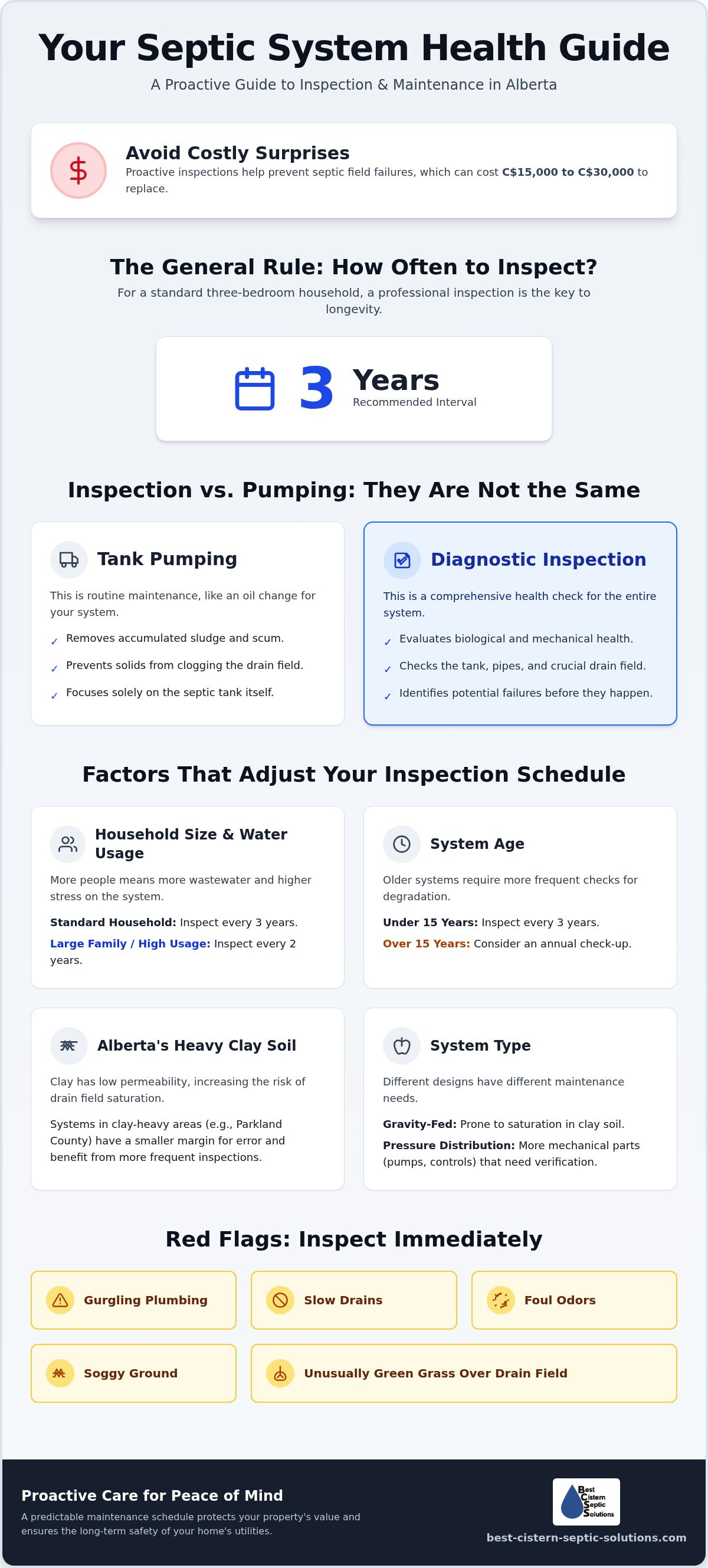
For most rural Alberta homeowners, the septic system is the most expensive utility on the property, yet it's often the most ignored. While your system operates quietly underground, relying on an "out of sight, out of mind" strategy is a dangerous gamble that often ends in premature field failure. A standard three-bedroom household should schedule a professional septic inspection every three years to maintain system health. This interval allows a specialized expert to identify minor mechanical issues before they escalate into high-cost emergencies.
It's vital to distinguish between a simple visual check and a comprehensive diagnostic. While you might look at your lawn and see no standing water, a professional inspector uses specialized tools to evaluate the actual biological and mechanical state of what a septic system is and how it's performing. This proactive approach identifies sludge accumulation or distribution issues before they manifest as a backup in your basement or a saturated drainage field.
Regulatory Standards in Alberta
The Alberta Private Sewage Systems Standard of Practice (2021) provides the technical framework for how systems must be built and repaired. However, Alberta doesn't currently mandate recurring inspections for existing residential systems. This lack of provincial enforcement puts the entire maintenance burden on you, the homeowner. In regions like Parkland or Leduc County, local bylaws focus on safety and environmental protection, but they rarely trigger a reminder for your routine check-up. You are the primary steward of your system's longevity.
The Impact of Household Size
The question of how often should you inspect your septic system often depends on the volume of wastewater your family generates. Every system has a specific design capacity based on the number of bedrooms. If a house designed for a retired couple is suddenly occupied by a family of five, the internal components face significantly higher stress. High-water-usage appliances, such as high-efficiency washers or water softeners, also accelerate the rate at which solids move through the tank. When determining how often should you inspect your septic system, consider your occupancy levels. If your household exceeds the original design intent, you should move to a two-year inspection cycle to ensure the drainage field isn't being overwhelmed by hydraulic overload.
Factors That Dictate Your Specific Inspection Schedule
While the General Rule for Septic System Inspection suggests a three-year cycle for standard homes, your specific property may require a more frequent schedule. Several local variables influence the durability of your underground infrastructure. In the Edmonton region, soil conditions and system age are the two most common factors that shift the timeline for professional maintenance.
Aging systems require much closer attention to maintain reliability. Once a septic system passes the 15-year mark, the risk of structural degradation increases significantly. Concrete tanks, while traditionally robust, can eventually suffer from interior corrosion caused by sewer gases. Plastic tanks are resilient but may shift or crack if the surrounding heavy clay soil expands and contracts with moisture changes. Older installations often lack modern effluent filters, which are now standard for protecting drainage fields from solid carryover. If you have an older system, moving to an annual check-up can prevent a minor leak from becoming a total field collapse.
Alberta's heavy clay soil also dictates how your drainage field processes wastewater. Clay has low permeability, meaning it holds water much longer than sandy soil. If you have a traditional gravity-fed field in clay-heavy areas like Parkland County, the risk of saturation is higher than in a pressure distribution system. Pressure systems use pumps to spread effluent evenly, but they contain more mechanical parts that require regular verification. When considering how often should you inspect your septic system, remember that your soil type determines your system's margin for error.
System Age and Material Integrity
The materials used in your system's construction have different lifespans and failure points. Concrete tanks can develop cracks at the joints over decades, while plastic tanks might bulge if not backfilled correctly. Modern systems include safety features like alarms and filters that older models lack. A professional septic system inspection identifies these material weaknesses before they lead to a system failure, providing a clear roadmap for future upgrades or repairs.
Environmental and Climate Stressors
Our local climate introduces unique stressors that are not present in warmer regions. The deep frost line in North Central Alberta can put immense pressure on septic piping, potentially causing shifts or breaks. Spring is the optimal time for a professional review because it allows us to see how the system performs during the heavy runoff period. If you're wondering how often should you inspect your septic system during these seasonal shifts, a spring assessment catches problems before the high-usage summer months begin. Protecting your field from winter compaction is also vital; driving or parking over the area can drive frost deeper and damage sensitive components.
Inspection vs. Pumping: Why You Need Both
A common misconception among rural Albertans is that a recently pumped tank equals a healthy septic system. This "Pumping Myth" leads many to believe that as long as the truck arrives every few years, the system is functioning perfectly. However, a clean tank tells you nothing about the drainage field's actual ability to absorb water. When you're determining how often should you inspect your septic system, you must view pumping as a necessary maintenance chore and an inspection as a vital property health check.
Integrating professional diagnostics into your septic tank maintenance routine can actually save you money over the life of your property. An inspector might find that your sludge levels are low enough to safely skip a pumping cycle, or they may discover a leaking toilet flapper that is hydraulically overloading your field. By catching these issues early, you prevent the massive C$15,000 to C$30,000 expense of a total field failure. It's about moving from reactive emergency calls to proactive, manageable care.
What a Pumper Does
A pumper's primary goal is solids removal. They arrive, empty the tank, and ensure the immediate inlet and outlet pipes aren't blocked. While they provide a vital service, their report is typically limited to the volume of waste removed. They rarely have the time or specialized equipment to evaluate the Factors That Dictate Your Inspection Schedule, such as the saturation level of your soil or the mechanical integrity of your distribution box. A pumper sees the waste; an inspector sees the system.
The Scope of a Professional Diagnostic
A professional diagnostic is a comprehensive evaluation of your system's biological and mechanical health. We measure the precise thickness of the scum and sludge layers to ensure the bacterial balance is correct for breaking down waste. For homes with advanced setups, we test the effluent pump and septic alarm functionality to prevent silent failures that lead to sewage backups. We also perform hydraulic load testing, which simulates heavy water usage to see how the field responds under stress. This thoroughness transforms your maintenance from a stressful chore into a long-term asset for your property. Our detailed reports provide a definitive professional fix for any identified risks, ensuring your household's security and property value remain intact.
Warning Signs That Demand an Immediate Inspection
While a three-year maintenance cycle provides a solid foundation for property care, your system may occasionally signal a need for attention ahead of schedule. Ignoring these early warnings often leads to the high costs of field replacement. If you experience slow-clearing drains or hear distinct gurgling sounds in your plumbing, your system is likely struggling with hydraulic pressure. These sounds occur when air bubbles are forced back through the traps because the tank or the drainage field is nearing its capacity. When these symptoms appear, the standard answer to how often should you inspect your septic system shifts from "every few years" to "immediately."
Surface conditions in your yard also tell a vital story. Standing water or spongy soil during dry Alberta summer months indicates that wastewater is no longer filtering downward through the soil. Instead, the effluent is pushing upward, which creates a significant health risk for your household. Foul odors near the tank or the drainage area suggest that sewer gases are escaping, often due to a structural crack or a saturated field that can no longer breathe. These physical indicators require a professional diagnostic to prevent a manageable repair from becoming a total system collapse.
The "Greener Grass" Warning
A common myth suggests that exceptionally lush, green grass over a septic field is a sign of a high-performing system. In reality, this "Greener Grass" is often the first visual indicator of a failing drainage field. The grass is thriving because it has direct access to excessive moisture and nutrients that should be treated deep underground. When the soil becomes clogged with a thick biological layer, or bio-mat, the water surfaces and "over-fertilizes" the lawn. If you spot a specific patch that looks significantly more vibrant than the rest of your yard, it's time for a professional health check to evaluate your field's absorption rate.
Odors and Backups
Differentiating between normal operation and a system failure is essential for your peace of mind. While a faint odor near the roof vent is common, any persistent sewage smell inside the home is a critical emergency. This often indicates that the system is fully backed up or that a mechanical component, like an effluent pump, has failed. In these instances, you should seek a professional septic system repair to restore the integrity of your utility. Catching these issues before sewage enters the home preserves your property value and ensures your family's safety. If you notice any of these red flags, schedule a septic system inspection to secure a definitive professional fix today.
What to Expect During a Professional Septic Inspection
A professional diagnostic begins with a physical mapping of your property's underground infrastructure. Unlike a simple visual check, we locate and uncover all system components, including the main tank lids, distribution boxes, and secondary treatment areas. This thoroughness is essential because many older Alberta properties have buried components that haven't been seen in decades. Once the system is accessible, we perform a detailed evaluation of the interior structures, ensuring the baffles and effluent filters are intact and functioning. These components act as the final line of defense, preventing solids from escaping the tank and clogging your drainage field.
Measuring the sludge and scum levels is the next critical step. This data provides the specific answer to how often should you inspect your septic system based on your household's actual waste production. We use specialized core samplers to determine the thickness of these layers, which tells us if the biological balance is healthy or if the tank requires immediate pumping. Every finding is documented in a comprehensive written report. This document serves as a vital property health record, offering peace of mind for your family and providing essential proof of maintenance for insurance or real estate purposes.
Diagnostic Tools and Technology
We utilize advanced technology to see what remains hidden from the surface. High-resolution waterproof cameras allow us to inspect lateral lines for root intrusion or pipe collapses that could lead to a system failure. We also conduct a full electrical and mechanical audit, specifically testing the septic alarm installation and float switches to ensure your safety systems are ready to alert you before a backup occurs. Soil probing in the drainage field helps us identify any early biomat buildup, allowing for a manageable resolution before the field becomes fully saturated.
The Best Cistern Septic Solutions Approach
Our approach is tailored to the unique environmental challenges of North Central Alberta. We understand how the heavy clay soils of Parkland, Leduc, Sturgeon, and Strathcona Counties affect system longevity. By focusing our inspections on the health of the drainage field rather than just the tank, we help homeowners prevent premature field replacements. We view your septic system as a long-term asset for your property, and our goal is to provide the honesty and thoroughness you expect from a reliable neighbor. Ready to secure the future of your property’s utility systems? Book your professional diagnostic today and gain the clarity you need for a worry-free home.
Secure Your Property’s Future with Proactive Care
Maintaining a rural property in Alberta requires a shift from reactive repairs to proactive management. You now understand that while a three-year cycle is the standard answer for how often should you inspect your septic system, your specific soil conditions and system age may demand a more frequent schedule. A professional diagnostic goes beyond the tank to ensure your drainage field remains a long-term asset rather than a hidden liability.
Best Cistern Septic Solutions specializes in detailed field diagnostics across Parkland, Leduc, and Sturgeon Counties. We provide the comprehensive reports you need for insurance, real estate, or simply your own peace of mind. Our team focuses on finding a definitive professional fix for every concern, ensuring your household remains safe and your property value stays protected. Don't wait for a backup to tell you there's a problem when a simple check-up can provide total clarity.
Schedule Your Professional Septic Diagnostic with Best Cistern Septic Solutions
Taking this simple step today removes the worry of tomorrow's emergencies and keeps your home running smoothly for years to come.
Common Questions About Alberta Septic Inspections
Is a septic inspection required to sell a home in Alberta?
Alberta provincial law doesn't strictly mandate a septic inspection for every property transfer, but most buyers and mortgage lenders require one as a condition of the sale. Real estate professionals in the Edmonton region strongly advise against waiving this condition. A professional report protects both parties by verifying the system's current health, ensuring there aren't hidden five-figure repair costs waiting for the new owner after the keys are handed over.
How much does a professional septic inspection cost in the Edmonton area?
A professional diagnostic evaluation typically falls within a standard industry range for rural property maintenance. The final cost depends on the complexity of your system, the number of tanks, and whether components like distribution boxes need to be excavated for access. Investing in this regular check-up is a cost-effective way to avoid a full system replacement, which can reach C$30,000 in Parkland County if a failure is left unaddressed.
Can I inspect my own septic system to save money?
You can perform basic visual checks, such as looking for surface water or listening for gurgling pipes, but these don't replace a professional diagnostic. Homeowners lack the specialized equipment, such as waterproof cameras and core samplers, needed to measure sludge layers or inspect lateral lines. A DIY approach often misses early warning signs of field saturation, leading to much higher costs when the system eventually fails without any obvious warning.
What happens if I skip my 3-year septic inspection?
Skipping your three-year interval increases the risk of a silent failure in your drainage field. Without regular checks to determine how often should you inspect your septic system based on your actual usage, solid waste may carry over into the field and cause permanent clogging. This oversight often turns a simple maintenance task into an emergency replacement. Consistent inspections provide the peace of mind that your home's most vital utility remains in peak condition.
How long does a professional septic inspection take?
A thorough professional diagnostic typically takes between 1.5 and 3 hours to complete. This timeframe allows the technician to locate all buried components, measure scum and sludge levels, and perform hydraulic load testing. We take the time to ensure every part of your system, from the tank to the furthest reaches of the drainage field, receives a meticulous evaluation. You'll receive a clear explanation of our findings and a detailed report immediately following the process.
Will the inspector pump my tank during the visit?
No, a professional inspection is a separate diagnostic service from tank pumping. We specialize in evaluating the health of the drainage field and the mechanical integrity of the entire system. In many cases, an inspection should occur before you call a pumper. This sequence allows us to see the system under normal operating conditions, providing a more accurate assessment of how your field is handling the daily hydraulic load of your household.
What is the best time of year to get a septic inspection in Parkland County?
Spring is the ideal time for an inspection in Parkland or Leduc County. This season allows us to observe how your system handles the high water table caused by snowmelt and spring runoff. Performing the check-up during this period ensures your system is prepared for the high-usage summer months. Late fall is also a suitable option to verify that your lids are secure and your alarms are functioning properly before the ground freezes for the winter.
Can a septic inspection find a leak in my cistern?
Yes, because we specialize in both septic and cistern systems, our technicians can evaluate the integrity of your water storage during the same visit. We check for structural cracks, failing seals, or pump issues that could compromise your water supply. Combining these services provides a complete overview of your property's rural utilities. This integrated approach ensures that both your waste management and water storage systems are durable and safe for your family.


