
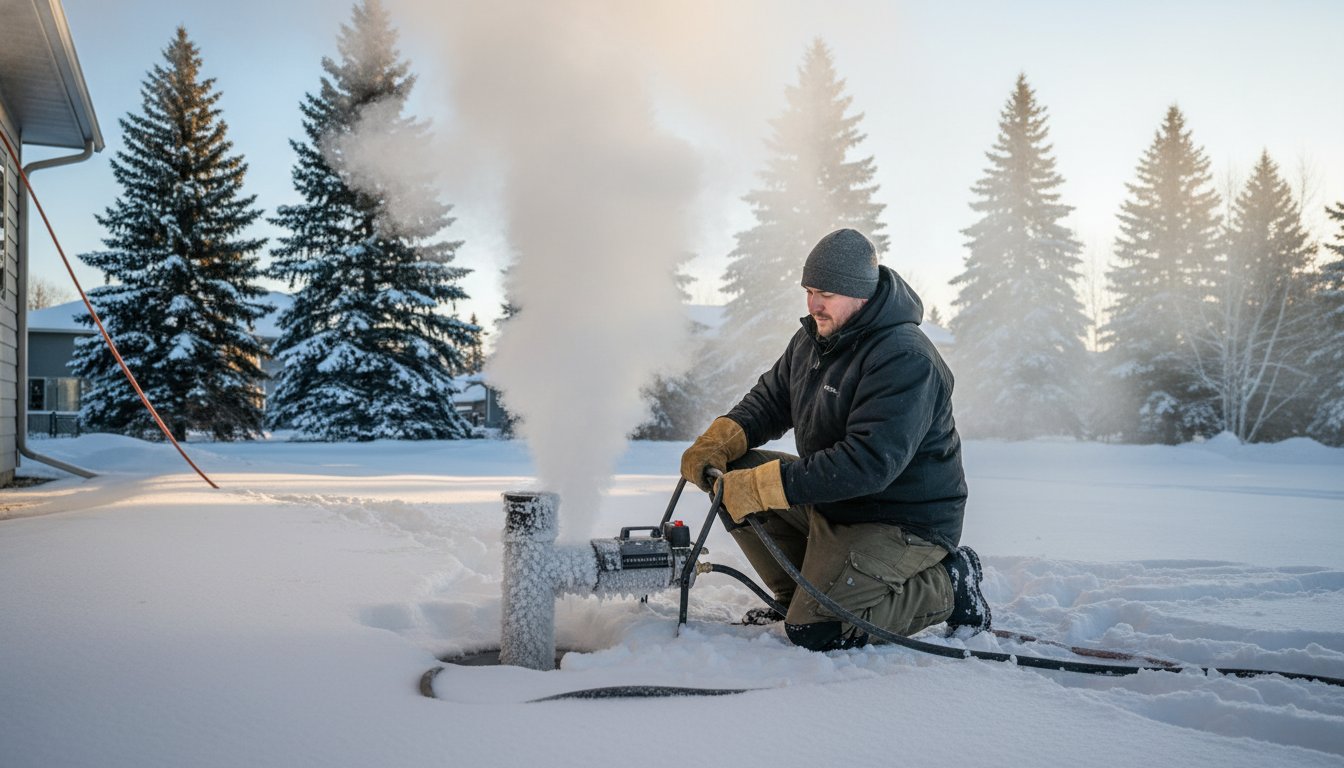
What if the sewage backup in your basement isn't a sign of a collapsed system, but simply a localized thermal bridge waiting for a professional, non-invasive solution? When the temperature drops to -30°C across Alberta, the stress of a slow drain can quickly turn into a high-stakes emergency. You're likely worried about the structural integrity of your pipes and the potential for a massive repair bill. It's a common concern for homeowners facing the need for frozen septic line repair Parkland County, especially when you're trying to keep your home safe and functional during the harshest months of the year.
This guide will show you how to handle these winter challenges efficiently. We'll help you determine if your system is truly broken or just temporarily seized by the frost, ensuring you stay compliant with the Alberta Private Sewage Codes and Standards. You'll learn the diagnostic steps to identify the freeze point, the professional methods used to restore flow without damaging your yard, and the long-term septic maintenance strategies to keep your system running through 2026 and beyond. We'll walk through exactly how to restore your peace of mind and protect your property's most vital utility.
Key Takeaways
- Identify the early warning signs of a winter blockage, such as gurgling floor drains, to prevent a complete sewage backup before it starts.
- Navigate the technical steps of frozen septic line repair Parkland County by learning how to pinpoint exactly where the thermal bridge has formed in your delivery line.
- Master the diagnostic checks for your effluent pump and chamber to ensure your system's mechanical components are operating safely despite freezing temperatures.
- Protect your long-term property integrity by understanding why professional steaming is the only safe method for resolving ice blockages without damaging your pipes.
- Implement proactive measures like specialized insulation and septic field repair to eliminate future freeze risks and ensure permanent system reliability.
Recognizing the Signs of a Frozen Septic Line in Parkland County
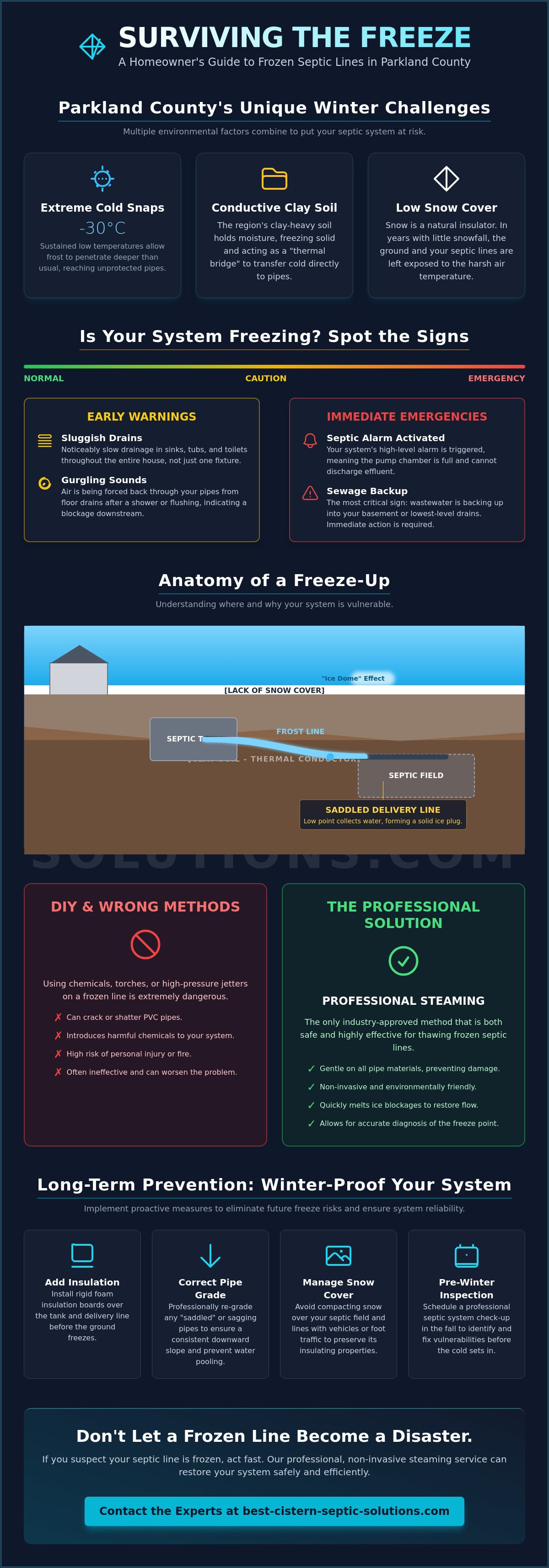
Parkland County winters are legendary for their intensity. When the mercury stays below -20°C for weeks at a time, the ground freezes deep, often reaching depths that challenge even the best-designed utility systems. You might notice your sinks aren't draining as quickly as they did in November. This isn't just a plumbing quirk. It's often the first indicator that you may need a specialist in frozen septic line repair Parkland County. Understanding how a septic system works helps you realize that even a small ice blockage can disrupt the entire pressure balance of your home's wastewater management. Small signs matter. Catching them early prevents a manageable issue from becoming a costly emergency.
Early Warning Signs vs. Immediate Emergencies
Sluggish drainage throughout the entire house is the primary red flag. If only the kitchen sink is slow, it's likely a localized clog. However, when the bathtub, toilets, and laundry all struggle simultaneously, the issue is further down the line. You might hear rhythmic gurgling from floor drains after a shower. This is air being pushed back into the house because the wastewater has nowhere to go. Don't ignore these sounds. A septic alarm triggered by high water levels in the pump chamber is your final warning. It signals that the effluent pump is trying to move liquid, but an ice blockage is preventing it from reaching the field. At this stage, the risk to your basement is high.
The "Alberta Winter" Factor
Our local geography plays a massive role in system failure. Parkland County features clay-heavy soils that hold moisture and expand when frozen. This creates "thermal bridges" where the cold penetrates the pipe walls more easily. If you have low snow cover, the insulating layer is gone. This allows frost to reach the delivery line much faster than in years with heavy snowfall. Frost penetration is a silent process. It happens beneath your feet without any visible change to the landscape until the drains stop moving.
Look for the "Ice Dome" effect on your property. This is a localized patch of ice or frost forming directly over where the delivery line runs. It happens when warm air from the tank escapes through a small crack or loose joint and freezes upon contact with the cold surface air. Additionally, soil shifting can create a "saddle" or a dip in the pipe. These low spots trap water that eventually turns into a solid ice plug. Identifying these nuances early allows for a methodical resolution. We focus on restoring your flow before your home safety is compromised. A professional frozen septic line repair Parkland County ensures your system is evaluated for these structural issues, not just thawed for a temporary fix.
Why Septic Lines Freeze: Parkland County’s Winter Challenges
Parkland County is known for its dense, clay-rich soil. This specific soil type acts as a thermal conductor, drawing frost deeper into the ground than sandy or loamy soils. In a standard Alberta winter, frost can penetrate several feet down, often reaching the depths where older delivery pipes were installed without sufficient protection. If your property was developed decades ago, the pipes might be shallower than current standards require, making them primary targets for ice formation. This environmental pressure requires a specialized approach to ensure your system remains durable through the coldest months.
The Delivery Line Vulnerability
The delivery line is the critical bridge between your septic tank and the drainage field. Because this pipe often carries effluent in smaller, intermittent bursts rather than a constant stream of warm household water, it loses heat rapidly. A saddled line is a section of pipe that has sagged due to soil settling, creating a low point where stagnant water pools and eventually freezes into a solid plug. When this happens, the entire system halts because the wastewater has no clear path to the field. For homeowners facing this situation, professional Septic Solutions can address these underlying structural issues rather than just treating the symptoms.
Local Soil and Vegetation Impacts
Maintaining your septic system requires understanding the local environment. Parkland County clay retains significant moisture into the late fall. This wet soil freezes more solidly and conducts cold temperatures more efficiently than dry ground. You might think clearing snow off your septic field helps with access, but this is a mistake. Snow acts as a natural insulator. Removing it allows the frost to drive much deeper into the earth, potentially reaching your pipes. Similarly, driving vehicles or snowmobiles over the septic area compacts the snow and soil, destroying the air pockets that provide insulation and pushing frost directly toward the delivery line.
Properties used only on weekends or seasonally are at the highest risk. Without the regular introduction of warm water from showers and laundry, the residual liquid in the pipes has no thermal defense against the surrounding frozen clay. Reviewing a guide on Winter-Proofing Your Septic System provides additional context on why consistent usage matters. If you find yourself in this situation, a specialized frozen septic line repair Parkland County service is necessary to safely restore flow without cracking the brittle, cold-soaked pipes. We focus on identifying these specific environmental triggers to provide a resolution that lasts well beyond the current cold snap.
Diagnostics: Is it a Frozen Line or a Failed Septic Field?
When your drains stop moving in the middle of January, the first instinct is often panic. You might worry that your entire system has collapsed, requiring a massive excavation in the frozen ground. However, in our region, the issue is frequently a localized thermal bridge rather than a biological failure. Determining whether you need a frozen septic line repair Parkland County or a more extensive field intervention starts with a methodical diagnostic process. We believe that every problem has a manageable resolution once you identify the root cause.
The Pump Chamber Test
If your property uses a mound or a pressure-distribution system, your pump chamber is the best place to start. Safely remove the access lid and observe the liquid levels. If the effluent pump is running or humming, but the water level remains high, you likely have a frozen discharge pipe. The pump is doing its job, but the ice plug in the delivery line is blocking the path to the field. You can find detailed safety protocols for these checks in the NEHA Winter Septic System Guide. If the chamber is empty but the house drains are still backed up, the blockage is located between the house and the tank.
Comparison Checklist: Frozen vs. Failed
It helps to look at the history of your system. A failed field usually shows signs of distress long before the snow flies, such as sluggish drains during heavy rain or persistent sewage odors. A frozen line is almost always linked to a sudden drop in temperature. Use this checklist to help differentiate the two scenarios:
| Symptom | Frozen Septic Line | Failed Septic Field |
|---|---|---|
| Onset | Sudden; typically during a cold snap. | Gradual; worsening over several months. |
| Odors | Minimal; usually no smell outside. | Strong sewage odors near the field. |
| Surface Signs | Localized ice patches or "ice domes." | Soggy soil or ponding (visible in thaw). |
| Recovery | Restored immediately after steaming. | Requires remediation or field repair. |
A unique indicator for Parkland County residents is the "greener grass" phenomenon. If you noticed a specific patch of your lawn was exceptionally lush and green last summer, that area likely has high moisture levels. Because wet soil conducts cold more efficiently than dry soil, these high-moisture zones are the first places where a line will freeze. Understanding these patterns is a core part of Understanding Septic Systems in Parkland County. If your system worked perfectly until the thermometer hit -20°C, a professional frozen septic line repair Parkland County is the most likely path to restoring your home's comfort and safety.
Emergency Steps: Professional Steaming and Repair Solutions
When the flow stops, the urge to take immediate action is understandable. However, attempting a DIY fix on a frozen system often leads to permanent structural damage that is far more expensive than the initial blockage. Professional frozen septic line repair Parkland County relies on specialized equipment designed specifically for our Alberta climate. We use high-pressure, low-volume steam to gently melt ice blockages from the inside out. This approach ensures that the pipe walls remain intact while the ice is efficiently cleared. It's a methodical process that prioritizes the long-term safety of your property over a temporary, risky patch.
The Steaming Process Explained
Professional steaming is the only safe way to thaw a septic line because it uses heat rather than physical force. Mechanical snaking often fails in frozen lines because ice is too dense for a rotating cable to penetrate effectively. In many cases, a metal snake can even puncture or shatter a brittle, frozen PVC pipe, turning a simple freeze into a major frozen septic line repair Parkland County project. Steam, however, flows around the obstruction and melts it evenly without applying stress to the pipe material. Professional steaming restores flow in hours, not days, ensuring your home returns to normal function without the need for extensive winter excavation.
What Not to Do (Homeowner Warning)
It's vital to avoid "quick fixes" that compromise your system's biological health. Never pour automotive anti-freeze or harsh chemical additives down your drains. These substances kill the beneficial bacteria that break down waste, which can lead to a total system failure once the ground thaws. Similarly, boiling water is rarely effective. It loses its heat long before it reaches a deep blockage and can cause thermal shock, potentially cracking your pipes. We also strongly advise against using heat lamps or torches near septic vents or pipes. These methods present a significant fire risk due to the presence of methane gas within the system. For a reliable, technical resolution, a professional Septic System Repair in Parkland County is the only way to ensure your utility lines are safe and functional.
While you wait for a technician, immediately stop all non-essential water use. Avoid running the dishwasher, laundry, or taking long showers, as this extra volume will only pool behind the ice plug and increase the pressure on your indoor plumbing. This proactive step prevents a messy backup into your basement while the professionals prepare the necessary equipment. If you are facing a mid-winter emergency, our team provides the expert Septic Solutions required to restore your home's essential services and your peace of mind.
Long-Term Prevention: Winter-Proofing Your Septic System
Once the immediate crisis of a frozen line is resolved, the focus shifts toward ensuring the same vulnerability doesn't return next year. Treating your utility system as a long-term property asset involves proactive measures that go beyond emergency steaming. Effective winter-proofing often starts with high-quality insulation. Installing closed-cell Styrofoam or specialized thermal blankets over shallow delivery lines before the first frost provides a critical barrier against the penetrating cold of Parkland County. This simple addition can be the difference between a functional system and a recurring need for frozen septic line repair Parkland County. We view these upgrades as essential property preservation that removes future worries for the homeowner.
Structural Fixes for Permanent Peace of Mind
Permanent resolutions often require addressing the physical layout of your system. If your delivery line has developed a "saddle" or a low spot due to soil settling, re-grading the pipe to restore a consistent slope is essential. This process involves professional Septic Field Repair to ensure that wastewater flows by gravity as intended, leaving no stagnant pools to turn into ice. At Best Cistern Septic Solutions, we approach winter-proof septic field installation by ensuring every component is buried at optimal depths and protected by proper grading. We also recommend Septic Alarm Installation. These sensors provide an early warning by alerting you to rising water levels before a backup reaches your home, giving you time to act before the frost takes hold. These mechanical safeguards are vital for maintaining system integrity in remote rural settings.
Seasonal Maintenance Habits
Your daily habits play a significant role in system health. While a professional Septic Maintenance schedule is vital, simple water management helps keep the system "warm" during extreme cold snaps. Staggering your laundry loads or running a warm bath provides a consistent influx of heat that prevents ice from anchoring to the pipe walls. Don't forget the power of natural insulation. Use a "Snow Management" strategy by letting snow accumulate naturally over your tank and field; avoid shoveling these areas or packing the snow down with snowmobiles. Compacting the snow destroys its ability to trap air and keep the ground warm.
It's also wise to check your tank levels. While we don't provide pumping services, ensuring your tank is at the correct level before winter prevents solids from migrating into the delivery line and freezing. Regular Septic System Inspections help identify shallow pipes or damaged baffles before they lead to a winter emergency. If you're ready to secure your property against the Alberta winter, Contact Best Cistern Septic Solutions for Emergency Thawing and Winter-Proofing to ensure a professional, lasting fix. Our team focuses on providing the specialized expertise required to keep your essential services running regardless of the temperature outside.
Secure Your Property Against the Alberta Winter
Managing a rural utility system in Parkland County requires a methodical approach and an understanding of our unique environmental challenges. By distinguishing between a temporary ice blockage and a biological failure, you can avoid unnecessary stress and ensure your property remains safe throughout the coldest months. We focus on providing a resolution that combines immediate relief with long-term durability. Our team has served Spruce Grove and Parkland County since our inception, specializing in the specific needs of rural Alberta septic systems. We maintain specialized emergency steaming equipment ready to perform a frozen septic line repair Parkland County without the risk of damaging your infrastructure.
If you're currently facing a drainage issue or want to implement structural winter-proofing before the next deep freeze, professional assistance is the most reliable path forward. We offer comprehensive services from detailed inspections to specialized repairs that turn your utility system into a lasting asset. You don't have to face the -30°C weather alone when expert help is available. We take pride in performing these essential, difficult tasks with a high level of care and sophistication.
Restore Your System Today: Professional Frozen Line Repair in Parkland County
Every winter challenge has a manageable solution. We're here to provide the technical expertise and peace of mind you deserve to keep your home running smoothly all season long.
Frequently Asked Questions
Can I use RV antifreeze to thaw my frozen septic line?
You should never use RV antifreeze or any chemical additives to thaw a frozen line. These substances kill the beneficial bacteria required for waste breakdown and can lead to long-term system failure. Professional steaming is the only safe method that restores flow without compromising the biological health of your septic tank.
How much does it cost to repair a frozen septic line in Parkland County?
The cost for frozen septic line repair Parkland County varies based on the depth of the frost and the length of the ice blockage. Emergency service premiums often apply during extreme cold snaps or holiday weekends. It's best to check with a professional for a technical assessment to ensure you receive a durable resolution tailored to your property's specific needs.
Is it possible for the actual septic tank to freeze solid?
It's rare for a tank to freeze solid because the natural bacterial activity generates consistent heat. However, the surface can freeze if the tank is installed too shallow or if the property is left vacant during a cold snap. When the surface freezes, it prevents wastewater from entering the tank, causing immediate backups into the home.
What is the most common cause of frozen septic lines in Alberta?
The most common cause is a lack of snow cover combined with shallow pipe installation. Snow acts as a natural thermal blanket that keeps frost from reaching your utility lines. During "brown winters" with low snowfall, the frost penetrates deeper into the clay soil, eventually reaching the delivery pipes.
How long does a professional steaming service take to restore flow?
A professional steaming service typically restores flow within one to three hours. The exact duration depends on the location of the ice plug and the total length of the frozen section. This non-invasive process is much faster than waiting for a natural thaw and avoids the risks associated with mechanical snaking.
Will a frozen septic line fix itself when the weather warms up?
While the ice will eventually melt in the spring, waiting is not a practical solution for an active household. A frozen line prevents you from using sinks, toilets, and showers safely. Furthermore, ice expansion can sometimes damage pipe joints, so it's important to have the system inspected to ensure it remains a long-term asset.
Does a septic alarm go off if the line is frozen?
Yes, your septic alarm will trigger if the ice blockage is in the delivery line or the pump chamber. When the effluent cannot reach the drainage field, the liquid level rises until it trips the high-water sensor. This alarm is a vital safety feature that tells you to stop water usage immediately to prevent basement flooding.
Can I drive my snowmobile over my septic field or lines?
You should never drive snowmobiles or vehicles over any part of your septic system. Compacting the snow and soil destroys the air pockets that provide essential insulation. This allows the frost to drive much deeper into the ground, which is a leading cause of the need for frozen septic line repair Parkland County.


