
Over 25,000 people in the Athabasca Watershed alone rely on private water systems, yet many homeowners are unaware that the full responsibility for water safety rests entirely on their shoulders. Living rurally in North Central Alberta offers incredible freedom, but it also brings the quiet stress of managing your own utilities. It's natural to feel a sense of unease when you turn on the tap, wondering if your storage system is truly as clean as it looks. You want to protect your family, but searching for cistern water testing near me often leads to more confusion than clarity.
This guide provides the peace of mind you need by simplifying the path to clean, safe water. You'll discover exactly how to navigate the testing process, from finding local drop-off points to interpreting lab results with confidence. We'll break down common Alberta contaminants and provide a clear roadmap for maintaining a potable water system that remains a long-term asset for your home. By the end, you'll have a manageable plan to ensure your household water stays safe and your system remains durable for years to come.
Key Takeaways
- Learn why a comprehensive evaluation of both microbiological and chemical factors is essential for maintaining rural Alberta storage systems.
- Identify the critical differences between common indicator bacteria and immediate health risks like E. coli to better understand your lab reports.
- Establish a reliable testing routine for spring and fall and learn how to quickly locate cistern water testing near me during system emergencies.
- Understand the vital link between professional cistern installation and the long-term prevention of groundwater contamination.
- Discover how a thorough professional inspection provides a definitive resolution for your water quality concerns, moving beyond a simple pass or fail result.
Understanding Cistern Water Testing in North Central Alberta
Cistern water testing is a specialized process that evaluates both the microbiological and chemical safety of your stored water. Unlike municipal systems where water is treated and monitored daily, a private cistern requires you to act as your own utility manager. To understand the baseline, it helps to ask: What is a Cistern? In the context of rural Alberta, it's a critical storage vessel that holds either collected rainwater or hauled potable water, keeping it ready for your daily needs. Because these systems are often located underground or in utility rooms, they're susceptible to environmental factors that can compromise water quality over time.
Rural properties across North Central Alberta face unique challenges. Seasonal shifts, heavy spring runoff, and even the vibration of nearby agricultural activity can impact the structural integrity of a tank. Alberta Health Services (AHS) provides baseline testing kits for bacteria and chemicals, which serve as an excellent starting point for homeowners. However, many residents fall into the trap of believing that if their water looks, smells, and tastes clear, it's safe to drink. This is a dangerous misconception. Microscopic pathogens and dissolved minerals often leave no trace at all. Professional cistern water testing near me is the only way to confirm your system remains a safe, durable asset for your family. For instance, Sunshine Coast Water Testing provides the type of professional laboratory analysis for rainwater tank systems that goes beyond basic checks to ensure total potability.
The Difference Between Well and Cistern Testing
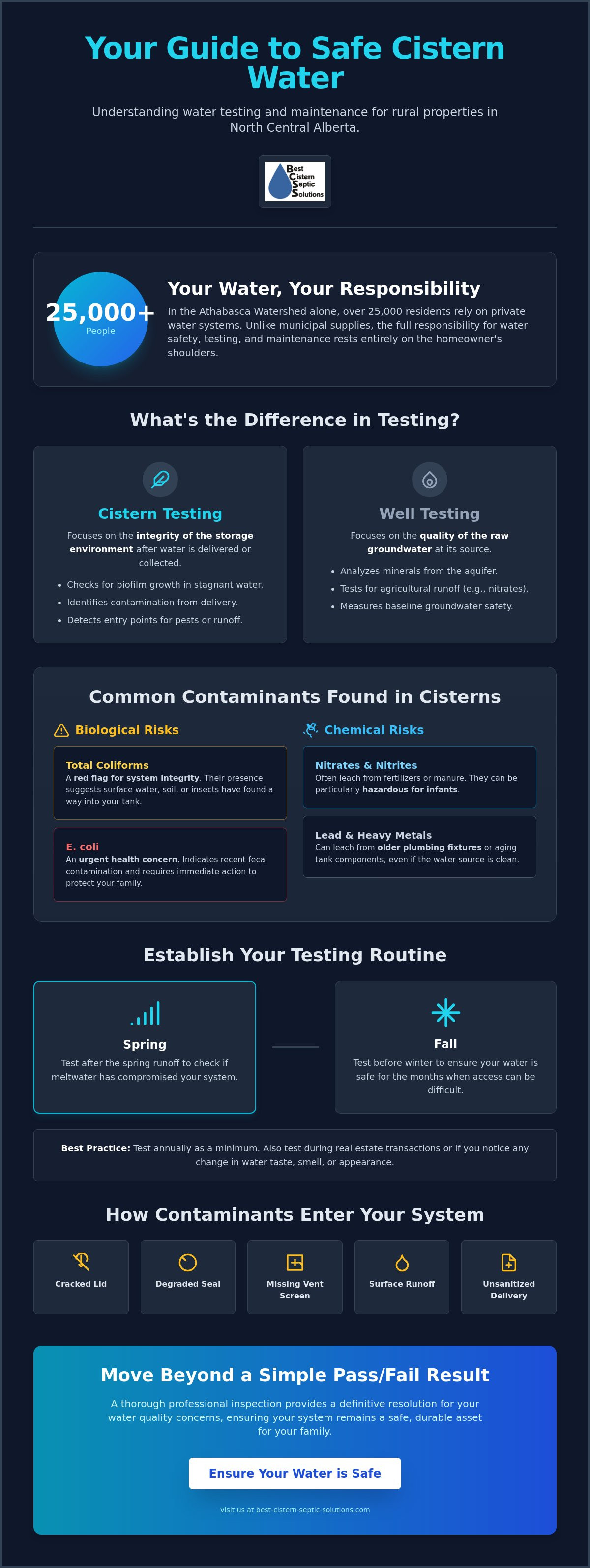
While a well test focuses on the quality of the groundwater at the source, cistern testing focuses on the integrity of the storage environment. Stored water is stagnant, which can lead to the growth of biofilm on the interior walls of the tank. If you rely on hauled-water systems, every delivery introduces a new variable. Contamination can occur during the transfer from the truck to your tank or through a loose-fitting lid. Because of these localized risks, cisterns generally require more frequent bacteriological monitoring than wells to ensure the water remains potable until it reaches your tap.
Regulatory Standards for Potable Water in Parkland County
In regions like Parkland County and the Edmonton Capital Region, water quality follows the Canadian Drinking Water Quality Guidelines. While there are no provincial laws forcing you to test your private system, it's a standard requirement during real estate transactions. Most lenders and buyers insist on a recent potability certificate before a sale is finalized. Beyond legalities, we recommend annual testing as a best practice. Regular checks allow you to catch minor issues before they become expensive repairs, ensuring your cistern installation continues to provide the security and health your household deserves. If you are preparing a home for sale or simply want to increase its market value, you might also check out Instacabinets for professional kitchen remodeling and custom cabinetry solutions.
Common Contaminants Found in Rural Water Storage
Total coliform bacteria represent a broad group of organisms that typically reside in the environment. While most aren't dangerous, their presence in your storage tank is a red flag for system integrity. It suggests that surface water, soil, or insects have found a path into your supply. E. coli is a much more urgent concern. This specific bacterium indicates recent fecal contamination, requiring immediate action to protect your household health. In agricultural regions like Sturgeon County, nitrates and nitrites are also significant concerns. These chemicals often leach into groundwater from fertilizers or manure, and they can be particularly hazardous for infants. Lead and heavy metals are less common in the water source itself but can leach from older plumbing fixtures or lead-based solder used in aging tank components. Finding reliable cistern water testing near me is about more than just getting a lab report; it's about identifying these specific risks before they impact your family.
How Contaminants Enter Your Cistern
Contaminants don't just appear; they enter through specific physical vulnerabilities. A cracked lid, a missing vent screen, or a degraded seal around the manhole can all provide entry points for rodents and debris. During heavy rainfall events in North Central Alberta, the risk of surface runoff overwhelming a shallow-buried tank increases significantly. Even the process of refilling your tank can be a source of trouble if the delivery equipment isn't properly sanitized. Following the Alberta Health Services water testing guidelines helps you monitor these risks, but maintaining the physical barrier of your tank is the first line of defense.
Chemical vs. Biological Testing
Most homeowners start with a bacteriological scan, which is a sensible first step. However, if you notice a metallic taste, blue-green staining on fixtures, or a rotten egg smell, a comprehensive chemical analysis is necessary. These symptoms often point to mineral imbalances or sediment buildup. Sediment acts as a nursery for bacteria, providing a physical shield that prevents disinfectants from working effectively. Regular septic maintenance and cistern care prevent this buildup from occurring in the first place. This proactive approach ensures your water remains clean and your equipment continues to function as a long-term asset for your property. A professional fix for water quality issues often begins with a thorough inspection of the tank's interior to ensure sediment isn't compromising your test results.
When and How to Test Your Cistern Water
Consistency is the cornerstone of water security. Alberta Health Services recommends testing your cistern for bacteria twice a year, typically in the spring and fall when environmental shifts and runoff are most active. Chemical and trace metal testing should occur every three years to monitor long-term changes in water quality. Beyond these scheduled checks, certain triggers demand an immediate sample. If your property experienced localized flooding, or if you've recently returned from a long period of non-use, you must confirm the system's integrity before drinking from the tap. These proactive steps ensure your water remains a reliable resource rather than a source of worry.
It's equally important to test your water following any cistern maintenance or repairs. Opening the tank lid or replacing a pump can introduce airborne particulates or surface contaminants. For those looking for cistern water testing near me in the Edmonton area, AHS Environmental Public Health offices offer free sample kits and serve as reliable drop-off points. Using these local resources ensures your samples remain viable for the lab's strict processing windows. Searching for cistern water testing near me helps you locate the closest office, which is vital because samples must typically reach the lab within 24 hours of collection to remain valid.
Steps for Proper Water Sampling
Sampling is a precise task that requires a steady hand and a clean environment. Start by choosing a clean, non-swivel tap and remove any aerators or screens. Run the cold water for at least three minutes to flush the lines and ensure you're sampling the water currently in the tank. When filling the sterile bottle, do not rinse it out; the powder inside is a preservative. Be careful not to touch the inside of the cap or the rim of the bottle. Once collected, the sample must be kept cool and delivered to a drop-off point immediately. This attention to detail prevents false positives that can cause unnecessary stress and confusion.
Interpreting Your Lab Results
Lab reports usually provide a simple "Presence" or "Absence" result for bacteria. If your report indicates "Presence," the water is considered unsafe for consumption. This doesn't mean your system is permanently compromised; it simply means the protective barrier has been breached. Before taking drastic measures, we often recommend a re-test to rule out sampling errors. If the second test confirms contamination, you'll need to follow professional Cistern Disinfection and Cleaning procedures to restore safety. Understanding these results is the first step toward a definitive resolution and a return to normal household operations.
Beyond the Lab: Maintaining a Clean Water Supply
A laboratory report provides a valuable snapshot of your water quality, but it doesn't account for the physical condition of your storage system. Environmental factors in North Central Alberta, such as shifting soil or heavy seasonal runoff, can compromise a tank within weeks of a successful test. This is why professional cistern installation is so critical. A properly engineered system uses high-quality seals and reinforced structures to prevent root intrusion and groundwater seepage. When these physical barriers fail, even the most frequent testing becomes a reactive measure rather than a proactive defense.
Many homeowners rely on shock chlorination to fix a failed test, but this is often a temporary solution. Bacteria often hide within "biofilm," a slimy layer that clings to the tank walls and floor. Bleach might kill surface bacteria, but it rarely penetrates the biofilm or the thick layer of sediment at the bottom. Without removing this physical debris, the bacteria will simply repopulate the water once the chlorine dissipates. When you search for cistern water testing near me, you're looking for a result you can trust; achieving that trust requires a clean, structurally sound environment for your water.
Professional Cistern Cleaning vs. DIY Bleaching
DIY bleaching is common, but it's often ineffective and potentially dangerous. Entering a cistern is considered a confined space entry, which requires specialized training and safety equipment to avoid oxygen deficiency or toxic fumes. Professional cleaning services use high-pressure washing to physically strip away biofilm and vacuum out accumulated sediment. This thorough process ensures the entire distribution system is disinfected, providing a definitive resolution rather than a quick fix. It's the most reliable way to ensure your next water sample comes back clean.
Signs Your Cistern Needs Maintenance
You don't always need a lab report to know your system requires attention. Watch for cloudy water or visible particulates at the tap; these are clear signs that sediment levels have reached your intake. Unusual "earthy" or "musty" odors often indicate organic growth within the tank. Additionally, if you notice your pump cycling more frequently or a sudden drop in water pressure, it may be due to a clogged intake screen or a failing component. If you encounter these issues after searching for cistern water testing near me, it's time to look deeper than the sample bottle. For a complete system evaluation, consider professional Septic Maintenance and cistern care to ensure your home's utilities remain in top condition.
Professional Cistern Safety and Maintenance Solutions
While a lab report is a diagnostic tool, Best Cistern Septic Solutions provides the definitive cure for long-term water security. We understand that rural living in Strathcona and Leduc Counties requires a reliable partner who understands the mechanical nuances of your property. Searching for cistern water testing near me is often the first step in a larger journey toward property preservation. Our role is to ensure that once you have those results, you have a clear, actionable path to keep your system safe and durable. We treat your home as if it were our own, focusing on honesty and thoroughness in every inspection.
One often overlooked risk to water quality is the proximity of wastewater systems. If a septic field fails, the resulting groundwater contamination can put immense pressure on your cistern's seals. We provide expert septic system repair to ensure that your household's waste management never compromises your drinking water. This holistic view of your property’s utilities is what sets a professional evaluation apart from a simple water sample. By addressing the integrity of both your potable water and waste systems, we create a secure environment that protects your family's health.
Our Approach to Cistern Integrity
Our technicians perform visual inspections that go far beyond what a homeowner can see from the surface. We examine tank walls for hairline fractures and check that lids and seals are airtight against insects and runoff. We also evaluate the cistern pump and filtration components to ensure they operate at peak efficiency. This includes checking pressure tanks and ensuring the intake is positioned correctly to avoid drawing in sediment. This detailed reporting is essential for your own peace of mind and often serves as a critical document for real estate requirements in the Edmonton area. When you look for cistern water testing near me, you deserve a partner who looks at the whole system, not just the water inside it.
Schedule Your Professional System Evaluation
Scheduling a professional evaluation is an investment in your home’s long-term value. Proactive maintenance allows us to identify minor wear and tear before it results in an emergency failure or a health risk. We take pride in being a diligent, detail-oriented partner for rural residents across North Central Alberta. Our goal is to provide a professional fix that removes future worries, allowing you to enjoy the benefits of rural life without the stress of utility uncertainty. Contact us for a professional assessment in the Edmonton region to secure your water supply and ensure your system remains a safe, hardworking asset for years to come.
Securing Your Rural Water Supply for the Long Term
Maintaining a safe drinking water system in North Central Alberta is a continuous commitment to your family's health. While a lab report provides a necessary snapshot of current safety, the long-term integrity of your system depends on proactive physical maintenance and professional oversight. You now have the tools to identify common contaminants and understand the critical timing for your next sample. Searching for cistern water testing near me is the first step toward clarity, but a structurally sound tank and a well-maintained septic system are the real foundations of a worry-free home.
We're dedicated to serving our neighbors with expert rural utility solutions that emphasize safety and durability. Our team specializes in both cistern and septic system integrity, offering the grounded, professional service you can trust to protect your property. We don't just look for problems; we provide the definitive resolution you need to feel confident in every drop of water that comes from your tap.
Ensure your water is safe—book a professional cistern inspection today. Taking this small step now ensures your system remains a hardworking asset and provides the lasting peace of mind you deserve.
Frequently Asked Questions
Where can I get a water test kit in Parkland County?
You can pick up a sterile water test kit at the Alberta Health Services (AHS) Environmental Public Health office in Stony Plain. These kits include the necessary bottles and instructions for collecting both bacteriological and chemical samples. Once you collect your sample, you must return it to the same drop-off point within the lab's required timeframe to ensure the results are accurate and valid.
How much does it cost to test cistern water in Alberta?
Alberta Health Services offers free bacteriological and chemical testing for residents using private drinking water systems. If you require specialized testing or a faster turnaround for a real estate transaction, commercial labs in the Edmonton region offer various potability packages. These private services provide a detailed analysis that can be helpful for identifying specific mineral issues or meeting lender requirements during a home sale.
How often should I test my cistern water for bacteria?
It is best to test your cistern for bacteria twice a year to ensure your water remains safe. Most rural homeowners schedule these tests during the spring and fall when environmental changes and runoff are most likely to affect system integrity. Regular monitoring helps you maintain a safe potable water system and allows you to address minor seal or lid issues before they lead to significant contamination.
What should I do if my water test comes back positive for E. coli?
Stop using your water for drinking, cooking, or brushing teeth immediately if E. coli is detected. This result indicates recent fecal contamination and requires a definitive resolution through professional disinfection. Once the system has been thoroughly cleaned and flushed, you should perform another round of cistern water testing near me to confirm the bacteria has been successfully removed before resuming normal use.
Can I use bleach to disinfect my own cistern?
You can use unscented household bleach for shock chlorination, but this is often a temporary fix that doesn't address the root cause of contamination. Bleach cannot penetrate thick layers of sediment or the biofilm that clings to the tank walls. For a long-term solution, professional cleaning is necessary to physically remove debris. Never enter a cistern yourself, as these are dangerous confined spaces that require specialized safety equipment.
Does a water test check for lead and heavy metals?
A standard bacteriological test only identifies coliforms and E. coli; it does not check for metals. To screen for lead, arsenic, or manganese, you must request a separate chemical analysis. AHS recommends performing this comprehensive chemical screen every three years. This helps you monitor the condition of your plumbing and ensures that your tank components aren't leaching minerals into your drinking supply.
Why does my cistern water smell like rotten eggs?
A rotten egg odor is typically caused by hydrogen sulfide gas, which is produced by sulfur-reducing bacteria in your tank. This often happens when organic matter or sediment builds up on the floor of the cistern over several years. While the smell is unpleasant, it's a manageable issue. A professional cleaning to remove the accumulated sediment and organic debris usually resolves the odor and refreshes your water quality.
Is cistern water safe to drink without a filtration system?
Cistern water is safe to drink without a filter as long as the water source is potable and the storage tank is properly maintained. However, because stored water can become stagnant, many residents in North Central Alberta install UV lights or carbon filters as an added layer of protection. Combining these tools with regular cistern water testing near me ensures your household remains protected against unexpected changes in water quality.


