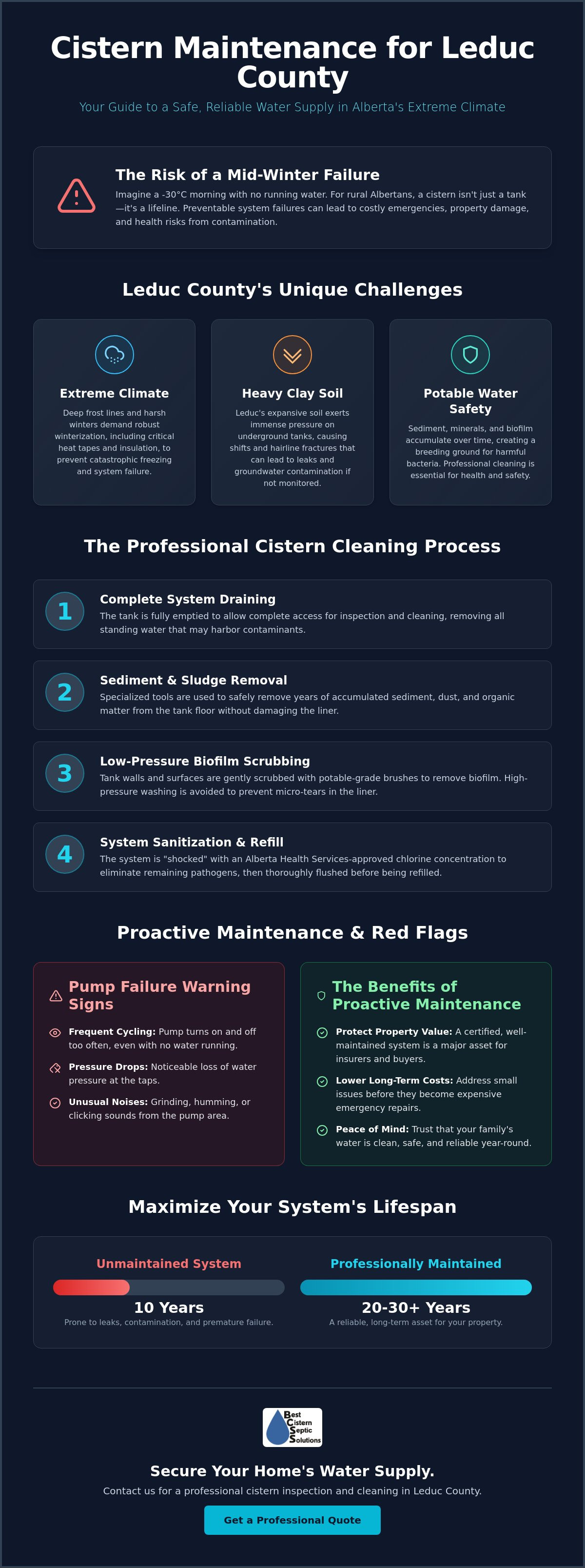
Imagine waking up on a -30°C morning in Leduc County only to find your taps have run dry because of a preventable system failure. For the thousands of Albertans who rely on hauled water, your cistern is more than just a tank; it's the lifeline of your home. You likely value the independence of rural living, yet the fear of water contamination or a mid-winter pump breakdown can be a constant source of stress. Professional cistern maintenance in Leduc County requires a methodical approach that accounts for both biological safety and the structural demands of our extreme climate.
We believe that every homeowner deserves peace of mind regarding their utility systems. This 2026 guide offers the professional clarity you need to ensure your water remains crystal clear and your system remains viable for 20 years or more. We will walk through the essential cleaning frequencies recommended by Alberta Health Services, proactive winterization strategies, and the technical signs of pump wear. By following these proactive steps, you can secure your household's safety and significantly lower your long-term repair costs. This methodical approach transforms a complex utility into a reliable, long-term asset for your property.
Key Takeaways
- Understand that effective cistern maintenance in Leduc County involves a multi-point check of water quality, tank integrity, and mechanical components to protect your property value.
- Learn why periodic professional sanitization and sediment removal are essential for maintaining potable water standards without damaging sensitive tank liners.
- Discover how to safeguard your system against the Alberta frost line by maintaining critical heat tapes and insulation to prevent mid-winter freezing.
- Identify the early warning signs of pump failure, such as frequent cycling or pressure drops, to address small issues before they become emergency repairs.
- Explore how comprehensive diagnostics and professional inspections ensure your water supply meets the rigorous standards required by insurers and real estate professionals.
Understanding Cistern Maintenance for Leduc County Properties
Effective cistern maintenance in Leduc County is a comprehensive technical audit rather than a simple visual check. It involves a methodical multi-point inspection that evaluates water quality, structural integrity, and mechanical performance. For rural homeowners, this system is the primary heartbeat of the household. Because Leduc County relies heavily on private water storage, the health of your cistern directly influences your property's market value and long-term viability. A well-maintained system ensures that your home remains a safe, functional asset regardless of municipal infrastructure limitations.
It is helpful to start with Understanding Cisterns and their specific roles. While some properties use cisterns for rainwater harvesting to supply gardens, most Leduc residents utilize them for potable water storage. These systems require vastly different care standards. Potable systems must remain hermetically sealed and chemically balanced to prevent the growth of harmful pathogens. Consistent maintenance acts as a safeguard against "no-water" emergencies, which often occur during the most inconvenient times, such as during extreme cold snaps or large family gatherings. By identifying wear in components like the cistern pump early, you replace a potential crisis with a scheduled, manageable resolution.
The Role of Potable Water Safety in Rural Alberta
Potable water safety begins with managing what you can't see. Over time, even the cleanest hauled water leaves behind trace minerals and organic particulates that settle at the bottom of your tank. This sediment buildup isn't just a plumbing nuisance; it can become a breeding ground for bacteria if left undisturbed for years. We prioritize the use of potable-grade materials for every maintenance task to ensure no contaminants enter your supply during the cleaning process. Maintaining this biological integrity provides more than just clean water; it offers the peace of mind that your family's health is protected by a secure, professionally managed system.
Leduc Soil and Its Impact on Your Storage Tank
The geography of Leduc County presents unique challenges for underground infrastructure. Our region is known for heavy clay soils that undergo significant expansion and contraction cycles based on moisture levels and frost depth. This movement exerts tremendous lateral pressure on cistern walls. Routine inspections allow us to identify hairline fractures or slight structural shifts before they escalate into catastrophic leaks or groundwater infiltration. In the specific environmental conditions of rural Alberta, the relationship between consistent soil pressure management and tank lifespan is the deciding factor in whether your system lasts ten years or thirty. Diligent monitoring ensures the earth around your tank remains a support structure rather than a source of mechanical stress.
The Core Steps of a Professional Cistern Cleaning and Sanitization
Professional cistern maintenance in Leduc County is a methodical restoration of your water's purity. It's more than a quick rinse. A full cleaning requires the system to be drained completely. This allows for a thorough removal of the organic and inorganic materials that inevitably collect on the floor of the tank. We use specialized, low-pressure scrubbing tools and potable-grade brushes to remove biofilm without compromising the structural integrity of your tank liner. Using incorrect high-pressure equipment can lead to micro-tears. These tears eventually cause leaks or allow external groundwater to seep in.
Once the tank is physically clean, the sanitization phase begins. This involves "shocking" the system with an approved concentration of chlorine. Following a reliable Cistern Cleaning and Disinfection Guide ensures that the ratio is strong enough to eliminate pathogens but safe enough for your plumbing. This methodical approach to cistern maintenance in Leduc County ensures that your water supply remains a reliable asset for your family. It's a proactive step that removes future worries about water quality.
Sediment Removal and Sludge Management
Even if you only receive high-quality water deliveries, sediment accumulates. Dust enters through vents and minerals precipitate out of the water over time. This creates a layer of sludge that can harbor bacteria. Alberta Health Services recommends that homeowners perform a deep clean and chlorination at least once per year. For busy households, regular Septic Maintenance and cistern care prevents this sludge from reaching your pump intake. This protects your mechanical components from premature wear and ensures your water remains crystal clear.
Safe Sanitization Protocols
It's vital to use only NSF-60 certified chemicals during the sanitization process. Industrial bleaches often contain fragrances or stabilizers that aren't safe for human consumption. After the sanitizing agent has sat for the required contact time, we flush the entire system. This includes running the treated water through every tap in your home to sanitize the internal pipes. We recommend testing the water 1 to 2 times per year for bacteriological quality once the process is complete. This final verification step confirms that the resolution of any previous contamination is complete and that your system is ready for another year of service.
Protecting Your Water Supply from Alberta’s Extreme Climate
Alberta's climate is notoriously demanding on rural infrastructure. In Leduc County, the frost line can penetrate deep into the soil during prolonged cold snaps, often reaching depths of seven to eight feet. This environmental reality makes the physical protection of your water storage a top priority. Proper cistern maintenance Leduc County involves more than just interior cleaning; it requires a diligent audit of your system's thermal defenses. If your tank sits at a shallower depth, you must rely on secondary protection like high-grade insulation and heat tapes to prevent a total freeze-up.
The integrity of your manhole cover is your first line of defense against the elements. We often see seals that have dried out or cracked over time, allowing snowmelt or debris to enter the potable supply. Ensuring these covers are hermetically sealed is a simple task that prevents significant contamination. Following the Alberta Health Services Cistern Guidance helps homeowners understand why these physical barriers are so critical for maintaining water safety during seasonal transitions. A secure lid keeps your water clean and your system's temperature stable.
Winterizing Your Cistern System
Preparation for the winter should begin well before the first hard freeze in October or November. We recommend a methodical checklist to ensure your system is ready for sub-zero temperatures. First, test your pump house heater to verify it maintains a consistent temperature above freezing. Next, inspect the insulation around exposed pipes and the tank neck for any signs of moisture or rodent damage. If you use heat tapes, plug them in early to confirm they're drawing power and heating correctly. Identifying a failing heat tape in the autumn is a manageable fix; discovering it during a January blizzard is an emergency. This proactive approach removes the stress of unexpected service interruptions when you need water most.
Spring Thaw and Runoff Protection
The spring thaw brings a different set of challenges as snowmelt saturates the ground. It's essential to inspect the grading around your cistern to ensure water sheds away from the tank rather than pooling on top of it. Saturated soil can put extra pressure on seals, potentially leading to surface water ingress. If you notice cloudy water or a change in taste after a rapid melt, it's a sign that your seals may have failed. This issue isn't unique to our area; homeowners looking for information on cisterns for rural properties in Parkland County face similar environmental hurdles. Maintaining the soil grade and seal integrity ensures that the spring runoff stays outside where it belongs, keeping your potable supply pure and reliable.
Troubleshooting Common Cistern and Pump Red Flags
A healthy water system should operate quietly in the background of your daily life. When you begin to notice your pump turning on and off every few seconds, even when no taps are running, it's a symptom called short cycling. This behavior often indicates that your pressure tank has lost its internal air charge. If you don't address this, the constant starting and stopping will burn out the motor prematurely. While a gradual drop in water pressure can sometimes be a clogged sediment filter, a total lack of flow often points to a failed cistern pump or an empty tank. Identifying these mechanical shifts early is a core part of cistern maintenance Leduc County homeowners should prioritize to avoid sudden service interruptions.
Your cistern alarm system acts as a vital safeguard for your household. These sensors are designed to alert you to low water levels or high-water conditions before they lead to mechanical damage or overflows. We recommend testing your float switches and audible alarms at least twice a year. If an alarm sounds, it's a clear signal that the system's balance has been disrupted. Catching a mechanical red flag through these alerts transforms a potential weekend emergency into a manageable, professional resolution. This proactive monitoring ensures your water supply remains a secure and reliable asset for your property.
Mechanical Warning Signs: Pumps and Pressure Tanks
If you hear a persistent humming from your pump house or a rapid clicking from the pressure switch, your system is signaling for help. These sounds suggest that the mechanical components are struggling to reach the required cutoff pressure. Fine sediment can act like sandpaper on pump impellers, slowly grinding down their efficiency over time. For homes with integrated utility systems, such as those requiring septic system repair in Parkland County, maintaining the balance between your water supply and waste system is essential. Keeping both systems in peak condition protects your property's overall health and value.
Water Quality Anomalies
Changes in the smell or appearance of your water are immediate indicators of a biological breach. A distinct rotten egg smell usually points to hydrogen sulfide gas produced by bacteria living in the sediment layer at the bottom of the tank. If you notice sudden cloudiness or a metallic taste, perform a simple visual inspection. You can often see floating debris or discoloration by shining a high-powered flashlight into the tank access point. If the water appears murky or smells foul, stop using it for drinking or bathing immediately. A professional sanitization is the only way to restore the safety and purity of your supply.
If you're noticing any of these red flags, it's time to secure a professional Cistern Pump diagnostic to prevent a total system failure.
Professional Cistern Maintenance and Inspection Services
Professional cistern maintenance in Leduc County is the most effective way to protect your home's primary utility. At Best Cistern Septic Solutions, we take a methodical approach to diagnostics. We don't just look at the water; we evaluate the entire mechanical and structural ecosystem of your storage system. This level of thoroughness is often a requirement for real estate transactions or insurance renewals in Alberta. Providing a certified inspection report proves to stakeholders that your water supply is safe, clean, and structurally sound. It transforms an invisible utility into a documented asset that adds tangible value to your property.
Choosing a proactive maintenance schedule offers a significant return on investment. Replacing a 15,000-litre concrete or poly tank is a major excavation project that can disrupt your property for weeks and carry a high price tag. In contrast, regular upkeep extends the life of your system to 20 or even 30 years. It's a simple calculation: a small investment in prevention removes the risk of a massive capital expense later. We view every cistern challenge as a manageable technical task with a definitive professional resolution. Our goal is to ensure you never have to think about your water supply because it simply works as intended.
What to Expect During a Professional Inspection
During a professional inspection, we use specialized waterproof cameras and ultrasonic sensors to check for structural anomalies. These tools allow us to see hairline cracks or root infiltrations that are invisible from the surface. Our reporting process provides a clear, sequential breakdown of your system's health, ensuring you feel informed rather than overwhelmed. We also bring a deep level of expertise in understanding septic systems to ensure your property's full utility health is balanced. This end-to-end perspective helps us identify if a pressure issue in the cistern might be impacting your broader household plumbing or waste management systems.
Securing Your Rural Lifestyle
Living rurally in Leduc County offers unmatched independence, but it requires a reliable partnership with experts who understand our local environmental conditions. Your cistern is a critical asset. It deserves the same level of attention as your home's foundation or roof. By establishing a recurring maintenance schedule, you remove the worry of unexpected failures from your daily life. You can trust that your water will be clear, your pump will be strong, and your household will remain secure through every Alberta season. This proactive care is the hallmark of a diligent homeowner who values property preservation.
If you're ready to secure your system's longevity, Contact Best Cistern Septic Solutions for your Leduc County maintenance needs. We take pride in performing these essential tasks with the care and sophistication your property deserves.
Securing Your Household’s Water Security for Years to Come
Maintaining a private water system in rural Alberta shouldn't be a source of constant stress. By prioritizing cistern maintenance Leduc County, you ensure that your potable water remains a safe and reliable asset for your family. We've explored how annual sanitization prevents bacterial growth and why protecting your infrastructure from shifting soils and extreme frost lines is vital for longevity. These methodical steps don't just prevent emergency failures; they preserve the long-term value of your property and provide the security your household deserves.
As a specialized partner in rural residential water systems, we provide comprehensive inspections for real estate compliance and personal peace of mind. Our team serves Leduc County and the Edmonton Capital Region with a commitment to honesty and technical thoroughness. We're ready to help you transition from reactive repairs to a proactive care schedule that removes future worries.
Book Your Professional Cistern Inspection and Maintenance Today.
Every utility challenge has a manageable professional solution. With a diligent plan in place, you can enjoy the independence of rural living with total confidence in your water supply.
Frequently Asked Questions
How often should a cistern be cleaned in Leduc County?
You should have your cistern professionally cleaned every one to three years to maintain water safety and structural integrity. Alberta Health Services specifically recommends cleaning and chlorinating at least once per year to prevent bacterial growth. Consistent cistern maintenance in Leduc County ensures that any sediment accumulation is managed before it affects your water quality, pump performance, or the overall health of your household's supply.
Can I use household bleach to sanitize my cistern?
We advise against using standard household bleach because it often contains fragrances, stabilizers, or thickeners not rated for potable water consumption. Instead, use NSF-60 certified chlorine products specifically designed for drinking water systems. These professional-grade sanitizers ensure your system is effectively disinfected without introducing unwanted chemicals into your family's daily supply. This methodical approach guarantees the highest standard of safety for your home.
Why does my cistern water have a strange smell or taste?
A strange smell or taste usually indicates that bacteria are growing in the sediment layer at the bottom of your tank. A "rotten egg" odor is often caused by hydrogen sulfide gas produced by these organisms. If you notice these changes, it's a clear sign that your system requires a professional cleaning and sanitization to restore the purity and safety of your potable water supply.
What is the most common cause of cistern pump failure?
The most common cause of failure is mechanical wear caused by sediment or frequent short cycling. When fine particles enter the pump, they act like sandpaper on the internal impellers, reducing efficiency until the motor burns out. Ensuring your pressure tank is properly charged and your cistern remains free of sludge will significantly extend the life of your equipment and prevent unexpected service interruptions.
How deep should a cistern be buried in Alberta to prevent freezing?
In Alberta, a cistern should ideally be buried so that the top of the tank is seven to eight feet below the surface. This depth places the main body of the water below the local frost line. If your tank is shallower, you must maintain active thermal protections like heat tapes and insulation to ensure your water supply remains reliable during the extreme cold snaps common to our region.
Is it normal for sediment to build up in a potable water cistern?
It is perfectly normal for sediment to accumulate over time, even with high-quality water deliveries. Minerals naturally precipitate out of the water, and fine dust can enter the system through atmospheric vents. This is why routine cistern maintenance in Leduc County is so essential; it removes this bottom layer before it can harbor bacteria or damage your pump, ensuring your system remains a long-term asset.
Does my cistern need an alarm system?
Yes, a reliable alarm system is a critical safeguard for every rural property. It provides immediate notification if water levels drop too low or if a mechanical failure occurs in your pump system. This early warning allows you to resolve the problem before you run completely out of water, transforming a potential emergency into a manageable scheduled service that protects your household's peace of mind.
What should I do if my cistern water level drops unexpectedly?
If your water level drops unexpectedly, you should first check for visible leaks in your home's plumbing or a running toilet. If the house is secure, the issue may be a structural leak in the tank or a faulty check valve in the pump system. We recommend calling a professional to perform a structural diagnostic to identify the source and protect your water supply from further loss or contamination.


