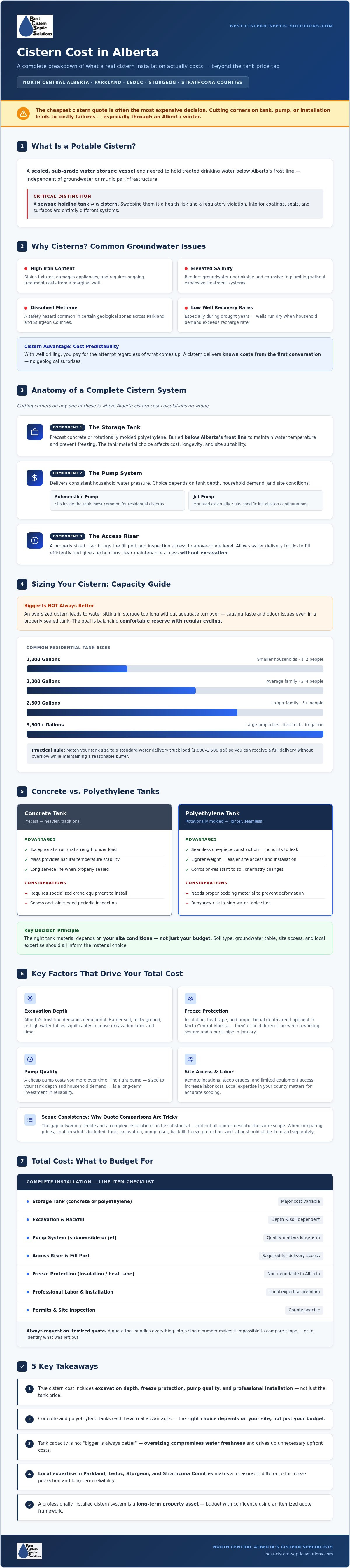
The cheapest cistern quote you receive is often the most expensive decision you'll make for your property. It's a counterintuitive reality that rural homeowners across North Central Alberta discover after a single hard winter exposes a poorly insulated tank or an undersized pump that can't keep up with household demand. Understanding the true cistern cost in Alberta means looking beyond the tank price and accounting for excavation depth, freeze protection, and the quality of components that will quietly serve your home for decades.
If you're relying on hauled water, managing unreliable well quality, or simply tired of the ongoing expense and uncertainty, you already know a properly installed cistern system isn't a luxury. It's a foundation. The frustration is real, and so is the solution.
This guide gives you a clear, honest breakdown of what a complete cistern installation actually costs in Parkland, Leduc, Sturgeon, and Strathcona Counties. You'll learn the real differences between concrete and plastic tanks, what professional excavation involves in Alberta soil conditions, and what ongoing maintenance looks like so you can budget with confidence from day one.
Key Takeaways
- Understanding the true cistern cost in Alberta requires looking beyond the tank price to include excavation depth, freeze protection, pump quality, and professional installation labor.
- Concrete and polyethylene tanks each carry distinct advantages for Alberta's soil and climate conditions — and the right choice depends on your site, not just your budget.
- Tank capacity is not a "bigger is always better" decision; oversizing your cistern can compromise water freshness and drive up unnecessary upfront costs.
- Local expertise in Parkland, Leduc, Sturgeon, and Strathcona Counties makes a measurable difference when it comes to freeze protection and long-term system reliability.
- A professionally installed cistern system is a long-term property asset — this guide gives you the pricing framework to plan your investment with confidence.
Understanding Potable Cistern Systems in Rural Alberta
A potable cistern is a sealed, sub-grade water storage vessel engineered specifically to hold treated drinking water safely below the frost line, providing a reliable on-site supply independent of groundwater or municipal infrastructure. That definition matters because it separates a cistern from every other buried tank on a rural property. A sewage holding tank, for instance, is built to contain waste. Its coatings, seals, and interior surfaces are not designed for potable water contact. Swapping the two isn't a shortcut; it's a health risk and a regulatory violation. These are distinct systems with distinct purposes, and treating them as interchangeable creates contamination problems that no amount of cleaning will fully resolve.
In North Central Alberta, cisterns have become the practical solution for properties where groundwater simply isn't reliable. High iron content, elevated salinity, dissolved methane, and low well recovery rates are common challenges across Parkland, Leduc, Sturgeon, and Strathcona Counties. Rather than fighting those conditions indefinitely, many rural homeowners choose a cistern system fed by a trusted hauled water source and sized to meet their household's actual daily demand.
Cistern vs. Well: Which is Right for Your Property?
Drilling a well carries real financial uncertainty. You pay for the attempt regardless of what comes up, and Alberta's geology doesn't guarantee potable water at any depth. A cistern system, by contrast, offers cost predictability from the first conversation. Understanding the full cistern cost in Alberta means accounting for tank, excavation, pump, and installation together rather than discovering unexpected expenses after the drill is already in the ground. For properties with documented water quality issues, a cistern also eliminates the ongoing treatment costs that come with managing iron, hardness, or bacterial contamination from a marginal well. During drought years, a properly sized cistern with a reliable hauling schedule maintains consistent household pressure when well recovery rates drop to nearly nothing.
The Anatomy of a Reliable Water Storage System
Three core components define a complete cistern installation:
- The storage tank: Either precast concrete or rotationally molded polyethylene, buried below Alberta's frost line to maintain water temperature and prevent freezing.
- The pump system: Submersible pumps sit inside the tank and deliver consistent household pressure; jet pumps are mounted externally and suit specific installation configurations. The right choice depends on tank depth, household demand, and site conditions.
- The access riser: A properly sized riser brings the fill port and inspection access to above-grade level, allowing water delivery trucks to fill the tank efficiently and giving a technician clear access for maintenance without excavation.
Each component affects long-term reliability. Cutting corners on any one of them is where cistern cost Alberta calculations go wrong for homeowners who focus only on the tank price.
Factors That Influence Cistern Cost in Alberta
No two cistern installations carry the same price tag, and the gap between a straightforward job and a complex one can be substantial. The variables that drive that gap aren't arbitrary. They reflect real differences in soil conditions, site access, household demand, and material performance under Alberta's climate. Understanding each factor helps you evaluate quotes honestly and avoid the trap of comparing numbers that aren't actually describing the same scope of work.
Sizing Your Tank for Household Demand
Bigger isn't always better when it comes to cistern capacity. A tank that's significantly oversized for your household's actual consumption creates a water freshness problem. Water sitting in storage for extended periods without adequate turnover can develop taste and odour issues, even in a properly sealed tank. The goal is a capacity that balances comfortable reserve with regular cycling.
A practical starting point for most rural Alberta families is matching your tank size to a standard water delivery truck load. Most haulers operate trucks in the range of 1,000 to 1,500 gallons per load, so sizing your cistern to receive a full delivery without overflow, while maintaining a reasonable buffer, drives both efficiency and freshness. Common residential sizes run from 1,200 gallons for smaller households up to 3,500 gallons or more for larger properties with higher daily demand. A family of four in a rural setting typically uses between 200 and 300 gallons per day, though that number shifts depending on laundry habits, livestock, and irrigation use.
Material Choice: Concrete vs. Polyethylene
Precast concrete tanks carry a higher upfront cost than rotationally molded polyethylene tanks, and that price difference reflects real differences in weight, longevity, and structural behavior underground. Concrete performs well under the pressure of Alberta's heavy clay soils and resists flotation in high water table conditions. Polyethylene tanks are lighter, faster to deliver, and can be easier to install on sites with limited access. The right material depends on your specific site, not on which option looks cheaper in isolation. A polyethylene tank installed without proper anchoring in a high water table area is a problem waiting to surface, literally.
Excavation and Soil Conditions in Parkland County
Burial depth is non-negotiable in North Central Alberta. Tanks must be set below the 2.5-meter frost line to prevent freezing, and Parkland County's heavy clay soil adds specific challenges to that excavation. Clay expands when wet and contracts when dry, which means proper bedding material and engineered backfill aren't optional extras; they protect the tank from shifting and cracking over years of seasonal movement. On new property developments where no topsoil has been stripped, excess excavated material also requires disposal, a cost that rarely appears in a preliminary estimate but consistently appears on the final invoice.
Site accessibility compounds all of these factors. Trees, overhead power lines, existing structures, and setback requirements from wells or property lines can force equipment to approach from less efficient angles, adding machine time and labor hours. The distance from your fill point to the home also matters: every additional meter of underground plumbing and trenching between the tank and your pressure system adds measurable cost to the total project.
Getting a complete picture of your site conditions before requesting quotes is the single most effective way to ensure the numbers you receive actually reflect the job being done. A local installer familiar with cistern cost in Alberta across Parkland, Leduc, Sturgeon, and Strathcona Counties can identify site-specific factors during an initial assessment that an out-of-area contractor might miss entirely. If you're ready to move from estimates to answers, connect with a local cistern installation specialist who can evaluate your specific site conditions and give you a quote grounded in what your property actually requires.
Concrete vs. Polyethylene: Comparing Materials and Costs
Material selection shapes your cistern's performance across decades, not just during installation week. Both precast concrete and rotationally molded polyethylene tanks can serve a rural Alberta household well, but they perform differently under the specific pressures of this region's soil, frost cycles, and groundwater conditions. Knowing those differences puts you in a much stronger position when evaluating quotes and understanding what drives cistern cost in Alberta.
Precast Concrete: The Alberta Standard
Concrete's weight is one of its most practical advantages in North Central Alberta. During spring thaw, saturated soils create significant upward pressure on buried tanks, a condition commonly called "tank floating." A precast concrete cistern resists that buoyancy through sheer mass, without requiring additional anchoring hardware. Polyethylene tanks, being considerably lighter, need supplemental anchoring systems in high water table areas to achieve the same stability.
For potable water applications, look for tanks carrying CSA B66 certification. This standard confirms the tank was manufactured specifically for drinking water contact, with appropriate coatings and materials throughout. Certification isn't a marketing label; it's the baseline requirement for a tank that will hold water your family drinks.
Concrete does require attention to joint sealing and surface coatings over its lifespan. Tree roots will exploit any crack or compromised seal given enough time, so high-quality sealants applied at installation, and inspected periodically, are what separate a 40-year concrete cistern from one that develops problems in year twelve. Properly maintained, concrete installations routinely reach 30 years or more of reliable service.
Plastic (Poly) Cisterns: When to Choose Them
Remote or access-restricted sites are where polyethylene tanks earn their place. When a property's layout, tree cover, or terrain prevents a heavy crane truck from reaching the installation point, a lighter poly tank can often be maneuvered into position with smaller equipment. That flexibility has real value on certain rural parcels across Parkland and Strathcona Counties.
Poly tanks manufactured with FDA-approved resins don't impart taste or odour to stored water, which is a genuine advantage for households sensitive to the faint mineral character that new concrete can occasionally produce during early use. The tradeoff is structural: polyethylene requires carefully engineered backfill, typically clean gravel or coarse sand, to support the tank walls evenly. Native clay backfill exerts uneven pressure that can deform a poly tank over time, compromising the seal and the structure.
Lifespan expectations are a practical consideration in any cistern cost Alberta calculation. Concrete tanks, when properly sealed and maintained, typically outlast polyethylene by a meaningful margin. Poly tanks perform reliably for many years under the right conditions, but concrete generally represents the longer-term asset for properties where installation access allows it.
The honest summary: neither material is universally superior. Your site conditions, access constraints, and soil type determine which choice serves your property best, which is exactly why a local assessment matters more than a general preference for one material over the other.
Estimating Total Installation Costs in 2026
Most online pricing guides stop at the tank. That's the gap between a quote that looks reasonable and a final invoice that doesn't. A complete cistern cost Alberta calculation includes the tank, yes, but also the pump system, pressure components, excavation labor, trenching, electrical work, permitting, and the first fill of water. Each line item is real, and each one varies based on your site. Understanding the full picture before you commit is how you avoid surprises.
The Full Installation Breakdown
A standard residential installation typically involves several distinct cost categories working together:
- Tank supply and delivery: Precast concrete and polyethylene tanks vary in price by size, material, and current supplier lead times. Concrete tanks for larger households carry a higher supply cost than comparable poly units, reflecting the manufacturing weight and delivery logistics.
- Excavation and backfill: Digging to Alberta's required depth in heavy clay soil, hauling excess material, and placing engineered bedding around the tank represents a significant portion of total project cost. This is the line item most online estimates omit entirely.
- Pump system and pressure components: A submersible pump, pressure tank, pressure switch, and associated internal plumbing are all separate from the tank itself. These components are what actually deliver water to your taps at consistent pressure.
- Underground plumbing and trenching: The supply line running from the tank to your home requires trenching at frost-protected depth. Distance matters; a tank sited far from the mechanical room adds measurable labor and material cost.
- Access riser and watertight lid: Proper above-grade access for water delivery trucks and future maintenance isn't optional; it's part of a functional installation.
Optional extras worth budgeting for:
- Electronic water level monitors that alert you before you run dry
- UV filtration systems for an added layer of potable water protection
- Sediment pre-filters to protect pump components from particulate wear
- Insulated riser covers for additional freeze protection at the access point
Hidden Costs to Budget For
Three costs catch rural homeowners off guard consistently. First, electrical work: a cistern pump requires a dedicated circuit, and if your panel is at capacity or the distance from the house is significant, that wiring job adds real cost before the pump ever runs. Second, post-excavation landscaping: once the equipment leaves, you're looking at disturbed topsoil, compacted ground, and a fill area that needs re-seeding or gravel to stabilize. That's a cost most installation quotes don't include. Third, the initial fill: getting a newly installed cistern charged with potable water requires a delivery, and depending on your location and current hauling rates in Parkland, Leduc, Sturgeon, or Strathcona County, that first truckload is a day-one operational expense to plan for.
Permitting under Alberta Safety Codes is another line item worth confirming early. Requirements can vary by county, and scheduling an inspection at the right project stage avoids delays that cost money in equipment standby time.
Getting accurate numbers starts with a site-specific assessment, not a general price list. Contact Best Cistern Septic Solutions for a complete installation quote that accounts for your actual soil conditions, site access, and household demand from the first conversation.
Professional Cistern Installation in North Central Alberta
Local knowledge isn't a selling point. It's a technical requirement. Alberta's heavy clay soils, frost depths, and seasonal water table fluctuations don't behave like conditions in other provinces, and an installer who learned their trade elsewhere will price and plan your project accordingly. That gap between general experience and regional expertise shows up in how a tank is bedded, how backfill is selected, and how freeze protection is engineered into the access riser. These are decisions made before the first shovel breaks ground, and getting them right is what separates a system that performs reliably for decades from one that develops problems after the first hard winter.
The full cistern cost Alberta picture only makes sense when it's built around your specific site. A professional installation process starts with a proper site assessment: evaluating soil conditions, confirming setback distances from wells and property lines, identifying access constraints for equipment, and sizing the system to your household's actual daily demand. From that assessment comes a quote that reflects the real scope of work, not a generic number adjusted after the fact.
Serving the Edmonton Capital Region
Best Cistern Septic Solutions is based in Spruce Grove and serves rural properties across Parkland, Leduc, Sturgeon, and Strathcona Counties. That service area isn't incidental; it reflects a focused understanding of the soil profiles, water quality challenges, and county-specific safety code requirements that apply to cistern installations in the Edmonton Capital Region. Every installation is completed in compliance with Alberta Safety Codes and applicable environmental regulations, so your system is permitted, inspected, and documented correctly from day one.
If you're planning a new rural build or evaluating your water storage options, the 2026 homeowner's guide to cisterns for rural properties in Parkland County covers site-specific considerations in detail and is a practical companion to the pricing framework in this article.
Start Your Rural Water Project Today
New builds present a straightforward opportunity: combining cistern and septic installation during the same construction phase reduces total equipment mobilization costs and minimizes site disruption. Two major excavation projects become one coordinated effort, and the underground plumbing for both systems can be planned together rather than retrofitted around each other later.
Ongoing maintenance is what protects your investment after installation. Professional cistern cleaning removes sediment accumulation, inspects seals and coatings, and confirms that pump components are operating within normal parameters. Scheduled service catches small issues before they affect water quality or system pressure, extending the working life of both the tank and the pump. A properly maintained system doesn't just last longer; it holds its value as a property asset.
Every property is different. The most useful next step isn't a general price range; it's a conversation about your site. Request a professional cistern consultation and get a complete, site-specific assessment that accounts for your soil conditions, household demand, and installation requirements from the start.
Plan Your Cistern Investment with Confidence
A well-planned cistern system is one of the most durable investments a rural Alberta property can carry. The real cistern cost Alberta homeowners should plan for goes beyond the tank itself; it includes excavation, pump components, proper freeze protection, and the kind of site-specific expertise that prevents costly problems down the road. Material choice matters. Sizing matters. And the installer you choose matters more than either.
Best Cistern Septic Solutions serves rural properties across Parkland and Leduc Counties with grounded, local advice built on genuine familiarity with Alberta soil conditions and potable water requirements. That regional knowledge is what connects an accurate quote to a system that actually performs when winter arrives.
You don't have to sort through the variables alone. Get a professional cistern installation quote from Best Cistern Septic Solutions and start your project with a clear scope, honest numbers, and a team that understands exactly what your property needs.
Frequently Asked Questions About Cistern Cost in Alberta
How much does a cistern cost in Alberta in 2026?
A complete cistern installation involves several cost categories working together: tank supply and delivery, excavation and engineered backfill, pump system and pressure components, underground plumbing, access riser, and permitting. Because each of those line items varies significantly based on your site conditions, soil type, tank size, and distance from the tank to your home, no single number accurately reflects what your project will cost. The most reliable way to understand your actual cistern cost in Alberta is to request a site-specific quote from a local installer who can assess your property directly.
Do I need a permit to install a water cistern in Parkland County?
Yes, cistern installations in Alberta are subject to Alberta Safety Codes requirements, and permit obligations can vary by county. Scheduling your inspection at the correct project stage matters because missed inspection windows can result in equipment standby time and added costs. Confirm permit requirements with your local county office or work with an installer familiar with Parkland, Leduc, Sturgeon, and Strathcona County processes before breaking ground.
How long does it take to install a full cistern system?
A straightforward residential cistern installation typically takes one to two days of active on-site work, covering excavation, tank placement, backfill, pump installation, plumbing connection, and access riser completion. Project timelines extend when site conditions are complex, such as restricted equipment access, significant trenching distance to the home, or electrical panel work that requires a separate trade. Lead times for precast concrete tanks in the Edmonton area can also affect your scheduling window, so confirming supply availability early is worthwhile.
Will my cistern freeze during an Alberta winter?
A properly installed cistern won't freeze. Tanks are buried below Alberta's frost line, which sits at approximately 2.5 meters in North Central Alberta, keeping stored water at a stable temperature regardless of surface conditions. The access riser is the one component that requires specific freeze protection engineering, since it extends toward grade level. An insulated riser cover and properly sealed lid address that vulnerability. Problems arise when tanks are installed too shallow or risers are left inadequately insulated, both of which a qualified local installer will prevent from the outset.
How often should a potable water cistern be cleaned?
Most potable cisterns benefit from professional cleaning every two to three years under normal household use. Sediment accumulates on the tank floor over time, and periodic cleaning removes that buildup, inspects interior coatings and seals, and confirms pump components are operating correctly. Properties with higher water turnover or specific water quality characteristics from their hauling source may benefit from more frequent service. Scheduled maintenance is what protects your system's long-term performance and keeps your water quality consistent.
Can I use a cistern for fire protection on my rural property?
Some rural property owners install a dedicated storage tank for fire suppression water, separate from their potable cistern system. Combining fire protection storage with a drinking water cistern raises cross-contamination and regulatory concerns that vary by jurisdiction. If fire water storage is a priority for your property, discuss it as a distinct system requirement during your installation consultation so the design and permitting can account for it correctly from the start.
Is concrete or plastic better for an Alberta cistern?
Neither material is universally better; the right choice depends on your specific site. Concrete performs well under the pressure of Alberta's heavy clay soils and resists flotation during spring thaw without additional anchoring hardware. Polyethylene tanks offer installation advantages on access-restricted sites where heavy crane equipment can't reach. Concrete generally represents the longer-term asset when installation access allows it. A site assessment by a local installer familiar with cistern cost in Alberta and regional soil conditions will identify which material suits your property.
What size cistern do I need for a family of four?
A family of four in a rural Alberta setting typically uses between 200 and 300 gallons per day, though that range shifts with laundry habits, livestock, and any irrigation use. A practical sizing approach is matching your tank capacity to receive a full water delivery truck load, commonly 1,000 to 1,500 gallons, while maintaining a comfortable reserve buffer. Oversizing creates water freshness issues from inadequate turnover; undersizing leaves you vulnerable during delivery delays. Most four-person households land in the 1,500 to 2,500 gallon range, but your installer should confirm that based on your actual daily demand.


